
Key Takeaways:
- Shift-left covers the basic checks. Layer it with manual checks and runtime monitoring for complex use cases, as more layers mean fewer holes.
- Shift-left security finds API bugs early by adding checks as you write and design code.
- Shift-left keeps flaws out of live code, while shift-right finds what escapes later.
- Instant security alerts in the IDEs/pipeline mean less switching and more secure and faster code for your devs.
- Stick with unified tools for SAST, SCA, DAST, and IAST. Scattered alerts from different tools only slow devs down.
Your API rollout is on track. Code’s tested, endpoints documented. John from security asks for the third revision of your vulnerability assessment, and your release date slips another two weeks.
Sounds familiar? You are not alone. According to a recent report by Salt Security, 99% companies reported at least one API security incident in 2024-25. And here’s the kicker: 95% API attacks come from authenticated sessions, proving that tokens alone don’t cut it anymore.
Shift-left security integrates automated API security checks directly into your CI/CD, catching vulnerabilities before they hit production. In this blog, you will understand exactly how shift-left security outperforms traditional testing, and which tools deliver results without breaking your development velocity
What Is Shift-Left Testing (and Why It Matters)?

Shift-left security is an approach in software development that moves security validation into the earliest phases, i.e, design, code, and build, to improve test coverage, provide continuous feedback, and speed up releases.
With APIs, security begins in your OpenAPI specification. This means defining authentication schemes, authorization policies, and input validations before any code is written. SAST scans for hard-coded secrets and unvalidated inputs, SCA flags vulnerable dependencies, and DAST smoke tests endpoints, all automated in your existing CI/CD pipeline.
According to a verified Reddit conversation in r/devops, developers may resist shift-left because it increases their workload and prevents them from “just writing quick code” to pass downstream. Hence, start with high-impact, low-friction tools and provide clear remediation guidance to build trust.
Why it matters now:
- Early design issues, such as BOLA and misconfigurations, lead to 40% of API security breaches, highlighting gaps that occur before runtime checks.
- In the US, API breaches cost nearly $591,404 on average, and fixing bugs after launch can be 100X costly than catching them early.
- Early testing catches issues while the code is fresh. This reduces rework and builds a stronger, more reliable dev culture.

Why Astra is the best in API Pentesting?
- We’re the only company that combines artificial intelligence & manual pentest to create a one-of-a-kind pentest platform.
- Runs 120+ test cases based on industrial standards.
- Integrates with your CI/CD tools to help you establish DevSecOps.
- A dynamic vulnerability management dashboard to manage, monitor, and assess APIs your web app consumes.
- Conduct 2 rescans in 60 days to verify patches.
- Award publicly verifiable pentest certificates which you can share with your users.
- Helps you stay compliant with SOC2, ISO27001, PCI-DSS, HIPAA, etc.
- Trusted by the brands you trust like Agora, Spicejet, Muthoot, Dream11, etc.

What’s the Difference: Shift-Left vs Shift-Right vs Traditional API Testing?
| Aspect | Traditional API Testing | Shift-Left API Testing | Shift-Right API Testing |
|---|---|---|---|
| Primary Focus | End-of-SDLC defect detection, compliance checkbox approach | Early detection and prevention. Proactive security embedded in development. | Continuous monitoring and real-world validation, resilience in production. |
| SDLC Stage | QA/Staging, just before deployment | Design, Code, and Build phases | Production and Operations |
| Scope & Tooling | Manual pentests, basic vulnerability scanners, and network firewalls | SAST, SCA, early DAST, fuzzing tools, API design linters | API Gateways, RASP, WAFs, SIEM, and runtime monitoring |
| Testing Approach | Sequential, heavily manual, and conducted as a separate phase | Continuous, automated, integrated into dev workflows | Continuous monitoring, real-time protection, and incident response |
| Cost Implications | Highest remediation costs due to late fixing (30X more expensive than dev fixes) | Significantly reduced costs (up to 80% savings) | Higher operational costs, but essential for zero-day protection |
| Visibility & Coverage | Significant blind spots for shadow APIs and business logic flaws | Strong visibility into code-level and design flaws. May generate false positives occasionally. | Excellent for runtime behavior and real-world usage patterns |
Traditional testing catches problems too late. Shift-right catches what you missed. However, shift-left prevents issues from reaching production in the first place.
The best way forward is to take a hybrid approach. Use shift-left to stop problems early, add focused manual tests for complex business logic, and keep shift-right running for ongoing security.
Benefits of Shift-Left Testing for API Security
Early Vulnerability Detection:
Spotting injection flaws and authentication bypasses in pull requests helps prevent costly emergency fixes down the line. When developers get instant feedback, they can patch issues while the code is still fresh.
This helps avoid the hassle and expense of switching context later, when security teams might find problems weeks after the code was written.
Cost & Time Savings:
The numbers don’t lie. An SQL injection that takes 30 minutes to fix during code review becomes a 15-hour task if discovered in production. At $100 per hour, that’s $50 vs $1,500 in remediation costs.
Companies using automated security testing find up to 92% of API vulnerabilities before launch. This cuts remediation costs by 80% and means far fewer unexpected outages.
Pro Tip: A verified user in r/cybersecurity says that many developers lack motivation/time to focus on security, resulting in low adoption of IDE-level security tools. Tie security metrics to performance reviews and provide dedicated time for security-focused development.

Improved Dev Velocity & Collaboration:
When security checks happen inside IDEs and CI/CD, developers save time. Real-time feedback is shared as they code, so there’s no need to stop and switch to another tab.
This means teams in development, operations, and security now work together at the same time, sharing responsibility instead of working in silos.
Enhanced Compliance & Audit Readiness:

Automated tools keep producing proof for OWASP API Top 10, PCI-DSS, and SOC 2 requirements. You won’t need to rush for documents before audits because evidence is already part of your workflow. This turns compliance into a natural result of building software securely.
What API-Specific Metrics Should You Track?
To see if shift-left security works for APIs, you should check the following relevant metrics:
- Defect Detection Rate: Tells you the share of real API vulnerabilities caught in the design and coding stages. A high rate means your shift-left approach is effective.
- False-Positive Ratio: shows how often your tools flag issues that aren’t actually vulnerabilities. Too many false alerts frustrate developers and weaken trust in security.
- Mean Time to Remediate for APIs: Measures how quickly teams fix vulnerabilities after they are found. Faster fixes mean less risk and better DevSecOps.
Regularly check these metrics to guide your security spending and keep refining your shift-left testing approach.
Astra Pentest is built by the team of experts that helped secure Microsoft, Adobe, Facebook, and Buffer

Tools & Techniques for Enabling API-First Shift-Left Security
| Tools | Purpose | Integration Point | Key Benefits |
|---|---|---|---|
| Static Analysis (SAST) | Schema and code checks before build | IDEs, pre-commit hooks, and CI/CD | Identifies hard-coded secrets, unvalidated inputs, and schema violations |
| Dependency Scanning (SCA) | Vulnerable libraries in microservices | Package managers, CI/CD pipelines | Automated SBOM generation and supply chain security |
| Dynamic Testing (API-DAST) | Lightweight smoke scans and full crawls | CI/CD for smoke tests, scheduled for deep scans | Runtime vulnerability detection without source code access |
| Interactive Testing (IAST) | Runtime code instrumentation | Application runtime with monitoring agents | Real-time feedback and exact vulnerability location |
| Fuzzing & API-Fuzzer | Invalid/unexpected data injection | Jenkins/GitLab CI/CD integrations | Edge case discovery, automated test case generation |
| API Gateway & Runtime Protection | Policy enforcement as a safety net | Production environment, traffic inspection | Rate limiting, authentication, and real-time threat blocking |
Pro Tip: Connect your shift-left security tools to runtime monitoring by pushing production issue data back into your CI pipeline. This lets you spot and fix gaps sooner, alongside building a cycle that steadily boosts your security.
What Are the Best Practices for Implementing Shift-Left Security?
Here are some best practices for implementing shift-left security:
Secure-By-Design API Requirements
Security starts with your API design, not code. Hence, define security gates directly in your OpenAPI specs. This formalizes security measures as core design requirements.
Conduct threat modeling during design to identify potential abuse scenarios before writing any code. Consider how attackers might exploit business logic, not just technical vulnerabilities.
Integrate Scans Seamlessly into CI/CD
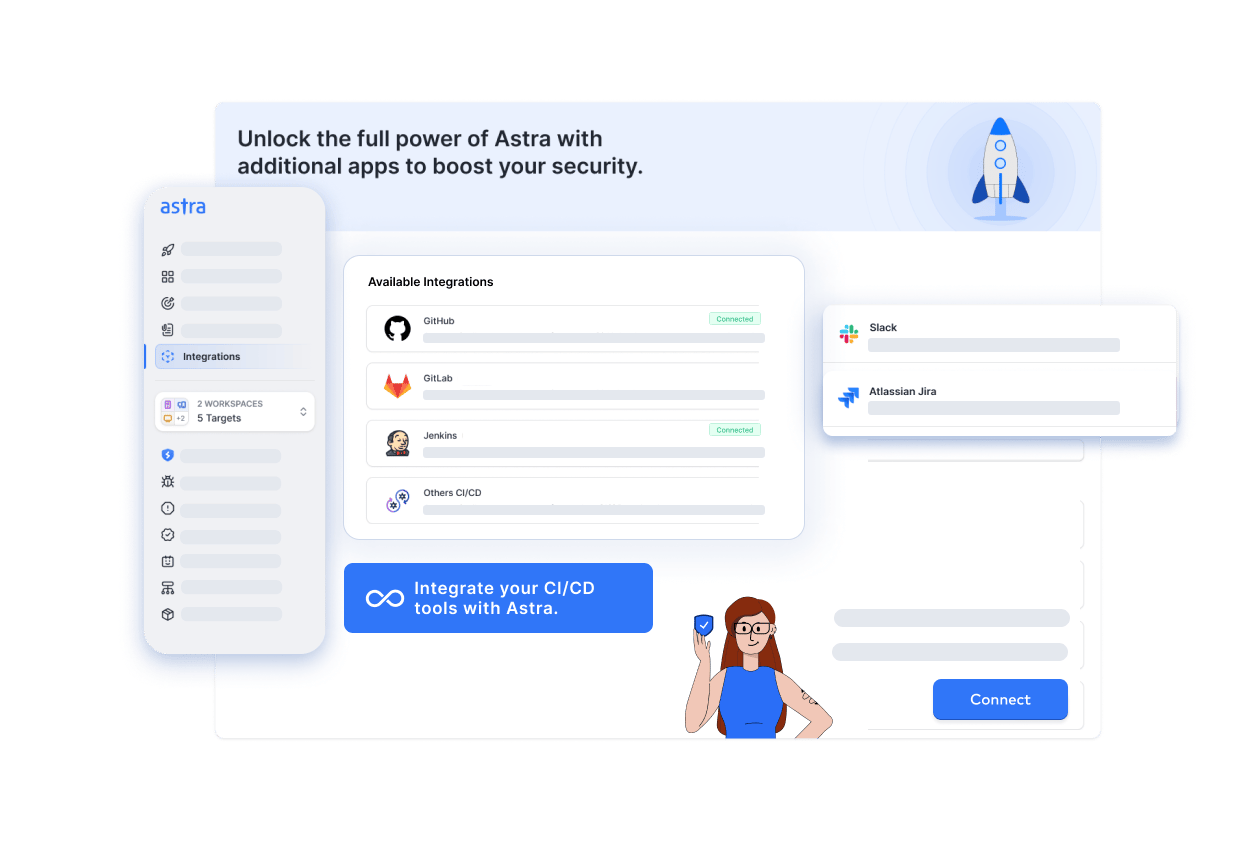
Set up your scans to trigger automatically with every code commit or pull request. Block merging if critical vulnerabilities are found, but just flag medium and low issues for review.
Make sure scan results show the problematic code snippet, explain how serious the issue is, and give clear steps to fix it. This helps developers resolve problems fast without slowing down their workflow.
Prioritizing API Threat Vectors
Shift-left is fundamentally about providing faster feedback by placing quality gates, including security, earlier in the development process. Balance coverage with speed to avoid pipeline bottlenecks.
Map OWASP API Top 10 risks to specific shift-left controls:
- Broken Object Level Authorization (BOLA): Requires nuanced access controls in the design phase.
- Broken Authentication: Demands strong password policies and MFA implementation early.
- Unrestricted Resource Consumption: Needs rate limiting built into API design.
Classify APIs by criticality based on data sensitivity, functional control, and exposure level. Each tier should have corresponding security controls and alert thresholds.
Balancing Automated & Manual Tests

Automated scans quickly spot common security issues, making them perfect for fast CI/CD pipelines. Whereas manual pen tests dig deeper, finding complex logic flaws that automated scans often overlook. This is perfect for use on critical APIs right before big launches.
Pro Tip: A verified user in r/devops states that automation isn’t a magic fix. If set up poorly, it disrupts developer routines, causing frustration when it clashes with existing practices. That’s why you should start small and refine with input from the team.
Cultivating a Security-First Dev Culture
Provide continuous training on secure coding practices and common API vulnerabilities. Appoint security champions within the dev team to act as peer mentors.
Get backing from your executives to push shift-left. Without them, you won’t get the resources or team buy-in needed to truly transform the culture.
What are the Common Challenges and Pitfalls in Shift-left API Testing?
Though shift-left testing has many benefits, it comes with its cons, too:
1. Managing Developer Experience & Alert Fatigue
Sending too many alerts, especially false positives, makes developers doubt the system and slows adoption. Set up triage rules to highlight only the most critical and real threats.
Keep refining your scanners and include code snippets, so devs get clear, useful feedback, not just useless clutter.
Note: A verified conversation in r/devops suggests that organizational inertia and a lack of practical alignment between teams can make shift-left challenging to realize, even if intentions are good. So, focus on practical integration rather than theoretical improvements.
2. Tool Sprawl & Integration Overhead
Juggling multiple solutions adds complexity, costs, and slows down CI/CD. Prioritize tools having a unified platform offering SAST, SCA, DAST, and IAST with native pipeline integrations. Fewer tools mean fewer context switches and clearer, prioritized alerts.
3. Skill Gaps & Organizational Resistance
If devs don’t understand security, they get overwhelmed, and security teams don’t engage with development. Solve this by offering practical training, appointing team security specialists, and sharing metrics. Make sure dev, security, and ops use the same tools and aim for the same targets.
How Can Astra Help with Shift-Left Security?
Key Features:
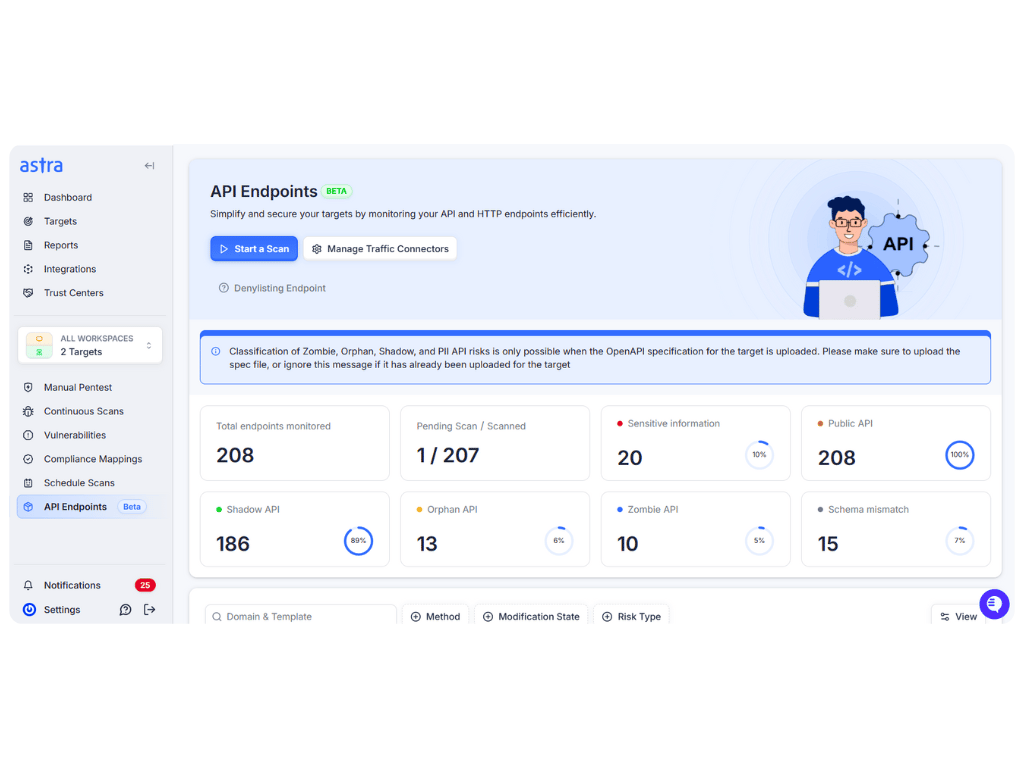
- Discover every API in under 90 minutes with runtime traffic analysis, leaving zero blind spots.
- Modern DAST scanner built for authenticated API scans with 15,000+ test cases (OWASP API Top 10, BOLA, IDOR).
- Incremental scanning means only rescan endpoints with behavior or schema changes for efficiency.
- Deep integrations with Postman & Burp Suite for continuous inventory building and security testing.
Astra Security’s API Security Platform unifies visibility, scanning, and prioritization across REST, GraphQL, internal, and mobile APIs. Traffic connectors for AWS, GCP, Nginx, and Azure continuously map both documented and shadow endpoints, ensuring your CI/CD pipeline always knows what to test.
AI-powered logic testing and PII/secret-disclosure detection catch real-world risks beyond spec violations. Tailored for agile teams shipping weekly microservice updates, Astra accelerates validation with targeted rescans and incremental scans.
A single unified dashboard keeps a record of human-verified VAPT findings and integrated automated alerts directly in Jira or GitHub, keeping your shift-left pipeline efficient, transparent, and audit-ready.
Lock down your security with our 10,000+ AI-powered test cases.
Discuss your security needs
& get started today!

Final Thoughts
When most organizations face API security incidents annually, reactive security isn’t risk management; it’s damage control. Shift-left security provides a strategic solution. Automated validation that prevents vulnerabilities from reaching production while accelerating development velocity.
Success demands more than scanning tools. It requires cultural commitment to making security a shared responsibility. Businesses that incorporate security early don’t just reduce costs, they eliminate the friction that slows down innovation.
FAQs
What is the difference between shift left and shift right?
Shift-left integrates testing and security early in design and development, which means you catch issues before they grow. Shift-right extends monitoring and protection into production so you catch real-time faults under live conditions. In a way, both complement each other.
What is the basic principle of shift left?
The principle is simple. Move testing earlier in the software dev lifecycle, i.e, starting from design and code, such that flaws are detected sooner, code quality improves, and remediation costs drop.
What does Shift-left do in DevSecOps?
In DevSecOps, shift-left means adding security practices like threat modeling, SAST, and code reviews into the earliest stages. It ensures vulnerabilities are caught as you write code, not after deployment.
What is shift right in security?
Shift-right focuses on real-world protection post-deployment. Think runtime monitoring, incident detection, and incident response, keeping your live APIs safe under real user conditions.
Recommended Reading:
- Astra API Security Solution
- What is API Security?
- API Management Security Best Practices
- What is API Security testing?
- OWASP Top 10 API 2023 Vulnerabilities
- 7 Top API Penetration Testing Tools in 2026
- DAST vs SAST Comparison
- The Ultimate 2026 API Security Checklist
- The Top API Security Risks and How To Mitigate Them
- What is Broken Object Level Authorization (BOLA)?
- Top API Security Vendors List (Updated)
- What is Shift Left Security? (Guide)
- Mobile App API Security: A Complete Guide
- What are Shadow APIs? (Explained)
- Top 5 API Security Challenges and How to Overcome Them
- How to Build a Solid API Security Strategy for 2026?
- What are Zombie APIs (Complete Guide)
- Top 7 API Security Trends to Know in 2026
- Guide to API Security Maturity Model
- How to Protect Your APIs for Healthcare Industry?
- API Security Pricing: Complete Cost Guide for 2026
- Why is Fintech API Security Important in 2026
- How to Secure Your APIs Against These Vectors?
- What is the Difference Between API Security and Application Security?
- What is API Security Management?