The industry treats API security like a checklist—patch a few issues, enforce some rules, and move on. But these risks aren’t isolated flaws; they’re symptoms of a deeper failure in how APIs are designed and secured. Built for speed and interoperability, APIs often expose more than intended, making security an afterthought.
Attackers don’t just exploit single vulnerabilities; they chain issues—broken authorization, excessive data exposure, and logic flaws—leveraging gaps security teams overlook. Yet, most defenses rely on scanning and periodic audits, missing how these risks emerge from API-first architectures.
Simply put, most security programs focus on patching individual CVEs, i.e., fixing leaks in a sinking ship without addressing the design flaw. The real solution is to rethink how we build, test, and defend APIs, not as an afterthought, but to address the OWASP top 10 as a core security priority from the ground up.
Top 10 API Security Risks
1. Insufficient Transport Layer Security
Due to weak encryption, APIs that do not properly enforce HTTPS are vulnerable to man-in-the-middle attacks. Transmitting data without proper, up-to-date encryption can expose sensitive information to attackers trying to intercept and modify the data.
Mitigation:
- Enforce HTTPS on all API communications.
- User-strong cipher suites and regularly update TLS protocols.
- Implement certificate pinning wherever necessary.
2. Insecure API Endpoints
Exposed internal APIs or insecure external endpoints provide a larger attack surface and can help attackers access the backed systems directly. The risks can grow consequentially if the APIs don’t implement proper authentication and authorization systems.
Mitigations:
- Restrict access to internal APIs using proper authentication.
- Regularly audit API endpoints to check for exposure.
- Implement strict authentication and authorization mechanisms.
Astra API Security Platform where offensive testing meets live traffic intelligence
- Complete API observeability
- 15000+ DAST test cases
- Risk classification & scoring

3. API Key and Token Leakage
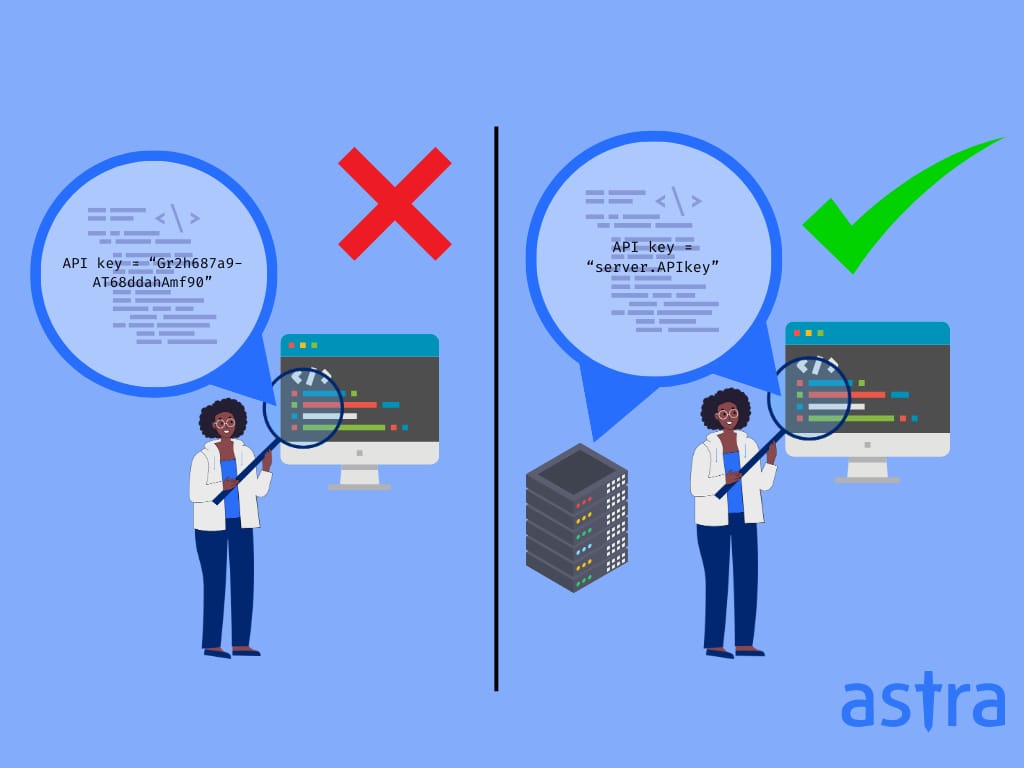
Exposed API keys or tokens via public repositories, URLs, or logs can allow attackers unauthorized access to the complete API environment. Similar risks can occur when credentials are hardcoded into the source code.
Mitigations:
- Store API keys in environment variables
- Implement strong token rotation and expiration policies
- Monitor repositories for accidental credential exposure
4. Webhook Manipulation
Organizations tend to use webhooks for real-time updates, and if they are not properly validated, attackers can spoof legitimate requests or manipulate data in the requests.
Mitigations:
- Use tokens or signatures to validate the webhooks
- Implement whitelisting rules for webhooks
- Encrypt webhook payloads to prevent manipulation.
5. Improper Error Handling
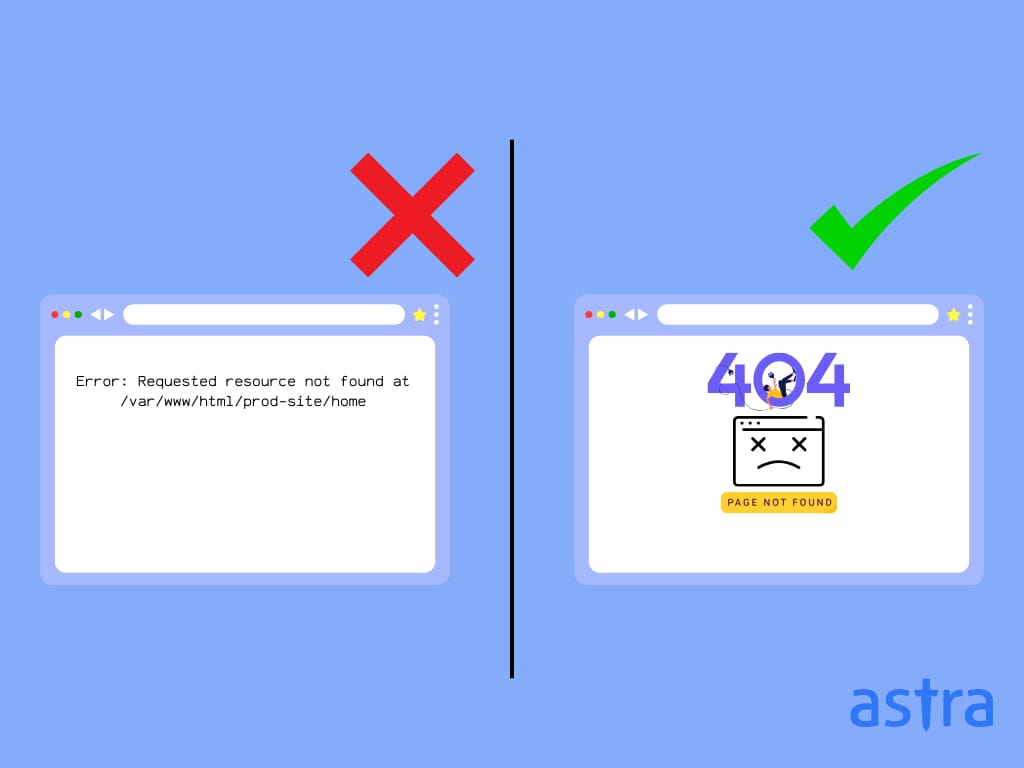
While testing, development teams create detailed API error messages; sometimes, these go through to production. Such detailed messages can expose sensitive information about the APIs or the applications, helping the attackers craft payloads for targeted attacks.
Messages that reveal server information, database structure, or authentication mechanisms are a few examples.
Mitigations:
- Return generic error messages
- Remove stack traces from API responses
- Review error handling to prevent data exposure
6. Third-party API Risks
Many organizations integrate different third-party APIs for supporting functionalities, which can sometimes introduce known vulnerabilities. Attackers can leverage these vulnerabilities and can lead to sensitive data exposure or allow unauthorized system access.
Mitigations:
- Check third-party APIs for security vulnerabilities before integration.
- Allow third-party APIs access to necessary data and permissions.
- Regularly update these APIs and monitor for any unintended behavior.
7. Lack of Rate Limiting
Suppose the APIs do not have proper rate-limiting mechanisms implemented. In that case, attackers can flood the APIs with requests, causing a Denial-of-Service (DoS) attack and making the system slow or unresponsive. Without proper rate limiting, APIs can also be vulnerable to brute-force and rainbow table attacks along with API scraping.
Mitigations:
- Implement rate limiting and throttling of APIs.
- Detect and block bots with CAPTCHAs.
- Use API gateways to enforce traffic controls.
8. Shadow APIs
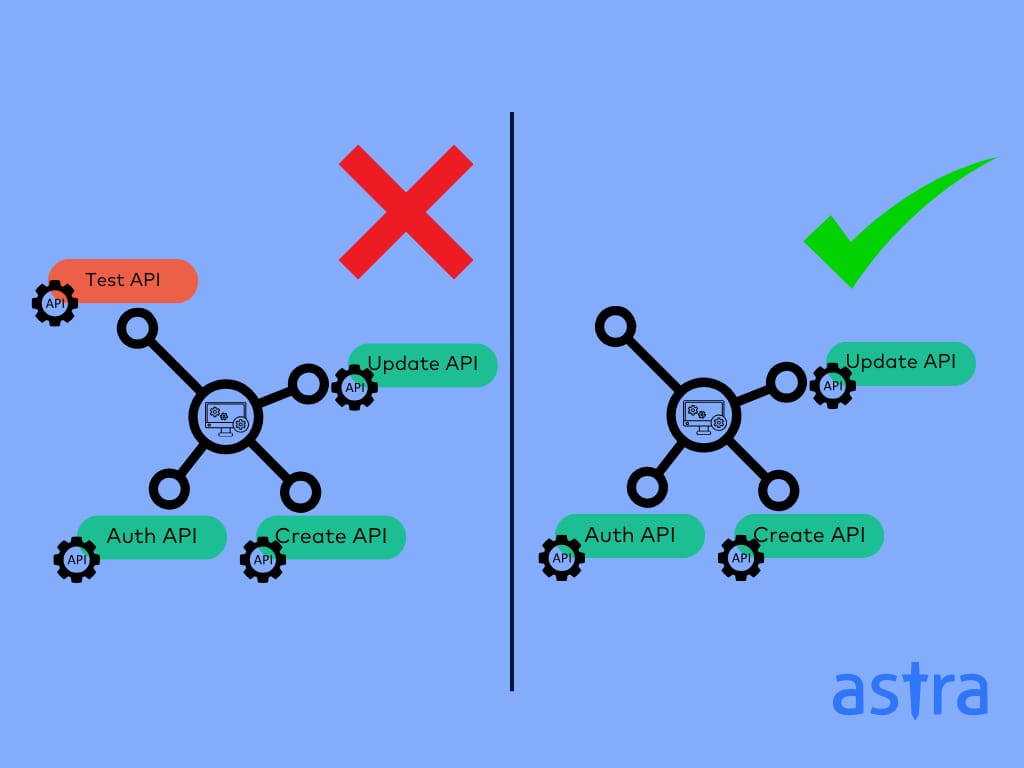
In the development phase, developers create test or legacy APIs that are deployed but not managed or maintained anymore. These shadow APIs are blind spots that become a point of attack to gain entry into the API systems.
Mitigations:
- Maintain inventory of all APIs in production and testing.
- Remove unused or old APIs regularly.
- Use tools to detect endpoints and categorize them as used or unused.
9. Server-Side Request Forgery in APIs
APIs that interact with external or internal resources via URLs can be attacked using various SSRF techniques by the attackers. This allows the attackers to perform unauthorized actions on behalf of the server and gain access to sensitive information.
Mitigations:
- Restrict API access to internal services unless absolutely necessary.
- Use whitelisting for external resources or endpoints.
- Always sanitize all user input URLs before making requests.
10. Insecure GraphQL Implementation
GraphQL APIs, if not appropriately managed, allow attackers to query excessive data, leading to data enumeration or running resource-intensive queries that could overload the servers.
Mitigations:
- Limit query depth and complexity
- Implement proper authorization checks
- Monitor GraphQL traffic for anomalies
API Security starts with visibility, you can’t secure what you can’t see. With Astra API Security Platform, you get:
- Complete API observeability
- Continuous offensive DAST tests
- AI-powered fixes, developer-first workflows
Importance of API Penetration Testing
API penetration testing is a crucial security practice that simulates real-world cyberattacks to identify vulnerabilities before malicious actors exploit them. APIs constantly evolve, and new vulnerabilities can emerge as businesses integrate new functionalities.
Regular penetration testing helps organizations uncover hidden weaknesses that automated security tools might miss. It also ensures compliance with security regulations and industry best practices.
Benefits of API Penetration Testing:
- Early Threat Detection: Identifies security flaws before they become exploitable vulnerabilities.
- Enhanced Security Posture: Strengthens API security by proactively addressing risks.
- Compliance Assurance: Helps businesses meet industry regulations such as GDPR, HIPAA, and PCI-DSS.
- Risk Mitigation: Reduces the likelihood of data breaches, unauthorized access, and service disruptions.
- Business Continuity: Ensures APIs remain secure and functional, preventing costly downtime.

What Can Astra Do About Your API Security Needs?
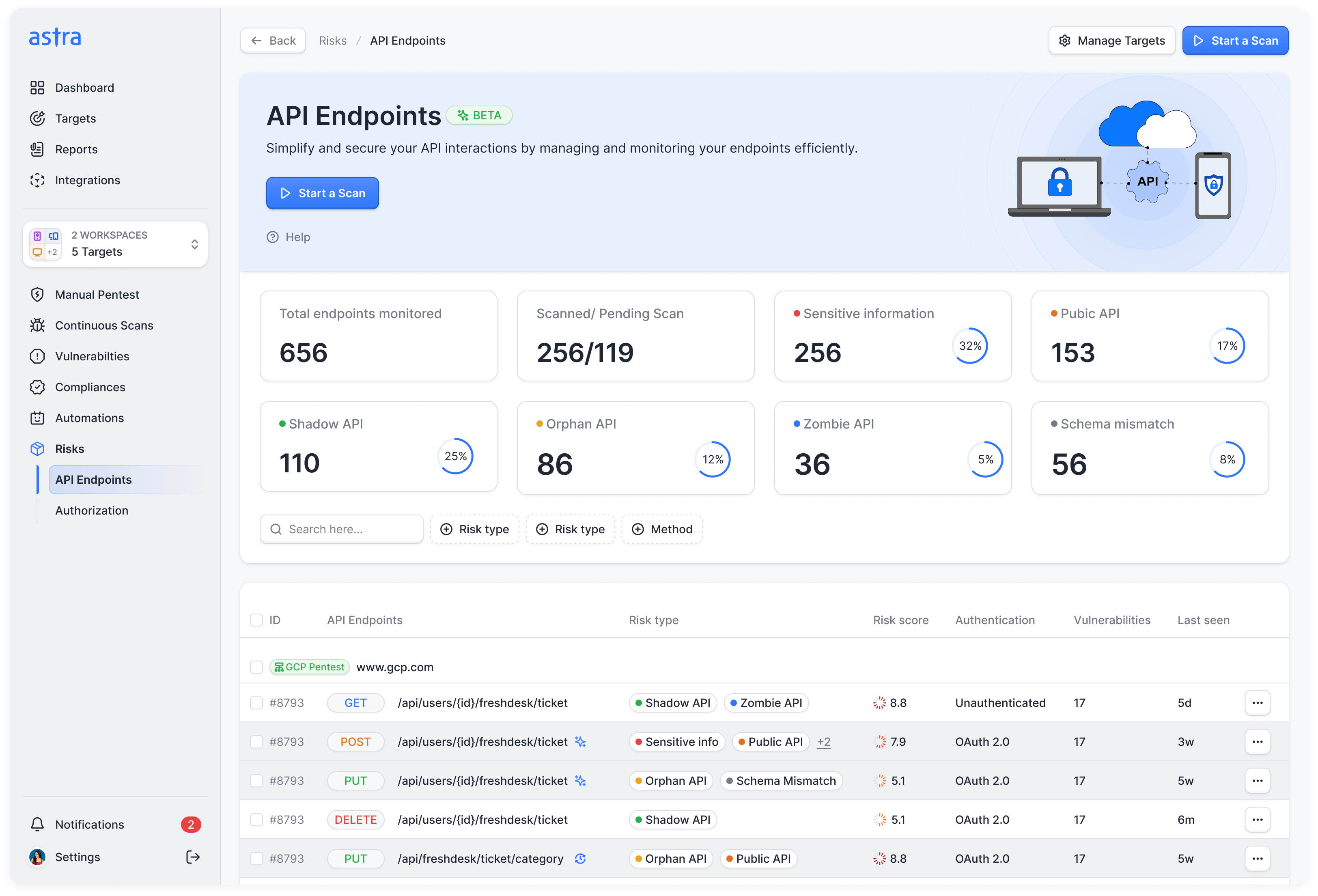
Most API security programs still treat risks like a checklist: scan once, patch a few issues, and move on. Astra Security takes a different approach. Its discovery engine builds a complete inventory by mapping every API in your environment, including shadow, zombie, and orphan endpoints, so you always know exactly what’s exposed before attackers do.
From there, Astra’s API Security Platform continuously run 15,000+ authenticated test cases against your APIs, identifying the flaws that matter most: broken authorization, excessive data exposure, weak authentication, and business logic abuse. Unlike traditional point-in-time audits, our platform pairs offensive testing with live traffic analysis from 10+ integrations (AWS, GCP, Azure, Kong, Postman, Nginx, and more), giving security teams continuous visibility into how APIs are used in the real world.
Fixing issues is built into the workflow. With AI-assisted remediation, selective auto-rescans, and integrations into CI/CD pipelines, as well as GitHub/GitLab, Jira, and Slack, Astra Security enables developers to validate patches instantly, reducing MTTR to under 44 days. Compliance is streamlined too, with export-ready PDF/CSV/JSON reports for GDPR, HIPAA, PCI-DSS, and ISO 27001.
Key capabilities include:
- Complete API discovery, including shadow and orphan endpoints
- 15,000+ authenticated test cases across OWASP API Top 10 risks
- Continuous penetration testing with 60+ scans per month
- Real-time detection of PII leaks, secrets, and misconfigurations
- Live traffic capture and monitoring via 10+ integrations
- AI-powered remediation with instant retest and validation
- Compliance-ready reporting (GDPR, HIPAA, PCI-DSS, ISO 27001)
- Support for REST, GraphQL, mobile, and internal APIs with SaaS deployment
API Security starts with visibility, you can’t secure what you can’t see. With Astra API Security Platform, you get:
- Complete API observeability
- Continuous offensive DAST tests
- AI-powered fixes, developer-first workflows
Final Thoughts
APIs are the backbone of modern digital interactions but are also prime targets for cyberattacks. Organizations need strong security measures to deal with the threats beyond the OWASP Top 10 list.
Securing APIs requires a proactive approach that implements strong authentication, rate limiting, monitoring, and regular penetration testing. Investing in API security today will protect your business and customers from potential threats in the future.
FAQs
1. Why is API security important?
API security is crucial because APIs handle sensitive data and facilitate communication between applications. A breach can lead to data theft, financial loss, and reputational damage.
2. How often should API penetration testing be conducted?
Regular testing is recommended, at least once per quarter or after significant updates to your API infrastructure.
3. What is the best way to prevent API security breaches?
Implement strong authentication and authorization, use encryption, monitor API activity, and conduct regular security audits and penetration tests.
4. Can API security testing help with regulatory compliance?
Yes, API security testing helps businesses comply with data protection regulations like GDPR, HIPAA, and PCI-DSS by identifying and mitigating security risks.
Recommended Reading:
- Astra API Security Solution
- What is API Security?
- API Management Security Best Practices
- What is API Security testing?
- OWASP Top 10 API 2023 Vulnerabilities
- 7 Top API Penetration Testing Tools in 2026
- DAST vs SAST Comparison
- The Ultimate 2026 API Security Checklist
- The Top API Security Risks and How To Mitigate Them
- What is Broken Object Level Authorization (BOLA)?
- Top API Security Vendors List (Updated)
- What is Shift Left Security? (Guide)
- Mobile App API Security: A Complete Guide
- What are Shadow APIs? (Explained)
- Top 5 API Security Challenges and How to Overcome Them
- How to Build a Solid API Security Strategy for 2026?
- What are Zombie APIs (Complete Guide)
- Top 7 API Security Trends to Know in 2026
- Guide to API Security Maturity Model
- How to Protect Your APIs for Healthcare Industry?
- API Security Pricing: Complete Cost Guide for 2026
- Why is Fintech API Security Important in 2026
- How to Secure Your APIs Against These Vectors?
- What is the Difference Between API Security and Application Security?
- What is API Security Management?