
Today, APIs power everything from mobile apps to cloud platforms, quietly moving data behind the scenes. That invisibility makes them prime targets. Over 84% of organizations experienced API security incidents last year, with breaches exposing ten times more data than in traditional attacks. Attackers now deploy AI-powered tools that map endpoints in minutes and exploit business logic flaws your defenses can’t see.
This guide will walk you through why API security should now be your top priority and how to build a defense that actually works in 2026. Let’s start by understanding why API security testing is crucial.
Why is API Security Important in 2026?
If your APIs aren’t secure, neither is your application. Attackers view APIs as open doors to your most sensitive data and business logic, exploiting them before traditional security tools even register the breach. In the last 12 months alone, approximately 17-20% of API incidents have resulted in actual data breaches caused by API exploitation.
The threat landscape has shifted dramatically, creating urgent challenges for technical teams:
- AI-powered attacks now map your API endpoints in minutes and craft evasive payloads that bypass signature-based defenses, exploiting business logic flaws your WAFs and IDSs can’t catch.
- Shadow and zombie APIs lurk in production environments, forgotten but still processing requests and leaking data through endpoints nobody’s actively monitoring.
- Regulatory penalties from GDPR, CCPA, and HIPAA now include massive fines and possible license revocation for API-driven breaches that expose customer data.
- Supply chain vulnerabilities mean one compromised API can affect your entire ecosystem of vendors and cloud partners in cascading failures.
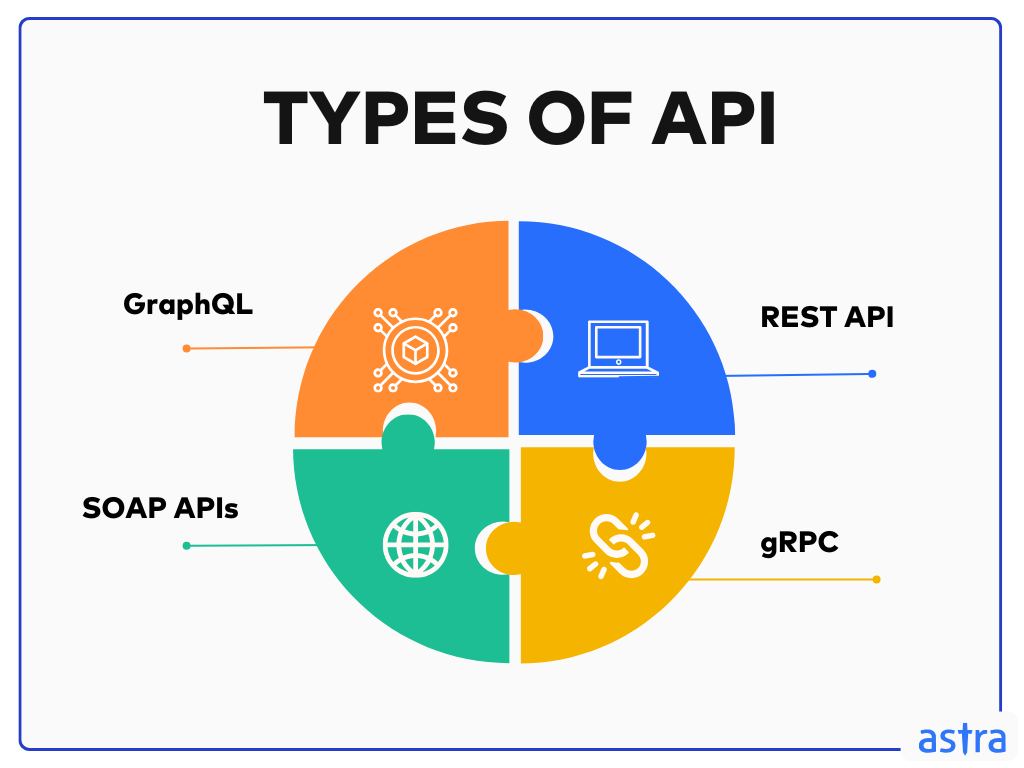
- Modern architectures built on REST, GraphQL, and microservices create scattered security landscapes where juggling internal APIs, partner integrations, and third-party services demands comprehensive strategies beyond legacy tools.

Understanding the API Security Landscape
While APIs power modern companies with unmatched agility and integration, they also multiply entry points for attackers, exposing your business to threats that outdated security tools can’t defend against.
The Growing API Threat Surface
Why does this concern CISOs, CTOs, and risk managers such as yourselves? Well:
- Firstly, the scrutiny by regulators such as GDPR, CCPA & HIPAA, on data breaches driven by APIs is drawing major fines.
- Secondly, customer data leaks via your mobile and web apps can harshly impact your brand credibility and trust; you may be famous then, but only for the wrong reasons and in free fall.
- Thirdly, supply-chain risk is essentially a single domino chip waiting to fall, since lateral expansion via a broken API is quite enticing and can compromise your entire ecosystem. Potentially affecting your vendors and cloud partners.
- And lastly, the business logic short-circuits. Threat actors now love abusing your core business flows. Think fraudulent financial transfers or gaming ticketing APIs that whistle past your traditional controls.
Key API Security Challenges Facing Enterprises
Security teams today fight on multiple fronts. From tracking down shadow and zombie APIs left behind by legacy or third-party integrations to managing new ones created every sprint. The result? An ever-expanding landscape that’s tougher to secure with each iteration.
Key Challenges shaping the 2026 API security landscape:
- Misconfiguration and insufficient monitoring: This emerges from certain over-permissioned endpoints coupled with poor audit logging, which pave the way for data to be easily directed off.
- Rapid endpoint sprawl: Agile development and CI/CD pipelines accelerate the number of APIs in touch with your tech and data stacks, which makes it tough and at times even impossible for security teams to review and monitor, inadvertently creating gaps.
- Shadow and zombie APIs: Forgotten, undocumented, or improperly retired APIs are now mushrooming in every production environment. These ‘zombies’ are often ignored and lack proper security controls, forming quite a lucrative entry point for hackers.
- Authentication and access struggles: Even with standards like OAuth and JWT, access gaps, privilege escalations, or data leaks are quite prominent due to stack complexity and misconfiguration, especially under fast-paced DevOps environments.
- Real-time risks: API security demands a continuous and behavioral approach to detecting and blocking threats; your traditional defences here just sit clueless.
- Business impact and regulatory exposure: Given the impact they have on your tech stack and data infra, slacking off on an API security platform is just data breaches, DDoS, and compliance failures waiting to happen; it’s just a matter of time.
These challenges form a rather thick tip of the iceberg, waiting to go all Titanic on your security posture. Here’s a resource that will help you understand the API security attack vectors so that you have an in-depth understanding of what all cracks can crack open your web and mobile apps, IoT, and cloud systems, as your defenses go ‘huh?’
Core Components of an API Security Strategy
Building an effective API security strategy requires alignment between executive leadership, technical implementation, and continuous governance. These core components form the foundation that keeps your APIs secure while enabling innovation at scale.
How to get executive buy-in for an API security strategy?
Never position API security tools as just another budget line item. Frame it as essential infrastructure that protects supply chains, prevents regulatory fines, and maintains customer trust at the board level.
Define clear ownership structures that give your board confidence in execution. CISOs and CTOs lay out strategic direction and allocate resources. Your Head of Enterprise Architecture integrates security into technology frameworks from day one. Cross-functional accountability ensures implementation actually happens rather than getting lost in planning cycles.
Establish explicit roles for who approves new APIs, who conducts audits, and who responds when alerts fire at 2 AM. Without these definitions, teams spin in silos while attackers watch, entertained.
What does an effective API governance framework actually look like?
API governance brings enterprise policy, technology implementation, and measurable accountability under one umbrella. It operates at strategic, operational, and tactical levels simultaneously to ensure nothing slips through as your ecosystem grows.
The framework rests on four essential pillars:
- Complete API inventory and lifecycle management through automated discovery that tracks every endpoint from design through retirement.
- Centralized policy enforcement standardizes authentication patterns, data privacy controls, and compliance requirements across all teams.
- Risk-based classification scoring APIs based on business impact and threat exposure, critical since nothing about attackers stays consistent.
- Automated compliance checking, integrating policy-as-code validation into dev workflows, catching gaps before hackers exploit them post-deployment.
Why should I implement Zero Trust for APIs, and where do I start?
The assumption that internal traffic is inherently safe represents a dangerous delusion. APIs let attackers move laterally across systems like Trojan horses, exploiting third-party integrations to disrupt operations from the inside out.
Zero Trust operates on a simple principle. ‘Never trust and always verify’ means questioning every request, whether from a trusted partner, internal microservice, or external application. Deploy these controls:
- Authentication layers including OAuth 2.0, OpenID Connect, API keys, and mutual TLS with multi-factor authentication for sensitive endpoints.
- Using RBAC and ABAC to grant users access only to resources they absolutely need.
- Real-time monitoring through schema validation, behavioral analytics, and anomaly detection spotting abuse before damage occurs.
- Network segmentation isolates APIs and services to minimize lateral movement if endpoints get compromised.
Treat Zero Trust as a mindset backed by architectural changes; you need it, your board needs it, and even your customers need it.
How to Build an API Security Strategy in 2026?
A comprehensive API security strategy starts with knowing what you are protecting, then layers multiple defenses that work together throughout the entire API lifecycle. Here’s how you can build something that actually holds up against modern threats.
1. Knowing Your ‘Unknowns’ and Inventory Management
The first step in devising any robust API security strategy starts with knowing your “unknown unknowns”. This mostly includes shadow or forgotten APIs left out of inventory, but still susceptible to attackers.
The solution here is automated API discovery tools that continuously scan networks, codebases, gateways, and cloud environments. Beyond discovery, these tools should also help you map dependencies and actively update inventories as new endpoints are incorporated. This reduces your TAT for tracking lifecycle stages and flagging deprecated or high-risk endpoints.
2. Strengthening Authentication and Authorization Systems
Threat actors today have a special affinity towards weak or missing authentication, and rely on ill-defined roles and permissions that grant them lateral and longitudinal movement.
Thus, implement OAuth 2.0, OpenID Connect, and mutual TLS (mTLS) protocols and enforce least privilege. Furthermore, grant ‘For your eyes only’ level access via RBAC or ABAC for customers, partners, and internal services.
Lastly, protect every endpoint, audit permissions, and erase privilege creep with every code or config change.
3. Encrypting & Protecting all Data Everywhere, Everytime
Data encryption and packet monitoring are a no-brainer as of today.
Deploy robust protocols (TLS 1.2+) for data in transit to ensure that credentials, PII, and other critical data never travel unprotected through the open internet or even internally. For at-rest setups, encrypt your databases and secret vaults; don’t rely solely on provider defaults, since regulators now persistently require explicit control.
Secondly, implementing input validation and data sanitization neutralizes injection attacks and prevents malicious payloads from passing through your APIs.
Moreover, enforce data masking for sensitive fields, such as logs or error messages, and enable continuous data flow monitoring to speed up the detection and remediation of leaks, loss, and policy violations.
4. API Gateway Security
As your first line of defence, make sure your API gateway security has centralized authentication, rate limiting, throttling, and IP filtering in place, as it offers granularity and blocking at a broad scale.
Your gateway security should bolster your encryption policies, block traffic based on threat intelligence, and integrate easily with modern WAFs to keep injection, abuse, DDoS, and bot attacks at bay.
Lastly, features like automated discovery integration, schema validation, DLP, and real-time monitoring dashboards help you best enforce policy-as-code, which smooths the deployment of standardized security configurations across all APIs.
Best Practices for Building Your API Security Strategy
Implementing API security best practices requires moving beyond theoretical frameworks into tactical execution. These practices span your entire SDLC lifecycle, from early-stage coding to production monitoring and incident recovery.
Implementing Shift-Left Security for APIs
The cybersecurity analogy for ‘precaution is better than cure’ is the shift-left approach.

Integrating security early into the SDLC helps reduce the cost and effort you would otherwise spend on fixing vulnerabilities, while also mitigating the customer trust and brand image risks it shields you from.
By embedding security checks during coding and CI/CD automation, you catch issues before they reach production, preventing costly incidents and reducing remediation friction.
But how do I implement Shift-left Security?
- Enable SAST to analyze source code for logic flaws and hardcoded secrets alongside DAST & IAST (Interactive Application Security Testing) to eliminate runtime vulnerabilities (via real-world attack simulations).
- Besides designing your APIs using OpenAPI standards, implement threat modeling and positive security models directly into the specification.
- Seal all data leaks by strictly enforcing input validation, consistent authentication across all endpoints, rate limiting, and comprehensive error handling. Further add to your efficiency by automating these in CI/CD pipelines. This is to ensure continuous security validation before deployment.
For the benefits it offers, the shift-left approach becomes an API security requirement rather than a good-to-have feature.
The need of the hour is to bake it into your data architectures, DevOps, and enforce ongoing monitoring. In such a diverse, fragile landscape driven by the API explosion, it all starts with aligning your technical controls with business initiatives for sustainable growth, even if it means burning a little cash in the short run.
Runtime Protection and Threat Detection
Once deployed, you need to continuously monitor your APIs to protect them against attacks that your traditional signatures miss.
This is where you deploy:
- Anomaly detection engines that aid in learning baseline behavior and flagging deviations
- Behavioral analytics to spot abuse patterns
- AI/ML-driven systems that adapt and scale with minimal human intervention.
Other key capabilities that are must-haves within your API security solutions include:
- Using Layer 7 (application-level) monitoring to analyze API traffic patterns
- Detecting data exfiltration
- Identifying credential abuse
- Blocking malicious payloads in real time
Compliance & Regulatory Considerations
What regulations apply to APIs?
GDPR (data privacy), HIPAA (healthcare), PCI-DSS (payment data), and ISO 27001 (information security) are some of the regulations that apply to API security tools.
Each regulation now demands encryption, access control, audit trails, and rapid breach notifications as standard.
How do I build a future-proof, compliance-ready API security strategy?
Zero Trust, shift-left security, and AI/ML are three key implementations that directly support regulatory expectations and help fight evolving threat vectors.
Moreover, automation of compliance checks in CI/CD pipelines and managed services allows you to stay audit-ready continuously and prevents you from scrambling during annual assessments
Selecting and Implementing API Security Policy
What you need here is an API Security Posture Management (ASPM) platform that discovers and classifies all your APIs along with risk scoring, API gateway authentication, rate limiting, and encryption.
How do I shortlist an ASPM platform?
Look for solutions that offer:
- Automated API discovery (including shadow and zombie APIs)
- Behavioral threat detection (not just signatures)
- Minimal latency during threat blocking
- Adaptive rate limiting that protects without disrupting business.
- Smooth integration with your existing SIEM, SOAR, and CI/CD tools
- Scalability to handle your API volume
- Audit-ready compliance reporting
Incident Response and Recovery
No matter your defenses, never once think incidents won’t happen.
An API-specific incident response playbook becomes non-negotiable for when things go wrong. Detail detection via anomaly alerts, containment by isolating compromised endpoints, investigation through collecting logs and traces, and recovery procedures that get systems back online safely.
Moreover, your operational excellence depends on how often you revise common scenarios, such as broken authentication, data exposure, and business logic abuse, and on automating your response actions via SOAR platforms.
Lastly, rebuilding once security is compromised. Analyse what exactly happened via RCA (Root Cause Analysis), document and communicate the same to your teams, and update security controls accordingly to nullify the probability of recurrence.
How Can Astra Security Help with Your API Security?

Key Features:
- Discover shadow and zombie APIs across your entire infrastructure in under 30 minutes
- Modern DAST scanner built specifically for APIs with authenticated scanning capabilities
- 15,000+ test cases covering OWASP API Top 10, IDOR, and business logic flaws
- Live API traffic capture through connectors for AWS, GCP, Azure, and Nginx for continuous observability
- Deep integrations with Postman and Burp Suite for seamless inventory building and security testing
Astra Security’s API Security Platform tackles the core challenges by providing automated discovery that solves your inventory management blind spots and catches unknown API threats that leave you exposed. Our platform supports Zero Trust implementation and shift-left practices through seamless CI/CD integrations, while AI-powered behavioral analytics deliver the runtime protection your traditional defenses miss.
Results flow into your existing workflows with video POCs, focused rescans for fix validation, and audit-ready compliance reports that satisfy regulatory requirements. Our certified team of experts combines automated scanning with manual testing to eliminate false positives, giving your security team a signal instead of noise while measurably reducing MTTR across your API ecosystem.
Final Thoughts
The difference between organizations that survive API attacks and those that make breach headlines comes down to strategy execution. We’ve covered everything from governance frameworks and Zero Trust architecture to compliance automation and incident response playbooks that actually work under pressure.
Building robust API security requires discovering every endpoint, including the zombies, implementing consistent controls across the entire lifecycle, and deploying real-time threat detection that catches what signatures miss. Track the metrics that prove ROI to your executive committee rather than vanity numbers that sound impressive but mean nothing.
Success lies in treating API security as continuous rather than episodic. Discovery, testing, monitoring, and response need to happen constantly as your infrastructure evolves. Start with comprehensive visibility, enforce layered defenses, empower developers with security tools, and measure outcomes that matter.
FAQs
Why do I need an API Security Strategy?
APIs are now the primary attack vectors, and without a strategy, you stand on the brink of system-wide data breaches, hefty regulatory fines, reputational damage, and supply chain disruptions that extend to your 3rd-party vendors and partners.
How To Implement Zero Trust for APIs Without Disrupting Business Operations?
– Strong authentication on every request (OAuth 2.0, mTLS, MFA)
– Least privilege access through RBAC/ABAC,
– Continuous monitoring with behavioral analytics
– Adaptive rate limiting and intelligent blocking
– Deploy policy-as-code to automate these enforcements and reduce your TAT
While the above pointers help implement Zero Trust, start with pilot programs and observe a phased rollout approach to minimise disruptions.
How do I Track API Security ROI for Leadership?
For operational metrics, deploy MTTD, MTTR, and false positive rates. For business impact measure API conformance scores, deprecated APIs are still receiving traffic, and compliance audit readiness.
How To Approach Compliance (GDPR, HIPAA, PCI-DSS) for Our API Strategy?
Start by mapping compliance requirements to technical controls.
For example:
– GDPR requires encryption, access controls, and audit trails
– HIPAA mandates authentication, authorization, and logging
– PCI-DSS demands encryption, tokenization, and monitoring
Furthermore, use ASPM platforms that provide automated compliance reporting and interactive dashboards.
Recommended Reading:
- Astra API Security Solution
- What is API Security?
- API Management Security Best Practices
- What is API Security testing?
- OWASP Top 10 API 2023 Vulnerabilities
- 7 Top API Penetration Testing Tools in 2026
- DAST vs SAST Comparison
- The Ultimate 2026 API Security Checklist
- The Top API Security Risks and How To Mitigate Them
- What is Broken Object Level Authorization (BOLA)?
- Top API Security Vendors List (Updated)
- What is Shift Left Security? (Guide)
- Mobile App API Security: A Complete Guide
- What are Shadow APIs? (Explained)
- Top 5 API Security Challenges and How to Overcome Them
- How to Build a Solid API Security Strategy for 2026?
- What are Zombie APIs (Complete Guide)
- Top 7 API Security Trends to Know in 2026
- Guide to API Security Maturity Model
- How to Protect Your APIs for Healthcare Industry?
- API Security Pricing: Complete Cost Guide for 2026
- Why is Fintech API Security Important in 2026
- How to Secure Your APIs Against These Vectors?
- What is the Difference Between API Security and Application Security?
- What is API Security Management?