Over 57% of organizations faced an API-related breach in the last two years. But the scarier number is the one nobody can measure. The APIs that are running and are completely unmonitored.
Shadow and zombie APIs are one of the leading entry points for attackers, and most existing tools don’t catch them. Pair that with insufficient logging, and post-breach analysis becomes guesswork. Even the scanning teams that you rely on for assessment rarely go deeper than HTTP error codes, leaving the actual root cause buried.
That’s why, if you are evaluating API pentesting tools right now, this guide cuts through the noise, covering the top 6 manual tools and the best automated API security solutions for 2026 that fit your security objective.
Our Selection Criteria: What Makes the “Best” API Pentesting Tools?
We evaluated dozens of API security testing tools against five critical aspects that separate noise from signal in practical pentesting workflows:
| Criteria | What to Look For | Weightage (%) |
|---|---|---|
| Core API Attack Coverage & Accuracy | Deep OWASP API Top 10 coverage, BOLA, IDOR, mass assignment detection, multi-protocol support (REST, GraphQL, gRPC, SOAP), and low false positives with replayable PoCs | 30 |
| DevSecOps Integration & Automation | Native GitHub, GitLab, Jenkins, Azure DevOps, Jira support, shift-left capabilities, and scalable API management with automated scheduling | 25 |
| Risk Prioritization, Reporting & Compliance | Context-aware risk scoring, executive-ready reports mapped to ISO 27001, SOC 2, PCI DSS, GDPR, and developer-friendly remediation guidance | 20 |
| Performance, Resilience & Architecture Fit | Flexible SaaS/on-prem/VPC deployment, testing profiles that respect rate limits and SLOs, and secure internal microservice connectivity | 15 |
| Usability, Collaboration & Vendor Partnership | Developer-first UX, quality docs and CLI, RBAC and team workspaces, and responsive vendor support | 10 |
TL;DR: Top 10 API Penetration Testing Tools for 2026 at a Glance
Here’s a short list of the top API pentesting tools if you are short on time:
- Burp Suite: Best overall manual API security testing work surface
- ZAP by Checkmarx (OWASP ZAP): Best open-source API testing baseline
- Postman: Best for API workflow orchestration in security testing
- Swagger: Best for design-first API contract hardening
- SoapUI: Best for legacy SOAP and mixed-protocol API testing
- GraphQL Tools: Best for GraphQL-specific attack surface testing
- Astra Security: Best Blended Manual+Automated Pentest Platform for SMBs & Enterprises
- ZeroThreat.ai: Best AI-Powered Continuous API Security Solutions
- Salt Security: Best for Large, Complex API Ecosystems
- 42Crunch: Best Design-First, Spec-Driven API Security Testing
See how modern teams test APIs beyond scanners with continuous pentesting and expert validation.

Best API Pentesting Tools Compared: Side-by-Side Analysis
Here’s how the top 6 API pentesting tools stack up against each other based on use case fit, known limitations, and pricing:
| Tool | Maturity Level | Key Limitations |
|---|---|---|
| Burp Suite | Level 3 (Advanced Manual Testing) | Steep learning curve, resource-heavy, and limited native CI/CD automation |
| ZAP by Checkmarx | Level 2 (Baseline Security) | Significant manual config required and higher false positives |
| Postman | Level 1 (Foundational) | Not purpose-built for deep security testing or complex exploits |
| Swagger | Level 1 (Foundational) | Limited to contract testing; no runtime vulnerability detection |
| SoapUI | Level 2 (Baseline Security) | Dated UX; resource-intensive with steep learning curve |
| GraphQL Tools | Level 3 (Advanced Manual Testing) | Protocol-specific; not a full pentesting suite |
Top 6 API Penetration Testing Tools for Pentesters: Expert Reviews
We tested these API security testing tools against real-world scenarios, authenticated flows, logic flaws, and modern architectures. And here’s what we found.
1. Burp Suite
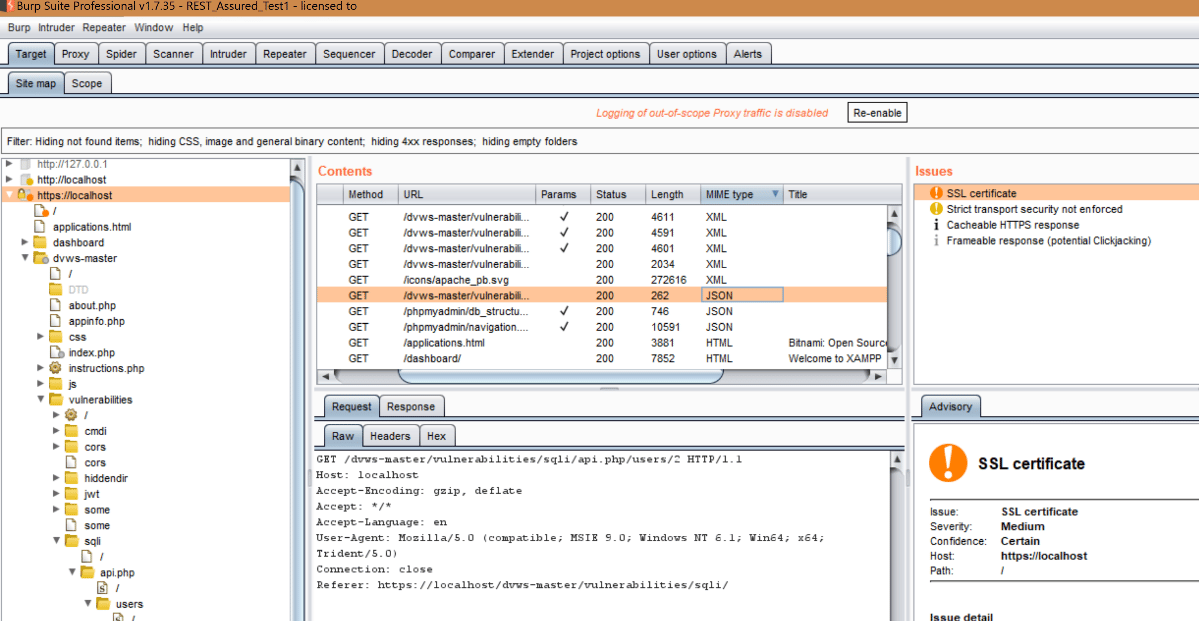
Burp Suite is the industry-standard proxy for manual API security testing, built for security researchers who need full control over request and response flows. It captures, inspects, and manipulates HTTP/HTTPS traffic in real-time, critical for identifying logic flaws like BOLA and auth bypass that automated tools routinely miss.
Its modular architecture does the heavy lifting. The Repeater module lets you iterate on individual requests, and Intruder handles large-scale fuzzing across hidden endpoints. The BApp Store adds extensions like Autorize for auth bypass detection and JWT Editor for token manipulation.
G2 Rating: 4.8/5 ⭐ (126 Reviews)
Key Features:
- Advanced Repeater and Intruder modules for fuzzing and logic-flaw discovery
- Turbo Intruder and BApp Store extensions for custom attack workflows
- Full proxy history, session token analysis, and OpenAPI import
- Active and passive scanning with low false positives
Pros:
- Advanced depth for manual testing
- Strong community and extensions
- Precise control over API attack chains
Limitations:
- Steep learning curve for beginners
- Limited out-of-the-box automation for CI/CD
2. ZAP by Checkmarx (OWASP ZAP)
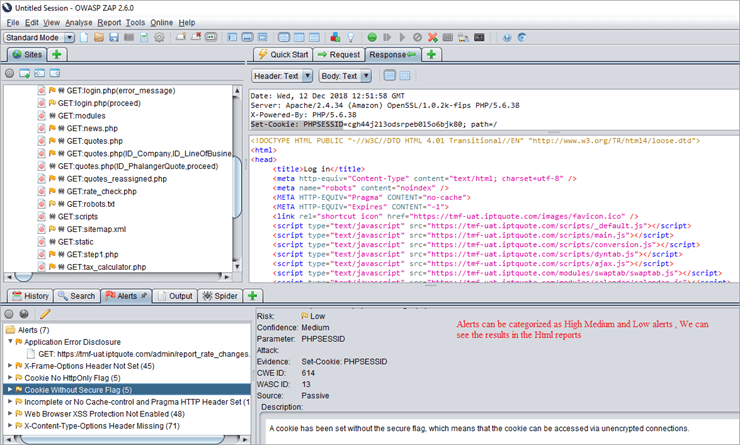
OWASP ZAP is the most widely used open-source DAST scanner for API security testing. It gives budget-conscious teams and DevSecOps engineers a free, flexible baseline for automated and semi-automated vulnerability detection across REST and SOAP APIs.
Its Docker and CLI support make CI/CD integration clean and fast. The scripting engine, supporting Zest, JavaScript, and Python, handles complex auth flows and multi-step API workflows with ease.
G2 Rating: 4.7/5 ⭐ (12 Reviews)
Key Features:
- Active and passive API scanning with OWASP Top 10 coverage
- Scripting engine (Zest, JavaScript, Python) for custom test logic
- OpenAPI/Swagger import for spec-driven testing
Pros:
- Free and open-source
- Strong community support
- Flexible automation options
Limitations:
- Requires manual configuration for best results
- Fewer built-in API-specific checks than commercial tools
3. Postman
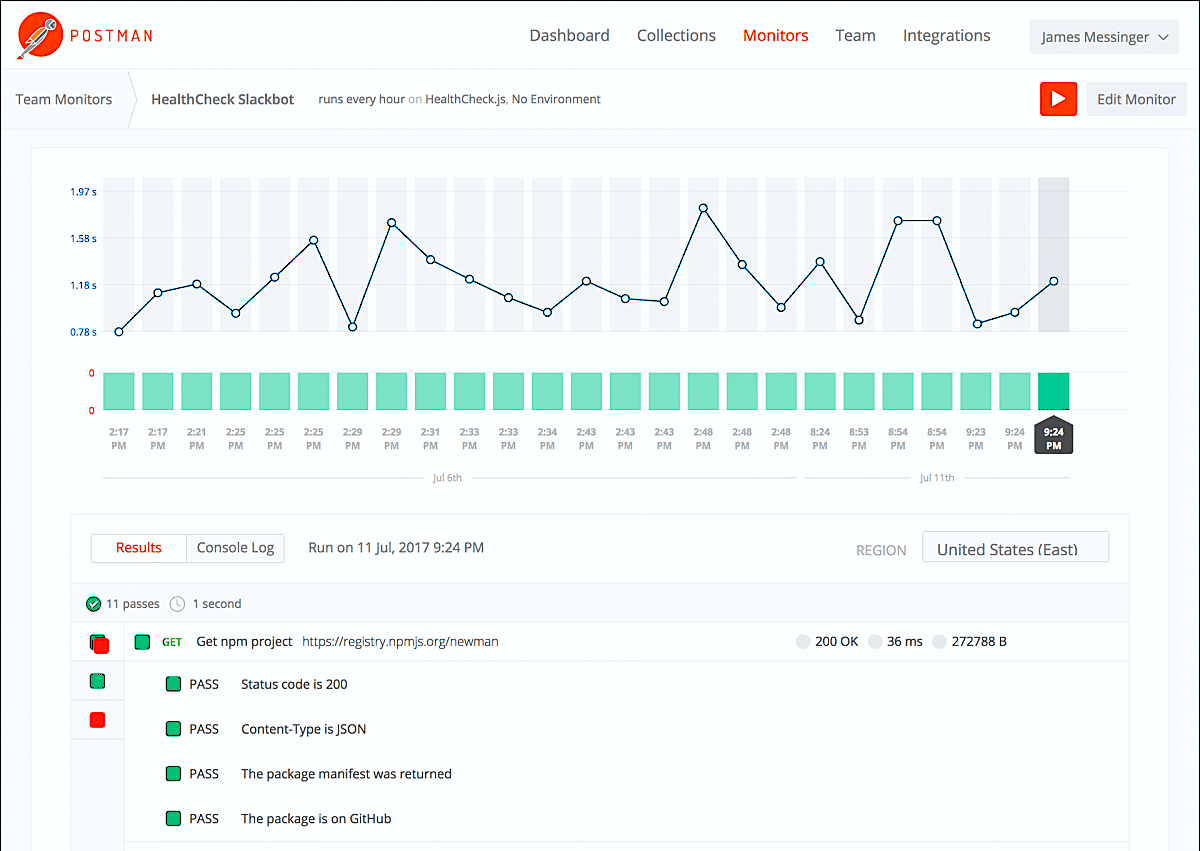
Postman is a full-lifecycle API pentesting tool. Security and QA teams use it to validate auth flows, test rate-limiting, and catch misconfigs before code ships to production.
Pre-request scripts can automatically capture JWTs from login responses and inject them into subsequent requests, enabling consistent authorization testing across complex multi-step flows.
G2 Rating: 4.6/5 ⭐ (1746 Reviews)
Key Features:
- Pre-request scripts and test assertions for auth, rate-limiting, and data validation
- Collection runner for automated regression testing
- Environment variables and secret management for multi-stage API testing
- Team workspaces for shared test repositories
Pros:
- Intuitive UI
- Excellent for collaboration
- Integrates with CI/CD tools
Limitations:
- Not purpose-built for deep pentesting
- Limited advanced vulnerability detection
Functional API tests catch bugs. Pentesting finds breaches.
Discover how automated + manual API pentesting exposes real attack paths.
4. Swagger
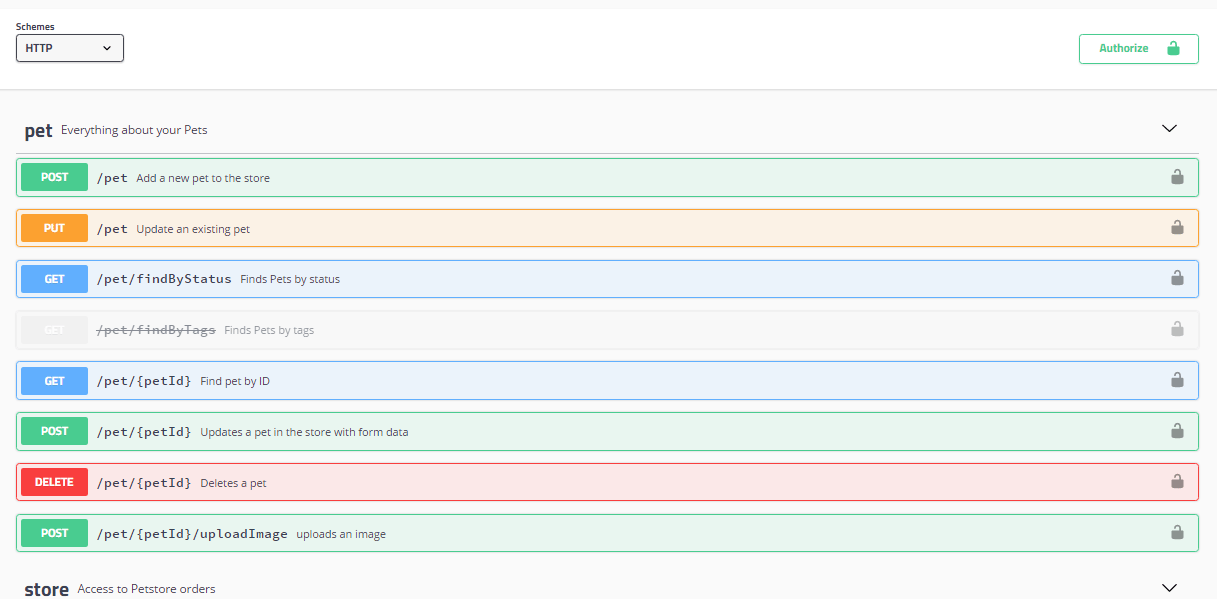
Swagger, built on the OpenAPI Specification, is the go-to tool for orgs practicing design-first API development. It enforces strict API contracts at the design stage, preventing vulnerabilities like mass assignment and invalid data handling before a single line of backend code is written.
With 68% of organizations struggling with unmapped shadow APIs, Swagger’s standardized blueprints ensure every endpoint is documented with consistent auth and authorization protocols.
G2 Rating: 4.5/5 ⭐ (68 Reviews)
Key Features:
- Auto-generated interactive API docs for security review
- Schema-driven mock servers for pre-deployment testing
- Integration with API gateways and testing tools
Pros:
- Prevents common API design flaws
- Widely adopted standard with a strong ecosystem
Limitations:
- Focuses on design or contract, not runtime vulnerability detection
- Needs complementary security testing tools
5. SoapUI
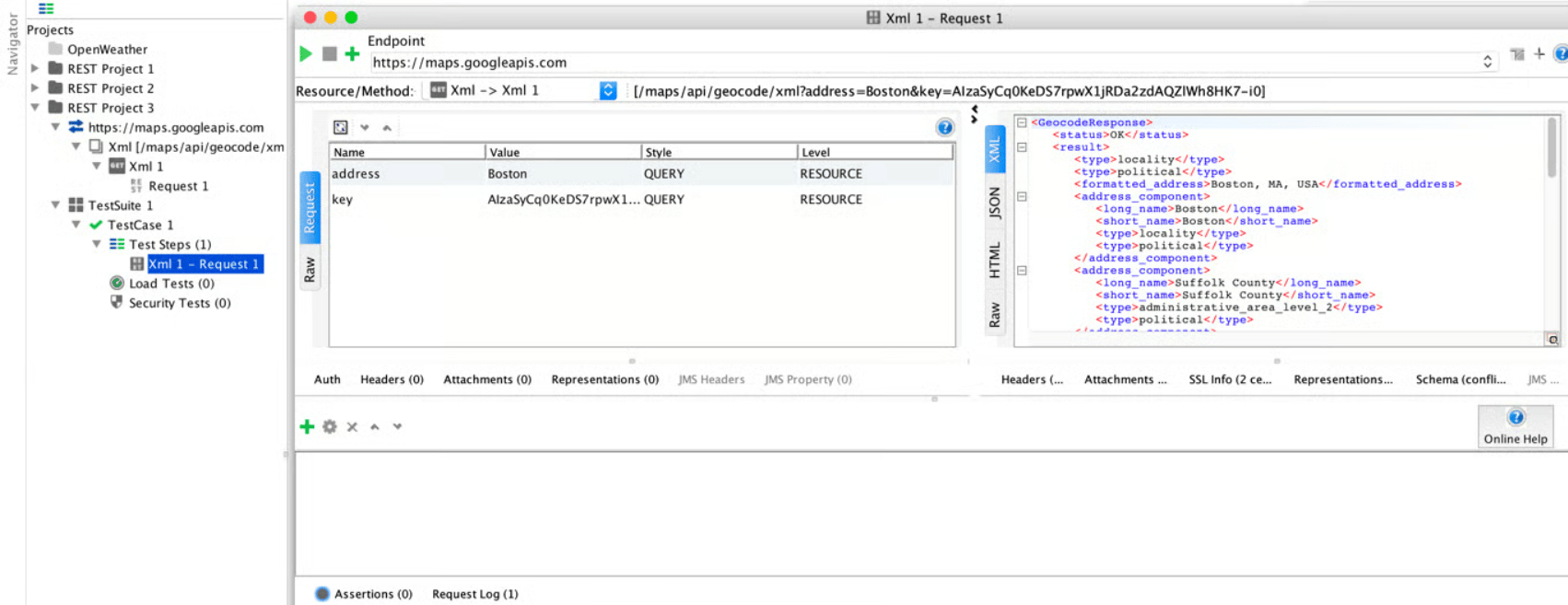
SoapUI is the most robust API pentesting tool for SOAP-based web services and complex multi-protocol environments. Enterprises in finance, telecom, and government still run SOAP, and SoapUI remains the most capable tool for validating those architectures alongside modern APIs.
The commercial version (ReadyAPI) extends this with advanced security scanning for SQL injection, fuzzing, and XSS, plus native Jenkins and Azure DevOps integration for automated CI/CD testing.
G2 Rating: 4.5/5 ⭐ (140 Reviews)
Key Features:
- Native SOAP and WSDL support with security scan profiles
- REST, GraphQL, and JMS protocol testing
- Assertion-based validation for functional and security checks
- Load testing and performance profiling
Pros:
- Strong SOAP support
- Comprehensive protocol coverage
- Mature tooling
Limitations:
- Dated UI
- Limited modern API-first features
- Steeper learning curve
6. GraphQL Tools
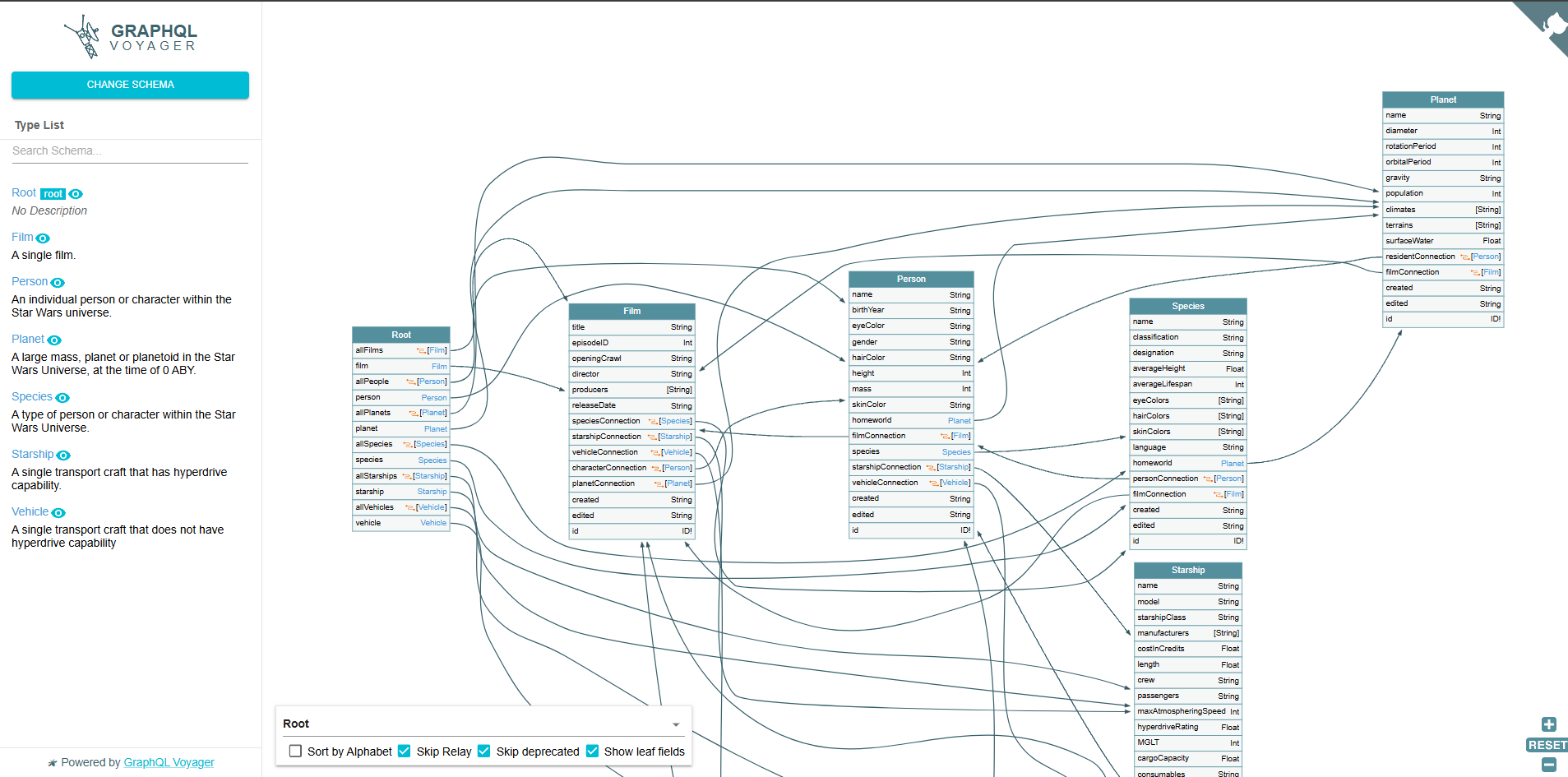
GraphQL APIs use a single endpoint to handle virtually unlimited user-defined queries, which creates a unique attack surface. Introspection abuse, circular query DoS, and batching exploits don’t show up in standard API scanners. Specialized tools such as GraphQL Voyager and InQL are designed specifically to address these attack patterns.
InQL, a popular Burp Suite extension, reconstructs backend schemas even when introspection is disabled and automates batched attacks that bypass traditional rate limiters.
G2 Rating: 3.9/5 ⭐ (11 Reviews)
Key Features:
- Introspection, enumeration, and schema visualization
- Depth/complexity limit bypass testing
- Batching and aliasing attack detection
- Authorization and data exposure checks at the resolver level
Pros:
- Purpose-built for GraphQL attack patterns
- Deep protocol understanding
Limitations:
- Fragmented tooling requires combining multiple tools for complete coverage
Best Automated API Penetration Testing Tools for Businesses
Manual pentesting covers depth. Automated DAST platforms provide continuous coverage. Here are four tools built specifically for DevSecOps teams that need always-on API security validation.
Astra Security: Best blended manual + automated pentest platform for SMBs & Enterprises
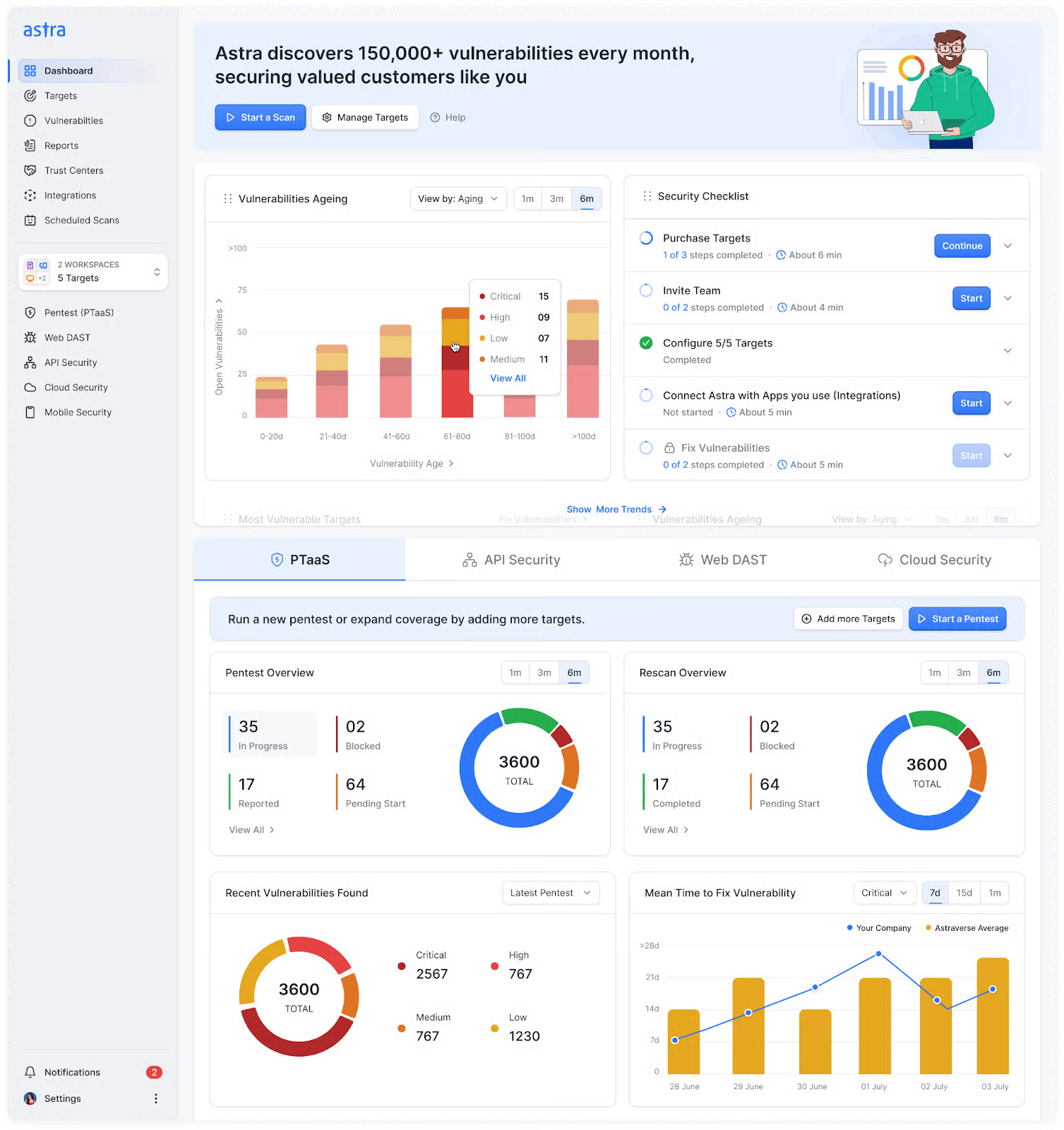
Astra Security offers a managed Penetration Testing as a Service (PTaaS) model that pairs automated scanning with expert manual validation. It’s built for businesses that need more than a vulnerability list, i.e, audit-ready evidence for SOC 2 Type II, ISO 27001, PCI-DSS 4.0, and more.
Expert pentesters run 15,000+ authenticated attack cases targeting BOLA, IDOR, and multi-step workflow abuse. Findings land directly in an interactive dashboard integrated with Jira, Slack, and GitHub for real-time triage.
G2 Rating: 4.6/5 ⭐ (166 Reviews)
Key Features:
- Expert pentesters conducting manual + automated API security testing
- Continuous scanning with remediation tracking and rescan validation
- Dedicated Slack/ticketing integration for real-time triage
- Detection of PII & secret disclosure happening via your APIs
Pros:
- High accuracy with expert validation
- Audit-ready deliverables
- Strong customer support
Limitations:
- Higher price point than DIY tools
- Not self-serve
ZeroThreat.ai: Best AI-Powered Continuous API Security Solutions
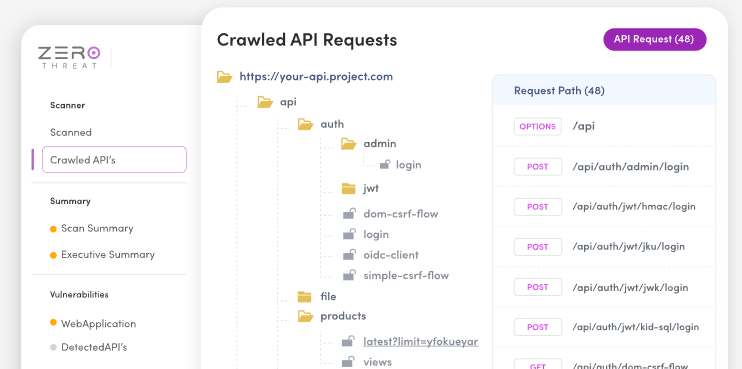
ZeroThreat.ai is an AI-driven API security tool that mimics real-world attacker behavior across REST, GraphQL, and gRPC APIs. It reports a 98.9% accuracy rate using models like GPT-4 Turbo to validate exploitability and cut through false positive noise.
G2 Rating: 4.9/5 ⭐ (10 Reviews)
Key Features:
- CI/CD integration for shift-left API testing
- Compliance reporting for SOC 2, ISO 27001, and GDPR
- Real-time alerting and remediation tracking
Pros:
- Low false positives
- Fast scanning
- Strong automation
Limitations:
- Newer platform
- Less community maturity than established tools
Salt Security: Best for Large, Complex API Ecosystems
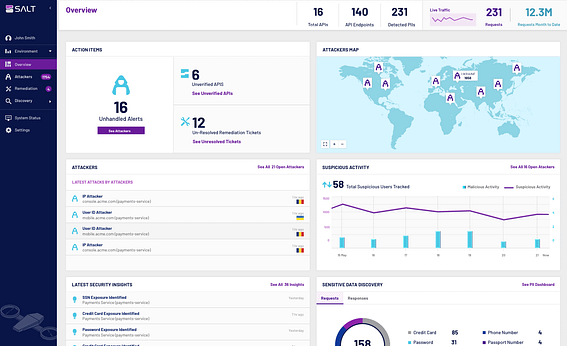
Salt Security is the leading runtime API pentesting tool for enterprises with vast, distributed API ecosystems. Its ML engine establishes a behavioral baseline across billions of API calls, detecting “low and slow” attacks that bypass traditional WAFs.
G2 Rating: 4.7/5 ⭐ (12 Reviews)
Key Features:
- Posture management with risk prioritization
- OWASP API Top 10 testing and business logic flaw detection
- Multi-cloud and hybrid deployment support
Pros:
- Comprehensive coverage
- Strong runtime protection
Limitations:
- Enterprise pricing
- Complex to deploy
42Crunch: Best Design-First, Spec-Driven API Security Testing
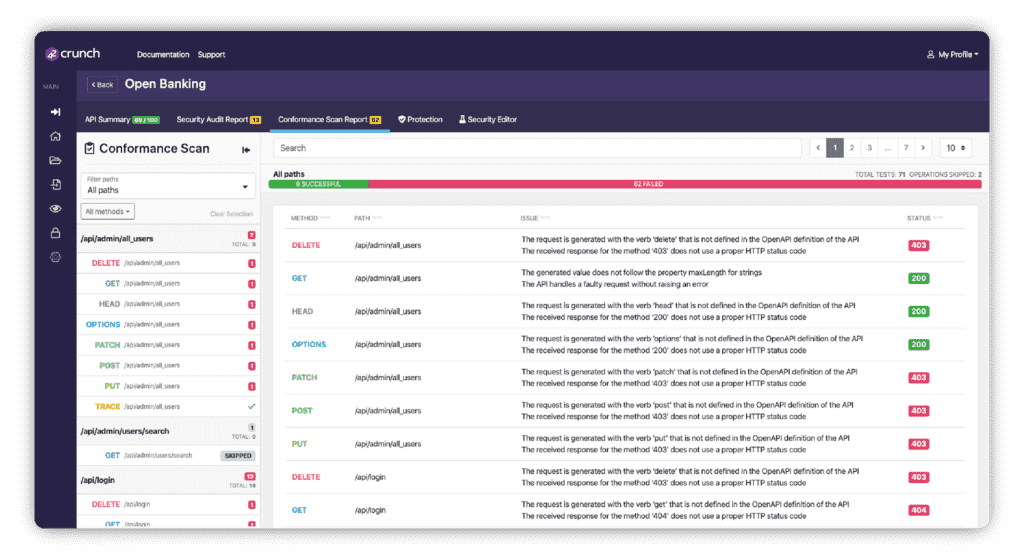
42Crunch is an API pentesting tool that takes a 3-tiered approach i.e, audit, scan, and protect. It starts with 300+ checks on OpenAPI specs, validates the live implementation against the audited contract, and enforces security policies at runtime through a lightweight API firewall.
Key Features:
- API firewall for runtime policy enforcement
- CI/CD integration for pre-deployment validation
- Security score and remediation guidance
Pros:
- Strong shift-left focus
- Prevents issues at the design stage
- Developer-friendly
Limitations:
- Requires OpenAPI specs
- Less effective for undocumented APIs
5 Key Features to Look for in API Security Tools
In 2026, your API security testing tools must have the following key features at any cost:
- OWASP API Top 10 Coverage with Business Logic Testing: Beyond generic OWASP checks, look for tools that detect BOLA, IDOR, mass assignment, and multi-step workflow abuse. These logic flaws bypass basic scanners and drive real-world breaches.
- CI/CD & DevSecOps Integration: Native support for GitHub, GitLab, Jenkins, and Jira ensures security testing fits existing workflows, enabling shift-left validation without friction.
- Low False Positives with Actionable Reporting: Tools should deliver replayable PoCs, clear remediation steps, and compliance-mapped reports that auditors and developers can act on immediately.
- Multi-Protocol API Support: Modern ecosystems run REST, GraphQL, gRPC, and legacy SOAP. Your tools must handle all four plus spec-driven discoveries from OpenAPI, GraphQL schemas, and WSDL.
- Flexible Deployment & Safe Testing Profiles: Whether SaaS, on-prem, or VPC, tools must connect securely to internal APIs while respecting rate limits and SLOs to avoid destabilizing production during scans.

 Expert Opinion
“While testing APIs, running scans with automated scanners specialized in API scanning makes a good base for manual testing with tools like BurpSuite to cover all aspects of a comprehensive pentest.”
Final Thoughts
In times where APIs power more than 70% of web traffic and drive the majority of modern breaches, treating them as an afterthought is no longer viable. The tools reviewed above enable pentesters and enterprises to detect logic flaws, broken auth, and data leaks before attackers exploit them.
Now, here’s your next step. Prioritize API pentesting tools that align with your team’s maturity level. If you are starting out, pair OWASP ZAP or Postman with shift-left spec validation. For production-grade assurance, invest in expert-led pentesting or automated DAST platforms like Astra Security that deliver audit-ready reporting and continuous validation. And lastly, don’t wait for a breach to prove APIs were worth protecting.
FAQs
What are the Best Open-Source API Pentesting Tools?
Popular open-source options include ZAP, Burp Suite Community Edition, and Akto. These tools offer good functionality but may require more technical expertise.
Recommended Reading:
- Astra API Security Solution
- What is API Security?
- API Management Security Best Practices
- What is API Security testing?
- OWASP Top 10 API 2023 Vulnerabilities
- 7 Top API Penetration Testing Tools in 2026
- DAST vs SAST Comparison
- The Ultimate 2026 API Security Checklist
- The Top API Security Risks and How To Mitigate Them
- What is Broken Object Level Authorization (BOLA)?
- Top API Security Vendors List (Updated)
- What is Shift Left Security? (Guide)
- Mobile App API Security: A Complete Guide
- What are Shadow APIs? (Explained)
- Top 5 API Security Challenges and How to Overcome Them
- How to Build a Solid API Security Strategy for 2026?
- What are Zombie APIs (Complete Guide)
- Top 7 API Security Trends to Know in 2026
- Guide to API Security Maturity Model
- How to Protect Your APIs for Healthcare Industry?
- API Security Pricing: Complete Cost Guide for 2026
- Why is Fintech API Security Important in 2026
- How to Secure Your APIs Against These Vectors?
- What is the Difference Between API Security and Application Security?
- What is API Security Management?