TLDR;
- Security teams face growing compliance demands and expanding attack surfaces, while pentesting budgets and resources remain limited.
- Traditional scanners miss complex vulnerabilities involving business logic, access control, and workflow abuse.
- Autonomous pentesting extends compliance mapping to these harder-to-test areas while enabling continuous security testing.
- It reduces repetitive manual pentesting efforts, freeing human testers to focus on complex attack chains and deeper security assessments.
- The future of pentesting lies in combining automated scanners, autonomous pentesting, and targeted manual engagements to achieve continuous security and compliance coverage.
Every security leader I speak to is being asked to do two jobs on one budget: stay compliant with a growing pile of frameworks, and stay ahead of attackers who ship exploits as fast as developers ship code. In my experience, most teams try to cover both with the same three or four pentesting programs:
- Automated scanners (DAST and SAST) in CI
- Manual pentesting
- A compliance-focused pentest for the SOC 2 or PCI letter
- A red team exercise once a year
The layers themselves are sound, and I would recommend them to anyone starting fresh. What I have watched happen over the last two years is that the pressure on each layer has climbed faster than the budgets to run them, and once a layer gets under-resourced, it stops producing results.
The pressure is coming from every direction at once
I count five things squeezing this stack at the same time:
- The economics: running manual pentesting at a cadence that matches modern shipping velocity is out of reach for most teams on current budgets.
- LLMs have dropped the attacker entry barrier through the floor.
- API sprawl has made business logic the primary attack surface. The median enterprise now runs over 5,900 APIs, with roughly a third sitting as unmanaged shadow or zombie endpoints (Akamai, Postman).
- Business-logic vulnerabilities cost more to find than CVEs, because they need context about the application rather than a signature match. Historically, only a human tester could reliably surface them.
- Regulators are tightening fast on privacy, which keeps the compliance tax climbing alongside the security tax.
Put together, every team I talk to is being asked to do more pentesting, more often, against a larger attack surface, on the same budget, while the compliance bar gets higher every year. Something has to give, and the thing I see most teams let slip is the frequency of real adversarial testing.
The annual manual pentest becomes the only time the application actually gets exercised the way an attacker would exercise it, which means eleven months of every year run on scanner coverage alone.
So how do we solve it?
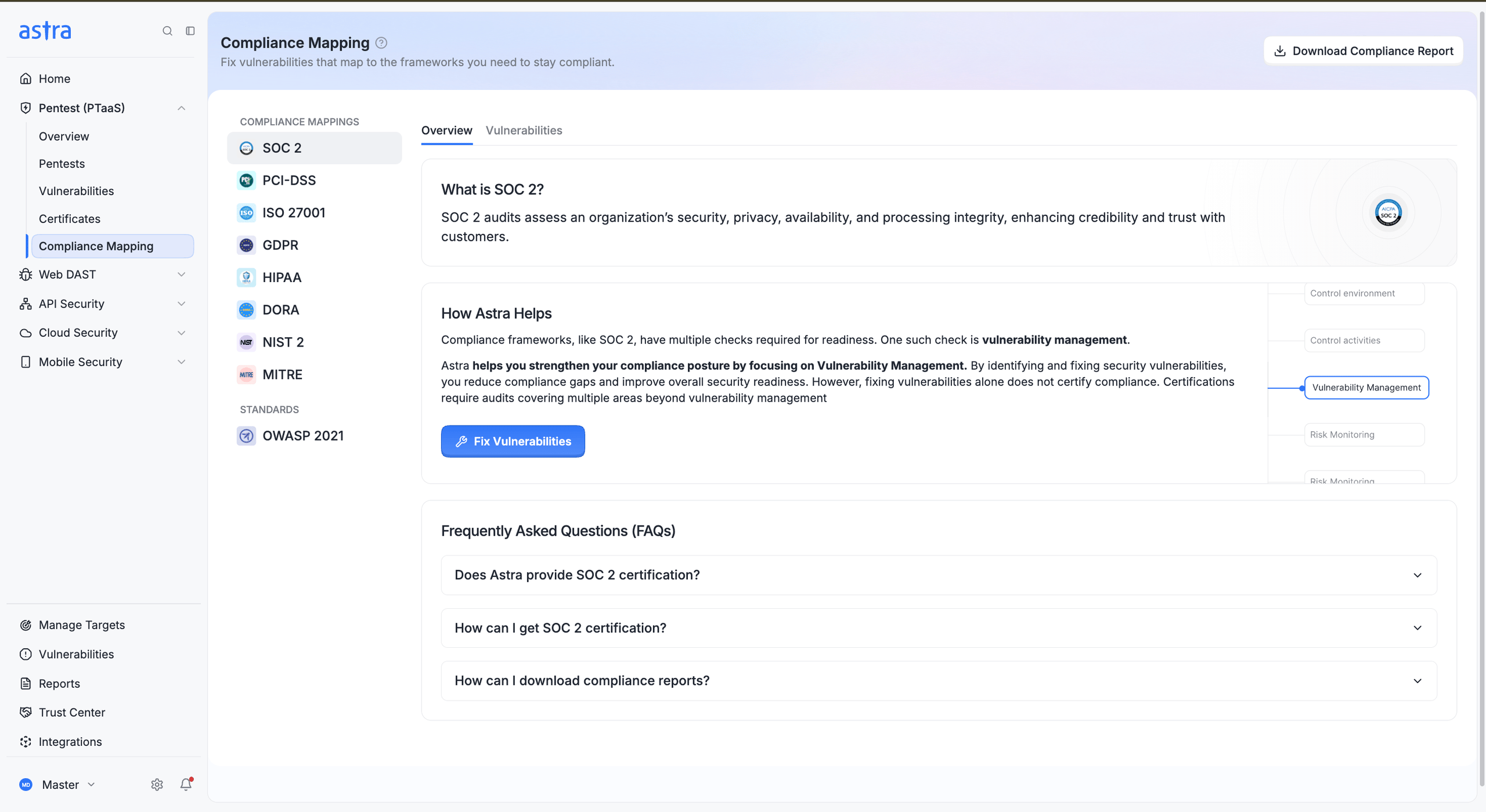
We solve it through Autonomous pentesting paired with compliance mapping. Compliance mapping is nothing new. Every mature DAST product has shipped it for years, including ours, and if you are running a modern scanner, you already know what it feels like to get a vulnerability tagged with the SOC 2 or PCI control it maps to.
What is new is the scope that lever can cover, and what sits on top of it.
For a decade, compliance mapping only ever applied to the vulnerability classes a scanner could actually find: CVEs, misconfigurations, missing headers, and the easier end of OWASP Top 10.
The hard half of every compliance framework (access control, authorisation boundaries, workflow integrity, logging under abuse conditions, privilege separation) sat outside what any scanner could evidence, so the compliance mapping never covered it. Those controls either got a manual pentest attached to them once a year, or got evidenced by policy documentation and an auditor’s goodwill.
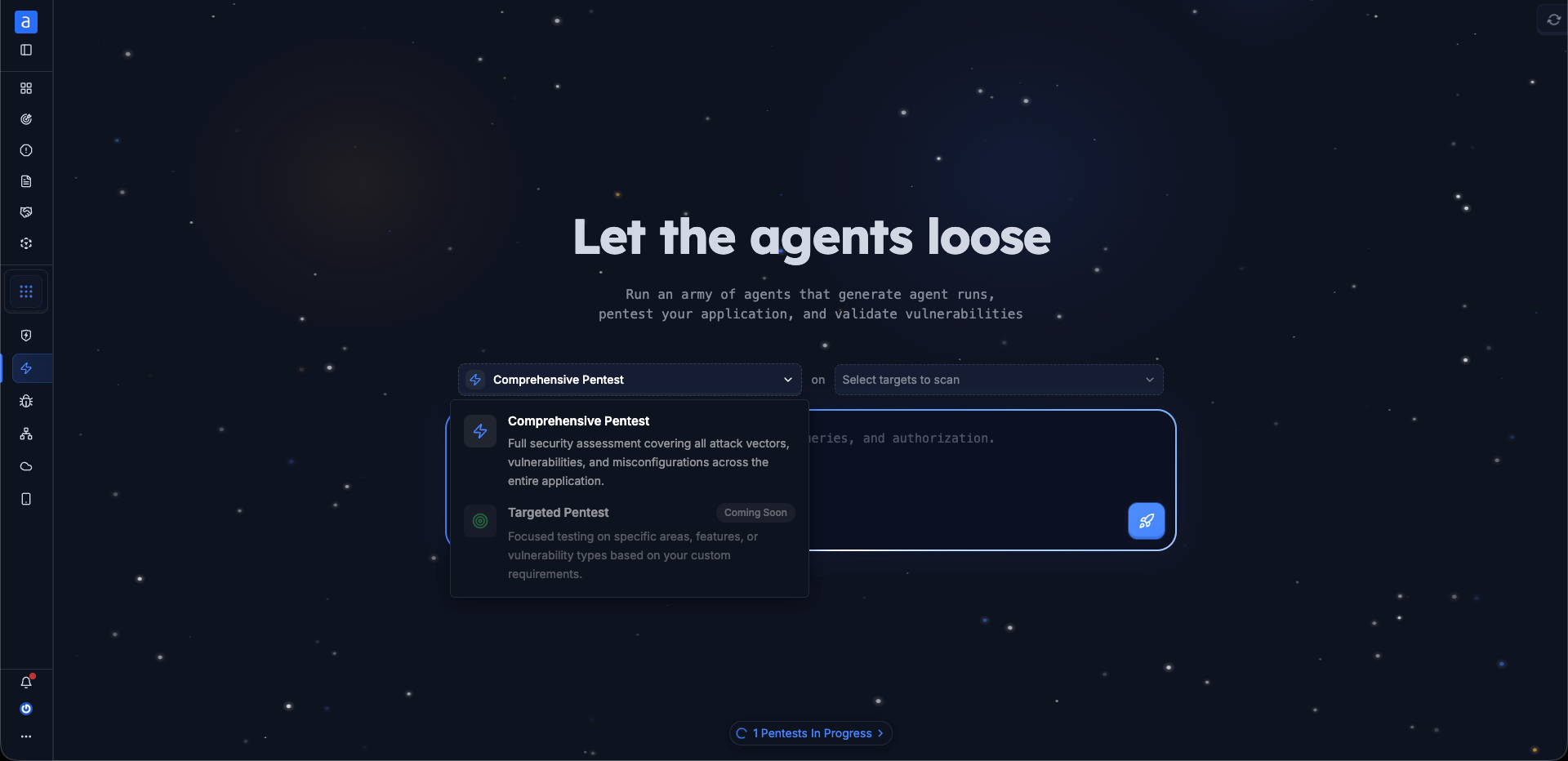
Autonomous pentesting extends compliance mapping into that second half, and in doing so takes a significant chunk of work off the manual pentest. The agents behave like a human tester, which means they can exercise the controls scanners could never reach. Because every finding still carries its control-ID tag at the point of discovery, the evidence lands in the same shape auditors already accept from the DAST side.
One continuous pipeline now covers both the vulnerability classes a scanner could evidence and the ones only a human tester could reach, with the compliance mapping doing the same job for both.
Equally important, the pentesting itself happens closer to how a manual pentester would actually run it, and far more often than any manual engagement could.
A release on Tuesday gets exercised against the same classes of attack a human tester would run (IDOR, BOLA, broken access control, authentication bypass, workflow abuse, chained privilege escalation) between Tuesday and Wednesday, instead of waiting six months for the next scheduled engagement.
The humans on your senior pentest team get freed up for the novel chained attacks and the deep source review that genuinely need a human in the loop, instead of spending their first week on every engagement reconfirming the same baseline findings.
At Astra, we support compliance mapping across the frameworks our customers run against: SOC 2, ISO 27001, HIPAA, PCI DSS, GDPR, and more.
Where I Think the Stack Lands
Pulling the threads together, I do not think the stack that worked for the last decade goes away. It gets reorganised around which layer is best suited for which job, and which layer each job can now be moved into.
- Scanners stay in CI and keep the CVE baseline cheap.
- Autonomous pentesting takes over the repeatable half of what manual pentesting used to carry alone. It drops the cost, pushes the cadence from quarterly to continuous, frees security analysts for the higher-value problems, and solves the compliance piece in the same run.
- Manual pentesting stops being the place where every finding has to come from, and becomes the place where the hardest findings come from.
- Compliance-focused pentesting still has a seat for teams in regulated verticals like BFSI, where auditors expect a named, scoped engagement for the letter.
My call is that in two years, every security program worth its budget will run autonomous pentesting as its default cadence, with manual engagements reserved for the scenarios that genuinely need a human in the loop. .