Key Takeaways
- With AI now a part of a threat-actor’s arsenal, annual vulnerability scanning or penetration testing is no longer sufficient to secure your cloud. You need continuous, shift-left, and AI-infused VAPT that generates actionable insights for you to act on
- The top 7 cloud security companies discussed here are all best in the business with unique capabilities that range from AI-blended penetration testing and DAST capabilities to multi-engine scanning that covers AI/LLMs, APIs, IoTs, Web and mobile apps, etc. All you need to see is which ones resonate with your workflow and tech stacks to extract the best value out of them
- A few factors you can look for in your desired cloud security service provider include their VAPT mechanisms, pricing models, compliance and reporting guidance, time to implementation, coverage, UI/UX, previous experience, and clients, etc.
- Companies help you secure your cloud infrastructure from all dimensions, while a cloud security tool offers a certain set of services that form a part of their bigger offering. So make sure you choose wisely
With AI roaring and clasping its way into the tech stacks of both threat actors and defenders, ushering a new era in cloud security, Gartner projects global information security spending to breach the $240 billion mark in 2026, with cloud security growing at a 17.8% CAGR (Fortune Business Insights) from 2026 to 2030, placing it amongst the fastest-growing security segments.
You, thus, cannot limit your cloud security to just firewalls or endpoint security. You need a cloud security company that performs hypothesis-based penetration testing blended with AI while retaining human expertise and oversight, and vulnerability scanning that not only identifies loopholes but also helps you fix them and build your compliance and shift-left security posture along the way.
That is why the seven companies profiled below specialize in cloud pentesting services, vulnerability assessment (VAPT), and manual security testing, and are not a list of firewall vendors or SIEM platforms. Each company is evaluated on scanner capabilities, compliance support, remediation guidance, pricing, and real-world fit. So the TAT for your cloud security service provider is minimized.
Top 7 Cloud Security Companies of All Time
- Astra Security
- Intruder
- Nessus
- Microsoft Defender for Cloud
- BreachLock
- Rapid7
- CheckPoint CloudGuard CNAPP
Top 3 Cloud Security Companies Comparison
| Feature | Astra Security | Nessus | Intruder |
|---|---|---|---|
| Best For | SMBs & mid-market needing hybrid pentesting + compliance | Large enterprises needing auditor-approved scanning at scale | Lean teams wanting automated continuous scanning |
| Testing Approach | Hybrid (automated + manual pentesting) | Automated scanning only (plugin-based) | Automated only (OpenVAS + ZAP engines) |
| Scanner Capabilities | Web, Mobile, API, Cloud Infra, Networks | Networks, Web (basic), API (basic), Cloud Config, IaC, OT | Infrastructure, Web Apps, APIs |
| Number of Tests | 400+ offensive security checks | 500+ vulnerability plugins | 140,000+ checks |
| Manual Pentesting | ✅ Yes (OWASP/PTES-certified experts) | ❌ No (automated only) | ❌ No |
| Scan Behind Logins | ✅ Yes (Chrome extension) | ✅ Yes (credentialed scanning) | ✅ Yes |
| False Positive Handling | Zero false positives (expert-vetted scans) | Low false positives (plugin-based, some noise) | Moderate (open-source engine limitations) |
| Compliance Support | PCI-DSS, SOC 2, ISO 27001, HIPAA, GDPR | PCI-DSS, SOC 2, ISO 27001, HIPAA, GDPR, CIS | SOC 2, ISO 27001, HIPAA, Cyber Essentials |
| CI/CD Integration | GitHub, GitLab, Jenkins, Bitbucket + pipeline gates | Jira, ServiceNow, Slack, Teams, SIEMs | Jira, Slack, GitHub, MS Teams |
| Remediation Support | Code-level fixes, video PoCs, 24/7 AI bot + expert chat | Remediation guidance (plugin data), SIEM/ticketing integration | Automated prioritization + basic guidance |
| Pentest Certificate | ✅ Yes (publicly verifiable) | ❌ No (audit reports, not pentest certificates) | ❌ No |
| Pricing | From $999/year (Scanner); $5,999/year (Pentest) | Professional: $4,790/year; Expert: $6,790/year | From ~$101/month (Essential); ~$163/month (Pro) |
| Free Trial | $7 trial | Free tier (Essentials, 20 IPs); no trial for Pro/Expert | 14-day free trial |
| G2 Rating | 4.6/5 (159 reviews) | 4.4/5 | 4.8/5 |
| Ideal Company Size | Startups, SMBs, Mid-market | Mid-market to Enterprise | SMBs, Lean IT Teams |
The bottom line: If you need the most well-rounded security company offering both automated scanning and manual pentesting at competitive pricing, Astra Security delivers the best value. Tenable Nessus is the go-to for enterprises that prioritize auditor-approved vulnerability scanning at scale and can operate with plugin-based detection.
Intruder wins for teams that want set-it-and-forget-it automated scanning without the complexity of full pentesting.
Leverage Astra Security’s modern, agentless, multi-cloud, cloud security services today.

Best Cloud Security Companies (Expert’s Opinion)
1. Astra Security
G2 rating: 4.6/5 (169 reviews)
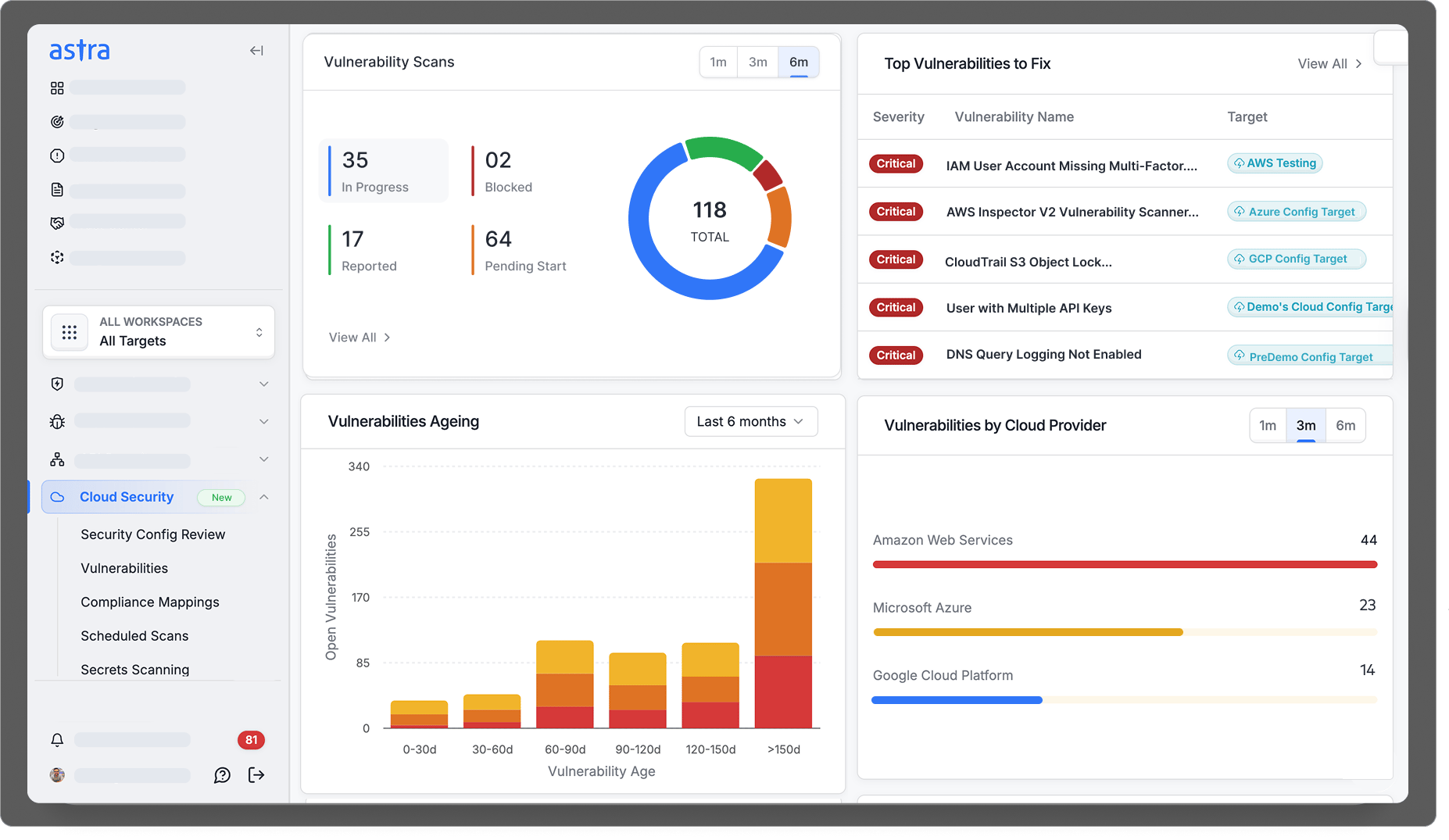
Astra Security, founded in 2018, is a CREST-accredited PTaaS and Continuous Threat Exposure Management platform covering API, AI, Cloud security, IoT, Mobile, and Web App.
Co-founded by Shikhil Sharma and Ananda Krishna (former security researchers who helped brands like Microsoft, Adobe, and AT&T), Astra has uncovered over 2 million vulnerabilities across 1,000+ businesses in 70+ countries, saving customers an estimated $69 million in potential losses. The platform detects 1000s of vulnerabilities daily across web apps, mobile apps, APIs, cloud infrastructure (AWS/Azure/GCP), networks, and blockchain.
As a cloud security company, we cover your entire cloud tech stack with our AI-infused PTaaS platform, and we’ve recently launched our cloud vulnerability scanner that runs on our in-house offensive security engine.
Key features:
- Generates your first Cloud risk report in under 10 minutes
- Astra’s automated scanner runs 400+ offensive security checks to uncover security misconfigurations, privilege gaps, and exposed services
- Hybrid approach: automated scanning paired with manual penetration testing services for cloud infra by OWASP/PTES-certified experts.
- The platform supports scanning behind logins via a Chrome extension
- Continuous visibility into drift, insecure defaults, and mismanaged identities with credential-aware scans using verified tokens and programmatic access
- Supports multi-region cloud environments for broad, scalable coverage
- Compliance-mapped checks for SOC2, ISO 27001, PCI-DSS, and more
- The AI-powered “Astra-naut” bot delivers 24/7 remediation guidance with code snippets.
- Upon successful testing, clients receive a publicly verifiable VAPT certificate
Pricing:
- Scanner plan starts at $99/month ($999/year) for automated scanning with 400+ tests for upto 250 resources per account
- The Pentest plan at $5,999/year adds full manual penetration testing, cloud security review, compliance reporting, the pentest certificate, and two retesting rounds.
- The Pentest Plus plan at $9,999/year covers multiple targets with a dedicated Customer Success Manager, Slack Connect support, and custom SLAs. A $7 trial cloud scan trial for a week is also available.
Best for:
- SMBs and mid-market companies needing enterprise-grade pentesting without a full security team
- SaaS companies pursuing SOC 2, HIPAA, PCI-DSS, and ISO 27001 (multiple local and global) certifications
Pros:
- Comprehensive hybrid testing combining 8,000+ automated tests with expert manual pentesting in one platform — rare in the market
- Exceptional CX and consistently rated highest across G2, Capterra, and Gartner reviews
- Strong compliance focus with built-in reporting for five major frameworks and integrations with Vanta/Drata/Secureframe
- Publicly verifiable pentest certificate and Trust Center for transparent security posture sharing
- Competitive pricing for hybrid pentesting that is significantly lower than traditional consulting firms charging 10x or more
- Seamless CI/CD integration with pipeline gates that stop builds on critical vulnerabilities
Limitations:
- Only a 1-week $7 trial is available
Intruder
G2 ratings: 4.8/5 (204 reviews)
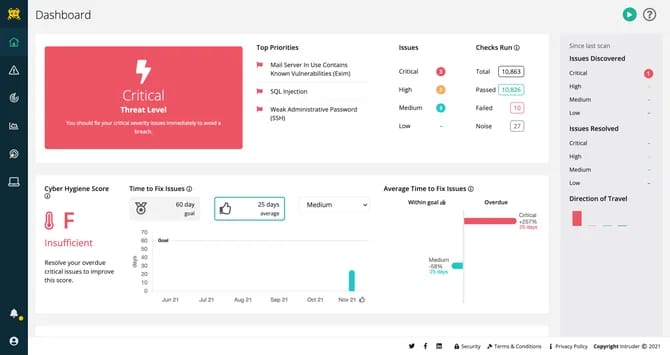
Founded in London in 2015 with the aim of solving the information overload crisis in vulnerability management, Intruder, a cloud security company, offers a cloud-based exposure management platform that currently serves north of 3,000+ companies. It unifies vulnerability scanning, attack surface management (ASM), and cloud security posture management (CSPM) in a clean, lightweight interface designed for teams without dedicated security staff.
Key features:
- Not just find but prioritize, track, and generate alerts under a single agentless umbrella platform
- Multi-engine scanning using OpenVAS and ZAP engines covering 140,000+ checks across infrastructure, web apps, and APIs.
- Their scanner finds and removes any systems that no longer serve any purpose and gulp up company resources
- Cloud connectors for AWS, Azure, GCP, Cloudflare, etc., run daily configuration checks with automatic asset discovery
- Custom rules allow you to scan only the assets you need for vulnerabilities.
- The emerging threat detection feature proactively scans for new CVEs as they’re published.
- Compliance reporting maps to SOC 2, ISO 27001, HIPAA, and Cyber Essentials.
Pricing: Pro tier at ~$163–$180/month includes internal scanning and integrations; Enterprise tier averages ~$29,886/year with full ASM.
Best for:
- SMBs and lean IT teams looking for a cloud security company offering light-weight, automated, continuous vulnerability monitoring
- Excellent for cloud-heavy environments needing CSPM
Pros:
- Real-time, accurate scanning combined with intelligent risk prioritization
- Emerging threat scans check your systems for new vulnerabilities released, highlighting weaknesses within hours
Limitations:
- Relies on open-source scanning engines (ZAP/OpenVAS) that can produce false positives
- Lacks depth for advanced manual pentesting
- The essential plan is highly restrictive (2 users, 1 scheduled scan/month)
Nessus
G2 rating: 4.5/5 (302 reviews)
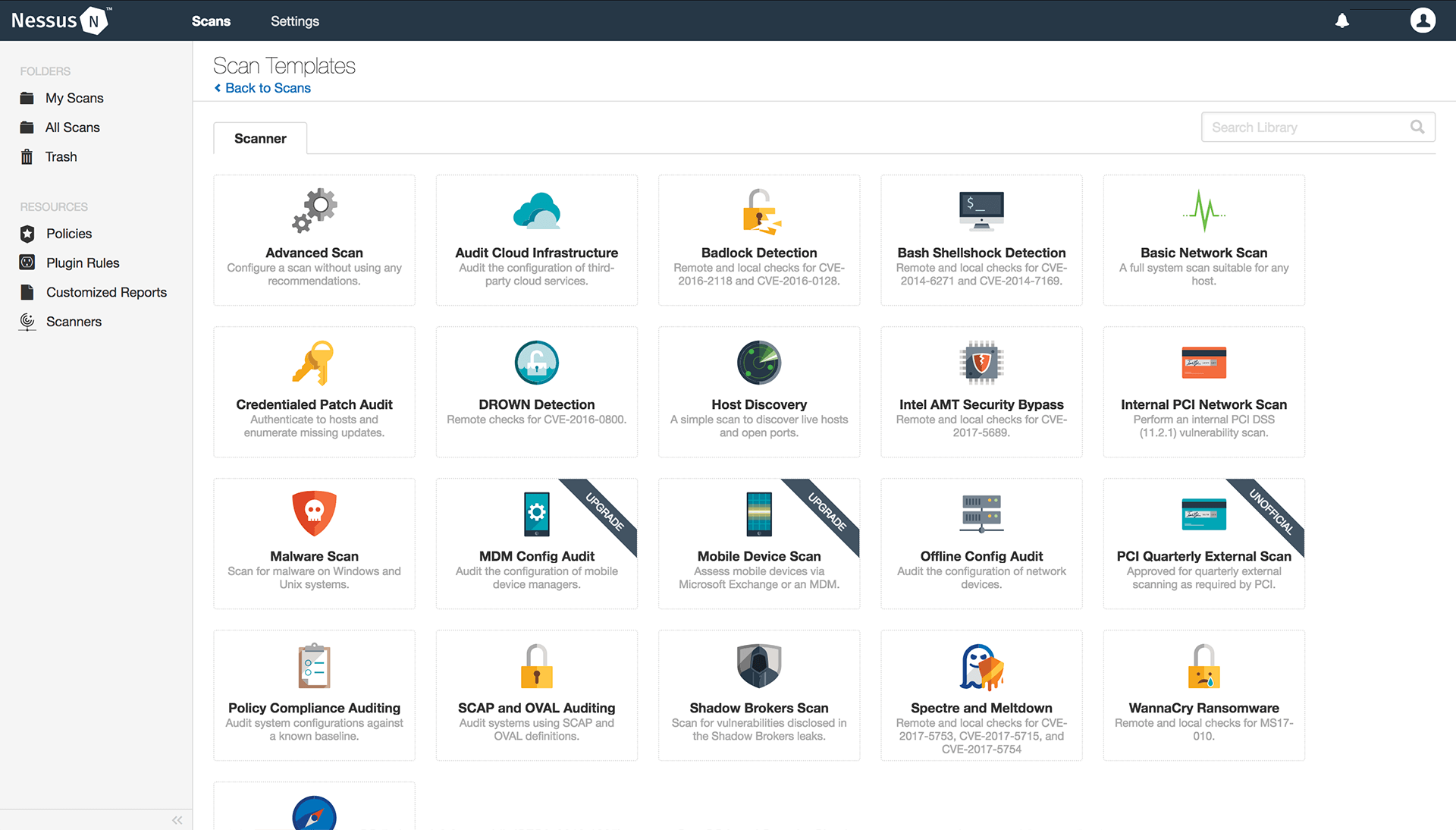
As a vulnerability management company, Tenable is known for its enterprise-scale scanning capabilities. By building Nessus as an automated, signature-based scanner backed by decades of vulnerability intelligence, they enable comprehensive vulnerability discovery, compliance reporting, and rapid remediation across IT, cloud, and OT environments.
Moreover, with worldwide customers (including some of the Fortune 500), their approach to cloud security is to combine automated scanning with purpose-built cloud security modules (covering configuration management, identity risk, infrastructure-as-code, and continuous workload protection).
It serves as the foundation for vulnerability detection, while Tenable Cloud Security handles deeper, agent-based cloud posture and runtime visibility.
Key features:
- Unlimited vulnerability, configuration, and compliance scans with 500+ prebuilt policies across networks, hosts, and cloud environments
- Coverage spans traditional networks, web applications (via plugin checks), APIs, cloud infrastructure, IaC, and OT systems
- Plugin-based detection model with industry-leading accuracy and low false-positive rates Nessus
- Expert adds external attack surface discovery (up to 5 domains per quarter) and web application scanning (up to 5 FQDNs)
- Integrates with Jira, ServiceNow, Slack, MS Teams, and SIEMs for seamless remediation workflows
Pricing:
- Professional tier at $4,790/year per scanner (unlimited IP scanning)
- Expert tier at $6,790/year, adding external surface and web-app capabilities
- Essentials (free) covers up to 20 IPs
- Advanced Support at +$400/year for 24×365 phone, email, and chat access
- No free trial available for paid tiers
Best for:
- Mid-market to large enterprises needing auditor-approved vulnerability scanning with minimal setup
- Compliance-driven organizations (PCI-DSS, SOC 2, HIPAA, ISO 27001)
- Teams standardizing on a single, trusted scanner before investing in human-led pentesting or specialized cloud tools
Pros:
- Nessus reports are accepted by auditors without question; 25+ years of vulnerability intelligence backing
- Point-in-time scanning completed quickly, providing clear vulnerability inventory
Limitations:
- Point-in-time scanning only; doesn’t provide continuous monitoring or real-time visibility into emerging exposures
- Static PDF reporting by default (though SIEM integrations and modern Tenable platforms like Tenable.io offer dashboards)
- Cloud security depth requires the Tenable Cloud Security product; Nessus’s cloud checks are complementary, not comprehensive
Microsoft Defender for Cloud
G2 ratings: 4.4/5 (303 reviews)
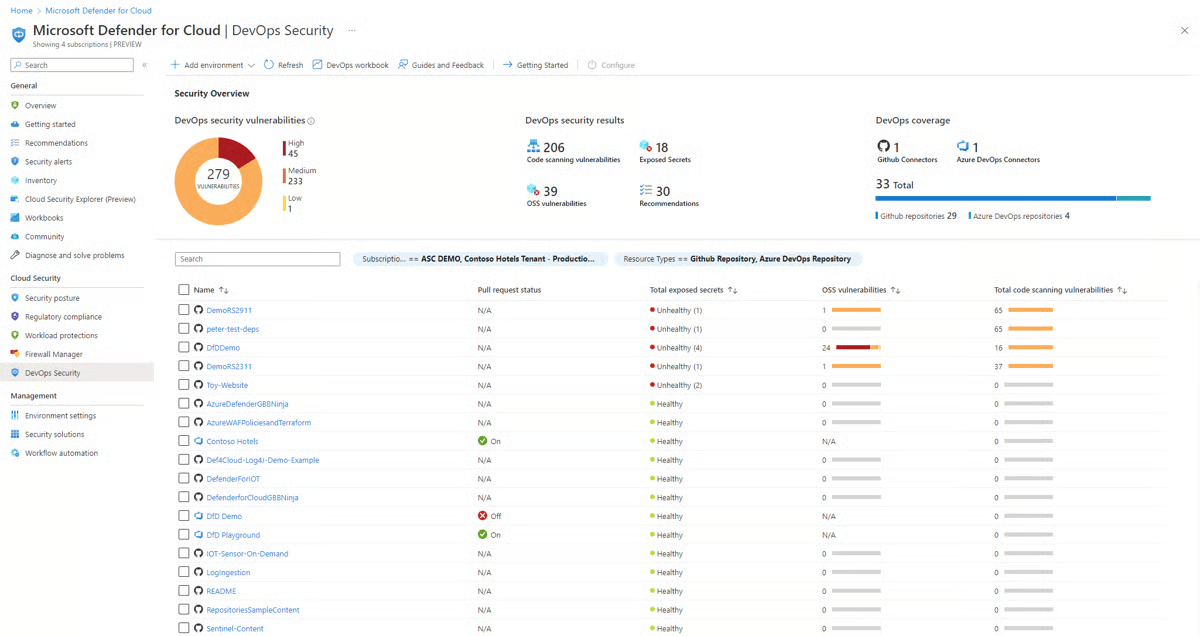
Microsoft Defender for Cloud’s cloud-native application protection platform (CNAPP) provides security posture management, DevOps security, and workload protection across Azure, AWS, and GCP. Named a Leader in the IDC MarketScape for CNAPP 2025 and recognized by Frost & Sullivan for Cloud Workload Protection, it’s a natural choice for organizations that are a part of the Microsoft ecosystem.
Key Features:
- CSPM: Continuous security assessments, Secure Score, and Microsoft cloud security benchmark — free tier included
- Multicloud Support: Native coverage for Azure, AWS, and GCP from a single dashboard
- Workload Protection: VMs, databases, storage, containers, Kubernetes, serverless, and AI workloads
- DevSecOps: Infrastructure-as-Code (IaC) security scanning and DevOps posture visibility
- Compliance: Built-in regulatory compliance dashboard mapping to PCI-DSS, HIPAA, SOC 2, ISO 27001, and NIST SP 800-53
Pricing:
- Pay-as-you-go based on protected resources with a foundational CSPM free
- Enhanced plans vary by workload: ~$15/server/month for Defender for Servers, ~$15/DB/month for databases
- 30-day free trial available
Best Suited For:
- Enterprises with Azure-heavy or Microsoft-centric environments needing a native CNAPP without 3rd party interventions
Pros:
- Deeply integrated with the Azure ecosystem, including Entra ID, Purview, and Sentinel
- Free foundational CSPM tier provides basic posture management at no cost
- Single glass pane multicloud visibility across Azure, AWS, and GCP
Limitations:
- Pricing can escalate quickly and is complex to predict across large environments
- Steep learning curve with multiple overlapping dashboards and UI layers
- Users report high false-positive rates and alert fatigue, which demands significant tuning
Need deeper security testing beyond posture management? Astra Security combines automated scanning with manual pentesting for comprehensive protection.
BreachLock
G2 rating: 4.6/5 (37 reviews)
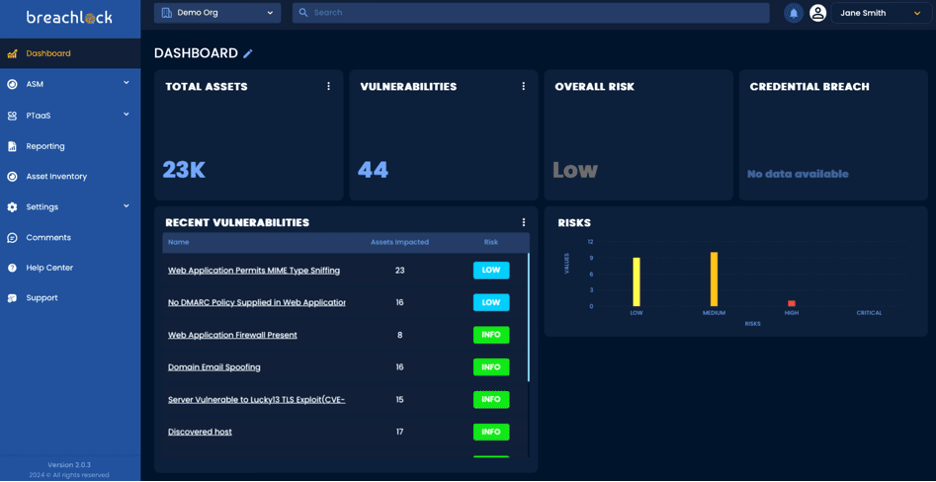
New York-based BreachLock (founded 2018/2019) is the world’s first full-stack PTaaS platform that combines AI automation with 100% in-house, CREST-certified pentesters (OSCP, OSCE, CEH, CISA).
They currently serve over 1,000 clients worldwide, and the company launched its Unified Security Testing Platform in January 2025. While they’re not a core cloud security service provider, they offer RTaaS, PTaaS, CTEM, and ASM services that cover your cloud infrastructures quite well.
Key features:
- Hybrid AI + human testing covers web apps, APIs, networks (internal/external), cloud infrastructure, and mobile
- Continuous Attack Surface Management discovers exposed assets, including Shadow IT and Dark Web exposures
- Compliance reports map to PCI-DSS, HIPAA, SOC 2, ISO 27001, GDPR, and CCPA with evidence-based PoC documentation
- CI/CD integration supports pipeline security gates
Pricing:
- Starting at approximately $2,500 per engagement with fixed-price, predictable pricing (not credit-based)
Best for:
- Mid-sized to large enterprises needing continuous security testing across the full stack
- Organizations in finance, healthcare, and manufacturing with strict compliance requirements
Pros:
- Unified platform eliminates tool sprawl across PTaaS, ASM, red teaming, and CTEM
- 100% in-house certified pentesters ensure consistency
- Detailed reporting with evidence-based PoC consistently praised by users
Limitations:
- The Platform portal has a learning curve for scheduling workflows
- Pricing is not fully transparent on the website
- Relatively young company with a smaller market presence than established competitors
Rapid7
G2 rating: 4.3/5 (255 reviews)
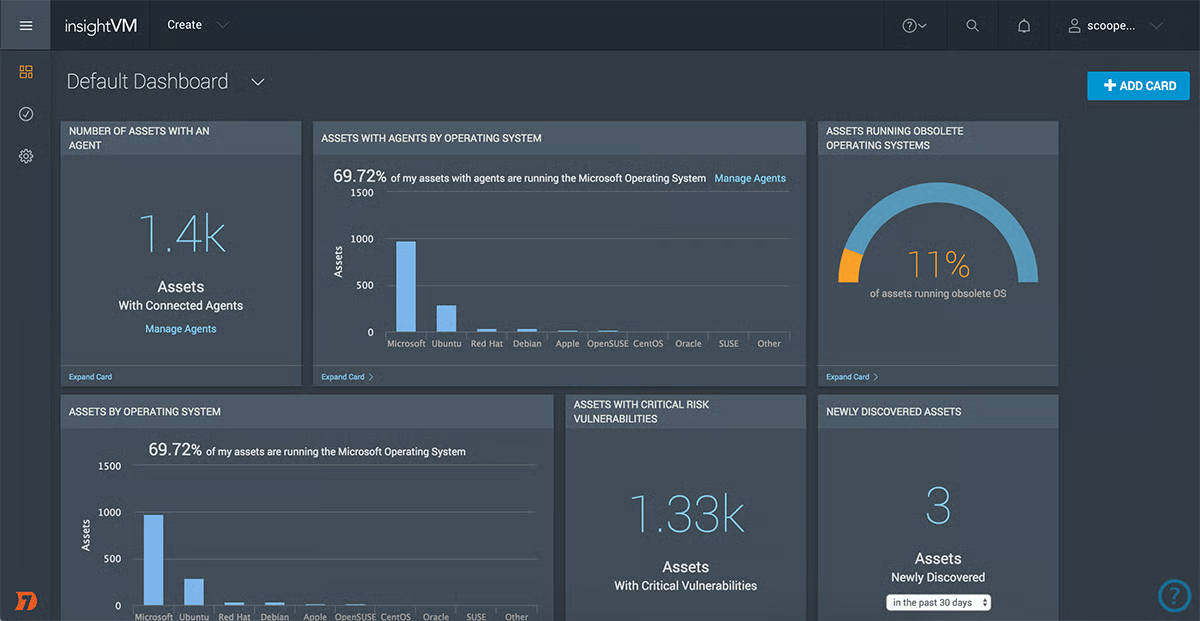
Boston-based Rapid7 (NASDAQ: RPD, founded 2000) is a publicly traded security company that currently generates ~$860M in annual revenue and serves over 11,000 customers. Its platform spans vulnerability management (InsightVM), application security (InsightAppSec), cloud security (InsightCloudSec), and penetration testing via Metasploit, which is amongst the industry’s most widely used pentesting framework (1,500+ exploits and 3,300+ modules)
Key Features:
- Scanner Capabilities: Cloud, virtual, remote, and containerized infrastructure with agent and agentless scanning
- Risk Prioritization: Proprietary Active Risk scoring integrating real-world threat intelligence beyond CVSS
- Emergent Threat Response: Proactively flags priority CVEs
- Integrations: 500+ native connectors, including Jira, ServiceNow, and major CI/CD tools
Pricing:
- InsightVM starts at ~$1.93/asset/month for 500 assets (~$11,000–$15,000/year); InsightAppSec at $175/app/month
Best Suited For:
- Mid-to-large enterprises with complex hybrid IT environments managing 100s of assets across multiple cloud providers
Pros:
- Broadest security platform combining VM, SIEM/XDR, AppSec, cloud security, and Metasploit under one roof
- Industry-leading threat intelligence with Active Risk scoring
- Extensive integration ecosystem with 500+ connectors
Limitations:
- Enterprise deployments easily exceed $100K+/year with a minimum 512-asset commitments
- Steep learning curve with significant administrative overhead
- Large-scale scans can cause performance slowdowns and high memory consumption
Check Point CloudGuard CNAPP
G2 rating: 4.5/5 (177 reviews)
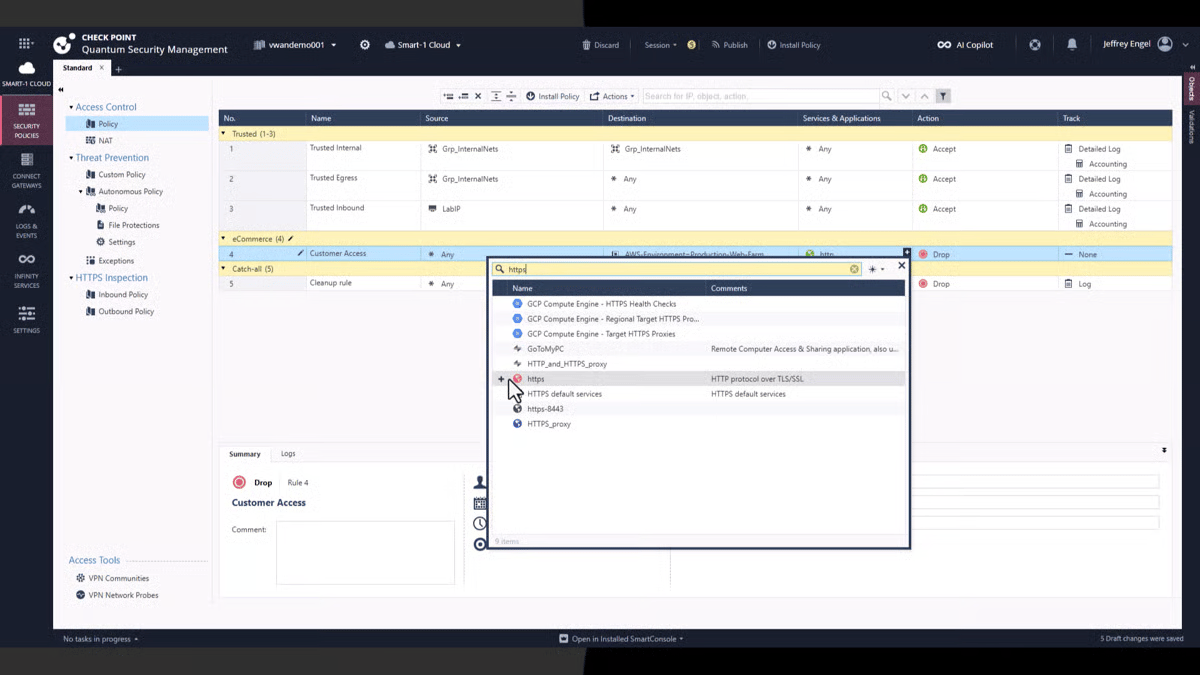
Check Point CloudGuard, by Israel-based Check Point Software Technologies (NASDAQ: CHKP), is a prevention-first CNAPP that packs cloud security posture management (CSPM), cloud workload protection (CWPP), code security, and cloud detection and response all into a single platform. With 52 security engines and a consumption-based pricing model, this cloud security service provider protects your workloads across AWS, Azure, GCP, and Oracle Cloud.
Key Features:
- CNAPP Modules: CSPM, CWPP, CIEM (entitlement management), WAF, code security, and CDR… all unified
- Threat Prevention: Industry-leading malware catch rate (verified by Miercom and CyberRatings, 2025)
- Code Security: Scans IaC templates (Terraform, CloudFormation) and CI/CD pipelines for secrets and misconfigurations
- Compliance: Out-of-the-box rulesets for CIS benchmarks, PCI-DSS, HIPAA, SOC 2, GDPR, and NIST
- Auto-Remediation: One-click remediation for posture management findings
Pricing:
- Consumption-based with no hidden fees or year-two price hikes
- Available on AWS/Azure Marketplace and through channel partners
- Custom quotes required. 30-day free trial available
Best Suited For:
- Large enterprises that are managing multicloud deployments need a prevention-first CNAPP that offers deep network security, WAF, and workload protection capabilities.
Pros:
- Comprehensive prevention-first approach spanning code to cloud across the full application lifecycle
- Unified platform with 52 engines eliminates the need for multiple point solutions
- Strong multicloud coverage with native integrations for AWS, Azure, GCP, and Oracle
Limitations:
- Initial setup and configuration are complex, especially for teams new to cloud security
- Pricing can escalate for large-scale deployments and requires vendor consultation
- Users report documentation gaps and a steep learning curve across modules
How to Choose the Right Cloud Security Provider?
To find a cloud security company that suits your business and its burgeoning needs, you need to evaluate more than just their features and price lists. Below, we present 7 succinct factors that help you with the same:
Define Your Requirements First
Before getting lost in the jargon, remember these three essentials by heart:
- Why do you need the security test?
- What’s your budget and timeline?
- Are there specific compliance certifications you need?
This gives you a broad outline of your ideal cloud security service provider and sets clear non-negotiables.
Prioritize Hybrid Testing (Automated + Manual)
The best companies combine automated vulnerability scanning with manual penetration testing in a developer-friendly UI that’s easy to grasp and to connect to. Automated-only tools miss business logic flaws, while manual-only testing can barely keep pace with CI/CD deployments. Look for platforms that offer both in a single workflow.
Verify Compliance Certification Support
A good cloud security provider does not just hand out a pretty-looking, generic vulnerabilities list but maps findings to your specific regulatory needs; PCI-DSS, SOC 2, ISO 27001, HIPAA, or GDPR, and supplies you with audit-ready reports and compliance guidance.`
Evaluate CI/CD Integration Depth
The ability to trigger scans on every deployment and gate builds on vulnerability severity is table stakes for modern DevSecOps teams. Ask whether the platform integrates with your existing tools (GitHub, GitLab, Jenkins, Jira). This is a non-negotiable.
Assess Remediation Quality
Look for video PoCs, code-level fix guidance, expert chat support, and free retesting after fixes. A report full of vulnerabilities without actionable fix guidance is only half the job.
Compare Pricing Honestly
The average cost of Cloud security testing is ~$5,000–$50,000 per engagement, with PTaaS subscriptions offering continuous testing at a lower per-test cost. Sometimes, in credit-based models, you need to keep a careful tab on your unused credits and use them accordingly, since their expiration is just cash burnt for nothing.
Verify Pentester Certifications
Look for CREST, OSCP, and CEH certifications, and the provider’s track record in your specific industry. Read reviews on G2 and Gartner Peer Insights, not just the company’s own website.
Final Thoughts
The market rewards ninja cloud security companies…
The cloud security landscape in 2026 has shifted decisively towards ninja platforms that not only merge AI-powered automation with human expertise but also offer everything from VAPT to compliance guidance and reporting across your entire tech stack (Cloud, API, IoT, AI, web, and mobile apps).
Pure-play automated scanners miss the business-logic flaws that cause the most damage, while traditional consulting-only pentesting rarely keeps pace with modern development cycles. Astra Security’s shift-left approach lies at this intersection; we offer 4,00+ automated offensive security checks, expert manual pentesting, compliance automation, and publicly verifiable certificates.
But, the right choice depends on organizational needs; some may desire lightweight continuous scanning for lean teams or premium human-led testing for enterprises, while others seek unmatched DAST accuracy for large application portfolios or full-stack unified testing that serves complex hybrid environments at scale
But the common thread here is that you now need to test continuously, not annually, so as not to become part of the $4.76 million statistic you’ve been hearing for quite some time now.
FAQs
1. Which cloud platform is best for security?
AWS, Azure, and GCP all offer quite nuanced native security tools under a shared responsibility model:
– Azure integrates deeply with Microsoft Defender for Cloud
– AWS has GuardDuty, Inspector, and Security Hub
– GCP offers a Security Command Center
However, native tools alone aren’t enough; you need to supplement these with independent
2. How much does cloud security testing cost?
Cloud security testing costs range from $1,999/year for automated vulnerability scanning to $5,000–$50,000+ per engagement for comprehensive manual pentesting. A lot depends on the services you are looking for and the pricing models your cloud security service provider deals in.
3. How often to perform cloud security testing?
Leading security companies recommend continuous or quarterly testing and not just during annual audits. Since nowadays CI/CD pipelines deploy changes daily, annual pentests leave months of undetected vulnerabilities. Continuous scanning with periodic manual testing is thus an industry best practice, also recommended by frameworks like PCI-DSS and NIST.
4. What is the best cloud security company?
The best security company depends on your needs. But look out for companies that offer VAPT and compliance support with multiple integrations. Astra Security offers businesses hybrid automated + manual pentesting and global + local compliance support from IoTs to LLMs.
5. What is a cloud security provider?
A cloud security provider is a company that offers tools and services that secure your cloud infrastructure and help with compliance as well. Such companies typically provide vulnerability scanning, penetration testing, compliance monitoring, and threat detection services.
6. What are cloud security companies?
Cloud security companies are specialized vendors that help organizations protect their cloud environments across AWS, Azure, and GCP by offering services like cloud pentesting, posture management, misconfiguration detection, identity reviews, and compliance audits to reduce risk and secure workloads at scale.
7. How do you choose a cloud security company?
Some factors to look out for while choosing a cloud security company are cloud coverage, manual testing depth, scanner accuracy, compliance support, remediation help, integrations, and pricing. The right provider would ideally identify exploitable cloud risks, and not just list misconfigurations in your dashboard.
8. What should you compare in cloud security providers?
Compare cloud security providers on testing depth, cloud platform coverage, IAM checks, compliance reports, remediation support, integrations, false-positive handling, and retesting. A strong provider helps in understanding which cloud issues are exploitable and which ones should be prioritized over the others.
9. How do you compare cloud security vendors?
Cloud security vendors should be evaluated on requirements fit, hybrid automated and manual testing, compliance support, CI/CD integrations, remediation quality, pricing, and pentester certifications. The right vendor should match your cloud architecture, security maturity, budget, timeline, and audit needs.
10. What are the best cloud security companies?
Top cloud security companies include Palo Alto Networks, CrowdStrike, Astra, Wiz, Lacework, and Zscaler. They cover areas like cloud posture management, workload protection, penetration testing, and network security. The right choice depends on your cloud provider, compliance requirements, and security priorities.
11. Who are the top 10 cloud security companies?
The top 10 cloud security companies include Astra Security, Intruder, Nessus, Microsoft Defender for Cloud, BreachLock, Rapid7, CheckPoint CloudGuard CNAPP, Wiz, Palo Alto Prisma Cloud, and CrowdStrike. They span pentesting, CNAPP, CSPM, and workload protection, so the right fit depends on your stack.