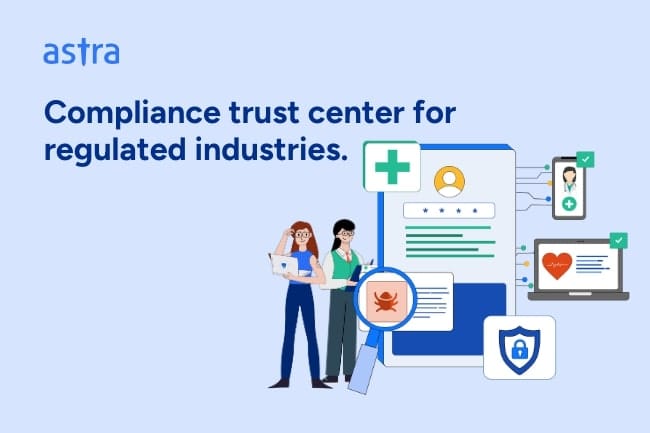
Organizations in regulated industries must comply with strict guidelines that require continuous security measures and data protection protocols to be in place. Maintaining compliance in trust centers is becoming essential, as these organizations must demonstrate compliance with industry-specific regulations across their business relationships with clients and partners, as well as during audits.
Trust centers for compliance metrics as a key framework for regulated companies to show compliance at scale. Instead of answering individual security questionnaires or scheduling separate audit reviews for each new customer, organizations can house their HIPAA, PCI DSS, and SOC 2 documentation inside a centralized trust center for compliance.
This methodology significantly simplifies due diligence, alleviates pressure on security teams, and enables stakeholders to obtain key compliance information whenever needed, supporting real-time compliance monitoring and audit-ready trust centers.
Why are Specialized Trust Centers for Compliance Non-Negotiable?
Generic trust centers do not address the concerns of stakeholders in regulated industries. Healthcare providers, when choosing a new software vendor, should be able to immediately obtain HIPAA compliance documentation, while financial institutions need PCI DSS compliance trust center attestations and detailed SOC 2 reports.
These generic trust centers combine generalized security documents and industry-specific compliance materials, which causes friction during the evaluation process.
Industry-specific trust centers give companies a competitive edge by demonstrating in-depth knowledge of industry regulations. For example, a trust center for healthtech can be organized around HIPAA security and breach notification procedures, illustrating to prospects that compliance is part of the business process.
Compliance Trust Center for HealthTech: HIPAA and Beyond
Healthtech organizations handle highly sensitive patient data, and any lapse in compliance can risk reputations, fines, and patient safety. A trust center for healthtech not only centralizes HIPAA and related compliance evidence but also demonstrates proactive data protection to regulators, partners, and healthcare providers.
Key Compliance Requirements for HealthTech
Trust centers for healthtech must support HIPAA compliance trust center functions that protect PHI (Protected Health Information) through technical, physical, and administrative safeguards. These requirements go beyond yearly audits to include real-time compliance monitoring of access controls, encryption standards, and breach response procedures.
Essential Certifications and Audit Proof
HITRUST CSF certification is a comprehensive framework for showing complete security measures for health technology. Fulfilling the requirements of HIPAA, NIST, and ISO standards, HITRUST CSF certification combines validated assessments demonstrating audit-ready compliance.
SOC 2 Type II reports are audits more relevant to data center operations and application security, as they test the execution of the security controls over time.
What to Display in a HealthTech Trust Center for Compliance
A HealthTech trust center for compliance should structure its content around specific stakeholder groups, such as healthcare providers, health plans, and research institutions. The center should detail encryption for data at rest and in transit, including the algorithms used and key management practices.
The technical documentation should cover business associate agreement templates and subprocessor lists that specify all third parties with possible access to protected health information, and should be easily downloadable.
HealthTech-Specific Design Considerations
Audit-ready trust centers in healthtech have access controls that separate permissions based on roles between clinical users, administrative staff, and technical evaluators. Various stakeholders require different levels of detail about security implementations.
Clinical decision-makers care more about protecting patient data and making systems available than they do about technical architecture diagrams and documentation of security controls, while IT security teams are usually looking for more detail.
Here’s a quick checklist to simplify the same:
| Checklist Item | Purpose / Benefit |
|---|---|
| Maintain HIPAA safeguards | Protect PHI with encryption, access control, and monitoring |
| Keep HITRUST CSF certification current | Demonstrates validated, comprehensive compliance across HIPAA, NIST, ISO |
| Publish SOC 2 Type II reports | Show long-term control effectiveness for data center and application security |
| Enable real-time compliance monitoring | Proactively identify risks and maintain audit-ready posture |
| Provide BAAs & subprocessor lists | Streamline third-party compliance verification for stakeholders |
| Role-based access controls | Ensure clinical, admin, and IT teams see only relevant information |
| Secure downloadable documentation | Reduce manual requests and accelerate vendor reviews |
Fintech Trust Centers for PCI DSS and SOC 2 Compliance
Fintech companies operate under constant scrutiny, where missteps in handling payment data can lead to financial loss and regulatory penalties. A dedicated trust center for fintech consolidates PCI DSS and SOC 2 compliance evidence, enabling faster audits, smoother customer onboarding, and substantial confidence in financial data security.
Key Compliance Requirements for Fintech
Trust centers for fintechs that handle payment card data must comply with the requirements of PCI DSS, including network security and protection of cardholder data, as well as vulnerability management.
Merchants are categorized depending on the transaction volume, number of transactions per year, nature of payment processing, and size of operation, with Level 1 merchants (over six million transactions per year) undergoing a more extensive onsite assessment and verification of compliance.
Essential Certifications and Audit Proof
While SOC 2 Type II reports remain the bare minimum for fintech players, organizations expect their reports to include all five trust service criteria, not just security. Validated by qualified security assessors, PCI DSS attestations of compliance confirm compliance with payment card security standards.
Third-party security firm penetration testing reports provide independent validation of security controls between formal audits.
What to Display in a Fintech Trust Center for Compliance
PCI DSS attestations, level, and validation date must be front and center in the trust center, and SOC 2 reports should be accessible through a controlled-access process. Security architecture documentation emphasizes the flow of cardholder data through systems and where tokenization or encryption takes place.
Fintech-Specific Design Considerations
The sensitivity of financial data requires granular access controls in fintech trust centers. Payment card industry standards and regulatory changes are fluid, so quarterly compliance status updates should be implemented.
Support integration with various compliance monitoring tools to display security metrics such as vulnerability remediation time, uptime percentage, etc., in real time.
Here’s a quick checklist to help with your trust center for fintech organizations:
| Checklist Item | Purpose / Benefit |
|---|---|
| Maintain PCI DSS compliance | Protect cardholder data and reduce breach risk |
| Display merchant level & validation date | Clearly communicate audit requirements and compliance scope |
| Publish SOC 2 Type II reports | Cover all five trust service criteria to assure clients and auditors |
| Quarterly compliance updates | Stay aligned with evolving regulations and security standards |
| Publish penetration test results | Provide independent validation of security controls |
| Real-time security metrics | Show uptime, vulnerability remediation, and system health continuously |
| Granular access controls | Protect sensitive financial data while sharing needed info with buyers |
Universal Design Principles for Regulated Industry Trust Centers
Certain principles apply across sectors, from certification visibility to layered access and automated updates. This section discusses design strategies that make trust centers both functional and scalable.
Prominent Certification Display
The trust center for compliance homepage should display certification badges and attestations, along with their validity dates and the names of the issuing authorities. A separate page should be devoted to each certification, detailing the scope, assessment methodology, and specific controls covered, including real-time compliance monitoring.
It should include the downloadable certificate in PDF format along with a verifiable digital signature.
Layered Access Controls
Website sections that are directed for public use show non-sensitive security practices and company policies, while sensitive audit reports require an authenticated individual to gain access. Role Permissions restrict which documents an individual user can view based on their organization type and verification status.
With request workflows, prospects can submit an access request for restricted materials through automated approval routing to the team members of the security team.
Real-Time Compliance Monitoring
API integrations read current system status metrics, such as uptime percentages, incident response times, and vulnerability remediation statistics, directly from security monitoring tools.
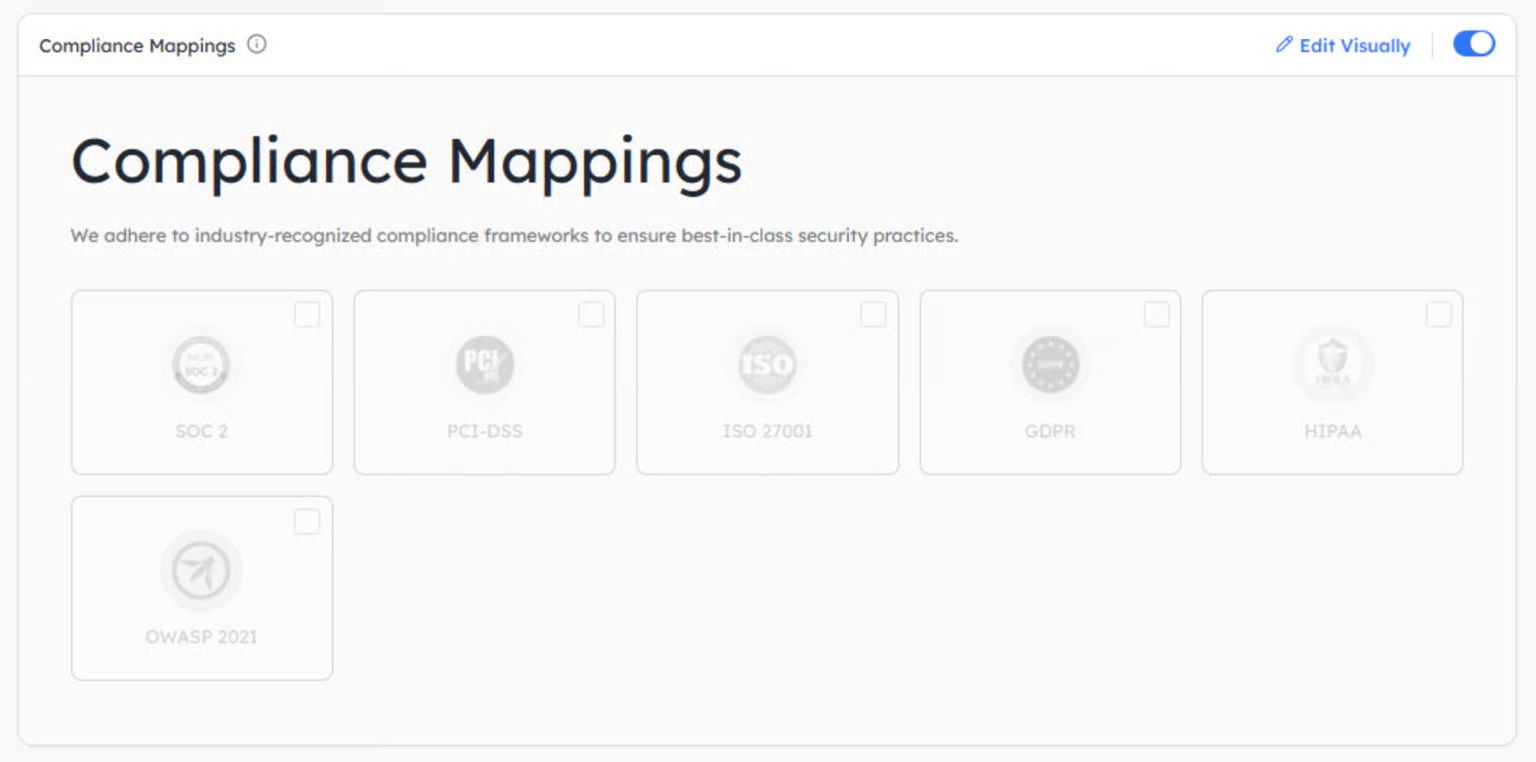
Automated updates regularly replicate changes such as certification status, policy changes, security control implementation, etc., without requiring manual work. Dashboards display compliance posture across several frameworks, allowing stakeholders to see HIPAA, PCI DSS, and SOC 2 trust center status within the same interface.
Industry-Specific Navigation
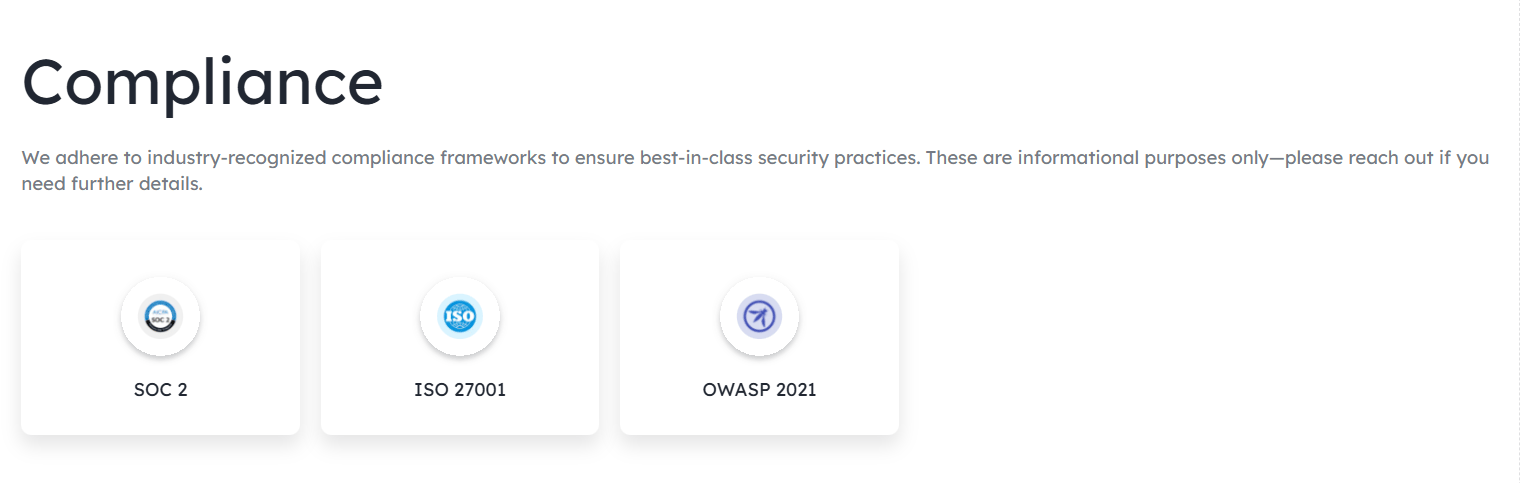
Regulated industry trust center examples showcase content with regulations from industries that the target audience would be familiar with. The HIPAA security rule is grouped by the trust center for healthcare groups, materials covering HIPAA technical security, administrative requirements, and physical security.
In fintech platforms, the navigation is structured around payment security, data protection, and financial regulations of PCI DSS and SOC 2 trust centers.
Automated Document Management
Most version control systems maintain a history of every compliance document and an activity log that records what was changed from version to version. Renewal dates for certifications or the typical duration of audit reports are tracked to send alerts.
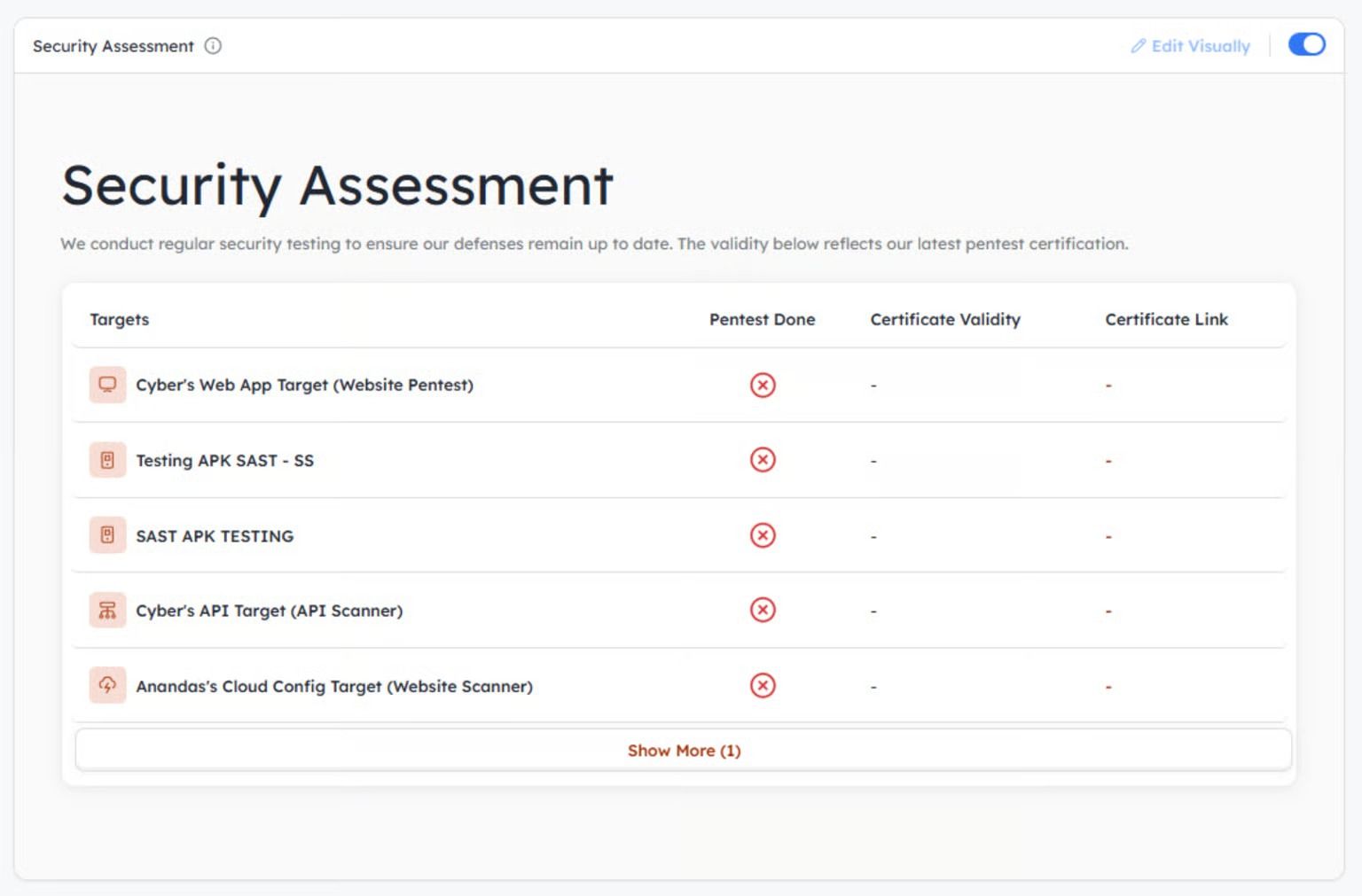
Autodistribution ensures that stakeholders are alerted when new compliance documentation is added or when any material change to the security posture is made.
Build a trust center that meets regulatory expectations and scales with your business.

Best Practices for Maintaining Compliance in Your Trust Center
Maintaining a trust center is a continuous effort. Here are some best practices, including automation, audit trails, and industry-specific content, to ensure your trust center stays up-to-date and reliable.
Schedule Regular Certification Renewals and Updates
Establish certification renewal calendars to track the expiration dates (at least 4 months prior to expiration) of SOC 2 reports, PCI DSS attestations, and industry-specific certifications. This time enables scheduling the audits, fetching the evidence required for passing the audit, and releasing the report without any compliance status breaks.
Security teams should conduct assessments aligned with business timelines and regulatory requirements, and coordinate with auditors.
Implement Automated Compliance Monitoring Integrations
Connect compliance monitoring solutions directly to a trust center platform that provides real-time security metrics from systems, including SIEMs, vulnerability scanners, and cloud security posture management tools.
Through API connections, these statistics on system availability, patch compliance rates, and security events are automatically updated, with no manual data entry required.
Maintain Audit Trails for All Document Access
Maintain extensive audit logs of user authentication events, document access, and download activity with timestamps and the origin IP address. Together, these logs provide security reviews and controls on information access for external audit purposes.
Regulations require logs to be retained for at least two years. Set up notifications for abnormal access behavior, such as bulk document downloads or access attempts to restricted materials by unverified users.
Create Industry-Specific Content Sections
In the healthcare sections, HIPAA technical security, administrative requirements, and physical security documentation should be separated. The fintech zones need to be distinct, with dedicated areas for payment security controls, a focus on financial data protection measures, and a section for presenting regulatory compliance evidence.
Where documentation pertains to multiple frameworks, reference other frameworks in trust centers for compliance to prevent duplication while ensuring all necessary information is captured.
Establish Vendor and Subprocessor Transparency Protocols
Have a process in place to update lists of subprocessors within 30 days of onboarding new vendors or ceasing existing relationships. Trust center data should include answers to the subprocessor security questionnaire, compliance certificates, and information about the data processing agreement.
How can Astra Trust Center for Compliance help?
Astra Trust Center simplifies compliance for security-conscious organizations by turning static documentation into a dynamic, automated source of truth.
Instead of chasing SOC 2, HIPAA, or ISO reports across folders, teams can centralize live security evidence in a single location, where every control, audit result, and vulnerability update syncs automatically, so compliance stays accurate, verifiable, and always up to date.
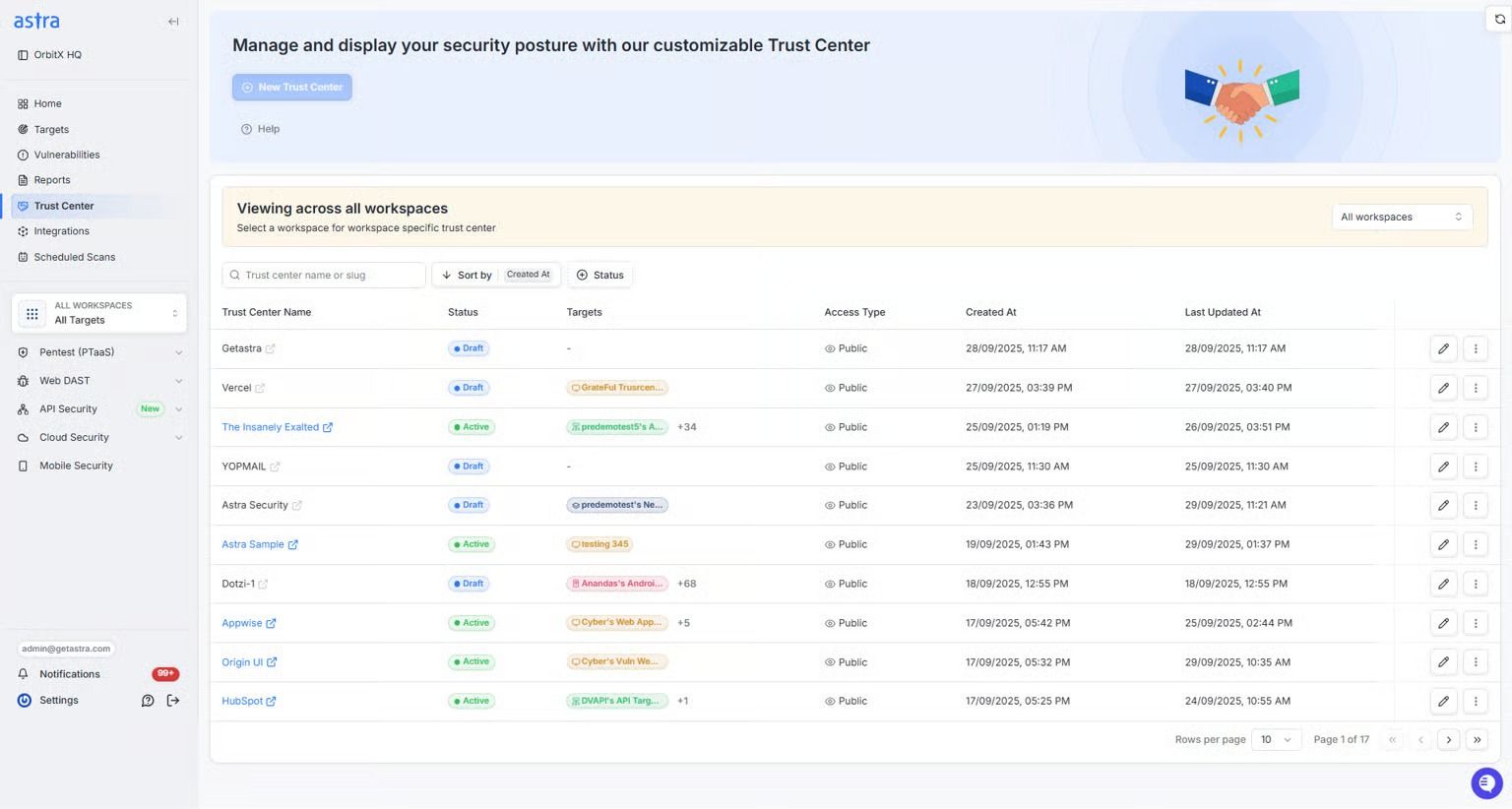
Built for regulated industries, Astra Trust Center for compliance delivers real-time visibility into your security posture. It integrates with scanners, penetration tests, and monitoring tools to automate compliance tracking across frameworks like PCI DSS and ISO 27001.
The outcome: less manual work, faster customer assurance, and shorter deal cycles, all while keeping sensitive information protected.
Key highlights:
- Unified dashboard for SOC 2, HIPAA, ISO 27001, and PCI DSS compliance.
- Automated evidence collection and real-time compliance updates.
- Direct integrations with security and monitoring tools.
- Customizable access controls for public and gated information.
- Branded, audit-ready trust center launched in minutes.
Final Thoughts
Establishing and managing a trust center for compliance requires a compliance program, security, and stakeholder communication. The trust center for an organization should always be finely-tuned to meet the expectations of healthcare providers, financial institutions, regulatory auditors, and similar entities.
Astra offers a security platform that helps companies demonstrate their security posture through trust centers, provides compliance reporting for multiple frameworks, offers continuous vulnerability monitoring, and maps security findings to regulatory requirements. By setting up dedicated gated trust centers for regulated sectors, regulated companies show that they take compliance seriously, whilst also ensuring faster vendor evaluations and developing better relationships with security-focused customers.
FAQs
What is a trust center?
A Trust Center is a centralized hub where organizations showcase their security, privacy, and compliance posture. It consolidates policies, audit reports, certifications, and live security metrics, providing stakeholders with transparent, verifiable evidence of how data and systems are protected.
What is a compliance trust center?
A Compliance Trust Center is a specialized platform for regulated industries to display adherence to frameworks like HIPAA, SOC 2, or PCI DSS. It centralizes documentation, audit reports, and real-time compliance metrics, enabling buyers, partners, and auditors to quickly verify that an organization meets regulatory requirements.