Key Takeaways
- Cybersecurity frameworks give you a shared structure for managing risk, meeting compliance requirements and prioritizing security work.
- They aren’t interchangeable: some guide governance, some define technical controls and some set audit requirements.
- Most enterprises combine two or more frameworks, based on their industry, regulations and customer demands.
A cybersecurity framework is a structured set of guidelines and controls that helps organizations manage risk, strengthen security and meet compliance requirements. However, each framework serves a different purpose, from governance and risk management to technical security testing.
Enterprises often combine multiple frameworks based on their industry, regulatory obligations and business needs. Understanding their differences helps organisations choose the right approach. Choosing without understanding the differences can leave gaps or create duplicate work.
This guide explains what 10 widely used frameworks do, who each one suits and where each one falls short. A few entries are standards, regulations or reference resources rather than true frameworks, and we flag the difference as we go.
New to security frameworks and not sure where to start? Explore Guides
What Are Cybersecurity Frameworks?
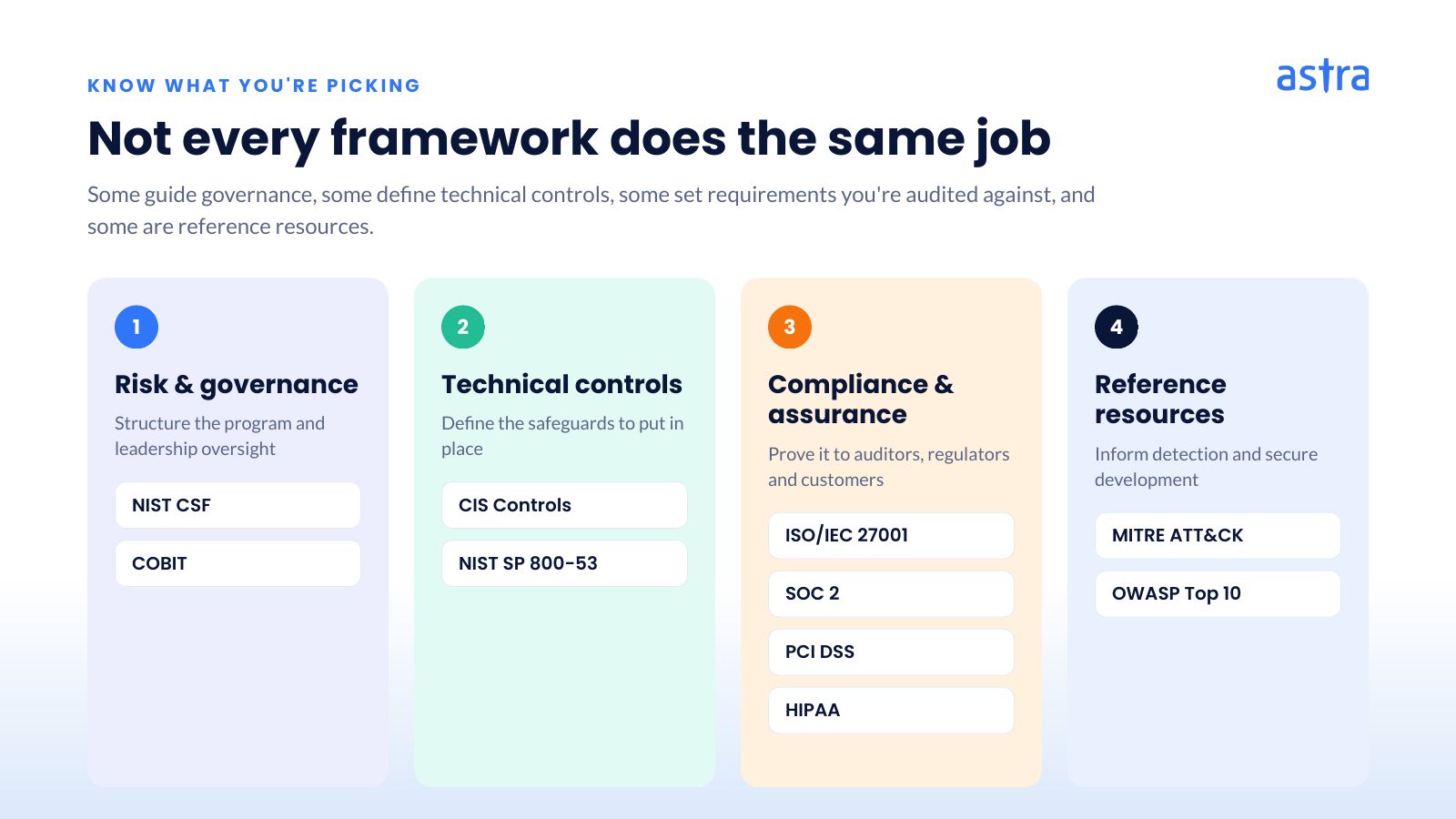
Frameworks differ in what they’re built to do. Some guide risk and governance, some define technical controls and some set requirements you can be audited against. A few entries below, such as MITRE ATT&CK and the OWASP Top 10, are reference resources that support those goals rather than complete frameworks.
Here’s a quick comparison of all 10 before we look at each one.
| Framework | Type | Main Focus | Best Suited To |
| NIST CSF | Voluntary, risk-based framework | Six functions (Govern, Identify, Protect, Detect, Respond, Recover); gap analysis and benchmarking against a target state | Enterprises building or benchmarking a security program and incident response |
| ISO/IEC 27001 | International standard (certifiable) | Establishing and improving an Information Security Management System (ISMS) | Organisations that want third-party certification to build customer and partner trust |
| CIS Critical Security Controls | Prioritised control set | Safeguards against common threats such as weak access controls and insecure configurations | Enterprises that need to prioritise security improvements |
| SOC 2 | Attestation report (AICPA) | Controls against the Trust Services Criteria: security, availability, processing integrity, confidentiality, privacy | SaaS companies and cloud providers |
| PCI DSS | Industry compliance standard | Security requirements for storing, processing or transmitting payment card data | Organisations that handle cardholder data |
| HIPAA Security Rule | US regulation (no official certification) | Administrative, physical and technical safeguards for electronic health information | Covered entities and their business associates in healthcare |
| COBIT | IT governance and management framework (ISACA) | Aligning technology processes and controls with business objectives; accountability and oversight | Enterprises strengthening governance, usually paired with a control-focused framework |
| MITRE ATT&CK | Threat knowledge base (not a compliance framework) | Real-world attacker tactics and techniques | Security teams improving threat detection and finding gaps |
| OWASP Top 10 | Awareness resource (not an enterprise-wide framework) | Major web application security risks | Development teams focused on secure coding and application testing |
| NIST SP 800-53 | Security and privacy control catalogue | Detailed controls such as access management, incident response and audit logging | US federal agencies and enterprises selecting controls based on risk |
1. NIST Cybersecurity Framework (NIST CSF)
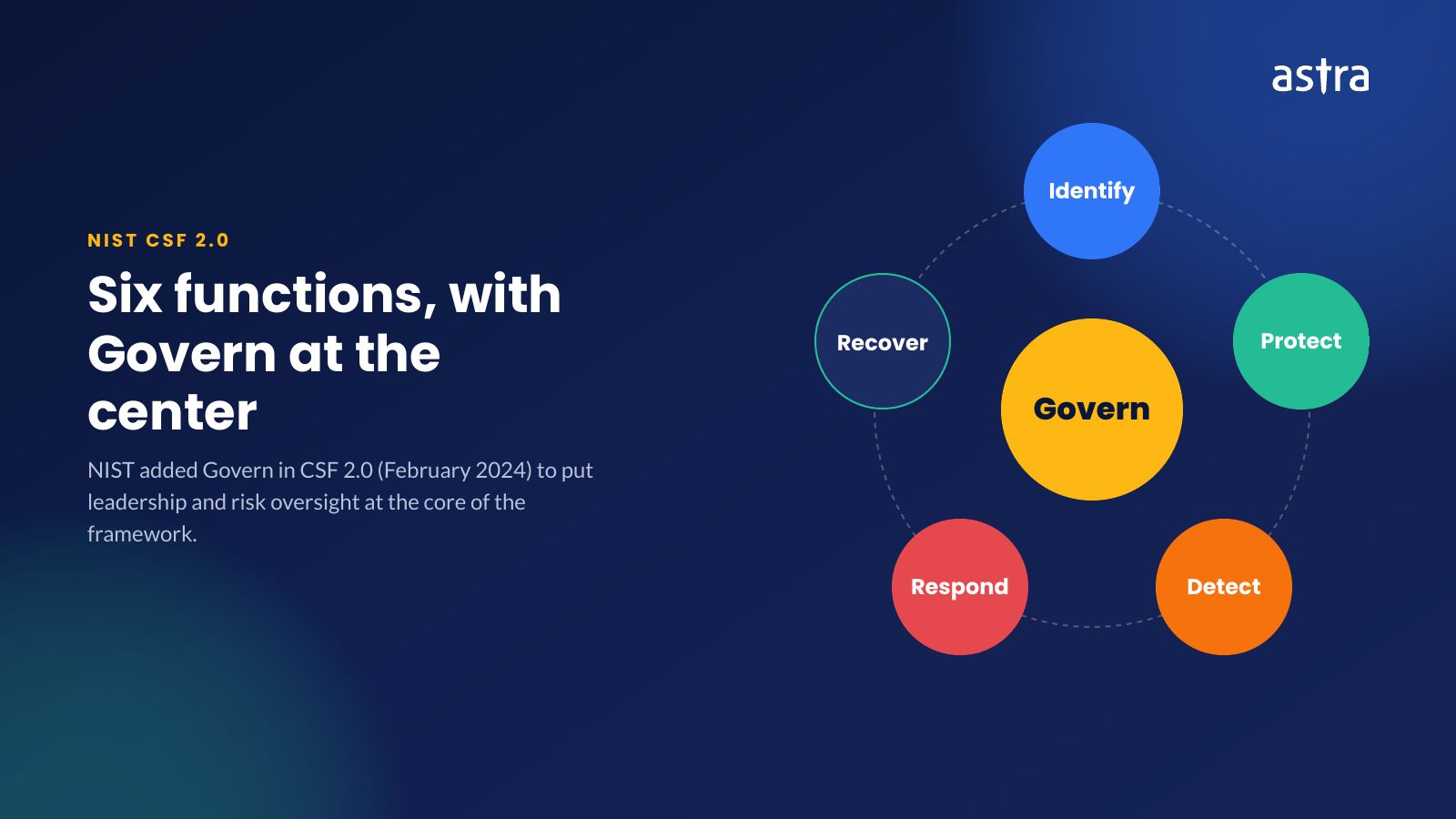
The NIST CSF is a voluntary, risk-based framework that provides risk-based guidance through six functions: Govern, Identify, Protect, Detect, Respond and Recover. NIST added Govern in CSF 2.0, released in February 2024, to put leadership and risk oversight at the center.
Enterprises can use it to identify security gaps and benchmark their current program against a target state. Its Respond and Recover functions are a good starting point for building a modern incident response.
2. ISO/IEC 27001
ISO/IEC 27001 is an international standard for establishing and improving an Information Security Management System (ISMS). Unlike voluntary frameworks, it is certifiable: an accredited auditor can assess your ISMS against it.
Enterprises can obtain certification to demonstrate their commitment to information security and build trust with customers and business partners.
3. CIS Critical Security Controls
The CIS Critical Security Controls provide prioritised safeguards against common cyber threats, including weak access controls and insecure configurations.
Enterprises can use them to prioritise improvements. Once controls are in place, verified proof-of-concept exploits show which gaps are genuinely exploitable and which to fix first.
4. SOC 2
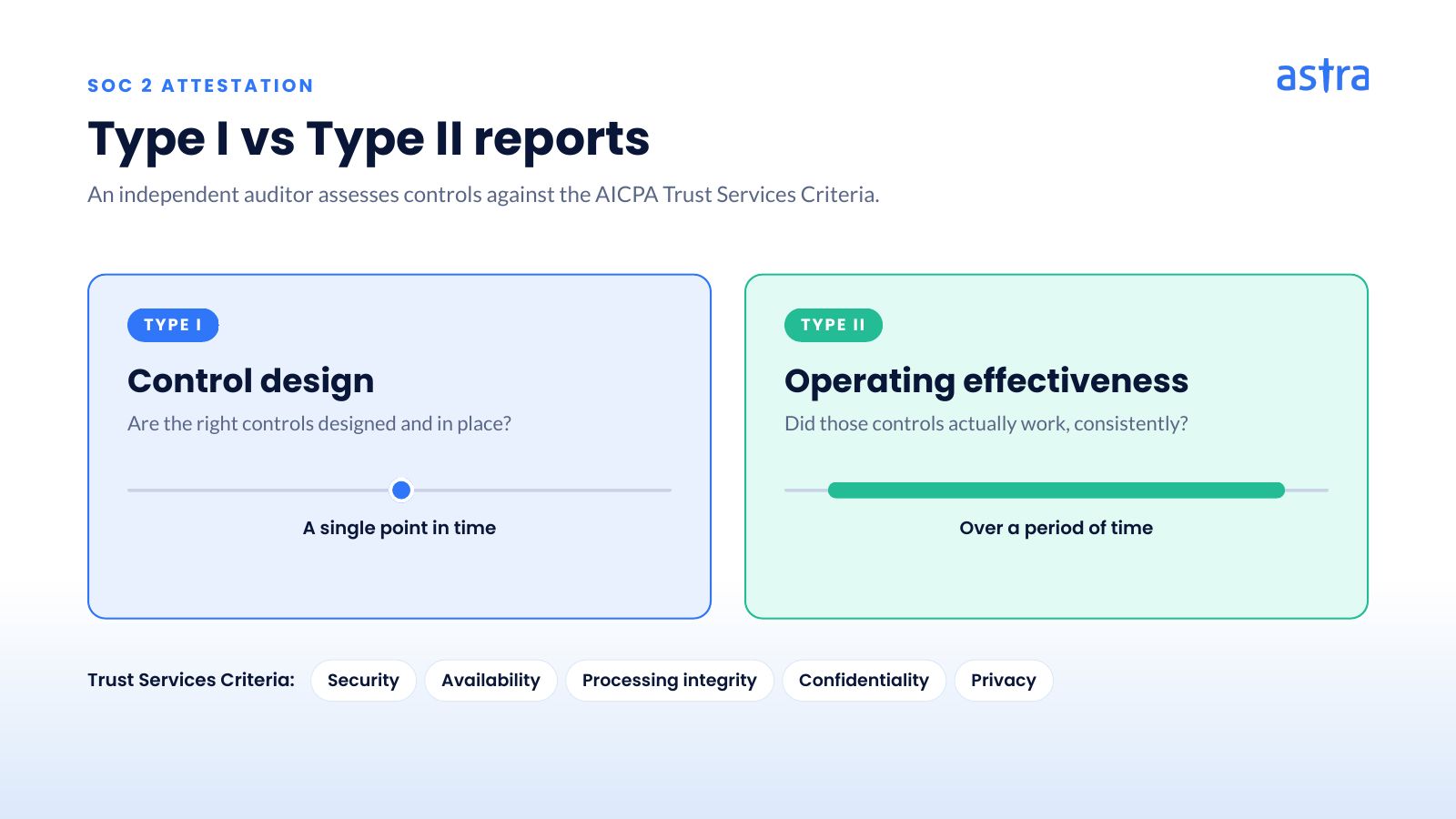
SOC 2 is an attestation report in which an independent auditor assesses a service organisation’s controls against the AICPA’s Trust Services Criteria: security, availability, processing integrity, confidentiality and privacy.
It is particularly useful for SaaS companies and cloud providers. Unlike ISO 27001 certification, SOC 2 provides an independent attestation report. Type I reports cover control design at a point in time, while Type II reports cover how controls operate over a period.
5. PCI DSS
PCI DSS establishes security requirements for organisations that store, process, or transmit payment card data.
Regular security assessments help identify weaknesses and protect cardholder information. Astra’s VAPT methodology explains how vulnerability assessment and penetration testing support security efforts.
6. HIPAA Security Rule
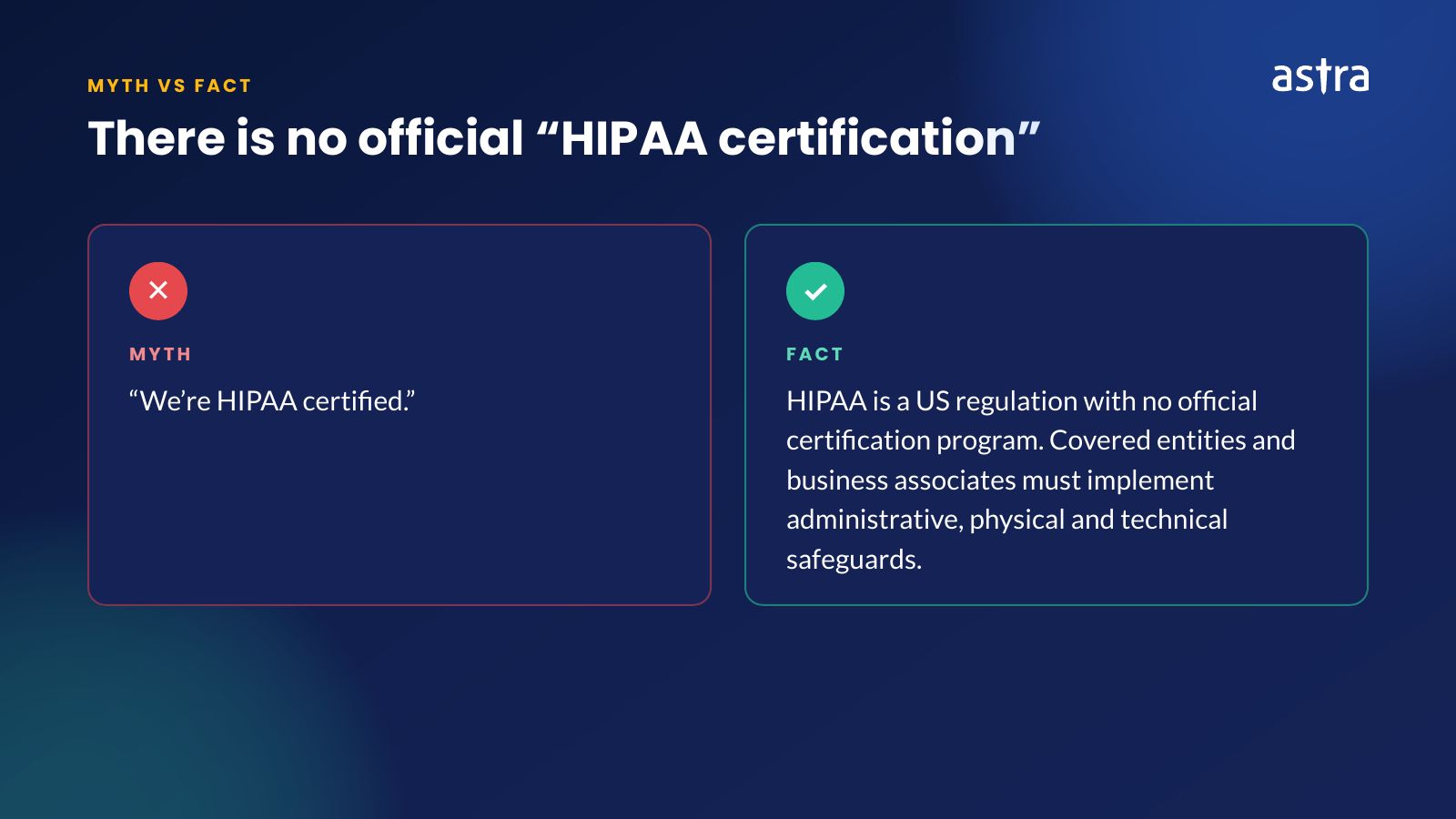
The HIPAA Security Rule establishes requirements for protecting electronic health information in the United States. It applies to covered entities and their business associates.
Healthcare organisations must implement appropriate administrative, physical and technical safeguards. HIPAA does not provide an official certification, so claims of “HIPAA certification” don’t reflect an official government program.
7. COBIT
COBIT is an IT governance and management framework developed by ISACA. It helps organisations align technology processes and controls with business objectives.
Enterprises use it to improve accountability, manage technology risks and strengthen oversight of security investments. Since it focuses on governance rather than technical controls, it’s usually paired with a control-focused framework.
8. MITRE ATT&CK
MITRE ATT&CK documents real-world attacker tactics and techniques, helping security teams understand how cyberattacks unfold. It isn’t a compliance framework, so there is nothing to certify against.
Enterprises use it to improve threat detection and identify security gaps. Generative reasoning with expert validation can further support attack-path analysis.
9. OWASP Top 10
The OWASP Top 10 highlights major web application security risks. It is an awareness resource, not a complete enterprise-wide cybersecurity framework.
Development teams use it to improve secure coding and application testing. Understanding the challenges of shift-left security can help teams build security into every stage of development.
10. NIST SP 800-53
NIST SP 800-53 provides a detailed catalogue of security and privacy controls, covering areas such as access management, incident response and audit logging.
US federal agencies widely use it, and enterprises can also help enterprises select controls based on their security risks.
How Do You Choose Between Cybersecurity Frameworks?
Start with what your industry, regulators and customers already require, then add a broader framework to organize the rest of your program. Most enterprises layer two or three: one for risk and governance, one for technical controls and one for external assurance.
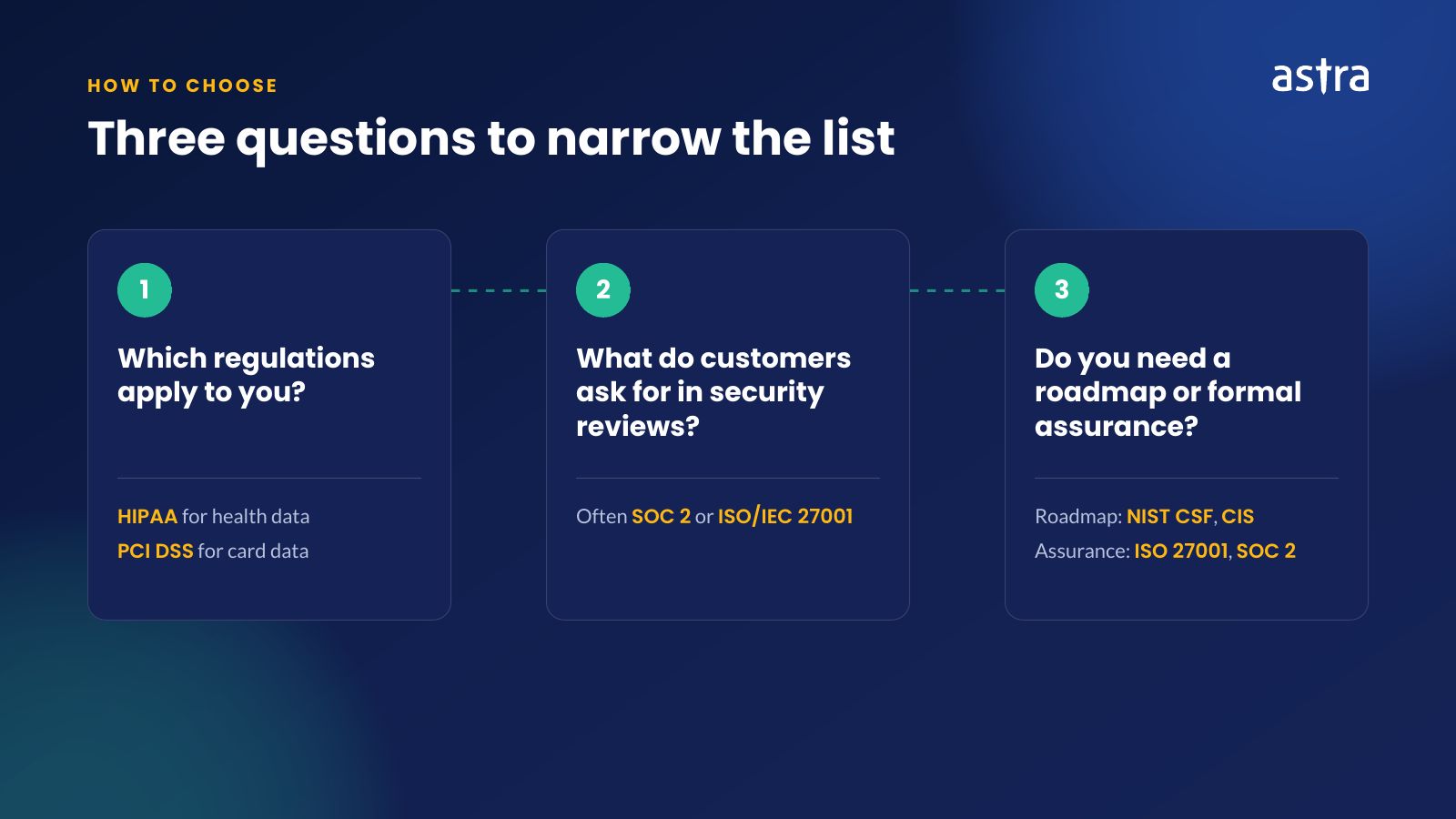
Use these questions to narrow down the list:
- Which regulations apply to you, such as HIPAA for health data or PCI DSS for card data?
- What do customers ask for in security reviews, often SOC 2 or ISO 27001?
- Do you need a program roadmap (NIST CSF, CIS Controls) or formal assurance (ISO 27001, SOC 2)?
Conclusion
These frameworks support different aspects of cybersecurity, from governance and compliance to technical testing and threat detection. Enterprises should select the combination that best fits their risks and obligations.
Strong leadership is also essential. Exploring insights from CTOs to follow in 2026 can help connect cybersecurity priorities with business strategy.
About The 403 Circle
Today’s CISOs need more than technical expertise. They need trusted peers, practical insights and real-world experience that go beyond industry headlines. The 403 Circle is a private community of [confirm: 250+ CISOs / 500+ cybersecurity leaders] who exchange knowledge, discuss emerging threats and share security strategies that work.