Incidents involving cybersecurity can be extremely disruptive, lead to losses and result in damage to reputation. In most cases, the effect is heightened due to the lack of preparedness by companies, delayed responses, or even failure to take certain recovery measures.
An insight into common pitfalls allows enterprises to develop effective incident response and recovery strategies.
1. Relying on an Undocumented or Untested Response Plan
Without a clear incident response plan, teams may struggle to make decisions during a crisis. Outdated procedures and unclear responsibilities can further delay action.
Organisations should document response procedures and test them through regular exercises. The lessons from modern incident response highlight the importance of preparation.
2. Time Delays for Detection and Reaction
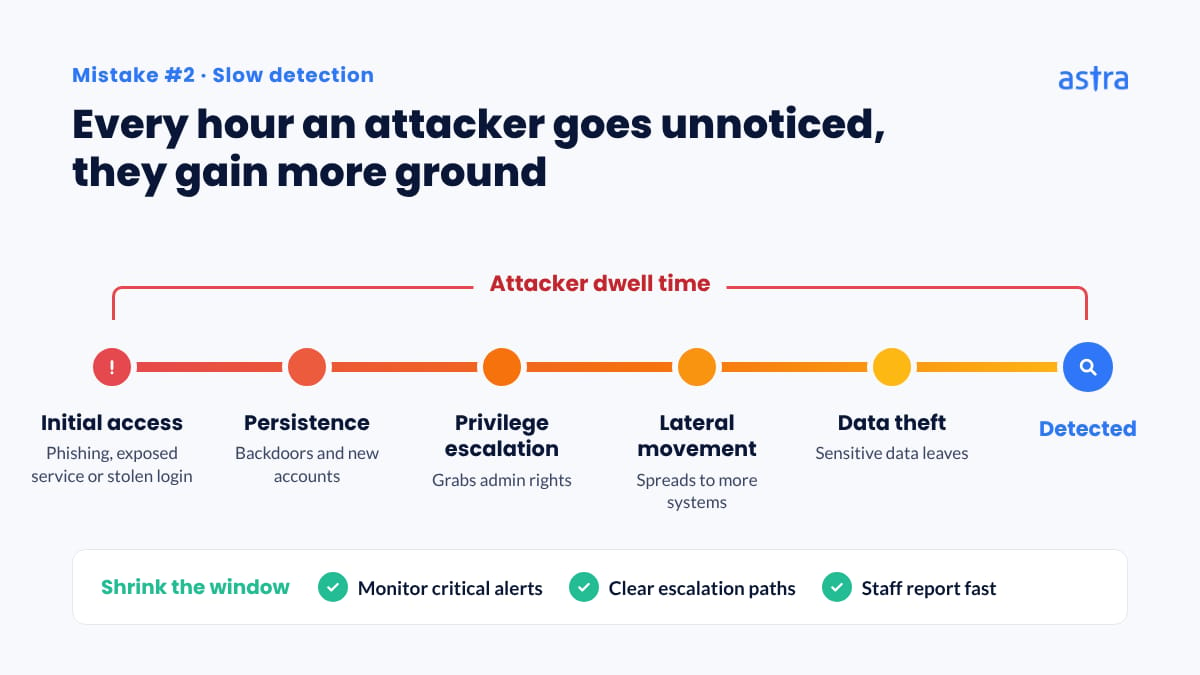
Lack of notifications, inadequate monitoring, and ambiguous escalation procedures can result in attack persistence. The extra time will be used by attackers to gain access to valuable data and other systems.
The company needs to enhance monitoring, concentrate on critical notifications, and motivate staff to report any suspicious behavior immediately. Quick investigation will stop any incidents from growing bigger.
3. Not Defining Roles and Responsibilities
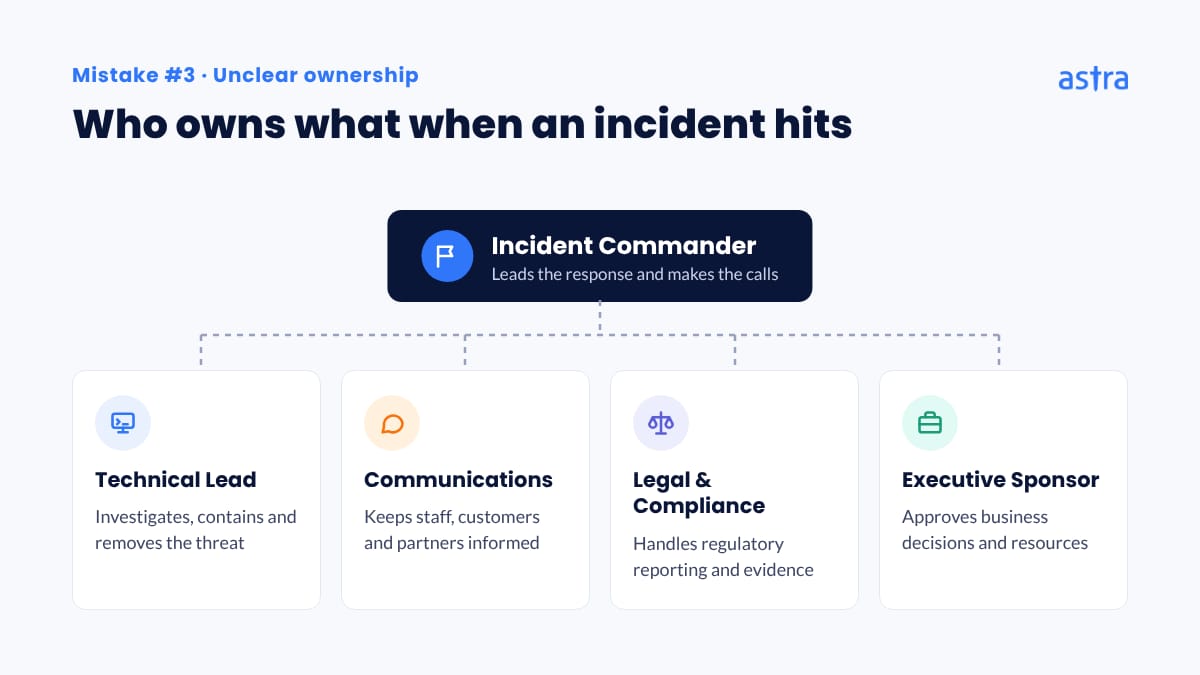
Inability to define the person responsible for making key decisions will result in poor incident response. Some important steps will be ignored or delayed.
Define responsibilities in all departments. Following experienced CISOs can offer useful insights into security leadership and accountability.
4. Failing to Identify the Full Scope of an Incident
Isolating one compromised system may not stop an attacker who has access to other devices or accounts. Incomplete containment can leave threats active.
Teams should investigate affected systems and identify the root cause before deciding on recovery measures. Verified proof-of-concept exploits can help demonstrate which vulnerabilities pose genuine business risks.
5. Mishandling Digital Evidence
Wiping systems or deleting logs too early can destroy evidence needed to understand an attack. This may complicate investigations and regulatory reporting.
Organisations should preserve relevant logs, document evidence collection and maintain secure records. Combining technical analysis with expert validation, as explained in generative reasoning with expert validation, can support better investigations.
6. Neglecting Incident Communication
Communication problems can cause confusion among employees, executives, customers, and other stakeholders. Miscommunication might also destroy trust.
Communication should be clarified well in advance with proper preparation for notification procedures. Backup communication systems can facilitate coordination in case normal communication systems fail.
7. Neglecting Third-Party and Cloud Threats
Threats can come from suppliers, improper cloud configuration, or even compromised software vendors. Absence of coordination can make handling such incidents challenging.
Organizations must have critical third-party providers identified, understand security duties, and set up an incident notification process. Exercises should include cloud and supply chain incidents.
8. Not Testing Backups and Recovery Processes

Having backup does not guarantee success when restoring from disaster. Backups can be insufficient, unavailable, or even compromised during the attack.
Backups should be kept separate and checked on a regular basis. Knowing your recovery priorities is key to an efficient and safe recovery process.
9. Reinstating Systems Too Soon
Re-establishing the system in production before addressing the threat will result in another incident. Attackers can regain access due to existing vulnerabilities or compromised credentials.
Before restoring operations, it is necessary to fix the issue, reset exposed credentials, and check system integrity.
10. Skipping Post-Incident Reviews
Without reviewing an incident, organisations may repeat the same mistakes. Unresolved security weaknesses can leave them vulnerable to similar attacks.
Conduct a review after every significant incident and assign corrective actions with clear deadlines. Understanding why shift-left security has fallen short can also help strengthen preventive controls.
Conclusion
Effective incident response requires preparation, timely detection, clear responsibilities, and reliable recovery procedures. Addressing these mistakes helps organisations reduce disruption and strengthen resilience.
Security must remain an ongoing business priority, supported by strong technical and executive leadership. Exploring the perspectives of leading CTOs can provide further insight into technology strategy and operational resilience.
Cybersecurity is evolving faster than ever, and today’s CISOs need more than technical expertise to stay ahead. They need access to trusted peers, practical insights, and real-world experiences that go beyond industry headlines.
That’s exactly what The 403 Circle offers: a private community where over 550+ CISOs and cybersecurity leaders come together to exchange knowledge, discuss emerging threats, and share proven security strategies.