

DAST tools all pitch a different mix of features, and none of them fits everyone. Enough to stall any RFP. So we asked our engineering and security teams to weigh in. Here are the 13 best on the market, with honest pros and cons for each.
Top 13 DAST Tools for 2026
- Astra Security
- Invicti
- Checkmarx
- HCL AppScan
- Burp Suite
- OWASP ZAP
- Acunetix
- Stackhawk
- Qualys WAS
- Rapid7 InsightAppSec
- Escape
- Detectify
- Intruder
At a glance
The DAST market in 2026 splits into three camps, and picking the wrong one is why most RFPs stall.
- Continuous-pentest platforms: Astra Security. Validated findings across web, API, and cloud, built for teams that want a confirmed queue, not a raw one.
- Enterprise scanners: Astra Security, Invicti, Checkmarx, HCL AppScan, Qualys, Rapid7, Acunetix. Built for scale, sprawl, and compliance reporting across hundreds of apps.
- Developer-first and open-source: Burp Suite, OWASP ZAP, StackHawk, Escape, Detectify, Intruder. Optimized to fit a pipeline and get run by engineers.
DAST Tools Compared 2026
We benchmarked the top DAST tools under production-like conditions, evaluating each tool’s claimed features and its ability to move from raw detection to a confirmed signal. Special focus was given to false positives, authenticated scanning, and CI/CD pipeline fit, since those axes play a vital factor in deciding which DAST tools teams actually keep.
| S.NO | Tool | Best for | Coverage | Validation / false positives | Pricing model |
|---|---|---|---|---|---|
| 1 | Astra | Teams wanting confirmed findings across surfaces | Web, API, cloud, mobile | Expert-vetted; zero false positives reach remediation | Transparent subscription |
| 2 | Invicti | Large, JS-heavy web estates (300+ apps) | Web | Proof-based auto-confirmation | Quote-based |
| 3 | Checkmarx | Existing Checkmarx One customers | Web, API | Correlation-driven; AI remediation | Enterprise/quote |
| 4 | HCL AppScan | Regulated orgs needing on-prem/hybrid | Web | AI-based reduction; FP complaints persist | Enterprise (often costly) |
| 5 | Burp Suite | Teams already fluent in Burp Pro | Web-focused | Elite detection in expert hands | Per-scan licensing |
| 6 | OWASP ZAP | Teams with in-house expertise, zero budget | Web, API | High false positives | Free/open-source |
| 7 | Acunetix | SMBs with a security engineer | Web, API | AcuSensor IAST aids accuracy | Accessible / mid-tier |
| 8 | StackHawk | API-first teams shipping in CI/CD | Web, API | Dev-facing findings: no governance layer | Subscription |
| 9 | Qualys WAS | Inventory-heavy, large estates | Web, API + asset breadth | Breadth over exploitability | Platform / existing Qualys |
| 10 | Rapid7 InsightAppSec | Existing Rapid7 customers | Web, API, SPA | Attack Replay confirms findings | Enterprise |
| 11 | Escape | Modern API-first architectures | API (business logic) | AI exploit validation | Subscription |
| 12 | Detectify | Perimeter & forgotten-asset discovery | External surface, web | Crowdsourced real-payload checks | Subscription |
| 13 | Intruder | Small teams, no dedicated security staff | Web, API, cloud infra | Context-based prioritization | Accessible subscription |
Our Criteria for the Best DAST Tools
A good DAST tool is never good in the abstract; it depends on the team. So we benchmarked every DAST tools on the axes that actually decide whether it survives past the third sprint.
Here’s what we measured:
- Exploit validation accuracy: Does the DAST tool confirm whether a finding is real with proof, or raises a suspicion that eats engineering hours?
- False-positive reduction: We weighted the amount of triage that every DAST tools takes off your engineering team.
- Coverage: Do the DAST scanning tools support authenticated scanning across web apps, REST, and GraphQL APIs?
- Remediation verification: Can you rescan a single fix to confirm it’s closed?
- Scale and compliance fit: asset discovery, governance, and audit-ready reporting across dozens or hundreds of apps.
Why Should You Trust Us?
We’re a security team that runs DAST scans and pentests every day, so we know what actually separates a scanner that surfaces exploitable risk from one that just floods your queue with noise.
This list draws on hands-on experience with the tools we use, verified vendor documentation, and feedback from practitioners on G2, Gartner, and our own security network. We weighed each tool on what matters in the field, exploit validation accuracy, false positives, authenticated scanning depth, CI/CD fit, and compliance coverage.
Top 13 DAST Tools in 2026
1. Astra Security
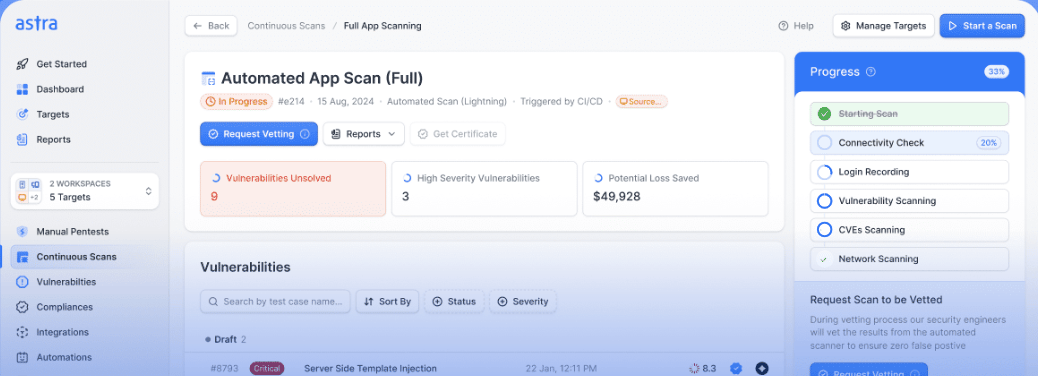
Astra Security stands out as a fast and comprehensive DAST tool in the market that offers automated scanning with managed penetration testing. It runs more than 15,000+ test cases covering web apps and APIs, detecting vulnerabilities beyond OWASP and generic ones. Among DAST tools, it excels at seamless CI/CD pipeline integration and collab tools(Slack, Jira, etc.) to make patching easier and effective.
Technically speaking, Astra’s DAST tool performs authenticated and unauthenticated scans with strong support for modern frameworks, SPAs, GraphQL, and REST APIs.
G2 rating: 4.6/5 ⭐(231 reviews)
Key Features
- CI/CD-native integration with automatic scan triggers on deployment.
- Compliance mapping across PCI DSS, ISO 27001, SOC 2, GDPR, and HIPAA.
- Publicly verifiable certificate post-remediation.
- Chrome extension to capture login sequences like SSO flows and MFA for authenticated scanning.
- Role-tailored reporting, a high-level security posture summary for leadership, and a separate dev-facing report with more technical details like reproduction steps, remediation guidance, etc.
- A publicly accessible trust center that provides stakeholders (buyers, auditors, investors) with updates on security posture.
- Pricing begins with a $7 trial and plan starts from $49 per month.
Pros
- Zero false positives reaching the remediation phase, which is very rare among DAST tools.
- Evidence-backed reports built for engineers and auditors.
- Transparent, predictable subscription pricing.
- Strong authenticated scanning, including MFA flows.
- Reporting that serves both audiences, i.e., management (gets the quick summary) and the devs(with more actionable details).
Cons
- Limited trial period
2. Invicti
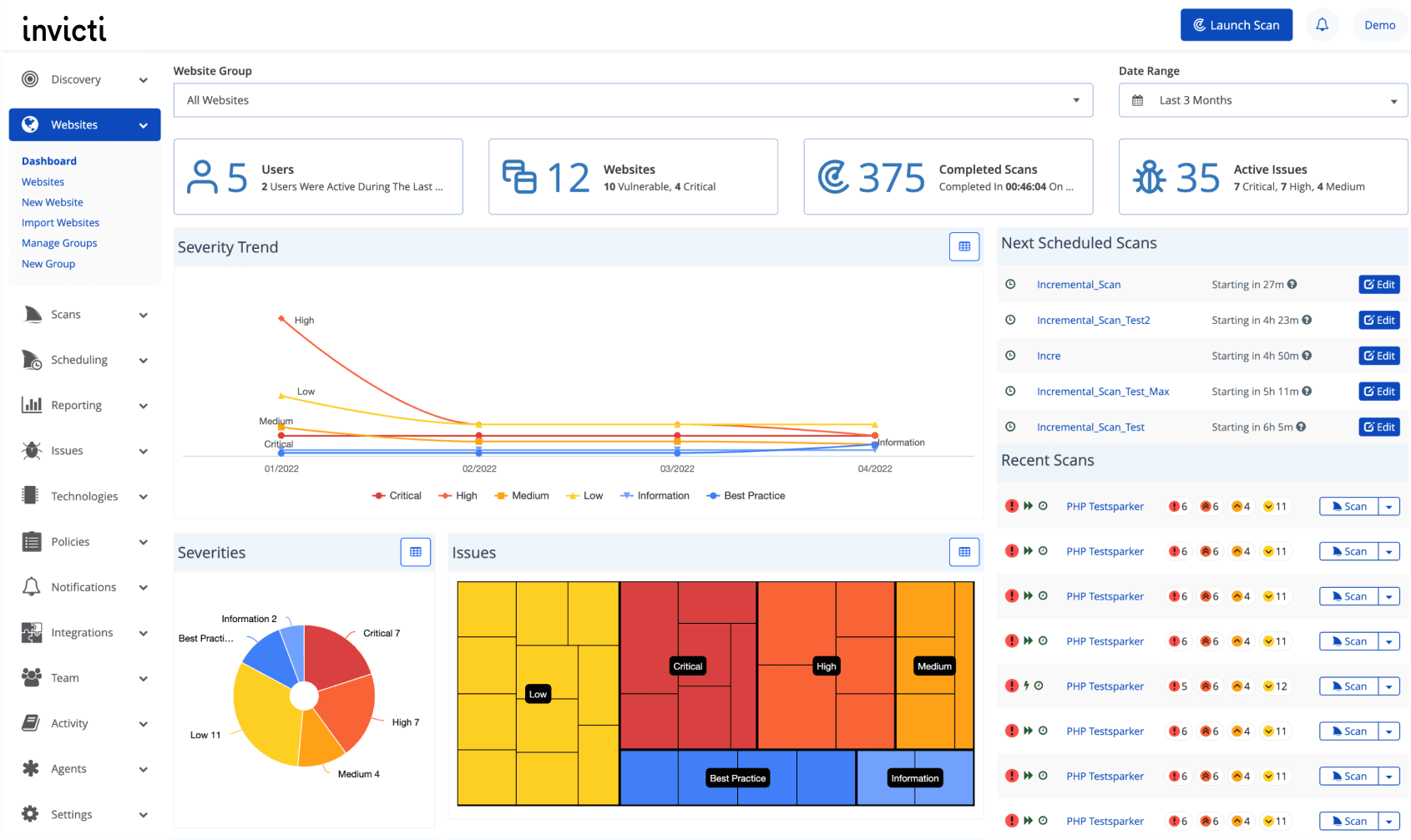
Invicti( formerly known as Netsparker; also owns Acunetix) built its reputation in the DAST tools market through proof-based scanning. The platform targets enterprises running large, complex web estates, with crawling tuned for JavaScript-heavy single-page applications and a reporting layer aimed at compliance teams as much as engineers.
If your problem is “we have 300 applications and no idea which ones are even being tested,” the Invicti DAST tool is built for exactly that breadth.
G2 Rating: 4.5/5
Key Features
- Proof-based scanning that auto-confirms exploitable vulnerabilities to cut false positives
- Combined DAST, SAST, and IAST signals in a single platform.
- Deep CI/CD and issue-tracker integrations with RBAC.
- Compliance and executive reporting across major frameworks
Pros
- Mature, well-documented integration ecosystem.
- Strong fit for large, JavaScript-rendered applications
Cons
- Quote-based pricing makes budgeting unpredictable.
- Can be overkill for organizations with a small, focused application footprint, where lighter DAST tools fit better.
3. Checkmarx
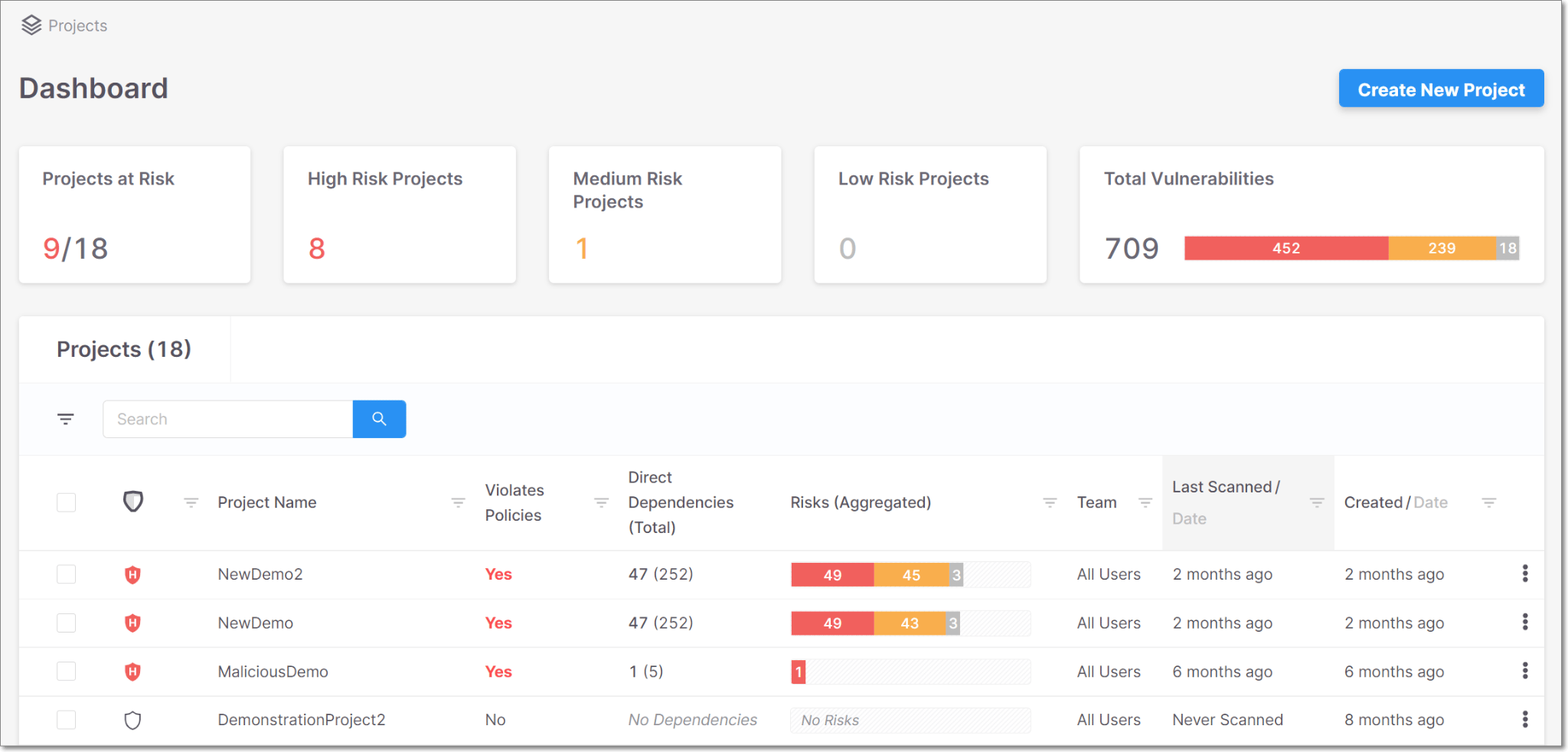
Checkmarx is best known for its SAST, and now they are bringing their own DAST tool to market by leveraging the share they enjoy. As a component of the Checkmarx One Platform, its unique feature is correlation: pairing every finding with static analysis, software analysis, and API signals, so security teams get a unified appsec risk view instead of different outputs from separate DAST tools.
The biggest trade-off is that the dynamic scanning is strongest when purchased as part of the Checkmarx ecosystem, where its full potential can be extracted. Bought purely as a standalone DAST tools, it stays solid and capable but loses much of its differentiation.
G2 Rating: 4.2/5
Key features
- DAST is integrated directly into the unified Checkmarx One platform
- Correlation of findings with SAST, SCA, and API security signals.
- Testing for authentication bypasses, business logic, and config flaws.
- AI-assisted remediation guidance.
Pros
- Faster root-cause analysis and prioritization.
- Good Support for APIs, authentication flows, internal apps, and CI/CD-native execution.
- Excellent repository and CI/CD integration, and supports automated scanning in pipelines.
Cons
- Most compelling as a part of the Checkmarx platform, not a standalone.
- Some users report UX limitations and slow interfaces.
4. HCL AppScan
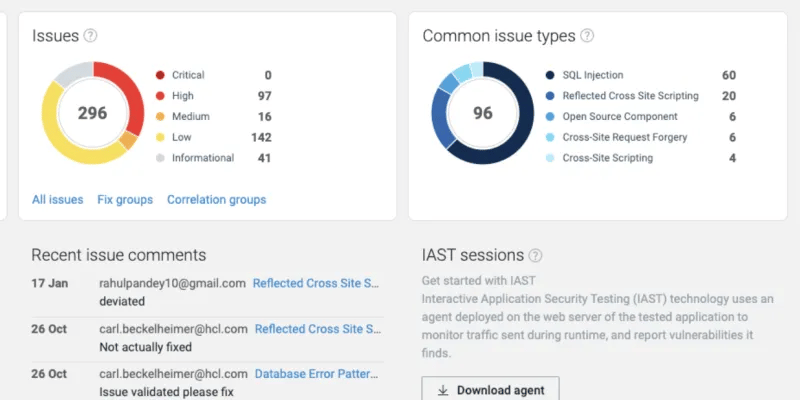
HCL AppScan is one of the oldest names in the appsec market, and it offers DAST/ SAST tools and IAST. HCL APP scan is the only tool among these 13 DAST tools in our list that supports on-premises, cloud, and hybrid deployment.
AppScan’s sweet spot is large enterprises with strict deployment constraints, e.g., banks and governments that need granular RBAC and on-prem control for data-sovereignty reasons, and can’t send their apps to a SaaS-based DAST tool.
G2 Rating: 4.1/5
Key Features
- Granular scan policies and governance controls
- Extensive compliance reporting for regulated industries
- Role-based access for large, distributed teams
- Strong support across SAST, DAST, IAST, and SCA in a single platform.
- Flexible deployment options.
- Claimed upto 98%(SAST) of false positive reduction using AI.
Pros
- FIPS 140-3 compliant, strong for government and regulated industries.
- Supports 30+ languages and modern tech stacks.
Cons
- Still, false positives are a common complaint in user reviews.
- Steeper learning curve and heavier administration than newer DAST tools in the market.
- The interface feels dated compared to modern DAST tools.
5. Burpsuite
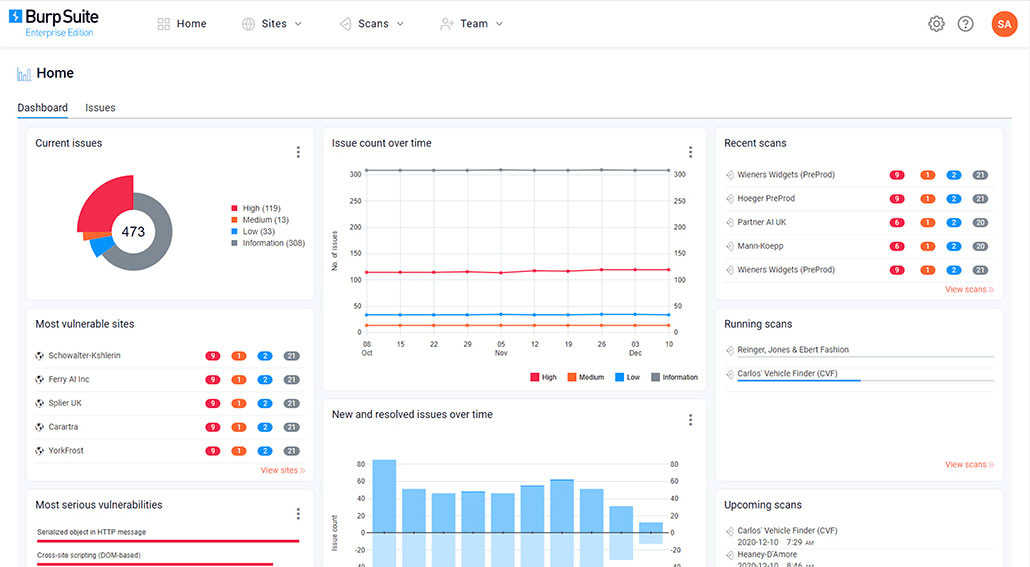
Every pentester’s daily go-to is Burp Suite, and it’s always running in the background. PortSwigger’s Burp Suite Professional edition is the de facto standard for manual web app testing among DAST tools. The Enterprise Edition takes that same well-respected scanning engine and wraps it in automation.
For organizations that already have testers fluent in Burp Pro, the Enterprise Edition extends that fluency into the security pipeline without forcing a new mental model on the security team, a smoother adoption curver than most DAST tools offer.
G2 Rating: 4.8/5
Key Features
- Automated schedulable scanning built on the industry-standard Burp engine.
- CI/CD integration for pipeline-triggered scans.
- Centralized scan management across large application portfolios.
- Native support for Jenkins and other build tools to trigger scans and report findings.
- Regular updates, Burp AI features (issue explanation, remediation guidance), and strong community/extensions (BApp Store).
Pros
- Detection quality is backed by the team that breathes offensive security every day.
- Gartner Peer Insights shows strong scores in integration & deployment (4.5/5).
- Strong suite for teams that need custom testing beyond what most DAST tools allow.
Cons
- Requires significant expertise to configure authentication, scan policies, and get optimal results.
- Mixed feedback on support responsiveness for some enterprise users.
6. OWASP ZAP
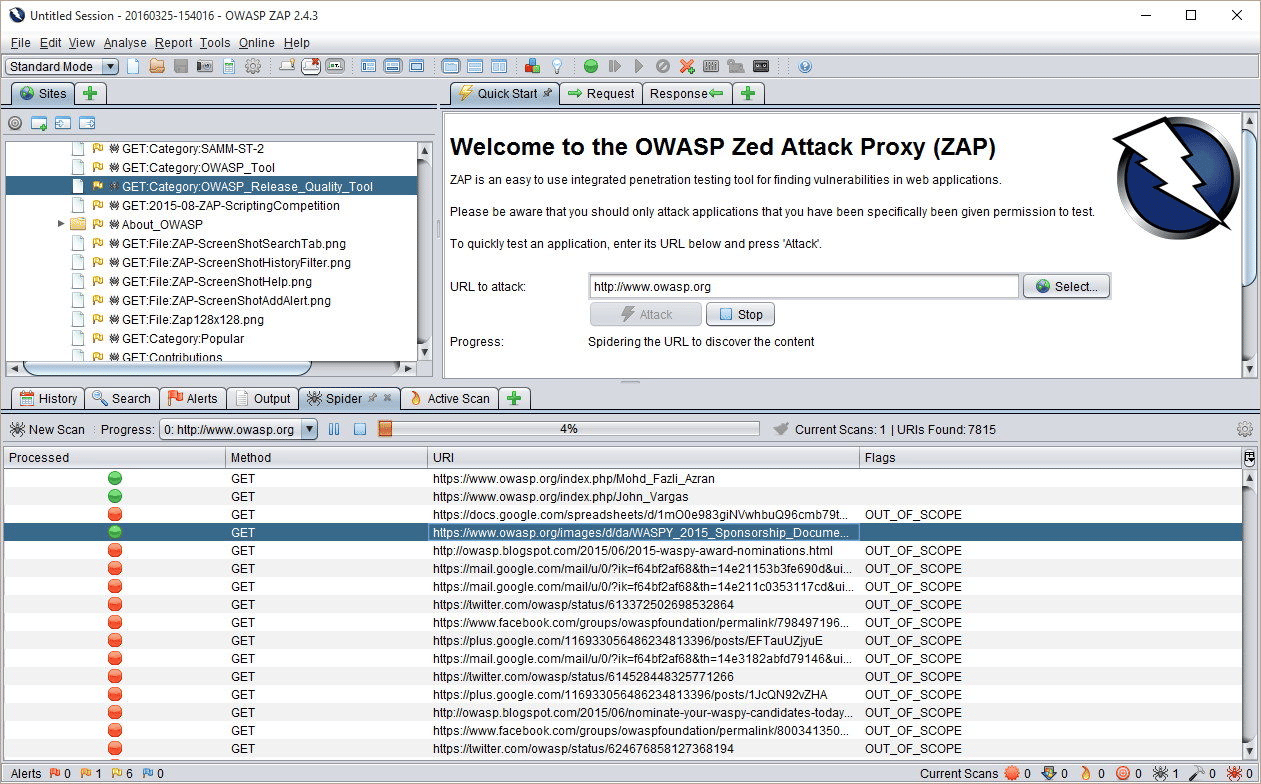
OWASP ZAP (Zed Attack Proxy) is the open-source anchor of any proper DAST tools list. Free, community-driven, and now maintained by Checkmarx, ZAP acts as both an intercepting proxy for manual pentesting and an automation framework that integrates with CI/CD via APIs and GitHub Actions.
The honest cost with ZAP and other FOSS DAST tools is that it’s free in license but not in labor. ZAP is known to produce more false positives than other DAST tools on this list, and it lacks enterprise-grade automation. It always requires tuning and configuration effort, making it best suited to teams with the in-house expertise to run it. You’re trading dollars for engineering hours.
G2 Rating: 4.7/5
Key features
- Automated spidering/crawling that automatically discovers application structure, links, and pages.
- Handles form-based, script-based, and complex auth flows.
- Strong REST API, CLI, Docker support, and CI/CD integrations.
- Automation framework with API and GitHub Actions support for CI/CD.
- Good coverage for APIs (REST, GraphQL with add-ons), WebSockets, SPAs, and continuous improvements via community.
Pros
- Completely free and open source DAST tool.
- Highly customizable and scriptable for bespoke testing workflows.
- Zero vendor lock-in with full control and transparency.
Cons
- Very high false positives.
- UI feels outdated and less polished than modern DAST tools in the market.
7. Acunetix
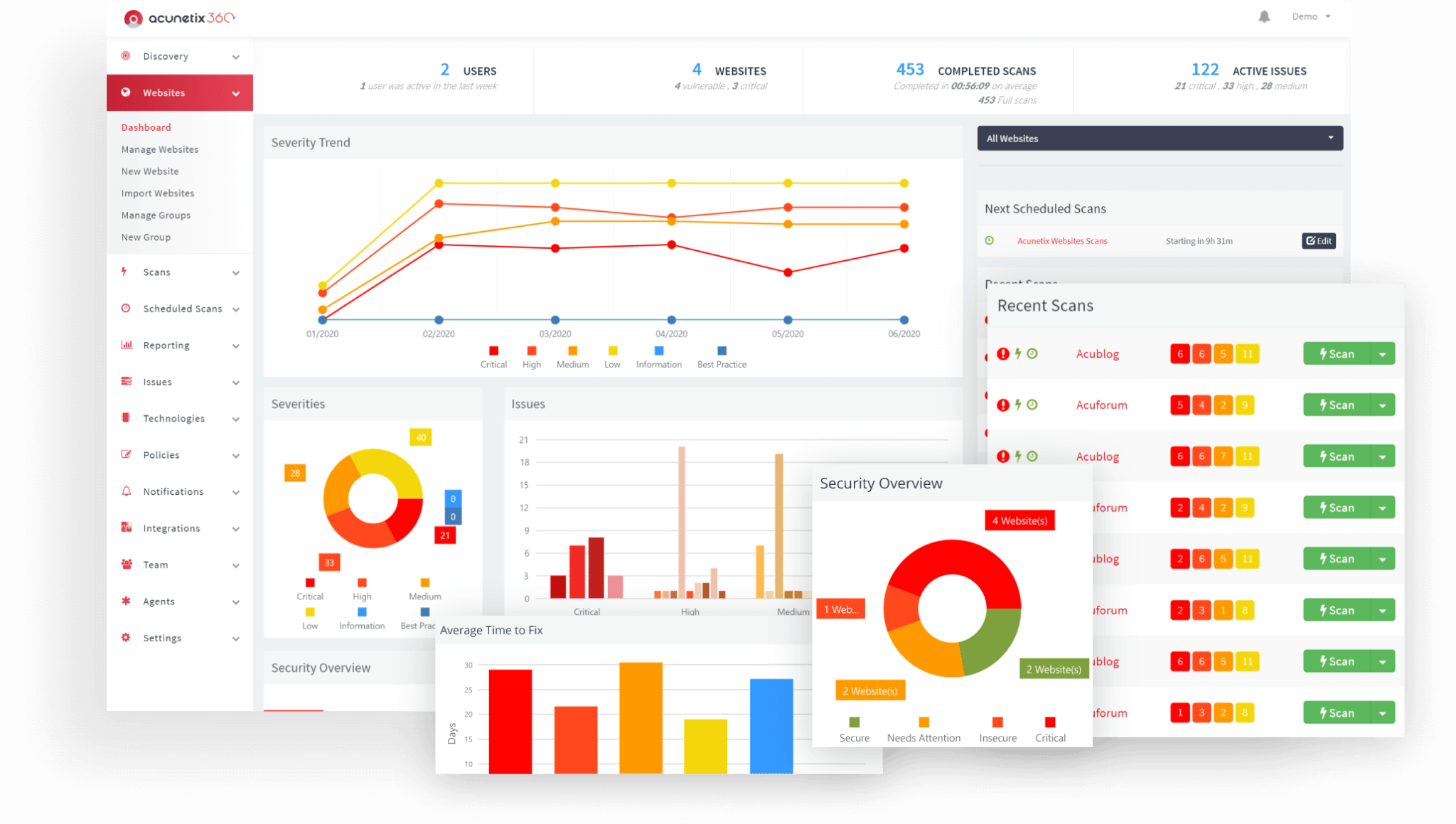
Acunetix, now part of the Invicti family, is the lighter DAST tool built for speed and quicker deployment. It’s a strong fit for SMBs that want capable DAST tools without enterprise-level billing or complexity. Its standout feature is AcuSensor, which instruments supported app stacks to reduce false positives and pinpoint the exact line where a vulnerability lies,an accuracy edge most DAST tools lack.
G2 Rating: 4.1/5
Key Features
- Detailed reporting with line-of-code pinpointing(with AcuSensor IAST capabilities).
- Fast scanning engine with CI/CD integration.
- Authenticated scanning for complex login and session flows
- Deep CI/CD and issue-tracker integrations with role-based access control
- Compliance and executive reporting across major frameworks.
Pros
- One of the quickest scanning engines available among DAST tools.
- More accessible pricing and simpler licensing than full Invicti Enterprise, making it attractive for smaller teams.
- Mature, well-documented integration ecosystem
Cons
- Weaker fit for complex, non-standard, or heavily internal applications.
- Best value requires a security engineer to own the workflow end-to-end.
8. StackHawk
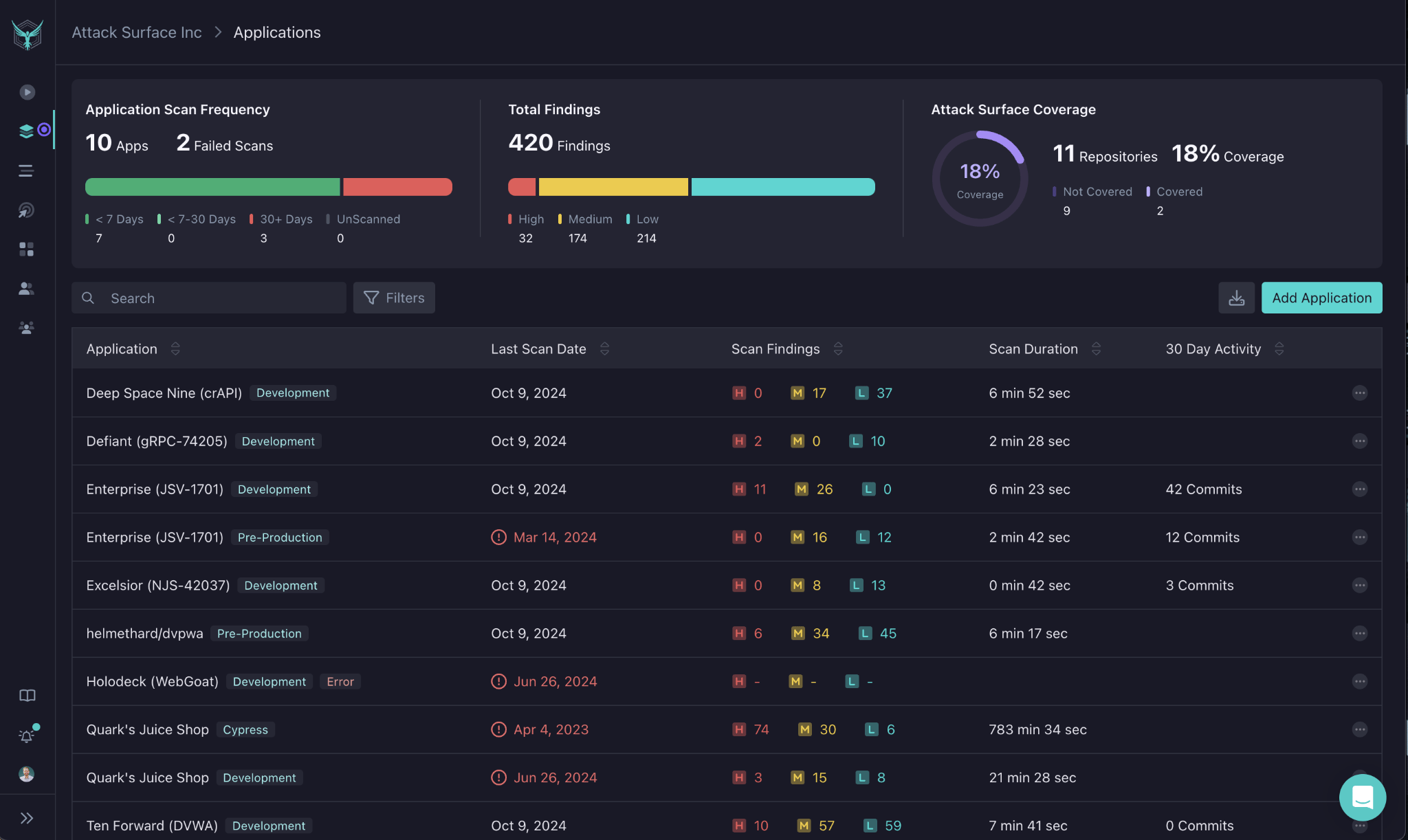
StackHawk is the developer-first end of the DAST tools spectrum, built on a simple conviction: a DAST tool is only valuable if developers actually run it. The technical philosophy behind this tool is “shift left and make it the developer’s tool.”
The trade-off is scope. StackHawk is deliberately focused on developer-driven dynamic testing in the pipeline, and misses governance and validation layers that enterprise DAST tools include.
G2 Rating: 4.6/5
Key Features
- CI/CD- native design with config-as-code.
- Pull request and ephemeral-environment scanning with quick feedback.
- Dev-focused findings with request/response and reproduction detail.
- Integrations with GitHub Actions, GitLab CI, Jenkins, and more.
- Incremental and smoke-test scanning for feature branches.
Pros
- Keeps security from being a bottleneck for release.
- Strong, modern API coverage out of the box.
Cons
- Compliance mapping and enterprise governance are missing.
- Less suited to large, centralized security team workflows than broader DAST tools.
9. Qualys
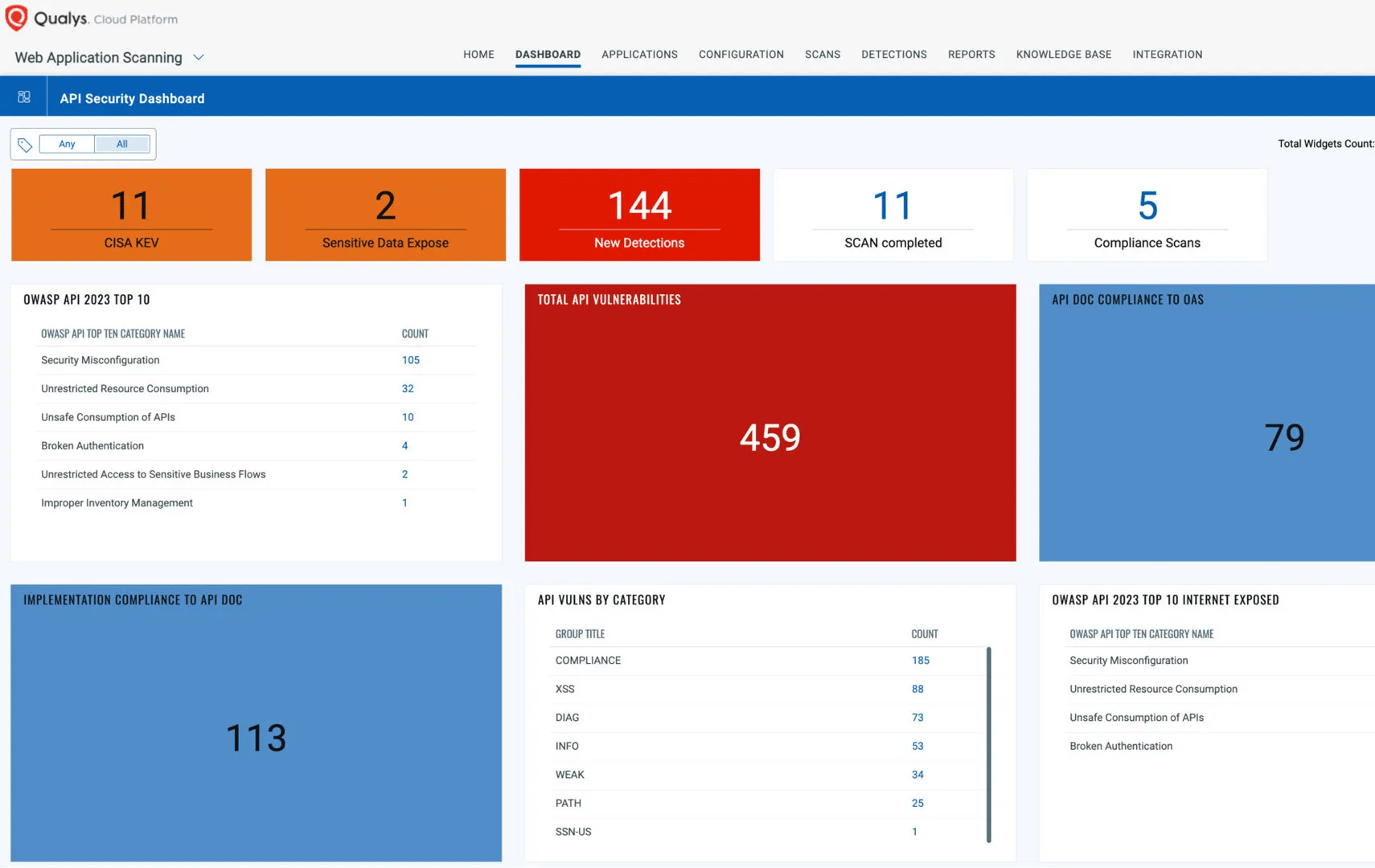
Qualys WAS extends the well-established cloud platform into appsec, and its biggest strength is asset intelligence. WAS handles authenticated scanning, malware detection, and API testing, and draws its benefits from the operational maturity of Qualys Cloud. As a DAST tool for inventory-heavy environments, it does the unglamorous work that more DAST tools skip and making sure nothing slips through uncatalogued.
G2 Rating: 4.5/5
Key Features
- Large-scale web app and API discovery cataloging.
- Centralized cloud console shared with the Qualys vulnerability management platform.
- Continuous, scheduled scanning across large estates.
- Consolidated asset inventory and reporting.
- Tagging and policy-based scan organization.
Pros
- Strong asset inventory that prevents forgotten apps from going untested.
- Progressive scanning reduces production disruption.
- PII exposure detection beyond standard vulnerability classes.
Cons
- Best value tied to existing Qualys platform adoption.
- Reporting can feel oriented toward breath metrics over exploitability, more than validation-focused DAST tools.
10. Rapid7 InsightAppSec
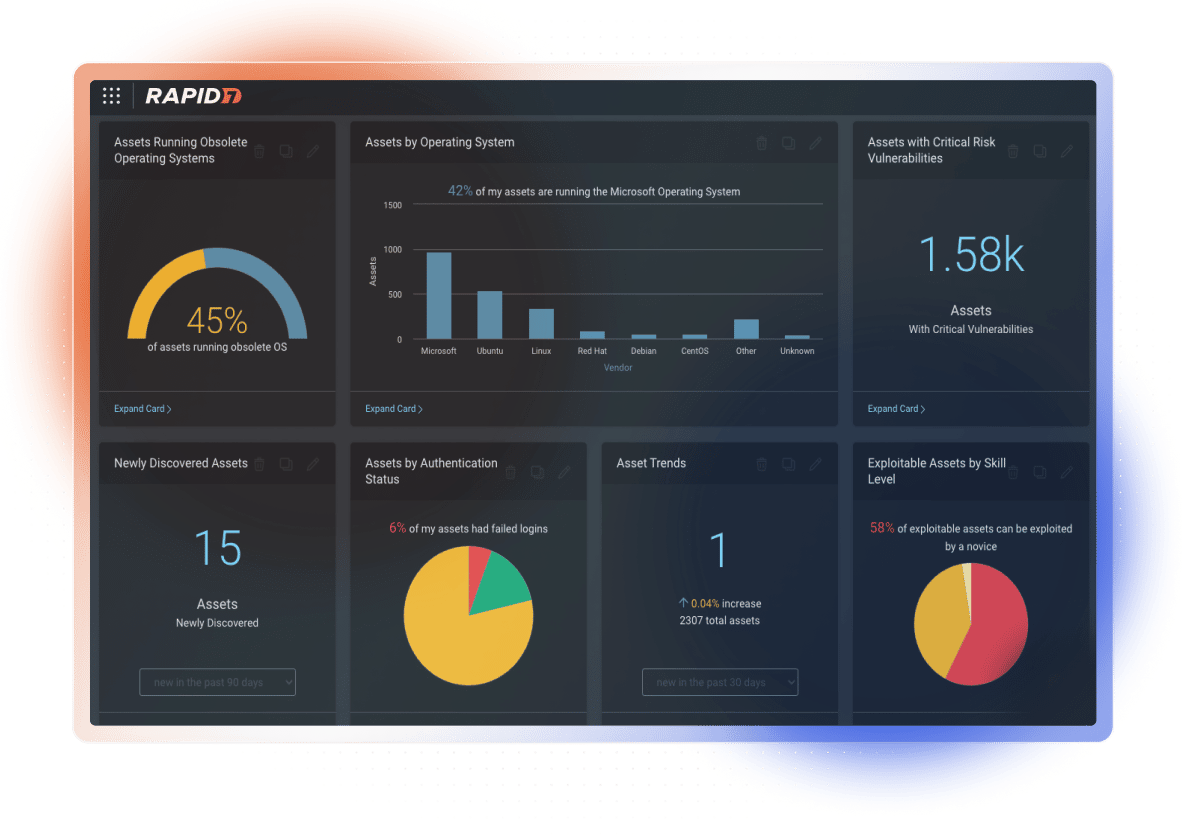
InsightAppSec is Rapid7’s cloud-based DAST tool, and among DAST tools its value proposition is context. It plugs into the broader Rapid7 platform, so findings can be correlated among the vulnerability management console, SIEM, and cloud security data (only a few standalone DAST tools offer this in the market).
Technically, the standout feature is Attack Replay, which lets teams reproduce a reported vulnerability to confirm its real and understand the exploit path, cutting down the back-and-forth between the security and engineering teams.
G2 Rating: 4.4/5
Key Features
- Cloud-native DAST tool with no scanner infrastructure to manage
- Attack Replay for reproducing and confirming reported vulnerabilities
- Native integration with the Rapid7 Insight platform
- Customizable scan policies and scheduling
- Authenticated scanning and modern web app/SPA support.
Pros
- Attack Replay meaningfully reduces security-to-engineering friction
- Scales cleanly without on-prem scanner maintenance
- Established enterprise support structure among other DAST tools in the market.
Cons
- Best ROI is tied to being an existing Rapid7 customer
- Enterprise pricing model
11. Escape
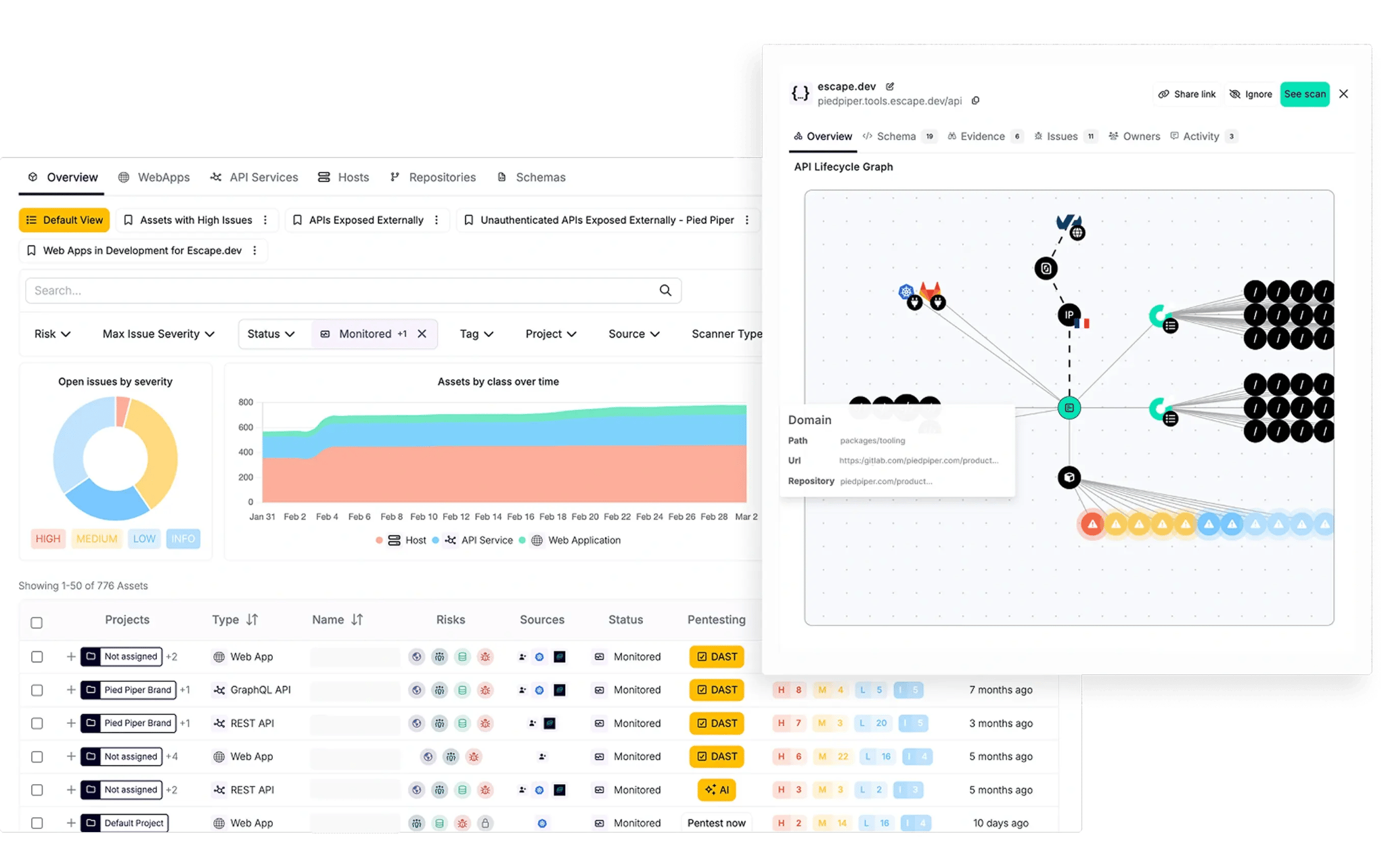
Escape is the modern, API-first answer to a problem older DAST tools structurally can’t detect: business logic vulnerabilities. Most DAST tools fire payloads at endpoints in isolation and have no concept of what “correct” behavior looks like.
Escape’s feedback-driven Business Logic Security Testing (BLST) engine is built specifically to reason about an application’s context, which is why it focuses on the vulnerability classes that hurt most in API-driven architectures.
G2 Rating: 4.9/5
Key features
- Deep focus on IDOR, BOLA, and access-control flaws in APIs.
- Agentless API discovery paired with ASM.
- Complex authentication and multi-user testing via natural-language rules.
- AI-powered exploit validation for confirmed, reproducible findings.
- CI/CD integration with fast developer feedback.
Pros
- Excellent at complex, multi-user authentication scenarios.
- Built for modern API-first architectures rather than retrofitted like legacy DAST tools.
Cons
- Specialized only for API and business-logic testing, not a broad enterprise suite
- Newer entrant with a shorter track record than other DAST tools in the market.
12. Detectify
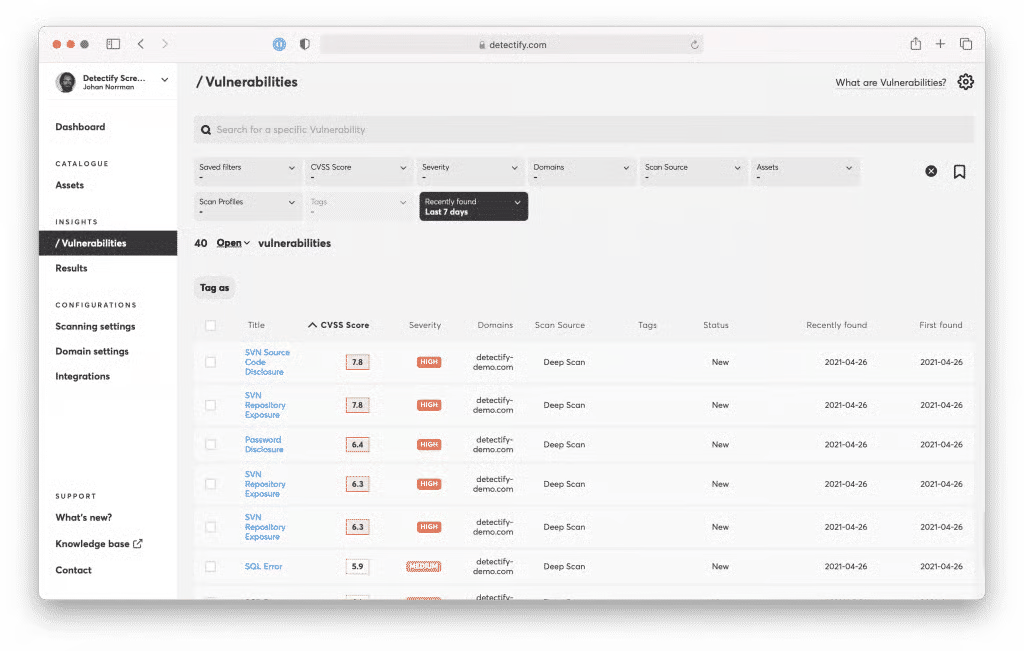
Detectify approaches DAST from the threat actor’s vantage point rather than the application’s owner’s. It uses EASM with dynamic testing to continuously discover assets, subdomains, and shadow IT across your internet-facing footprint, a niche most DAST tools don’t work.
For teams whose real exposure is the forgotten subdomain nobody remembers spinning up, that discovery-first model is the differentiator.
G2 Rating: 4.2/5
Key Features
- Combined external attack surface management (EASM) and DAST.
- Crowdsourced network feeding checks from vetted ethical hackers
- Rapid deployment of checks for newly emerging vulnerabilities
- Real attack payloads for verifiable, low-noise findings
Pros
- Low setup friction for expanding the testing scope across the perimeter.
- Findings reflect how attackers actually operate.
Cons
- Less governance and compliance tooling than enterprise-focused DAST tools.
- Crowdsource-driven model centers on known patterns over custom business logic.
13. Intruder
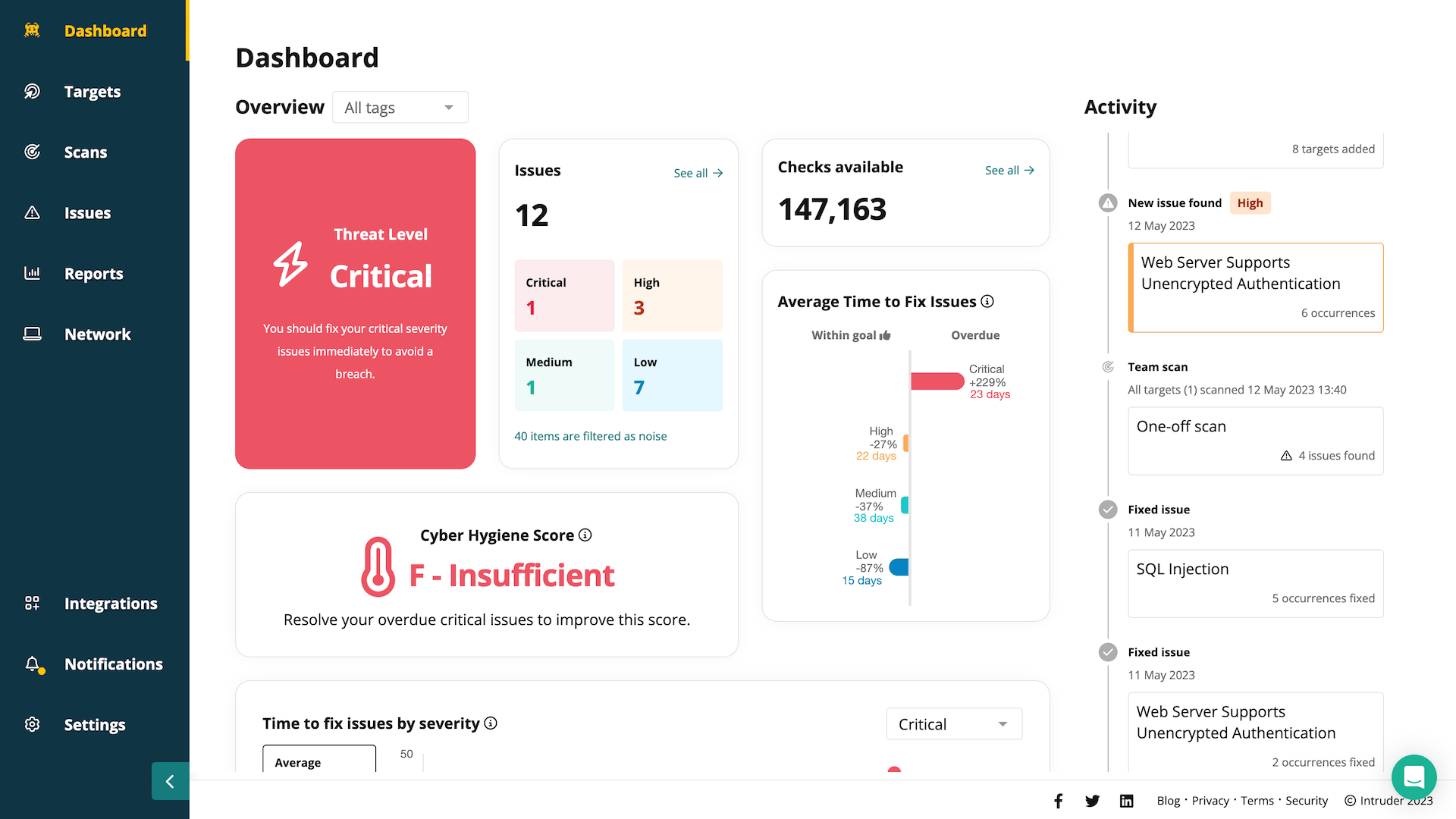
Intruder is the approachable, exposure-management end of the DAST tools market. It’s a cloud-based platform that blends dynamic scanning with external ASM, continuously checking web apps, APIS, and cloud infra. Intruder checks for known CVEs, misconfigs, and exposed services, then ranks them based on context and real-world impact.
The philosophy behind this DAST tool is clarity over volume. Intruder is the kind of tool a head of engineering can stand up and understand without a specialist translating security jargon.
G2 Rating: 4.8/5
Key Features
- Cloud-based continuous scanning across web apps, APIs, and cloud infrastructure
- Context-based prioritization of issues by real-world impact
- Strong CI/CD and cloud-provider integrations
- Automated scan scheduling with an intuitive, low-overhead interface
- Great coverage of perimeter and infrastructure exposure
Pros
- Genuinely easy to deploy and run without a dedicated security team
- Prioritization cuts through noise so small teams act on what matters
Cons
- Lighter on deep application and business logic testing than dedicated DAST tools.
- Best paired with a dedicated app-layer DAST tool.
Final Thoughts
After thirteen DAST tools, the honest takeaway is this: every DAST tools on the list can flag a SQL injection. What matters is what happens next.
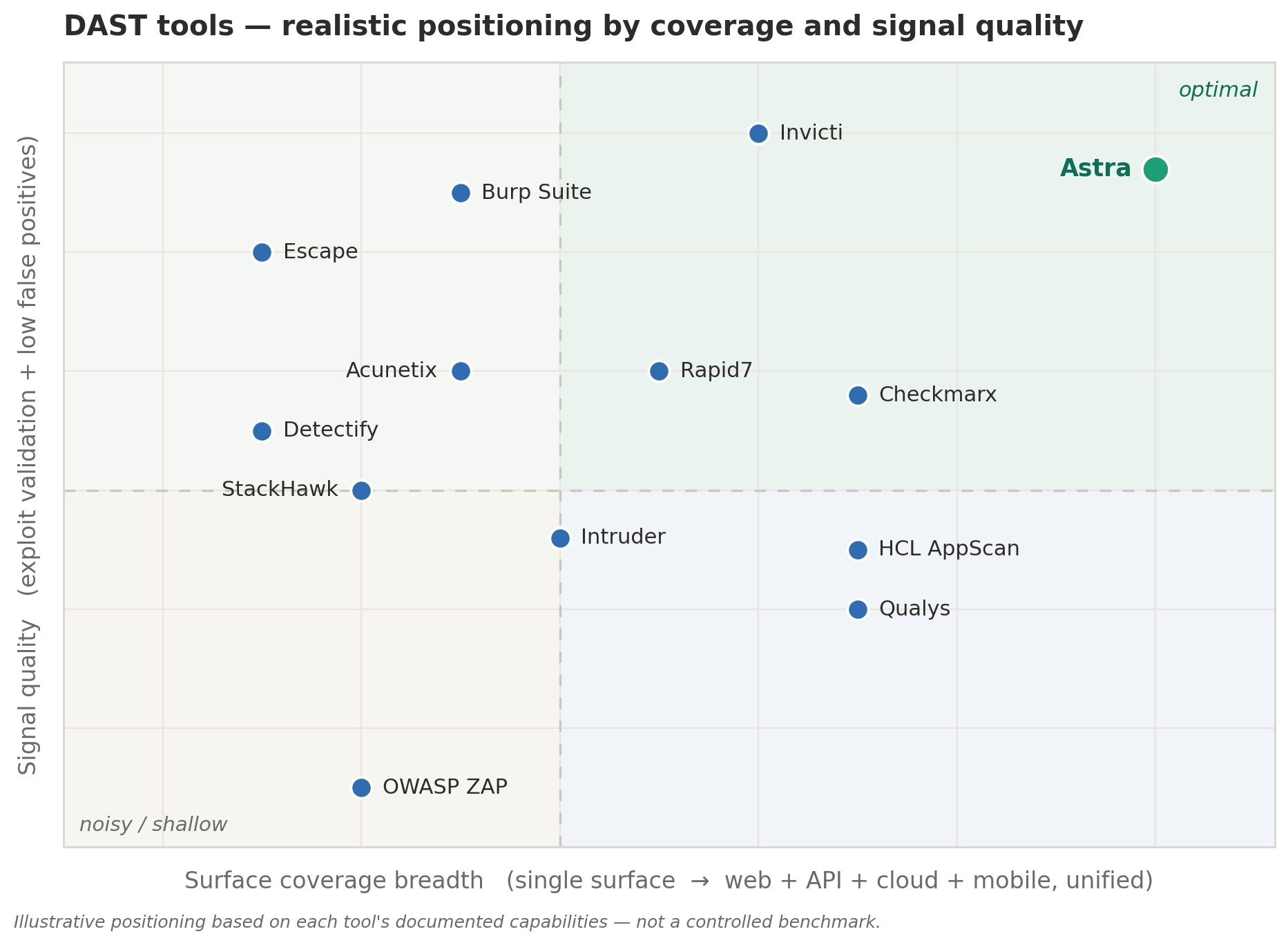
The DAST software market in 2026 splits into roughly three camps. Knowing which one you’re shopping in saves you from comparing DAST tools that were never meant to compete:
- Continuous-pentest and platform players: DAST tools folded into a broader offensive program across web, API, and cloud, built for teams who want confirmed findings, not a raw queue. (Astra)
- Enterprise scanners: DAST tools engineered for scale, asset sprawl, and compliance reporting across hundreds of applications. (Invicti, Acunetix, Checkmarx, HCL AppScan, Qualys, Rapid7)
- Developer-first and open-source DAST tools: optimized to fit into a pipeline and give engineers something they’ll actually run. (Burp Suite, OWASP ZAP, StackHawk, Escape, Detectify, Intruder)
So find your camp first, then your DAST solution.
And if your real bottleneck is noise, validation is the axis that matters most among DAST tools, which is exactly where Astra leads, pairing broad web, API, and cloud coverage with expert-vetted findings.
FAQs
1. How is DAST different from SAST?
SAST analyzes source code before the app runs and detects code-level flaws, while DAST tools test a running app like a threat actor. Most mature security programs run both as complementary, since each tool detects what the others structurally miss.
2. What is a DAST tool?
A DAST (dynamic application security testing) tool is software that probes a running web app without source code access to detect vulnerabilities (e.g., misconfiguration, BOLA, IDOR) by sending malicious inputs and analyzing responses. These DAST tools mimic real attacker behavior(black-box pentesting) to surface exploitable risks.
3. What are common DAST tools?
DAST tools often fall into three categories: continuous-pentest platforms like Astra, enterprise scanners like Invicti, Acunetix, Checkmarx, Veracode, and Qualys, and developer-first or open-source DAST tools like Burp Suite, OWASP ZAP, and StackHawk. The right pick depends on team size, architecture, and budget.
4. What is an example of a DAST tool?
Astra Security is one of the best examples of a DAST tool, combining continuous scanning across web, API, and cloud environments with expert-validated findings. Other DAST tools on most “best DAST tools” lists include Invicti, Burp Suite, OWASP ZAP, Acunetix, and StackHawk.
5. Is OWASP ZAP a DAST tool?
Yes, OWASP ZAP is one of the most widely used open-source DAST tools. It scans running web applications and APIs for runtime vulnerabilities through active and passive testing, without needing source code access.
6. Is SonarQube SAST or DAST?
SonarQube is a SAST tool, not one of the DAST tools. It analyzes source code statically for bugs, security flaws, and quality issues before runtime, whereas DAST tools test running applications from an attacker’s perspective
Additional Resources on Security Testing
This post is part of a series on Security Testing. You can
also check out other articles below.

- Chapter 1: What is Security Testing and Why is it Important?
- Chapter 2: Security Testing Methodologies
- Chapter 3: What is Web Application Security Testing?
- Chapter 4: How to Perform Mobile Application Security Testing
- Chapter 5: What is Cloud Security Testing?
- Chapter 6: What is API Security Testing?
- Chapter 7: What is Network Security Testing?
- Chapter 8: A Complete Guide to OWASP Security Testing?
- Chapter 9: What is DAST?
- Chapter 10: What is SAST?