

Key Takeaways
- Web applications are among the top threats to organizations, as 90% of attacks occur at the application layer, introducing critical security risks due to vulnerabilities such as broken access controls, injection, and cryptographic failures.
- From Equifax to Facebook and NASA, actual breaches illustrate the kinds of data leaks, financial losses, and regulatory fines that result when the OWASP Top 10 vulnerabilities remain unresolved.
- Security-by-design in CI/CD pipelines, enforcement via HSTS and CSP headers, regular web application penetration testing, and thorough training and/or mentorship for developers are required for effective security.
Hackers love web applications. Why? Because 9 out of 10 vulnerabilities exist at the application layer, and exploiting them lets attackers bypass firewalls and perimeter defenses completely.
In 2025, a total of 48,448 Common Vulnerabilities and Exposures (CVEs) were published, up 17% from the previous year, where such exploited vulnerabilities in web applications cost organizations an average of $4.44 million in damages, excluding the lost reputation.
As such, in this article, we will not only explore the list of web application vulnerabilities but also their impact, mitigation, and best practices. Let’s dig in.
Common Vulnerabilities in Web Applications
- Broken Access Control
- Cryptographic Failures
- Injection Attacks
- Broken Authentication & Session Management
- API Specific Vulnerabilities
- Security Misconfigurations
- Vulnerable & Outdated Components
What are Web Application Vulnerabilities?
Web app vulnerabilities are defects in the code, design, or implementation of an app that attackers can exploit to breach security. These vulnerabilities might manifest as broken authentication, input validation, session management, or data encryption issues.
Web applications are particularly attractive targets for the following reasons. For one thing, they’re always online, giving cybercriminals a 24/7 opportunity to comb through them. Secondly, the amount of sensitive data that today’s web applications process is massive, from personal information to financial and intellectual property.
The third issue is that the more complex application architectures in use now introduce many points of entry for attacks: multiple integrations, APIs, and third-party components.

What are Common Web Application Vulnerabilities?
To build a robust defense against attackers who exploit these weaknesses daily, the first step is to understand the most common vulnerabilities in web applications.
Broken Access Control
Broken access control situations arise when applications do not correctly enforce restrictions on what authenticated users can do. Threat actors can then read, alter, or delete data they do not have access to. Given that Broken Access Control was the number one vulnerability in the OWASP Top 10, and 94% of applications tested contained some form of broken access control, this should not come as a surprise.
Impact: An attacker could see other users’ accounts, gain admin functions without permission, change access permissions, and escalate privileges. For example, in 2015, security researcher Laxman Muthiyah discovered that by sending a slightly altered API request to the site, an attacker could gain administrator access to any Facebook page.
Example: We can understand this with an example, as shown below, with an online banking application where the user accesses the account via a URL like https://www.example.com/account?id=12345.
If the application does not verify that the logged-in user owns account 12345, an attacker can simply change the ID parameter to gain access to any account they choose.

Cryptographic Failures
Cryptographic Failure occurs when applications are unable to adequately safeguard sensitive data due to insufficient or nonexistent encryption, weak key management, and/or insecure transmission protocols.
Common mistakes include storing passwords in plaintext, using outdated algorithms such as MD5 or SHA-1, sending sensitive information over unencrypted HTTP, and hardcoding encryption keys in source code.
Impact: Depending on the implementation, an unsuccessful cryptographic implementation is a critical risk for the company, as it may allow the attacker access to important and sensitive data from users, such as passwords, personal information, financial records, session tokens, etc.
Example: In March 2019, Facebook disclosed a major cryptographic failure affecting up to 600 million users. The company admitted that it had been storing user passwords in plaintext format in internal data storage systems, making them readable by thousands of Facebook employees. Some of these passwords dated back to 2012.
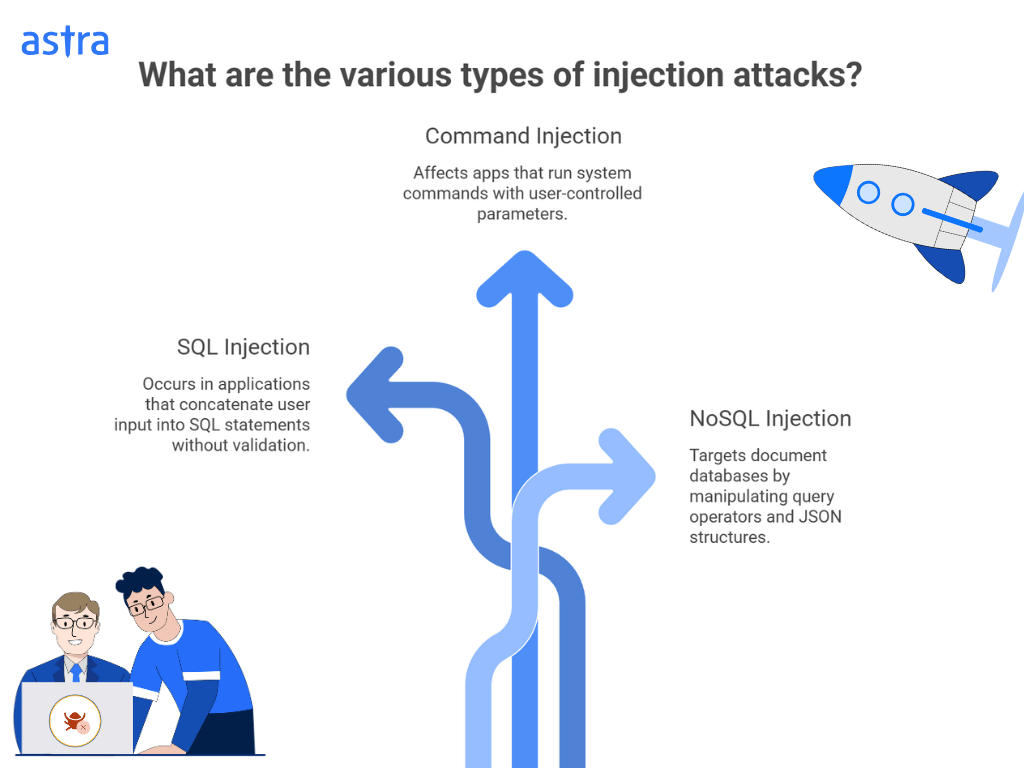
Injection Attacks
An attack that occurs when the application sends untrusted data to an interpreter as part of a command or query. The most common types of injection attacks are SQL injection and Cross-Site Scripting (XSS). The results from 2025 identified over 6227+ XSS vulnerabilities in the web applications, while SQL injection continues to enable database manipulation and data theft.
Impact: The SQL injection allows reading, modifying, or deleting contents from data, for example, turning off authentication and executing commands on the operating server. The attacker can use this type of attack to steal session cookies, entice the victim to open malicious websites, change the look and feel of web pages, and distribute malware via XSS.
Example: An SQL injection attack on a search feature on an e-commerce website that takes user input directly into SQL queries. So an attacker would enter in the search box:’ OR '1'='1'; DROP TABLE users; (this is a dummy and sample payload). The application creates an unsanitised query that leads to dropping the entire users table.
Broken Authentication and Session Management
Authentication failures refer to the improper implementation of user identity verification and session management in an application. Weak password policies, the absence of multi-factor authentication, predictable session tokens, and failure to invalidate the current session upon logout are common issues.
Exploitation of such web app vulnerabilities can help an attacker to hijack user accounts using credential stuffing, brute-force, and/or session hijacking techniques.
Impact: Attackers can impersonate real users and maintain control of accounts to exfiltrate data and commit fraud. If administrative accounts are compromised, the attacker can control the applications and the underlying systems. The effect is even more devastating when users reuse passwords across multiple services.
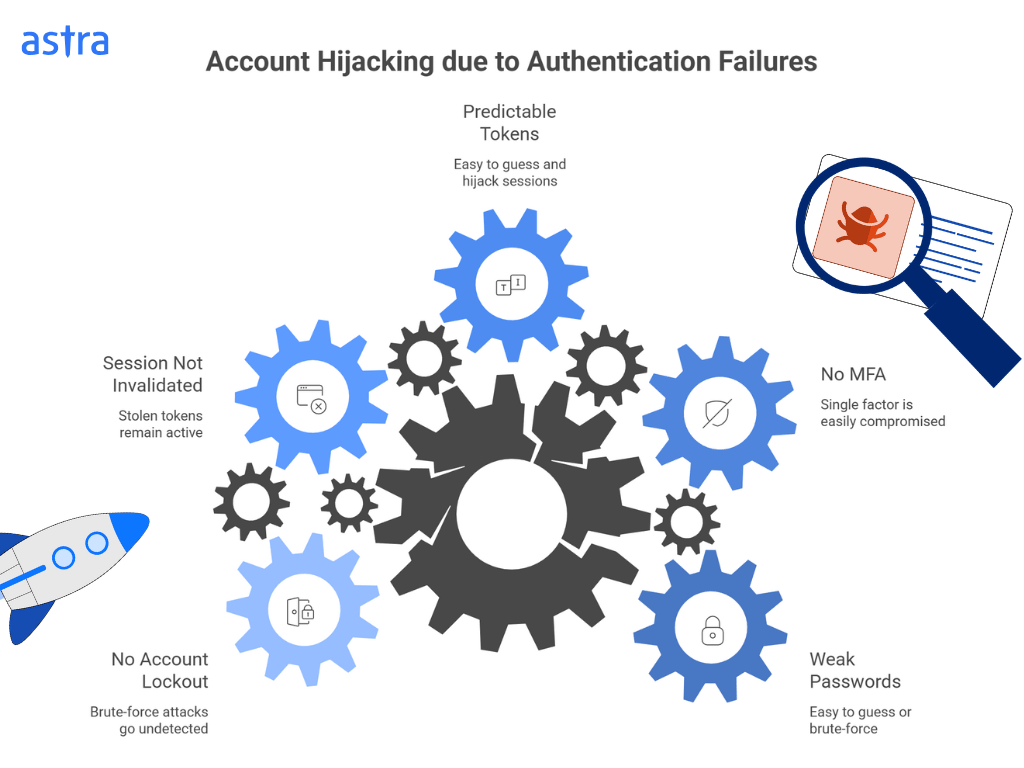
Example: A session token based on a sequential number was deployed on an e-commerce website. An attacker has authenticated and received session token 12345, then begins guessing tokens 12346 and 12347, and continues.
Within minutes, hundreds of active sessions are hijacked, and customer accounts are accessed. In addition, the platform’s lack of account lockout mechanisms allows attackers to easily brute-force admin accounts without triggering any alerts.
API-Specific Vulnerabilities
APIs create their own security challenges. OWASP API Security Top 10 2023 covers critical risks like broken object-level authorization, broken authentication, and broken object property-level authorization.
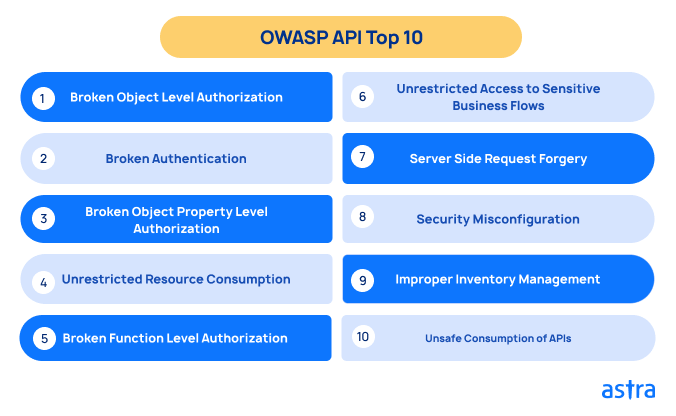
Impact: API vulnerabilities can be abused by attackers to gain access to sensitive information, change business logic, overload resources, and compromise security controls. Broken Object Level Authorization (BOLA) is the root cause of most API attacks.
In 2019, attackers were changing the user ID in the API request parameter to view a private post or story on any account, making users’ private content visible to the world due to this Instagram IDOR vulnerability.
Example: A bank can get account information through APIs in a mobile banking app. The API endpoint /api/accounts/{account_id} fails to ensure that the account is owned by the requesting user.
It was found that an attacker had called the API, changed the account_id parameter value, and was able to access other customer account details such as balance, transaction history, and personal details. Internal customer IDs and risk scores are other fields the API returns, providing threat actors with additional context.
Security Misconfiguration
Security misconfigurations include default settings, incomplete setups, open ports, error messages that contain too much information, unpatched software, etc. These types of web app vulnerabilities are among the most insecure, since they can be easily exploited and affect any layer of the application stack.
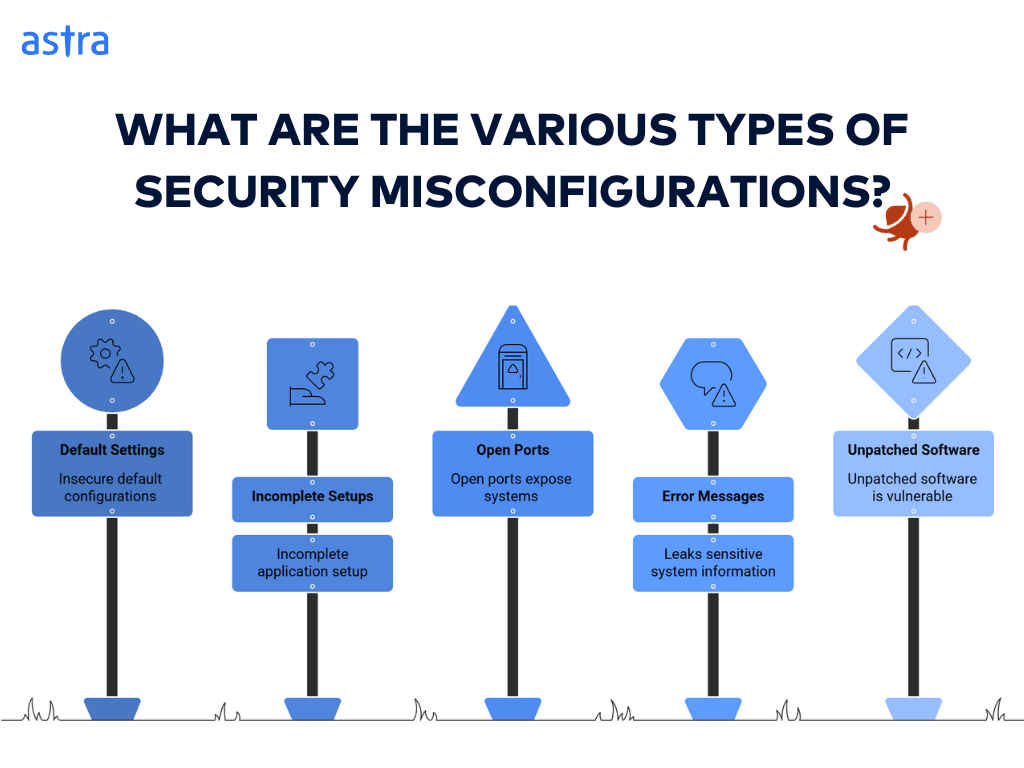
Impact: Misconfigurations may expose sensitive data, enable unauthorized access, leak system information to attackers, and serve as potential entry points for more sophisticated attacks. Misconfiguration in Atlassian JIRA exposed sensitive internal data from hundreds of Fortune 500 companies in February 2025 due to misconfigured global permissions.
Example: A company deploys a web app, but the default admin credentials are not changed (e.g., "admin/admin" is live). If directory listing is active, anyone could access the file structure and discover the backup records, given the database password.
Vulnerable and Outdated Components
Modern web applications rely on third-party libraries, frameworks, and components. These dependencies have CVEs or become obsolete. At least one high- or critical-severity vulnerability was discovered in most applications, and these unpatched web app vulnerabilities contribute to the majority of data breaches.
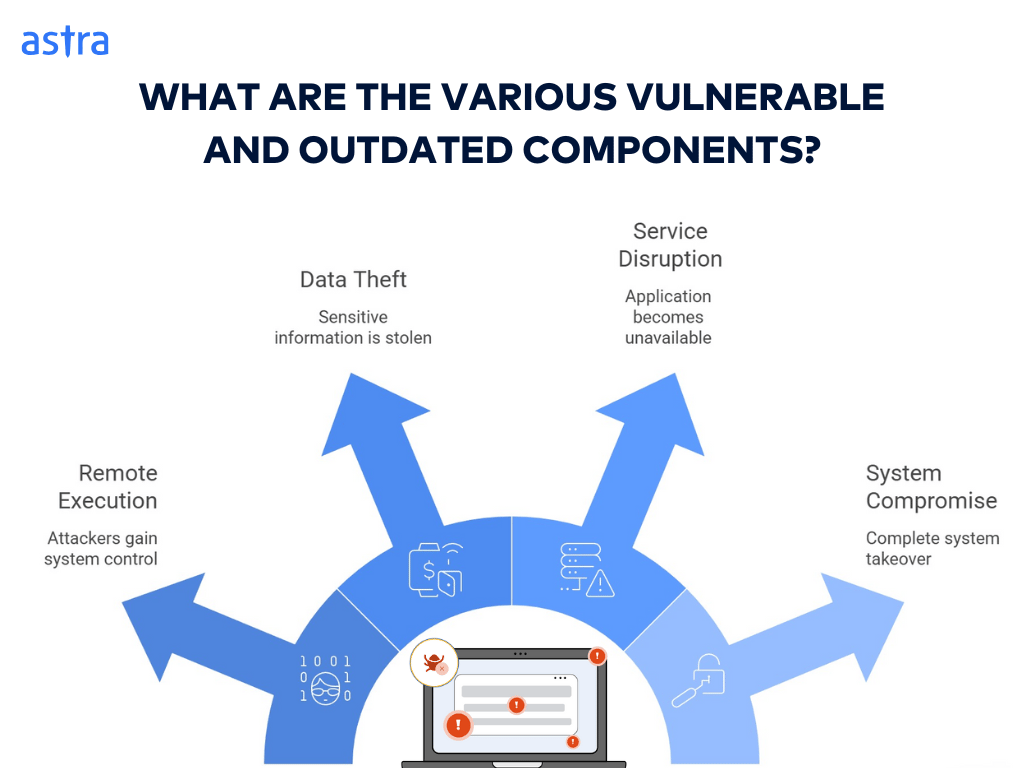
Impact: Vulnerable components may allow remote code execution, data theft, service disruption, and complete system compromise. For example, the 2017 Equifax breach, which exposed the data of 147 million individuals, was caused by an unpatched vulnerability in Apache Struts.
In 2024, multiple instances of obsolete JavaScript libraries with publicly known exploits were detected throughout the examined applications.
Example: An e-commerce platform had a function that used a vulnerable JavaScript library (such as an outdated jQuery version) embedded in the frontend pages, and it had an existing, known XSS vulnerability. Consequently, attackers can exploit this to execute a script on one of the product pages.
Best Practices for Web Application Security
Most common vulnerabilities in web applications stem from a handful of preventable coding mistakes and misconfigurations, as explained above, that attackers exploit repeatedly. Here are some best practices to help prevent them
Security by Design Approach
Security controls should be built into the architecture from the ground up rather than added as an afterthought after features have already been developed. Organizations should adopt secure development frameworks such as OWASP’s Secure Coding Practices, perform threat modeling before development, and apply secure coding standards throughout the development life cycle, especially when implementing modern vibe coding security practices in AI-assisted development environments.
Regular Security Assessments
New vulnerabilities are discovered every day, and even small changes to an application can change its risk profile.
Some crucial assessments organizations should conduct include Static Application Security Testing (SAST) for code analysis, Dynamic Application Security Testing (DAST) for runtime testing, and manual penetration testing to help identify complex vulnerabilities that automated tools are unable to detect.
Continuous Security Testing in CI/CD Pipelines
Continuous Integration/Continuous Deployment (CI/CD) should include security testing so that vulnerabilities can be identified as early as possible, when the cost and effort required to remediate them are at their lowest.
Automatically perform vulnerability scanning as part of the build process, establish security gates that will reject code from being merged and deployed until the code meets specific security thresholds, and provide real-time details to developers on security issues in the code they write.
HTTP Strict Transport Security (HSTS) and Content Security Policy (CSP)
HSTS ensures all connections to HSTS domains use secure HTTPS, protecting against protocol downgrade attacks and preventing cookie hijacking. At the same time, CSP helps prevent XSS and data injection attacks by controlling which resources the user agent is allowed to load for a given page.
HSTS headers with max-age directives set to a long duration should be enabled across all web properties, and CSP should be configured for every organization to restrict script sources and inline JavaScript execution.
Developer Security Training Programs
Developers who understand security write more secure code and catch and avoid vulnerabilities during code reviews. The OWASP Top 10 can be part of the overall training, but secure coding practices specific to different languages and frameworks, along with emerging threats, should be taught in a practical way to software development teams.
How Astra Security Can Help
Astra Security is an all-in-one penetration testing platform that combines automated AI scanning with manual expert testing to identify and fix web application vulnerabilities.
Unlike traditional security platforms, the PTaaS Platform is designed to deliver the best of both worlds: an AI-powered DAST scanner runs continuous security assessments using over 15,000+ test cases to detect OWASP Top 10 vulnerabilities, CVEs, SANS 25 threats, and business logic flaws; meanwhile, CREST-accredited security professionals conduct manual pentesting to uncover complex security issues that automated tools alone simply cannot detect.
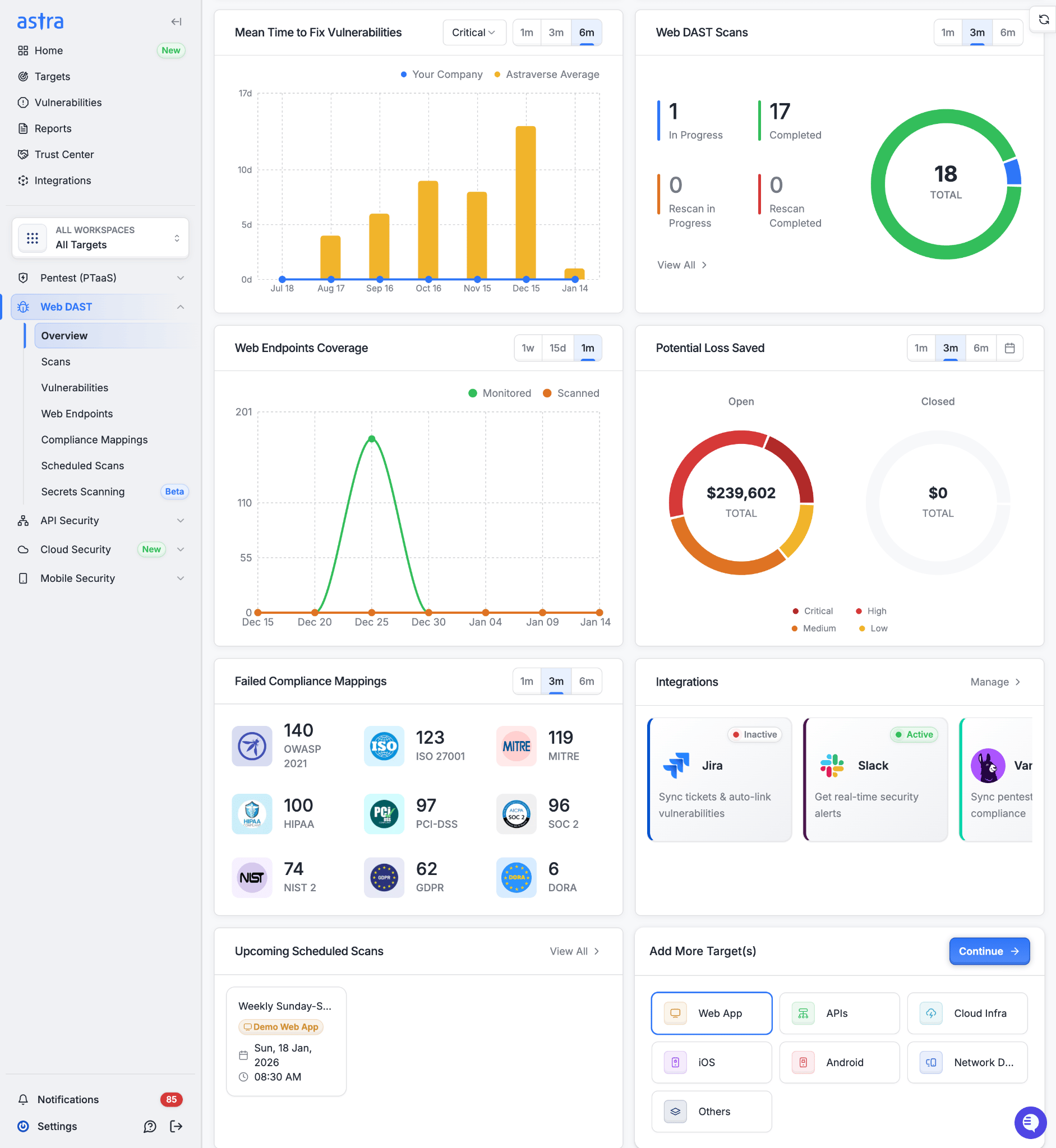
Our team enables continuous monitoring of your applications, helping you stay ahead of emerging threats and identify security vulnerabilities in web applications in real-time. Moreover, the platform is one of the few that not only helps you protect your web application, but also covers the cloud infrastructure and APIs consumed in real time.
Key Features:
- Run dynamic, authenticated offensive vulnerability scans that go well beyond OWASP Top 10.
- Automatically crawl your web app with a headless browser engine to accurately map JS-heavy SPAs and discover API inventory.
- Scans REST, SOAP, and GraphQL APIs with proper authentication, and also auto-discovers zombie, shadow, and undocumented APIs from traffic.
- Execute dynamic scans behind login with support for MFA, token-based logins, SSOs, and multi-step custom auth flows.
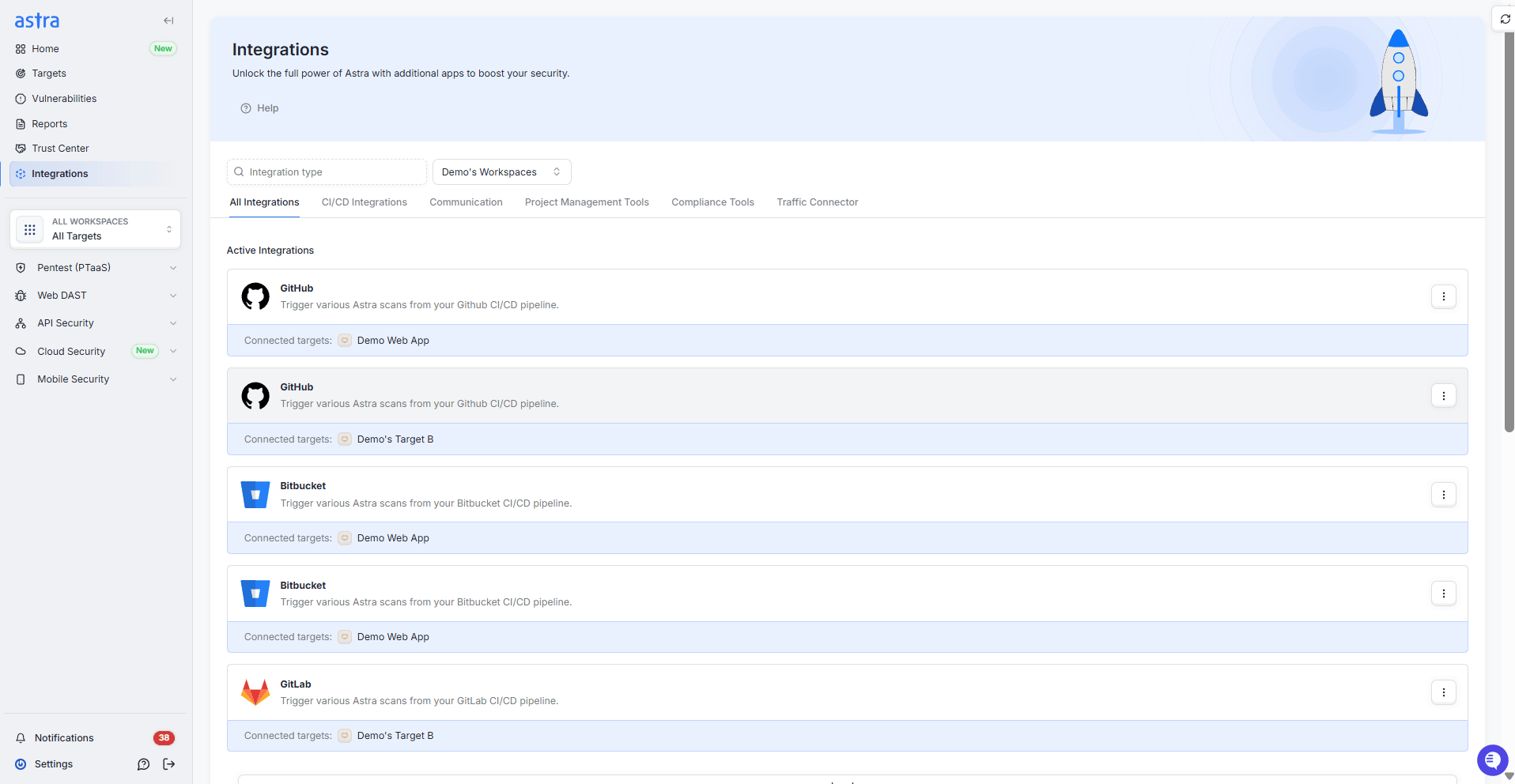
- Trigger scans from your CI/CD pipeline (GitHub, GitLab, Jenkins, CircleCI, Azure DevOps, GCP DevOps, etc.) or schedule recurring scans for continuous monitoring.
- Support for custom scan configuration (headers, user agents, timeouts, etc.) to adapt to complex environments.
- Role-Based Access Control (RBAC) to manage multiple users with defined roles.
- Cloud & container awareness: understands apps in Kubernetes, Docker, and cloud-native environments, with integrated cloud misconfig scanning for AWS, GCP, and Azure.
Final Thoughts
The largest cybersecurity risk to organizations now comes from repetitive & common web application vulnerabilities, where 90% of threats occur, and over 40,000 new CVEs were published in 2024. Attackers could compromise applications and exfiltrate sensitive data through multiple vectors covering broken access control, cryptographic failures, injection and API vulnerabilities.
If organizations adopt the mentioned best practices and leverage security platforms, the attack surface will be drastically reduced, thereby protecting critical assets. Want to protect your web applications from the evolving threat landscape?
Learn how Astra Security’s ongoing pentesting platform secures your organisation with automated scans, manual expert testing, and end-to-end vulnerability management.
FAQs
What are the potential vulnerabilities in a web application?
Common vulnerabilities in web applications include broken access control, SQL injection, cross-site scripting (XSS), authentication failures, security misconfigurations, insecure APIs, vulnerable components, cryptographic failures, insufficient logging, and server-side request forgery (SSRF)—all exploitable by attackers.