




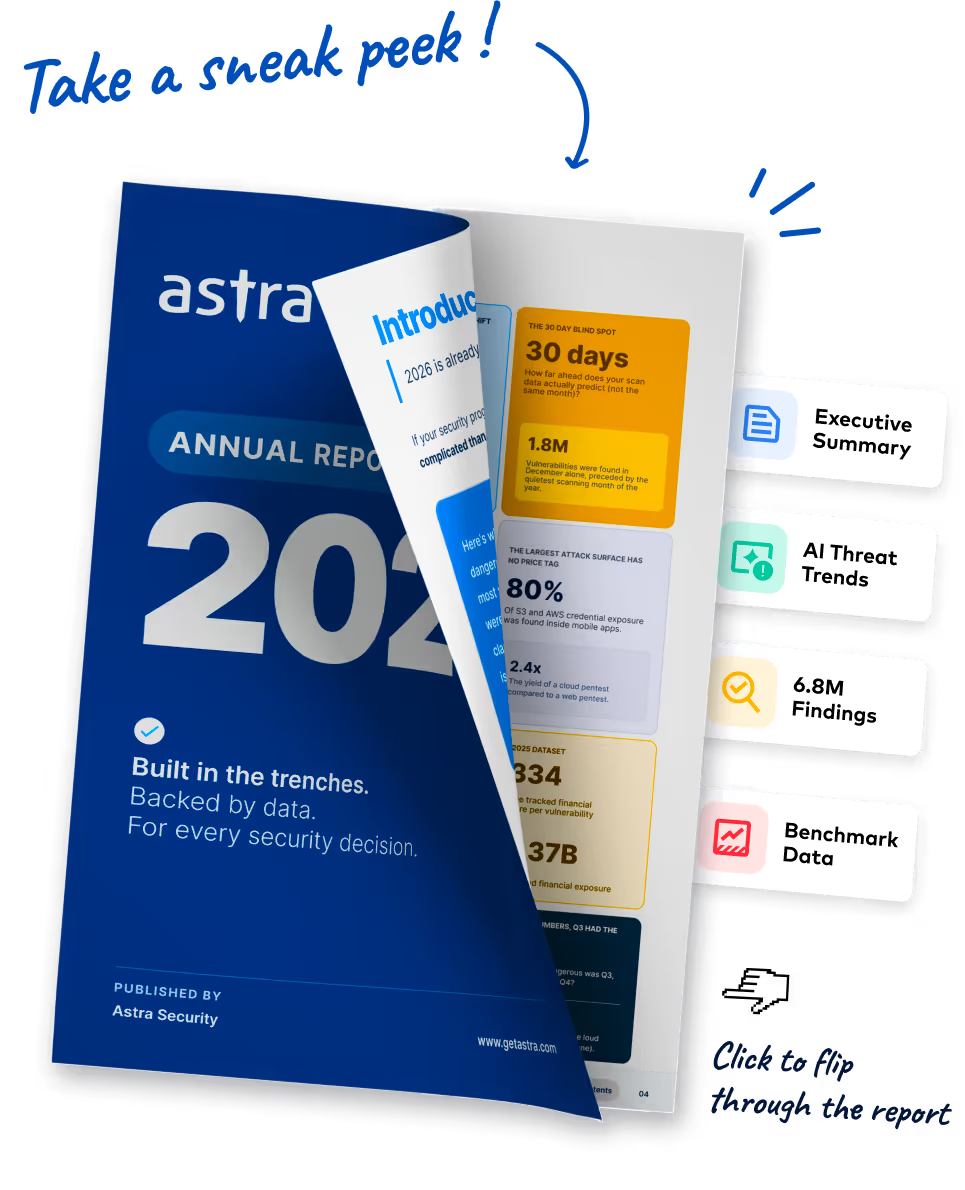






Built in the trenches. Backed by data. For the boardroom.
State of continuous pentesting report 2026
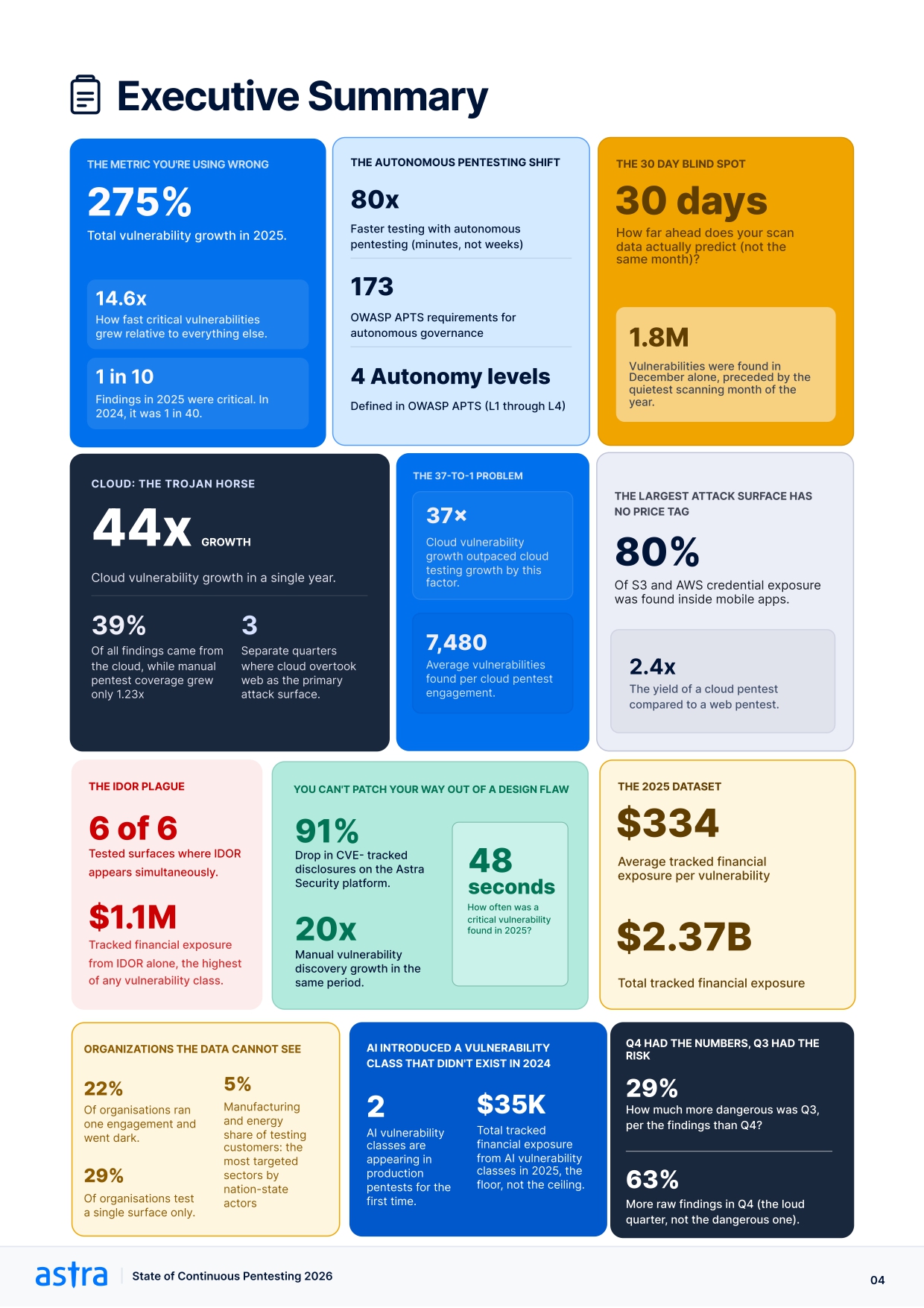
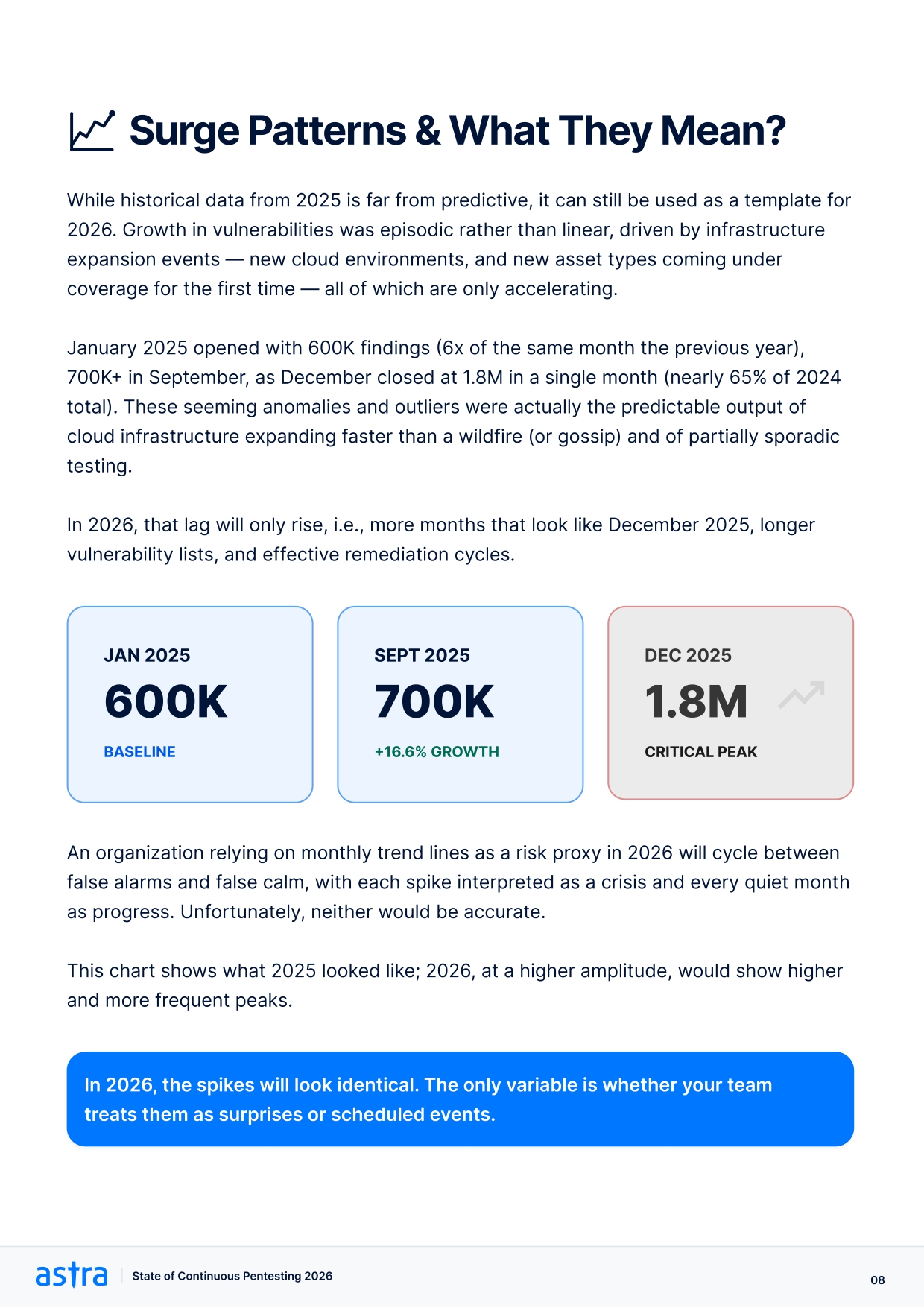
A critical vulnerability was found every 48 seconds in 2025. In 2024, it was every 12 minutes. That’s one critical vulnerability for every reel you watch. So if 2024 was buffering, 2025 just hit autoplay. And 2026 isn’t getting any slower. Risk is moving continuously, and so should pentesting.

What’s inside?
This pentest report is backed by data from 6.8M findings (across web app, cloud, APIs, network,
Android, and iOS), 150K+ scans, 8K+ engagements, 1,000+ organizations, and 70 countries.

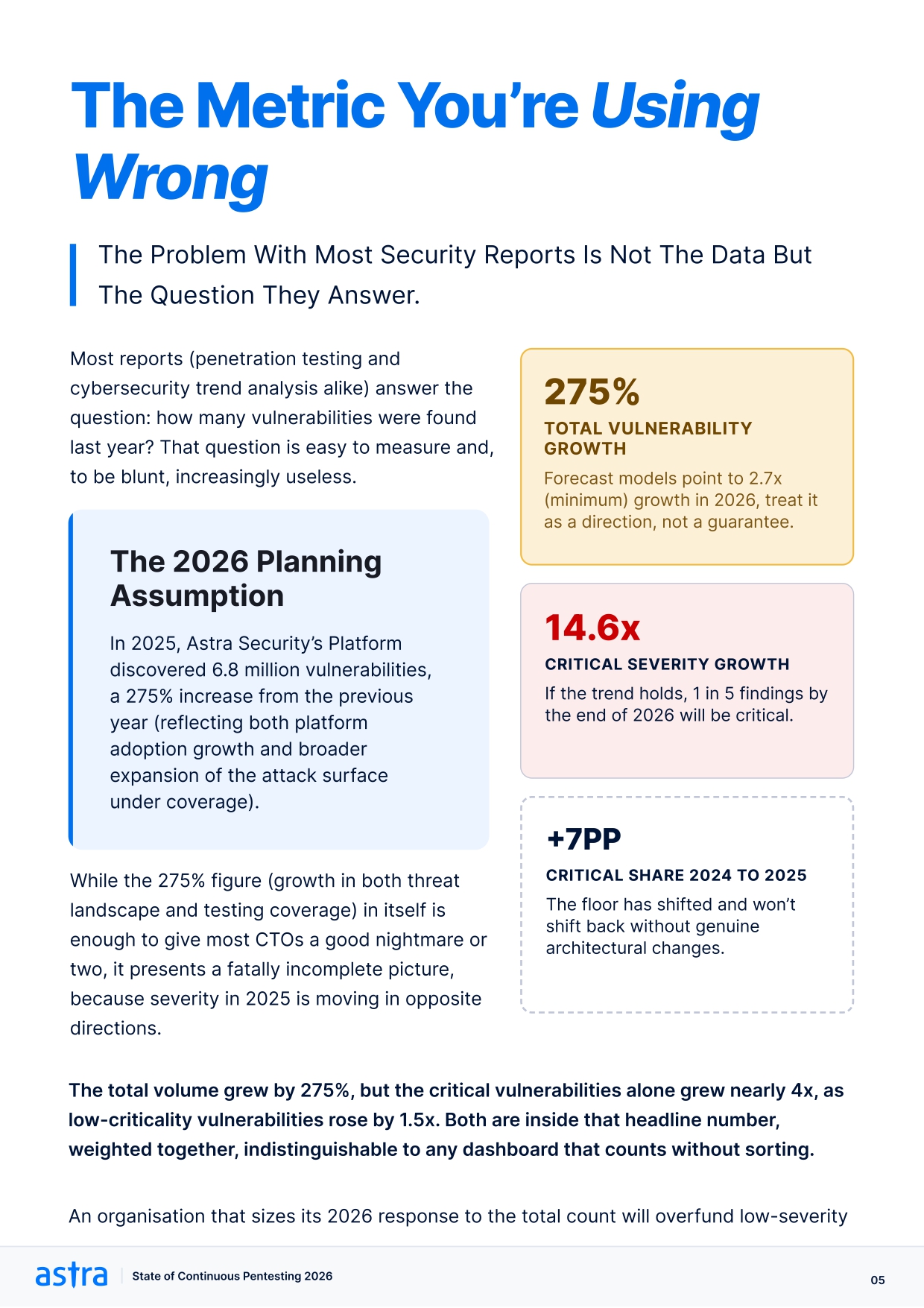
14.6x
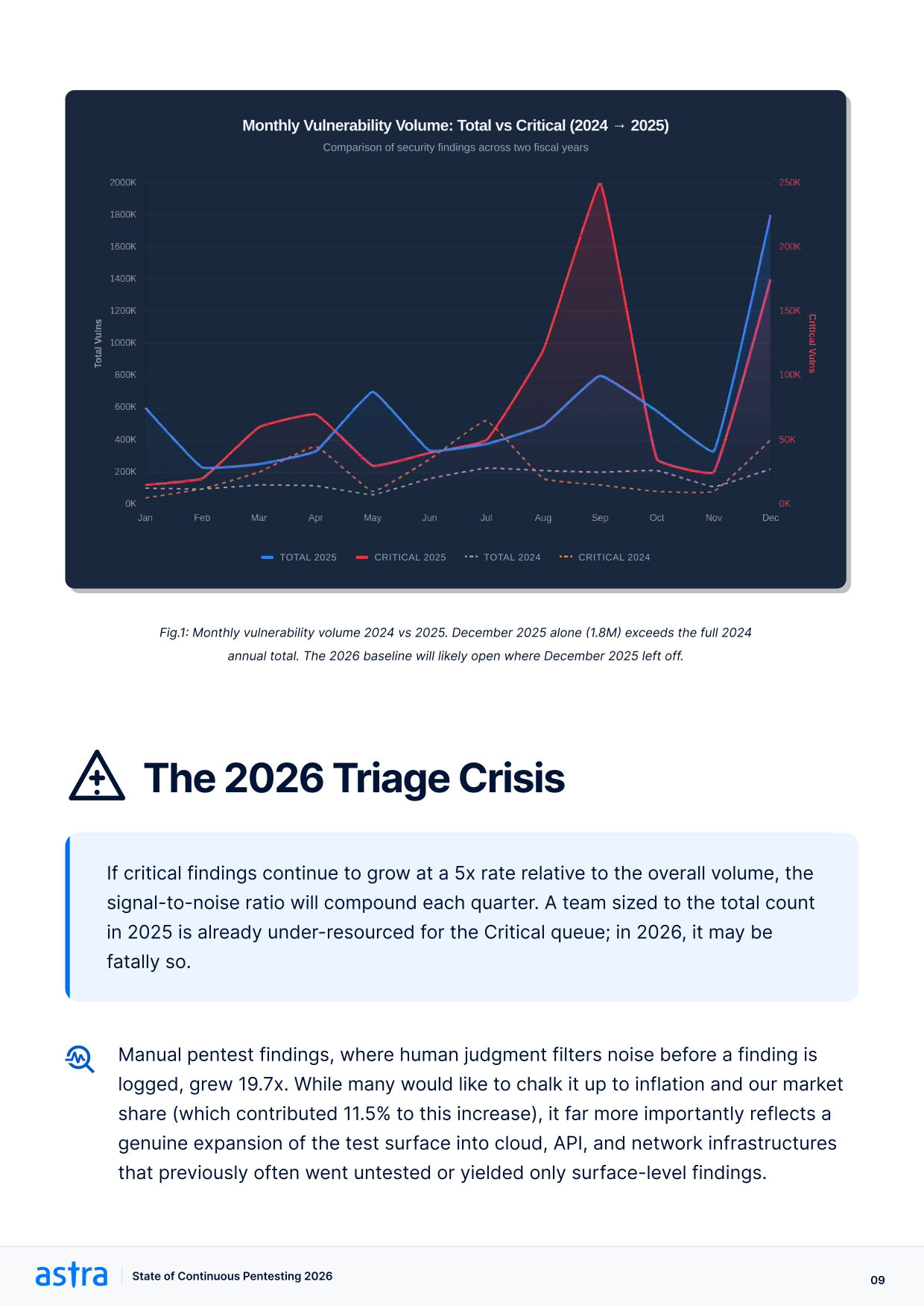
Faster growth in Critical vulnerabilities vs all other severity classes

44x
Increase in Cloud vulnerability growth in one year, but cloud testing coverage grew just 1.23x

80%
Of tracked AWS credential exposure found during mobile tests, not cloud scans

$1.1M
Financial exposure from IDOR is present on all 6 tested surfaces simultaneously.
91%
Of critical findings have no CVE, no vendor patch, and no remediation playbook
1.8M
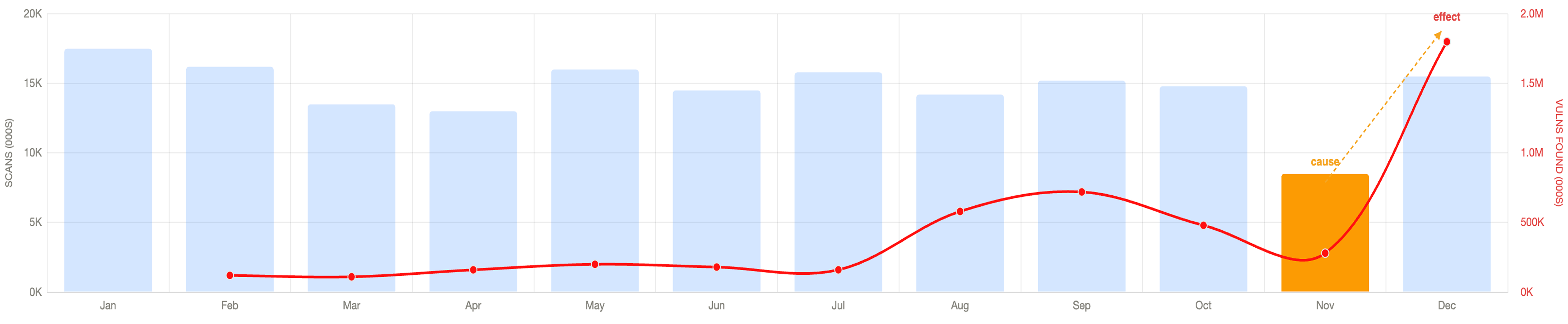
Vulnerabilities found in December alone are more than all of 2024 combined.
Four shifts reshaping security risk in 2026
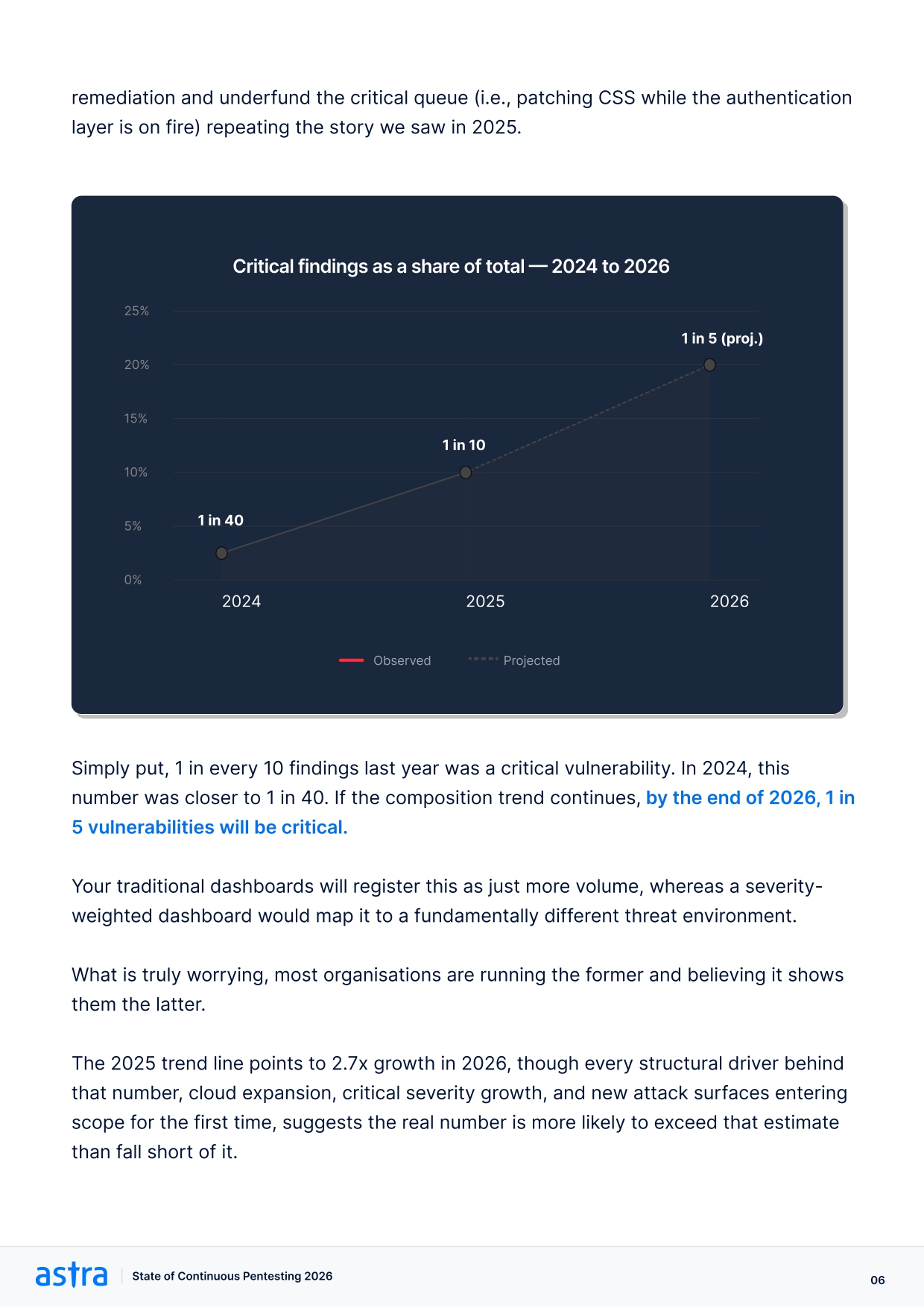
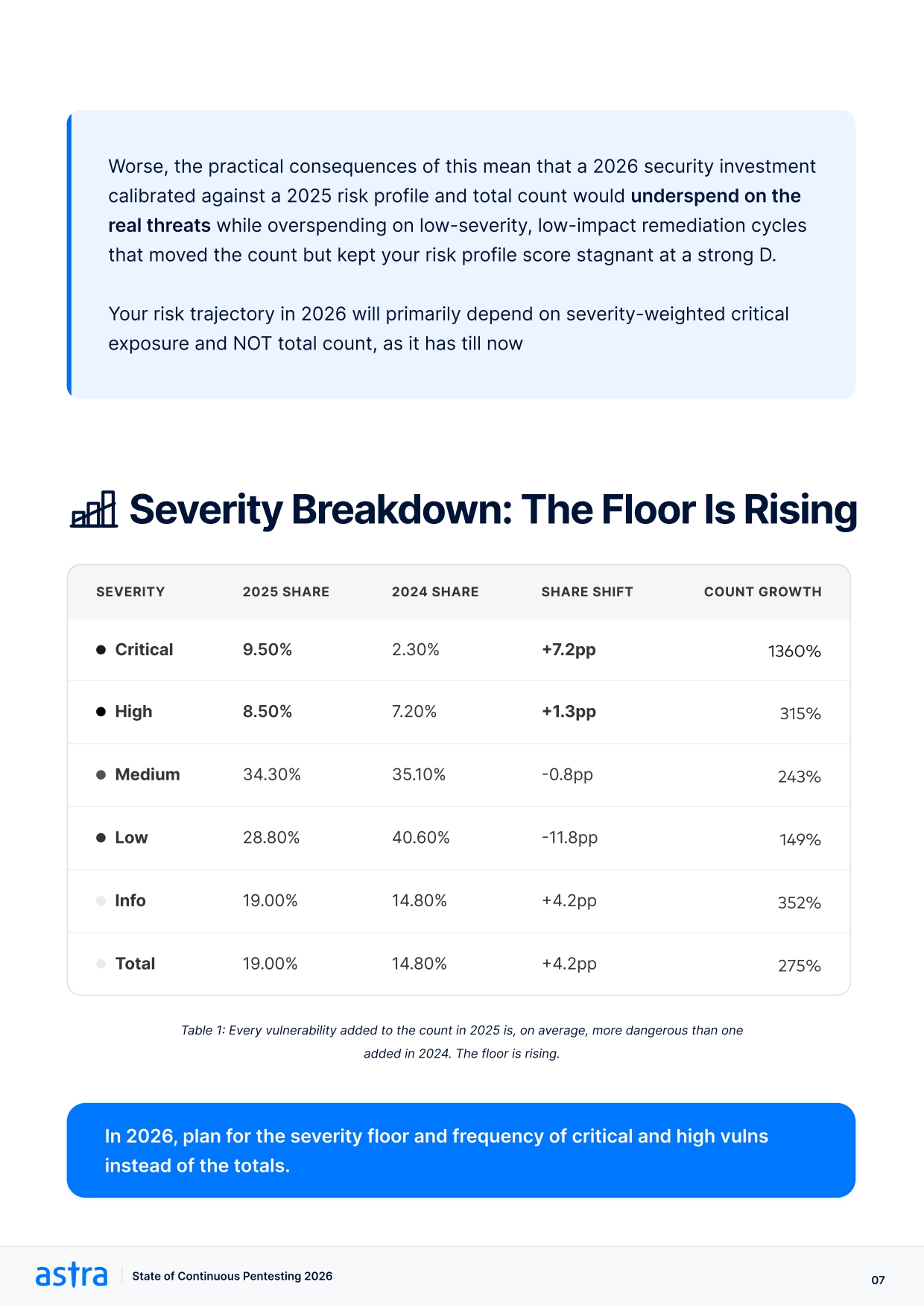
Total vulnerability count looks useful until it hides what really changed: severity. In 2025, 1 in 10 findings was Critical. In 2024, it was 1 in 40. Though numbers may have looked fine, risk was out here doing parkour.
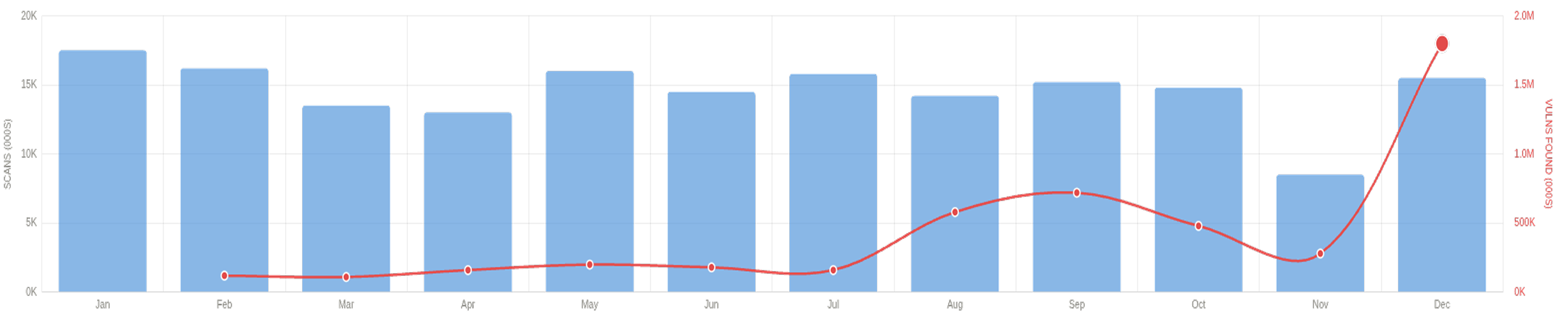
Scan activity this month predicts next month’s findings, not today’s risk. November looked quiet, but December showed up with 1.8M vulnerabilities. While a clean dashboard can be reassuring, know that it is just the calm before the storm. This pentest report surfaces the lag your tools miss.
Cloud overtook web as the primary attack surface three times in 2025. Meanwhile, Many teams still plan testing budgets around web security spend, even though the cloud is now driving more risk.
IDOR appeared across all 6 tested surfaces simultaneously. It regenerates with every new feature. Fix it on the web, and the pattern can still reappear in the next API, mobile flow, or product release.

Voices from the frontlines of security

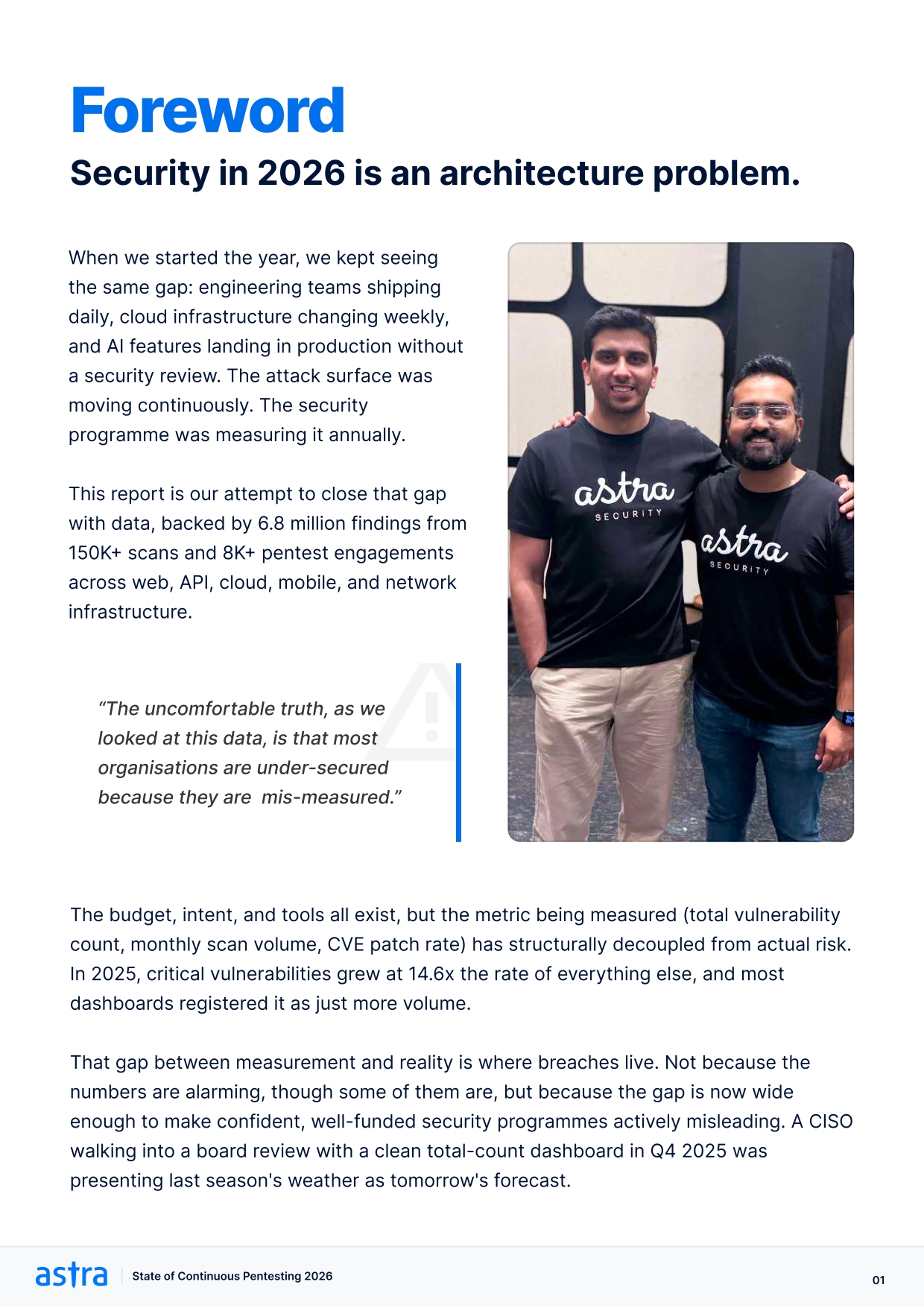
"The uncomfortable truth, as we looked at this data, is that most organisations are under-secured because they are mis-measured."

Shikhil and Ananda
Co-Founders, Astra Security

"Autonomous pentesting tools are making real-time exploitation decisions on production systems. The question is not whether they work, it's whether you can prove they stayed within the boundaries you set. APTS gives organizations a way to answer that before an incident forces the question."

Jinson Varghese Behanan
Pentest Lead, Astra Security

"The real risk is the blast radius created by identity and permission chains, not just misconfiguration."

Abhinandan Khurana
Security Engineer, MoveInSync

"AI now handles 70% of traditional SOC functions... One platform replaces five vendors."

Kaustubha N K
CTO, Lab To Market Innovations Private Limited
Frequently asked questions
Does the State of Continuous Pentesting Report include security recommendations?
What is the State of Continuous Pentesting Report?
How does Astra Security collect data for the State of Pentesting Report?
I have a specific scope, can you tailor the pricing?
