Fintech
- Secure financial systems and payment workflows from logic flaws
- Deliver actionable fixes and maintain PCI DSS, ISO 27001, SOC 2, DORA compliance and more
- Standards: OWASP, PTES, CVSS


Expert-led manual pentesting plus continuous automated scanning. Reports in 5–10 business days, and every fix verified by our CREST-accredited team.
Loved by 1,500+ security-conscious companies around the world






Penetration testing services (also called pen testing services) mimic real-world cyberattacks to identify vulnerabilities across the attack surface. Comprehensive penetration testing services help organizations find exploitable security gaps before attackers do, with prioritized fixes and expert validation.
We find the bugs before the bad guys do.
Our team stays ahead of the curve in the ever-evolving world of web security.


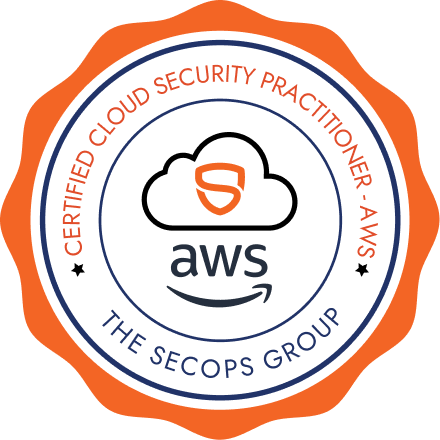


Astra delivers penetration testing as a service (PTaaS): continuous, on-demand security testing backed by Astra's in-house certified pentesters, with real-time visibility into vulnerabilities and direct collaboration throughout the engagement.
| Feature | Astra Security | Traditional vendors |
|---|---|---|
| Testing frequency | Continuous penetration testing, on demand | Once or twice a year (point-in-time) |
| Start time | Within 12 to 24 hours | 2–4 weeks for scoping and planning alone |
| Pentesters | In-house certified pentesters | External or assigned testing teams |
| Visibility | Real-time dashboard with live findings and testing progress | Static PDF report delivered after testing |
| Collaboration | Direct collaboration with Astra pentesters | Limited interaction with pentesting teams |
| Evidence | Detailed PoCs, screenshots and video recordings | Primarily screenshots and written findings |
| Remediation | Direct guidance from pentesters plus AI-powered Astrabot | DIY: developers figure it out alone |
| Re-testing | Unlimited automated rescans + multiple manual retests | Retesting often incurs additional cost |
| Integrations | Native Jira, Slack, GitHub and more | Manual data entry and workflow management |
| Reporting | Technical reports + CXO-friendly security insights | Primarily static technical reports |
Our in-house pentesters cover every attack surface an adversary would touch, with dedicated methodology, tooling and expertise for each.
Astra's web application penetration testing services cover Next.js, Django, Rails, Express, Spring, and FastAPI, surfacing the auth, access control, and business logic flaws that lead to account takeover and RCE, with every chain verified by a pentester.
Explore ServiceAstra's API penetration testing services cover REST, SOAP, GraphQL, and gRPC, hunting BOLA, BFLA, mass assignment, injection, and the shadow endpoints your OpenAPI spec never mentions.
Explore ServiceAstra's mobile penetration testing services (Android and iOS) find insecure storage, bypassable cert pinning, IPC flaws, and the pivot paths from a rooted device into your production API.
Explore ServiceAstra's cloud penetration testing services evaluate AWS, Azure, and GCP for IAM privilege escalation and misconfigurations across compute, storage, and identity, proving which chains actually reach sensitive data.
Explore ServiceAstra's red teaming services simulate a full-lifecycle attack (initial access, foothold, lateral movement, privilege escalation, objective completion) against a goal you define, testing your SOC's detection and response alongside your technical controls.
Explore ServiceAstra's external network penetration testing services start with discovery (subdomains, exposed services, shadow assets) and test each for the flaws that give attackers their first foothold.
Explore ServiceAstra's internal network penetration testing services simulate post-compromise activity across Active Directory, chasing credential abuse, Kerberos attacks, and segmentation gaps that reach domain controllers and secrets stores.
Explore ServiceAstra's AI and LLM penetration testing services target LLM-backed apps, autonomous agents, and RAG pipelines, hunting prompt injection, embedding leakage, insecure tool use, and excessive agency.
Explore ServiceAstra's physical penetration testing services run controlled intrusions against badge systems, mantraps, and restricted areas, exposing the gaps that lead to network, logical, or data access.
Request a QuoteAstra's Wi-Fi penetration testing services assess corporate, guest, and IoT-segmented networks for weak WPA/WPA2-PSK encryption, rogue and evil-twin APs, and RADIUS misconfigurations.
Explore ServiceAstra's IoT penetration testing services assess the full stack including hardware interfaces (UART, JTAG, SPI), chaining findings to show how one device becomes a path into fleet backends.
Request a QuoteAstra's social engineering and phishing testing services run realistic campaigns across email, SMS, voice, and pretexting scenarios, showing how your team responds under pressure and where awareness and reporting workflows need shoring up.
Request a QuoteA vulnerability scan is automated and finds known weaknesses fast. A penetration test uses human testers to prove which weaknesses are exploitable and what they expose. A red team engagement emulates a real adversary end to end to test whether your team can detect and stop it. Most teams combine continuous scanning with regular pentests, which is what vulnerability assessment and penetration testing (VAPT) means.
| Criteria | Vulnerability scan | Penetration test | Red team |
|---|---|---|---|
| Question it answers | What known vulnerabilities, CVEs, and misconfigs are present? | Which weaknesses are exploitable, and what is their impact? | Can my team catch a real adversary before objectives are met? |
| Method | Automated scanning using signatures | Manual testing by human pentesters | Goal-driven adversary emulation using custom tactics, social engineering, and more |
| Depth | Surface-level, breadth over depth | Deep analysis within the defined scope | End-to-end attack simulation across multiple environments and security controls |
| Typical duration | Hours to days | Days to several weeks, depending on scope and complexity | Several weeks to months |
| Best suited for | Continuous visibility and vulnerability management | Validating exploitable risk and security controls within a defined scope | Measuring resilience against realistic, multi-stage adversary operations |
| Regulatory fit | PCI DSS 11.3.1, ISO 27001, ongoing SOC 2 | PCI DSS 11.4, HIPAA, SOC 2 Type II, ISO 27001, CERT-In | TIBER-EU, CBEST, DORA TLPT, mature security programs |
| Frequency | Continuous, weekly, or monthly | Quarterly to annually, plus every major release | Annual, risk-driven, or after significant changes |
Each pentest finding is mapped to the SOC 2, PCI DSS, ISO 27001, and GDPR controls it affects, with the evidence auditors need.

See how our in-house pentesters identify, validate, and help remediate vulnerabilities across your attack surface.
Astra's penetration testing services start with a scoping call, where our penetration testing experts confirm the assets in scope (web apps, APIs, mobile builds, cloud accounts, network ranges) and agree on the testing methodology (black box, grey box, or white box).
Our security team defines the target environments, access requirements, testing boundaries, and assessment objectives based on your architecture and risk profile.
The engagement is aligned with applicable security standards and compliance requirements (OWASP, PTES, NIST SP 800-115, PCI DSS, ISO 27001, HIPAA) and other relevant frameworks.

See how our in-house pentesters identify, validate, and help remediate vulnerabilities across your attack surface.
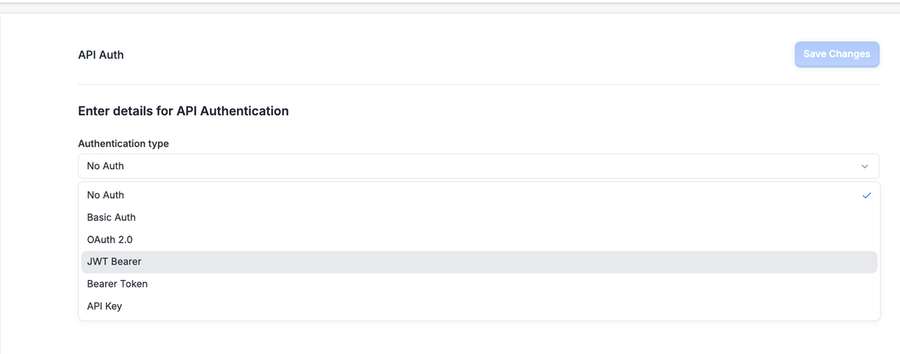
Astra's experts onboard you to our OrbitX platform and set up authenticated testing for every user role, SSO flow (SAML, OAuth, OIDC), and API token type before penetration testing. We configure staging or production-replica environments, standardize auth templates so future retests inherit the same coverage, and validate that the test traffic is safely isolated from production data.
See how our in-house pentesters identify, validate, and help remediate vulnerabilities across your attack surface.
Once auth is live, the Astra platform runs automated discovery and vulnerability assessment across the defined attack surface to establish an initial security baseline.
Testing can identify common vulnerabilities such as OWASP Top 10 issues, known CVEs, security misconfigurations, exposed services, authentication weaknesses, API vulnerabilities, and other technical weaknesses. Automated results are correlated and analyzed to reduce noise and prioritize areas requiring deeper manual investigation.

See how our in-house pentesters identify, validate, and help remediate vulnerabilities across your attack surface.
Astra's in-house certified penetration testers manually validate identified vulnerabilities and actively attempt to exploit security weaknesses within the agreed scope.
Testing goes beyond automated scanner output to assess business logic flaws, authentication and authorization bypasses, privilege escalation, insecure direct object references, injection vulnerabilities, API abuse, chained vulnerabilities, and other attack paths.
All confirmed findings are available in the OrbitX platform with detailed vulnerability information, proof-of-concept (PoC), screenshots, and video recordings of exploitation where applicable, giving security and engineering teams clear evidence of how each vulnerability can be exploited and its potential impact.

See how our in-house pentesters identify, validate, and help remediate vulnerabilities across your attack surface.
Every validated vulnerability is assessed based on exploitability, technical impact, business impact, and compliance relevance.
Astra applies contextual risk scoring, including CVSS where appropriate, to help prioritize vulnerabilities according to your organization's risk profile. Astra highlights critical findings that could affect certifications, regulatory requirements, or sensitive assets for immediate attention.

See how our in-house pentesters identify, validate, and help remediate vulnerabilities across your attack surface.
Astra provides detailed, developer-focused remediation guidance for every confirmed vulnerability, including affected assets, severity, technical impact, reproduction steps, proof-of-concept evidence, payloads, and recommended fixes.
We also provide CXO-friendly reports that summarize the overall security posture, critical risks, business impact, and remediation progress, while giving security, engineering, DevOps, and other stakeholders the technical depth they need to act on findings.
Security teams can track remediation progress through integrations and workflows.

See how our in-house pentesters identify, validate, and help remediate vulnerabilities across your attack surface.
Once vulnerabilities are fixed, Astra's in-house pentesters perform targeted re-testing to verify that the original attack vectors have been successfully remediated. We offer unlimited rescans and multiple manual retests to validate fixes, identify residual vulnerabilities, and check for potential bypasses introduced during remediation.
You can also share your latest security posture, assessment results, and relevant security documentation with customers, partners, and other stakeholders through Astra's Trust Center, making it easier to demonstrate ongoing security and compliance.

Every penetration testing engagement with us gives you a live Trust Center that shows buyers, auditors, and investors exactly where your security posture stands.

Every Astra engagement ends with reports built for the people who'll read them: auditors, executives, and the engineers who'll fix the findings. Download real samples below.


Every finding mapped to SOC 2, ISO 27001, PCI DSS, HIPAA, GDPR, and NIST controls, so your audit evidence is ready the moment the report ships.


A short executive summary of a selected pentest or scan, for CXOs, boards, and non-technical stakeholders who need the story, not the syntax.
Proof-of-pentest document you can share with auditors and customers before the full report ships.
Quick executive-level summary for VAPT engagements: the same story in fewer pages.
Comprehensive VAPT report in a tighter, faster format for iterative pentest cycles.
Structured summary table of every vulnerability found: sortable, exportable, dashboard-ready.
Fast automated scan output for continuous monitoring: CVEs, misconfigs, and OWASP coverage.
Understand our industry-specific pentest-as-a-service plans, designed to meet your compliance, scale and security needs.
Validate every deployment before it hits production.

Integrate Astra directly into your CI/CD workflows.

Eliminate false positives and focus on real, validated risks.
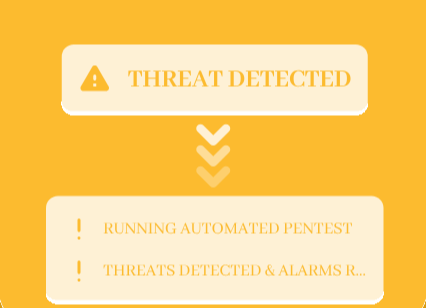
Show proof of continuous assurance in every audit.

See how security and engineering teams use Astra's penetration testing services to pass audits, close real vulnerabilities, and ship with confidence.

Report turnaround cut to 48 hours, down from about a week.
Read Story
$41,904 in potential losses saved.
Read Story
ISO 27001-ready pentest reports, with $8,080 in potential losses saved.
Read Story
SOC 2 pentest certification with two rescans in 60 days.
Read Story
“The pentest by Astra validated our claims.”
Read Story
Continuous visibility and compliance readiness for enterprise deals.
Read Story





Astra's AI agents find vulnerabilities, chain them and exploit them, then an independent AI validator confirms every finding before it reaches your report. Use it between manual pentests for always-on coverage.
Talk to a security engineer about your scope. You get a fixed quote, testing that starts within 12 to 24 hours, and a report in 5–10 business days.

A penetration testing service simulates real-world attacks on your digital assets, including web apps, APIs, cloud, and AI systems. It uncovers vulnerabilities before attackers can exploit them, providing actionable insights to strengthen your security posture and reduce business risk.
Penetration testing identifies critical vulnerabilities, prevents potential breaches, and reduces downtime or financial loss. It enhances risk management, validates security controls, and enables teams to resolve issues more efficiently, demonstrating due diligence to customers, partners, and auditors.
Costs vary based on scope, complexity, and technology stack. Astra Security offers transparent pricing that scales with your applications and infrastructure, ensuring you only pay for the coverage you need, without hidden fees or surprises. Pentests start at $2,999 with a manual retest included. See pricing.
Yes, Astra Security provides tailored quotes based on your environment, technology stack, and testing needs. Our team evaluates your scope, integrations, and risk priorities to recommend the right mix of manual and automated pentesting. Contact our team to get a scoped quote.
Absolutely. Astra Security maps its findings to major compliance frameworks, including PCI DSS, HIPAA, SOC 2, ISO 27001, and GDPR. Our actionable reports and verification steps simplify audits, demonstrating regulatory adherence to internal and external stakeholders.
Astra’s penetration testing services deliver a comprehensive report within 5 to 10 business days after the pentest, covering risk ratings, PoCs, attack paths, and prioritized remediation guidance, with expert support throughout the remediation process.
Choose penetration testing services by evaluating the pentesters' expertise, asset coverage, methodology, compliance support, retesting, reporting quality, and remediation support. The right provider should identify real attack paths, explain the impact, help teams fix issues, and avoid delivering only scanner output.
The seven stages, based on the Penetration Testing Execution Standard (PTES), are pre-engagement, reconnaissance, threat modeling, vulnerability analysis, exploitation, post-exploitation, and reporting. Each stage builds on the last, moving from scoping the engagement to proving impact and handing engineering a clear remediation path.
The three main approaches are black-box, grey-box, and white-box testing. They differ by how much information the pentester has before the engagement: black-box simulates an external attacker with zero knowledge, grey-box mirrors a compromised user or insider, and white-box gives full source code and architecture access for the deepest coverage.
Penetration testing companies are usually ranked based on the depth of their manual testing, credibility, retest policy, and various other factors. Names that most often come up are Astra Security, Bishop Fox, CrowdStrike, etc. For a full breakdown, see our complete list of the top penetration testing companies.
No. AI is augmenting pentesters. It handles mechanical coverage across every endpoint, improves pentesting cadence, lowers cost per engagement and speeds up remediation, freeing security experts to focus on creative attack chains. Astra combines both: autonomous pentesting for speed and coverage, plus manual pentests for depth.
A penetration test typically costs around a few thousand to ten thousand dollars, depending on the scope, application complexity, and various other factors. Web applications, APIs, infrastructure, and compliance requirements can directly influence the price. At Astra, it starts at $2,999.
Pentesting is legal when you have explicit authorization from the application owner. Organizations should define the testing scope, targets, methods, timing, and authorization before conducting any penetration test.