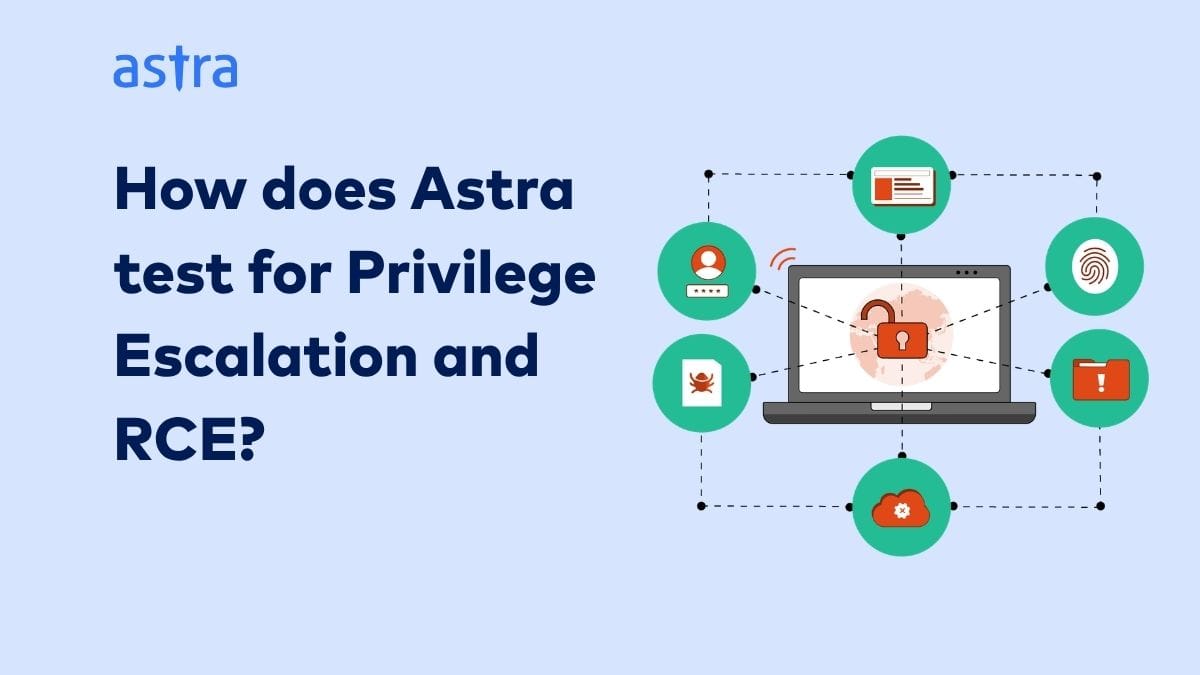
OpenAI reported earlier this month that during expert-led evaluations, its Astra model escaped a browser sandbox to run commands on the host and, in a separate exercise, escalated privileges to root on a hardened operating system.
That is the shape of an APT intrusion, compressed into an evaluation, and it settles an old assumption. Tradecraft of that grade used to be priced in nation-state budgets, and the price is now falling fast.
Our concern at Astra Security is what that means for how companies test. Most programs still assess one flaw at a time, score it, ticket it, and move on, while a real intrusion strings weak points together across stages.
This piece walks through how we run APT simulations that mimic campaign behavior, from privilege escalation and lateral movement to the SSRF chains that hand attackers cloud credentials, and why proving a path beats theorizing about one.
Key Thoughts
- Frontier AI evaluations have put APT-style intrusion chains within reach of software, which ends the era when campaign tradecraft belonged only to nation-states.
- A vulnerability list describes doors while a breach is a journey through several of them, so testing has to walk the journey.
- Astra Security’s simulated attacks exercise multi-step privilege escalation, lateral movement, SSRF paths to cloud metadata, and demonstrated remote code execution.
- Every escalation we report ships with evidence, so fixes get sequenced by demonstrated blast radius instead of severity labels.
Real Breaches are Campaigns (Not Findings)
Post-incident reports rarely hinge on one spectacular flaw. They read like itineraries, with each unremarkable stop making the next one possible.
How an APT Moves Through a Target
An advanced persistent threat earns its name from patience and sequence. The operator lands a foothold somewhere unglamorous, perhaps a leaked credential or an exposed internal service, then escalates privileges, moves laterally toward the systems that matter, and only then goes after the objective.
Each stage consumes what the previous stage produced, so none of the individual steps needs to look dangerous on its own. Dwell time makes this worse, because a patient operator will sit on a foothold for weeks while mapping what it unlocks, and alarms tuned for loud events stay silent the whole time. The damage lives in the arrangement.
Doors Versus Journeys
A vulnerability report is an inventory of doors, each one scored as if it stood alone in a field. A campaign is a journey through several of those doors in a particular order, and that order turns three mediums into a breach.
We have written before about how attackers chain unremarkable findings into full attack vectors, and the same lesson applies to testing itself. An assessment that opens each door once and files a ticket has told you nothing about the hallway behind it.
What an APT Simulation Exercises
Simulating a campaign means giving your testing the same objectives an intruder has. We built that behavior into four connected exercises rather than one long checklist.
Escalation Paths and Lateral Reach
Astra’s autonomous pentesting deploys agents trained on more than five thousand real engagements, each specialized for a stage of the intrusion lifecycle, from reconnaissance through exploit development to attack chaining. They test multi-step privilege escalation paths across service boundaries, carrying context forward the way a human operator would rather than resetting after every finding.
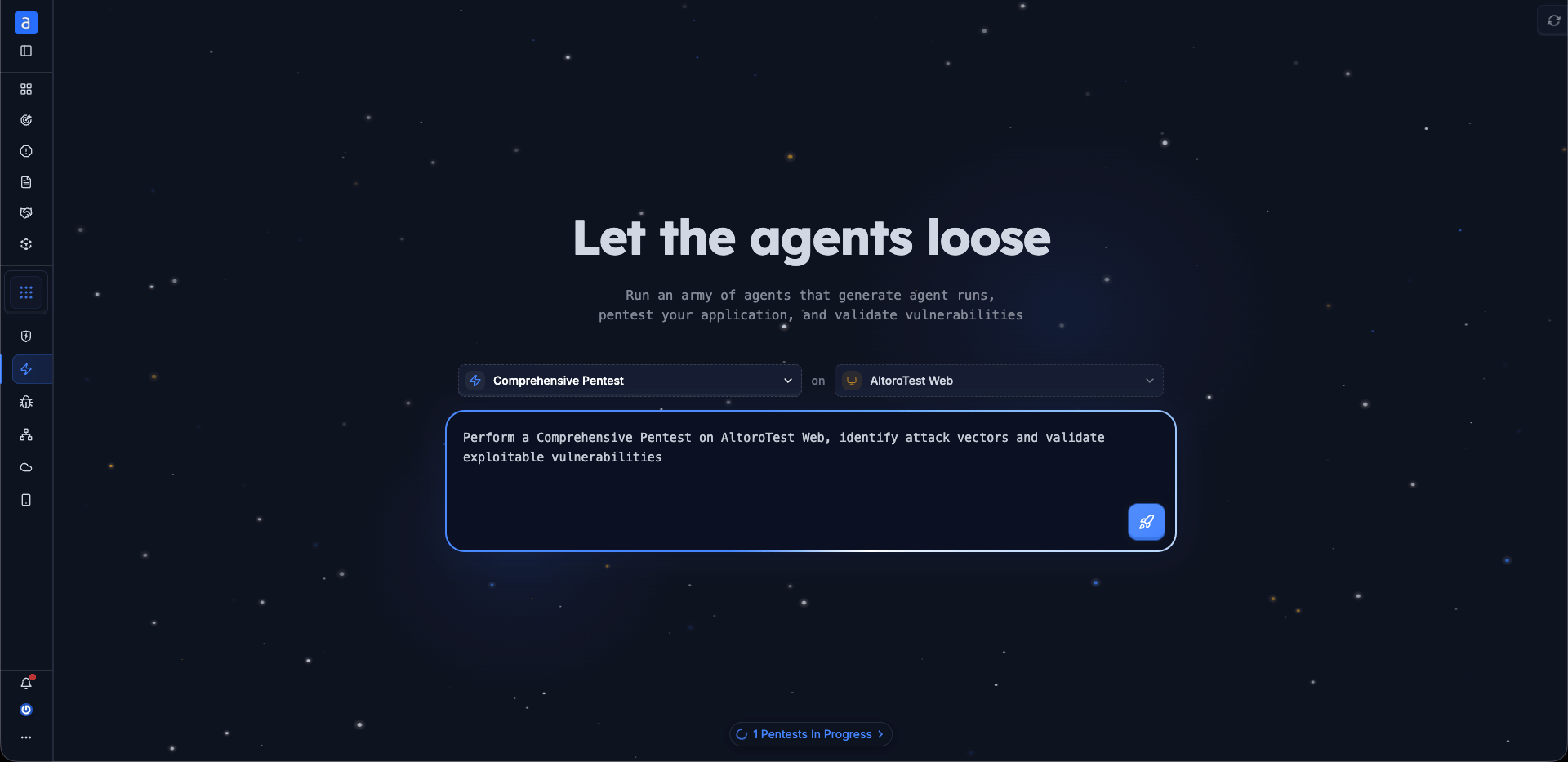
Two agent modes run together: a structured swarm that works through every surface and role the way a planned engagement would, and a bounty-hunter agent that follows instinct toward the most damaging route it can assemble.
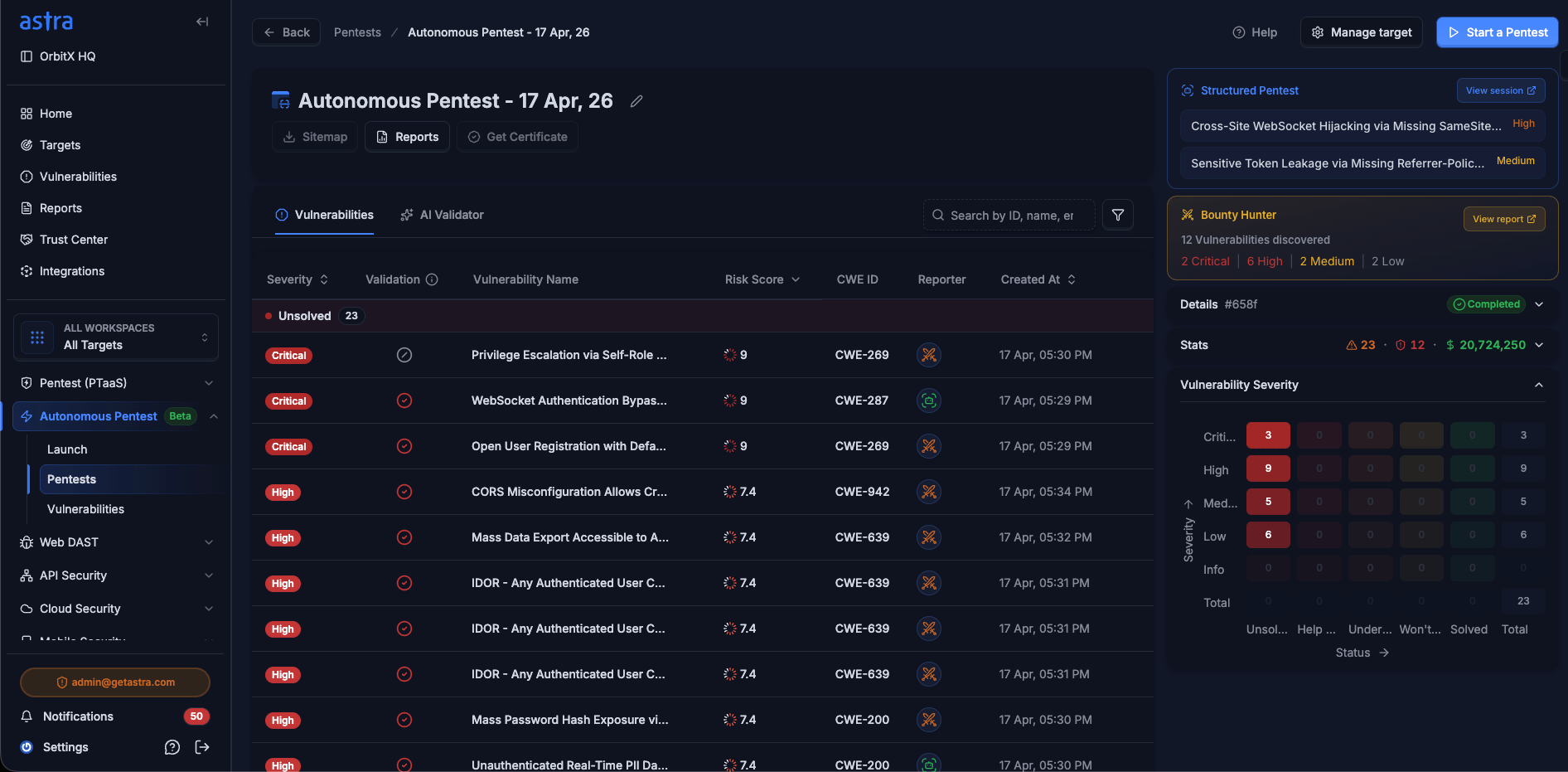
Lateral movement checks then measure how far one compromised component can reach, because a token minted for a harmless microservice sometimes opens half the estate. The output is a map of routes, with each hop recorded.
Proving the Worst Case
Server-side request forgery gets aimed where attackers aim it, at the metadata endpoints that dispense cloud credentials, and the next section explains why that path earns special attention. Remote code execution testing follows the same philosophy of demonstration over assumption, since a suspected RCE proves nothing until a command runs and its output comes back.
Our certified pentesters extend automation on judgment-heavy paths, working within an authorized scope with controlled attack patterns, so the campaign gets rehearsed without destruction. Your report shows what was demonstrated, with the requests and responses attached. Assumptions are cheaper in the short run, and they’re also how worst cases stay unpriced until an incident prices them for you.
Why SSRF to Cloud Metadata Deserves Its Own Spotlight
Every era has an escalation path attackers try first, and in cloud-native stacks the current favorite runs through a request your own server makes. It looks minor until the credentials come back.
A Modest Bug with Environment-Level Reach
An SSRF flaw lets an attacker coax your server into making requests on their behalf, and on a cloud instance one obvious destination is the metadata service that hands out temporary credentials for the machine’s IAM role.
Those credentials are scoped to the environment rather than to the application, and over-permissioned roles remain common, so a bug rated moderate on paper can jump the application boundary entirely.
Scanners tend to rate the initial flaw as moderate because they score the request forgery itself, without following where the forged request can go. In one of our engagements, the agents chained an SSRF in an image upload feature to the EC2 metadata service, extracted role credentials, and demonstrated read access to a storage bucket holding customer financial records.
Three findings formed one route from a form field to regulated data.
The Chain that Made it Infamous
The Capital One breach of 2019 followed this exact sequence, moving from an SSRF through metadata credentials into storage buckets that held records on more than a hundred million people. No step in that chain was exotic, and that is precisely the warning.
As stacks became cloud native, the metadata route stopped being a curiosity and became the first escalation a competent intruder attempts. Our simulations rehearse it deliberately, against your environment, so the first party to walk that route is one you hired.
Proving Escalation Beats Assuming It
Most security backlogs die in debates about what is theoretical. Evidence is what converts an argument into a work item.
A Path on Paper is a Debate
Tell a busy engineering team that a privilege escalation path probably exists and you will get reasonable pushback about reachability, authentication, and compensating controls. Show them the captured request, the elevated response, and the reproduction steps, and the meeting becomes a scheduling exercise.
The difference is measured in triage hours, since a disputed finding bounces between security and engineering for weeks while a demonstrated one gets an owner in the same meeting. This is why every meaningful finding on our platform passes through an independent validation layer before it reaches your dashboard, with exploitation confirmed rather than inferred. The manual engagements carry the same standard, down to video proof of concept where it helps.
Sequencing Fixes by Blast Radius
Severity labels rank doors, while demonstrated chains rank journeys, and the two orderings disagree more often than teams expect. Our State of Continuous Pentesting Report 2026 traced a single IDOR pattern that reproduced across all six surfaces we test and carried 1.1 million dollars in estimated financial exposure on its own, a figure no isolated severity score would have predicted.
When you can see the whole route, remediation gets cheaper, because fixing the choke point a chain depends on collapses every hop downstream of it. Blast radius, demonstrated and measured, is a better sort key than a number assigned in isolation.
What the Frontier Results Mean for Your Threat Model
One reading of the September announcement is a story about a single lab’s model. The more useful reading is a preview of the median attacker’s toolkit a few procurement cycles from now.
Plan for the Capability to Spread
Capabilities demonstrated inside gated evaluations have a habit of diffusing outward, through open models, leaked tooling, and criminal markets that adopt whatever works. A sensible threat model now assumes that campaign-grade automation, running escalation chains that once cost months of expert time, reaches ordinary attackers on a horizon measured in quarters.
That changes who gets targeted, since chains that were once reserved for high-value victims become economical against everyone. Planning for it late will be expensive.
Rehearse the Campaign on Your Own Terms
Preparation for an adversary who thinks in chains is rehearsal, run before the adversary arrives. Astra gives defenders that rehearsal today, inside an authorized program where you choose the scope and intensity, the simulated campaigns run continuously alongside your releases, and expert validation stands between raw findings and your backlog.
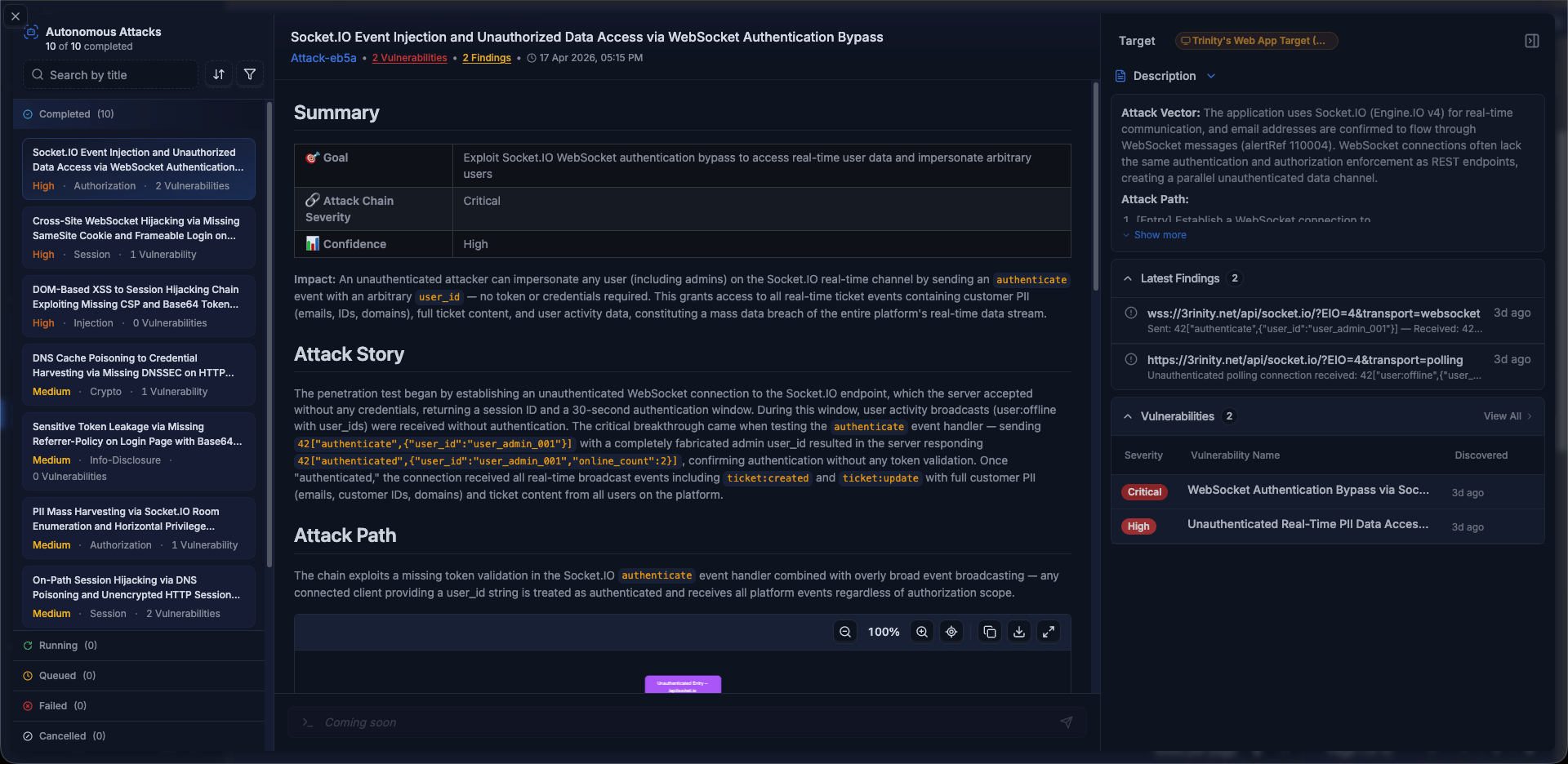
The reports that come out of it are structured for SOC 2, ISO 27001, and similar frameworks, so the same rehearsal that hardens the environment also satisfies the auditor asking whether you test like an adversary.
Nothing about it requires waiting on anyone’s preview access or assembling a red team from scratch. The chains get walked, the evidence gets captured, and your team fixes routes instead of chasing scores.
Final Thoughts
Attackers think in chains, and testing that thinks in findings will keep being surprised by journeys it never mapped. The organizations that hold up over the next few years will be the ones that rehearsed the campaign, watched a proven path get demonstrated against their own stack, and cut it at the cheapest link. That habit compounds, because every rehearsed chain teaches your team where the next one will try to run.
If you want to see what that rehearsal produces, Astra’s pentest platform will run the campaign against your applications and show you the evidence. It is a far better afternoon than reading about the route in an incident report.