
Key Takeaways:
- API security confidence remains low: Only 21% of organizations trust their API detection capabilities, and just 13% can prevent more than half of attacks.
- The API Security Maturity Model (Levels 0–3) charts the progression from insecure API keys (Level 0), to scope-based OAuth 2.0 (Level 2) with URL-manipulation risks and cascading “spaghetti of trust,” and finally to claims-based, cryptographically signed JWTs (Level 3) that centralize trust in identity providers and enable FAPI-level compliance.
- Moving from Level 0 to Level 3 typically requires 21–36 months: 3-6 months for token-based authentication, 6-12 months for OAuth adoption, and 12-18 months for implementing full claims-based JWT authorization.
- Achieving mature API security requires end-to-end integration: automated discovery of shadow/zombie APIs, OWASP Top 10 vulnerability mapping, shift-left SAST/DAST in CI/CD, API gateways for runtime control, and continuous SIEM monitoring for detection and response.
As per Traceable’s 2025 State of API Security report, only 21% of the >1500 respondents surveyed across the globe showed confidence in detecting attacks at the API layer. Furthermore, only 13% were capable of preventing >50% of API attacks. This is when the API sprawl is still burgeoning. The challenge, thus, is no longer volume but maturity.
Are you one of those firms that still rely on old-age authentication mechanisms that never moved beyond basic implementation, that use static API keys vulnerable to exposure on GitHub repositories and token-based systems that can easily fall prey to privilege escalations?
We hope not. The point here though, is that complexity intensifies as you scale (firms on average manage >613 API endpoints) and traditional security measures then slowly fail to even identify all your active APIs, let alone resolving identity-centric vulnerabilities, and broken authorizations.
This is where the API Security Maturity Model guides you. This 4-level framework helps you assess your current API security posture and create the blueprint for a sustainable API ecosystem.
Whether you’re a CTO, CISO, or a cybersecurity professional, you need to have an understanding of the API security maturity model to be able to best apply it in the context of your company, that is what we wish to help you achieve through this piece.

What is the API Security Maturity Model?
This maturity model concept was first conceived by Roy Fielding in 2000, who introduced the REST principles. This was furthered by Leonard Richardson in 2008 with a model that identified specific technical changes you can implement to improve the adaptability and resilience of your API design and architecture.

API Security Maturity Model is thus not a single defined model that you copy and paste to your organization; it is a flexible framework that helps you best evaluate and thus strengthen your API security posture.
The flexibility arises from the specific dimension you decide to focus on—security, maintainability, discoverability, etc. Even though there are currently four API security model levels, down the line, as API ecosystems become more complex, this number may rise.
Now, API management vendors, including Kong, Tyk, and Curity, align API maturity levels as per their own solutions. What you need to define is the scope and protocols pertaining to your architecture.
Why Do You Need an API Security Maturity Model?
Application programming interfaces act as the bridge between your multiple disparate services and applications, a key pillar of the internet. Secondly, they allow your developers to use third-party technologies and data sources rather than building from scratch.
Thirdly, they enable you to integrate governance, data, resources, and security running your tech stack, which basically forms the backbone of cross-team functioning and internal deployments.
SDKs have become a favourable trend: multiple APIs packaged alongside libraries, UI tools, and other components, combined with a set of tools that significantly shrink your dev timelines. These are not just encomiums in praise of APIs; rather, all the reasons you need to have an in-depth understanding of their presence, deployment, and future within your ecosystem, as API threat vectors get increasingly scary.
API maturity models help you define, design, and describe tailored structural and technological innovations and strategic best practices that equip you to develop sophisticated, robust API systems with efficiency, security, and interoperability: a roadmap that helps organizations prioritize which innovations to accelerate API development and their business value.
What are the Levels of an API Security Maturity Model?
An API Security Maturity Model has four levels: Level 0 uses static API keys or basic auth, Level 1 adds bearer tokens with basic identity context, Level 2 adopts OAuth 2.0 with scope-based authorization, and Level 3 implements OpenID Connect with claims-based JWTs and zero-trust enforcement.
Each level strengthens identity, authorization, and blast-radius control, helping teams assess current risk and plan a clear path to stronger API security.
Level 0: API Keys & Basic Authentication
| Aspect | Category | Details |
|---|---|---|
| Characteristics | Authentication Method | HTTP Basic Authentication or static API keys in headers or URLs |
| Identity Model | Machine-to-machine verification only | |
| User Context | User data passed separately in request body or URL parameters | |
| Maturity Level | The most common implementation level where many APIs remain stuck | |
| Technical Implementation | API Key Usage | API keys inserted in request headers (Authorization: Basic ABCDEF) |
| Basic Auth | Username and password–based authentication | |
| User Identification | User ID passed as separate parameters in body or URL | |
| Credential Lifecycle | Static keys with no expiration or rotation | |
| Security Limitations | Credential Exposure | Keys are frequently compromised and exposed in GitHub repositories |
| Identity Binding | No binding to user identity, only machine verification | |
| Authorization Gap | Provides authentication only, not authorization | |
| Attack Surface | Vulnerable to replay attacks and credential theft | |
| Operational Risk | Difficult key rotation and lifecycle management | |
| Privilege Model | Anyone with an API key has full access | |
| Real-World Examples | Commerce APIs | E-commerce store APIs calling payment or billing systems using an API key in the header, with user ID passed separately in the request body |
| Security Incidents | Trello (Jan 2024): Public API without authentication exposed 15M user records; RabbitR1 (Jun 2024): Hardcoded API keys in code risked unauthorized access to AI responses; GitHub secrets spill (Mar 2024): 13M API keys or tokens exposed in public repositories | |
| When This Level Is Appropriate | Limited Use Cases | Internal, low-risk APIs within trusted network perimeters; proof-of-concept or development environments |
| Legacy Constraints | Legacy system integrations requiring backward compatibility | |
| Minimal Sensitivity | Simple machine-to-machine communication with minimal sensitivity | |
| Not Recommended For | Production Risk | Production systems handling user data |
| Exposure | APIs exposed to the internet | |
| Compliance | Compliance-regulated environments such as HIPAA, PCI DSS, and SOC 2 |
Level 1: Token-Based Authentication
| Aspect | Category | Details |
|---|---|---|
| Characteristics | Identity Differentiation | Access tokens delineate user types (machine, app, user) |
| Auditability | Better auditing with user identity tracked in requests | |
| Privilege Separation | Enables privileged access separation | |
| Maturity Level | Improved over Level 0 but still limited | |
| Technical Implementation | Token Usage | Bearer tokens in authorization headers (Authorization: Bearer eyEFGH) |
| Context Embedding | User context embedded in tokens | |
| User Segmentation | Differentiation between internal and external users | |
| Infrastructure | Token generation service required | |
| Security Limitations | Token Power | Anyone with a token can modify APIs |
| Authorization Model | Authorization is still handled through custom code | |
| Attack Surface | Prone to privilege escalation attacks | |
| Code Complexity | Complex if-statement logic required for authorization | |
| Impersonation Risk | Token theft enables full impersonation | |
| Permission Gap | Does not address “what are you allowed to do?” | |
| Real-World Examples | Retail Systems | E-commerce platforms introducing back-office systems requiring elevated privileges |
| Operational Risk | Token-based authentication differentiates store users from internal admins, but custom logic is still required to distinguish back-office requests from regular store requests, creating potential authorization bypass | |
| When This Level Is Appropriate | Transitional Use | Organizations migrating from Level 0 to a more mature security model |
| Audit Needs | Systems requiring basic user identity tracking for auditing | |
| Segmentation | Environments needing internal and external user separation | |
| Platform Evolution | Development teams building toward OAuth implementation | |
| Limitations | Compliance | Insufficient for regulatory compliance |
| Security Posture | Not suitable for high-security applications | |
| Strategic Guidance | Should be a temporary stepping stone, not a final state |
Level 2: Token-Based Authorization
| Aspect | Category | Details |
|---|---|---|
| Characteristics | Authorization Model | OAuth 2.0 implementation for authorization |
| Permission Abstraction | Scopes as “named permissions” within tokens | |
| Standards | Standardized authorization flows (IETF maintained) | |
| Design Principle | Separation of authentication and authorization concerns | |
| Technical Implementation | Authorization Server | OAuth 2.0 authorization server deployment |
| Scope Design | Standard scopes (OpenID Connect) and custom scopes definition | |
| Grant Types | Multiple grant type support (authorization code, client credentials) | |
| Permission Mapping | Scope-based permissions (LIST, MANAGE, VIEW) | |
| Security Limitations | Authorization Granularity | Scopes are “names,” not “values,” and are insufficient for user-specific authorization |
| Object-Level Risk | URL or parameter manipulation still possible (e.g., changing user IDs in requests) | |
| Coverage Gaps | Does not fully address user-specific authorization | |
| Implementation Risk | Risk of decompilation and logic errors | |
| Trust Complexity | Complex cascading trust scenarios create a “spaghetti of trust” | |
| Residual Logic | Application-specific authorization rules are still needed | |
| Real-World Examples | SaaS Implementations | OAuth-enabled e-commerce platforms implement scopes (LIST, MANAGE) for privilege levels, but LIST scope for invoices may still allow URL manipulation (e.g., changing id=123 to access other users’ invoices) |
| Public APIs | GitHub API: repo scope for full repository access | |
| Enterprise APIs | Microsoft Graph API: Calendars.Read scope for calendar data | |
| Payments | Stripe API: read:orders vs write:orders scopes | |
| When This Level Is Appropriate | Moderate Security | Multi-tenant SaaS platforms requiring scope-based access control |
| Integrations | Third-party integrations using OAuth 2.0 | |
| Access Control | Organizations implementing role-based access control (RBAC) | |
| Standardization | APIs requiring standardized authorization without heavy custom code | |
| Good Fit For | Developer Platforms | Developer platforms such as GitHub, Google Cloud, AWS |
| System Design | Systems with well-defined permission boundaries | |
| Compliance | Environments requiring compliance with basic OAuth requirements |
Level 3: Centralized Trust Using Claims
| Aspect | Category | Details |
|---|---|---|
| Characteristics | Maturity Level | Most evolved and secure tier |
| Token Model | JSON Web Tokens (JWTs) with claims-based architecture | |
| Cryptography | Cryptographically signed tokens | |
| Security Model | Zero-trust security principles | |
| Trust Model | Centralized trust in the token issuer rather than individual claims | |
| Technical Implementation | Token Structure | JWT structure: Subject, Attribute, Asserting Party |
| Protocols | OAuth 2.0 and OpenID Connect protocols | |
| Signature Verification | Public key cryptography for signature verification | |
| Claims Design | Subject attributes (name, role, country) and context attributes (location, time, device) | |
| Security Limitations | Key Management | Requires proper key management infrastructure |
| Performance | JWT size can impact performance if claims are excessive | |
| Configuration Risk | Misconfiguration risks (e.g., weak signing algorithms) | |
| Operational Complexity | Requires OAuth/OIDC expertise for proper setup | |
| Enforcement | Token validation must occur on every request | |
| Real-World Examples | Regulated Industries | Financial services & healthcare: Open Banking APIs use JWTs with claims for transaction verification; healthcare APIs implement HIPAA-compliant claims-based authorization |
| Advanced Usage Patterns | Claims include country, subscription_level for product access control | |
| Access Control Example | Premium products require subscription_level: premium claim | |
| Zero Trust Enforcement | Zero-trust APIs validate JWT |
How do I Assess my API Security & its Maturity?
Unless you know where you are, you can’t actually decide how and where to go. API Security Maturity assessment acts as that compass needle, that GPS which helps you chart out the best course towards furthering your API security maturity, and also choose the best model for the same.
Self-Assessment Framework
Start by conducting an honest inventory of your current authentication and authorization mechanisms. Ask fundamental questions:
- Do your APIs rely on static API keys or Basic Authentication?
- Are bearer tokens tracking user identity?
- Have you implemented OAuth 2.0 with scopes?
- Are your JWTs in use cryptographically signed?
Document the authentication method for each API endpoint or at least a similar grouping of APIs, and have a concrete idea of whether user identity is bound to requests and whether authorization decisions are made through custom code or standardized protocols.
Gap Analysis and Vulnerability Mapping
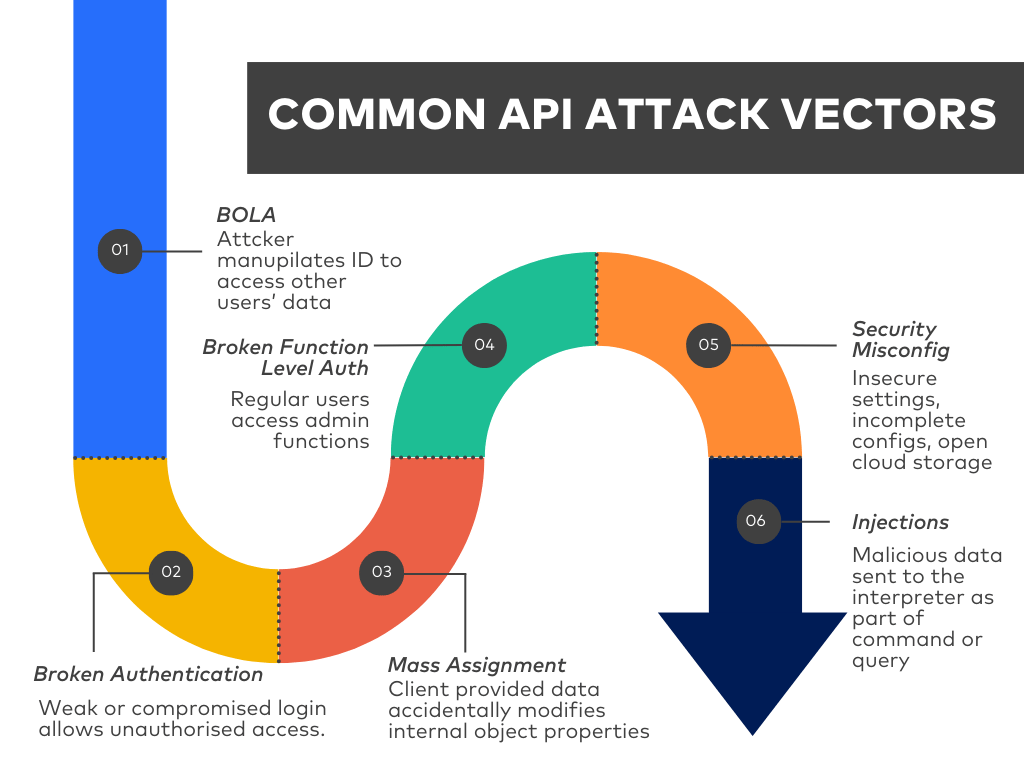
Map your current implementations against the OWASP API Security Top 10 to identify specific vulnerabilities that may be affecting the current level you’re at.
Level 0-1 APIs commonly suffer from:
- Broken authentication (API2:2023)
- Broken object-level authorization (API1:2023)
- Security misconfiguration (API8:2023).
Level 2 implementations face:
- Broken function-level authorization (API5:2023)
- Unrestricted access to sensitive business flows (API6:2023).
It is thus very important that you conduct a thorough gap analysis that involves comparing your authentication mechanisms, authorization models, and identity management against industry standards and what compliance mandates.
Tools and Methods for Assessment
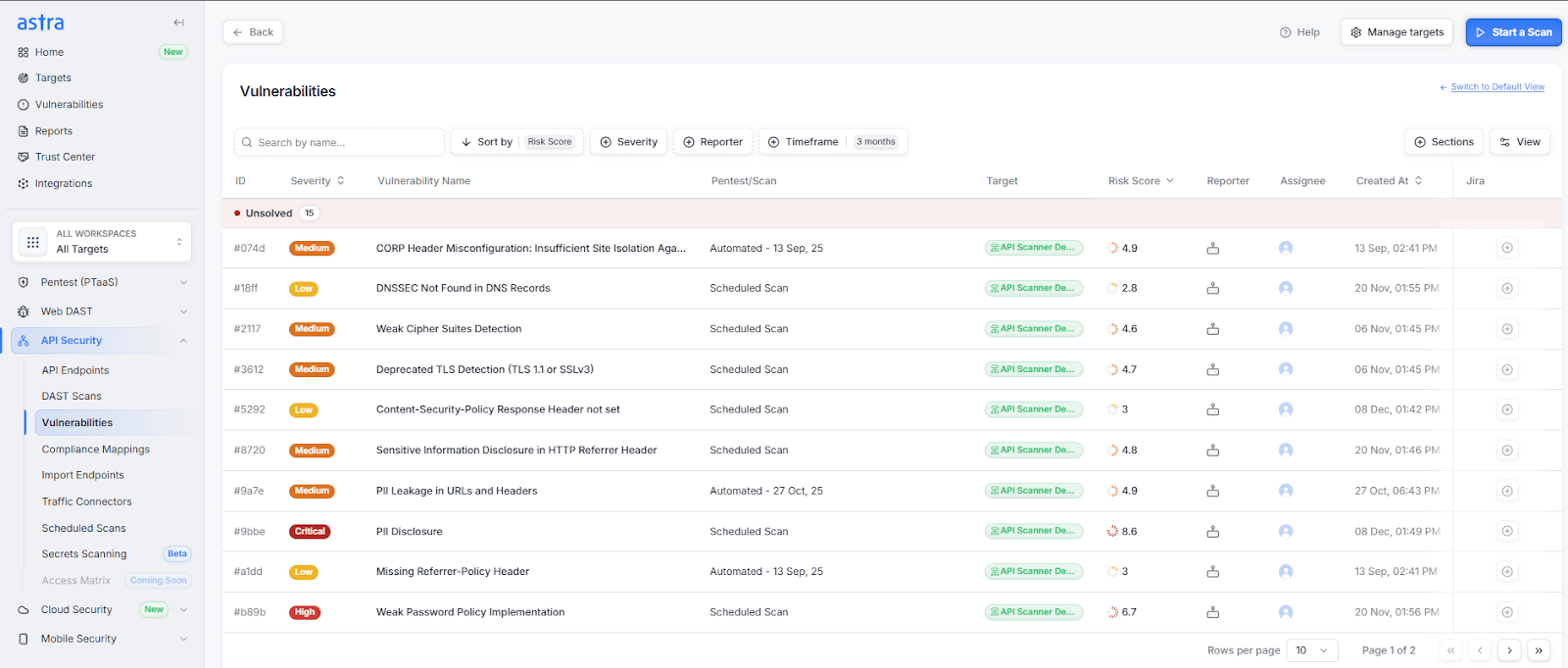
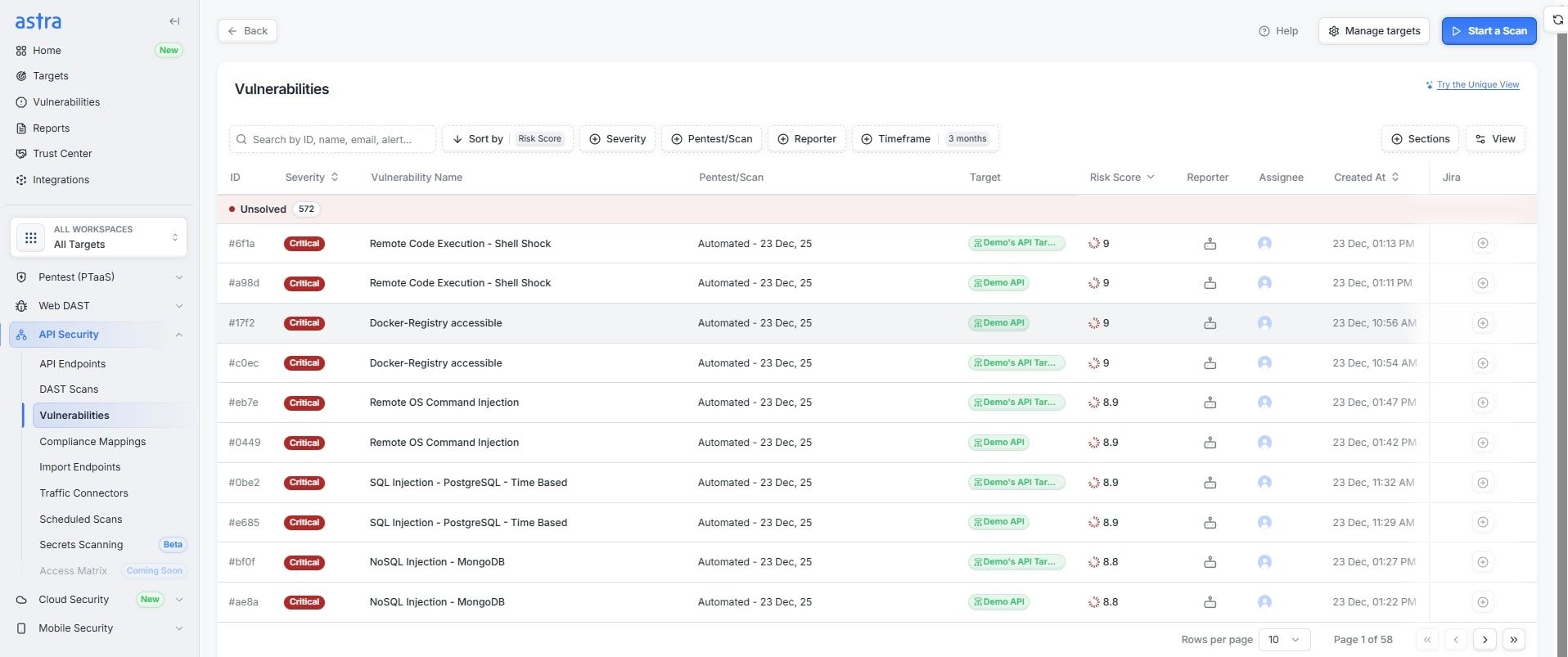
Automated API discovery tools help you identify shadow and zombie APIs across your infrastructure. Tools like Astra’s API security platform, Pynt, APIsec, and Burp Suite provide automated vulnerability scanning against OWASP Top 10 risks.
Make sure your API security posture management vendor offers both automated discovery and offensive security testing across your CI/CD pipelines. This helps you minimize operational disruptions while enabling shift-left security.
For manual assessment, use penetration testing frameworks like OWASP ZAP to validate authentication flows, test authorization bypass scenarios, and identify exposed sensitive data.
Don’t know where to start with your API security assessment? Schedule your Demo.
How do I Improve my API Security Maturity Model?
This requires meticulous planning and a phased implementation approach followed by continuous monitoring. Each transition is built upon the implementations made during the one beneath it and on the security gaps identified.
Level 0 → Level 1: Implementing Token-Based Authentication
| Phase | Category | Details |
|---|---|---|
| Implementation | API Inventory & Assessment | Conduct a complete API inventory and document current authentication methods |
| Token Design | Design token structure embedding user types (machine, app, user) | |
| Token Infrastructure | Deploy the token generation and validation service | |
| Authentication Enforcement | Implement bearer token authentication in API headers | |
| Migration Strategy | Migrate endpoints from API keys to tokens with a backward compatibility period | |
| Token Governance | Establish token lifecycle management and rotation policies | |
| Challenges & Solutions | Backward Compatibility | Challenge: Maintaining backward compatibility during migration Solution: Use feature flags for gradual rollout; maintain dual authentication support temporarily |
| Token Storage & Management | Challenge: Token storage and management complexity Solution: Implement secure token storage patterns; avoid localStorage for sensitive tokens |
|
| Performance Impact | Challenge: Performance overhead from token validation Solution: Implement token caching with a 30-second clock skew allowance |
|
| Success Metrics | Adoption | 100% of production APIs using bearer tokens within 3–6 months |
| Identity Coverage | User identity tracking coverage reaches 95%+ | |
| Risk Reduction | API key-based vulnerabilities reduced by 70% | |
| Credential Hygiene | Zero hardcoded credentials in code repositories | |
| Stability | Authentication failure rate remains below 0.5% during migration |
Level 1 → Level 2: Adopting OAuth 2.0 and Scopes
| Phase | Category | Details |
|---|---|---|
| Implementation | Authorization Infrastructure | Deploy an OAuth 2.0 authorization server with PKCE support |
| Scope Design | Define standard (OpenID Connect) and custom scopes for your APIs | |
| Flow Enforcement | Implement authorization code flow with exact redirect URI matching | |
| Identity Integration | Integrate with identity providers (IdP) for centralized authentication | |
| Authorization Refactor | Migrate authorization logic from custom code to scope-based permissions | |
| Legacy Flow Removal | Eliminate implicit flow and password credentials grant | |
| Challenges & Solutions | Scope Granularity | Challenge: Scope granularity design—too broad or too narrow Solution: Start with coarse-grained scopes; refine based on actual usage patterns |
| OAuth Version Migration | Challenge: OAuth 2.0 to 2.1 migration complexities Solution: Follow a 6-week phased approach: eliminate implicit flow (Week 1), add PKCE (Weeks 2–3), enforce exact URI matching (Weeks 4–6) |
|
| Legacy Integrations | Challenge: Legacy system integration with OAuth flows Solution: Implement REST drivers replacing SOAP; use JSON instead of XML for lightweight communication |
|
| Success Metrics | Coverage | OAuth 2.0 coverage across 90% of APIs within 6–12 months |
| Code Reduction | Custom authorization code reduced by 60% | |
| Vulnerability Reduction | Authorization-related vulnerabilities (BOLA, BFLA) decreased by 50% | |
| Flow Hygiene | Zero implicit flow usage in production | |
| PKCE Adoption | PKCE implemented in 100% of authorization code flows |
Level 2 → Level 3: Implementing Claims-Based Architecture
| Phase | Category | Details |
|---|---|---|
| Implementation | Identity Layer | Implement OpenID Connect on top of the OAuth 2.0 foundation |
| Token Claims Design | Design JWT claims structure with subject and context attributes | |
| Key Management | Deploy cryptographic signing infrastructure (JWKS rotation) | |
| High-Security Tokens | Implement certificate-bound tokens (RFC 8705) for high-security scenarios | |
| Trust Centralization | Centralize trust in identity provider; remove app-specific authorization rules | |
| Regulated Compliance | Implement mTLS and PKI for FAPI-grade compliance (regulated industries) | |
| Challenges & Solutions | Key Rotation | Challenge: Cryptographic key management and JWKS rotation Solution: Automate key rotation with proper versioning; maintain a 30-day key overlap period |
| Token Size & Performance | Challenge: JWT size impacting API performance Solution: Use opaque tokens for public APIs, JWTs internally; limit claims to essential data only |
|
| Time Validation | Challenge: Clock skew and token expiration issues Solution: Permit ±30 seconds tolerance for exp/nbf validation; implement proper refresh token flows |
|
| Success Metrics | Adoption | JWT adoption rate reaches 95% for sensitive APIs within 12–18 months |
| Logic Elimination | Custom authorization logic was eliminated completely | |
| Zero Trust Coverage | Zero trust architecture coverage at 100% for critical endpoints | |
| Compliance | Compliance attestation achieved (FAPI, PCI DSS, HIPAA) | |
| Incident Reduction | API breach incidents reduced by 85% |
What are the API Security Maturity Model Best Practices?
Implementing a successful API Maturity model demands that you give it weight in your actions and thoughts across the entire development lifecycle, from initial design through production deployment. The best practices discussed below apply regardless of your current maturity level; they form the basis on which you build and sustain your maturity model.
Design Time Security
Security begins before you even start writing your code—this entails implementing threat modeling early in your design using frameworks, as they help you weed out, early on, identify potential attack vectors.
Secondly, document all API, including entry points, data flows, and integration touchpoints, to best understand your attack surface. Thirdly, have clearly defined security requirements early on, including authentication mechanisms, authorization models, and data encryption standards.
This ought to be followed by creating comprehensive API specs based on the OpenAPI/Swagger standards, and lastly, minimize your data exposure, enforce least privilege access, and design for zero trust right from the beginning.
Development and Testing
When we say implement security before coding, we mean testing as well, rather affirmatively.
Integrate SAST to identify hardcoded credentials, SQL injection flaws, and insecure API calls. Couple this with DAST that examines your APIs while they run in staging environments and helps you stop authentication bypass, broken authorization, and session hijacking. While SAST catches flaws at the design level, DAST exposes behavioral vulnerabilities.
Deployment and Runtime Protection
API gateways secure your digital perimeters—first line of defense. They manage your traffic via throttling, rate limiting, and quotas that mitigate DDoS threats. In today’s age, using AI/ML-infused monitoring helps you wade through the rising volume by analyzing traffic patterns to detect anomalies before they go all cannonball on your API security fort.
Secondly, make sure only compliant requests that match your OpenAI/Swagger specs are let through. This is done via schema validation that helps implement positive security. Thirdly, WAFs have now become non-negotiable, and soon RASP (Runtime Application Self-Protection) will too, as it enables immediate threat response by blocking any abnormal behaviours without manual intervention.
Monitoring and Incident Response
This entails continuous and in-depth API traffic analysis, comprehensive and periodic logging of API requests, authentication and authorization attempts along with data access patterns (for your forensic evidence), automating security event alerts (authentication spikes, unusual privilege escalations), integrating SIEM & SOAR platforms to centralize incident management, and much more.
Phew! We know we know….but this is where we come into the picture.
How Can Astra Security Support Your API Security Maturity Journey?
As you saw above, implementing your API Security Maturity Model is not just about knowing what to do or how to do it; you need a partner who helps you implement every step of it.

A tool, or rather a set of tools, that can assess, test, and validate your security posture at every level. That is why our API Security Platform delivers real-time visibility into your entire API ecosystem, automatically discovering shadow, zombie, and undocumented APIs that attackers could exploit.
Key Features:
- API discovery and inventory: Automatically detects all APIs (shadow, orphan, and zombie APIs) and maintains a comprehensive API inventory for complete visibility.
- Risk classification: Categorizes APIs based on sensitivity and exposure to help prioritize security efforts.
- API security testing (DAST): Runs deep, authenticated dynamic security tests to find misconfigurations, data leaks, and security loopholes.
- Hacker-style API pentest: Expert-led penetration testing simulating real-world attacks to uncover business logic vulnerabilities.
- Authorization matrix: Ensures low-privilege users don’t have unintended access to sensitive APIs.
- Seamless integrations: Works with AWS Traffic Mirroring, Kubernetes, GCP Packet Mirroring, Azure, Apigee, NGINX, and more for real-time scanning.
- Continuous and incremental security scans: Automates security testing within CI/CD pipelines to shift API security left.
- Developer-friendly fixes: Provides actionable remediation steps directly within development workflows.
Final Thoughts
The API Security Maturity Model is to help you chart a clear and actionable framework that evaluates and strengthens your organization’s API defense strategy. From vulnerable API keys at Level 0 to sophisticated claims-based architectures at Level 3, each maturity stage is a step taken towards a resilient and identity-centric API security posture.
But the journey from basic authentication to zero-trust APIs is not a cake walk at all! It requires strategic planning, phased implementation, and continuous validation. You just can’t navigate this transformation alone. That is why we have developed and continue to work on our PTaaS, DAST, API, and cloud security platforms that marry automated vulnerability scanning with expert-led penetration testing.
FAQs
What is an API Security Maturity Model?
An API Security Maturity Model is a structured framework that defines ascending levels of API security. It lays out a platform that helps you assess your current security posture and chart a roadmap towards a zero-trust API security architecture.
What are the four levels of the API Security Maturity Model?
Depending upon the tool or vendor, these levels vary. But the first time levels came into the picture was in 2008 when Leonard Richardson 2008 devised a model that identified specific technical changes you can implement to improve your API design and architecture. The four levels he defined are:
Level 0 – Non-RESTful design and a single command (usually POST)
Level 1 – Multiple URIs
Level 2 – HTTP methods
Level 3 – HATEOAS, or hypermedia (engine of application state)
How do I assess my organization’s API security maturity level?
The first step is to inventorize your authentication methods, in general:
– Static API keys indicate Level 0
– Bearer tokens suggest Level 1
– OAuth scopes show Level 2
– JWT claims with cryptographic signatures confirm Level 3.
What is the difference between authentication and authorization in API security?
Authentication verifies “who you are” (identity validation), while authorization determines “what you can do” (permission validation). Levels 0-1 focus primarily on authentication, while Levels 2-3 address both.
Why are claims-based architectures more secure than API keys?
Claims use cryptographically signed tokens from trusted identity providers, which bind authorization to a verified user identity. API keys, on the other hand, are static credentials that are quite susceptible to exposure, lack user binding, and provide only machine-to-machine verification.
How long does it take to advance through API security maturity levels?
The timeline varies based on your organization’s size and available resources. Typical progressions, though, take:
3-6 months for Level 0 to 1
6-12 months for Level 1 to 2
12-18 months for Level 2 to 3