
Smart contracts enforce trust our security experts ensure they’re airtight.
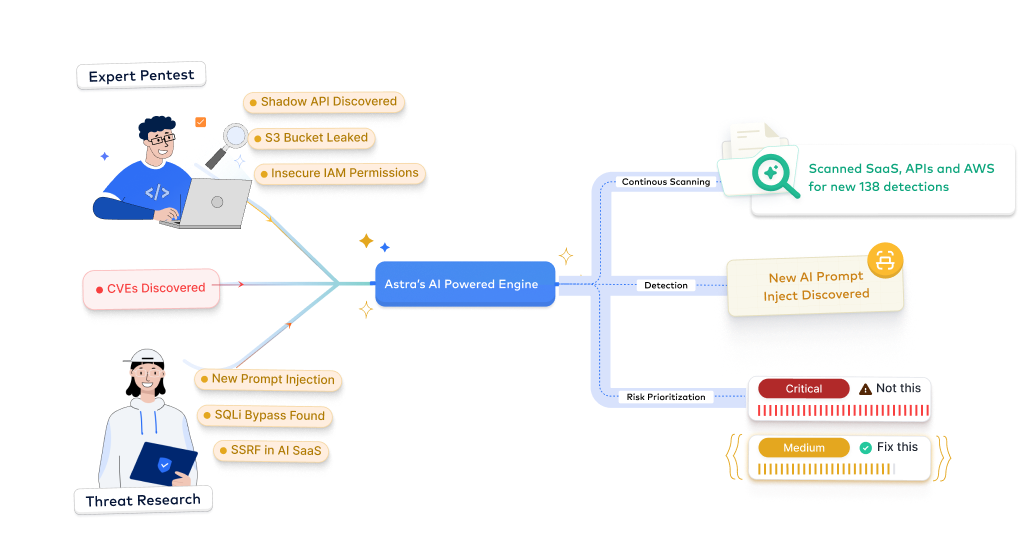
Designed to automate trust, smart contracts in DeFi and CeFi are prime hacker targets, with metaverse and gaming not far behind. Astra secures them with AI-powered, continuous offensive testing.




"Astra identified several moderate and high severity issues that our team never thought existed. We are working in the Mental Health space and data privacy and security are extremely critical to us. That being said, I am thankful for to Astra."
Georgi Atanasov

“A key standout during our Astra Pentest was the solid support via Slack, making communication easy and efficient. The platform itself is user-friendly, and the Jira integration greatly streamlined issue resolution for our team, seamlessly fitting into our existing workflow”
Richard Ganpatsingh

"Astra's exceptional manual penetration testing and efficient automated tools have provided invaluable insights into our application's security, making them our trusted partner for comprehensive and reliable security measures"
Michal Pěkný

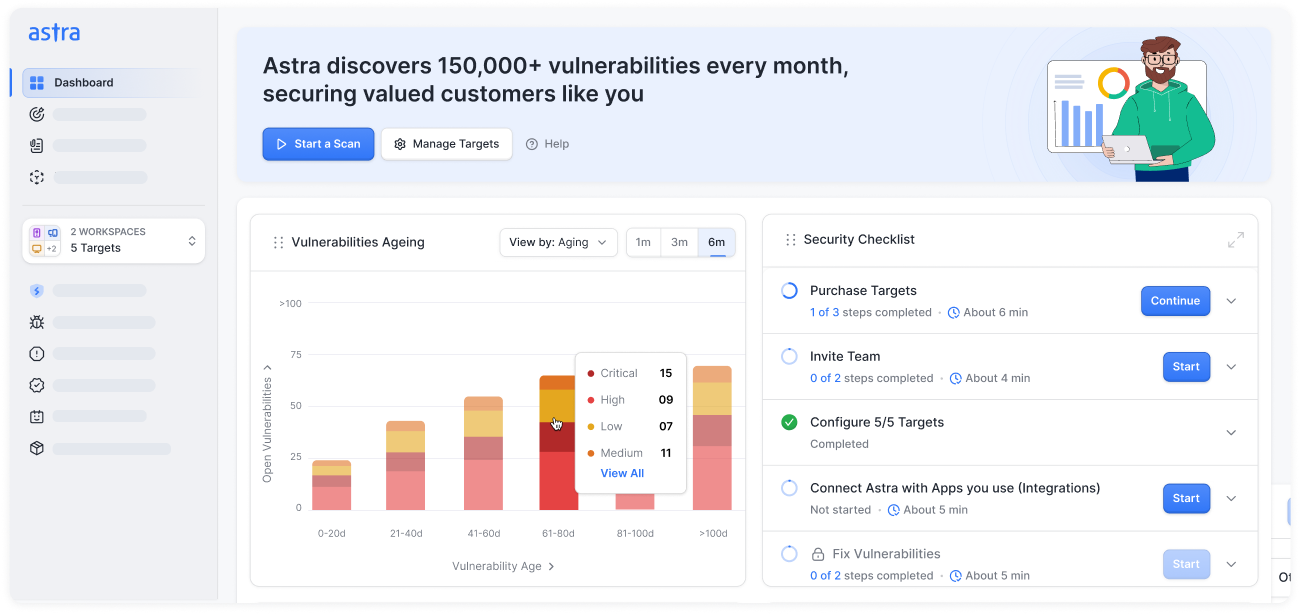
"We are impressed with Astra's dashboard and its amazing ‘automated and scheduled‘ scanning capabilities. Integrating these scans into our CI/CD pipeline was a breeze and saved us a lot of time. The rapid issue resolution and detailed vulnerability …"
Ankur Rawal

"The most impressive part is the certificate they give you. It shows that you actually pentest and don't just say that you do. Customers can be a tad more trusting in your security because it's not just lip service. The dashboard can be a little slow sometimes, but this "
Clinton Skakun


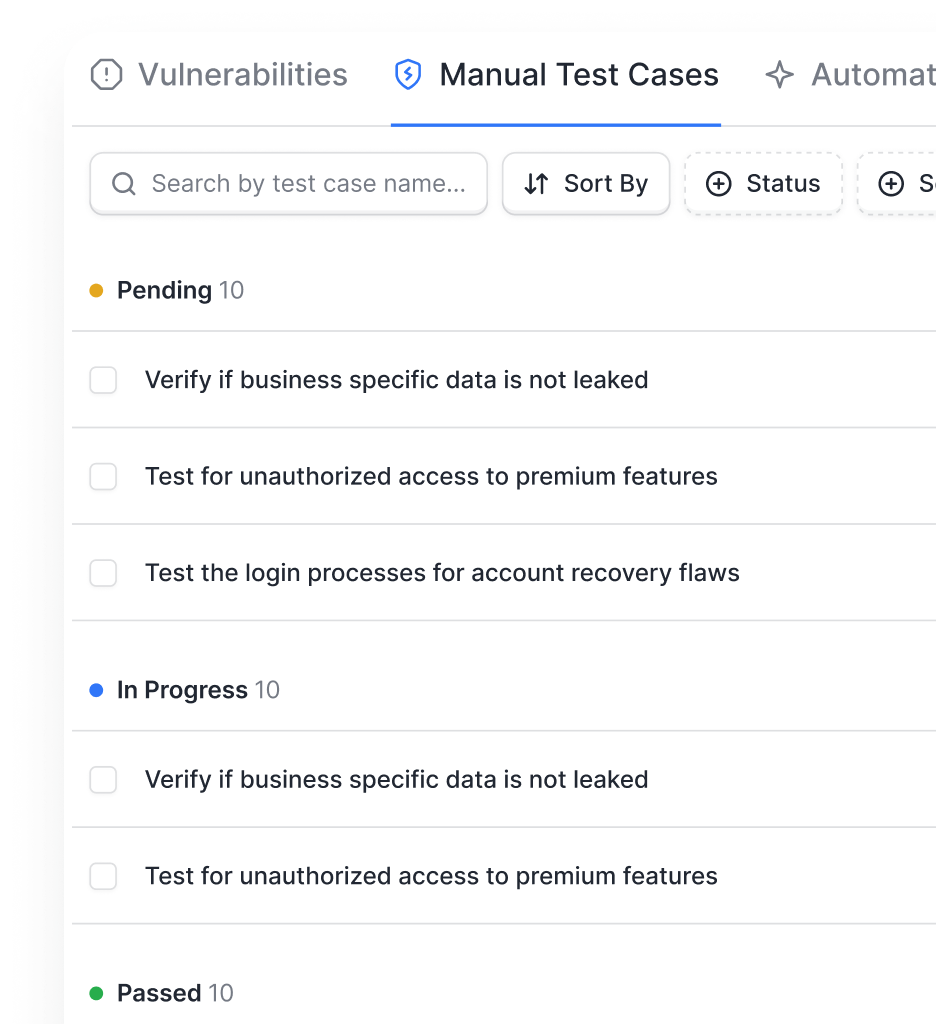

Astra's 7-Step Pentest Process
Hackers innovate daily, so should your security.
You ship code. Hackers ship exploits. Astra smart contract security audit services stress-test your defenses so real threats can’t.
Zero False Positives


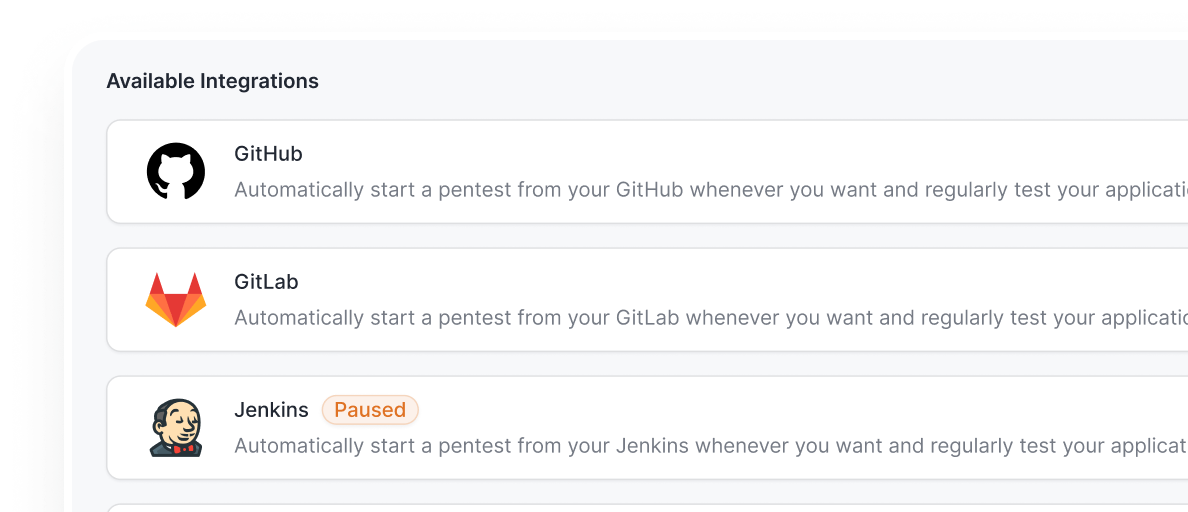
Seamless CI/CD Integrations
Compliance-Specific Scans


Publicly Verifiable Certificate
CXO-Friendly Dashboard


From startups to fortune companies,
1000+ companies trust Astra


.webp)


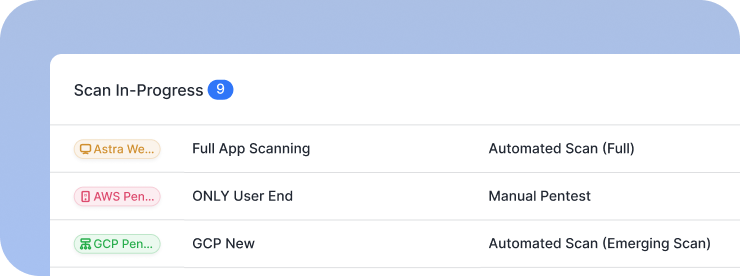



Pentesting as a service, tailored for your industry
Continuous penetration testing and compliance mapping services built for ISO, SOC 2, HIPAA, PCI DSS, and more.

- Secure financial systems and payment workflows from logic flaws
- Deliver actionable fixes and maintain PCI DSS, ISO 27001, SOC 2, DORA compliance, and more
- Standards: OWASP, PTES, CVSS

- Protect patient data and secure APIs across web, mobile, and cloud
- Uncover hidden PHI exposures and validate HIPAA, ABHA, and more
- Standards: OWASP, PTES, NIST, CVSS

- Accelerate app security with DevSecOps integration and continuous scans
- Detect vulnerabilities with AI-driven validation and ensure ISO 27001, SOC 2, GDPR compliance and more
- Standards: OWASP, PTES, CVSS, NIST SP 800-115

- Protect customer data and secure payment flows from BOLA/IDOR risks
- Empower developers with guided remediation and PCI DSS, ISO 27001, SOC 2 compliance and more
- Standards: OWASP, PTES, CVSS

- Fortify cloud, container, and on-prem systems with authenticated tests
- Monitor and validate vulnerabilities to prevent downtime; comply with NIST, ISO 27001, SOC 2, CREST, Cert-In, and more
- Standards: OWASP, PTES, NIST, CVSS

- Discover shadow APIs and secure cloud services
- Deliver fast, developer-friendly fixes; ensure GDPR, ISO 27001, SOC 2 compliance
- Standards: OWASP, PTES, CVSS
Our pentesters? World class, certified & contributors to top security projects
We find the bugs before the bad guys do
Our team stays ahead of the curve in the ever-evolving world of web security

.avif)
.avif)
.avif)



Stay compliant throughout the year
Understand our industry-specific pentests as a service plans designed to meet your compliance, scale, and security needs.
- Get compliance-ready year-round for ISO 27001, SOC 2, GDPR, HIPAA, PCI DSS, CREST, CERT-In, CIS Controls, NIST, & more
- Receive actionable insights from continuous pentesting and expert-led remediation guidance
- Track compliance progress with the Astra Security Compliance View, providing executive-friendly and technical views


- Maintain audit-ready reports without manual effort
- Reduce risk exposure with real-time detection and validation
- Prioritize remediation based on business impact and compliance requirements
- Demonstrate security maturity to clients, regulators, and internal stakeholders

Frequently asked questions
What is a smart contract security?
Smart contract security refers to the practices and technologies used to identify, prevent, and mitigate vulnerabilities in blockchain-based contracts. It involves code audits, formal verification, and continuous pentesting to prevent exploits like reentrancy, logic flaws, and privilege escalations, ensuring trust, reliability, and financial safety.
How much do smart contract audits cost?
Smart contract audit costs range from $5,000 to $100,000+, depending on code complexity, audit depth, and firm reputation. Continuous pentesting solutions may have subscription-based pricing for ongoing security testing.
What are smart contract security audit services?
Smart contract security audit services identify vulnerabilities by analyzing code, testing for exploits, and simulating attacks. They help ensure contract integrity, prevent hacks, and meet compliance standards before deployment, reducing financial and reputational risks in blockchain platforms.
How do I prepare for a smart contract audit?
Code readiness – Ensure the contract is feature-complete, compiled without errors, and follows best practices (e.g., Solidity’s latest version).
Testing coverage – Conduct unit and integration tests with tools like Hardhat, Foundry, or Truffle, achieving high test coverage (>80%).
Gas optimization – Refactor expensive operations to prevent unnecessary DoS risks and improve efficiency.
Access control validation – Verify role-based permissions, upgradeability logic, and ownership mechanisms to prevent privilege escalation attacks.
External dependencies – Audit third-party libraries and oracles (e.g., Chainlink) for security risks.
Comprehensive documentation – Provide auditors with architecture diagrams, function explanations, previous audits, and security assumptions for clarity.

