
In 2026, fintech cybersecurity and pentesting companies are more than just defenders—they’re enablers of trust and growth in a complex, fast-evolving threat landscape. For CTOs, CISOs, and risk leaders, the challenge lies in securing CI/CD pipelines, API-first architectures, and real-time transactions, all while staying compliant with regional and global regulations.
Even a minor misstep, such as a misconfigured container, can escalate into a significant risk. That’s why today’s leaders need security partners who offer fast, customizable, and deeply integrated threat intelligence. Here’s a look at 7 top companies doing just that.
List of Top 7 Fintech Cybersecurity Companies in 2026
- Astra Security
- SentinelOne
- SOCRadar Extended Threat Intelligence
- Cisco
- Palo Alto (Cortex XSIAM)
- CrowdStrike
- Onfido [Entrust]
However, before we dive deep into the best offerings in the business, understanding the basis for choosing your fintech security solutions provider is essential.

Top Fintech Cybersecurity Companies Compared
| Feature | Astra Security | SentinelOne | SOCRadar Extended Threat Intelligence |
|---|---|---|---|
| Detection & Capabilities | DAST vulnerability scanner with 15,000+ security tests (OWASP Top 10, CVEs, access control flaws), PTaaS, continuous pentesting | Behavioural & static AI-powered XDR, SIEM, EDR, ATT&CK framework evaluation, data lake analytics | Multi-environment monitoring, malware feed, phishing detection, EASM, digital risk protection |
| Coverage | Web apps, APIs, mobile banking, payment processors, network, cloud; full CI/CD integration | MDR, DFIR, threat hunting, data, endpoint, cloud, network; IaC scanning (Terraform, Helm, CloudFormation) | Threat hunting, vulnerability, identity & access, dark web monitoring, brand protection, tactical & operational intelligence |
| Compliances & Certifications | PCI-DSS 4.0, SOC-2, GLBA, DORA, SEC, GDPR, CCPA, PSD-2, Open Banking, 23 NYCRR 500; CREST & PCI-ASV approved, CERT-In empanelled, ISO 27001 | ISO 27001, PCI-DSS, NIST, GLBA, GDPR | CCPA, eDIAS2, KYC/AML, ETSI eSignatures, NIST, PEP, WCAG 2.1 |
| Dashboard & Reporting | Single CXO-friendly dashboard for scans, compliance, monitoring, detailed reports | Customizable enterprise dashboards, compliance & business reporting | Flexible no-code UI workflows with granular verification results |
| Automation | AI-powered engine for scale, speed, accuracy; auto-discovery with continuous monitoring | Single-click rollback & remediation; Singularity Hyperautomation for workflows; reduces MTTD & MTTR | Fully automated AI platform for onboarding and ID verification; real-time monitoring using ML |
| Company Size | 100–200 | 1,000–5,000 | 200–500 |
| Geography | USA, India, Europe, APAC, Australia, South America | USA | USA |
| Cost | Plans starting at $1,999/year | Median buyer pays ~$25,344/year | SMB plan starting at $3,590/year |
| Pros | Compliant with 15+ frameworks, certified professionals (OSCP, CEH, etc.), public certificates, OWASP contributor, live AI-driven reporting | Advanced, comprehensive platform; scalable & flexible; simplifies SOC & IT management | Combines EASM, CTI, digital risk protection; real-time ML monitoring; Gartner-recognized (2024) |
| Limitations | Only a 1-week trial available | Support and global deployment limitations | Limited global readiness noted in G2/Gartner reviews |
| Best For | Holistic fintech pentesting & continuous monitoring | Unified endpoint, cloud, and identity protection | Early warning, external attack surface visibility, threat intelligence |
Top 7 Fintech Cybersecurity Companies [2026]
1. Astra Security [Get Started]
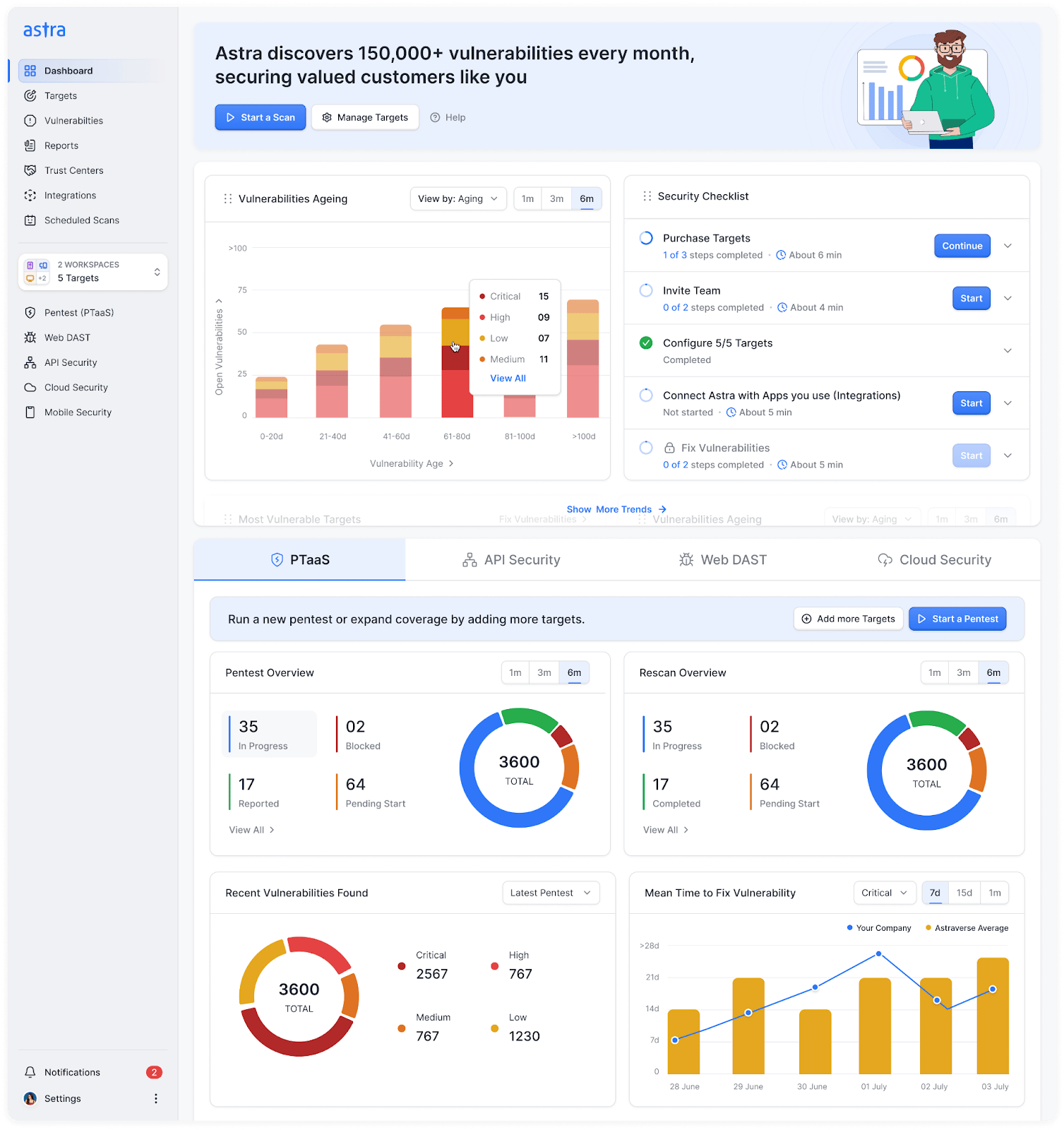
Key Features:
- Detection and other capabilities: DAST Vulnerability scanner with 15,000+ security tests (OWASP top 10, CVEs, access control flaws)
- Coverage: Web apps, APIs, mobile banking, payment processors, network, and cloud coverage with full CI/CD integration.
- Compliances & Certifications: PCI-DSS 4.0, SOC-2, GLBA, DORA, SEC, GDPR, CCPA, PSD-2 & Open Banking, 23 NYCRR 500, etc. CREST & PCI-ASV approved, CERT-In empanelled, and ISO 27001-certified
- Dashboard and Reporting: Single CXO-friendly for scans, compliance, monitoring, detailed reports, and much more.
- Automation: AI-powered engine for scale, speed, and accuracy. Auto-discovery with continuous monitoring for live threat detection.
- Company Size: 100-200
- Geo: USA, India, Europe, APAC, Australia, and South America
- Cost: Plans starting at $1,999 annually.
Why Choose Astra Security?
Astra is a fintech cybersecurity company designed for high-stakes environments, including digital banking, payment processors, and DeFi. In a world where threats move faster than compliance cycles, periodic testing isn’t enough. Astra secures your entire stack with agile, continuous protection.
Our AI-powered platform offers PTaaS, Continuous Threat Exposure Management, and a 360° view of your security posture. It proactively scans web, mobile, cloud, API, and network layers, delivering real-time insights, continuous pentests, and shift-left security at scale.
In 2025, Astra helped over 800+ engineering teams across 70 countries identify more than 5,500 daily vulnerabilities, resulting in millions in potential savings. With SMB and mid-to-large firm clients (Muthoot Finance, Cambridge, Singapore Trade Exchange), Astra scales with you.
Pros:
- Testing standards and certificates compliant with 15+ cybersecurity regulatory frameworks worldwide. Ensuring your legal troubles and penalties are minimal.
- Security professionals with numerous certifications & CVEs such as OSCP, CEH, eJPT, eWPTXv2, and CCSP (AWS)
- Offers publicly verifiable certificates to build trust
- Active contributor to OWASP and other similar open-source projects
- Live reporting, AI-driven strategies, and a GPT-powered chatbot with 10,000+ security tests
Limitations:
- Only a 1-week trial is available.
Best For:
- Holistic fintech pentesting and continuous monitoring
2. SentinelOne [G2 Rating: 4.7/5 ]
Key Features:
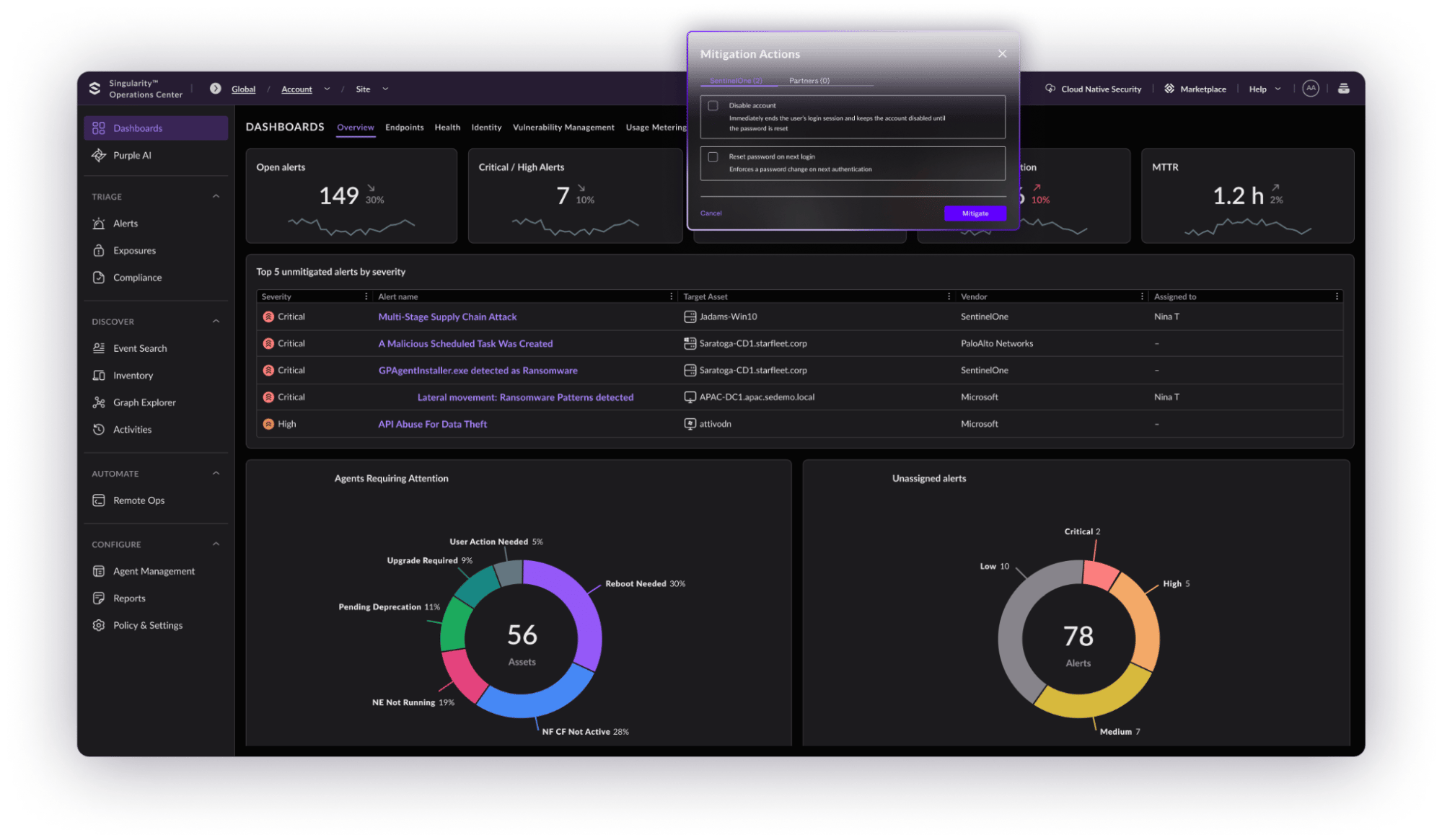
- Detection & other capabilities: Behavioural and static AI-powered XDR, SIEM, EDR, record-breaking ATT&CK evaluation, data lake for log analytics, etc.
- Coverage: MDR, DFIR, Threat hunting, Data, endpoint, cloud, network and integrated enterprise security
- Integration: Iac (Infrastructure as Code) scanning for Terraform, Helm templates and CloudFormation for security across DevOps pipelines
- Compliances & Certifications: ISO 27001, PCI-DSS, NIST, GLPA, GDPR, among others.
- Dashboard and Reporting: Customizable enterprise dashboards, along with compliance and business reporting
- Automation: Single-click rollback and remediation, Singularity Hyperautomation for creating fast and interactive workflows, reducing MTTD and MTTR.
- Company Size: 1000-5000
- Geo: USA
- Cost: Median buyer pays ~$25,344 per annum
Why Choose SentinelOne?
SentinelOne works around a single AI-infused intelligent platform (Singularity). It helps monitor and remediate attacks across ATMS and PoS to data centres, provides enterprise-level visibility of IoT and IP-enabled devices, and secures cloud migration.
Pros:
- One of the most comprehensive and advanced cybersecurity platforms in the market
- It puts scalability, management ease, and flexibility in focus for your SOC and IT operations.
Limitations:
- Users on PeerSpot have expressed grievances related to support, a dearth of interactive sessions at a global level, and automated deployment.
Best For:
- Unified endpoint, cloud, and identity protection
3. SOCRadar Extended Threat Intelligence [G2 Rating: 4.8/5]
Key Features:
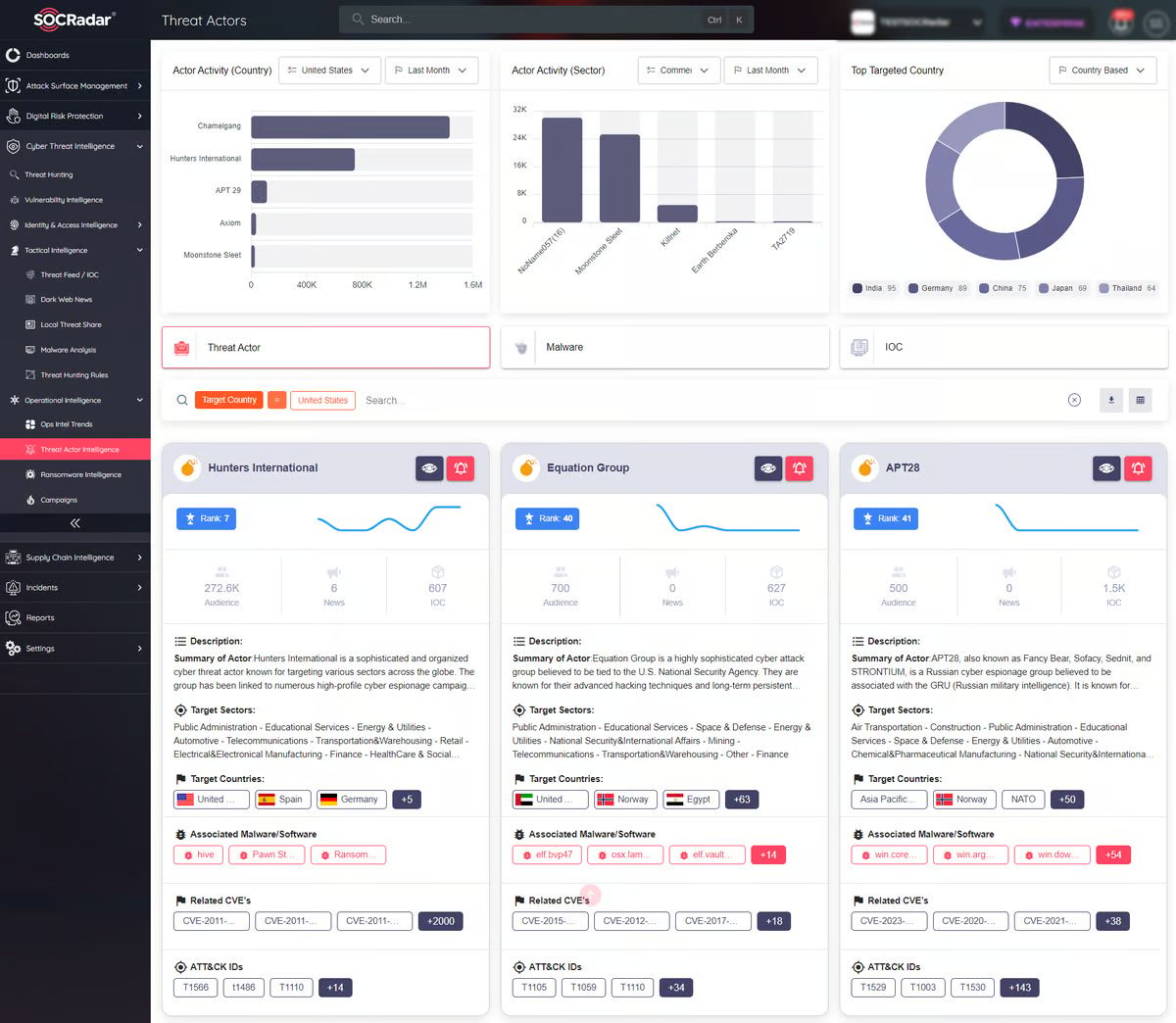
- Detection & Other capabilities: Multi-environment monitoring, malware feed, phishing detection, digital risk protection services for EASM (External Attack Surface Management) and beyond.
- Coverage: Threat hunting, vulnerability, identity and access, tactical and operational intelligence covering dark web monitoring, brand protection, and more.
- Compliances & Certifications: CCPA, eDIAS2, KYC/AML, ETSI eSignatures, NIST, PEP, WCAG 2.1 accredited.
- Dashboard and Reporting: Flexible no-code based workflows of UI segments, verifications, and if-this-then-that conditions, accessing granular verification results
- Automation: Fully automated AI-powered platform for onboarding and ID verification.
- Company Size: 200-500
- Geo: USA
- Cost: SMB plan starting from $3590 annually.
Why Choose SOCRadar Extended Threat Intelligence?
Monitoring, remedying, and limiting data breaches and exposure is central to any fintech firm to build trust and stay compliant. As a fintech cybersecurity solutions provider, SOCRadar excels in this space, and that too at a reasonable enough cost, along with API integration, SIE,M and vulnerability tracking.
Pros:
- This platform combines EASM, CTI and digital risk protection, real-time monitoring using ML.
- Recognised by Gartner in the area of Digital Risk Protection Services (2024)
Limitations:
- Reviews on G2 and Gartner highlight a lack of global readiness of its products.
Best For:
- Early warning, external attack surface visibility & threat intelligence
4. Cisco [G2 Rating: Cisco Duo 4.5/5]
Key Features:
- Detection Accuracy: Real-time identity verification, AI-based liveness check and fraud discovery
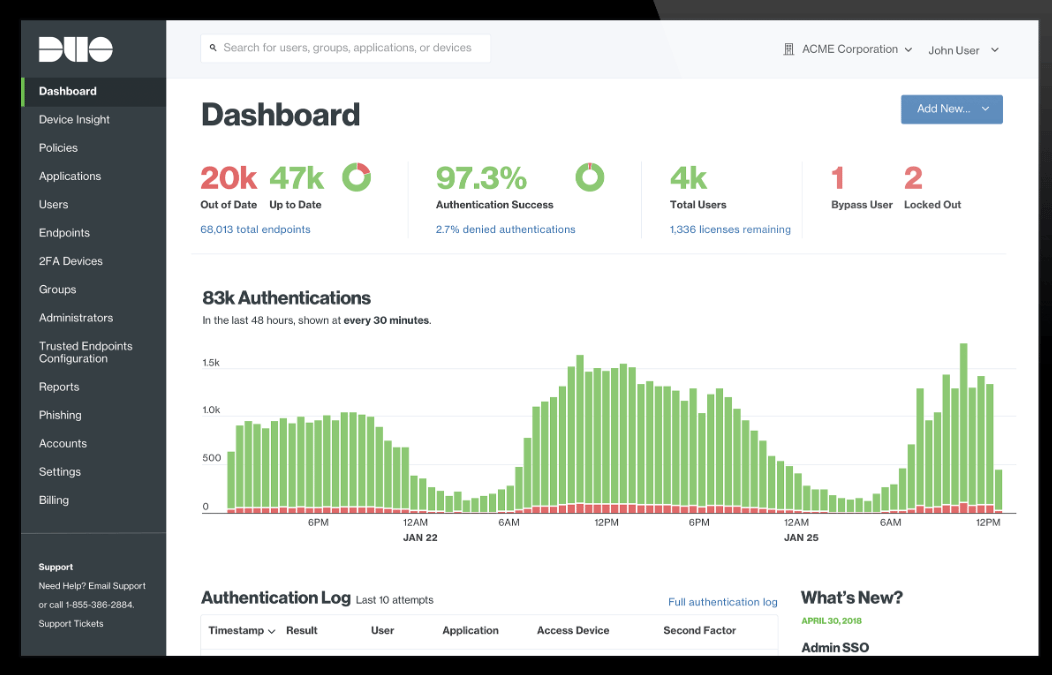
- Coverage: Umbrella for cloud security, Duo for identity intelligence and Talos for threat intelligence, besides other endpoint and security suites
- Compliances & Certifications: ISO 27001, CSA STAR, PCI DSS, GDPR, FedRAMP, etc.
- Dashboard and Reporting: Customizable, detailed dashboards depending on the solutions package opted for that support regulations reporting for network and cloud.
- Automation: Incident orchestration and automation are powered by SecureX across its products.
- Company Size: 10,000+
- Geo: USA
- Cost: Median annual cost of ~$17,772
Why Choose Cisco?
Firstly, Cisco’s cloud-delivered SASE (Secure Access Service Edge) solution simplifies security and policy enforcement, while the SD-WAN allows for a seamless user experience by optimising network performance.
Secondly, Cisco Talos threat intel-powered scalable analytics platform XDR hunts down threats across applications, cloud, endpoints, and various networks.
Pros:
- The enterprise-grade scalability Cisco offers is quite unmatched even today.
- It offers 24/7 managed detection and response services and rich threat intel.
- Its powerful segmentation and encryption attributes prove to be a boon for PCI data.
Limitations:
- When juxtaposed against boutique fintech cybersecurity solutions providers, the cost of the course is a huge consideration.
- Given its wide range of solutions and products, preparing a setup that suits your firm can get complex and thus requires intensive planning.
- Mostly suited for bigger enterprises and organisations.
Best For:
- Scalable network security & infrastructure protection
5. Palo Alto (Cortex XSIAM) [G2 Rating: 4.3/5]
Key Features:
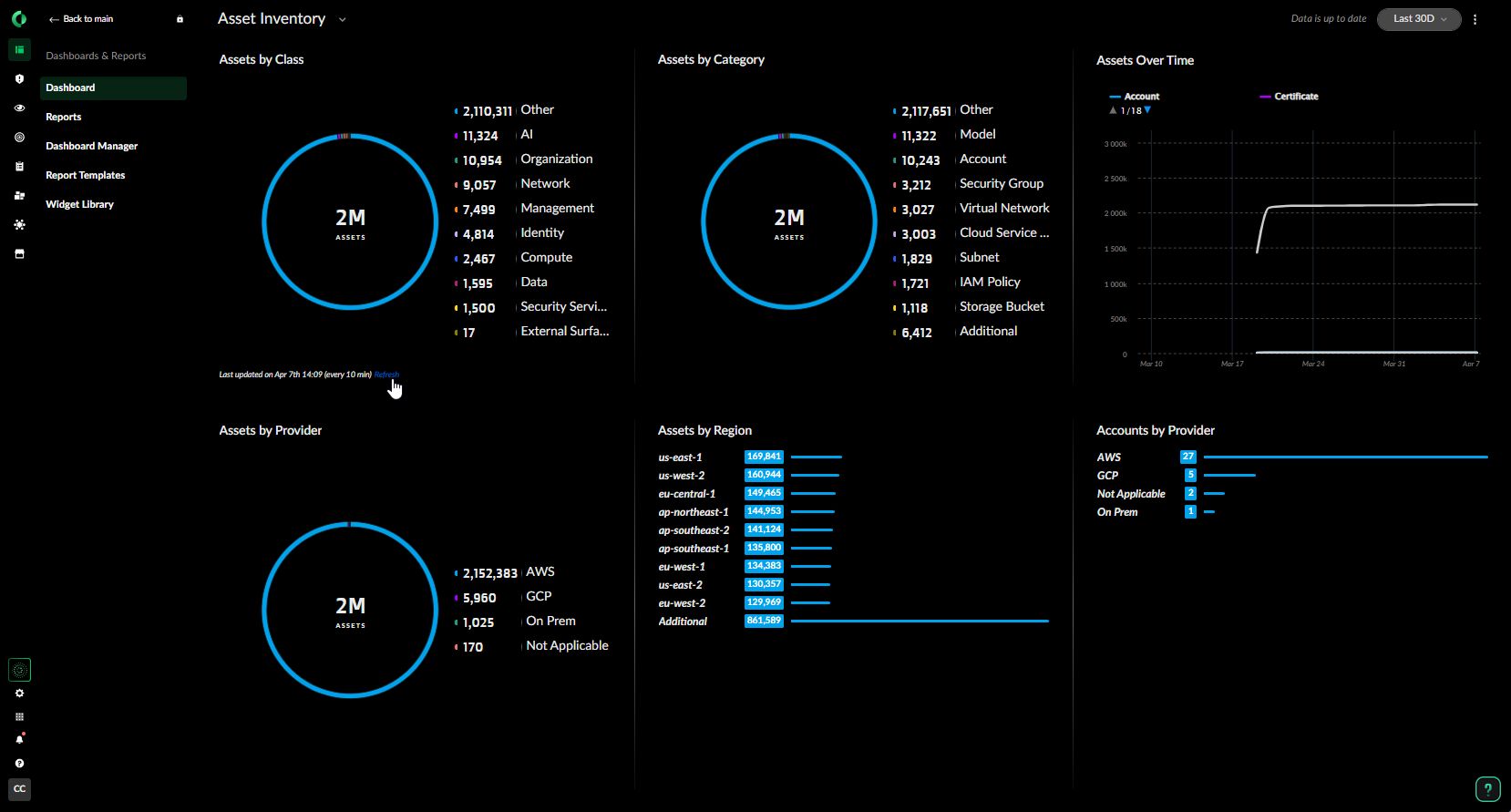
- Detection & Other Capabilities: Continuous collection, stitching and normalisation of raw data, helps eliminate console switching. Automation-first approach to speed up incident response and remediation
- Coverage: Combines multiple SOC capabilities such as XDR, SOAR, ASM & SIEM
- Compliances & Certifications: FS-ISAC, WSTA, besides the ones mentioned above and others
- Dashboard and Reporting: Unified, multiple dashboards (for security operations, analysis during investigations, etc.) with heavy customisation
- Automation: AI-powered incident orchestration and automation powered by SecureX across their products. XSOAR simplifies remediation and offers integration with multiple tools.
- Company Size: 10,000+
- Geo: USA
- Cost: Median annual cost of ~41,045
Why Choose Palo Alto’s Cortex XSIAM?
This AI-driven platform offers automation management and extended security intelligence for your SOC and is kind of hell-bent on transforming the way your SOC operates. It is known industry-wide for simplifying operations, eliminating threats at scale and improving incident response and remediation.
It also aids in curbing the risk and operational complexity of your SOC by connecting multiple products into a single platform built solely for security operations.
Pros:
- Most advanced adversary attack protection backed by 100% MITRE ATT&CK results
- Cortex’s QRadarr offers an intuitive and easy-to-deploy UI.
- Its in-built rules and correlation engine offer powerful, unmatched performance in the SIEM space.
Limitations:
- Of course, as far as Cisco is concerned, cost is a hurdle that is dense enough for upcoming fintech firms.
- Users on G2 have expressed concerns regarding integration.
Best For:
- AI-driven SecOps & consolidated threat intelligence & exposure management
6. Crowdstrike [G2 Rating: 4.6/5]
Key Features:
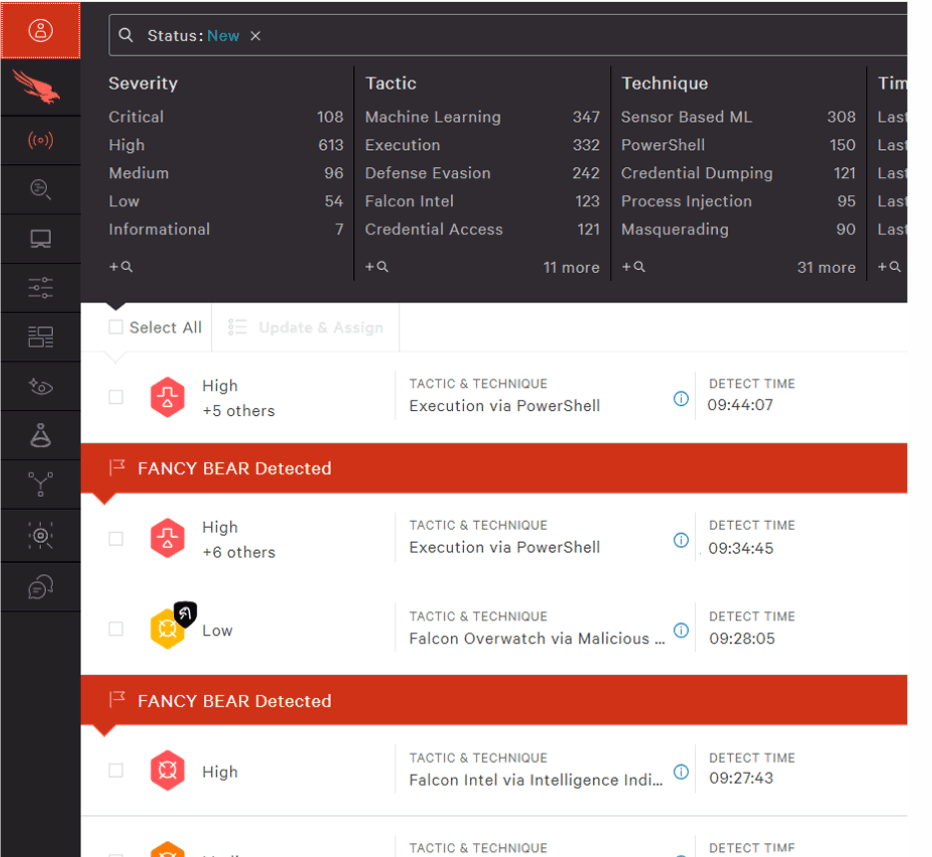
- Detection & Other Capabilities: 75% reduction in MTTR, approx. 240 seconds MTTD along with 13 M+ detections resolved annually across industries
- Coverage: MDR, SOC, SIEM, EPP and Cloud services and products
- Compliances & Certifications: CMMC, DOD IL5, TISAX, FFIEC, etc., besides those mentioned above
- Dashboard and Reporting: Allows for customised real-time monitoring, compliance reporting, integration with other tools, data analysis and hunting, etc.
- Automation: Allows flexible workflow orchestration with native SOAR and AI-native SOC platform
- Company Size: 5,000-10,000
- Geo: USA
- Cost: Median annual cost of ~$49,788
Why Choose CrowdStrike?
Considered a long-time leader in the cloud-native endpoint security space, its Falcon suite deploys AI-based behavioural analytics along with featherlight agents that accurately detect and stop any criminal advances on endpoints.
Fintech firms trust it for its stringent standards in data protection. These include monitoring a wide array of endpoints (containers, servers, laptops, etc.) and accelerated investigation during breaches that provide much-needed assurance for your burgeoning fintech fraternity.
Pros:
- Its cloud-managed and agent-based solutions ensure quick deployment.
- Tried, tested, and spoken for endpoint breach and malware detection that provides ML-based threat intel.
- Has a proven track record of halting any zero-day vulnerabilities and ransomware attacks.
Limitations:
- Users on G2 have raised concerns regarding the generation of false positive alerts, as it uses AI/ML and processes behaviour for the same. Bypassing them shall require prudent and consistent fine-tuning on your behalf.
Best For:
- Endpoint and cloud workload protection with strong visibility & threat response
- Exposure management
7. Onfido [Entrust] [G2 Rating: 4.4/5 (105 reviews)]
Key Features:
- Detection & Other capabilities: Real-time identity verification, AI-based liveness checks and fraud discovery
- Coverage: End-to-end identity verification platform
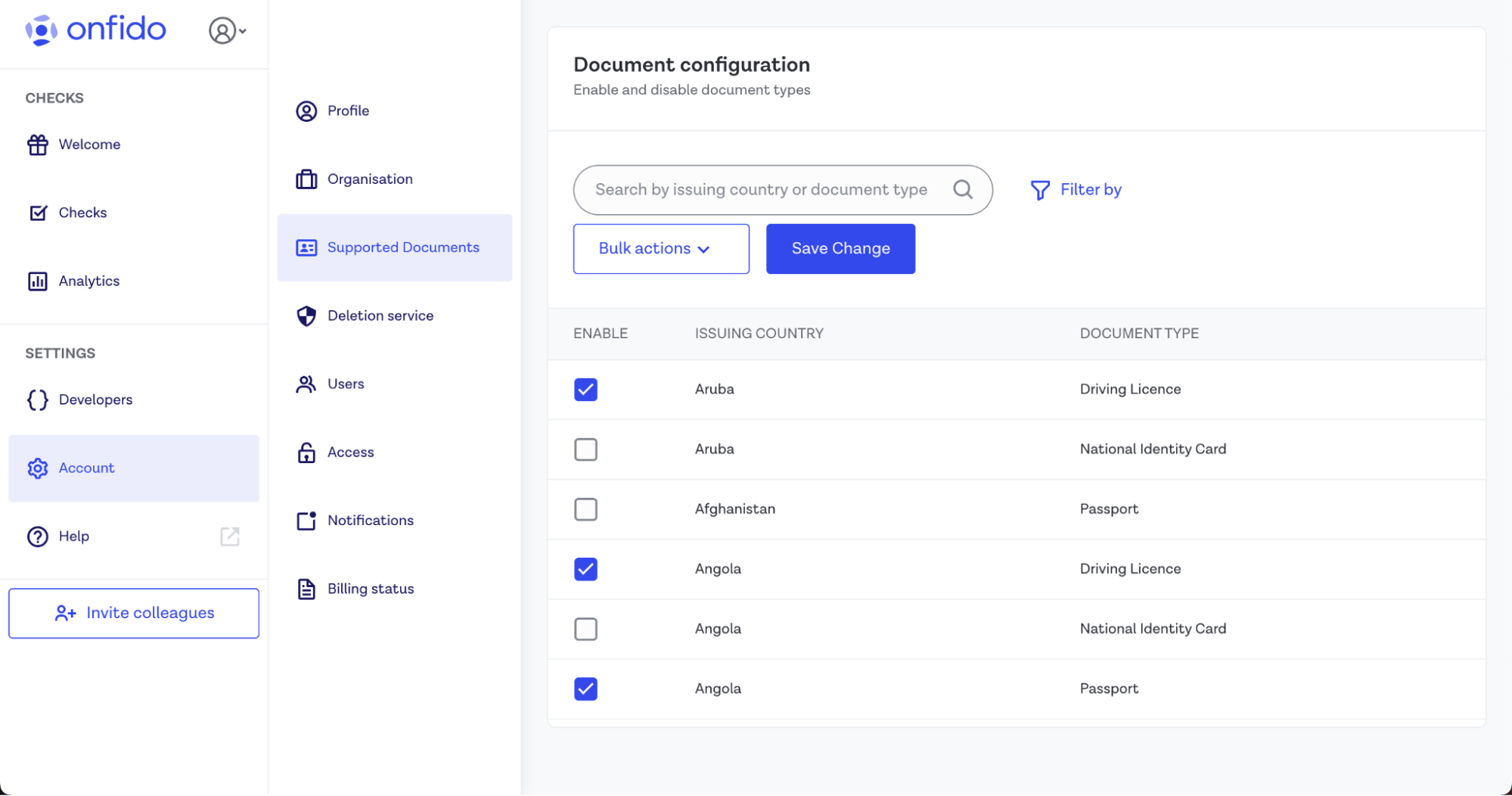
- Compliances & Certifications: CCPA, eDIAS2, KYC/AML, ETSI eSignatures, NIST, PEP, WCAG 2.1 accredited.
- Dashboard and Reporting: Flexible no-code based workflows of UI segments, verifications, and if-this-then-that conditions, accessing granular verification results
- Automation: Fully automated AI-powered platform for onboarding and ID verification.
- Company Size: 500-1,000
- Geo: UK
- Cost: Average user cost ~$65,000 per year
Why Choose Onfido [Entrust]?
Identified as a leader in the 2024 Gartner Magic Quadrant for identity verification, Entrust’s Onfido offers some of the best identity verification and onboarding services.
This AI-powered platform enables seamless and efficient customer authentication, while also facilitating continuous fraud detection and prevention. It utilizes machine learning and biometrics for identity verification, detection of deepfakes or synthetic identities, and a secure digital onboarding process.
Pros:
- Considered a market leader (Gartner Magic Quadrant) in AI-driven identity verification
- Smooth and efficient digitalised onboarding in compliance with international KYC/AML regulations
- An augmented credential management system post-acquisition by Entrust
Limitations:
- Focused on identity, does not offer endpoint or other infrastructure protection.
- Since pricing is directly proportional to verification volume, it can prove to be expensive for fast-growing fintechs.
Best For:
- Identity verification & fraud prevention during customer onboarding & remote identity assurance
5 Essential Features Your Ideal Fintech Cybersecurity Vendor Must Have
Well-versed with Fintech’s Threat Landscape
Just as you scour for your next marketing agency, magnifying deep into their offerings and experience, trying to gauge how close they come to your requirements. Your fintech security company, too, should possess expertise in understanding and thwarting the hacker mindset behind attacks on online payments, digital wallets, and banking apps.
Helps You Stay Compliant, Globally
Cybersecurity, at some level, is like purchasing gold; buying unmarked or uncertified gold puts you at the edge of a deep financial gorge, besides the legal repercussions that can infest and eat into your business.
Multiple cybersecurity certifications, such as PCI DSS, ISO 27001, and SOC 2, demonstrate that your fintech security solution provider’s capabilities align with global best practices, enabling you to establish a compliant security posture.
Offers Flexibility, Malleable to Your Needs
Look, whether it’s widening your cloud security or introducing advanced penetration testing techniques, it is imperative to have a vendor that helps manage vulnerabilities in real-time, is flexible enough to cover broad attack surfaces, and can keep up with your development velocity.
Thus, having a vendor that offers quick, compliant, and responsive scalability options across your multiple firmware setups and online payment platforms becomes equally indispensable.
Provides Robust Security Technology and Integration
With the ever-evolving and advancing cyber threat landscape, the need of the hour is to have a fintech cybersecurity company that offers continuous and comprehensive hacker-style penetration testing and vulnerability assessment.
Besides this, deep integration with major developer environments and tools is also vital as it allows for efficient and smooth cybersecure operations and growth.
Offers Cyber Resilience & not just AI-infused
AI is good to have, but still, only 37% of organisations worldwide have safeguards in place before they deploy AI into their solutions.
Hence, make sure you ask your solutions provider, who claims to be AI-powered, what rules and guidelines they have in place in case AI gets mischievous.
What is the Importance of Cybersecurity in Fintech?
In fintech, cybersecurity is less about regulatory checklists and more about operational assurance. The attack surface is defined by high-velocity APIs, third-party integrations, and mobile-first client experiences, all of which evolve faster than static defenses.
Automated scanning alone cannot account for complex business logic flaws, chained exploits, or misconfigurations in such distributed architectures.
Why fintech teams prioritize pentesting:
• Validates whether layered defenses withstand real adversarial techniques
• Identifies business logic and integration flaws missed by automated tools
• Provides evidence to support accurate risk quantification
• Strengthens incident response by mapping exploitable attack paths
Pentesting addresses these gaps by simulating realistic threats and exposing vulnerabilities with actual exploit paths. For security-mature fintechs, it ensures remediation efforts focus on issues with the greatest business impact and translates security investment into measurable resilience and trust.
Final Thoughts
The choice here isn’t just limited to what these companies bring to the table, but what your fintech business needs right now and its future goals and development plans.
See, whether it’s securing your real-time payments and API-driven architecture, navigating and complying with regulatory requirements, or managing DevOps pipelines that don’t slow innovation as you shift left, you simply can’t copy-paste legacy offerings. You need tailored solutions catering to your unique operational and technical challenges.
And so we hope our comprehensive list of fintech cybersecurity solutions, including legacy and boutique firms, has helped you on this odyssey, as the cybercriminals…well, these guys never log off.
FAQs
What is fintech cybersecurity?
Fintech cybersecurity refers to the practices, tools, and standards that protect financial technology platforms from fraud, data breaches, and cyberattacks. It’s critical given regulatory scrutiny. Strong fintech security builds customer trust and prevents costly incidents.
Which company is best in Fintech cybersecurity?
Astra Security is a leading Fintech cybersecurity company that combines automation and manual expertise to run over 10,000 tests and compliance checks, providing a 360° view of an organization’s security posture. Recognized as a leader for vulnerability scanning and penetration testing by G2, its continuous proactive insights, real-time reporting, AI-first defensive strategies, and seamless integrations make cybersecurity simple, effective, and hassle-free.
What is security fintech?
Fintech security is the discipline of keeping money movement trustworthy at machine speed, where a single API flaw can drain accounts faster than any teller-window fraud ever could. It’s less about ticking compliance boxes and more about earning the right to hold someone’s financial life.