


Nmap is free the way a puppy is free. So is ZAP, so is Nuclei, and so is the “essential toolkit” LinkedIn keeps recycling. The sticker price is zero, the actual bill is the senior engineer hours spent stitching six single-surface outputs into one story, and the exposure sitting in the seams between them.
Astra’s State of Continuous Pentesting 2026 found that 80% of cloud credential exposure was surfaced by mobile pentesters (not cloud scanners), the kind of finding a free tool stack structurally cannot make. Our security experts have handpicked the 16 best pentesting tools that focus on your non-negotiables, including cost, timeline, functionality, deployment, & pentest capabilities.
Top 16 Penetration Testing Tools
- Astra Pentest – Best for continuous, autonomous enterprise pentesting
- Acunetix – Best for automated web app & API scanning
- Burp Suite Professional – Best for manual web app testing & bug bounty
- Cobalt Strike (Fortra) – Best for red team adversary emulation
- Rapid7 – Best for enterprise vulnerability management
- Kali Linux – Best for open-source, terminal-driven pentesting
- Nikto – Best for web server misconfiguration scanning
- Zed Attack Proxy – Best for MitM proxy-based web traffic testing
- Aikido Security – Best for agentic AI pentesting bundled with code security
- XBOW – Best for autonomous exploit validation on web apps
- IndusfaceWAS – Best for managed DAST with WAF/WAAP
- BeEF – Best for browser exploitation & social engineering
- Nessus Professional – Best for compliance-ready vulnerability scanning
- OpenVAS – Best for free, large-scale vulnerability databases
- JohnTheRipper – Best for password strength assessment
- Hashcat – Best for GPU-accelerated password cracking
At a Glance: Top Pentesting Tools in 2026
- Best for Web Apps, Burp Suite Professional: Deep manual control over traffic interception, fuzzing, and exploit crafting for hands-on analysts.
- Best for Red Teamers, Kali Linux: A full offensive OS with 600+ pre-installed tools for security pros comfortable in the terminal.
- Best for Continuous Enterprise Pentesting, Astra Pentest: Combines automated scans, AI-led autonomous pentesting, and manual expert tests in one platform.
- Best for Compliance Scanning, Nessus Professional: Broad, audit-ready vulnerability coverage across networks, cloud, and web with mature reporting.
Top Pentest Tools in 2026 Compared
Whether it’s top pentest companies or white-hat hackers, all use these tools to stay a notch ahead.
| Features | Astra Pentest | Burp Suite | Cobalt Strike |
|---|---|---|---|
| Pentest Capabilities | Continuous automated scans with manual tests for multiple assets | Automated and manual scans for web apps | Automated adversary emulation and manual penetration testing for networks |
| Accuracy | Near zero false positives | False positives possible | False positives possible |
| Compliance | PCI-DSS, HIPAA, GDPR, ISO, PCI-DSS & SOC2 | PCI-DSS, OWASP Top 10, HIPAA, and GDPR | - |
| Expert Remediation | Yes | No | No |
| Workflow Integrations | Slack, Jira, GitHub, GitLab, Jenkins, and more | Slack, Jira, Jenkins, GitLab, and more | Outflank Security Tooling and Core Impact |
| Pricing | Starting at $2999/yr | $449/yr/user | Available on quote |
Why Trust Astra Expert Reviews?
This list comes from security engineers who run pentests daily, the same team carrying OSCP, CEH, and CVEs under their names.
Each tool earned its spot against five non-negotiables: cost, timeline, functionality, deployment, and pentest capability. That means testing whether a tool catches business-logic and chained flaws beyond the OWASP Top 10, and verifying vendor claims, such as false-positive rates and G2 scores, against public data.
Open-source and commercial tools answer to the same bar here, and since the AI pentesting market moves fast, this list gets revisited often.
Use Our Pentest Tools Chooser
Confused about which pentesting tool is best for you? Our chooser helps you make the perfect decision based on your specific needs.
16 Best Pentesting Tools in 2026
This list offers a strong foundation for anyone looking to explore leading penetration testing tools, as detailed below.
1. Astra Pentest [Get Started]
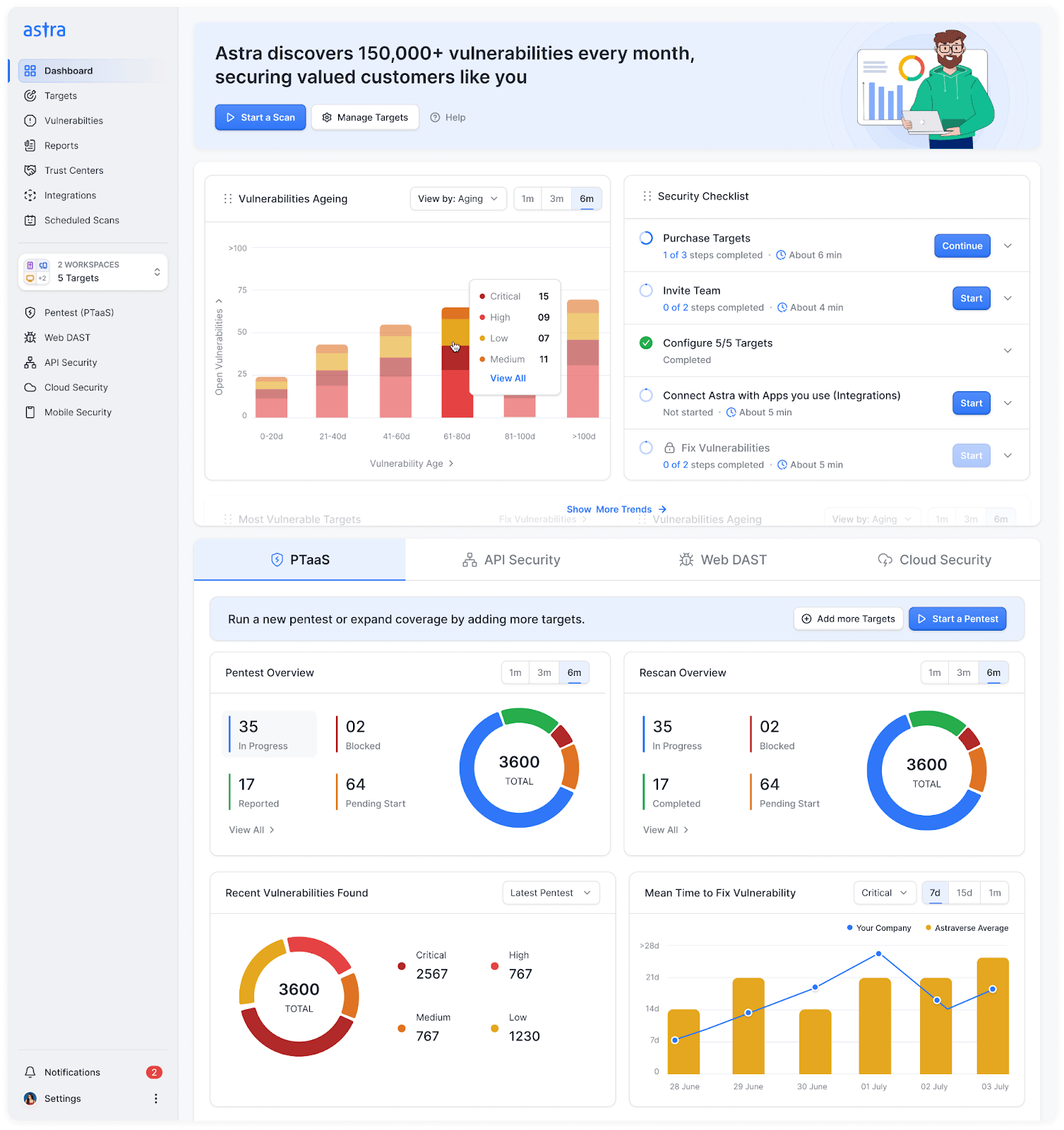
Key Features:
- Platform: Online
- Pentest Capability: Continuous automated scans; autonomous and manual pentests
- Accuracy: Zero false positives in vetted scans
- Compliance: PCI-DSS, HIPAA, ISO27001, and SOC2
- Expert Remediation: Yes
- Integration: Slack, Jira, GitHub, GitLab, Jenkins, Vanta, and more
- Price: Autonomous pentests start at $ 2,999/yr. Better pricing, tailored to you. Book a call to unlock it
- Best Suited For: Vulnerability assessments and penetration testing + continuous, autonomous pentests
The Astra Pentest Platform is a comprehensive penetration testing suite that combines our continuous, autonomous pentesting and manual pentesting capabilities, in compliance with various industry standards, including OWASP Top 10, OWASP APTS, and SANS 25.
While expert-vetted scans ensure zero false positives, in-depth, hacker-style pentests (both manual and autonomous with 3 agents) reveal critical vulnerabilities and chained attack paths such as payment gateway hacks and business logic errors.
The plug-n-play SaaS platform includes a convenient extension for login recording, enabling authenticated scans behind login pages without redundant reauthentication.
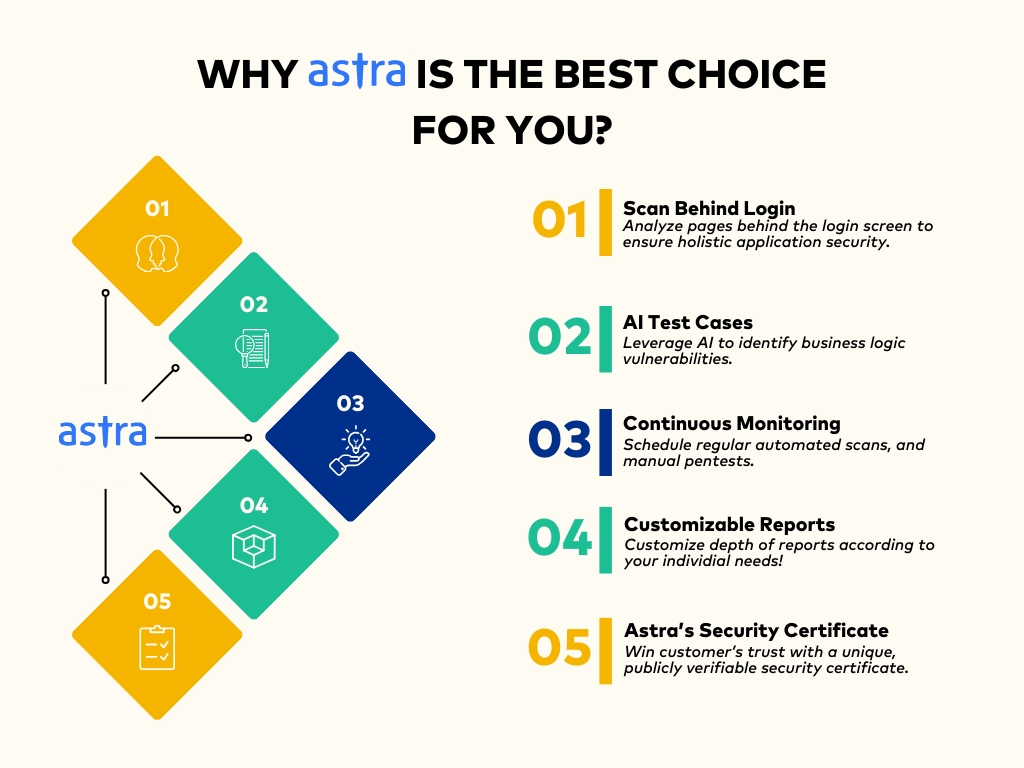
All in all, with over 50 years of combined experience of security engineers and a portfolio of 15,000+ test cases and compliance checks, Astra empowers enterprises and security analysts to achieve their security goals.
Pros:
- Seamlessly integrate with your CI/CD pipeline
- Continuously scan for vulnerabilities and attack vectors with regularly updated rules
- Collaborate with security experts with OSCP, CEH & CVEs under their name
- Rapidly prioritize and remediate vulnerabilities
- Generate custom executive and developer-friendly reports
Limitations:
- Only a 1-week free trial is available for scanner
G2 rating: 4.6/5 ⭐(231 reviews)
2. Acunetix
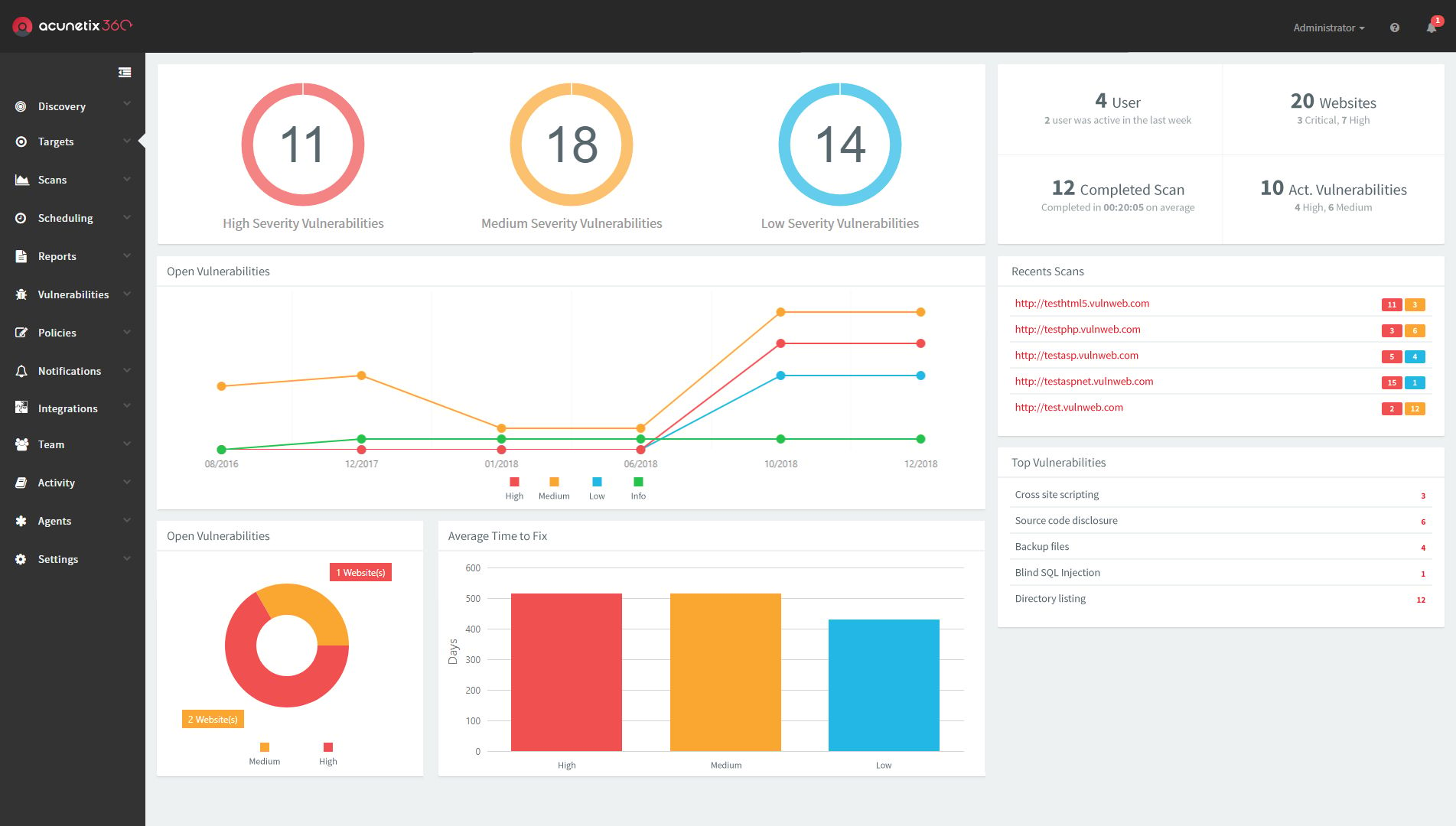
Key Features:
- Platform: Windows, macOS
- Pentest Capability: Automated vulnerability discovery and validation for web apps & API
- Accuracy: False positives possible
- Compliance: OWASP, SOC2, NIST, HIPAA, and ISO 27001
- Expert Remediation: No
- Integration: GitHub, Jira, and Atlassian
- Price: Available on quotes; third-party data estimates $7,000 per year average
- Best Suited For: Application scanning and security testing
As a dedicated pentest scanner with advanced features, Acunetix automates the process wherever possible. It scans your applications for over 4,500 vulnerabilities, including common threats such as SQL and XSS injection.
Acunetix offers simple workflow integrations and detailed reports, along with proof-of-concept examples, to help improve the efficiency of remediation efforts for enterprises. That said, complex authorization, business-logic, race-condition, and chained vulnerabilities still require manual analysis.
Pros:
- Intelligent automated scanning tool
- Easy to navigate and learn
Limitations:
- Limitations in vulnerability detection, as specific bugs need manual insight
- Can generate false positives
G2 rating: 4.1/5 ⭐(105 reviews)
3. Burp Suite Professional
Key Features:
- Platform: Windows, macOS, Linux
- Pentest Capability: Automated and manual scans for web apps
- Accuracy: False positives possible
- Compliance: PCI-DSS, OWASP Top 10, HIPAA, and GDPR
- Expert Remediation: No
- Integration: Slack, Jira, Jenkins, GitLab, and more
- Price: Starting at $449/yr/user
- Best Suited For: Web app security audit & and bug-bounty testing
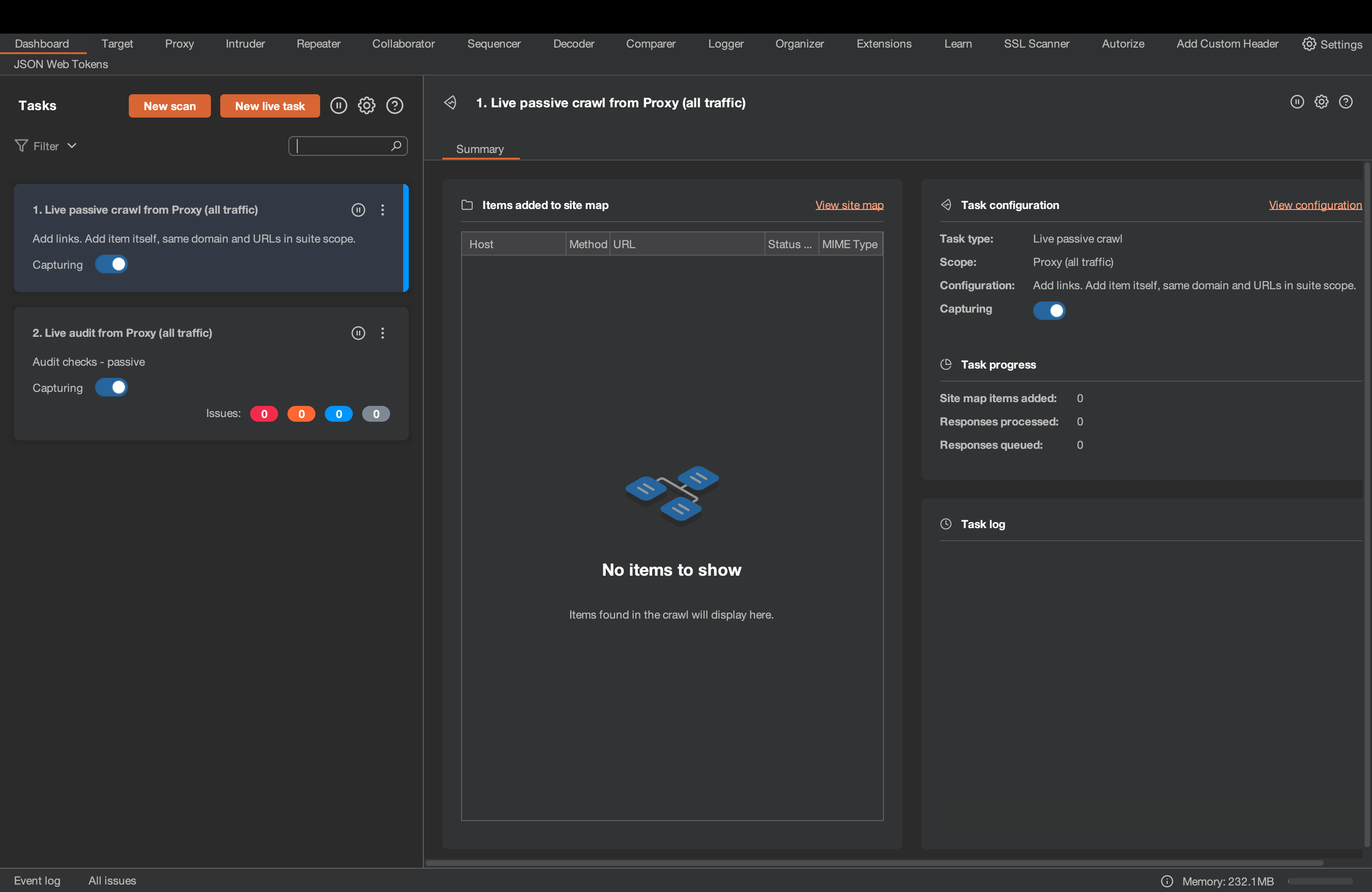
Burp Suite Professional is one of the best pentesting tools for web apps, offering a variety of features for manual and automated testing. It pinpoints vulnerabilities by intercepting and manipulating web traffic, automating repetitive tasks, fuzzing, and brute-forcing logins.
It detects common vulnerabilities such as SQL injection, cross-site scripting (XSS), and insecure direct object references (IDORs). Burp Suite now includes Burp AI and Burp AT capabilities & also offers easy integration with external tools for a smooth user experience.
Pros:
- Offers a variety of extensions to enhance performance
- Automates routine testing processes
Limitations:
- Requires significant web-security knowledge for effective use
- Automated results and scanner coverage depend on application mapping, authentication, and configuration
G2 rating: 4.8/5 ⭐(129 reviews)
4. Cobalt Strike (Fortra)
Key Features:
- Platform: Networks and systems
- Pentest Capability: Automated adversary emulation and red-team operations/pentesting.
- Accuracy: False positives possible
- Compliance: None
- Expert Remediation: No
- Integration: Outflank Security Tooling and Core Impact
- Price: Available on quote; third-party data puts the average at $5,900 per user annually
- Best Suited For: Red team exercises
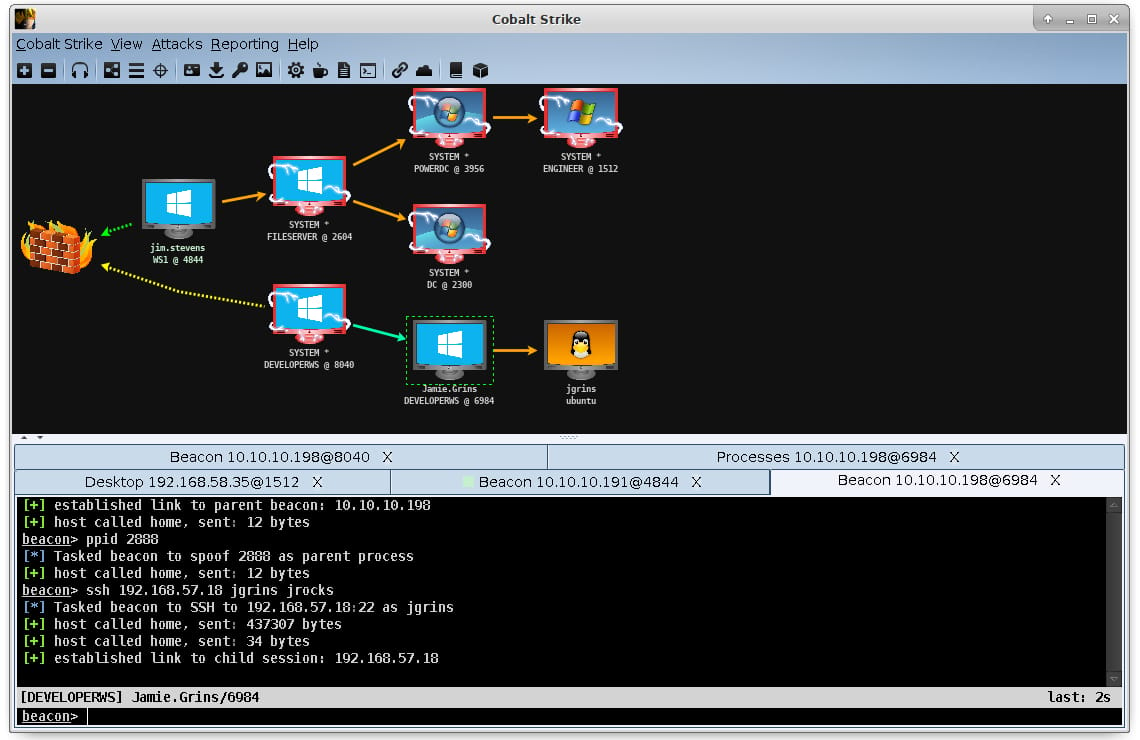
As a well-known commercial platform for advanced adversary emulation and network penetration testing, Cobalt Strike by Fortra is an ideal fit for an enterprise that prefers a more hands-on approach. It allows you to tailor payloads, evasion techniques, and attack methodologies.
The tools provide a vibrant community and a repository of tutorials, plugins, and knowledge-sharing resources for CXOs and CTOs, with primary value lying in controlled adversary emulation, operational flexibility, command-and-control capabilities, and collaboration during red-team engagements.
Pros:
- Provides configurable attack workflows and post-exploitation capabilities
- Helps security teams test detection, response, and containment
Limitations:
- Downloads can take hours, even for a few megabytes
- Expensive and operationally complex for small teams
- Requires highly skilled operators and strict engagement controls
5. Rapid7
Key Features:
- Platform: Cloud and Web Applications
- Pentest Capability: Continuous automated scanning and manual pentests
- Accuracy: False positives possible
- Compliance: CIS, ISO 27001, and PCI DSS
- Expert Remediation: No
- Integration: ServiceNow Security Operations, LogRhythm NDR, and ManageEngine
- Price: Starting at $175/mo per app or $5,775/mo for up to 500 instances in the cloud
- Best Suited For: Enterprise vulnerability management
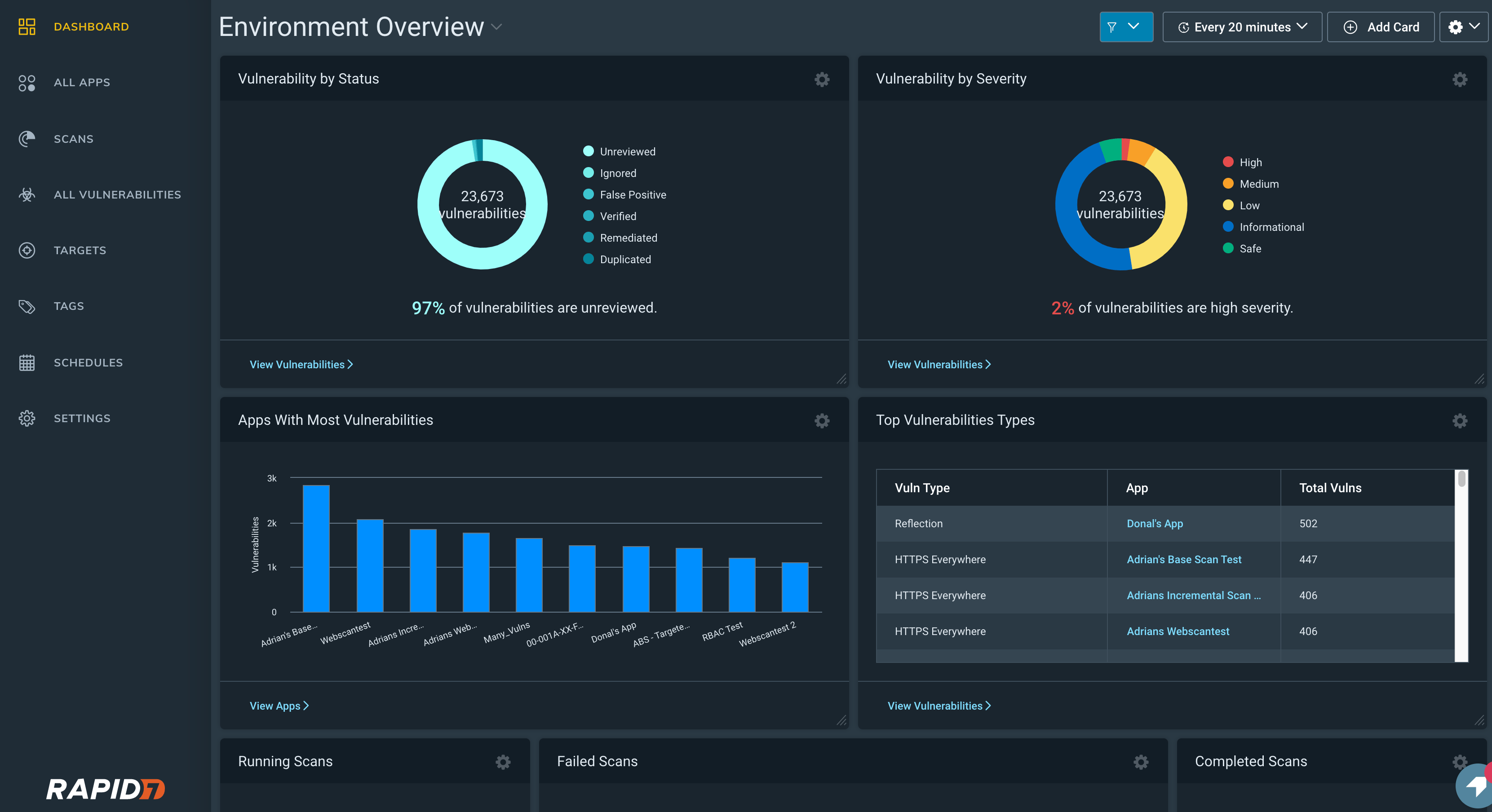
Rapid7 offers a unified penetration testing platform that empowers enterprises to achieve sustainable security across the entire attack surface. It understands the challenges of managing complex security landscapes and offers end-to-end vulnerability management.
InsightVM helps organizations identify, prioritize, and manage vulnerabilities across enterprise assets. Nexpose provides on-premises vulnerability scanning and risk visibility. For exploitation and external penetration testing, Metasploit Framework or Metasploit Pro is the more appropriate Rapid7 product.
Pros:
- Provides in-depth visibility into vulnerabilities and threats
- User-friendly interface
Limitations:
- Relatively high-priced for SMEs and startups
- Results depend on asset discovery, credentials, network reachability, and scan configuration
G2 rating: 4.3/5 ⭐(264 reviews)
6. Kali Linux
Key Features:
- Target: Online and physical systems, applications, and networks
- Pentest Capabilities: Unlimited Scans for vulnerability scanning, exploitation, privilege escalation, and post-exploitation
- Deployment Capabilities: Installer packages for live boot and disk installation
- Accuracy: False positives are possible
- Price: Open-source OS
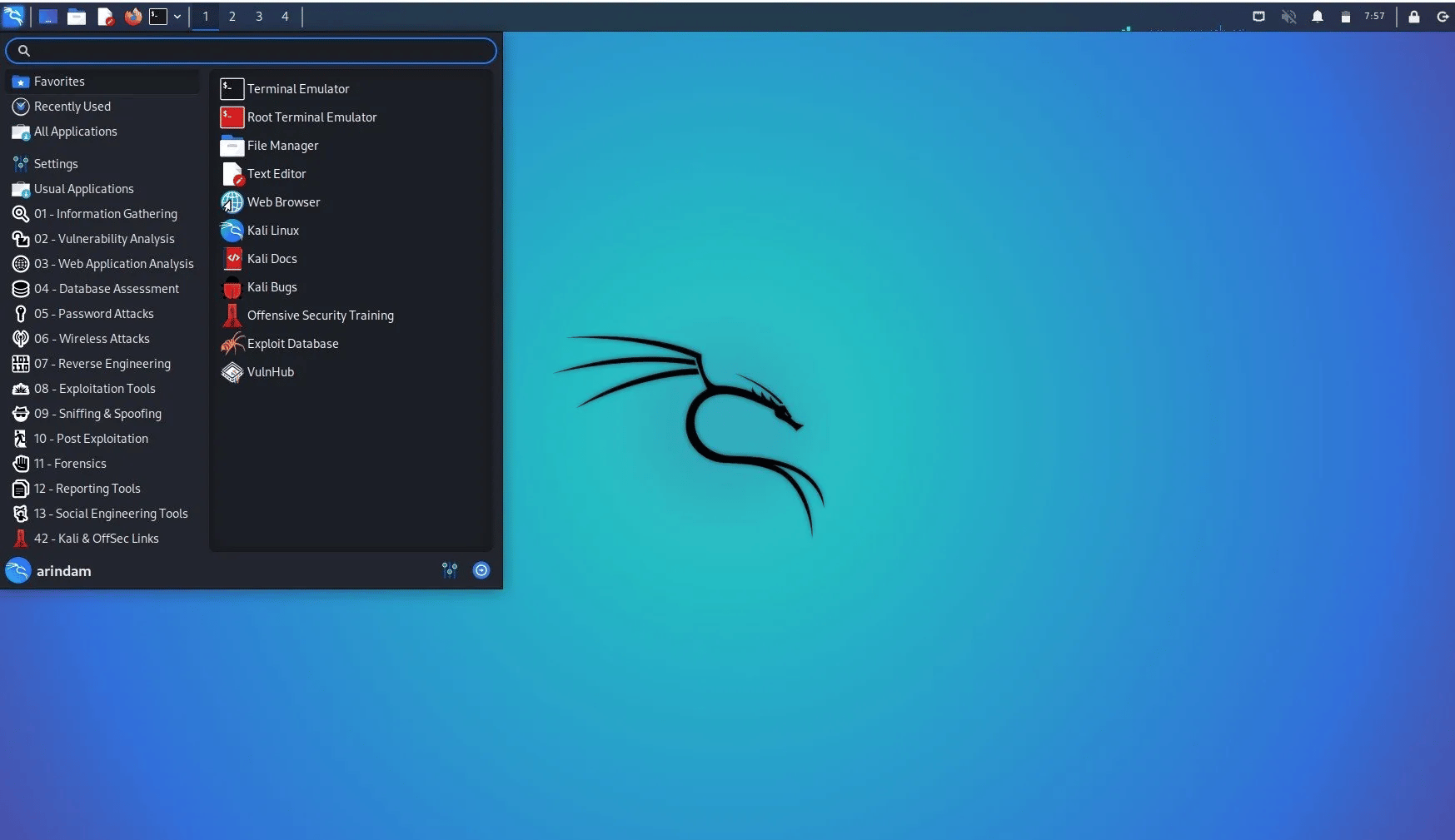
With 600+ pre-installed security tools, Kali Linux is a comprehensive penetration testing OS that enables security professionals to cover a wide breadth and depth of VAPT tasks, from initial assessment to post-exploitation analysis.
With extensive customization options, the OS provides extensive documentation, tutorials, and support to aid learning and troubleshooting.
Pros:
- Comprehensive community support
- Regular updates and patches
- High-speed execution of tasks
Limitations:
- Need to be fluent in Linux commands
- Learning curve is steep for beginners
G2 rating: 4.5/5 ⭐(247 reviews)
7. Nikto
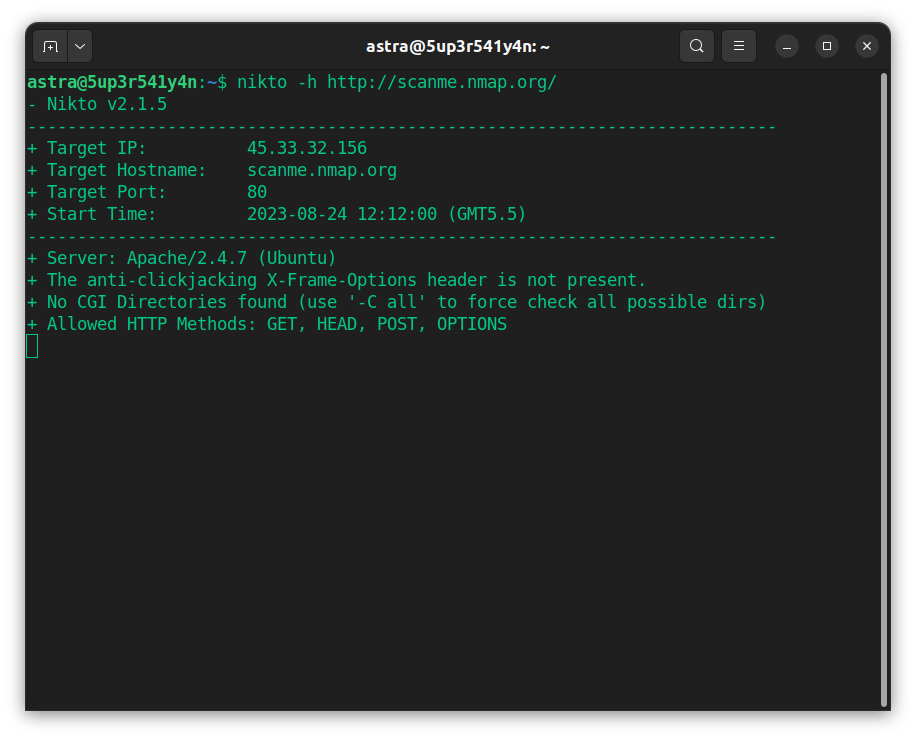
Key Features:
- Target: Web applications and servers
- Pentest Capabilities: Vulnerability and misconfiguration identification
- Deployment Capabilities: Manual installation from source code
- Accuracy: False positives are possible
- Price: Open-source tool
As one of the best open-source penetration testing tools for web apps and servers, Nikto helps identify outdated software, insecure files, default content, weak configurations, and other server-level security issues. It is intended for security professionals, penetration testers, and system administrators.
It helps security analysts identify open directories, insecure file permissions, and weak HTTP headers. Nikto also offers customization plugin support.
Pros:
- Scans for over 6700+ vulnerabilities
- Fosters a learning environment
- Nikto 2.6.0 was released in February 2026 with improvements to scan speed, reporting, and detection.
Limitations:
- May generate false positives that require manual vetting
- Does not provide an in-depth analysis of vulnerability exploit and impact
8. Zed Attack Proxy
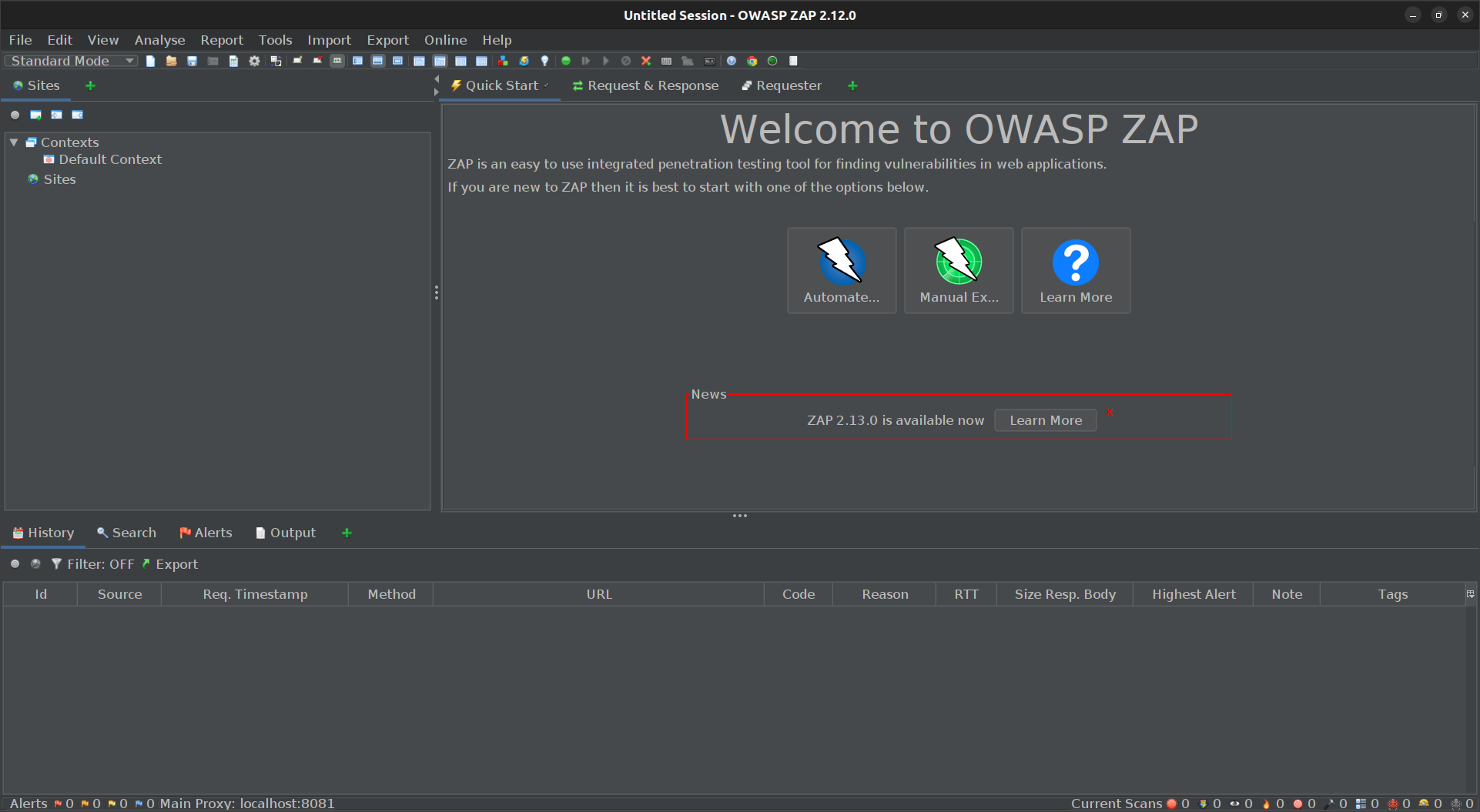
Key Features:
- Target: Web applications
- Pentest Capabilities: Automated and manual pentests, including
- Deployment Capabilities: Manual installation from source code pre-built packages and Docker
- Accuracy: False positives are possible
- Price: Open-source tool
Zed Attack Proxy, or ZAP, is a web application security testing (WAST) tool primarily used for penetration testing. It acts as a MitM proxy, allowing security analysts to intercept, analyze, and modify web traffic between a browser and a web application.
In addition to pre-built scanners and manual pentest tools, ZAP also supports MCP-server assessment to enumerate tools, resources, and prompts, capture JSON-RPC traffic, and apply passive scanning, active scanning, fuzzing, and reporting workflows.
Pros:
- User-friendly interface, especially for beginners
- Community-developed plugins help enhance functionality
Limitations:
- Can generate false positives necessitating manual vetting
G2 rating: 4.7/5 ⭐(14 reviews)
9. Aikido Security
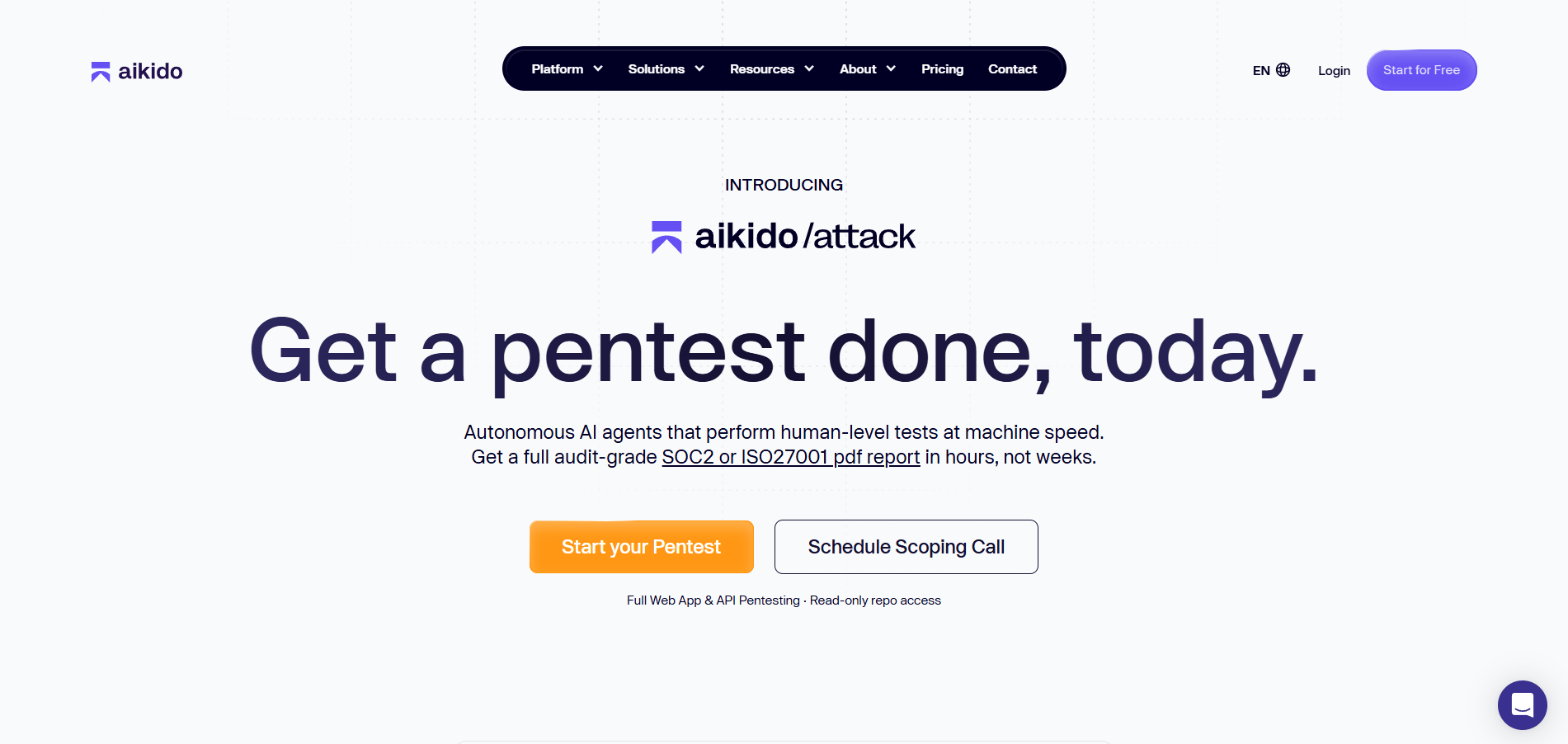
Key Features:
- Platform: Cloud-hosted, point-and-scan
- Pentest Capability: Continuous autonomous AI pentesting, plus SAST, SCA, & cloud scans
- Accuracy: False positives possible
- Compliance: Limited formal compliance mapping compared to enterprise scanners
- Expert Remediation: No
- Integration: API-based
- Price: Starting at $240 per month, free plan available
- Best Suited For: Consolidated code-to-cloud security with pentesting built in
Aikido built its reputation on consolidation rather than raw pentest depth. Its SAST engine runs on a Semgrep fork the company helps steward, and that same reachability-first filtering carries into its pentesting product.
It uses agentic AI to simulate exploits across environments to validate findings and to determine how they can be chained into attack paths.
Pros:
- Bundles pentesting with code, cloud, and container security
- Human checkpoint before escalation
Limitations:
- Web app testing trails dedicated autonomous pentesters on chained flaws
- Better as part of the platform than as a standalone pentest tool
G2 rating: 4.6/5 ⭐(259 reviews)
10. XBOW
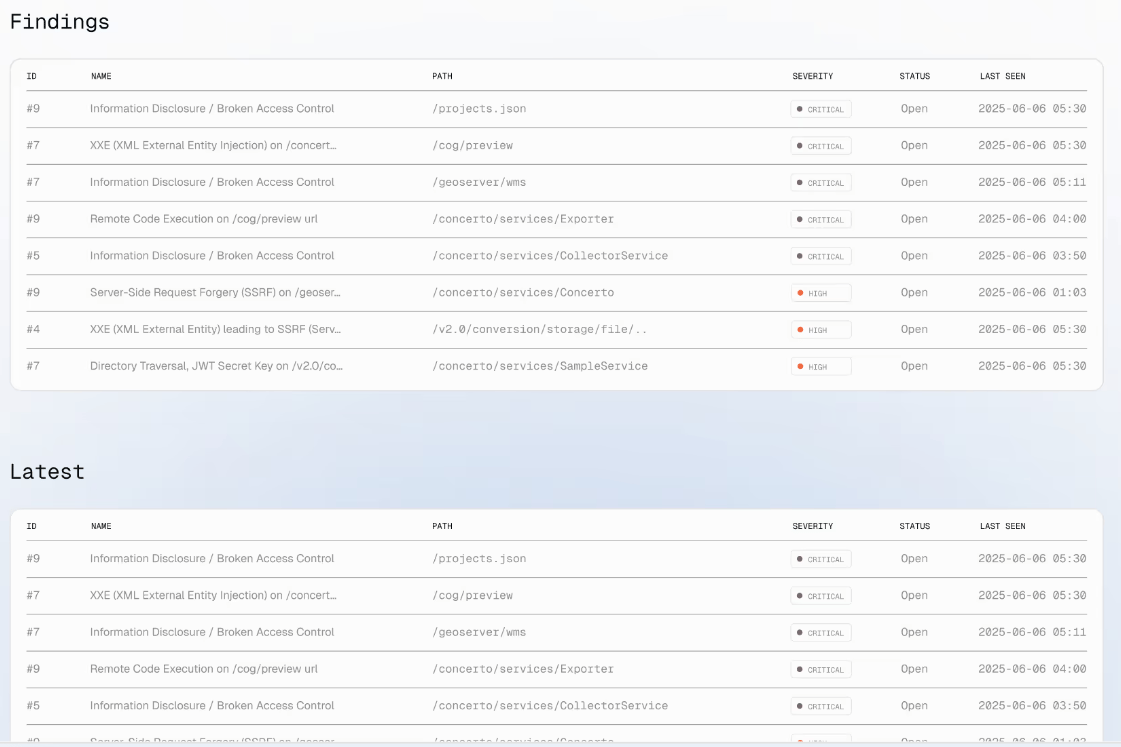
Key Features:
- Platform: Cloud-hosted, point-and-scan
- Pentest Capability: Fully autonomous AI pentesting for web apps
- Accuracy: False positives possible
- Compliance: Minimal formal mapping
- Expert Remediation: No
- Integration: API-based
- Price: Available on quote, third party data indicates starting at $4,000 per app
- Best Suited For: Fast, exploit-validated testing on a single web target
As an autonomous AI pentesting agent, XBOW is built to behave like a hands-on hacker rather than a traditional scanner: it probes a target, chains findings, and delivers a working exploit rather than a theoretical alert.
That said, it tests web applications only, so teams still need separate tooling for network, infrastructure, and cloud coverage, and enterprise-only pricing keeps it out of reach for smaller teams.
Pros:
- Strong on business-logic and chained vulnerabilities
- Much faster than human-led engagements
Limitations:
- Web apps only, no network, infrastructure, or cloud coverage
- No public pricing or G2 track record yet
11. IndusfaceWAS
Key Features:
- Platform: Web applications
- Pentest Capability: Continuous automated vulnerability scans and manual pentests
- Accuracy: False positives possible
- Compliance: SOC2, ISO and OWASP
- Expert Remediation: Available at extra cost
- Integration: Jira, GitHub, Slack, and Microsoft Teams
- Price: Starting at $599/app annually
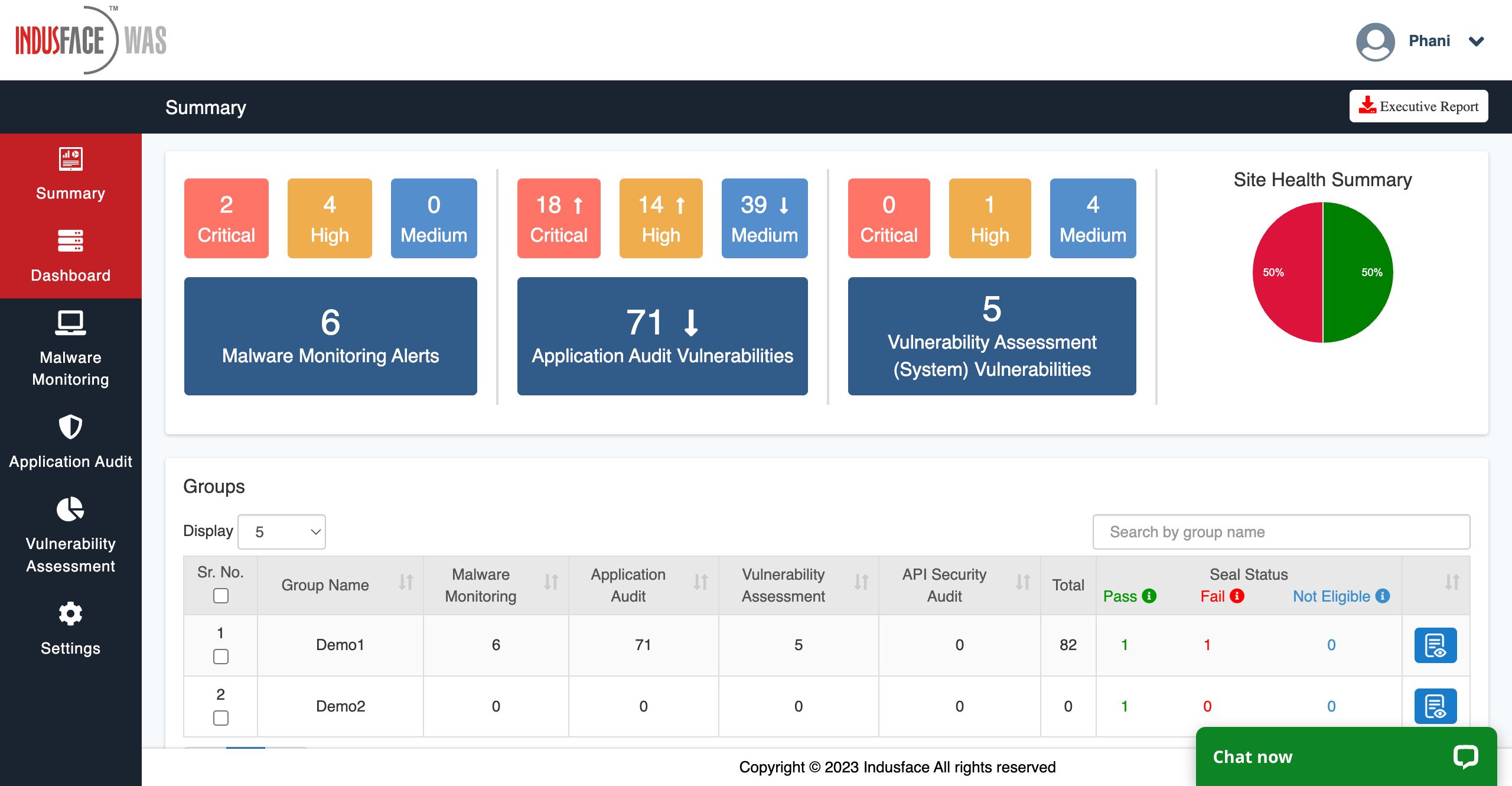
IndusFaceWAS is a managed dynamic application security testing (DAST) tool that is designed to identify common application vulnerabilities, provide proof-of-vulnerability evidence, and support remediation workflows.
Moreover, it offers AppTrana capabilities, including DAST, malware scanning, WAF or WAAP functionality, and application-security services.
Pros:
- Quick support and timely responsiveness
- OWASP Top 10 and SANS 25 detection
Limitations:
- GUI is not very intuitive
- Frequent scan update emails can be overwhelming
G2 rating: 4.6/5 ⭐(68 reviews)
12. BeEF
Key Features:
- Target: Web browsers
- Pentest Capabilities: Social engineering for in-depth vulnerability assessments
- Deployment Capabilities: Can be installed from sources, pre-built packages, and via Docker
- Accuracy: False positives are possible
- Price: Open-source tool
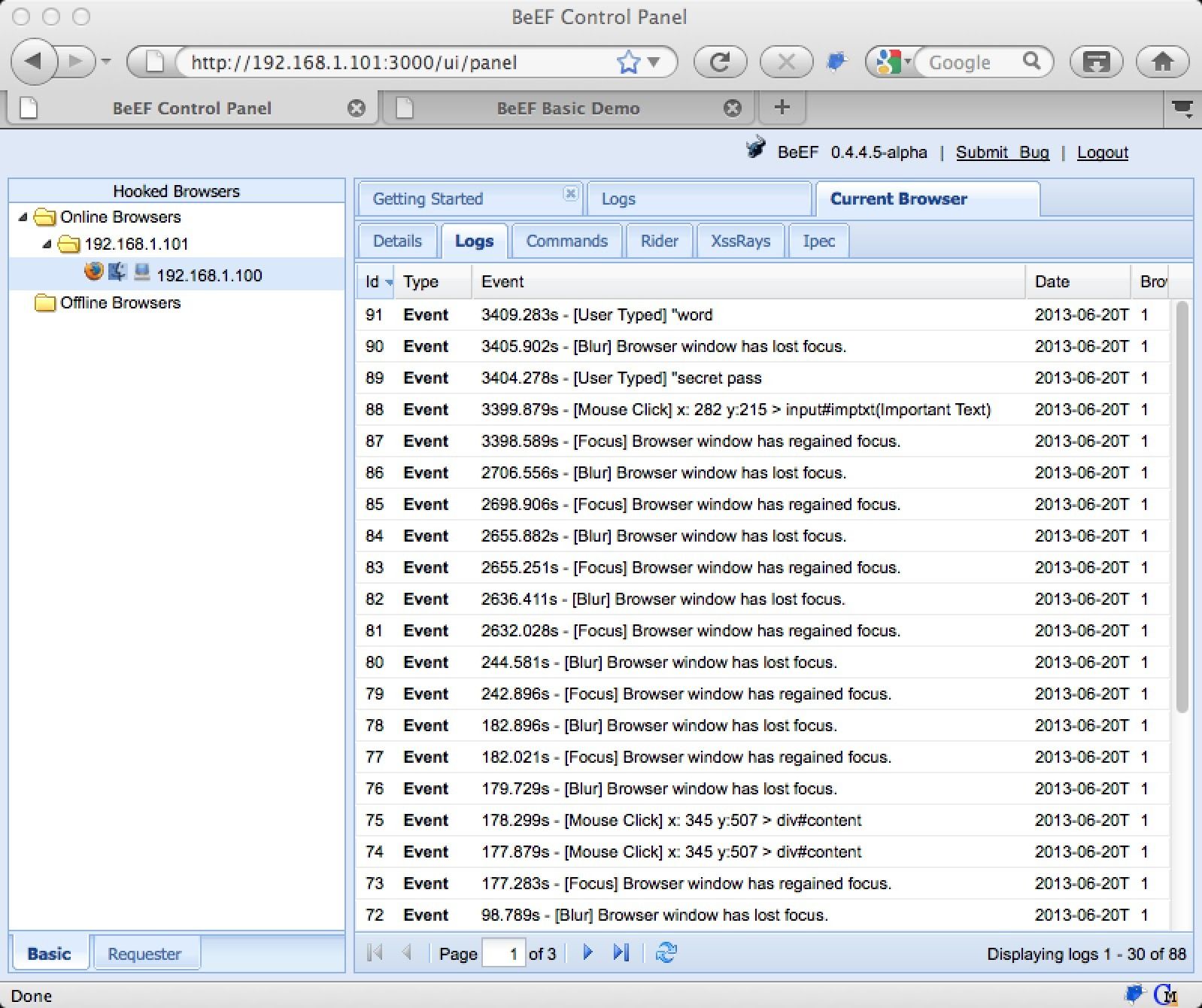
As the name suggests, the Browser Exploitation Framework, or BeEF, is an open-source pentest tool designed to evaluate the security of web browsers. It helps analysts simulate malicious attacks to identify vulnerabilities and assess the security posture.
Once the security analyst has gained control of a browser, BeEF helps analyze post-exploitation impacts such as redirecting traffic, keystroke logging, and theft of sensitive data.
Pros:
- Easy to install and configure
- Hassle-free tool for beginners
Limitations:
- User interface is comparatively tricky to navigate
- Database configuration can be a little difficult
13. Nessus Professional
Key Features:
- Platform: Windows, macOS
- Pentest Capability: Automated vulnerability scans for web apps, mobile & cloud
- Accuracy: False positives possible
- Compliance: HIPAA, ISO, NIST, and PCI-DSS
- Expert Remediation: Available at extra cost
- Integration: IBM Security, Splunk, GitHub, and GitLab
- Price: Starting at $5,652.20
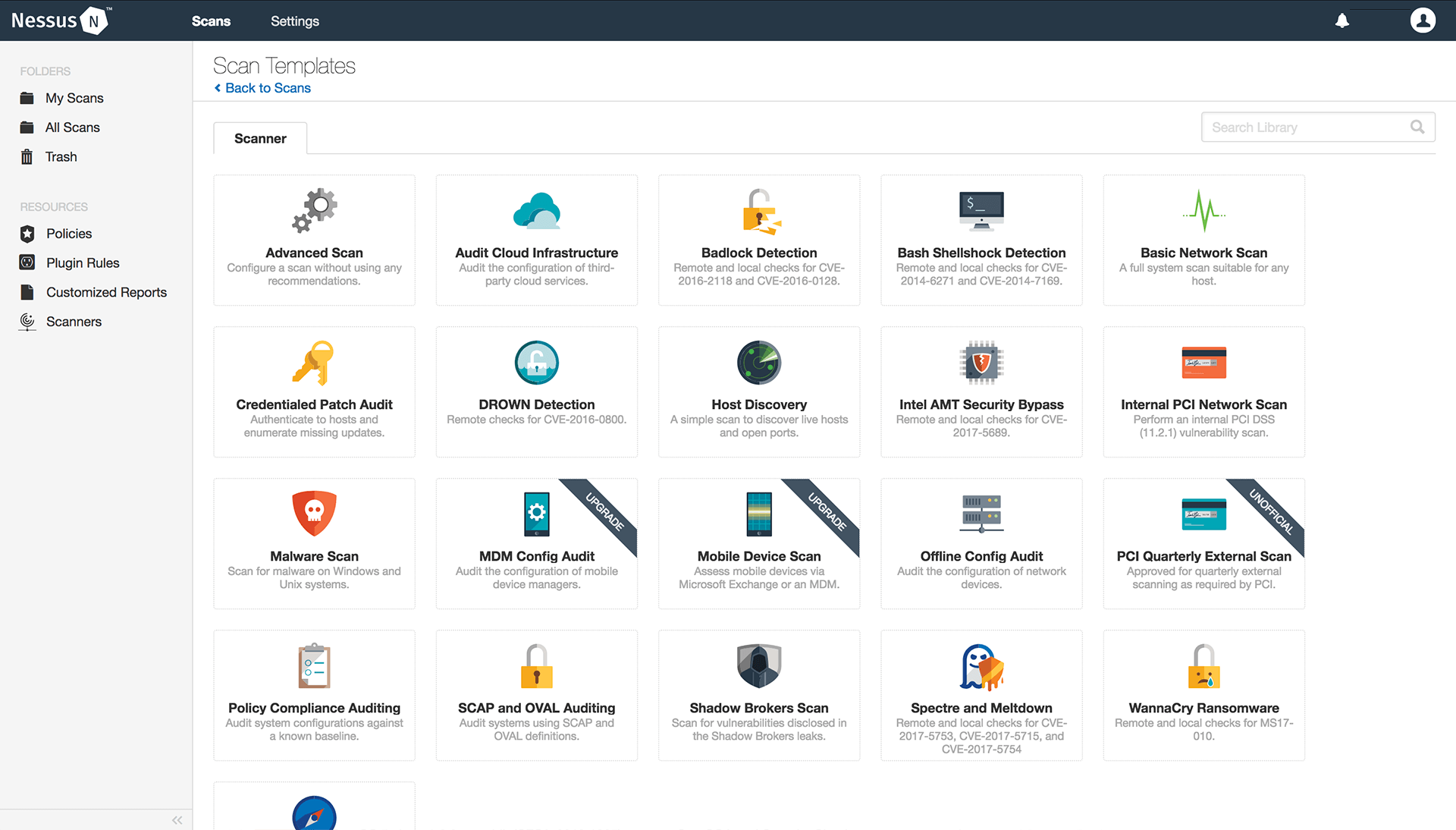
Nessus Professional is a comprehensive tool under the Tenable umbrella that can identify and assess vulnerabilities in a wide range of IT systems. Its extensive vulnerability coverage and automation capabilities genuinely set it apart.
The commercial pentest tool’s compliance support across standards and industries such as PCI DSS, HIPAA, and ISO helps maintain year-round compliance.
Pros:
- Easy-to-navigate and use UI
- Scanning and reporting tasks can be automated
Limitations:
- Scan results require validation and contextual prioritization
- Does not identify every business-logic, authorization, or chained attack vulnerability
G2 rating: 4.5/5 ⭐(306 reviews)
14. OpenVAS
Key Features:
- Platform: Network and web application
- Pentest Capability:
- Accuracy: False positives possible
- Compliance: PCI-DSS, HIPAA, and other compliance frameworks
- Expert Remediation: No
- Integrations: None
- Price: Open-source tool
OpenVAS, a key part of the Greenbone Vulnerability Management (GVM) framework, is a free, open-source vulnerability scanner. It helps organizations of all sizes identify security weaknesses in networks as well as web applications.
Whether you prefer local, container, or cloud setups, the tool offers flexible deployment options. Please note that community and enterprise feeds may differ in coverage, support, and update availability.
Pros:
- Access to a large vulnerability database
- Supports authenticated and unauthenticated assessments
Limitations:
- It can be resource-intensive
- Requires technical expertise for configuration
G2 rating: 4.4/5 ⭐(32 reviews)
15. JohnTheRipper
Key Features:
- Target: Password hashes
- Pentest Capabilities: Password cracking (brute-force, dictionary, hybrid attacks)
- Deployment Capabilities: Command-line tool, standalone application, cloud-based services
- Accuracy: False positives are possible
- Price: Open-source tool
John the Ripper is a flexible password-cracking tool that supports various hash types. Its extensive customization allows you to tailor the cracking process using various modes, including single, incremental, and distributed cracking.
More importantly, its advanced features, such as mask- and rule-based attacks for targeted password guessing, can help Pentesters exploit password- and input-based CVEs. Simply put, John the Ripper helps assess password strength and recover authorized credentials; it does not itself exploit application CVEs or replace application penetration testing.
Pros:
- Offers transparency and community contributions as an open-source tool
Limitations:
- May require significant computational resources
- Can be complex to use for beginners
16. Hashcat
Key Features:
- Target: Password hashes
- Pentest Capabilities: Password cracking and GPU acceleration
- Deployment Capabilities: Manual installation from source code and pre-built packages
- Accuracy: False positives are possible
- Price: Open-source tool
Hashcat is a robust and versatile password-cracking tool in penetration testing and security audits. It supports a range of hashing algorithms, including MD5, SHA-family, and bcrypt. The official project currently lists Hashcat version 7.1.2 as the latest version at the time of writing.
Its GPU acceleration and various attack modes, such as brute-force, dictionary, and combinator attacks, significantly improve performance, handling large-scale cross-platform cracking jobs efficiently.
Pros:
- Offers a user-friendly interface.
- Supports both command-line and graphical modes.
Limitations:
- Might generate false positives.
- Limited support for operating systems other than Windows and Linux.
Choosing a Pentest Tool: Enterprise vs. Security Analyst
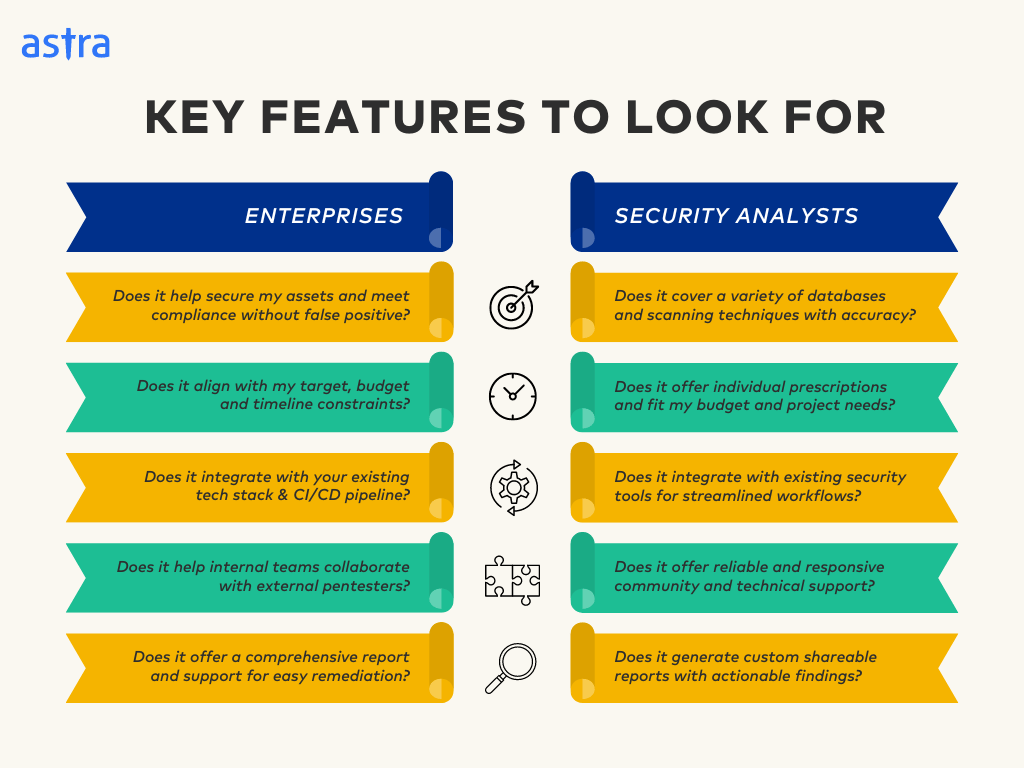
Although both companies and analysts utilize pentesting tools, needs and considerations naturally differ. This table highlights the key differences between choosing a Pentest Tool as an Enterprise vs choosing a Pentest Tool as a Security Analyst:
| Features | Pentest Tool for Enterprises | Pentest Tool for Security Analysts |
|---|---|---|
| Managing End-to-End Pentests | Essential for scheduling, assigning, and tracking tests | Not applicable, pentester focuses on hacking the given scope |
| Generate Custom Reports | It is crucial for presenting findings to stakeholders and regulators | Might not be necessary, depending on individual reporting requirements |
| Deployment Capabilities | On-premise or cloud deployment based on the company’s policies | Portable and usable on personal computers |
| Acceptance of Reports | Requires reports accepted by industry standards and customers | Value detailed findings over report formatting |
| Collaboration | Enables team collaboration and knowledge sharing | Primarily for individual use |
| Workflow Integrations | Integrates with existing security platforms, ticketing systems & CI/CD | Not essential, they value tool functionality over integration |
On the other hand, some common traits resonate with both enterprises and security analysts:
1. Effectiveness:
Both enterprises and analysts look for tools that effectively uncover vulnerabilities in the given scope. The ideal pentesting tool takes an offensive approach to uncover vulnerabilities.
SQLMap is an excellent example of a pentest tool that probes the application for SQL injection and exploits a vulnerability once it detects one. Ultimately, a pentest tool is judged by its effectiveness, among other things.
2. Cost:
Enterprises seek cost-effective penetration testing solutions that deliver results without compromising quality. On the other hand, security experts prioritize open-source or flexible pricing tools.
3. Asset Specialization:
Enterprises look for pentesting platforms that target their unique infrastructure and applications, while security analysts seek tools tailored to specific assets like web applications, mobile devices, or cloud environments.
4. Accuracy:
Enterprises rely on vulnerability and attack vector identification accuracy to prioritize remediation efforts. Conversely, security professionals rely on accurate findings to build trust and deliver credible reports.
Key Features to Look for While Choosing a Pentest Tool
Final Thoughts
The above list highlights some of the best penetration testing tools addressing the diverse needs of both enterprises and security analysts.
Astra & Rapid7 offer end-to-end pentesting, reporting, and workflow integration for enterprises seeking comprehensive suites.
Security analysts seeking deep, flexible, and user-friendly penetration testing tools for specific assets can leverage Kali Linux, ZAP, and Burp Suite. The importance of specialized tools like Wireshark, Aircrack-ng, and BeEF, of course, cannot be ignored.
With that said, platforms like Astra Pentest combine these benefits, offering a comprehensive PtaaS pentest tool solution ideal for both parties.
Ultimately, the quality of your penetration testing tool plays a crucial role in determining your cybersecurity culture’s growth rate and stability.
FAQs
What are open source penetration testing tools?
Open-source pentesting tools are free, community-maintained programs that let security teams simulate attacks, scan for vulnerabilities, and crack credentials without licensing costs. Examples include Kali Linux, Metasploit, Nmap, OpenVAS, Nikto, Hashcat, John the Ripper, Ettercap, and BeEF
Which tool is the top contender in each category?
Burp Suite Professional leads web app testing with deep manual traffic control. Kali Linux dominates red teaming with 600+ pre-installed tools. Astra Pentest wins continuous enterprise pentesting via automated, autonomous, and manual testing combined. Nessus Professional tops compliance scanning with broad, audit-ready coverage.
What are the various types of pentesting?
Common categories include network pentesting (internal/external infrastructure), web application pentesting (OWASP Top 10 flaws), mobile app pentesting (iOS/Android), cloud pentesting (misconfigurations, IAM), API pentesting, social engineering (phishing, BeEF-style browser exploitation), and red teaming (full adversary emulation combining multiple attack vectors).
What is the average cost of a penetration test?
Pricing varies widely by tool and scope. Commercial platforms range from roughly $449/year (Burp Suite) to $5,600+ (Nessus), while enterprise suites like Rapid7 and Cobalt Strike run $5,900–$70,000+ annually. Open-source tools remain free but demand engineering time to operate.
What is the difference between open-source vs commercial tools?
Open-source tools (Kali Linux, Nikto, ZAP, OpenVAS) cost nothing upfront but require in-house expertise, manual correlation across tools, and generate more false positives. Commercial platforms charge for automation, expert remediation, compliance mapping, and integrations, trading budget for accuracy, support, and faster time-to-insight.
How to pick the best pentest tool per your usecase?
Match the tool to your target and goal. Astra Pentest suits continuous enterprise testing with compliance needs. Burp Suite fits web app audits. Kali Linux serves red teamers needing broad offensive coverage. Nessus handles compliance-driven vulnerability scanning. Open-source tools (Nikto, ZAP, OpenVAS) work for budget-conscious, DIY-capable teams.
Explore Our Penetration Testing Series
This post is part of a series on penetration testing.
You can also check out other articles below.

Chapter 1: What Does Pentest Mean?
Chapter 2: Different Types of Pentest Testing
Chapter 3: Top 5 Pentest Methodology
Chapter 4: Top Penetration Testing Companies
Chapter 5: Best Pentest Online Tools – Top List
Chapter 6: A Super Easy Guide on WordPress Pentest
Chapter 7: Average Penetration Testing Cost in 2026
Chapter 8: Pentest Reporting (Sample Report)
Chapter 9: Web App Pentest Guide







I think this is a excelent article, what is the source?