Key Takeaways
- IRDAI’s 2025 rules shift from checkbox compliance to continuous cybersecurity assurance.
- Certification covers insurers, brokers, TPAs, and vendors handling insurance data.
- Mandatory VAPT, CISO appointment, continuous monitoring, and rapid incident reporting required.
- Third-party risk management, cloud security, and AI/Blockchain governance now part of compliance.
In August 2024, Star Health woke up to every insurer’s nightmare: 31 million customer records (Aadhaar numbers, PANs, medical histories) dumped for sale on Telegram for less than the price of a hatchback. Four months later, a software vendor breach spilled another 1.59 million rows of policy data across HDFC Ergo, Bajaj Allianz, and ICICI Lombard, bragging about exploiting nothing more than weak access controls and unpatched systems.
Those back-to-back shocks pushed the Insurance Regulatory and Development Authority of India (IRDAI) to act. Its 2025 guidelines now demand more than paperwork, i.e., continuous system monitoring, airtight encryption, and proof that defenses can withstand a real-world attack.
The question isn’t whether you’ll need it, but how to get IRDAI certification without wasting cycles or leaving blind spots.
Understanding IRDAI Certification: The Cybersecurity Framework
The Strategic Shift from Compliance to Continuous Assurance
IRDAI’s 2025 cybersecurity framework shifts the focus from compliance through checkboxes to continuous assurance. In today’s time, when a breach occurs, the ripples extend beyond the immediate company and affect millions of policyholders, their families, and their financial security. The Star Health incident demonstrated how a single breach can undermine public trust in the entire sector.
The new IRDAI approach mirrors the shift we’ve seen globally in cybersecurity governance. Just as the European Union’s NIS2 Directive and the United States’ cybersecurity executive orders mandate continuous monitoring, IRDAI now requires insurance entities to maintain persistent security vigilance.
IRDAI Certification Scope and Applicability
The scope of IRDAI certification encompasses not only traditional life and general insurance companies but also health insurers, reinsurers, insurance brokers, corporate agents, third-party administrators, and technology service providers that handle insurance data.
Understanding the applicability is crucial because the requirements are interwoven throughout the value chain. If you’re a technology vendor serving insurance companies, you cannot escape IRDAI requirements simply because you’re not directly regulated as an insurer. The framework explicitly includes third-party risk assessments and supply chain security validations as mandatory components.
The certification encompasses multiple dimensions of your digital infrastructure, including, but not limited to, web applications, network perimeters, cloud environments, mobile applications, APIs, database systems, operational technology used in claims processing, and the security of AI models employed for underwriting and fraud detection.
What are the Core IRDAI Certification Requirements for Board-Level Governance Framework?
Information and Cyber Security Policy (ICSP) Development
The ICSP functions as your organisation’s constitutional document for cybersecurity governance. This isn’t merely a technical document that sits in your IT department; it needs to be a board-approved strategic framework that aligns cybersecurity investments with business objectives.
Your ICSP must articulate clear security objectives that map directly to business risks. For instance, if your insurance company specializes in health insurance, your policy needs to address the protection of sensitive medical information, comply with healthcare data regulations, and specify threats facing health insurers. This also, at times, includes setting up continuous compliance as a process.

The policy should establish security principles that aid product development, claims processing, and customer service teams to stay secure and on top of their deliverables.
The policy framework must include risk appetite statements that define what levels of cybersecurity risk your organization is willing to accept in pursuit of business objectives. These statements serve as guardrails for operational teams, providing clear guidance on investment priorities. For example, you might establish a zero-tolerance policy for unauthorized access to policyholder personal data while accepting moderate risk for non-sensitive operational systems.
Creating an effective ICSP requires understanding the interconnections between cybersecurity and insurance business operations. Claims processing systems that integrate with healthcare providers, policy administration systems that interface with government databases, and customer portals that connect with banking systems all create complex dependencies that your security policy framework ought to address.
Information Security Risk Management Committee (ISRMC) Formation
Think of ISRMC as the operational nerve center for cybersecurity governance, translating board-level policy into executable risk management activities. The committee structure should reflect the unique risks insurance companies face, including people who understand how cyber incidents could affect loss reserves, compliance professionals who track regulatory requirements across multiple jurisdictions, and business leaders who can assess the impact of security controls on customer experience.
The ISRMC must also maintain visibility into emerging risks that could affect the insurance industry. This includes monitoring developments in cyber insurance claims, understanding how new technologies such as artificial intelligence and blockchain affect security postures, and more.
| ISRMC Key Responsibilities | Frequency | Deliverables |
|---|---|---|
| Risk Assessment and Review | Monthly | Risk register updates, threat landscape analysis |
| Security Control Effectiveness Evaluation | Quarterly | Control assessment reports, gap analysis |
| Incident Response Oversight | As needed | Incident reports, lessons learned, process improvements |
| Regulatory Compliance Monitoring | Ongoing | Compliance dashboard, regulatory change impact assessment |
| Security Investment Prioritization | Semi-annually | Investment roadmap, ROI analysis for security initiatives |
Mandatory CISO Appointment and Organizational Structure
This appointment represents cybersecurity as a distinct business and showcases your commitment to cybersecurity, as you now possess direct accountability to senior leadership and external stakeholders.
Unlike CISOs in other industries who primarily focus on protecting internal systems and data, insurance CISOs must also consider the security implications of regulatory reporting, the protection of sensitive personal information across complex value chains, and the cybersecurity aspects of financial solvency.
IRDAI guidelines emphasize that the CISO should have sufficient organizational authority to implement security controls across all business functions and the ability to escalate security concerns directly to executive leadership with speed and minimal impediment.
Your CISO must have an understanding of how cyber incidents could affect actuarial assumptions, the security implications of regulatory reporting requirements, the unique threats facing insurance companies from organized crime and nation-state actors, and the cybersecurity considerations of emerging insurance products such as cyber insurance itself, along with contextualizing it into a KPI and critical vulnerabilities first plan.
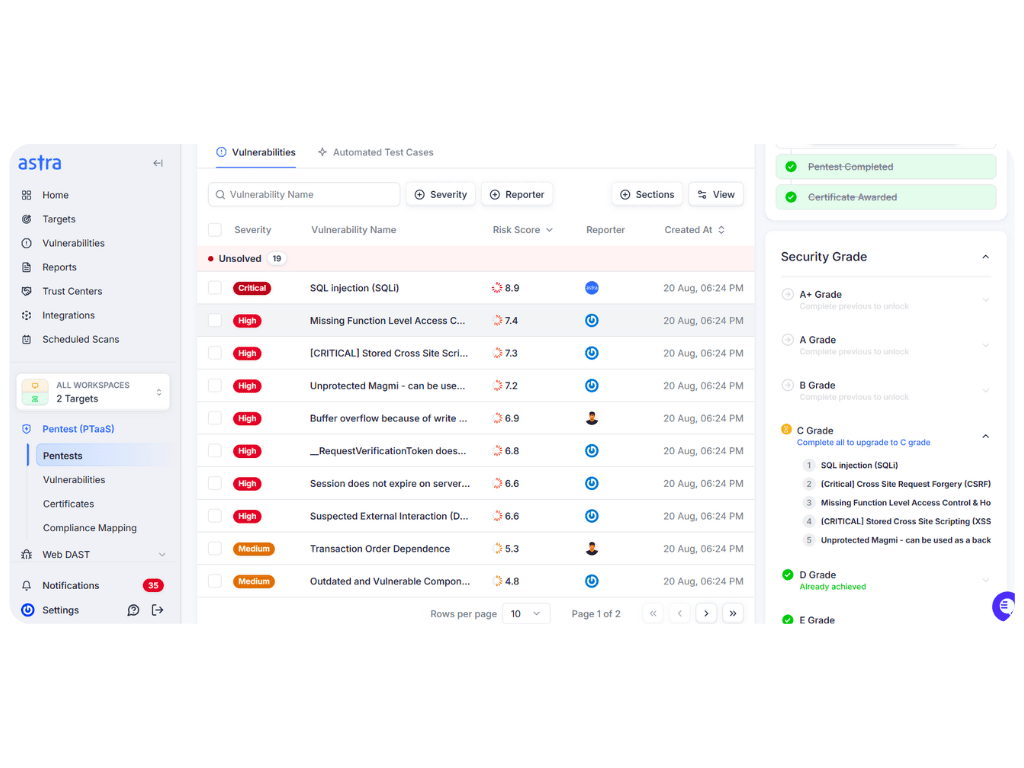
Not only that, your security functions too must be embedded within product development teams, claims processing operations, customer service organizations, and third-party vendor management processes. This requires developing security expertise throughout your organization, not just within a centralized security team.
Struggling to structure your security leadership for how to get IRDAI certification for pentesting?

What are the VAPT and Security Assessment Requirements?

Annual Vulnerability Assessment and Penetration Testing Framework
The VAPT framework under IRDAI guidelines transforms security testing from a periodic compliance exercise into a systematic risk management tool. Understanding this transformation is crucial for developing an effective testing strategy that genuinely enhances your security posture, rather than merely meeting regulatory requirements.
Modern VAPT programs for insurance companies must address the full spectrum of attack vectors, which include traditional network-based attacks, application-level vulnerabilities in policy administration systems, API security gaps in digital platforms, and social engineering attacks targeting employees with access to sensitive information.
The annual VAPT requirement should be treated as a minimum baseline—not a comprehensive security validation strategy. For that, you need to supplement annual formal assessments with continuous security testing, regular internal assessments, and targeted testing.
Your VAPT program should be robust enough to account for lateral movements between different systems and business processes. A vulnerability in your customer portal doesn’t just affect that single system; it could provide access to policy administration systems, claims databases, and financial systems.
Want to understand how vulnerability assessments work? Check out our in-depth guide on VAPT
| VAPT Component | Scope Coverage | Testing Frequency | Key Focus Areas |
|---|---|---|---|
| Network Infrastructure | Firewalls, routers, switches, wireless networks | Annual minimum, quarterly for critical systems | Network segmentation, access controls, encryption |
| Web Applications | Customer portals, agent systems, vendor interfaces | Annual plus change-based testing | Input validation, authentication, and session management |
| Mobile Applications | Customer apps, agent mobile tools | Annual plus release testing | Data protection, secure communications, and device security |
| APIs | Internal and external integrations | Annual plus continuous monitoring | Authentication, authorization, data validation |
| Database Systems | Policy, claims, financial, and customer data | Annual plus quarterly access reviews | Access controls, encryption, and audit logging |
| Cloud Infrastructure | SaaS, PaaS, and IaaS environments | Annual plus configuration reviews | Identity management, data protection, and monitoring |
Technical Testing Requirements and Standards
Your technical standards must align with international frameworks while addressing the specific risks faced by insurance companies. This means going beyond basic vulnerability scanning to include sophisticated testing methodologies that simulate real-world attack scenarios.
For this, your testing methodology must incorporate threat intelligence that understands the tactics, techniques, and procedures used by cybercriminal fraternities that specifically target insurance companies, the data types most valuable to attackers in insurance environments, and the attack patterns observed in recent insurance industry breaches.
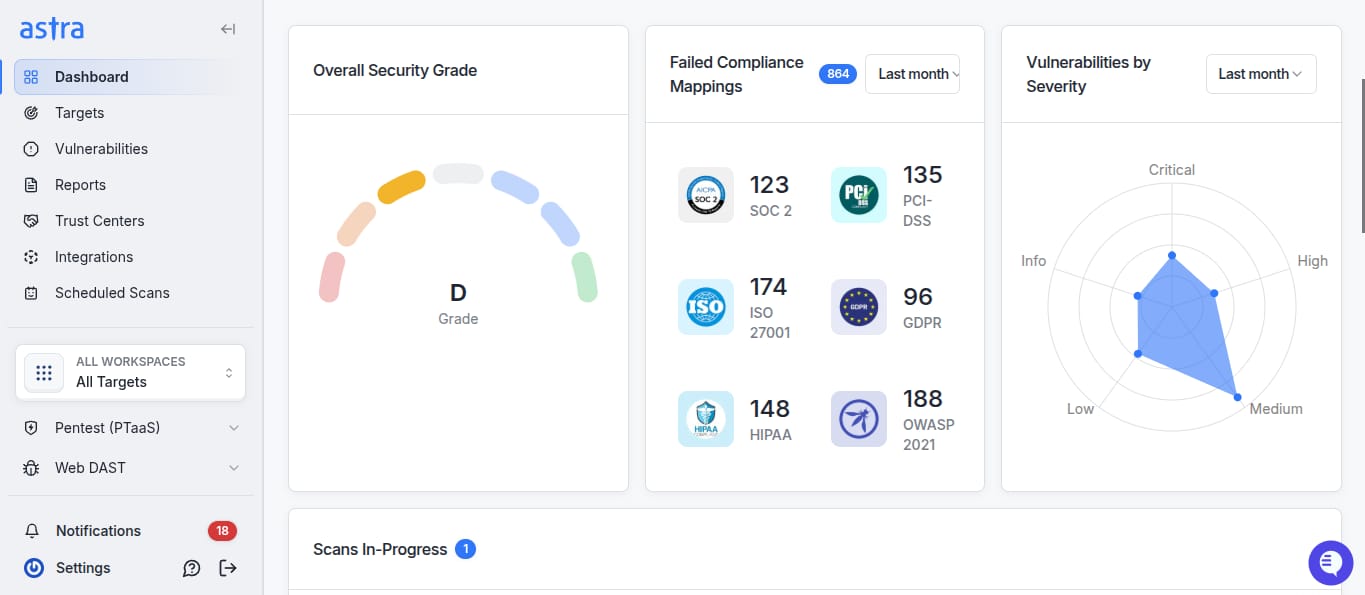
Testing standards must also ensure that security testing activities don’t inadvertently violate data protection regulations, understanding the documentation requirements for regulatory reporting, and maintaining audit trails that demonstrate due diligence in security risk management.
The technical depth of testing should reflect the criticality of different systems to your business operations. For example, core policy administration systems require more intensive testing than general corporate systems, but even seemingly less critical systems must be evaluated for their potential to serve as stepping stones for attackers.
Lastly, as insurance companies increasingly adopt artificial intelligence for underwriting and claims processing, VAPT programs must include AI-specific security testing. As blockchain technology is explored for claims verification and smart contracts, testing programs must also address distributed ledger security concerns.
Need deeper testing methodologies mapped to how to get IRDAI certification for pentesting?
Independent Assurance Audit Framework
The independent assurance audit framework provides external validation of your cybersecurity controls and processes. This framework serves multiple purposes: regulatory compliance, stakeholder assurance, and independent verification of security effectiveness..
The selection of independent auditors requires careful consideration of their expertise in addressing cybersecurity challenges within the insurance industry. Auditors must understand not just general cybersecurity principles but also the specific regulatory requirements affecting insurance companies and the unique data protection challenges in insurance environments.
Independent audits must be structured to provide actionable insights for business leaders, not just technical findings for IT teams. Audit reports should clearly articulate the business impact of identified vulnerabilities, provide risk-based prioritization for remediation activities, and offer strategic recommendations to enhance the overall security posture.
Which Technical Security Controls and Monitoring are Involved?
Comprehensive Data Protection Framework
Data at rest refers to information stored in databases, file systems, backup systems, and archival storage. Protection here would include encryption coupled with key management, access controls that implement least-privilege principles, and monitoring systems that detect unauthorised access attempts without continuous human intervention.
Data in transit protection includes systems such as internal communications, external integrations with partners and vendors, and customer-facing applications. Here, your job is to implement certificate management systems and network security controls that prevent eavesdropping and man-in-the-middle attacks.
Data is being processed. Traditional encryption methods cannot protect data in use by applications. For that, you need advanced techniques such as homomorphic encryption and secure multi-party computation, etc.
Lastly, your data protection framework should also be capable of standing against the complex web of data-sharing relationships that characterise modern insurance operations. Reinsurance arrangements, third-party claims processing, regulatory reporting, and fraud investigation activities all involve sharing sensitive data with external parties. Each of these relationships requires tailored protections, technical controls, and monitoring.
| Data Category | Protection Requirements | Key Controls | Monitoring Focus |
|---|---|---|---|
| Policyholder Personal Data | GDPR, state privacy laws, IRDAI guidelines | Encryption, access controls, data masking | Access patterns, data movement, retention compliance |
| Financial Information | PCI DSS, banking regulations, and audit requirements | Tokenization, network segmentation, and audit logging | Transaction monitoring, access reviews, compliance reporting |
| Health Information | HIPAA, health privacy laws, medical confidentiality | End-to-end encryption, role-based access, de-identification | Medical record access, research data usage, breach detection |
| Proprietary Business Data | Trade secret laws, competitive protection | Classification systems, DLP controls, and insider threat monitoring | Data exfiltration detection, intellectual property protection |
Network Security and Access Control Implementation
Your core operations, including customer service, regulatory reporting, agent networks, and business partner integration, all create a complex and extensive attack surface that demands nuanced and agile security.
Network segmentation
This acts as a fundamental control that limits the potential impact of security breaches. Thus, implementing multiple layers of segmentation not only isolates high-value systems, production, and non-production environments but also controls traffic flows between different business functions. For this, you need to have a strong understanding of the data flows and business processes that require network connectivity.
Access control implementation
When it comes to Access control implementation, it needs to cover both human users and automated systems. Human access controls include identity management systems that track the entire employment lifecycle, authentication systems that verify user identities via MFA, and authorization systems that enforce least-privilege access to critical systems and data.
For an Automated system, the challenge is that these systems usually access multiple resources to complete business processes, such as service accounts, API keys, and system-to-system authentication, which require careful management to prevent unauthorized. Implementing a few key measures would involve securing credential storage, regularly rotating authentication credentials, and monitoring automated access patterns.
Wondering how to align your controls with how to get IRDAI certification for pentesting?
Continuous Monitoring and Logging Requirements
Continuous monitoring transforms cybersecurity from a reactive discipline to a proactive risk management capability.
The scope of monitoring must thus encompass all components of your IT infrastructure and business applications. This includes network traffic monitoring that detects unusual communication patterns, system monitoring that identifies unauthorized changes or suspicious activities, and application monitoring that tracks user behaviors and data access patterns.
Additionally, comprehensive logging must capture authentication attempts, data access activities, system configuration changes, network communications, and other relevant events. It thus becomes imperative for these logs to be protected from tampering and that they are retained for periods that help both security investigations and regulatory compliance.

Security incident and event management platforms help unify monitoring from multiple sources, offering a comprehensive picture of your security posture. These platforms typically employ correlation rules and machine learning algorithms to identify patterns that may indicate security threats, thereby reducing the volume of alerts that security teams must investigate while enhancing the detection of sophisticated attacks.
The 180-day log retention requirement mandated by IRDAI guidelines is the bare minimum time typically required to investigate complex security incidents and satisfy regulatory examination requirements. However, it is a safe practice to retain security logs for longer periods to support trend analysis, threat hunting activities, and compliance with multiple regulatory frameworks, particularly when working with numerous international jurisdictions.
Overall, effective monitoring requires tuning your detection rules to minimize false positives and requires understanding the typical patterns of activity in your IT environment and adjusting monitoring limits to account for business cycles, seasonal variations, and operational changes.
What is Cyber Incident Response and Crisis Management under IRDAI?
Accelerated Incident Reporting Requirements
Understanding the accelerated reporting timelines means recognizing the difference between incident detection, assessment, and reporting. Detection occurs when you first identify that a security incident may have happened.
Impact assessment involves determining the scope of the incident, the types of data potentially affected, and the business processes that it may have disrupted. Lastly, notifying the regulatory body means sticking to their stipulated reporting timeline while having an action plan in place and already being executed.
| Incident Category | Reporting Timeline | Required Information | Follow-up Requirements |
|---|---|---|---|
| Critical (Data Breach >10,000 records) | 2 hours | Initial notification, estimated scope, immediate response actions | 24-hour detailed report, 72-hour impact assessment, final report within 30 days |
| Significant (System Disruption >4 hours) | 4 hours | System affected, business impact, restoration timeline | 48-hour progress update, final report within 15 days |
| Moderate (Security Control Failure) | 8 hours | Control affected, potential impact, remediation plan | Final report within 10 days |
| Low (Attempted Unauthorized Access) | 24 hours | Nature of attempt, systems targeted, defensive measures | Final report within 5 days |
Forensic Investigation and Expert Empanelment
Forensic investigations aim not only to understand what happened during security incidents but also to preserve evidence for potential legal proceedings.
Developing internal forensic capabilities requires significant investment in specialized tools, training, and processes. For example, the external experts on your forensics team should possess a certain level of expertise, gained through experience and specialization in insurance operations.
This would involve hiring digital forensics specialists who can analyze systems and recover evidence expeditiously, followed by incident response consultants who can effectively coordinate response activities, and lastly, legal counsel and public relations specialists who can help manage communications and litigation during major incidents.
In the insurance business, lengthy system outages can halt customers’ claims-filing processes, prevent them from accessing policy information, and cause disruptions in payments. Therefore, the forensic investigation process needs to balance thorough analysis with business continuity.
Lastly, evidence preservation isn’t straight-up bagging it up, too. It varies depending on the types of data involved, potential regulatory enforcement actions, and the intensity of civil litigation that may be involved. This is where a good legal counsel can make all the difference.
What Falls Under Business Continuity and Disaster Recovery under IRDAI Certification?
| Stakeholder Group | Communication Timeline | Key Messages | Communication Channels |
|---|---|---|---|
| Internal Response Team | Immediate and ongoing | Incident status, response actions, resource needs | Secure communications systems, emergency hotlines |
| Senior Leadership | Within 1 hour | Business impact, response status, decision requirements | Direct communication, emergency notification systems |
| Regulatory Authorities | Per regulatory requirements | Compliance with notification requirements, cooperation with investigations | Formal reporting channels, regulatory portals |
| Affected Policyholders | Within 24-72 hours (depending on impact) | Nature of incident, data protection measures, steps being taken | Email, mail, website notifications, customer service |
| Media and Public | As determined by the crisis team | Factual information, response actions, and customer protection measures | Press releases, website updates, social media |
| Business Partners | Within 24 hours | Impact on shared systems, continuity measures | Secure partner portals, direct communication |
Third-Party and Supply Chain Security Management to get IRDAI Certification
Vendor Risk Management Framework
Here, you need to make sure of two things: one, the data sensitivity of the data they’ll access and two, the criticality of the services they’ll provide. Thus, we suggest implementing:
Contractual Protections
Contractual protections, though they act as the foundation for vendor risk management, can’t replace your technical and operational controls. Make sure your vendor contracts specify cybersecurity requirements, audit rights that enable verification of your vendor’s practices, and notification requirements that ensure you’re promptly informed of security issues.
Ongoing Vendor Monitoring
As the name suggests, ongoing vendor monitoring is essential because vendors’ security posture can change over time. Thus, having regular security assessments will help ensure that security requirements are being met and you’re not caught off guard when regulatory bodies come knocking.
Simply put, the vendor lifecycle management process should include cybersecurity considerations at every stage, from initial vendor selection through contract renewal or termination. This generally comprises updating your RFP processes, monitoring your vendor’s security best practices and their enforcement,s along with making sure a secure data return or deletion when the contract ends.
| Vendor Risk Category | Assessment Frequency | Key Security Requirements | Monitoring Activities |
|---|---|---|---|
| High-Risk (Critical systems, sensitive data) | Annual assessments plus continuous monitoring | SOC 2 Type II, penetration testing, incident response plans | Real-time security monitoring, quarterly security reviews |
| Medium-Risk (Important systems, moderate data access) | Bi-annual assessments | Security questionnaires, basic certifications | Semi-annual security reviews, incident reporting |
| Low-Risk (Non-critical systems, limited data access) | Every 3 years | Basic security questionnaires | Annual security check-ins, contract compliance reviews |
Supply Chain Transparency and Risk Mitigation
The concept of Software Bill of Materials (SBOM) under the IRDAI certification is to help you understand the software products currently making up your digital infrastructure. This furthers your understanding of the security implications of policy administration, claims processing, and customer-facing digital platforms, which typically involve multiple interconnected third-party components.
On the other hand, hardware supply chain risks are typically associated with nation-state threats and lay emphasis on how you handle sensitive personal and financial data. Supply chain risk mitigation, therefore, entails developing alternative supplier relationships that ensure continuity if your primary suppliers experience business disruptions of any kind.
Technology-Specific Security Requirements
Cloud Security and Hybrid Environment Controls
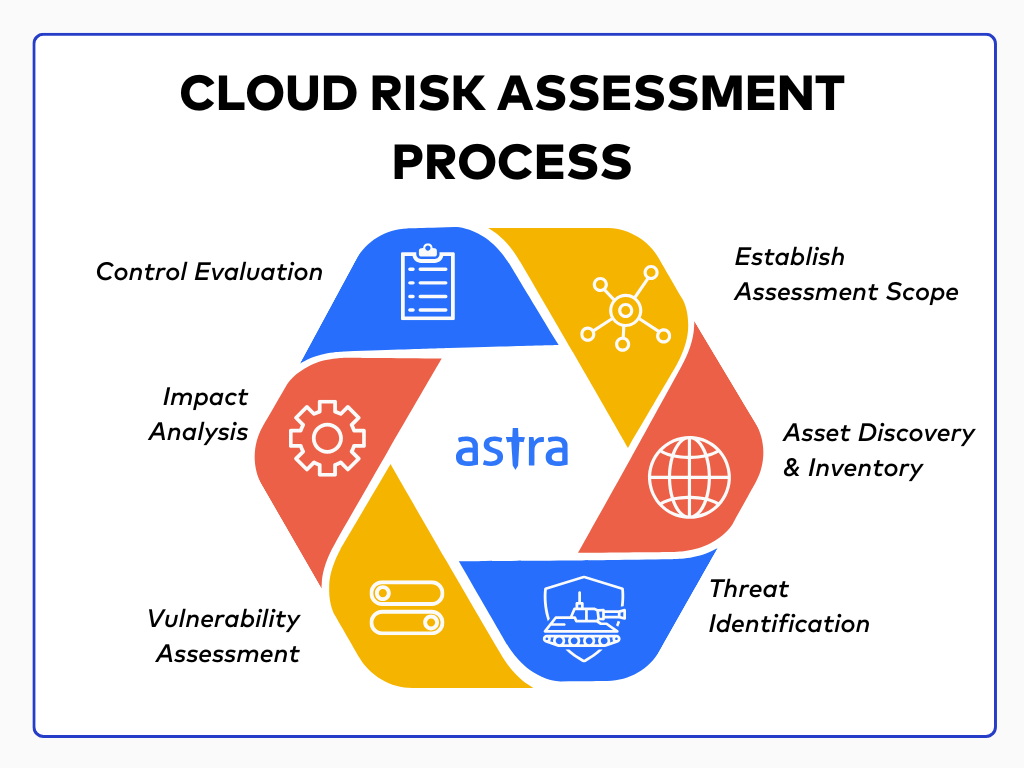
IaaS providers typically secure the underlying infrastructure while customers are responsible for securing operating systems, applications, and data. PaaS providers usually secure more of the technology stack, while SaaS providers typically secure the entire application, and customers retain responsibility for data protection and access management.
Identity and access management also becomes nuanced since it requires implementing identity-centric security models that verify user and system identities regardless of their network location. Multi-factor authentication, single sign-on systems, and privileged access management become indispensable components.
Many insurance companies require that encryption keys remain under their control even when data is stored in cloud systems. This requires implementing key management solutions that can protect data across hybrid and multi-cloud environments. Moreover, hybrid environments that combine on-premises and cloud systems create additional security challenges since data and applications may move between environments with different security models.
Compliance requirements for insurance companies often include restrictions on where data can be stored and processed. This includes understanding data residency requirements, cross-border data transfer restrictions, and regulatory examination requirements that may affect cloud service selection.
| Cloud Service Type | Customer Security Responsibilities | Key Controls | Compliance Considerations |
|---|---|---|---|
| Infrastructure-as-a-Service (IaaS) | Operating systems, applications, data, and identity management | Endpoint protection, application security, data encryption, and access controls | Data residency, audit trails, and incident response |
| Platform-as-a-Service (PaaS) | Applications, data, identity management | Application security, data protection, and user access management | Code security, data classification, and regulatory reporting |
| Software-as-a-Service (SaaS) | Data protection, user access management | User provisioning, data classification, and access reviews | Data ownership, portability, and vendor assessments |
Emerging Technology Governance: AI and Blockchain
When it comes to artificial intelligence, AI model security is of utmost value. Her, data poisoning represents a particularly insidious threat to AI systems, through which attackers can infiltrate and manipulate training data to introduce biases into AI models, thereby benefiting themselves.
Thus, you need to ensure that the training data hasn’t been tampered with and monitor the AI model’s performance, looking out for any compromises in its outputs.
Blockchain technology applications, on the other hand, generally handle claims verification, smart contracts, and fraud prevention. What concerns you here are private key management, smart contract vulnerabilities, and consensus mechanism attacks.
Smart contract security is particularly crucial for insurance applications, as smart contracts automate policy issuance, claims processing, and premium calculations. Vulnerabilities in smart contracts can trigger inappropriate payouts or manipulate policy terms. Securing yourself here requires implementing smart contract auditing and code review processes that address blockchain-specific vulnerabilities.
| Technology | Primary Security Risks | Key Controls | Governance Requirements |
|---|---|---|---|
| Machine Learning/AI | Model attacks, data poisoning, bias manipulation | Model validation, data integrity, performance monitoring | AI ethics review, explainability documentation, audit trails |
| Blockchain/DLT | Private key management, smart contract vulnerabilities, consensus attacks | Key management systems, contract security testing, and network monitoring | Governance framework, regulatory compliance, and change management |
| IoT/Connected Devices | Device compromise, botnet participation, data interception | Device authentication, encryption, and firmware management | Asset inventory, lifecycle management, network segmentation |
Mobile Security and Endpoint Protection
Mobile application security encompasses securing both applications developed by your organisation and third-party applications that may access your systems or data. For customer-facing mobile applications, you need robust authentication mechanisms, secure data storage, and protection against reverse engineering that may expose API keys or other PI information.
Whereas your endpoint protection strategy should address the diverse endpoints insurance environments deploy—traditional desktop and laptop computers, mobile phones and tablets, specialized insurance terminals used by agents, and IoT devices.
To secure endpoints, the most basic implementation is a zero-trust policy, which assumes that endpoints cannot be trusted and requires verification for every access request, regardless of the device’s location or previous authentication status. This approach is particularly relevant for insurance companies that support work-from-anywhere arrangements.
| Endpoint Type | Key Security Challenges | Required Controls | Management Approach |
|---|---|---|---|
| Corporate Laptops/Desktops | Malware, data theft, and unauthorised access | Endpoint detection and response, disk encryption, and patch management | Centralised management, automated updates, policy enforcement |
| Mobile Devices (Corporate) | Application security, data leakage, and device loss | Mobile device management, application wrapping, and remote wipe | Comprehensive MDM deployment, regular security assessments |
| Mobile Devices (BYOD) | Mixed use, limited control, diverse platforms | Containerization, limited access, and data classification | Selective management, user agreements, and regular compliance checks |
| Specialized Terminals | Legacy systems, limited updates, and physical security | Network isolation, physical controls, and monitoring | Asset-specific controls, regular vulnerability assessments |
Want guidance on securing modern tech stacks for how to get IRDAI certification for pentesting?
Compliance Monitoring and Performance Measurement
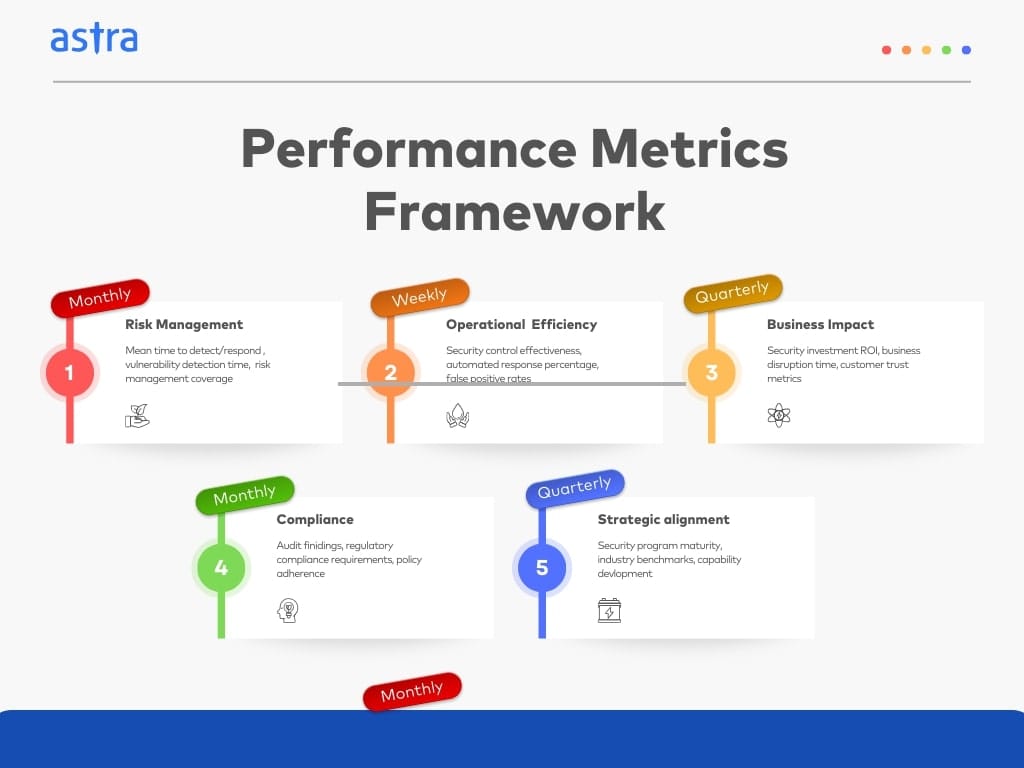
Strategic Implementation and Business Value
Risk-Based Implementation Approach
On your journey to an IRDAI certification for a large insurance organization, you need a strategic approach that prioritizes initiatives based on risk reduction potential and business impact. This risk-based implementation strategy enables organizations like yours to achieve significant security improvements without incurring the costs and operational disruptions typically associated with cybersecurity initiatives.
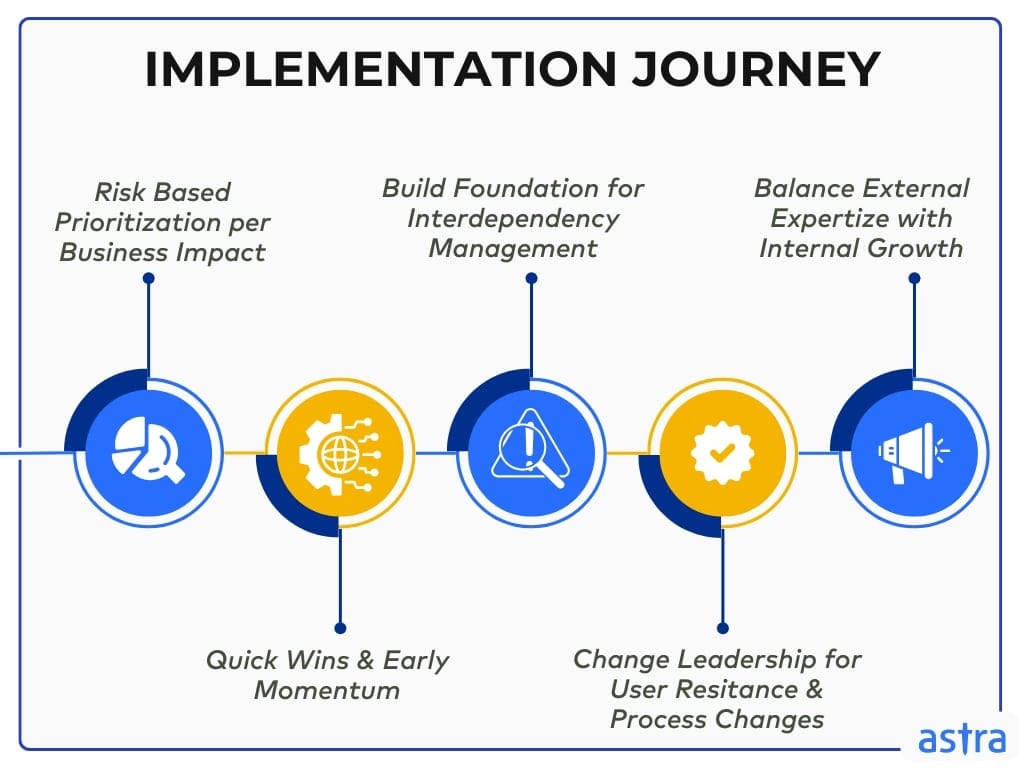
In such a scenario, change management becomes necessary because cybersecurity initiatives often require changes to established business processes and user behaviours. Thus, you need to effectively communicate business rationale for security improvements by providing adequate training and support for new processes, and address resistance from users who may view security controls as impediments to their productivity.
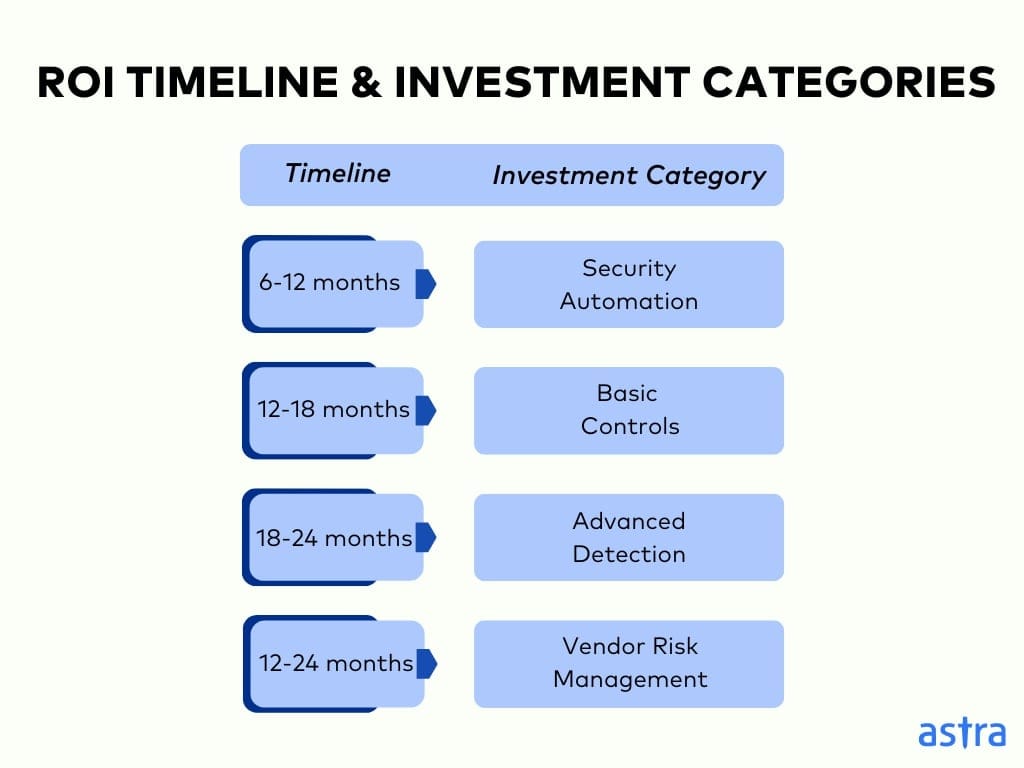
Return on Investment and Competitive Advantage
How Can Astra Security Help with IRDAI Certification?
Astra Security simplifies how to get IRDAI certification by translating its VAPT mandates into clear, automated workflows: semi-annual vulnerability assessments and annual penetration tests for critical systems are scheduled by default, with lifecycle checks triggered before go-live, post-deployment, and after every major change. Our audit-ready reports are generated automatically, mapped directly to IRDAI compliance clauses for faster regulatory approvals.
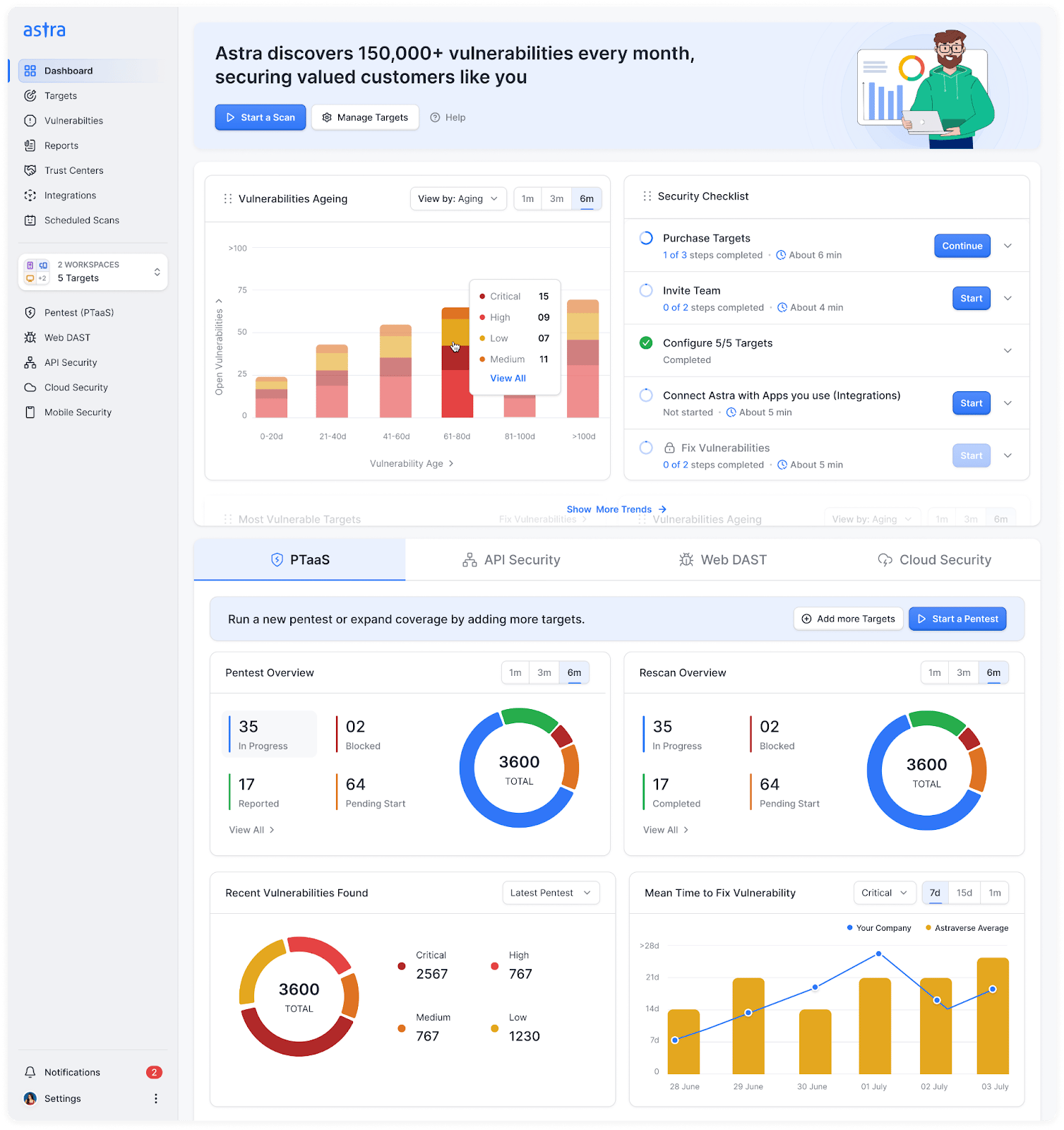
Beyond compliance, our IRDAI VAPT service delivers a comprehensive security audit that combines 15,000+ automated DAST checks with in-depth manual penetration testing by CERT-In certified experts. Coverage extends beyond logins, with AI-assisted logic testing and two included rescans, helping teams significantly reduce remediation timelines.
Astra Security goes beyond simply detecting vulnerabilities across APIs, multi-cloud setups, web and mobile applications, and network layers. We act as your IRDAI-approved security audit partner, integrating seamlessly with Jira, Slack, GitHub, and Jenkins to fit into your DevSecOps pipeline. After remediation, we issue publicly verifiable certificates alongside validation scans to minimize friction during the compliance reviews and audits.
Table 10: Astra Security’s alignment with your IRDAI Certification
| Capability | Business Value | IRDAI Alignment | Implementation Timeline |
|---|---|---|---|
| Continuous VAPT | Real-time risk visibility, rapid response | Annual testing requirement, change-based assessments | 1-2 weeks initial setup |
| API Security Testing | Comprehensive coverage, rapid assessment | Technical testing standards | Immediately upon deployment |
| Compliance Reporting | Multi-framework support, audit readiness | Documentation requirements, regulatory reporting | Available immediately |
| Workflow Integration | Process automation, accountability tracking | Continuous improvement, performance measurement | 2-4 weeks integration |
| Executive Dashboards | Strategic visibility, board-ready reporting | Leadership governance, risk communication | 1 week configuration |
Ready to simplify how to get IRDAI certification for pentesting with automated workflows?
Final Thoughts
Understanding how to get IRDAI certification for pentesting is about more than ticking compliance boxes. In the insurance sector, cybersecurity is a key business driver, protecting customer trust, enabling digital innovation, and ensuring operational resilience.
Certification requires embedding security into every layer of your ecosystem. That means going beyond VAPT scans to securing apps, APIs, cloud, and third-party vendors. Our guide breaks down IRDAI’s mandates into clear steps and tables, making compliance faster, audit-ready, and easier to implement.
FAQs
How do I get my IRDAI certificate?
Getting your IRDAI certification for your insurance firm involves a complete, comprehensive cybersecurity framework implementation, including board governance, VAPT assessments, continuous monitoring, incident response protocols, and vendor risk management. Also, engage empanelled auditors for validation and certification issuance.
What is an IRDAI license?
IRDAI license authorizes firms to conduct insurance business in India. It requires meeting capital adequacy, governance standards, cybersecurity compliance, and operational capability requirements before you can begin operations.
What is the IRDAI Cybersecurity policy?
As of March 2025, the policy mandates continuous ICT monitoring, 180-day log retention, external incident response experts, robust encryption, and annual VAPT assessments, among other measures. For more details, please visit the IRDAI website.