We are just a few steps away from widespread agentic AI tool sprawl in the threat actor community.
GTIG documented nation-state actors from China, North Korea(Lazarus Group), Russia, and Iran actively embedding AI into their workflows. Chinese threat actor GTG-1002′s most recent campaign achieved 80% autonomous operation, using LLMs for reconnaissance, target selection, and exploit refinement. Given that nation-state actors and ransomware syndicates can now invest over $1 million per campaign, the probability of them developing autonomous offensive tools is now very high.
The only rational response is autonomous penetration testing that operates at the same pace as the threat.
The market has exploded with every vendor claiming autonomy. So we wrote this blog to share the 10 best autonomous pentesting tools of 2026 picked by our experts to help you figure out which one actually fits your environment, your team, and your threat model.
Why Trust This Guide?
We are the team behind the OWASP Autonomous Penetration Testing Standard (APTS), the world’s first governance standard for autonomous pentesting platforms.
Our recommendations come from over 5+ years of hands-on offensive security experience, running thousands of penetration tests, serving 1000+ customers, operating our own PTaaS platform, and developing autonomous pentesting solutions for enterprise environments.
What is Autonomous Pentesting
Autonomous pentesting is a modern approach in which a swarm of AI agents executes pentesting with minimal human intervention. In simple terms, it’s a hacker powered by AI that works at machine speed.
These tools go far beyond traditional automated scanners by intelligently chaining multiple exploits, adapting to defenses or changes in real time, simulating real threat actor behavior, validating actual business impact, and even verifying whether the fixes actually worked
Best Autonomous Pentesting Solutions
- Astra Security
- Node Zero
- Xbow
- Aikido Security
- RunSybill
- Novee Security
- Nova
- Cyberware
- Terra Security
- Penligent
Our Evaluation Criteria for Selecting the Best Autonomous Pentesting Tools
We evaluated dozens of autonomous pentesting platforms against six critical aspects that separate truly effective solutions from marketing hype in real-world security programs
- Autonomy level – How much can the tool perform without a human in the loop?
- Coverage – Does it handle network, web apps, cloud, AD, or is it only specialized to a particular niche?
- Integration – Can you plug into your existing ticketing systems(JIRA, ServiceNow), or directly into your CI/CD pipeline?
- Safety controls – Can you run it in prod without the tool going rogue or taking systems down?
- Reporting Quality – Does the output go beyond the usual CVE list?
- Pricing Model – Per asset, per engagement, or subscription? Does it scale with your environment?
Autonomous Pentesting Tools Compared
| Tool | Autonomous Level | Best For | Key Strength | Pricing Model |
|---|---|---|---|---|
| Astra Security | Fully Autonomous | Web apps, APIs & Cloud | Dual-mode (Structured + Bounty Hunter) AI agents | Subscription |
| NodeZero (Horizon3.ai) | Fully Autonomous | Internal networks & Hybrid infra | Complete kill-chain simulation | Enterprise licensing |
| XBOW | Fully Autonomous | Web applications | Advanced exploit chaining & validation | Subscription |
| Penligent | Highly Agentic | Web, API & Network | Orchestrates 200+ tools via natural language | Free tier + Paid |
| Hadrian Nova | Agentic | External attack surface | Continuous external asset discovery & chaining | Per-test / Subscription |
| Cyberware | Highly Agentic | Web apps & APIs | Context-aware reasoning engine | Subscription |
Top 10 Best Autonomous Pentesting Tools in 2026
We benchmarked the best autonomous pentesting tools in production-like environments, testing their ability to perform end-to-end penetration testing against dynamic targets.
Special focus was given to true autonomy, exploit validation accuracy, adaptability to dynamic defenses, false-positive reduction, and remediation verification capabilities.
1. Astra Security [Schedule a demo now]
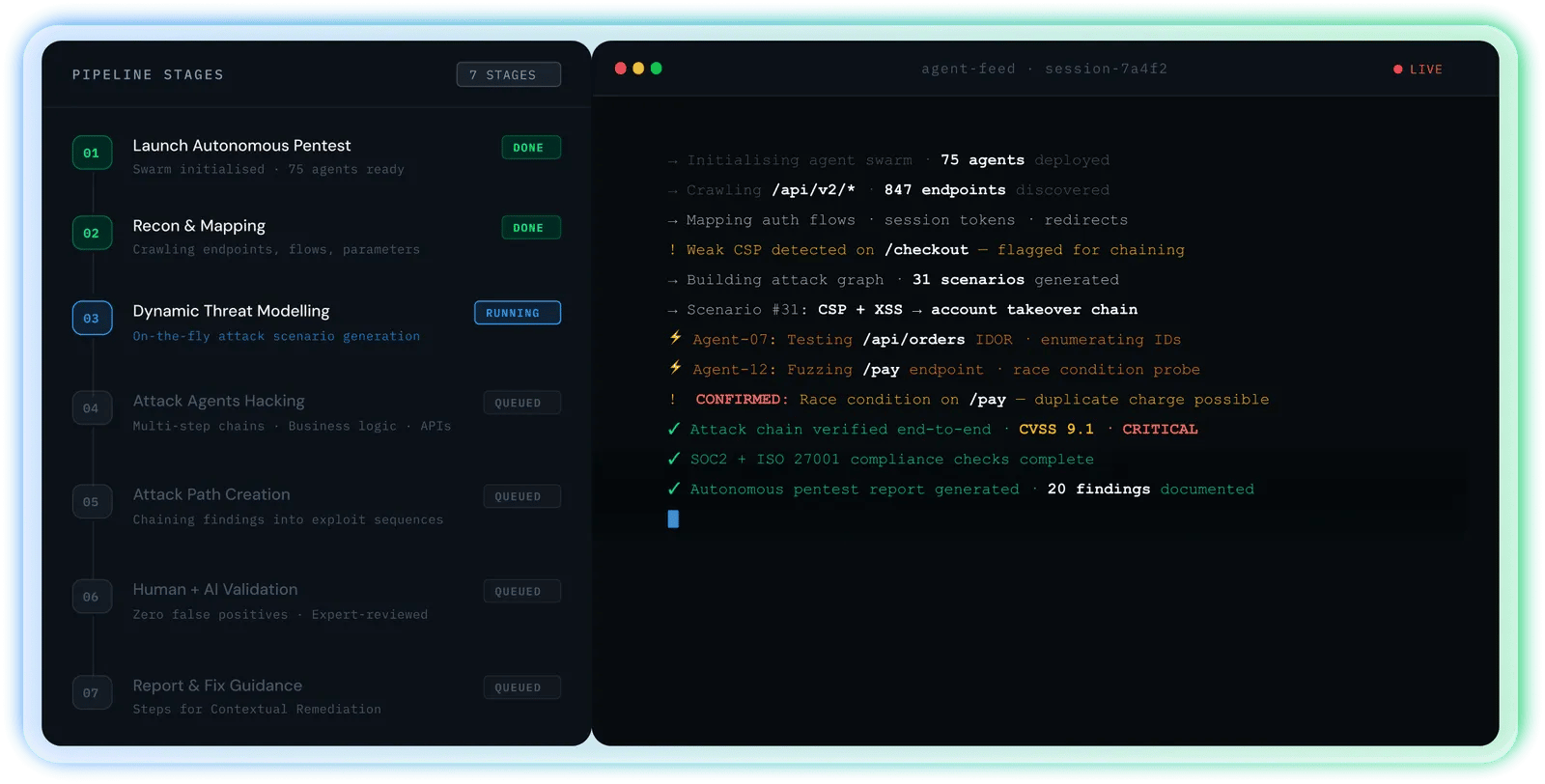
Astra Security, a well-established name in the PTaaS space, is now entering the autonomous pentesting arena with a powerful AI-driven solution.
Built on insights from 5000+ real-world pentests and 10 million vulnerabilities, the agents autonomously handle reconnaissance, threat modeling, dynamic test case generation, exploit chaining, and validation.
Our platform offers two pentesting modes that run in parallel: a structured pentest that methodically covers the attack surface, and a “Bounty Hunter” mode where an independent agent explores attack surfaces like a security researcher or bug bounty hunter. This dual approach delivers both comprehensive coverage and high-impact discoveries.
Key Features
- Full autonomous pentesting lifecycle: reconnaissance, threat modeling, dynamic test case generation, exploitation, and chaining
- Dual testing modes: Structured Pentest + Bounty Hunter running in parallel
- Context-aware and business-logic-aware attack reasoning (e.g., race conditions, TOCTOU flaws, complex authorization issues)
- An independent AI validation layer that verifies every finding before reporting
- Production-safe execution with clear proof-of-concept and reproduction steps
- Real-time dashboard showing vulnerabilities, severity breakdown, and estimated business risk (e.g., potential financial loss prevented)
- Continuous and on-demand testing aligned with modern release cycles
Pros
- Up to 80x faster than manual pentests without compromising quality
- Can discover complex, chained, and business-logic vulnerabilities that traditional tools miss
- Makes human pentesters more effective by handling repetitive and mid-level work, allowing them to focus on novel or high-value scenarios
- Strong visualization and reporting suitable for both technical teams and executives/auditors
Limitations
- Limited trial period
2. NodeZero
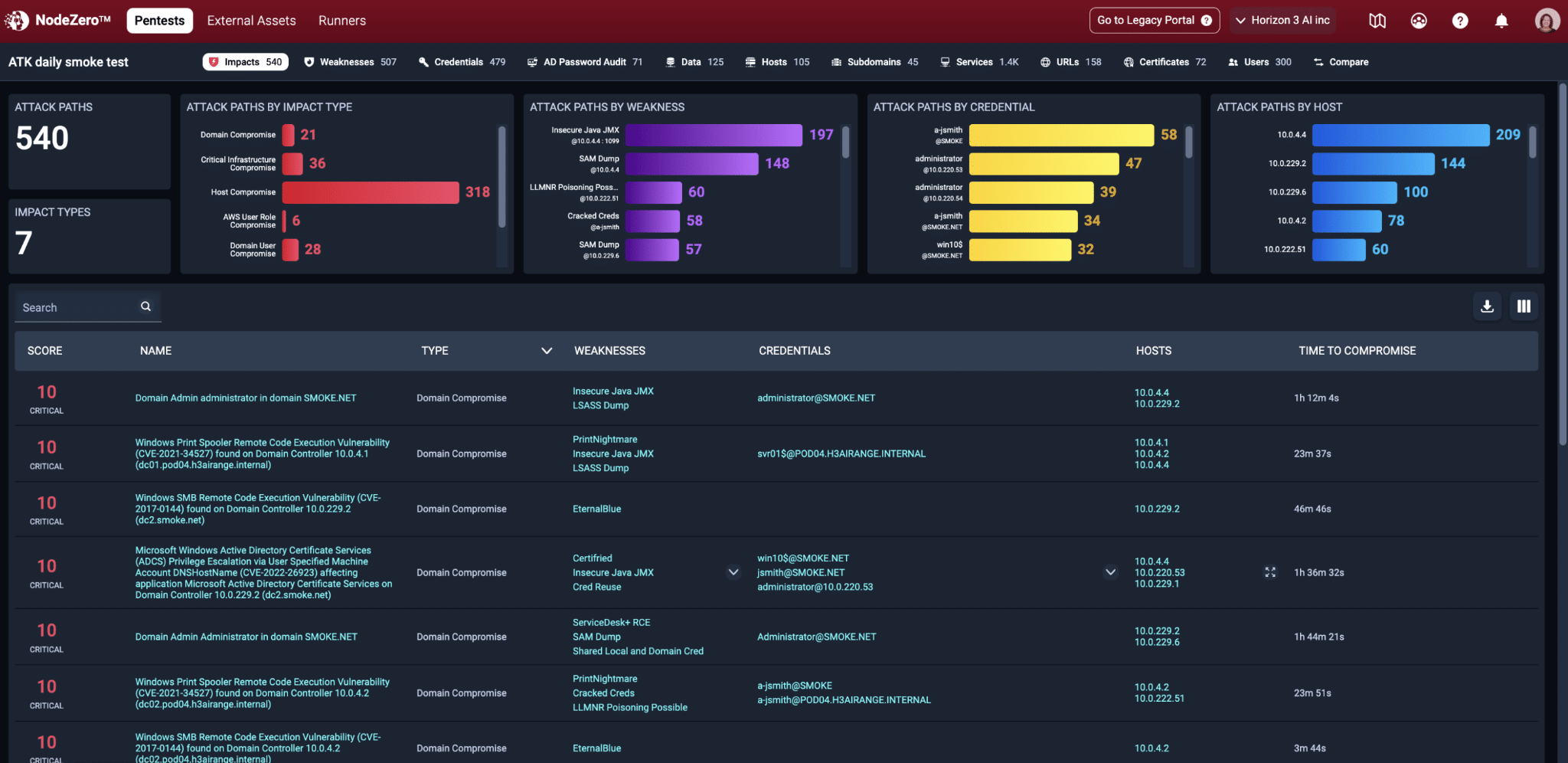
NodeZero is one of the most popular autonomous pentesting platforms developed by Horizion3.ai. It operates as a self-directed agent that launches simulated cyberattacks within your network without using pre-staged credentials or prior knowledge of the environment.
Nodezero can also discover credentials from the misconfigured services and exploit them to move laterally across the network, completing a full kill chain without a human in the loop.
Pros
- No agents required on target systems
- Exceptional depth in internal network exploitation.
- SAML/OAuth abuse detection
- Active Directory attack simulation
Limitations
- Limited web app coverage only
- Feel heavyweight and complex for a smaller team
3. XBOW
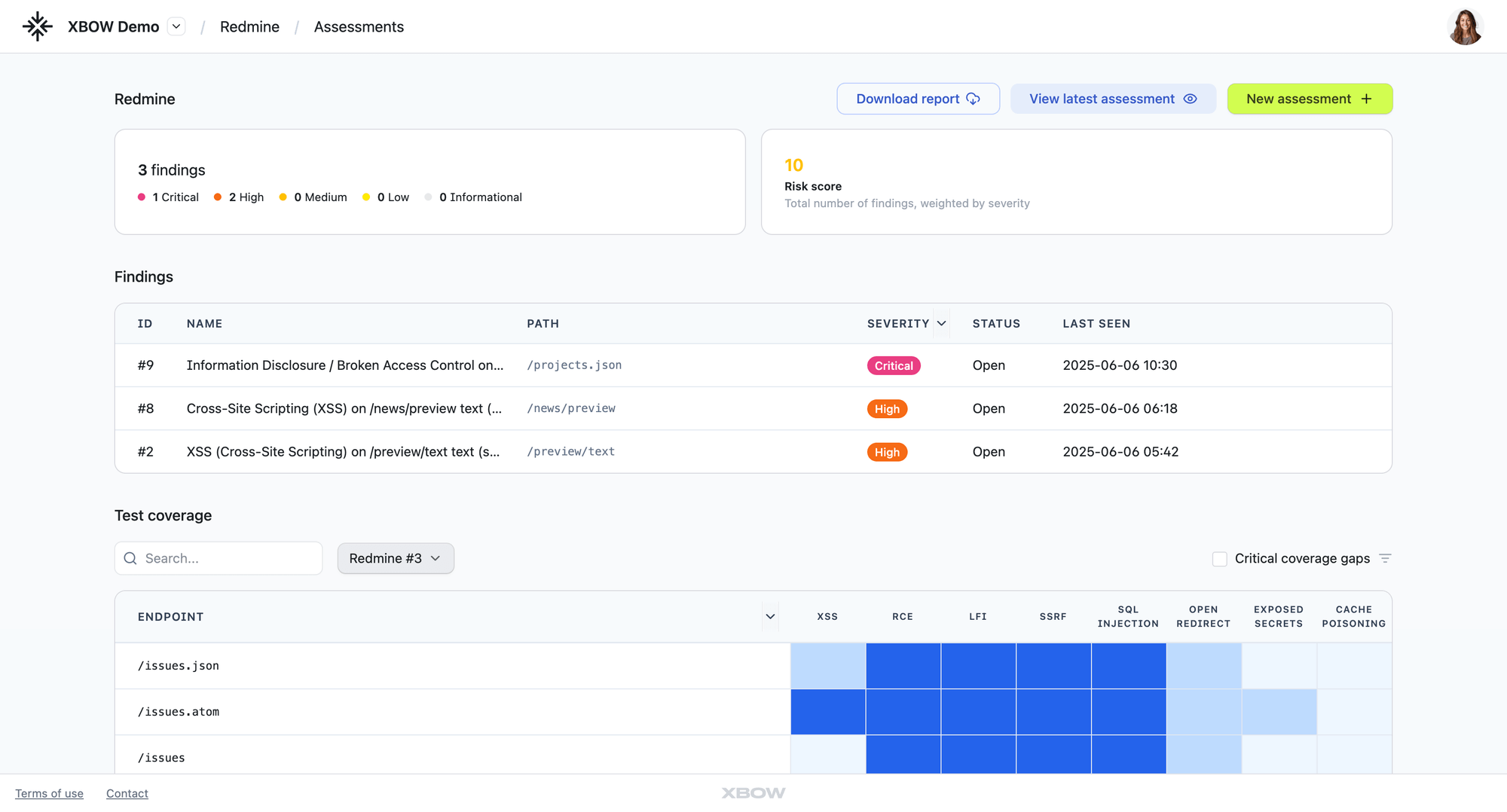
XBOW is one of the popular fully autonomous web application offensive security tools. It was founded by the former GitHub security engineers in 2025. XBOW can map all assets in the environment, detect vulnerabilities, and simulate cyberattacks that mimic real-world attacks.
All these processes are carried out by dozens of agents without human intervention.
Pros
- Agents can rewrite execution guidelines on their own
- Reduce false positives by validating findings with custom peer reviewers
- No complex manual prompts are needed to use XBOW at its full potential
Limitations
- Sometimes it might miss context-specific rules that can cause a compliance breach/violation
- Not suitable for all niches
4. Aikido Security
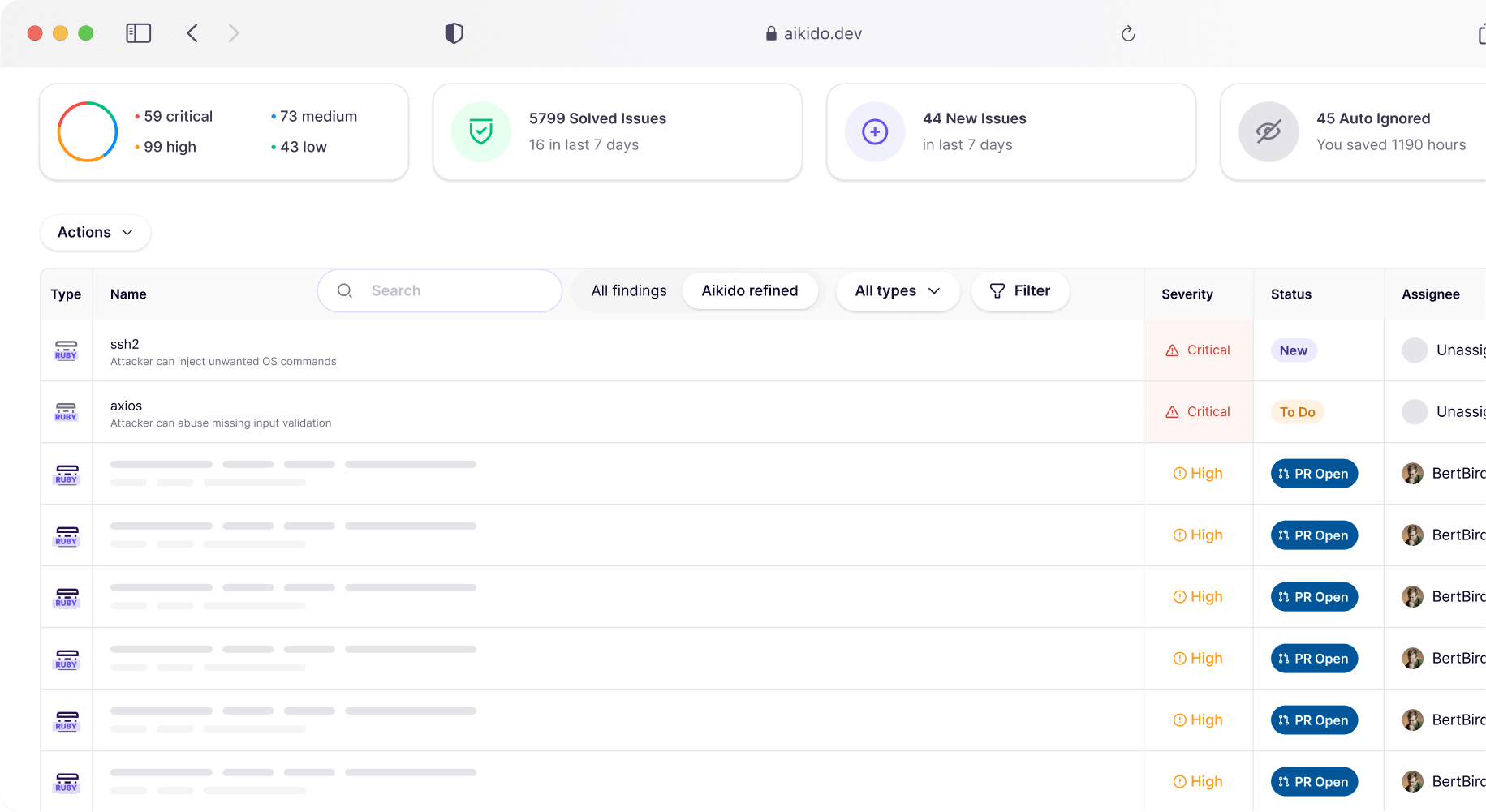
Aikido security is an autonomous pentesting tool built to provide devs with a comprehensive security platform that can be integrated directly into the workflow.
It uses agentic AI to simulate exploits across environments to validate multiple vulnerabilities and how they can be chained together into larger full attack paths.
Pros
- Detects leaked API keys and passwords in production
- Akido supports hosting in the US and EU, based on compliance and requirements
- Offer centralized reporting and support for major international compliance
- Non-intrusive and faster to deploy
Limitations
- Pricing is not transparent.
- Only limited information is shown in the dashboard.
5. RunSybil
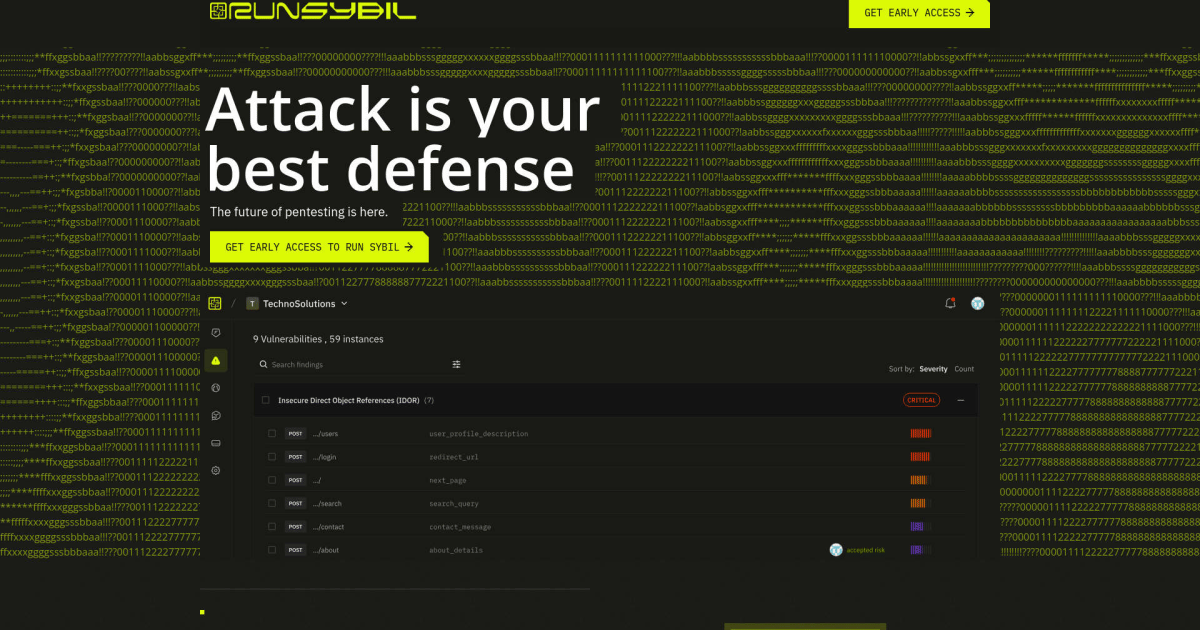
RunSybill is an AI-powered offensive security platform built by Ex OpenAI’s security researchers. It interacts with systems like pentesters. The platform is built based on the full attack lifecycle and allows security teams to run simulated cyberattacks or isolated testing for various test cases.
Pros
- Perfect for red-team exercises that require ATT&CK mapping
- Offers integration with SIEM and SOAR for detection validation
- Generates a heatmap of the ATT&CK techniques used during pentesting
Limitations
- Steep learning curve
6. Novee Security
Novee Security is the newest player in the field, launched in 2026, built to perform red teaming autonomously with minimal human intervention.
The platform can deploy a dozen hive-mind AI agents that map your environment, detect vulnerabilities, and provide remediation support.
Pros
- Offer true black-box testing as it only needs a domain name
- Every fix is automatically retested to ensure it’s been fully resolved
- Payloads are designed to be non-destructive to prevent data loss or damage to the infrastructure
Limitations
- Need human intervention often.
7. Nova
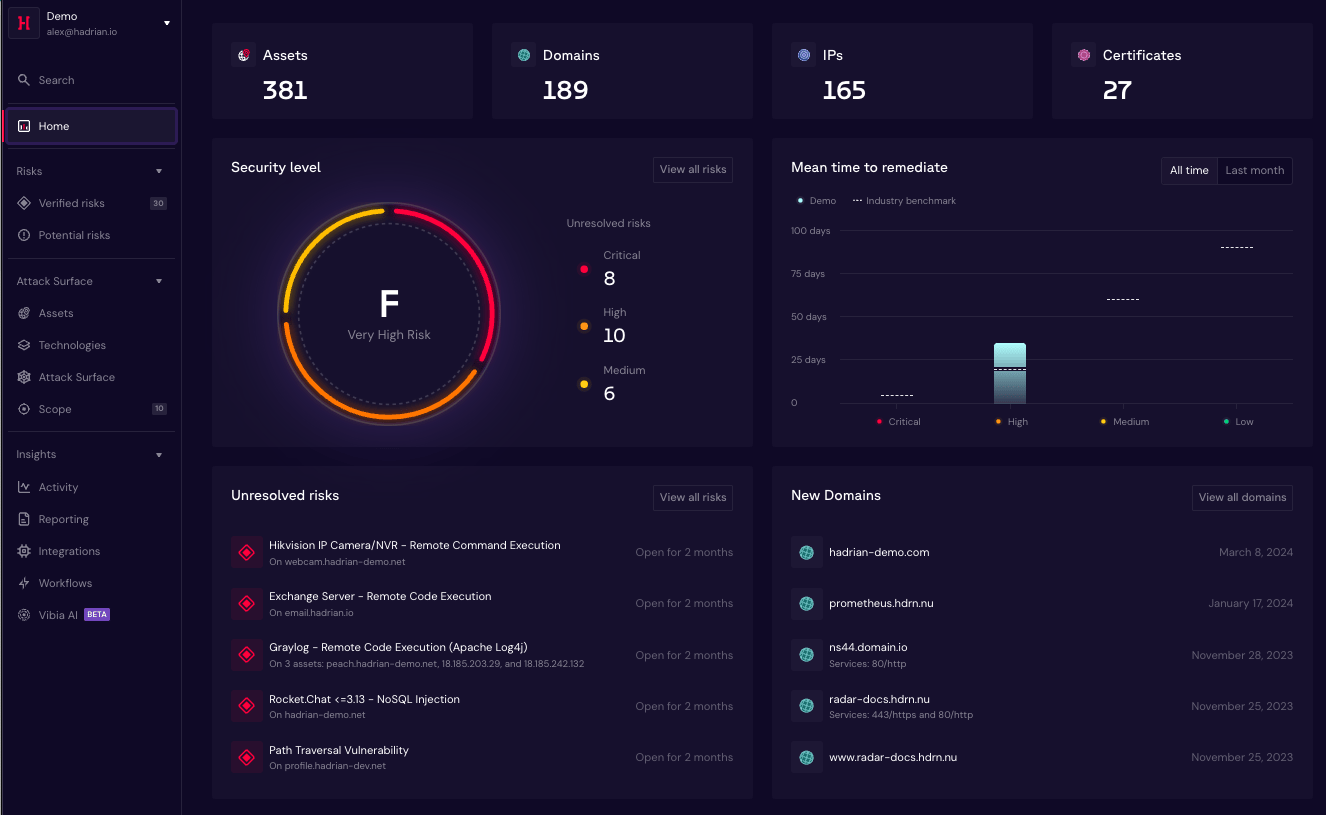
Hadrian Nova is an agentic AI-powered pentesting solution launched in March 2026 by Hadrian, designed specifically for autonomous testing of external attack surfaces.
It extends Hadrian’s core external exposure management platform by deploying dozens of agents trained by security engineers and researchers. These agents identify internet-facing assets (domains, subdomains, etc.) and chain vulnerabilities, replicating real-world cyberattacks.
Pros
- Attack path exploration with vulnerability chaining and privilege escalation across real assets
- Every finding is validated with POC, with reproduction steps
Limitations
- Less suited for internal network or deep web app pentesting
- May require integration with Hadrian’s core platform for maximum value, and advanced customization benefits from some security expertise
8. Cyberware
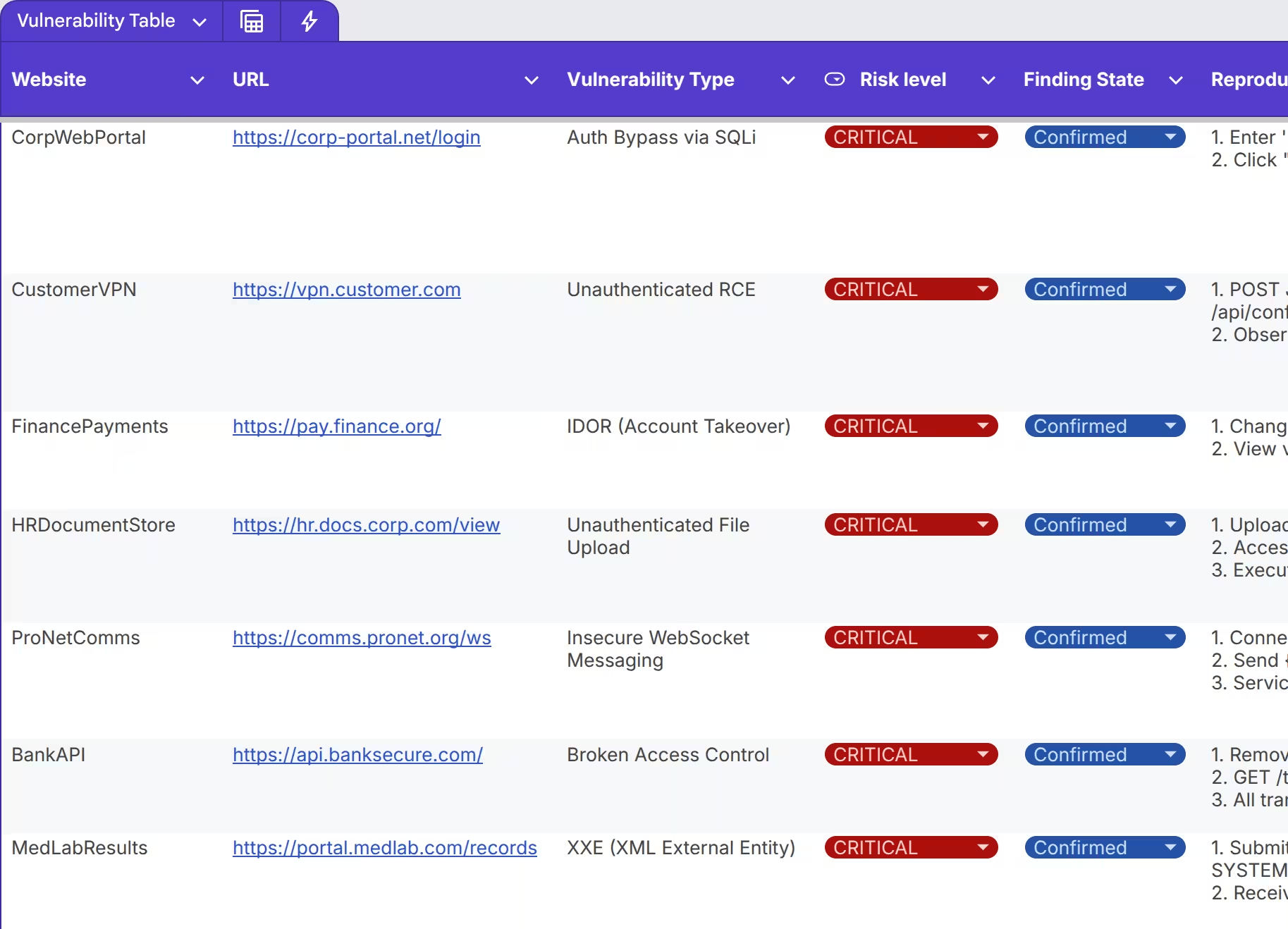
Cyberware delivers expert-level offensive security assessments using a sophisticated asynchronous, cross-domain, evidence-gated, reasoning, and context-aware AI engine.
Designed to replicate the ingenuity, creativity, and adaptability of seasoned human pentesters, it supports full white-box, gray-box, and black-box testing primarily focused on web applications, APIs, and associated attack surfaces.
Pros
- Excellent balance of autonomy and expert-level quality, ideal for web and API-heavy environments
- Supports white-box, gray-box, and black-box testing methodologies
- Asynchronous and cross-domain attack execution for deep, multi-layered testing
- Fast turnaround and continuous/on-demand capability
Limitations
- Less emphasis on internal network or hybrid cloud infrastructure
- Steep learning curve
9. Terra Security
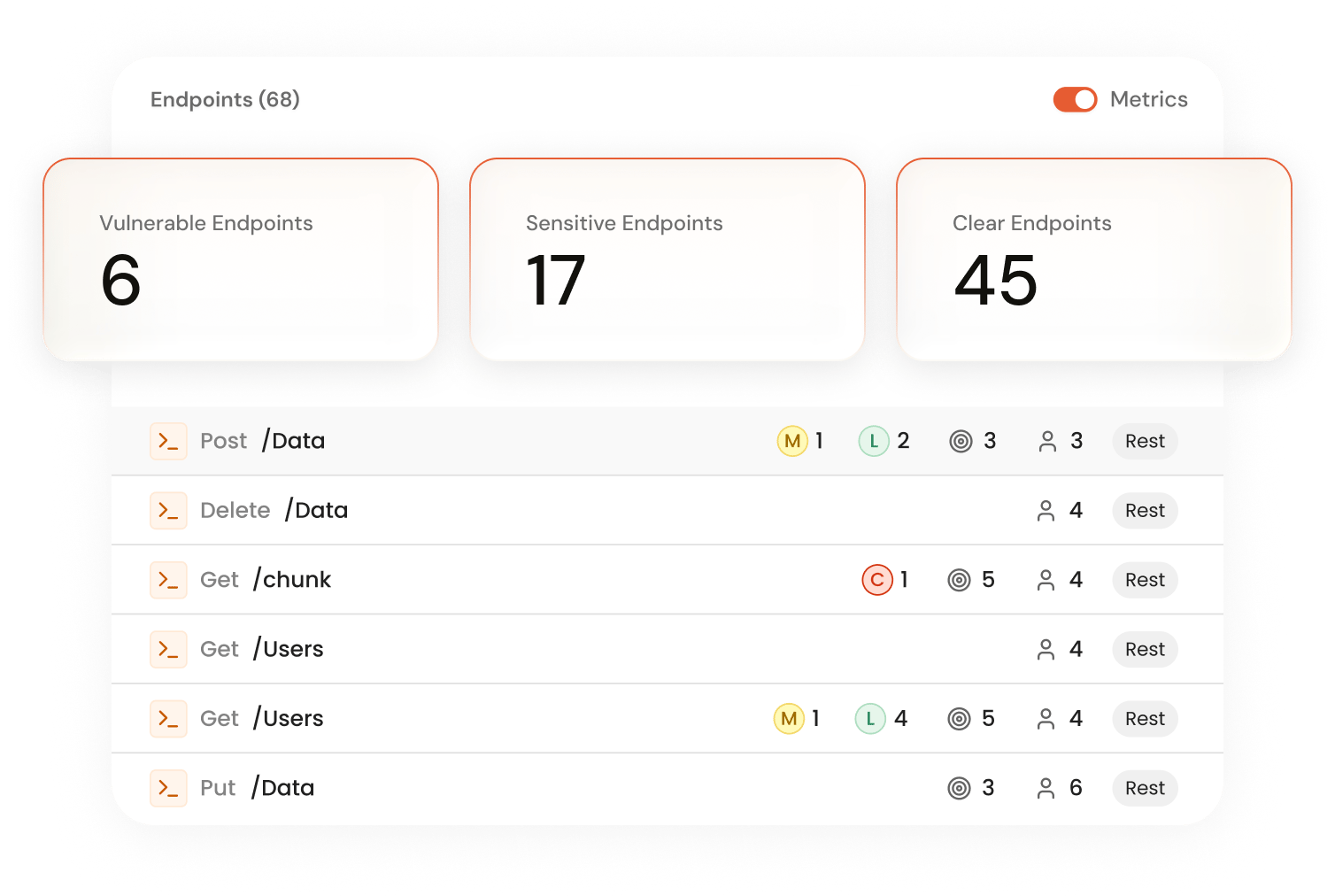
Terra Security is an AI-agent-based offensive security tool specializing in autonomous web app pentesting. Launched in early 2026, it uses multiple fine-tuned AI agents that operate in a human-in-the-loop model, combining autonomous execution with human oversight.
Pros
- Excellent for web apps and dynamic attack surfaces, with deep business-logic testing
- Continuous and change-triggered pentesting integrated with code/PR changes
- Seamless CI/CD and AWS Marketplace integration
Limitations
- Focused only on web apps
10. Penligent
Penligent is an agentic AI-powered penetration testing platform that can orchestrate more than 200 security tools (including Nmap, Metasploit, Burp Suite, OWASP ZAP, SQLMap, and more) within a unified, intelligent workflow.
Using natural language prompts, security engineers can describe their target in plain English, and Penligent autonomously handles the entire process, from asset discovery to final report generation.
Pros
- Ideal for both beginners and experienced teams
- Orchestration of 200+ pentesting tools with on-demand access
- Broad tool integration for comprehensive coverage of web, APIs, and network assets
Limitations
- Still a relatively newer platform with evolving enterprise-scale case studies
Autonomous Pentesting vs. Traditional Scanners
This is where a lot of organizations get confused. Vulnerability scanners and autonomous pentesting tools are entirely different, even though both are used to identify security gaps.
| Aspect | Autonomous Pentesting | Traditional Scanners |
|---|---|---|
| Approch | Adaptive, agentic AI with exploit chaining | Rules-based, static signature matching |
| Depth | Real exploitation, attack paths, business logic flaws | Identifies only known CVEs |
| Adaptability | Real-time pivoting | Very rigid |
| Output | POC with auto fixes for some vulnerabilities. | Limited mostly raw outputs |
| Human Effort | Minimal (setup + review) | Needs manual validation |
| False Positives | Low | Very high |
In simple terms, Scanners tell you what might be wrong. An autonomous pentesting tool tells you how an attacker would exploit a particular vulnerability or chain multiple vulnerabilities with a POC. This makes autonomous tools superior and more suitable for a modern security strategy in a 4,000-asset enterprise environment.
How to Choose the Best Autonomous Pentesting Tool
Selecting the right autonomous pentesting platform can feel overwhelming with so many tools claiming to be autonomous in the market. The key is to focus on your tech stack, level of autonomy, risks, team maturity, and operational needs rather than chasing the “most autonomous” or “most known” tool.
Use the following six targeted questions to quickly evaluate any platform:
- How does the tool’s core strength align with your primary attack surface? (e.g., web/API, cloud/hybrid, or AI/LLM applications)
- How much autonomy does your team need?
- Is the pricing model suitable for your security program and budget?
- Does it integrate with your existing workflows?
- Does it validate findings with clear POC and remediation guidance? (critical for having low false positives)
- How production-safe and controllable is the solution? (e.g., non-destructive modes)
If a tool answers “Yes” to 1, 5, or 6 questions for your organization, it is worth scheduling a live demo.
This simple checklist cuts through marketing hype and ensures you invest in a solution that will actually reduce risk at the pace your business demands.
Final Thoughts
Autonomous systems are now everywhere. From battlefield drones to smart homes, autonomy has become the defining characteristic of modern technology for the last two years. Cybersecurity is simply following the same inevitable path.
As threat actors continue to leverage AI to increase their speed and sophistication, security teams who fail to react faster will find themselves at a permanent disadvantage.
The future of cybersecurity belongs to teams that can test faster, validate smarter, and remediate earlier.
Choose your autonomous pentesting tool wisely. Start small with controlled experiments, measure real risk reduction, and then scale aggressively. The only real question left is how quickly you adopt these autonomous capabilities, before threat actors fully develop and weaponize them against you.
Explore Our Autonomous Penetration Testing Series
This post is part of a series on autonomous penetration testing. You can also check out other articles below.
- Chapter 1: Autonomous Pentesting: How it Works, Benefits, Tools (2026)
- Chapter 2: Autonomous vs Traditional Pentesting: What’s More Secure in 2026?
- Chapter 3: Top 10 Autonomous Pentesting Tools in 2026
- Chapter 4: How to Evaluate Autonomous Penetration Testing Security Vendors in 2026
- Chapter 5: OWASP APTS: A Complete Guide to Autonomous Penetration Testing Standard
- Chapter 6: Agentic AI in Cybersecurity: The Complete Guide for Security Teams
- Chapter 7: Autonomous Penetration Testing as a Growth Lever for Startups
- Chapter 8: 5 High-Impact Autonomous Pentesting Capabilities That Traditional Scanners Ignore
- Chapter 9: Autonomous Pentesting vs. Red Teaming: Do You Still Need Both?
FAQ
1. Can autonomous pentesting replace traditional pentesting?
No, but it can reduce the scope and cost of manual engagements by validating security posture continuously. Human pentesters remain essential for finding complex security gaps, social engineering, and novel attack techniques that haven’t been automated yet.
2. What’s the difference between BAS tools and autonomous pentesting tools?
Breach and attack simulation (BAS) only tests whether your controls detect and block specific TTPs, while autonomous penteesting tools attempt to exploit vulnerabilities in real time.
3. How do autonomous pentesting tools handle false positives?
As most of the autonomous pentesting tools validate exploitability by actual exploitation rather than signature or TTP-based, their false-positive rates are much lower than those of traditional scanners.