TLDR;
- Cybercrime is projected to cost the global economy $10.5 trillion in 2026 and could reach up to $15 trillion by 2029.
- Threat actors are increasingly deploying AI agents to perform recon and could carry out a proper cyberattack within minutes.
- 43% of executives feel threat actors are more advanced than their internal security teams.
- Human error and misconfiguration will cause 95% of the cloud security lapses in 2026.
- Ransomware’s long-term economic impact is projected to reach $265 billion annually by 2031, reflecting both expanding attack volume and increasing ransom demands.
- Cybercrime will increasingly exploit user identities, customer trust, and human behavior rather than relying solely on vulnerabilities.
- Phishing will be the most used initial access vector in 2026.
Somewhere in the time you took to open this article, an organization might be breached. Most likely with a stolen password, an AI-generated phishing email, or an exposed API endpoint that nobody had checked. That’s the uncomfortable truth about cybercrime in 2026.
The FBI’s Internet Crime Complaint Center (IC3) received 858,532 reports of suspected online cybercrimes in 2024. Across those complaints, victims reported financial losses totalling nearly $16.6 billion, illustrating both the scale and economic impact of modern cybercrime. And that number only reflects what was actually reported.
Top Cybercrime Stats in 2026
The most significant development in cybercrime over the past two years has been the automation and personalization of attacks. AI has made phishing smarter, reconnaissance faster, and malware more adaptive. It’s also, when deployed by defenders, dramatically shortened the time to detect and contain breaches.
1,265% surge in AI-assisted phishing attacks since 2023
Security researchers documented this acceleration throughout 2025. AI-generated phishing emails are grammatically flawless, culturally contextual, and personalized using data scraped from LinkedIn, company websites, and social media. The misspellings, odd phrasing, generic salutations, and the usual indicators of phishing emails are now gone.
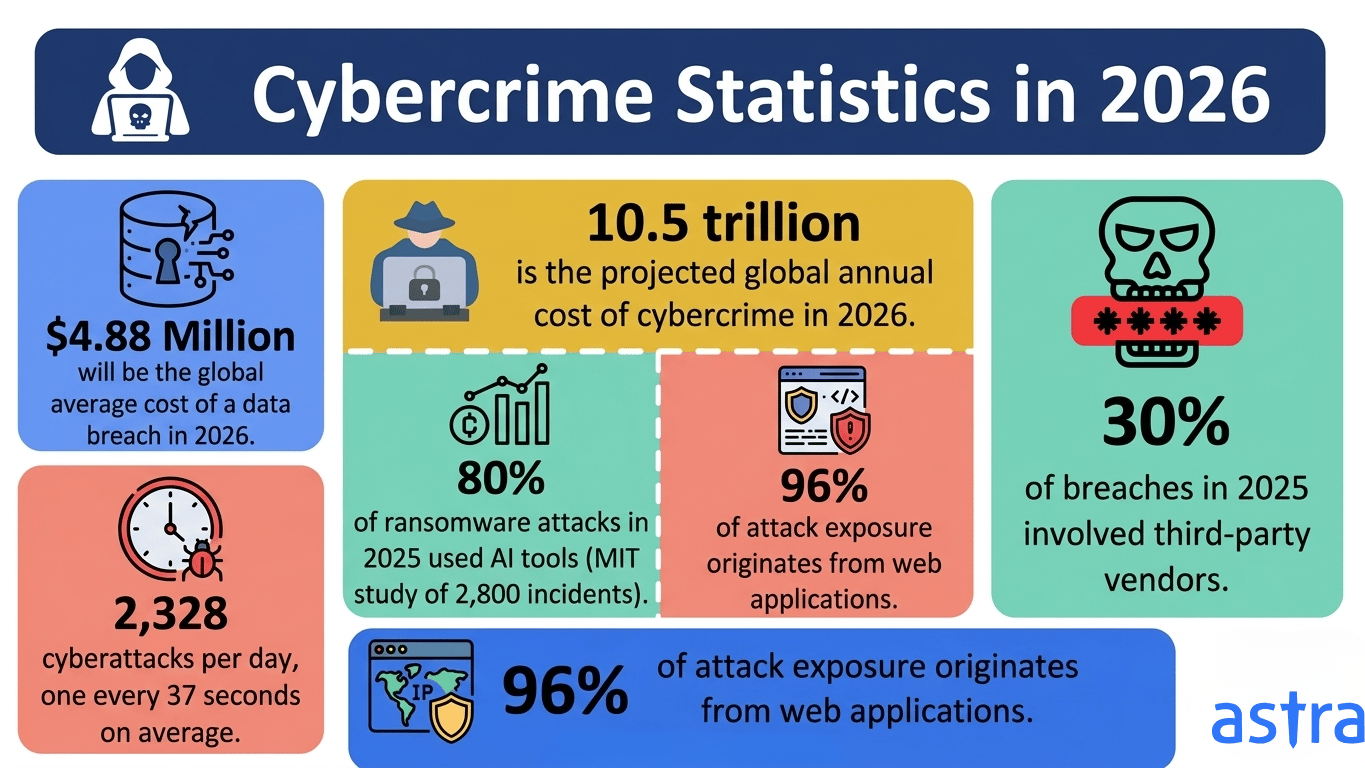
80% of ransomware attacks in 2025 used AI tools (MIT study of 2,800 incidents)
From deepfake phone calls to AI-generated spear-phishing campaigns, AI has become embedded in the ransomware attack chain. Attackers use it to identify high-value targets, craft convincing lures, and generate malware variants that evade signature-based detection.
49% increase in active ransomware groups in 2025
The explosion of Ransomware-as-a-Service platforms has lowered the barrier for new criminal operators. Pre-built ransomware kits, payment infrastructure, and profit-sharing models mean someone with no technical background can launch a campaign. The number of distinct extortion groups reached a record 85 in Q3 2025 alone.
30% of breaches involved third-party vendors in 2025(Verizon 2025 DBIR)
This doubling is driven by both the growth of SaaS integration ecosystems and attackers deliberately targeting smaller, less-defended vendors as pathways into their larger clients. If your vendor has weaker security than you do, they’re your weakest link, regardless of your own controls.

How often does cybercrime happen?
Cybercrime happens constantly. The bigger issue is that attackers no longer need sophisticated exploits. Most breaches come from the same predictable weaknesses: web exposure, API leaks, and misconfigurations.
Our report also highlights this critical blind spot: manual pentesting uncovered nearly 2000% more unique vulnerabilities than automation alone. That gap translates directly into real-world financial risk, with an estimated $2.88 billion in potential losses. Cyberattacks now occur at a pace at which a single organization can be probed, scanned, and exploited within minutes.
Over the last two decades (2001–2021), cybercrime impacted at least 6.5 million victims and caused estimated losses of nearly $26 billion, even before today’s explosion in ransomware and identity-based attacks.
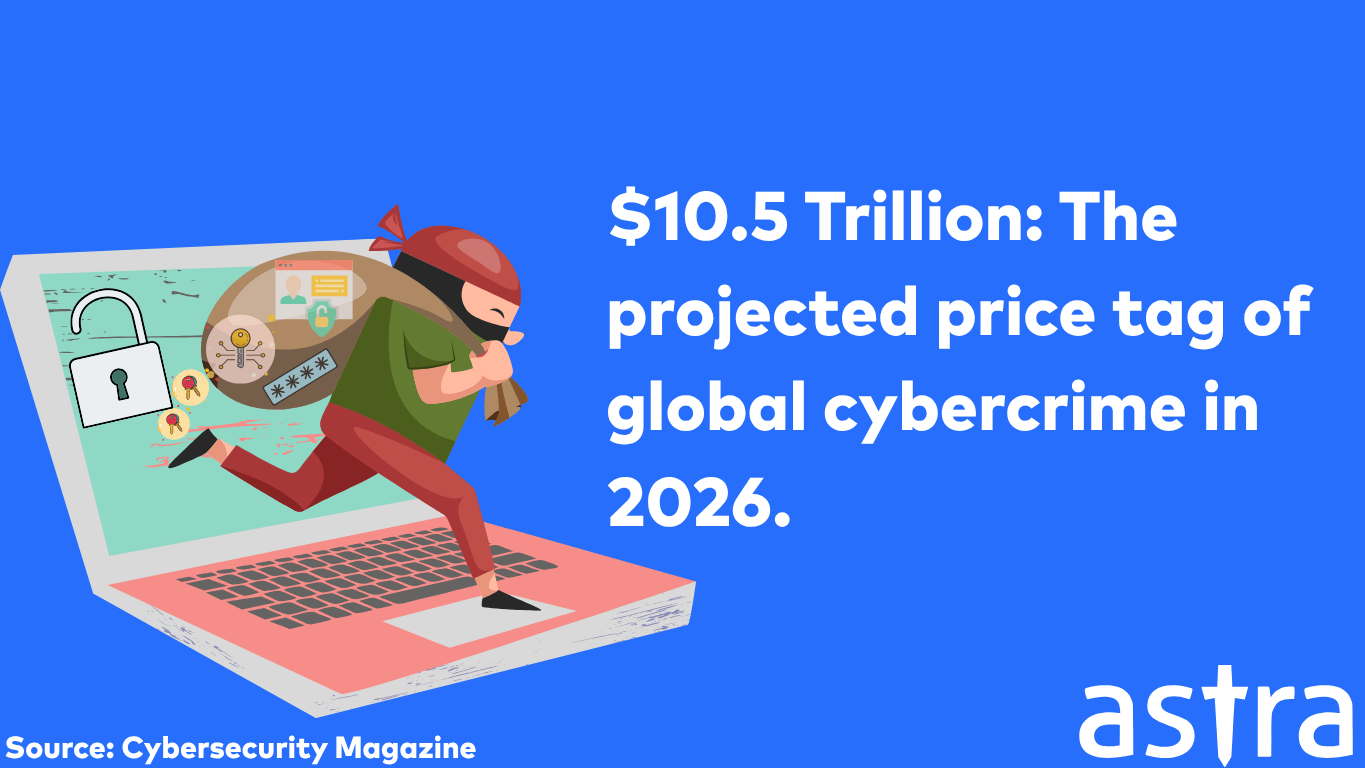
$10.5 trillion is the projected global annual cost of cybercrime in 2025
That’s more than the GDP of every country on earth except China and the US. This number has been. This projection has been climbing roughly 15% per year for the last decade, driven by data breaches, financial fraud, ransomware, and long-term reputational damage.
And it’s grown from $3 trillion in 2015, a 250% increase in a single decade.
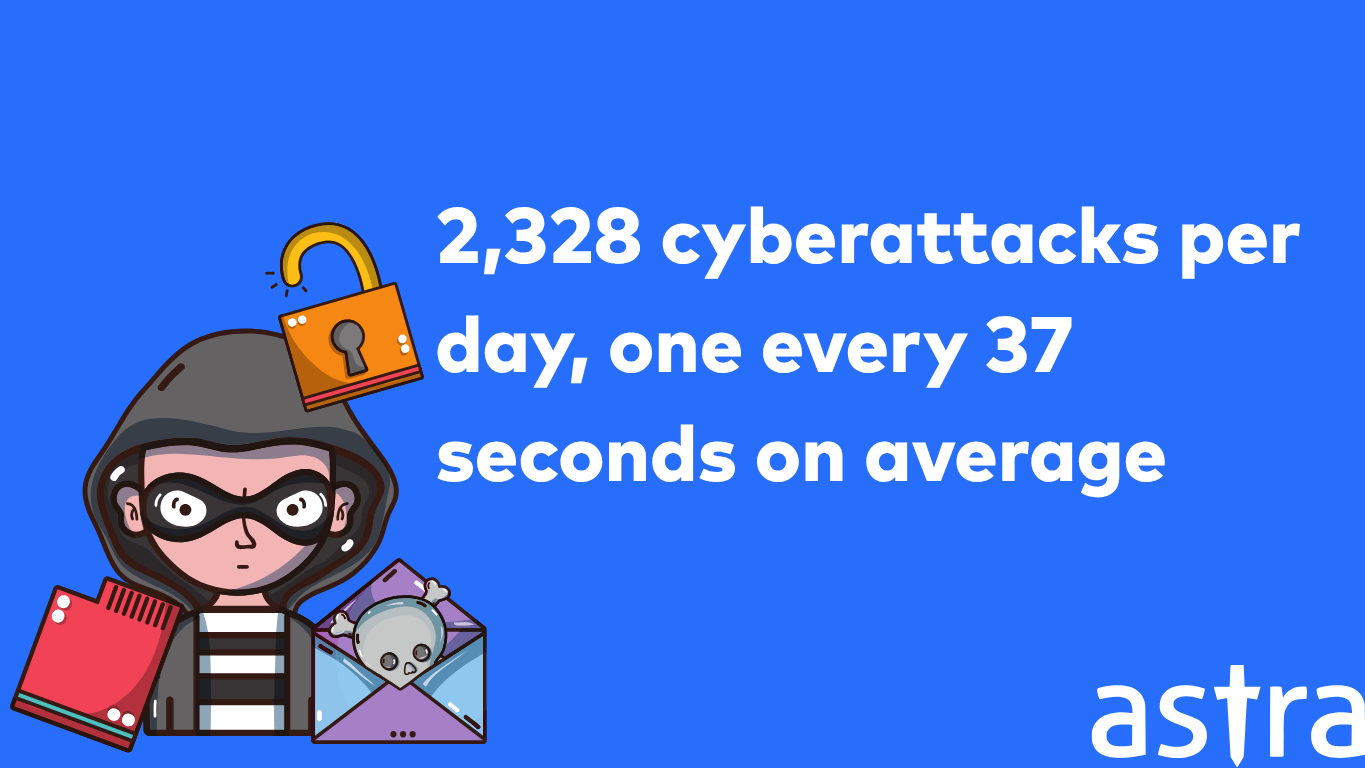
2,328 cyberattacks per day, one every 37 seconds on average
These aren’t targeted operations. Most are automated bots and scripts scanning every publicly reachable IP address on the internet, looking for misconfigurations, exposed ports, and default credentials. A freshly deployed server can be discovered and probed within minutes of going online.
96% of attack exposure originates from web applications.
The modern attack surface is SaaS tools, APIs, cloud storage buckets, and the web-facing components of every piece of software an organization uses. Every new productivity tool adopted without a security review is a potential door left unlocked.
44% increase in attacks exploiting public-facing applications in 2025 (IBM X-Force 2026 Report)
IBM observed attackers increasingly exploiting basic authentication gaps rather than advanced exploits. As AI tools now scan for these weaknesses faster than human security teams can patch them. The vulnerability exploited in 2026 will be a routine negligence.
Download Key insights & cybersecurity predictions 2025 Free Report Now
(Based on Insights from 900+ Companies, 150K+ Scans & 800+ Manual Pentests)
What a breach actually costs in 2026
The headline figure of $4.44 million global average breach cost in 2025 understates the damage for most industries. And it obscures the enormous variance between organizations that catch breaches fast and those that don’t.
The average US breach cost in 2025 is $9.36 million
America sits at more than double the global average because of a unique regulatory environment: state-level notification laws, SEC mandatory disclosure requirements, HIPAA penalties for healthcare, PCI-DSS liability for payments, and an active plaintiff’s bar that turns breaches into class-action lawsuits. The technical cleanup is expensive. The legal aftermath is often worse.
$7.42 million — Healthcare average breach cost in 2025 (IBM Cost of Breach Report)
Healthcare has held the most expensive sector title for 13 consecutive years. Patient records sell for more on dark web markets than credit card data, hospitals face massive operational disruption when systems go down, and regulatory penalties under HIPAA pile on top.
3.4 million cybersecurity jobs unfilled globally in 2025 (Cybersecurity Ventures).
The shortage is most acute in cloud security, OT/ICS security, and threat intelligence, precisely the domains that matter most as organizations migrate infrastructure and as nation-state actors increasingly target critical systems. Building experienced security professionals takes years; the threat environment won’t wait.

$80.6 billion is the projected annual cost of software supply chain attacks by 2026 (Juniper Research).
The 2020 SolarWinds breach was the warning shot. Since then, every major CI/CD tool, open-source library, and SaaS integration has become a potential vector. With AI-powered coding tools accelerating software development and occasionally introducing unreviewed or hallucinated code, the pressure on supply chains is expected to intensify through 2026.
Only 37% of cybercrime victims involve law enforcement.
IBM data consistently shows that law enforcement involvement is associated with lower total breach costs despite average savings of $470,000 when they do. Agencies have developed meaningful capabilities: ransomware decryption tools, threat actor tracking, coordination with international partners, and, in some cases, seizure of ransomware infrastructure that eliminates the threat entirely.
0.05% is the estimated probability of detection and prosecution for cybercriminals in the US
This number explains the supply side of the cybercrime problem. The expected cost of getting caught is vanishingly small, the potential upside is enormous, and tools that lower the skill barrier keep arriving. Until that calculus changes, the volume of attacks won’t decline.
Only 33% of breaches are detected internally, and attackers disclose 27%.
Two-thirds of breached organizations learn about the intrusion from someone other than their own security team. That’s a fundamental statement about the state of internal monitoring.
Global Financial Impact
- Between 2024 and 2026, organizations worldwide will continue to incur billions in direct financial losses, recovery costs, and operational disruption from cybercrime
- Crypto-related cybercrime is expected to remain significant, with forecasts estimating annual losses of up to ~$30 billion by 2025 from scams, exploits, and fraud in digital asset ecosystems.
- Victims spend an average of 6.7 hours resolving cybercrime, totaling 2.7 billion hours lost globally
- Reports show that nearly 1 in 3 scam victims lose money when fraud originates through social platforms.
Ransomware in 2026
Ransomware has matured into a professional industry. Today’s ransomware operators maintain business hours, employ customer service representatives to help victims navigate payment portals, and issue press releases when negotiations break down. It’s a criminal enterprise running at a corporate scale. Ransomware is forecasted to cost victims $265 billion annually by 2031, up sharply from roughly $20 billion in 2021.
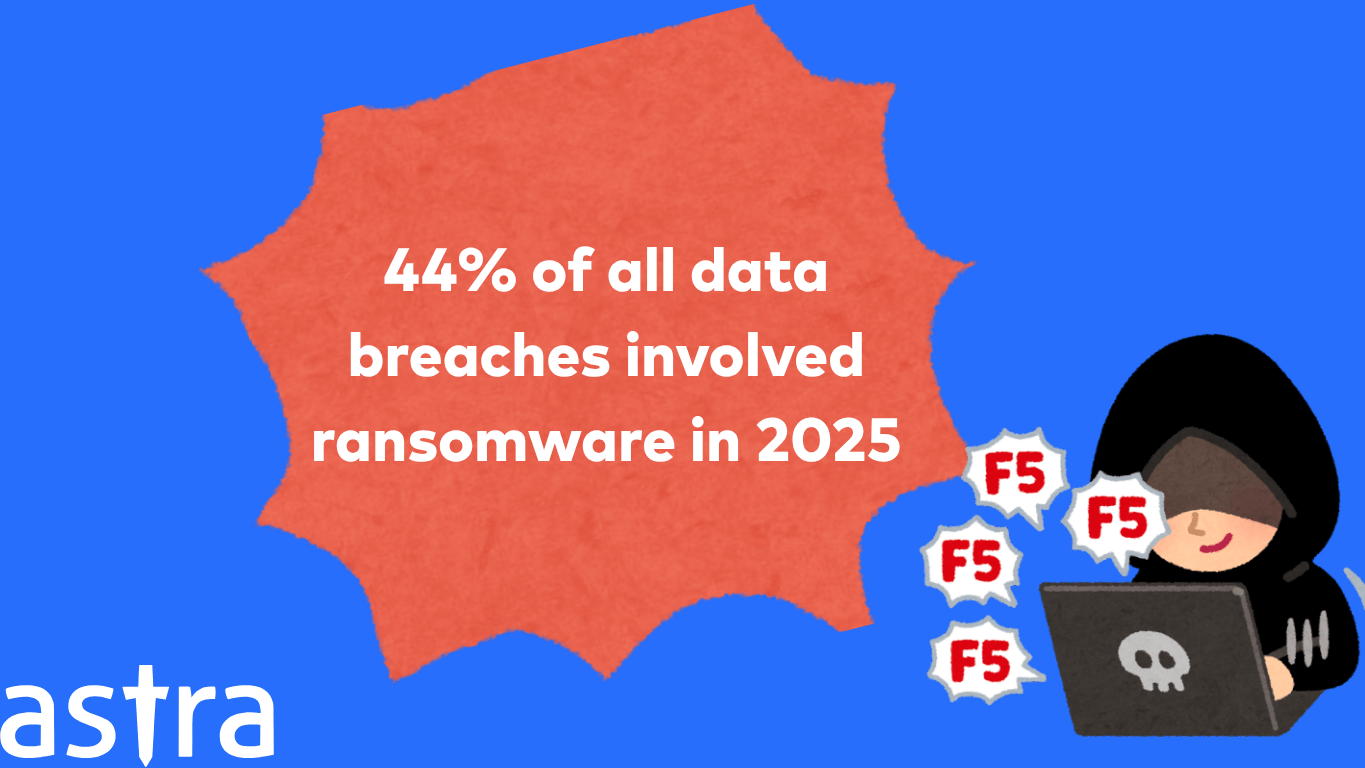
44% of all breaches involved ransomware in 2025, up 37% from the prior year (Verizon 2025 DBIR)
This is the highest penetration rate on record. Ransomware is the default threat profile for most organizations. The Verizon report noted the surge was driven partly by smaller, transient groups whose low-volume campaigns are harder to attribute and track. Industry reports indicate that ransomware is involved in roughly 1 in 5 cyber incidents globally.
88% of SMB breaches involve ransomware vs. 39% for large enterprises (Verizon 2025)
Small businesses are disproportionately victimized because ransomware operators know they’re less likely to have functional backups, dedicated incident response capabilities, or the resources to absorb extended downtime. They also pay faster. In Q4 2024, 75% of paying victims sent payment within 48 hours of the attack.
Average ransom payment: $1 million in 2025, down from $2 million in 2024 (Sophos).
The decline in payment size is a partial victory. More organizations are refusing to pay, 64% of victims declined in 2024, up from 50% in 2022. But refusing doesn’t mean safe: the recovery costs without paying averaged $1.53 million in 2025, still substantial. And 69% of businesses that paid were attacked again within a year.
Phishing in 2026
Phishing has been the dominant entry point for breaches for over a decade. Security teams have thrown awareness training, email filters, and multi-factor authentication at it. And yet it keeps working, because it targets human judgment under time pressure.
In 2026, the problem has gotten measurably harder because AI has removed the friction that once made phishing detectable.
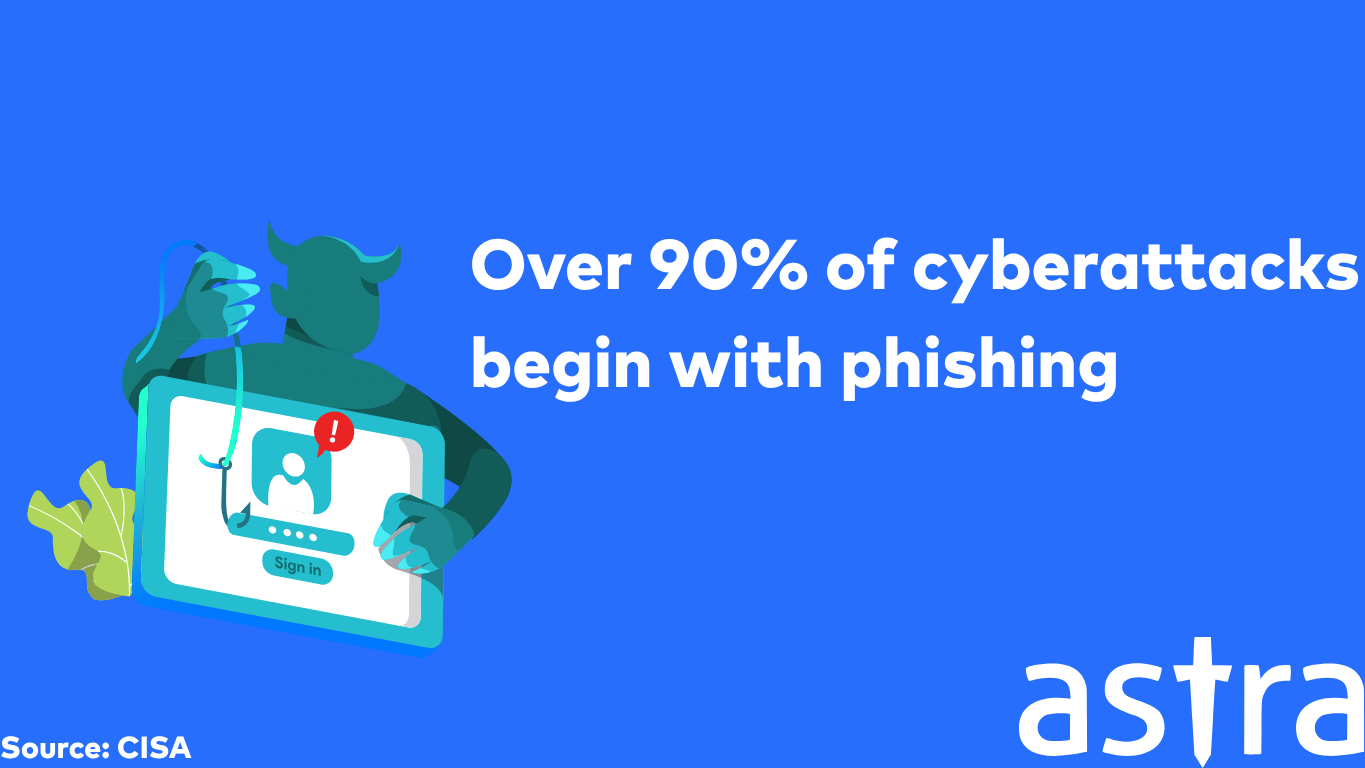
Over 90% of cyberattacks begin with phishing (CISA)
This has been true for years and remains true now. Every major attack vector, ransomware, BEC, credential theft, supply chain compromise begins with someone clicking something they shouldn’t have.
82.6% of phishing emails in 2025 contained AI-generated content (KnowBe4)
The shift happened faster than most researchers predicted. AI tools allow attackers to generate unlimited variations of convincing emails, personalized to individual targets, in any language, with no grammatical errors. The ‘Nigerian prince’ era of obviously fake phishing is effectively over.
3.8 million phishing attacks recorded across 2025 (APWG)
Attackers are now running both high-volume spray campaigns using AI-generated content and highly targeted spear-phishing operations against specific executives, often simultaneously, against the same organization.
BEC attack costs $4.67 million per incident (Viking Cloud 2025)
BEC has cost businesses more than $55 billion over the past decade, making it one of the most consistently devastating attack categories on record. The attacks typically involve some combination of email account takeover, domain spoofing, or executive impersonation, all aimed at redirecting a single large wire transfer.
Final Thoughts
Cybercrime in 2026 is a daily reality, and its surge has been increasing in recent years. Attacks and attack vectors are growing at a rapid and faster pace, costing more and causing more serious damage across industries worldwide.
Phishing, ransomware, and credential theft remain the biggest drivers, and attackers are now exploiting human trust and identity more than technical vulnerabilities.
Healthcare, finance, SaaS, government, and critical infrastructure continue to be top targets, while SMBs suffer the most due to limited security resources. Slow breach detection only makes the impact worse, increasing downtime, financial loss, and compliance risk.
The takeaway is clear: cybercrime is a business risk, not just an IT issue. Organizations that prioritize proactive security, faster detection, and stronger identity protection will be far better prepared for what’s coming.
FAQs
Why is cybercrime increasing and how much has cybercrime increased?
Cybercrime is increasing continuously since cybercriminals are difficult to catch and since the COVID pandemic, the opportunities for cybercrime have increased to an all-time high, by 69% in 2020.
How many cyber crimes are committed each year?
With over 2328 attacks per day, an average of 8,00,000 occur in a year and on average, there is a hacker attack every 39 seconds. It is estimated that 2023 will face around 33 billion account breaches.
Who does cybercrime happen to?
Cybercrime can be targeted at any individual or organization of any size that has assets in cyberspace. It is perpetuated by cybercriminals for monetary gain or other malicious intent.