The software supply chain has become a prime target for cyberattacks, with proprietary and commercial code facing significant security, regulatory, and operational risks. The financial toll is staggering, with estimates projecting costs to rise from $46 billion in 2023 to $138 billion by 2031.
The recent Move It attacks are a stark reminder of the catastrophic consequences of supply chain breaches. In this heightened threat landscape, securing your infrastructure alone is insufficient. APIs, the digital gateways to your systems, have emerged as critical vulnerabilities. This is where API security audit steps in.
What is an API Security Audit?
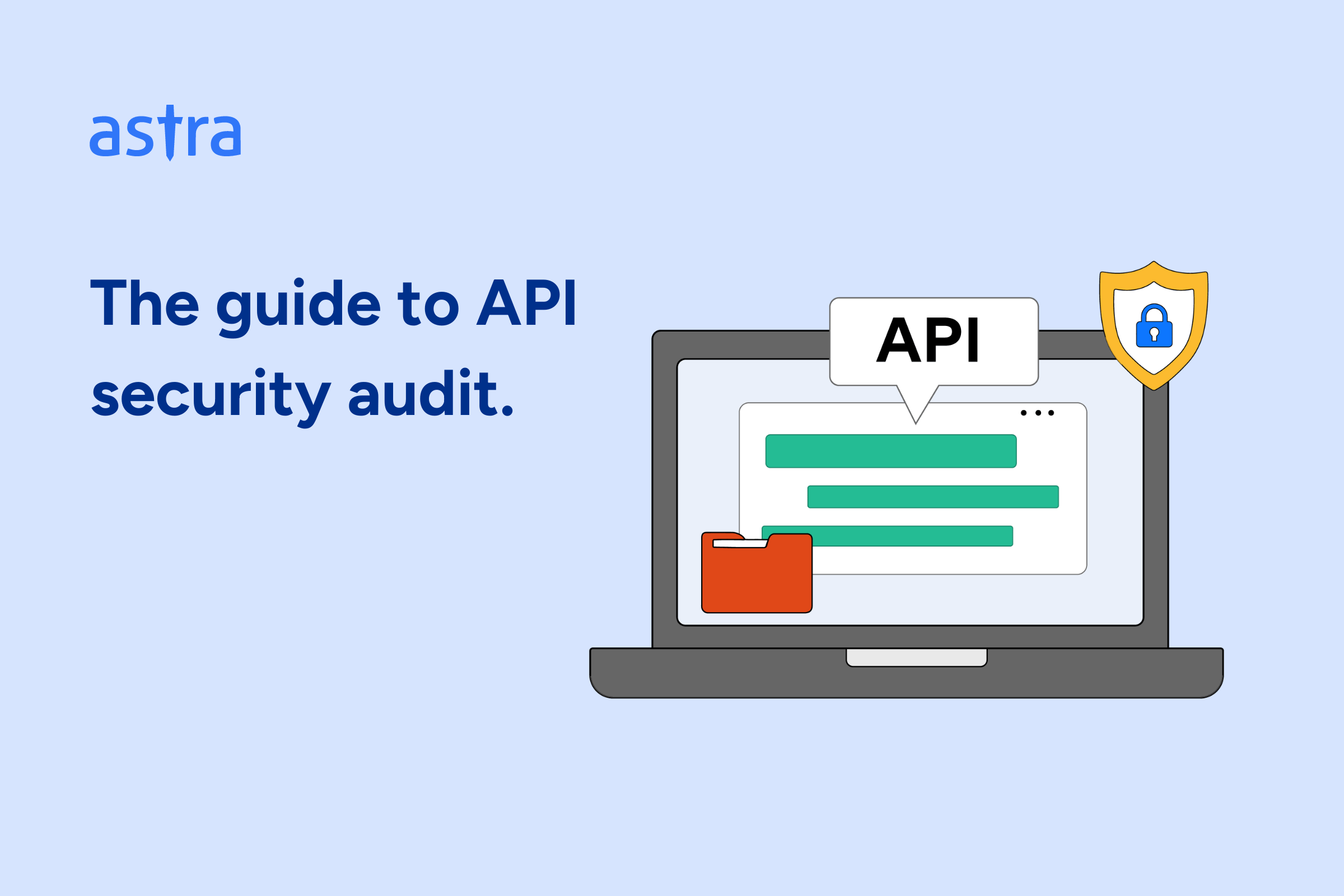
An API security audit is a comprehensive process of evaluating an application programming interface (API) to identify and assess potential security vulnerabilities. It involves static analysis of API definitions, dynamic testing of API endpoints, and assessment of security controls like authentication, authorization, input validation, error handling, and encryption.
Astra API Security Platform where offensive testing meets live traffic intelligence
- Complete API observeability
- 15000+ DAST test cases
- Risk classification & scoring

Importance of API Security Audit
Security Risks
API security audits thoroughly examine the endpoints your organization’s IT infrastructure consumes, identifying vulnerabilities that cybercriminals could exploit. They help your team proactively discover such existing CVEs and implement countermeasures to prevent breaches and data loss.
Compliance Mandates
Numerous industries are subject to stringent data protection regulations (e.g., GDPR, HIPAA, PCI DSS). Such API security and audit companies help you assess your compliance posture, especially against third-party risks, ensuring adherence to these mandates and avoiding hefty penalties.
Build Customer Trust
Consumers are increasingly concerned about data privacy. Demonstrating a commitment to security through regular internal and external audits strengthens customer confidence, especially in critical industries like finance, healthcare, and government contracts.
Impact on Business
Data breaches and supply chain attacks can lead to financial losses, reputational damage, and operational disruptions. API security audits help mitigate these risks, protecting your organization’s bottom line and ensuring business continuity.
API Security starts with visibility, you can’t secure what you can’t see. With Astra API Security Platform, you get:
- Complete API observeability
- Continuous offensive DAST tests
- AI-powered fixes, developer-first workflows
Phases of an API Security Audit
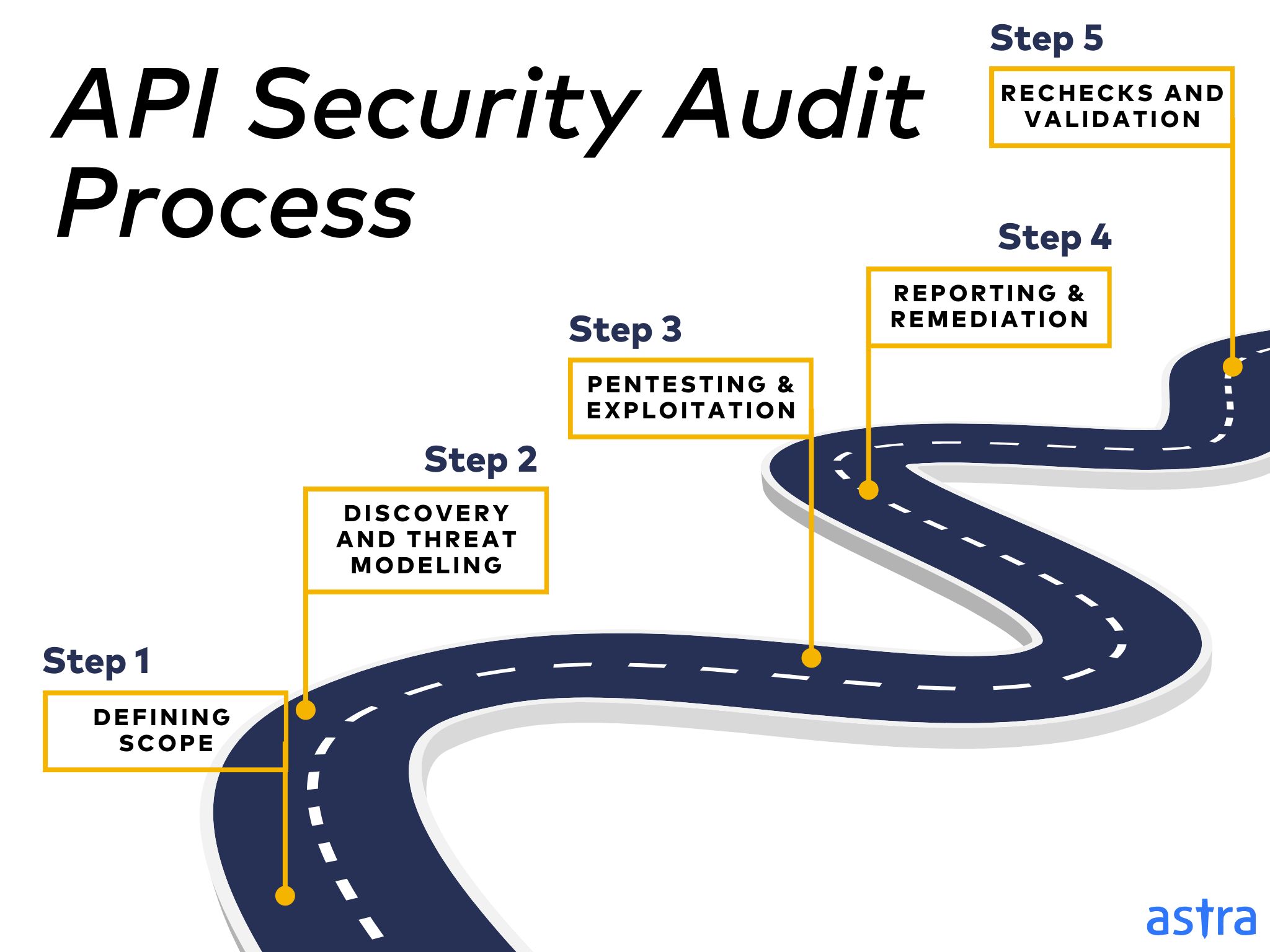
Phase 1: Defining Scope
The first step in an API audit is to define its boundaries clearly by identifying the specific APIs to be audited, outlining the objectives (such as vulnerability discovery, compliance checks, or overall security posture assessment), and determining the appropriate testing methodologies based on the API’s complexity and security requirements.
Phase 2: Discovery and Threat Modeling
Once the scope is defined, a comprehensive inventory of all APIs, including their endpoints, functionalities, and data flows, is created. Potential threats to the API, such as unauthorized access, data breaches, zombie APIs, shadow APIs, or denial-of-service attacks, are identified and prioritized based on their potential impact. This process is known as threat modeling.
Phase 3: Penetration Testing and Exploitation

In this phase, the API is subjected to rigorous testing to uncover vulnerabilities. Automated API security solutions are used to scan for common vulnerabilities, while manual testing is performed to identify those that automated API security tools might miss.
If vulnerabilities are found, controlled exploitation is conducted to understand their impact, related chain attacks, and potential consequences.
Phase 4: Reporting and Remediation
After the testing phase, a detailed report outlines the identified vulnerabilities, their severity, and recommended remediation steps. Vulnerabilities are prioritized based on their risk level, and a comprehensive remediation plan, including timelines and responsibilities, is developed.
Phase 5: Rechecks and Validation
Once vulnerabilities have been addressed, some vendors offer to restest APIs to verify the effectiveness of the patches released. Continuous monitoring and security testing are implemented to identify and address emerging threats and maintain an ongoing security posture.
Astra API Security Platform where offensive testing meets live traffic intelligence
- Complete API observeability
- 15000+ DAST test cases
- Risk classification & scoring
Top 3 API Security Audit Tools
| Features | Astra API Pentest | Probely | Akto |
|---|---|---|---|
| Audit Capabilities | Run 15000+ tests to uncover API vulnerabilities | Credit-based vulnerability scanner for APIs to detect 100+ bug types | Instant API penetration testing scanner with 150+ built-in test cases |
| API Vulnerability Scanner | Yes | Yes | Yes |
| Access Control Scanning | Yes | Yes | Yes |
| Compliance Scanning | GDPR, ISO 27001, SOC2, PCI-DSS, OWASP Top 10 API, and HIPAA | GDPR, ISO 27001, PCI-DSS, Owasp Top 10 API, and HIPAA | Owasp Top 10 API |
| Pentest Reports | Yes, personalized according to excutive roles | Yes | No |
| Publicly Verifiable Certificates | Yes | No | No |
| Workflow Integrations | Slack, GitLab, GitHub, Jira, Jenkins, and more | Slack, Jira, Azure DevOps, and more | Burp, Postman, and Har |
| Expert Remediation | Yes | Yes | No |
| Pricing Plan | Starts at $1999/yr | Open source with paid plans starting at $1,180/yr | Open-source |
How Can Astra Help with API Security Audit?
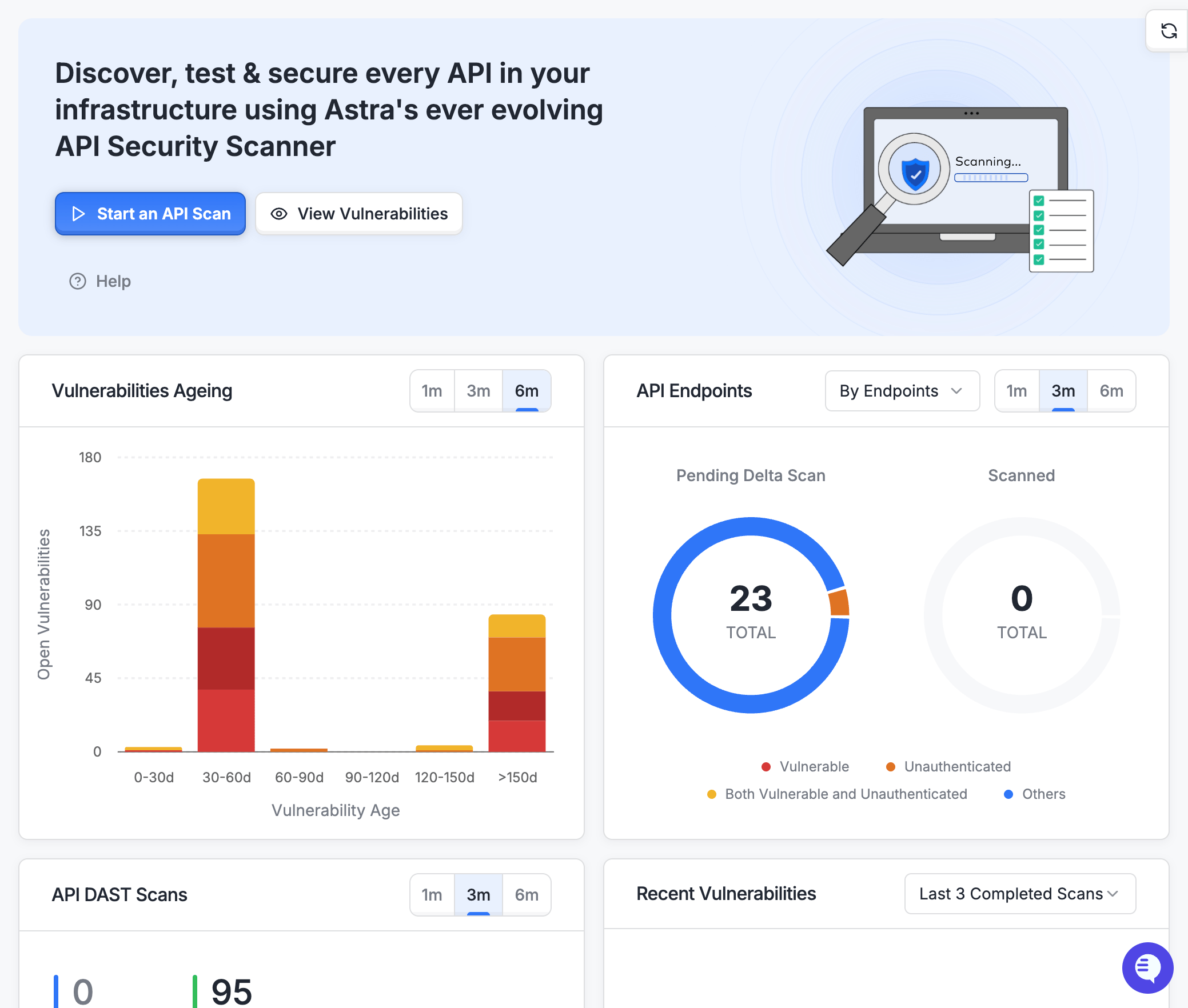
Key features:
- Modern DAST scanner with 15,000+ API-specific test cases, including OWASP API Top 10, BOLA, and IDOR.
- Discover active, dormant, and undocumented endpoints in under 30 minutes via runtime traffic analysis.
- Live API traffic capture through 10+ connectors (AWS, GCP, Nginx, Azure) for continuous observability.
- Validate fixes instantly with selective auto-rescans and focused retests.
Astra accelerates API security audits by combining fast discovery with depth of testing. Within minutes, teams get a risk-mapped inventory and a prioritized list of OWASP-aligned findings. Continuous DAST plus live traffic capture detects spec deviations, logic flaws, and shadow APIs that static reviews miss. Astra’s risk classification and scoring prioritizes fixes by business impact, and expert-validated reports are produced rapidly to support audit evidence.
Beyond detection, Astra closes the loop. AI-assisted logic testing reduces false positives and turns findings into developer-friendly remediation tasks via GitHub, GitLab, Jira, and CI/CD integrations. Selective rescans validate patches immediately, while PDF/CSV/JSON exports and compliance mappings help you prove SOC2, GDPR, and PCI readiness without slowing releases. Support for REST, GraphQL, mobile, and internal APIs, plus deep integrations with Postman and Burp Suite, ensures coverage across developer tools and reduces friction.
API Security starts with visibility, you can’t secure what you can’t see. With Astra API Security Platform, you get:
- Complete API observeability
- Continuous offensive DAST tests
- AI-powered fixes, developer-first workflows
Final Thoughts
Simply put, while industry leaders and CXOs unanimously recognize API security audits as the cornerstone of defense against modern cyber threats, many organizations struggle with fragmented implementation.
These audits empower businesses to protect sensitive data, comply with regulations, and bolster customer trust by systematically identifying, assessing, and remediating vulnerabilities through 5 key phases and respective API security checklists.
But an audit is only as effective as its implementation, which is why choosing leaders like Astra, or Akto are crucial to your security posture.
FAQs
What is API data security?
API data security refers to the protection of sensitive information exchanged between applications through APIs. It involves measures like authentication, authorization, rate limiting, encryption, and proper error handling to prevent unauthorized access, data breaches, and other security threats.