
Key Takeaways
- ABHA is most vulnerable to API exploits, IAM misconfigurations, insecure cloud setups, and third-party integrations requiring continuous, not periodic, assessments
- Astra Security, Tenable Nessus, and IBM Guardium lead as the most ABHA-ready VAPT solutions, with strong compliance and cloud-native capabilities.
- VAPT ABHA is about aligning with healthcare-specific threats, scaling securely, and ensuring uninterrupted patient care.
- Prioritize partners with proven expertise in healthcare API security, zero-impact testing, and compliance with India’s DPDP Act and HIPAA.
As of February 6, 2025, India has over 740 million Ayushman Bharat Health accounts
(ABHA), and close to 500 million health records linked with ABHA. Moreover, this architecture caters to more than 1,59,000 healthcare facilities and the personal data of over 6,00,000 professionals (under the HPR), respectively, with five digital foundational pillars:
- Ayushman Bharat Health Account (ABHA)
- ABHA Mobile App
- Health Facility Registry (HFR)
- Health Care Professional Registry (HPR)
- Unified Health Interface (UHI)
Top VAPT Service Providers for ABHA
- Astra Security
- QualySec Technologies
- WeSecureApp
- Tenable Nessus
- Orca Security
- IBM Guardium Vulnerability Assessment
While this initiative aims to provide inclusive, seamless, affordable, and efficient healthcare services, the fact that cyber incidents on Indian government entities have risen exponentially by over 138%, from 2019 to 2023, can’t be overlooked.
With this piece, we aim to analyse the best VAPT service providers for ABHA that can help address its nuanced security requirements. This assortment is specifically tailored to the sphere of cybersecurity in the healthcare and government sectors, encompassing their scale, technical expertise, and capabilities in the continuous assessment of evolving digital health infrastructures.
Along with that, we offer precise insights into how you can select the right VAPT partner for ABHA, along with what questions will help you secure the best VAPT service provider for ABHA.

Why Astra is the best in Third-Party Pentesting?
- We’re the only company that combines automated & manual pentest to create a one-of-a-kind PTaaS platform with SOC 2 vulnerability tags.
- Vetted scans ensure zero false positives. to avoid delays.
- Our intelligent vulnerability scanner emulates hacker behavior with 10,000+ tests to help achieve continuous compliance
- Astra’s scanner helps you simplify remediation by integrating with your CI/CD
- Our platform helps you uncover, manage & fix vulnerabilities in one place
- We offer 2 rescans to help you verify ptaches and generate a clean report
- Trusted by the brands you trust like Agora, Spicejet, Muthoot, Dream11, etc.

What are some Common Threats ABHA Service Providers Help With?
A few threat vectors under ABHA’s vast threat landscape include:
API Security Vulnerabilities: With over 3,63,000 health facilities accessing ABHA through APIs, potential threats are more than a handful:
- Lack of resource-limiting
- Splintered authentication
- Imprudent data exposure
- Hi-tech injection attacks targeted at multiple healthcare data repositories.
IAM loopholes: Managing authentication and authorization for over 5,60,000 healthcare professionals and millions of citizens, IAM-related vulnerabilities are sitting ducks. A few include :
- Unauthorised access to sensitive health records
- Privilege escalation attacks
- Identity theft on a national scale
Data Transmission Security:
- Inadequate encryption
- Man-in-the-middle attacks,
- Data tampering occurs during transmission amongst healthcare providers and also between medical devices.
Cloud Infrastructure and Mobile and Web Application Vulnerabilities:
- Misconfigured security groups
- Inadequate access controls
- Insecure data storage
- Weak cryptographic implementations
- insufficient transport layer security
- Social and reverse engineering vulnerabilities.
Third-Party Integration Risks: This ecosystem interweaves, via digital threads, numerous healthcare providers, diagnostic centers, and pharmaceutical companies, creating extensive third-party risk exposure, mandating a comprehensive and scalable vulnerability assessment
This is where vulnerability assessment and penetration testing become indispensable as a critical security control tool for ABHA’s infrastructure.
Comparative Analysis of the Best VAPT Service Providers for ABHA/ABDM
| Provider | CVE Detection | API Security | Cloud Security | Compliance | ROI | Deployment |
|---|---|---|---|---|---|---|
| Astra Security | 5/5 | 5/5 | 4/5 | 5/5 | 5/5 | 2-4 weeks |
| QualySec Technologies | 4/5 | 3/5 | 3/5 | 4/5 | 4/5 | 4-6 weeks |
| WeSecureApp | 4/5 | 4/5 | 2/5 | 3/5 | 4/5 | 3-4 weeks |
| Tenable Nessus | 4/5 | 3/5 | 4/5 | 5/5 | 3/5 | 6-8 weeks |
| Orca Security | 5/5 | 4/5 | 5/5 | 4/5 | 2/5 | 4-6 weeks |
| IBM Guardium VA | 5/5 | 4/5 | ⅘ | 5/5 | 3/5 | 6-8 weeks |
Top VAPT Service Providers for ABHA
1. Astra Security [G2 Rating: 4.6/5 (165 reviews)]
Key Features
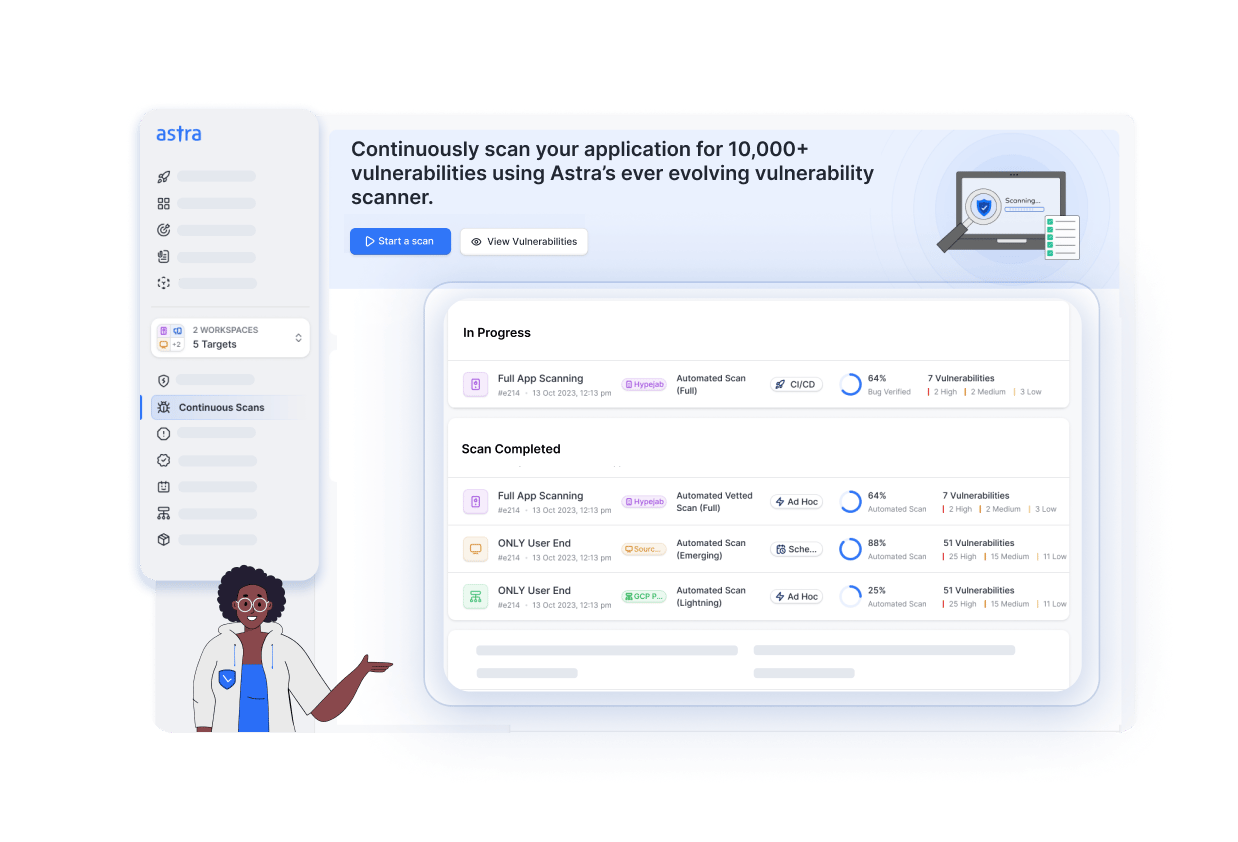
- Vulnerability Detection: Astra’s AI-powered scanning engine is capable of identifying 9,000+ vulnerability types while guaranteeing zero false positives.
- API Security Assessment: Includes SOAP APIs, GraphQL, REST, and other protocols, with a focus on multiple healthcare data exchange protocols.
- Cloud Security Assessment: Microservices architecture and container security evaluations for multi-cloud settings for Google Cloud, Azure, and AWS.
- Compliance Reporting: 12+ international healthcare sector frameworks, including HIPAA, PDPA, GDPR, HITRUST, etc.
- Deployment & Integration: JIRA, Slack communication channels, and tech stack integration and continuous monitoring capabilities to help you shift left.
- Cost: Starting at INR 16,000
Astra Security is a leading penetration testing company that provides tailor-made, scalable, and easy-to-integrate VAPT services covering your mobile and web applications, Cloud, IoT, and APIs. It’s guaranteed zero false positives, seamless tech stack integrations, and expert support help make cybersecurity simple, effective, and hassle-free for hundreds of businesses worldwide.
Moreover, its industry-specific AI test cases (including healthcare), world-class Astranaut Bot, and customizable reports are designed to make your experience smoother while saving you millions of dollars proactively. Not only that, Astra helps you stay compliant with over 12+ international healthcare regulatory frameworks, such as ISO/IEC, MHR Act, GDPR, HIPAA, PDPA, HITRUST, etc., via its framework-specific compliance checks
Built on an in-house developed Offensive Security Engine, with over 400+ security tests, Astra dives deep into key areas like:
- IAM configurations
- Network security
- Logging and monitoring
- Cloud virtual machine configurations.
This thorough approach ensures your access controls, network isolation, encryption, and virtual machines align with established security best practices.
Astra also offers a detailed gap analysis and configuration review, following the CSA Cloud Controls Matrix (CCM), to identify which security controls should be implemented and by whom in your sensitive cloud supply chain.
Besides, all scans are performed in the cloud, ensuring no strain on your servers, and the vulnerability management dashboard allows your team to engage directly with our experts, facilitating smoother collaboration and remediation.
Top-rated by our customers





(Rated 4.6/5 on G2)

Pros
- Proven track record with healthcare and government sector clients
- Automated scanning capabilities reduce assessment time and costs
- A strong focus on API security is critical for healthcare interoperability
- Comprehensive compliance reporting for regulatory requirements
- Continuous monitoring capabilities for dynamic environments
Limitations
- Only a 1-week trial is available.
Why Choose Astra Security:
Astra’s specialized focus on healthcare cybersecurity, combined with automated vulnerability detection capabilities, makes it ideal for ABHA’s technical requirements. Their experience with Indian healthcare organizations and understanding of the local regulatory landscape, coupled with a diverse and experienced team, make them a perfect choice as your ABHA/ABDM VAPT service provider.
Astra Pentest is built by the team of experts that helped secure Microsoft, Adobe, Facebook, and Buffer

2. QualySec Technologies [G2 Rating: 4.5/5 (1 review)]
Key Features
- Vulnerability Detection: A multi-layered pentesting framework that covers network, application, and infrastructure security with a manual testing approach
- API Security Assessment: 6-step pentesting assessment with focus on healthcare sector protocols
- Cloud Security Assessment: known for laying special focus on government-grade security requirements
- Compliance Reporting: HIPAA, GDPR, PCI-DSS, etc. Holds expertise in catering to the compliance requirements of firms in the government sector.
- Deployment & Integration: Offers comprehensive red-team evaluations and nation-state threat modeling.
- Cost: ₹3,00,000 – ₹25,00,000 annually
Born in 2020, QualySec Technologies provides mobile and web applications, IOT, API, and cloud infrastructure pentesting services in the healthcare sector, besides catering to other sectors as well, such as Fintech, SaaS, E-commerce, etc.
Pros
- Experience in the government sector related to VAPT testing
- Has advanced threat modelling capabilities that cover nation-state threats
Limitations
- Higher cost structure as opposed to its competitors
- Lengthy timelines for comprehensive assessments
- Limited automated vulnerability scanning capabilities
Why Choose QualySec Technologies:
QualySec’s government sector experience and comprehensive approach to cybersecurity assessment, including process-based penetration testing and tailored pricing, provide them with a strong foundation in the healthcare world, particularly in government-backed healthcare facilities and infrastructure.
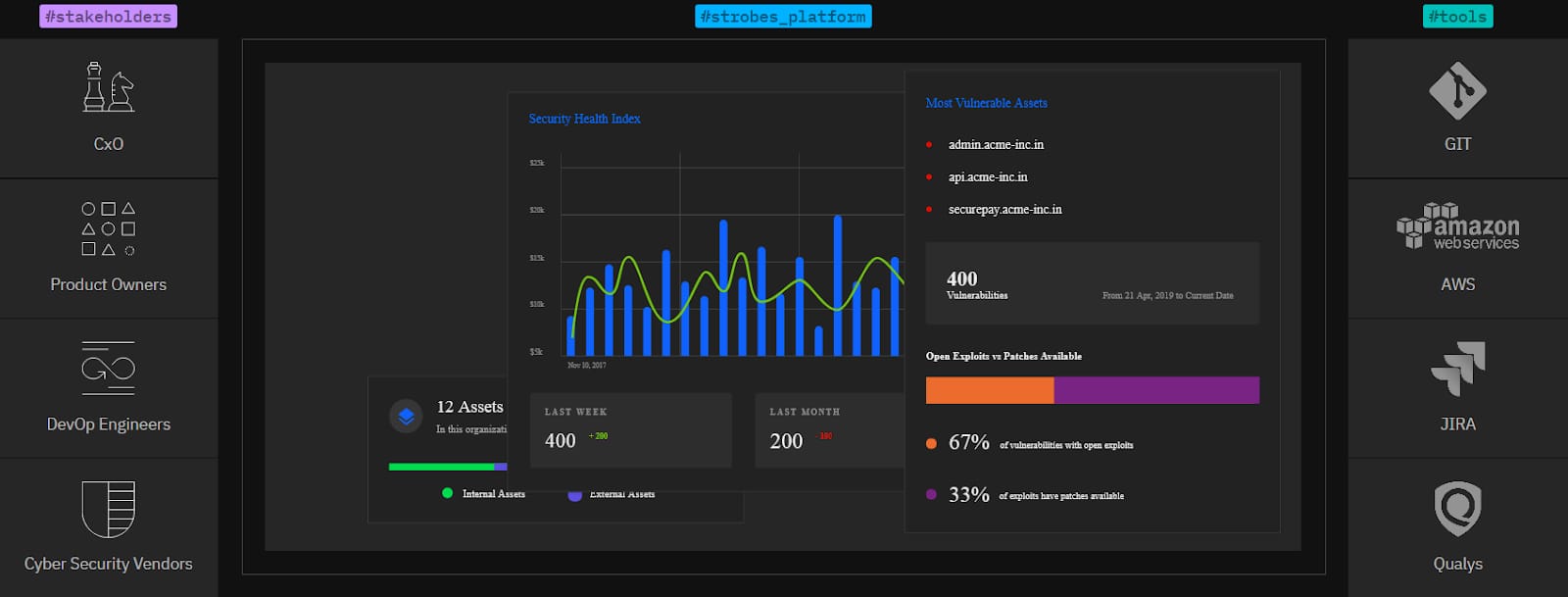
3. WeSecureApp [G2 Rating: 4.9/5 (1 review)]
Key Features
- Vulnerability Detection: Offers vulnerability management, remediation as a service, along with threat intelligence and smart shore sourcing
- API Security Assessment: Observes a hybrid approach that includes OWASP methodology along with their custom test cases to ensure an all-around assessment of APIs
- Cloud Security Assessment: IAM, data protection, along with application and infrastructure security
- Compliance Reporting: HIPAA, GDPR, UIDAI-AUA KUA compliance security and more
- Deployment & Integration: Offers DAST, SAST, Cloud, Secrets via multiple integrated tools
- Cost: CERT-In audit starts at ₹49,999
WeSecureApp’s offensive security solutions suite helps you break through data silos, perform continuous pentests, and proactively identify and rectify vulnerabilities, enabling you to go beyond just checklist compliance.
Pros
- Advanced automated security testing capabilities
- DevSecOps integration for continuous security
- Cost-effective automated compliance reporting
- Provide IT security training services
Limitations
- Limited experience with large-scale government projects
- Less emphasis on physical security assessment
- Newer firm with a limited long-term track record
Why Choose WeSecureApp:
WeSecureApp’s automated security testing platform and application security specialization align well with ABHA’s technology stack. Also, their DevSecOps capabilities and staff training support continuous security validation for dynamic healthcare environments.
No other pentest product combines automated scanning + expert guidance like we do.
Discuss your security
needs & get started today!
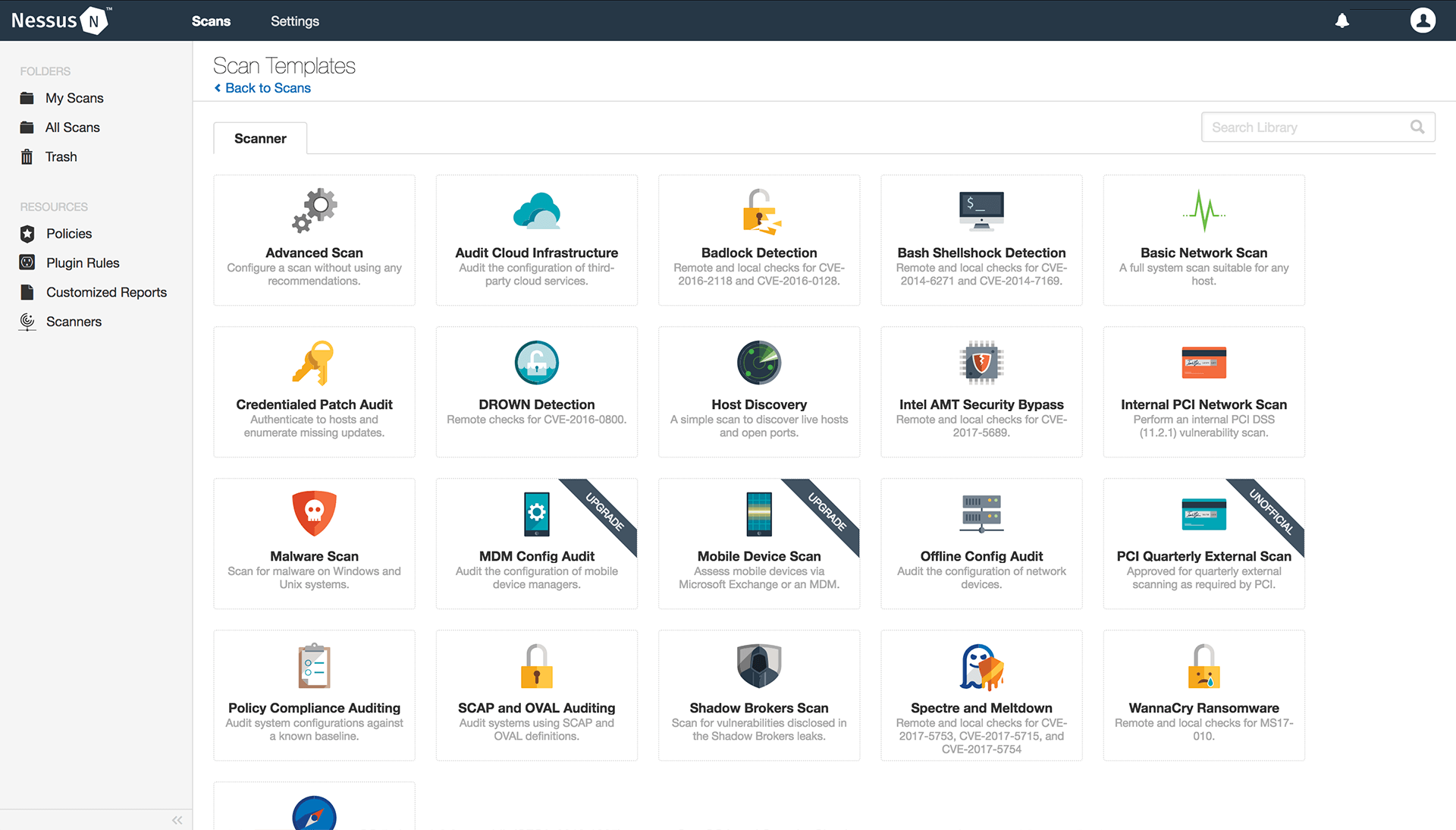
4. Tenable Nessus [G2 Rating: 4.5/5 (286 reviews)]
Key Features
- Vulnerability Detection: G2 ranked leader in risk-based vulnerability management—offering always-on-asset discovery and automated prioritization while remediating the same
- API Security Assessment: Offers standard API vulnerability scanning and healthcare-specific evaluations
- Cloud Security Assessment: Multi-cloud vulnerability scanning, specific AWS, Azure, and Google cloud security, and Kubernetes assessment,s along with container security
- Compliance Reporting: HIPAA, HITECH, and FDA medical device evaluations and reporting
- Deployment & Integration: ranked by G2 as a leader in terms of best usability, and setup in 2025.
- Cost: median buyer pays ₹15,00,000 annually
Tenable Nessus is built for and by security professionals, with products that are the de facto industry standards in the field of vulnerability assessments.
This level of leadership in the VA, with a focus on risk severity and not just its existence, is enabled by their point-in-time assessments that facilitate quick and easy identification and fixing of vulnerabilities. This includes software flaws, missing patches, misconfigurations, and malware across a wide array of OS, devices, and apps.
Pros
- Industry-leading vulnerability detection capabilities with comprehensive threat intelligence
- Specialized healthcare and medical device security expertise
- Scalable platform suitable for large healthcare networks
- Strong integration capabilities with existing security infrastructure
Limitations
- Quite expensive cost structure compared to regional providers
- Requires skilled security analysts for optimal platform utilisation
- Limited manual penetration testing capabilities
Why Choose Tenable Nessus?
Tenable understands that HIPAA, HITECH, and other regulations are compliance standards designed to secure patient data, not your firm’s reputation…you may be compliant and still not be secure.
Additionally, their medical device security expertise and regulatory compliance capabilities address the unique challenges of healthcare IT environments, providing security that goes beyond mere compliance ticks.
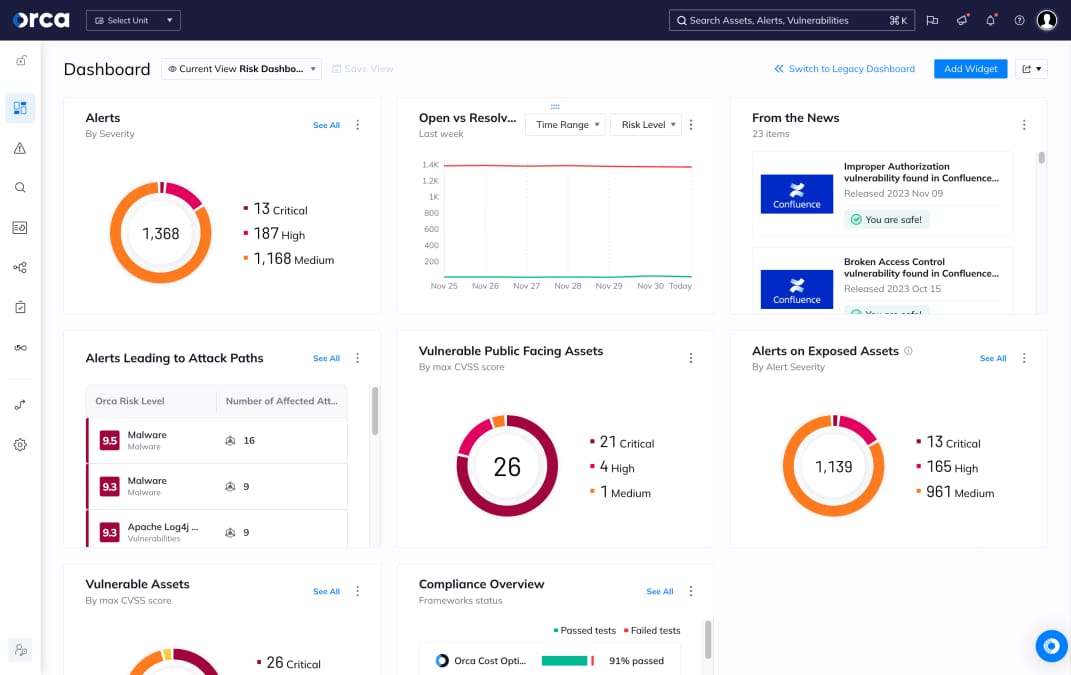
5. Orca Security [G2 Rating: 4.6/5 (221 reviews)]
Key Features
- Vulnerability Detection: Agentless cloud vulnerability assessment with AI-powered threat detection and behavioral analysis
- API Security Assessment: Cloud-native API security assessment with healthcare data protection validation
- Cloud Security Assessment: Comprehensive agentless cloud security across AWS, Azure, and GCP with runtime protection
- Compliance Reporting: Automated healthcare regulation compliance with continuous monitoring and audit trail generation
- Deployment & Integration: Offers cloud-native architecture requirements and enterprise integration
- Cost: median buyer pays ₹50,00,000 annually
Orca Security stands out in its cloud security niche with its agentless security platform, which offers comprehensive VAPT services for cloud-native healthcare applications with strong integration capabilities with existing enterprise security infrastructure.
As a CNAPP, Orca brings under its umbrella platform many point solutions, including CSPM, CWPP, Vulnerability management, multi-cloud compliance, and AI-SPM, among others.
Pros
- Specialized healthcare vulnerability assessment with medical device security expertise
- Advanced AI-powered risk prioritization reduces false positives
- Comprehensive compliance reporting with automated audit trail generation
Limitations
- Limited traditional network infrastructure assessment capabilities
- Requires cloud-native architecture for optimal effectiveness
- Among the highest-cost enterprise deployment VAPT service providers in the space, the most expensive on our list, at least.
Why Choose Orca Security:
Orca’s cloud-native approach and agentless security platform make them ideal for ABDM’s modern, scalable cloud infrastructure. Although their high pricing and focus on cloud security require consideration, as an ABHA/ABDM VAPT service provider needs to provide holistic assessments and services.
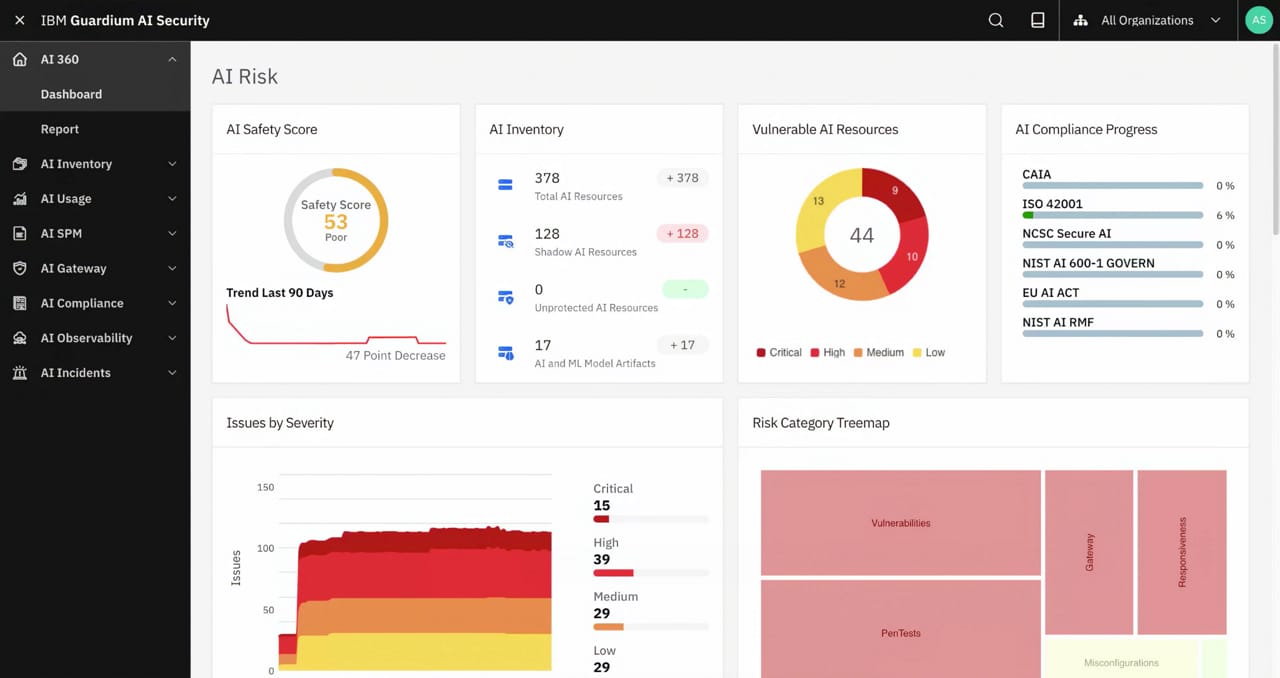
6. IBM Guardium Vulnerability Assessment [G2 Rating: 4.5/5 (12 reviews)]
Key Features
- Vulnerability Detection: Offers advanced scanning with 50,000+ vulnerability checks and AI-driven risk prioritization
- API Security Assessment: HIPAA-certified healthcare-focused API vulnerability assessment with EHR system integration
- Cloud Security Assessment: Database-focused cloud and on-premises vulnerability scanning with enterprise-grade assessment
- Compliance Reporting: Multi-framework compliance, including HITRUST, NIST, and healthcare-specific regulatory requirements
- Deployment & Integration: Provides enterprise-grade SIEM integration anda comprehensive enterprise support structure
- Cost: Perceived cost of minimum ₹8,50,000 annually
IBM Guardium Vulnerability Assessment represents IBM’s specialized vulnerability management platform designed for enterprise-scale healthcare infrastructure. It scans data warehouses, databases, both in the cloud and on-prem, to detect vulnerabilities and provide remedial actions based on benchmarks from CVE, CIS, STIG, etc.
The Guardium Vulnerability Assessment helps you secure your databases by identifying security gaps, such as weak passwords, missing patches, misconfigured privileges, excessive admin logins, and other behavioral vulnerabilities, including account sharing.
Pros
- Specialized healthcare vulnerability assessment with medical device security expertise
- Advanced AI-powered risk prioritization reduces false positives
- Comprehensive compliance reporting with automated audit trail generation
- Strong integration capabilities with existing enterprise security infrastructure
Limitations
- Requires dedicated security analysts for optimal platform utilization
- Limited penetration testing capabilities require supplementary services
- Higher learning curve for healthcare IT teams unfamiliar with IBM platforms
Why Choose IBM Guardium Vulnerability Assessment?
Named a leader in 4 categories in KuppingerCole Analysts’ Leadership Compass Data Security Platforms 2025, Guardium not only helps you achieve scalable and greater efficiency with a comprehensive enterprise support, but it also provides dynamic reports and precise recommendations to simplify your cybersecurity operations.

How to Select the Right VAPT Partner for ABHA?
Selecting the optimal VAPT partner for ABHA infrastructure demands a systematic evaluation that addresses the unique technical challenges facing India’s digital health ecosystem. With over 740 million health accounts and critical healthcare data at stake, a hastened or ill-thought-out choice of security partner can directly lead to national-level repercussions.
Technical Architecture Compatibility
Healthcare API Security Expertise: ABHA’s interoperability relies on secure API ecosystems that connect healthcare facilities, professionals, and patients. Your VAPT partner should demonstrate deep expertise in healthcare-specific API vulnerabilities, including FHIR protocol security, HL7 message validation, and healthcare data exchange encryption standards to begin with.
Your preferred vendor should offer a specialized healthcare API assessment framework that evaluates REST, GraphQL, and SOAP APIs against healthcare-specific attack vectors, helping to uncover and remediate API-specific vulnerabilities such as improper authentication, data exposure, and injection attacks across healthcare data repositories.
Cloud-Native Security Assessment: ABHA’s cloud infrastructure requires partners that are capable of assessing containerized microservices, Kubernetes clusters, and multi-cloud deployments. In today’s times, traditional network-based testing approaches fail to keep up with the speed, scalability, and volume at which cloud-native enterprise-grade applications operate..
Ensure that your provider’s security assessment capabilities encompass AWS, Azure, and Google Cloud platforms, providing deep configuration analysis, container security validation, and cloud-native vulnerability detection that aligns with ABHA’s scalable infrastructure requirements.
Regulatory Compliance Specialization
Multi-Framework Compliance Validation: ABHA is required to comply with the Digital Personal Data Protection Act (DPDP) 2023, as well as international standards such as HIPAA, GDPR, and HITRUST. Thus, your VAPT partner should be able to provide framework-specific compliance, detailed gap analysis, and remediation guidance tailored to Indian healthcare regulations.
Also, given the scale at which ABHA operates, automated compliance reporting helps reduce audit preparation time and ensures continuous regulatory alignment.
Healthcare-Specific Threat Modeling: Generic penetration testing approaches often fail to adequately address healthcare-specific attack vectors, including vulnerabilities in medical devices, theft of patient data, and attacks on the healthcare supply chain. A VAPT vendor thus needs to provide continuous and end-to-end assessment coverage and security.
Scalability and Performance Considerations
Zero-Impact Testing Methodology: ABHA’s 24/7 operational requirements demand non-intrusive testing approaches that don’t disrupt critical healthcare services. This requires a cloud-based scanning architecture that ensures zero server strain during vulnerability assessments—enabling continuous security validation with minimal downtime.
AI-Powered False Positive Elimination: Large-scale healthcare infrastructure generates thousands of potential security alerts. This is where AI-powered validation, which eliminates false positives, enables security teams to focus on genuine threats rather than sorting through false alerts. This precision is crucial given the velocity, veracity, and volume that ABHA drives.
Technical Integration Requirements
Existing Security Infrastructure Compatibility: SIEM platforms, security orchestration tools, and incident response systems are an indelible part of ABHA’s digital ecosystem.
Your VAPT partner must therefore be able to integrate seamlessly with existing security systems and provide comprehensive API integrations that support popular security tools, enabling the automated ingestion of vulnerability data into existing security workflows and incident response procedures.
Continuous Monitoring Capabilities: Healthcare threats evolve rapidly, requiring continuous security validation rather than periodic assessments. Thus, continuous assessments and monitoring need not even be given a second thought.
Questions to Ask Your ABHA VAPT Provider?
When reaching out to a VAPT vendor, ask questions that make sure it:
Specialises in Healthcare API Security
- “How does your platform assess FHIR R4 API implementations for healthcare interoperability vulnerabilities?”
- “What healthcare-specific attack vectors does your testing methodology cover beyond standard OWASP API Security Top 10?”
Offers Comprehensive Cloud-Native Security Assessment
- “What specific cloud misconfigurations do you identify that impact healthcare data protection?”
- “Can your platform assess serverless architectures and microservices security in healthcare deployments?”
Has AI-Powered Vulnerability Detection Capabilities
- “How do you eliminate false positives in vulnerability detection, particularly for healthcare-specific configurations?”
- “What AI/ML techniques do you employ to prioritize vulnerabilities based on healthcare threat intelligence?”
- “Can you demonstrate your platform’s ability to adapt to new healthcare-specific attack vectors?”
Covers Multiple Frameworks for Compliance Validation
- “How does your assessment methodology align with DPDP Act 2023 requirements for healthcare data protection?”
- “What specific compliance reports do you provide for HIPAA, GDPR, and HITRUST validation?”
Provides Healthcare-Specific Threat Intelligence
- “What healthcare-specific threat intelligence sources do you leverage for vulnerability assessment?”
- “How do you incorporate medical device vulnerabilities and healthcare supply chain risks into your assessment?”
- “Can you provide examples of healthcare-specific attack scenarios your platform simulates?”
Follows a Robust Zero-Impact Testing Methodology
- “How do you ensure vulnerability assessments don’t impact critical healthcare service availability?”
- “What measures do you implement to prevent testing activities from affecting patient care systems?”
Offers Continuous Monitoring and Real-Time Detection
- “How does your platform provide continuous security monitoring for dynamic healthcare environments?”
- “What real-time alerting capabilities do you offer for critical healthcare infrastructure vulnerabilities?”
- “Can you demonstrate your platform’s ability to detect configuration changes that impact security posture?”
Seamlessly Integrates with Existing Security Infrastructure
- “How does your platform integrate with existing SIEM, SOAR, and incident response systems?”
- “What API capabilities do you provide for automated vulnerability data ingestion?”
- “Can you demonstrate seamless integration with healthcare-specific security tools and workflows?”
Has Transparent Pricing
- “What is your complete pricing structure for ABHA-scale healthcare infrastructure assessment?”
- “How cost-effective are your continuous security validation options when juxtaposed with your competitors?”
Proactively Provides Technical Support and Expertise
- “What level of technical support do you provide for vulnerability remediation guidance?”
- “How do you ensure knowledge transfer to internal security teams?”
- “What ongoing support do you provide for evolving healthcare security requirements?”
Is Scalable as per the National Healthcare Infrastructure
- “How does your platform scale to assess infrastructure serving 740+ million health accounts?”
- “What performance benchmarks can you demonstrate for large-scale healthcare vulnerability assessments?”
- “How would you justify your readiness for a government-level healthcare implementation?”
Is Adept at Quick Deployments and Implementations
- “What is your typical deployment timeline for ABHA-scale healthcare infrastructure?”
- “How do you ensure minimal disruption during initial security assessment implementation?”
- “What training and onboarding support do you provide for healthcare security teams?”
This comprehensive list provides a holistic evaluation of your VAPT providers’ technical capabilities, regulatory compliance expertise, and operational suitability for ABHA.
It is one small security loophole v/s your entire website or web application.
Get your web app audited with
Astra’s Continuous Pentest Solution.
Final Thoughts
As modular technologies and smart medical devices enter this critical sector, new threats emerge regularly. This mandates a multi–strata security approach to secure the ABDM’s ABHA and other digital infrastructure pillars via combining scalable and shift-left VAPT assessments with persistent monitoring and agile incident response capabilities.
For Scalable Large-Scale Enterprise Deployments: Astra Security, Tenable Nessus, Orca Security, and IBM Guardian Vulnerability Assessment
For Specialized Healthcare Applications: Astra Security and QualySec Technologies
For Application-Centric Security: Astra Security and WeSecureApp offer focused application security testing services that suit ABDM’s web applications and patient portals, and are also cost-effective.
The success of ABHA and, thus, of the ABDM in the sphere of cybersecurity is not limited to continuous VAPT assessments and brandishing those compliance badges; it’s just a part of a long and wide-ranging prospect of what ABDM wishes to achieve for its populace.
FAQs
Is ABHA App Safe to Use?
The ABHA app handles sensitive health data for over 50 crore users but faces significant cybersecurity challenges. With 92% of healthcare providers experiencing cyberattacks in 2024 and 276+ million healthcare records breached globally, safety depends on robust security measures.
While ABHA complies with the DPDP Act 2023, users ought to use stronger passwords and enable two-factor authentication. While the cybersecurity teams need to monitor accounts regularly, keep the app updated, and keep databases updated and secured. This platform requires continuous security improvements through comprehensive VAPT services that Astra Security is known to provide.
What is the cost of VAPT?
VAPT service costs vary significantly based on scope and provider. Costs depend on infrastructure size, testing frequency, compliance requirements, and specialized healthcare security features needed. That being said, Astra Security provides comprehensive, AI-infused, yet manual, yet light on the pocket VAPT services.