
PCI pentesting is meant to validate your controls, but too often, it slows you down. Delays, scope creep, and misaligned teams leave findings unresolved as the audit clock continues to tick.
The right PCI compliance software removes the guesswork. Coordinating timelines, defining scope, collecting evidence, and supporting remediation help teams stay on track. Curated by experts for speed, clarity, integration, and efficiency, these 10 tools simplify PCI pentests and audits from start to finish.
10 Best PCI-DSS Compliance Software
- Astra Security
- Sprinto
- Qualys
- Orca Security
- Secureframe
- Drata
- Solarwinds
- Vanta
- Tripwire
- AlertLogic
What is PCI DSS Compliance Software?
PCI DSS compliance software is a security solution that helps organizations meet Payment Card Industry Data Security Standard requirements by automating vulnerability scans, monitoring cardholder environments, generating audit-ready reports, and continuously validating controls to protect payment card data from theft.
Best 10 PCI-DSS Compliance Tools in 2026
1. Astra Security [Get Started]

Key Features
- Capabilities: PCI Pentests for Web and Mobile Applications, Cloud Infrastructure, API, and Networks
- Manual Pentest: Yes
- Accuracy: Vetted scans for zero false positives
- Scan Behind Logins: Yes
- Cost: Starts at $5999
- Best for: SaaS companies, financial institutions, e-commerce businesses, medical companies
Astra Security is a PCI Qualified Security Assessor (QSA) and one of the few platforms that combines deep pentesting expertise with end-to-end PCI compliance support. Built for precision, using over 15,000 automated test cases and AI-assisted logic testing, Astra is layered with manual validation by certified experts to surface real risks.
From login-protected areas to complex cloud infrastructure, the PCI ASV handles full-scope testing with minimal disruption to your team. Its intuitive dashboard tracks vulnerabilities, remediation progress, and compliance readiness in one place, making it easy to align engineering, security, and compliance teams without friction.

Pros
- Run unlimited automated scans to detect emerging CVEs in real time
- Integrate seamlessly with Jira, GitHub, GitLab, Jenkins, and Slack
- Customize reporting for both executive and technical audiences
- Provide dedicated CSMs and private Slack/Teams channels for fast support
- Publish verifiable certificates via a built-in Trust Centre
- Offer tailored programs for early-stage startups
- Leverage an in-house team with OSCP, CEH, eWPTXv2, and other top certifications
Limitations
- Only a 1-week trial is available at $7
2. Sprinto
Key Features
- Capabilities: Continuous compliance monitoring, expert PCI-DSS guidance, automated workflows
- Manual Pentest: Yes
- Accuracy: False positives possible
- Scan Behind Logins: Yes
- Cost: Quote on request
- Best for: Financial institutions, online businesses, retailers, and other companies that require or want compliance
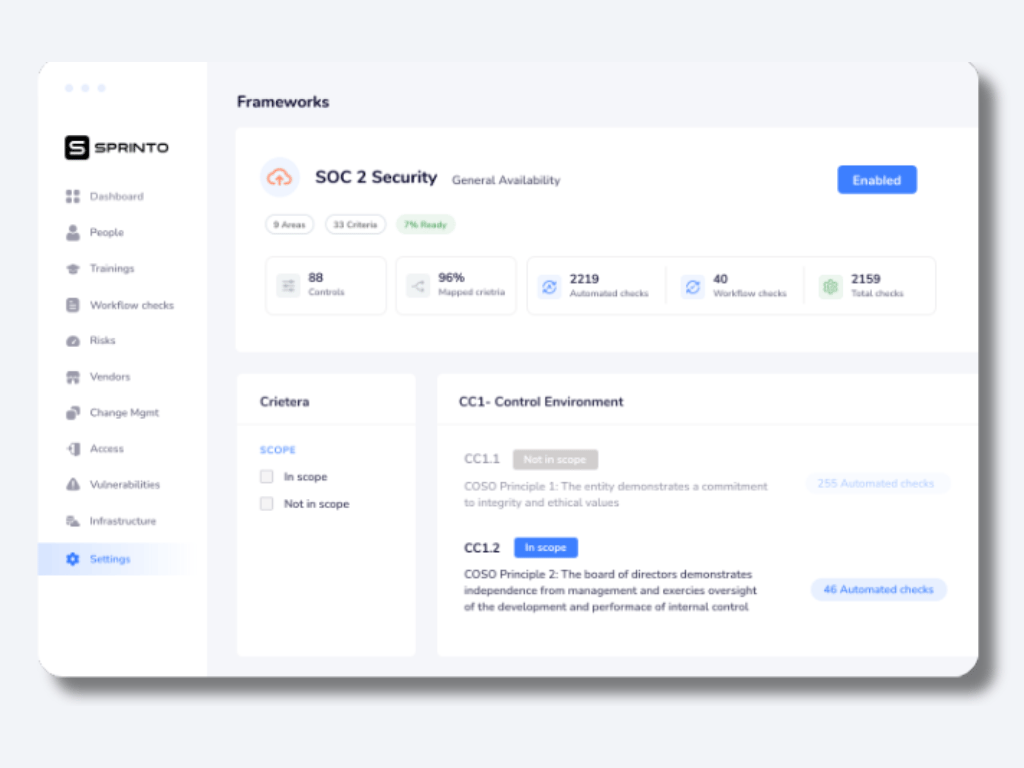
Sprinto is a PCI audit software with automation that brings a new speed to PCI-DSS compliance checks. Some of its features include a comprehensive compliance checklist and systems integration.
The tool works by just monitoring the system’s configurations. They provide live sessions that help your organization construct a faster implementation plan.
It streamlines processes by automating PCI compliance audits through pre-configured workflows and templates.
Pros
- Provides zero-touch audits.
- Automated evidence collection.
- Live sessions to construct better security plans.
Limitations
- Can be a bit difficult to navigate.
3. Qualys
Key Features
- Capabilities: PCI-DSS audits, compliance scans, and continuous monitoring
- Manual Pentest: No
- Accuracy: False positives possible
- Scan Behind Logins: Yes
- Cost: Quote on request
- Best for: Financial institutions, online businesses, retailers, banks
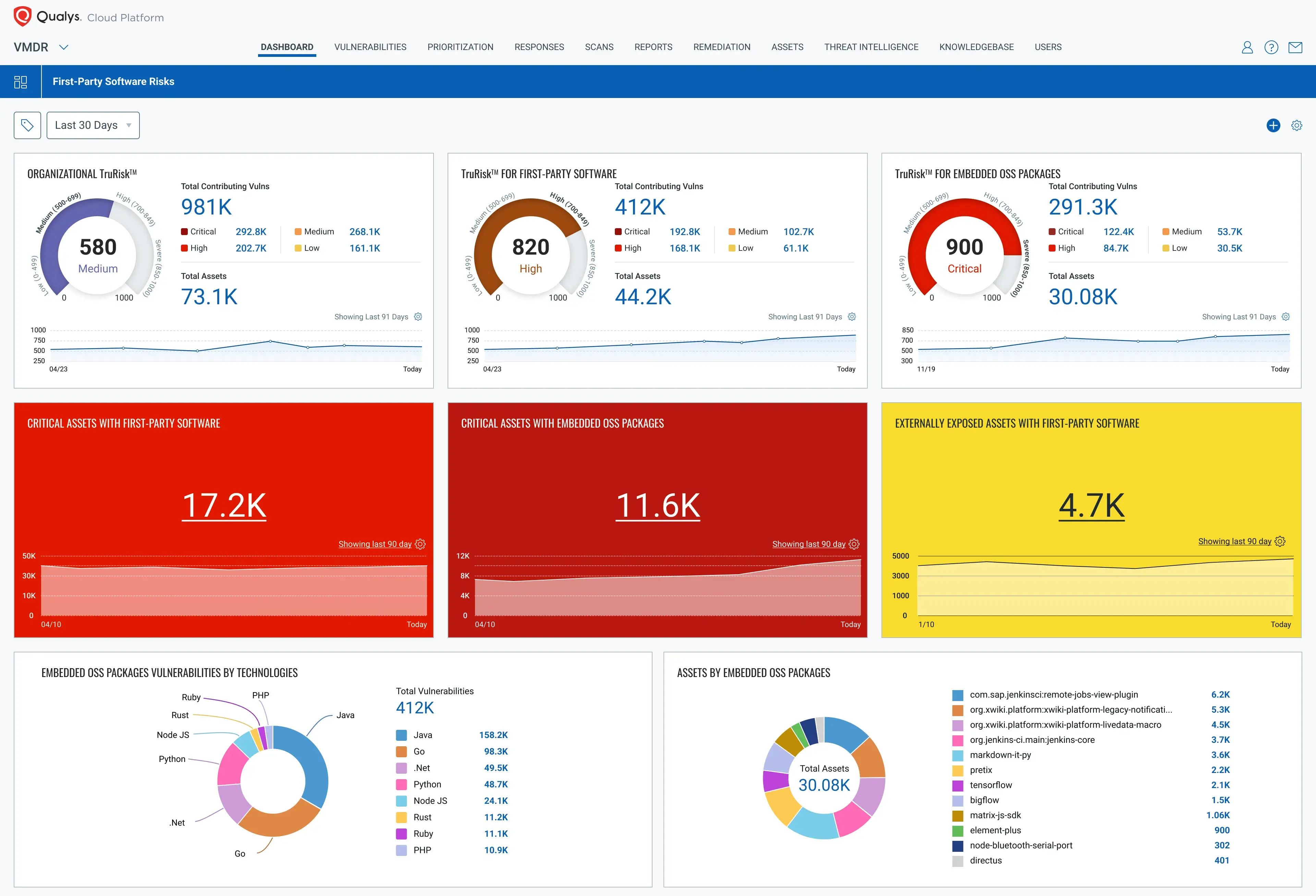
Qualys is one among the PCI-DSS audit tools that makes compliance data available for auditors and helps you inventory all IT assets on the cloud and view their security status.
The tool’s vulnerability scanner helps you take care of 97% of all the PCI-DSS requirements and automates the PCI compliance scan process.
It provides its cloud customers with continuous monitoring, vulnerability management, compliance solutions, and web application firewalls. These services make Qualys a top contender among PCI compliance vendors.
Pros
- Well-designed and easy-to-navigate user interface.
- Constant updates ensure the availability of current security measures.
Limitations
- Limited scheduling options.
4. Orca Security
Key Features
- Capabilities: Agentless cloud security with PCI-DSS v4 monitoring and continuous compliance
- Manual Pentest: No
- Accuracy: False Positives possible
- Scan Behind Logins: No
- Cost: Quote on request
- Best for: Cloud-first companies, fintechs, and modern SaaS platforms
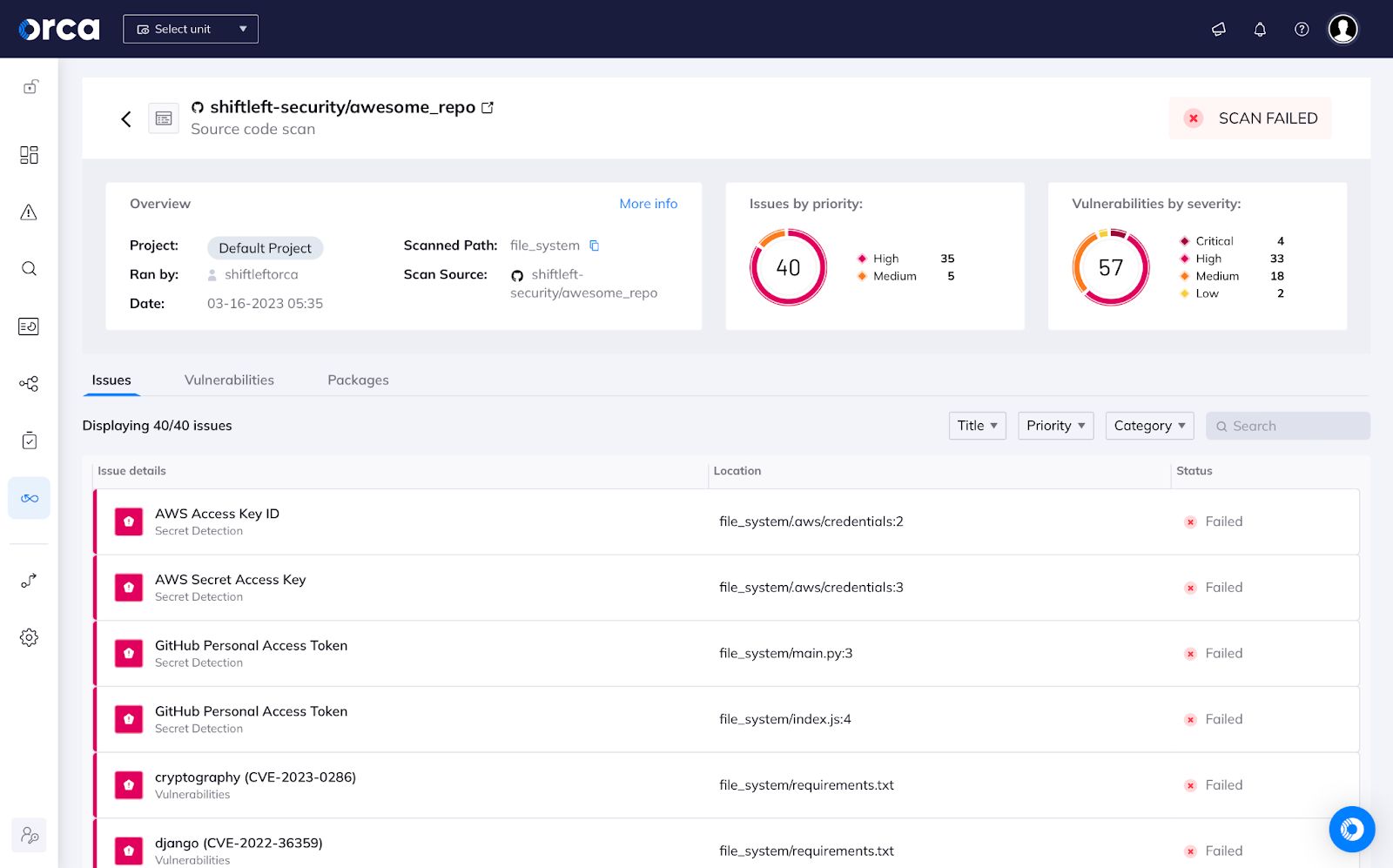
Orca Security supports PCI-DSS, over 40 CIS benchmarks, and other key security regulations.
Other features, such as data encryption, antivirus protection, potential intrusion detection, and threat detection, are also provided by this PCI-DSS compliance software.
Managed services from Orca involve a simple 3-step process: discovery, monitoring, and assessing the assets.
Pros
- Vulnerability management services for AWS, Azure, and Google platforms.
- Provides actionable data
- Provides data encryption and antivirus protection.
Limitations
- No upfront pricing provided
5. Secureframe
Key Features
- Capabilities: Automated PCI evidence collection, control monitoring, and QSA-ready reports
- Manual Pentest: No
- Accuracy: False Positives possible
- Scan Behind Logins: No
- Cost: Quote on request
- Best for: Cloud-first companies, fintech, and modern SaaS platforms
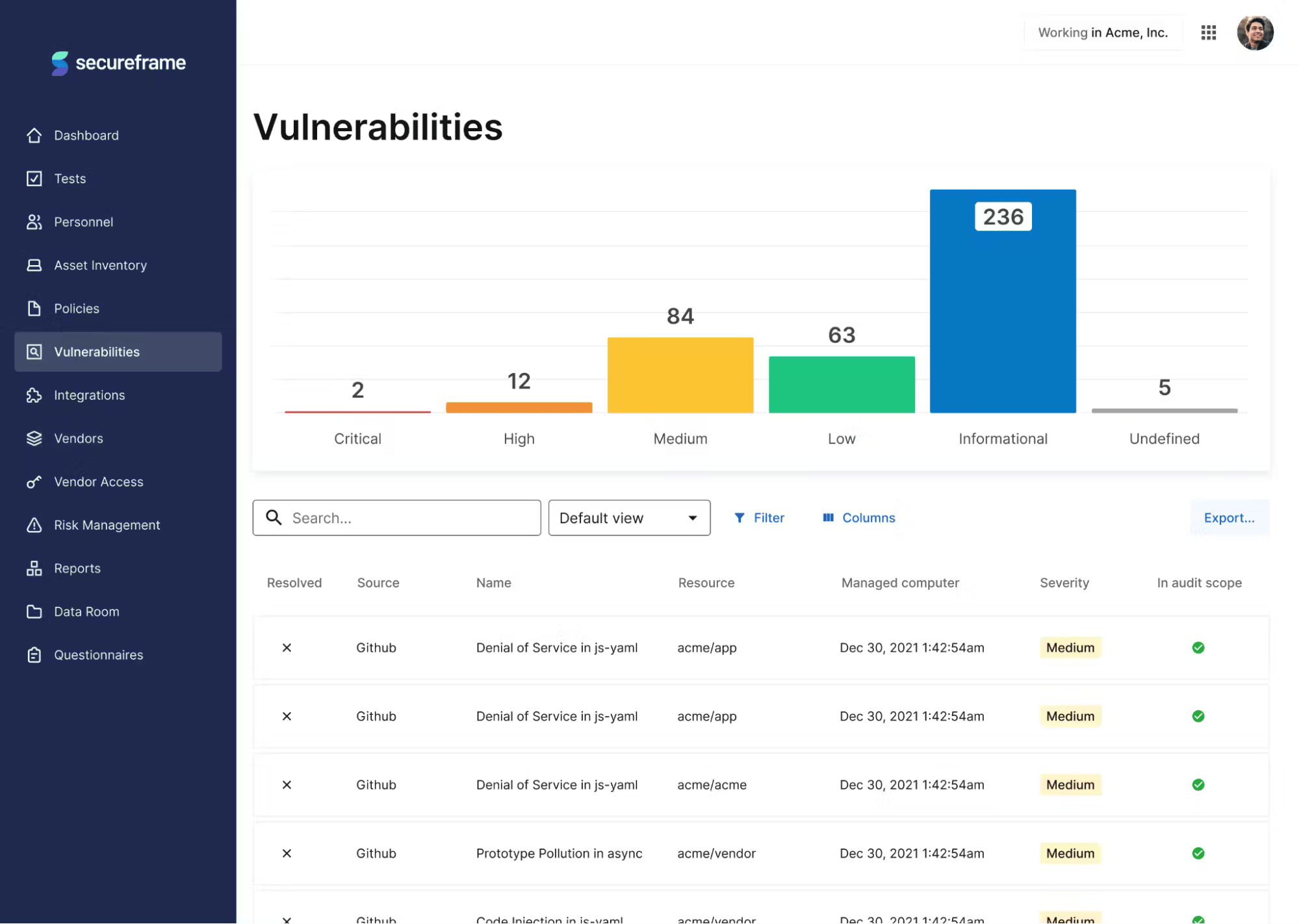
Secureframe assigns your company an account manager who ensures the build of an ISMS that is well-suited to your company’s needs and work processes.
This PCI vendor monitors over 150 cloud services and provides detailed vendor risk reports and automated evidence collection to ensure your company’s compliance.
The tool provides real-time alerts for vulnerabilities found and remediation steps to stay compliant.
Pros
- Easy access to information helps avoid the back-and-forth with auditors
- Saves time and effort.
- Reports facilitate easy analysis and remediation
Limitations
- Involves a potential learning curve
6. Drata
Key Features
- Capabilities: Continuous control monitoring and audit automation for PCI-DSS
- Manual Pentest: No
- Accuracy: False Positives possible
- Scan Behind Logins: No
- Cost: Quote on request
- Best for: Fast-growing companies automating PCI and SOC2
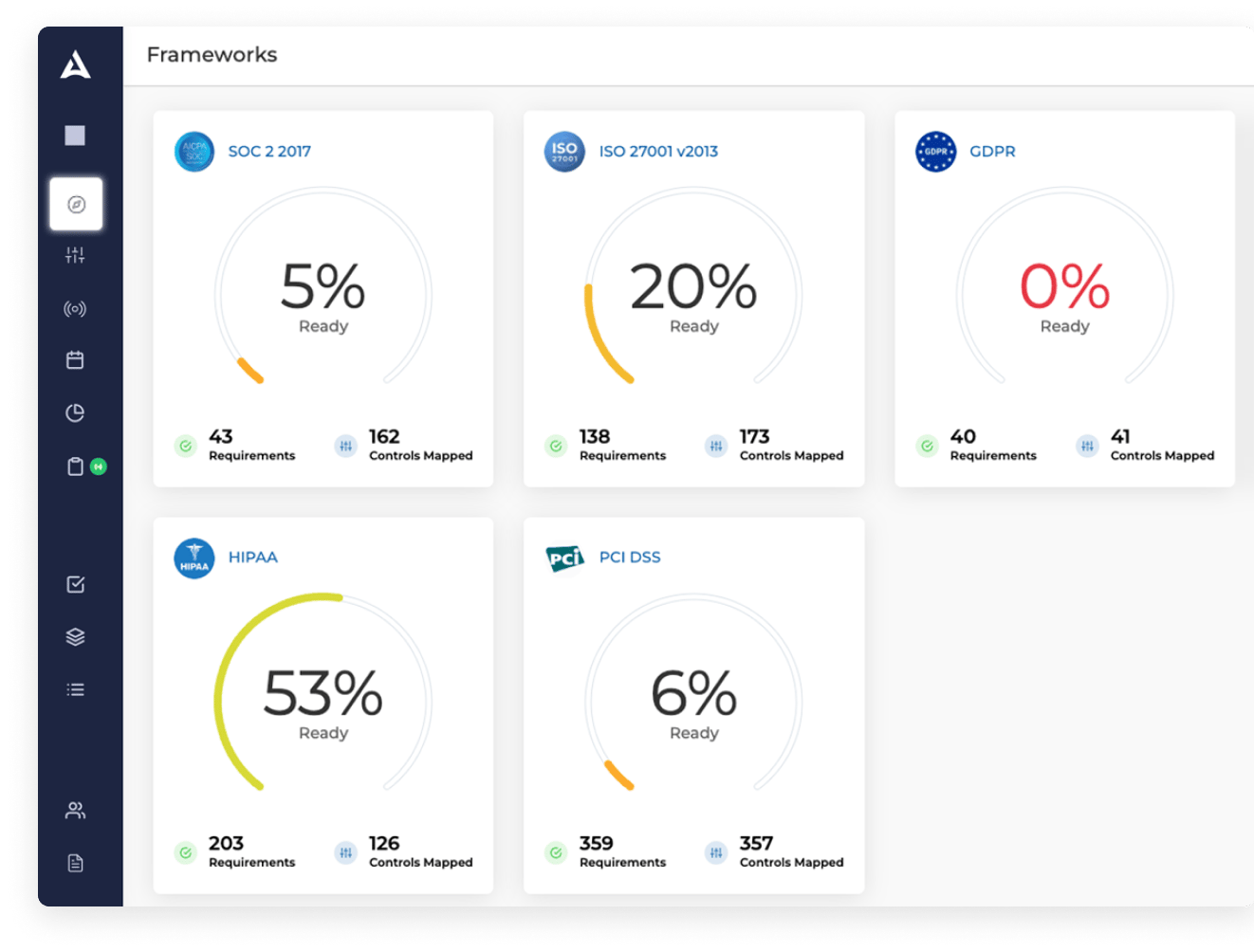
Well-known among PCI compliance tools, Drata specializes in automated evidence collection for PCI-DSS compliance audits by generating an inventory of cyber assets used by your organization.
It provides automated inventory creation through its asset and personnel tracking feature and has continuous monitoring capabilities.
Other features of Drata include its mapped security controls, which enable the integration of specific security controls and MDM (Master Data Management) for endpoint evaluation.
Pros
- Automates evidence collection and cataloging.
- Seamless integration with various tools and platforms simplifies compliance management.
- Streamlined the PCI-DSS audit process with a user-friendly interface.
Limitations
- Lacks risk assessment features
- Limited reporting capabilities.
7. SolarWinds
Key Features
- Capabilities: SIEM-based PCI compliance with log correlation, FIM, and audit reporting
- Manual Pentest: No
- Accuracy: False Positives possible
- Scan Behind Logins: No
- Cost: Quote on request
- Best for: Enterprises needing log-centric PCI compliance
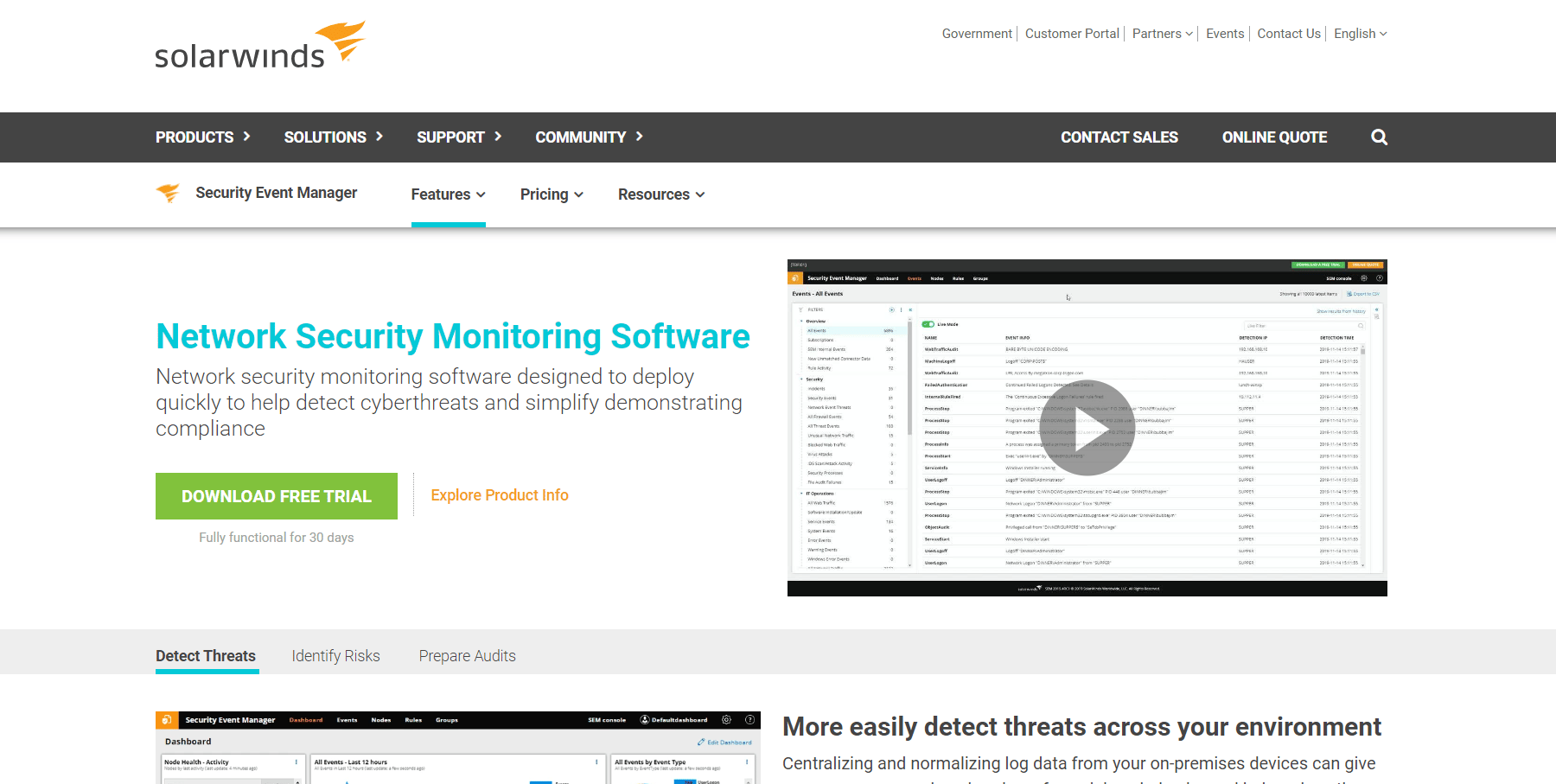
This PCI-DSS audit tool is used to reduce cyber threats through logging and monitoring, & quick scans, diagnoses, and resolutions of issues that may affect the performance of assets.
This is done following the PCI-DSS compliance standards, and its services are available for cloud, hybrid, and on-premise solutions.
Catering to both small and large enterprises, SolarWinds helps troubleshoot network misconfigurations and other flaws and risks, providing a detailed report for timely mitigation.
Pros
- Detailed reports
- Quick scans and resolutions.
- Easy-to-use interface.
- Provides reports on inventory and OS for all the devices added.
Limitations
- Better suited to larger infrastructures.
- Can be difficult to implement for beginners.
8. Vanta
Key Features
- Capabilities: Automated PCI monitoring, evidence collection, and workflow alerts
- Manual Pentest: No
- Accuracy: False Positives possible
- Scan Behind Logins: No
- Cost: Quote on request
- Best for: SaaS startups and tech-driven compliance teams
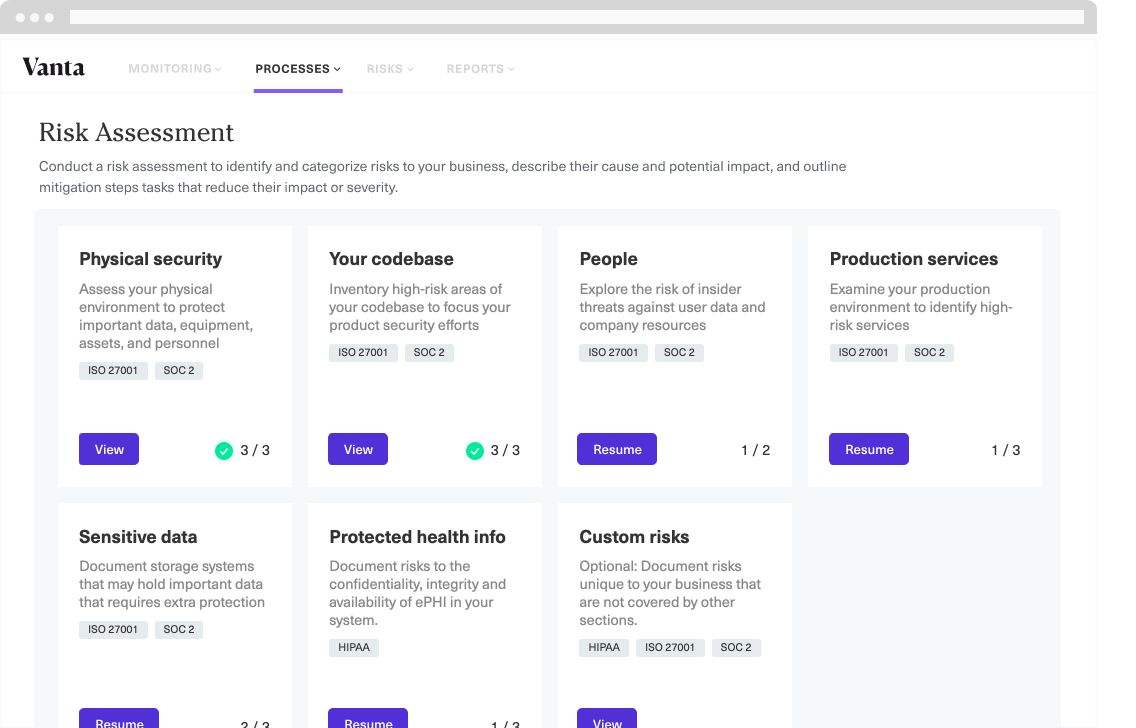
Vanta, a well-known PCI-compliance management software, offers a host of compliance risk assessment products for PCI-DSS, SOC 2, HIPAA, ISO27001, & GDPR.
Vanta helps you prepare for PCI-DSS compliance by automating tasks related to it. This PCI compliance software customizes security controls and provides continuous scans.
It also provides a centralized dashboard that helps monitor security practices, enabling businesses to track compliance efforts and identify areas for improvement.
Pros
- Continuous testing for security and compliance verification
- Faster audit report generation
- Simplified compliance management
Limitations
- Limited information on reporting capabilities
- Involves potential learning curve
9. Tripwire
Key Features
- Capabilities: PCI-focused config monitoring, vulnerability scanning, and file integrity management
- Manual Pentest: No
- Accuracy: False Positives possible
- Scan Behind Logins: No
- Cost: Quote on request
- Best for: Regulated industries like banking, education, and healthcare
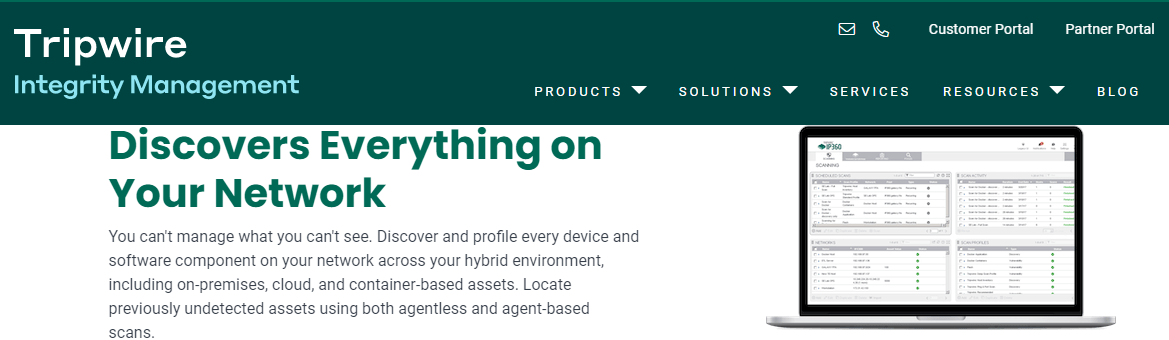
Tripwire is a powerful PCI compliance audit software that scans a wide range of devices and programs running on a network and detects previously missed issues in on-premise devices, the cloud, and containers.
The PCI vendor provides compliance solutions through policy management, audit-ready reporting, and continuous integrity monitoring to ensure continued PCI-DSS compliance.
It scores the vulnerabilities based on risk, ease of exploit, and impact. Key features include discovery and profiling of network assets and risk scoring and prioritization.
Pros
- Built-in NIST policy
- Has strong detection capabilities.
- Scalable architecture
Limitations
- Remediation services could be improved
10. AlertLogic
Key Features
- Capabilities: Managed PCI compliance with ASV scans, log monitoring, IDS/IPS, and WAF
- Manual Pentest: No
- Accuracy: False positives possible
- Scan Behind Logins: Yes (via credentialed internal scans)
- Cost: Quote on request
- Best for: Retailers, cloud-hosted businesses, and companies outsourcing PCI management
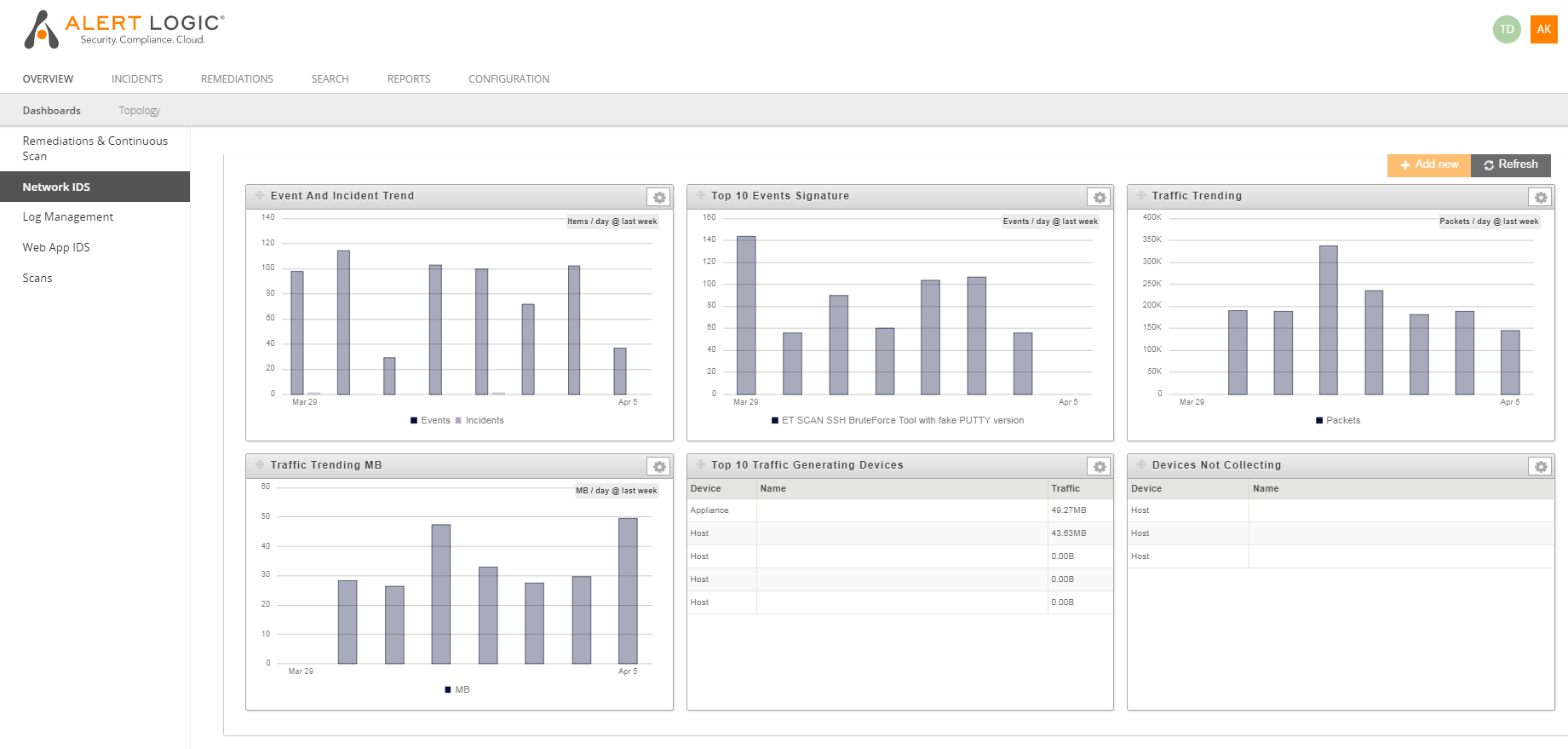
AlertLogic is a well-known SOC-as-a-service and vulnerability management provider that provides managed threat detection and response services (MDR) as well as compliance monitoring for PCI-DSS.
Their holistic services include 24*7 threat monitoring, incident validation, remediation, log management, and more.
Pros
- User-friendly solution
- Precise and timely notifications
- Easy-to-navigate dashboards.
Limitations
- End-point protection capabilities can be improved
Why PCI Compliance Testing Tools Are Essential for Your Security
- PCI compliance vendors help with PCI-DSS compliance through the automated implementation of PCI-DSS-required security measures such as data encryption, firewalls, and antivirus.
- PCI-compliance solutions aid in enforcing strict access control measures such as role-based access control, discretionary access control, and multifactor authentication.
- PCI-compliance tools often provide risk assessments in the form of vulnerability assessments or penetration tests to find vulnerabilities and mitigate risks to company security.
- PCI-DSS compliance software helps organizations continuously monitor assets and can help in the quick identification of vulnerabilities or security gaps, say, after a feature update for an application.
Top Features To Look For In A PCI Compliance Software
| Features | Functioning |
|---|---|
| A. Risk Assessments | |
| 1. Vulnerability Assessments | Exploit vulnerabilities found to understand their security impact using manual or automated methods. |
| 2. Penetration Tests | Exploits vulnerabilities found to understand their security impact using manual or automated methods. |
| B. Access Management | |
| 1. Role-based Access Control | User roles are defined by administrators based on which access and permissions are granted. |
| 2. Discretionary Access Control | Access control lists define the permitted level of access for a particular resource. |
| 3. Attribute-based Access Control | Users can only access resources for which they have the required attributes. |
| 4. Authentication | Confirms user identity with authorized credentials to gain access. Examples: MFA, 2FA, and OTPs. |
| C. Data Encryption | |
| 1. Encryption Keys | Scrambles data using a random string of letters or numbers which can be decoded with the right decryption key. |
| 2. Transport Layer Security | End-to-end encryption designed to increase data security during transit between two applications. |
| D. Security Programs | |
| 3. Firewalls | Acts as a barrier between a trusted internal network and untrusted external networks by filtering based on firewall policies. |
| 4. Anti-Virus | Detects, and removes malicious malware like viruses, & trojans, from systems by scanning their applications, and data. |
Worried about scope creep and missed deadlines? PCI software makes audits simple.

Final Thoughts
PCI compliance software is essential for your organization’s day-to-day operations, as data breaches and cyberattacks continue to increase daily.
With the average cost of a data breach going beyond $4 million, it is wise to invest in a good PCI compliance software like Astra Security to automate and scan your security according to PCI standards.
Select the right PCI software, featuring VAPT, access management, and encryption, to help your organization maintain compliance, update security protocols, and prevent non-compliance penalties, cyberattacks, and data breaches.
FAQs
1. What does PCI-DSS stand for?
PCI-DSS stands for Payment Card Industry Data Security Standards and is a compliance regulation put forth by PCI-SSC (Payment Card Industry Security Standards Council). It aims to enhance security to international & updated standards for any organization that deals with financial information.
2. Is PCI-DSS mandatory for companies?
PCI-DSS is not a law but a security standard that companies have to be compliant with if dealing with cardholder data. Compliance with it is usually mandated by banks that deal with organizations.
3. What is the PCI compliance checklist?
The PCI compliance checklist is the same as the 12 PCI-DSS compliance requirements. These are pre-requisite requirements put forward by PCI-SSC to enhance security for organizations that store sensitive financial information.