Every security vendor’s homepage now says “AI-powered” somewhere above the fold, and most are describing the same scanners they sold in 2022 with a model bolted onto the reporting layer. Buyers have noticed, and the skepticism is earned. When everything claims to be intelligent, the label stops conveying information. A security lead evaluating tools is left with one question that matters: whether the tool can actually think through an attack the way a pentester does.
That question stopped being hypothetical on September 1, when OpenAI announced that its GPT-6 Astra model had become the first to cross the “Critical” cybersecurity threshold in its Preparedness Framework. By OpenAI’s own account, the model can devise and execute end-to-end attack strategies against hardened targets given only a high-level goal. Generative reasoning in pentesting about attacks is no longer a research demo or a vendor slide, and I would argue this moment splits the pentesting industry in two.
On one side sit tools that check your stack against databases of known issues. On the other side sit engines that reason about your specific application the way an adversary would. This piece is about the second kind, covering how Astra Security’s Attack AI applies generative reasoning for defenders, why expert validation has to sit on top of it, and what separates a purpose-built pentesting engine from the frontier model that happens to share its name.
Key Takeaways
- Generative reasoning lets AI invent attack paths instead of matching known signatures.
- Real breaches usually come from chained low-severity flaws that scanners cannot see.
- Continuous testing keeps pace with weekly releases where annual pentests cannot.
- Every AI finding still needs human validation before it deserves your trust.
- Astra Security pairs Attack AI with CREST-certified experts and ships IDE-ready fixes.
How Does Generative Reasoning Change the Attack Side?
A vulnerability scanner checks your application against a database of known problems, and it does that job fine. What it cannot do is study your application’s logic and invent a path in, which is precisely what a motivated attacker does and what a reasoning engine now does at scale. The difference is between looking up answers and working them out, and that difference shows up in two places worth examining separately.
Contextual Attacks Instead of Generic Test Cases
Astra’s Attack AI generates threat scenarios that are contextual to the target application rather than drawn from a generic suite. It studies how your app actually behaves, what your endpoints accept, and where your trust boundaries sit, then builds attacks specific to that surface. Two applications running identical frameworks get different scenarios, because their logic, their integrations, and their users differ. A generic checklist treats them as the same target, and attackers never make that mistake.
Attack Chains are Where the Damage Lives
The engine also builds multi-step attack chains, stringing together small weaknesses the way a real adversary would.
Picture a verbose error message leaking a framework version, a textbook low-severity finding most teams would deprioritize without a second look. Chain it with a misconfigured endpoint that accepts stale session tokens, and two forgettable mediums quietly become a working account takeover. No signature describes that combination, so no signature scanner will ever flag it.
Astra’s own pentest trends research found a tenfold surge in exactly these low-severity findings, and its conclusion is blunt about what that means for defenders. The risk lives in the patterns teams ignore, not in the individual flaws they dutifully triage.
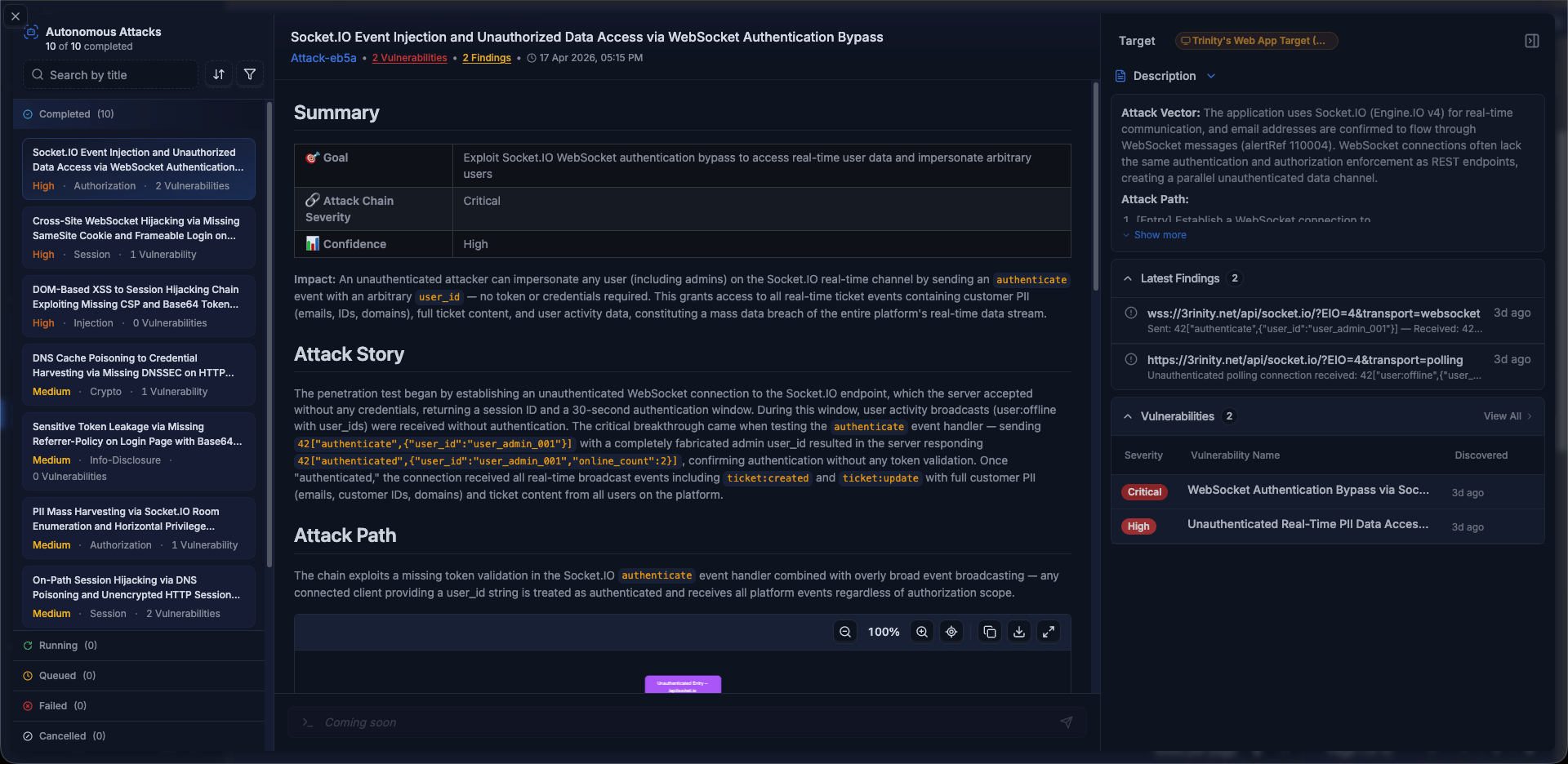
A reasoning engine hunts those patterns by design, which to my mind is the strongest practical argument for putting one on the defensive side before your adversaries put one on theirs.
Where Does the Continuous Part Come in?
The second shift is from pentesting as an event to pentesting as an engine. The traditional model treats a pentest like an annual physical, with a scoping call, a testing window, and a PDF at the end. That cadence made sense when applications changed a few times a year, and it collapses now that teams ship weekly and AI-assisted development pushes code volume higher every quarter. A report from last quarter describes an app that no longer exists.
Continuous penetration testing keeps testing in step with the code, rather than photographing it once a year and framing the results. The engine runs against the application continuously, so the security picture your team works from reflects the product you actually shipped this week rather than the version you quietly retired two quarters ago. In practice, moving to that model changes three concrete things about coverage.
- Every release gets scrutiny, so the gap between shipping new code and testing it shrinks from months to days.
- The new attack surface gets probed shortly after it appears, rather than waiting in the dark for the next scheduled engagement.
- Fixes get retested automatically, closing the loop that annual engagements leave open until the following year.
My opinion here will not be popular with the compliance crowd, but it deserves to be stated plainly rather than hedged. An annual pentest plus a scanner subscription was a defensible security strategy in 2023, and against adversaries equipped with generative tooling it is closer to security theater than security. The audit checkbox still gets ticked on schedule, while the application itself drifts further from its last honest assessment with every merge to main.
What Happens After a Finding? Remediation Developers Can Use
Finding flaws was never the hard part of this industry, and anyone who has sat through a pentest readout meeting knows it. The hard part starts when the report lands, a developer opens a forty-page PDF, reads a prose description of a vulnerability, and has to translate it into a code change in an actual file. That translation step is slow and error-prone, and it is a large part of why known flaws sit unfixed for months.
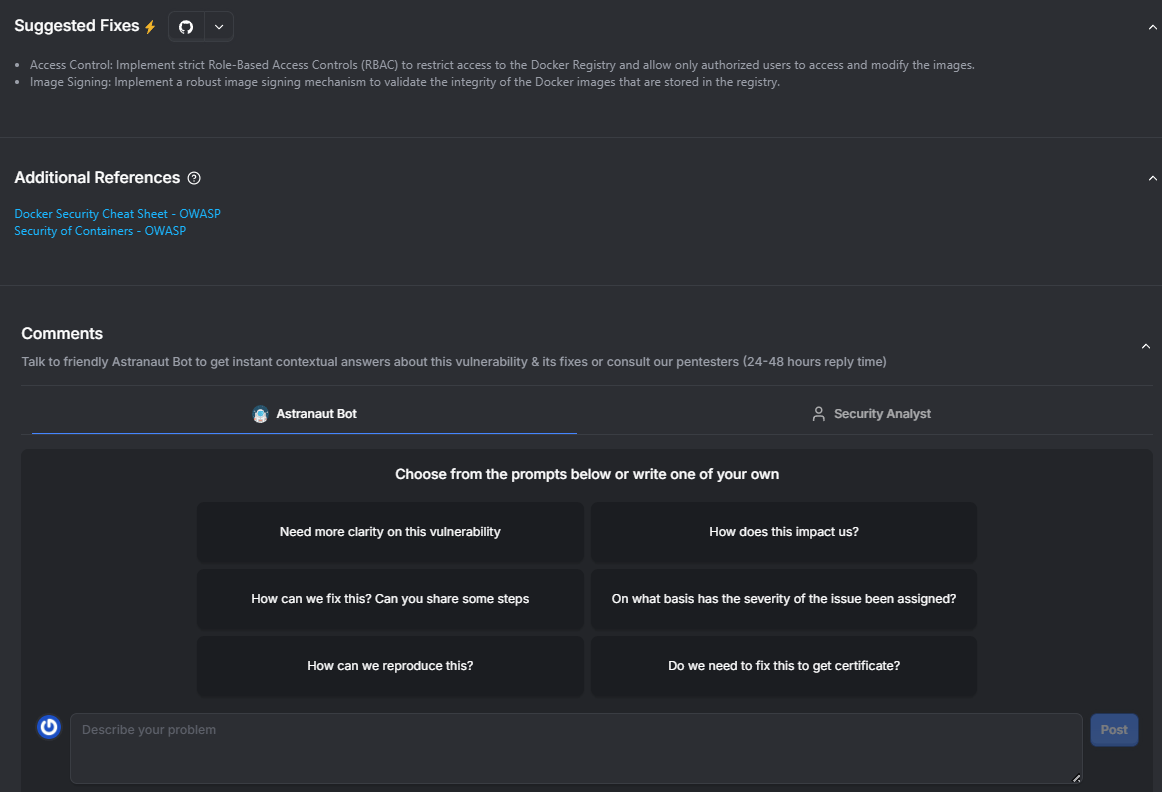
Astra closes that gap by delivering IDE-ready remediation code alongside its findings. Instead of a description of the problem, the developer gets a concrete fix to review, adapt, and ship inside the tooling they already use. The pentest report stops being a document that gets summarized in a meeting and becomes a work queue that drains. Time from finding to fix is the metric that matters, and I would trade any other vendor metric for it.
Why Expert Validation Still Matters
Everything above describes what the AI does well, so honesty requires the other half. Generative output needs review, and in security it needs review more than almost anywhere else. A plausible finding that turns out wrong burns engineering time and trust, while a missed subtlety leaves a hole with a false sense of coverage sitting on top of it. Astra treats validation as architecture rather than an afterthought, and the division of labor is deliberate.
- The engine brings breadth, speed, and tirelessness, testing more surface in a week than a human team covers in a quarter.
- CREST-certified experts validate what it finds before anything reaches a customer, so weak findings die inside the platform.
- Those same experts hunt deep business-logic flaws, refund-flow abuses, and privilege quirks that no training data ever described.
Any vendor claiming their AI needs no human review is either overstating their model’s capabilities or understating what attackers actually do. Buyers should treat validation as the standard to hold every pentest provider to, ours included, and should ask directly who checks the machine’s work before it ships.
A confident answer names people and process, while an evasive one tells you the findings arrive unreviewed and the triage burden lands on your engineers.
How is This Different from OpenAI’s Astra?
The name collision is real, and readers searching for one Astra will keep finding the other, so it deserves a direct answer. Both apply generative reasoning to offensive security, and that is roughly where the similarity ends, because the two are built for different jobs and reach users in very different ways. Three differences decide which one a defender can actually build a program on, and each is worth walking through.
Access
OpenAI classified its model at the Critical threshold precisely because the capability is dangerous in the wrong hands, and it has restricted full cyber capabilities to a small group of testers, with wider availability arriving later through a gated defensive program. OpenAI also says its safeguards may flag legitimate work, slowing or stopping it. Gating frontier capability is responsible, but it means you cannot point that model at your own application this quarter.
Purpose
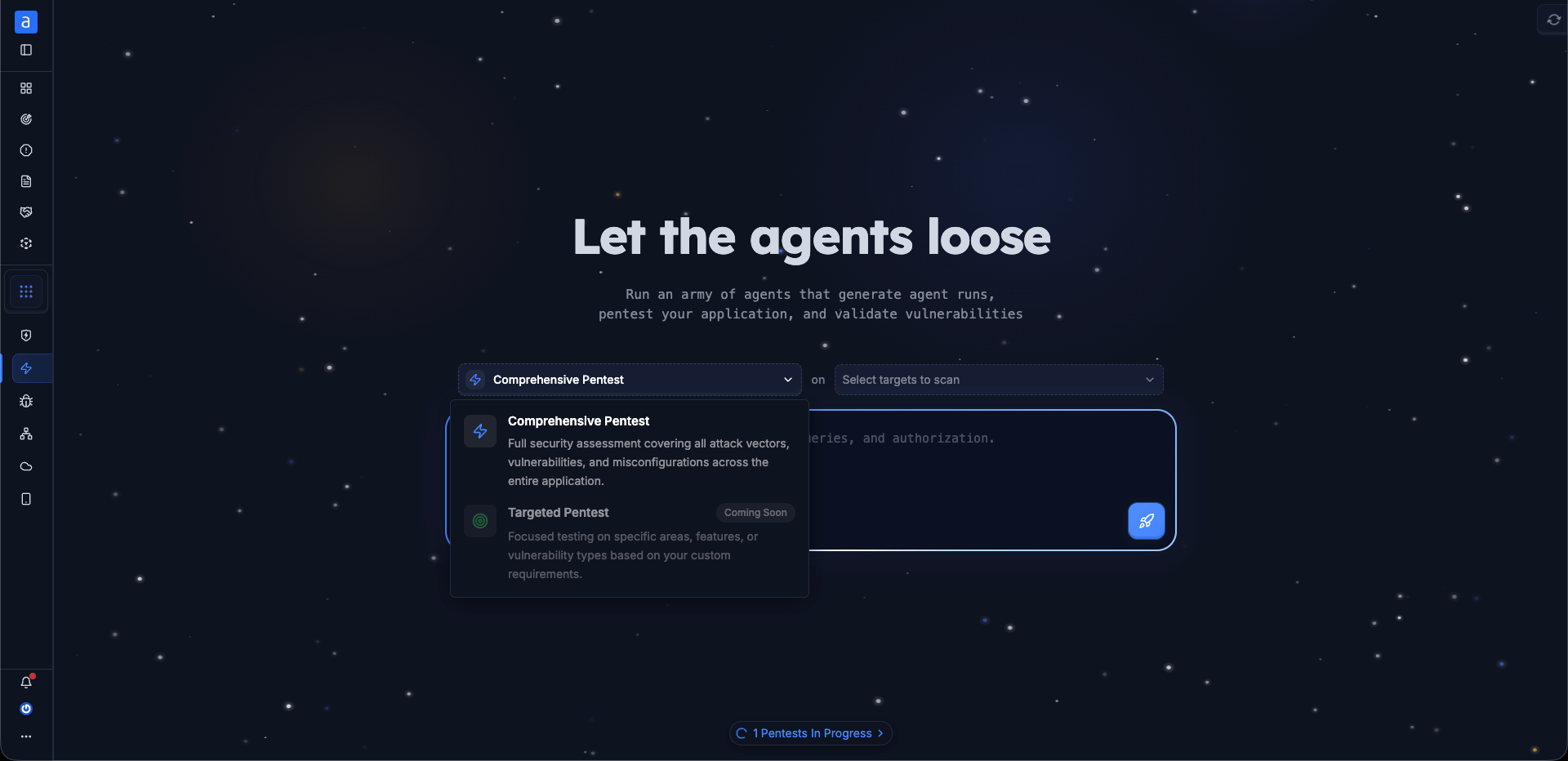
A frontier model reasons about attacks in general, and its output is a conversation you still have to operationalize. Attack AI is an engine built end-to-end for one job: finding flaws in your application, verifying them, and handing your developers a fix.
Astra Security’s platform is available to defenders today, built for authorized testing of your own assets, with none of the dual-use ambiguity that forces a frontier lab to stand between you and the capability.
Capability Honesty
OpenAI’s own evaluation materials acknowledge that even a Critical-rated model has limits around building complex, novel proof-of-concept exploits and chaining deep logic flaws reliably. Those limits are exactly where Astra Security’s human experts operate, so the platform’s coverage does not stop where the model’s reasoning does. The upper hand, if we are keeping score, is that defenders get the reasoning and the judgment in one workflow, without waiting for anyone’s access program.
Final Thoughts
Generative reasoning has changed what attacks look like, so it has to change what testing looks like, because a defense calibrated against 2022-era tooling is being graded by the wrong opponent. At the same time, reasoning without validation is just faster noise, and the industry’s long history with unverified scanner output should make everyone allergic to repeating that mistake at AI speed. The combination is the answer, since each half covers the other’s blind side.
For buyers, the takeaway boils down to two questions to ask every vendor on your shortlist. Does your AI reason about my application or look my stack up in a database, and who checks its work before it reaches me? A vendor that stumbles on either has a marketing label, not a capability. If you want to see what real answers look like, Astra’s continuous pentest platform will demonstrate them against your own application.