Cloud penetration testing involves exploiting vulnerabilities, either manually or with automated tools, to simulate hacker behavior and uncover weaknesses.
By identifying these risks, cloud providers and customers can better prioritize security and prevent breaches like the 23andMe incident that exposed millions of users’ data.
At a Glance
The right cloud pentesting tool depends on what you run and how deep you need to go. This guide covers 11 options for 2026, from all-in-one commercial platforms to open-source specialists built for AWS, Azure, or GCP.
Top 3 picks:
- Astra Pentest: 15,000+ tests, AI + manual pentesting, zero false positives. From $1,999/year.
- Intruder: Continuous automated scans with AI-triaged findings. From $299/month.
- Nessus: Deep infrastructure and misconfig scanning for large orgs. From $6,790/year.
11 Best Cloud Penetration Testing Tools
- Astra Pentest
- Intruder
- Nessus
- Scout Suite
- Pacu
- Nmap
- AWS Inspector
- CloudBrute
- MicroBurst
- SkyArk
- BurpSuite
How We Put Together This List
Each tool was evaluated on cloud coverage across AWS, Azure, and GCP, testing depth (manual vs. automated), false positive rates, compliance mapping, and CI/CD fit. We drew on hands-on experience, verified vendor documentation, and practitioner feedback from G2, Gartner, and our security network, and we deliberately mixed commercial platforms with open-source specialists.
| Feature | Astra Pentest (Top Choice) | Intruder | Nessus |
|---|---|---|---|
| Best For | Enterprises, compliance-driven orgs | SMBs, automated scanning | Large orgs, detailed scans |
| Supported Clouds | AWS, Azure, GCP | AWS, Azure, GCP | AWS, Azure, GCP |
| Key Features | 15,000+ test cases, AI/manual pentesting, zero false positives, CXO dashboard, detailed remediation | Continuous scan, agentless AWS, risk alerts, asset-based scans | Config audits, malware/compliance, point-in-time scans, customizable policies |
| Integrations | Jira, GitLab, CI/CD, Slack | Jira, GitHub, Azure DevOps | SIEMs, ticketing tools |
| Reporting | Real-time, CXO dashboard, detailed CVEs | Alerts, prioritized risks | Detailed, customizable |
| False Positives | Zero false positives (human verified) | Not guaranteed | Low rate, not zero |
| Compliance Scans | GDPR, HIPAA, SOC2, PCI-DSS, ISO 27001 | No dedicated suite | PCI, HIPAA, ISO 27001 |
| Price Range | $1,999+ /year | From $113/month | From $2,790/year |
| Review Score | 4.8/5 | 4.7/5 | 4.6/5 |
1. Astra Pentest [Get Started]
Key Features:
- Platform: SaaS
- Pentest Capabilities: Cloud-native manual pentests + automated scans
- Accuracy: Zero false positives with validated findings
- Compliance Scanning: PCI DSS, ISO27001, SOC2, HIPAA, and OWASP
- PCI Readiness Toolkit: Gap analysis, scoping guidance, and auditor-ready reports
- Workflow Integration: Slack, JIRA, GitHub, GitLab, and CI/CD pipelines
- Price: Starting at $1999/yr
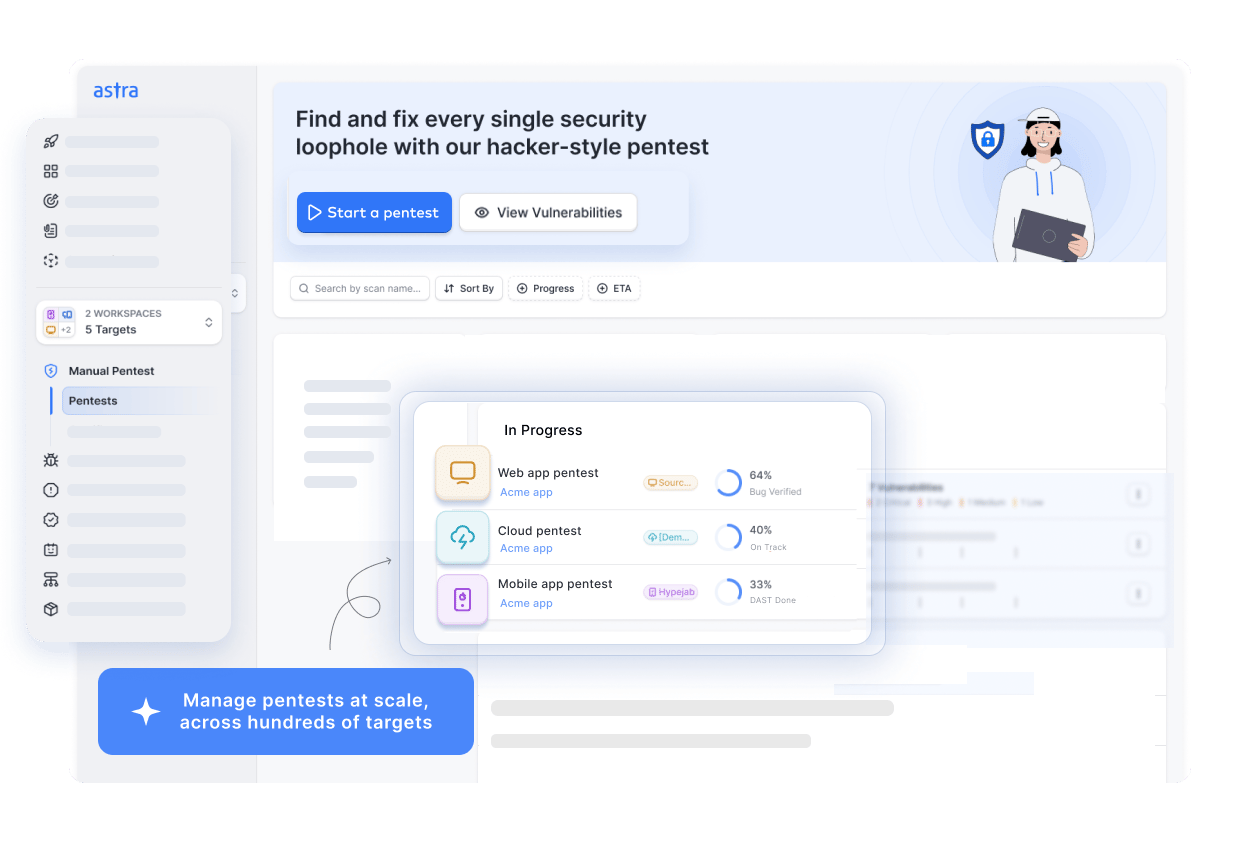
Astra Pentest is a leading provider of continuous cloud penetration testing services, combining both manual and AI-powered pentesting solutions to run various tests and compliance-specific scans, including GDPR, ISO 27001, SOC 2, HIPAA, and PCI-DSS.
With tests covering Azure, GCP, and AWS infrastructures, we aid in cloud vulnerability management to ensure a seamless penetration testing experience with zero false positives, a CXO-friendly dashboard, and an easy-to-navigate interface. With real-time reporting, a detailed list and analysis of all CVEs, along with their corresponding CVSS scores and remediation steps, are shared with your team.
Pros
- Carries out scans behind logins and detects business logic errors.
- Features a comprehensive vulnerability scanner with the option to rescan once vulnerabilities are resolved.
- It provides gap analysis for companies to find gaps in their security measures.
- All-around customer care is provided, and queries are answered via email or phone if necessary.
- Astra Pentest Certificate will be provided upon remediation of the found vulnerabilities.
- CI/CD integration is possible, allowing the move from DevOps to DevSecOps.
Cons
- Trial available at $7
Best for: Enterprises and compliance-driven organizations seeking an all-in-one cloud pentesting solution with robust integrations and certification for remediation.
Experts Review
Why did we choose Astra Pentest?
Astra Pentest is known for its comprehensive approach to cloud penetration testing, combining AI-powered automation with manual expertise. Their coverage of major cloud providers (Azure, GCP, and AWS), compliance-specific scans, and assured zero false positives make it a strong choice for organizations with diverse cloud environments and stringent regulatory requirements. The real-time reporting, detailed CVE analysis, and remediation guidance further streamline the vulnerability management process.
2. Intruder
Key Features:
- Continuous, automated vulnerability scans for AWS, Azure, GCP
- Agentless scanning, cloud asset monitoring, prioritized alerts
- Integrates with Jira, GitHub, Azure DevOps
- Asset/tag-based scan management, real-time notifications
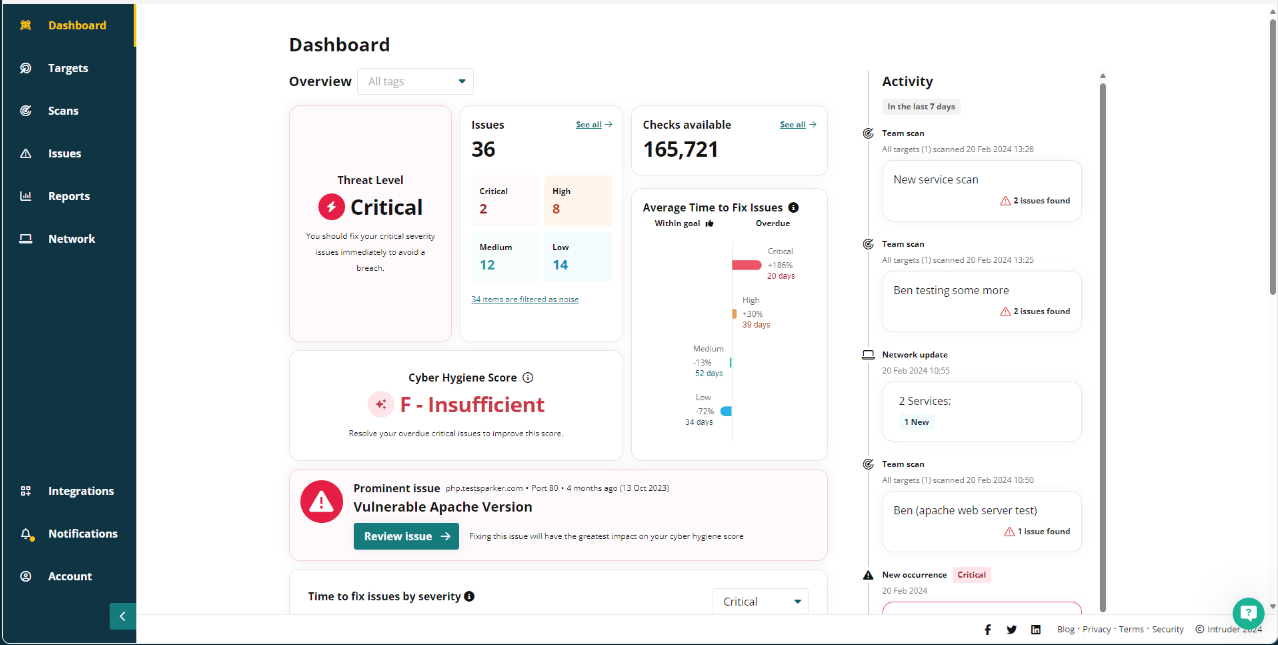
As one of the cloud security testing tools, Intruder is available for Azure, GCP, and AWS. It continuously performs incredibly thorough scans that can identify weaknesses.
Organizations may take action on vulnerabilities depending on their severity rating and monitor their attack surfaces for any changes or flaws that can expose them online.
Discover why security teams are switching from Intruder.io to alternatives that offer continuous monitoring and lower false positives.
Experts Review
Why did we choose Intruder?
Intruder is designed to simplify security assessments for websites, servers, and cloud environments. It scales effectively by emphasizing ease of deployment and management, making it ideal for growing organizations. While it does not guarantee zero false positives and its pricing may be a factor to consider, it offers transparent, evidence-based inputs.
Pros
- Helps with cloud vulnerability management in Azure, GCP, and AWS.
- Provides real-time intruder alerts.
Cons
- The reports could be more detailed.
- The Integrations could be widened.
Best for: Small and mid-sized businesses seeking easy setup and automated cloud vulnerability scanning.
3. Nessus
Key Features:
- Comprehensive point-in-time vulnerability scanning
- Customizable scan policies, over 100,000 plugins
- Detailed compliance checks (PCI, HIPAA, ISO, etc.), misconfiguration/malware detection
- Integration with SIEMs and ITSM tools
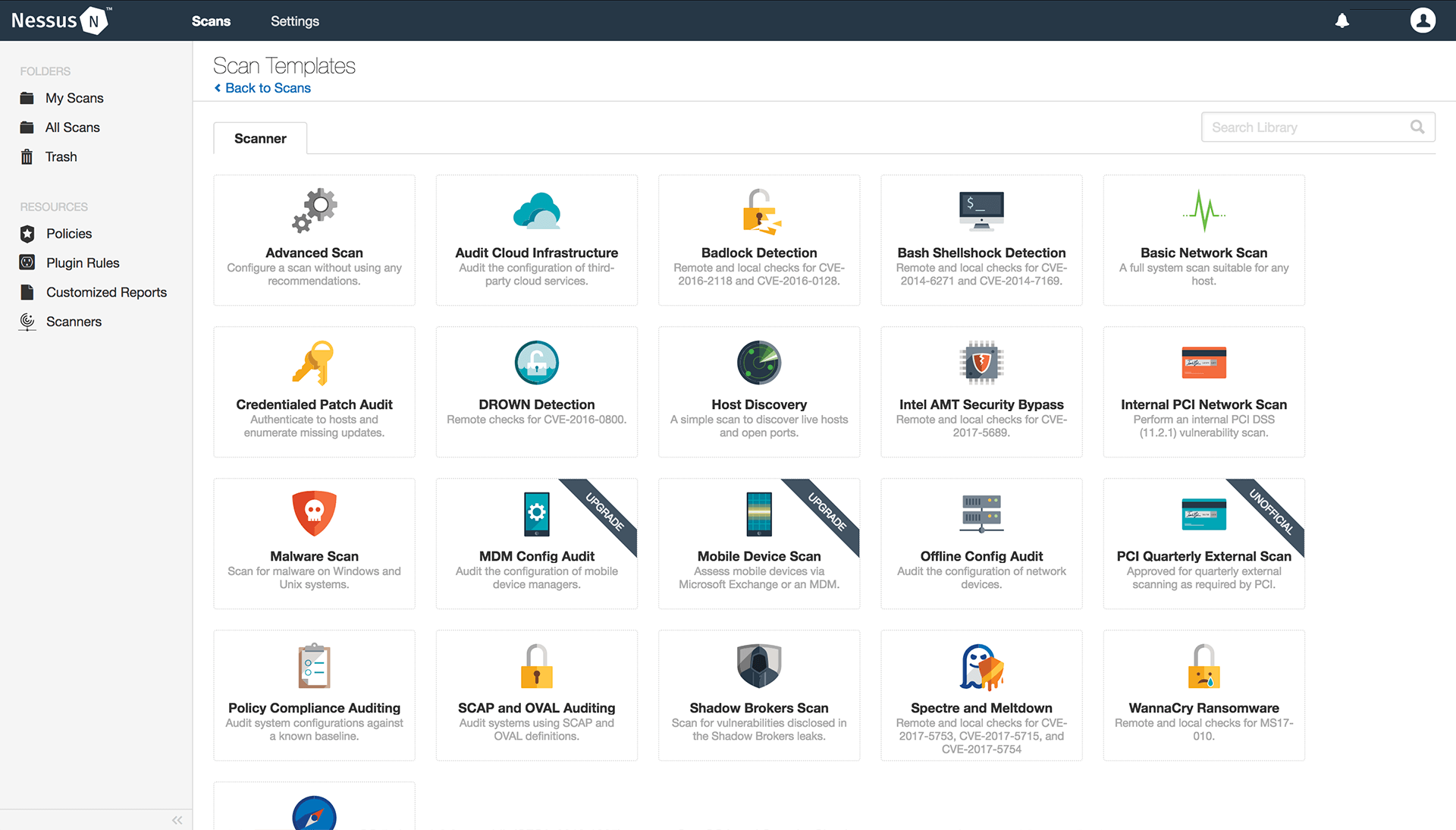
Nessus is a cloud-based security and security testing tool that aids businesses in finding gaps in their security systems. This vulnerability assessment tool provides point-in-time analysis, simplifying and expediting detection and treatment.
Pros
- Notifies users in real-time when a new vulnerability is discovered
- A vulnerability scan’s configuration can be greatly altered to meet the demands of the target.
- Aids in maintaining PCI compliance.
Cons
- Several customization options with very minute differences make it difficult to choose based on needs.
- Time-consuming scans.
- It’s expensive when compared to other options.
Best for: Large organizations and compliance auditors requiring in-depth, policy-driven scans and detailed remediation.
Experts Review
Why did we choose Nessus?
Nessus is a vulnerability assessment tool that extends its capabilities to the cloud. We included it as it provides point-in-time analysis and has customizable scanning options. While its customization can be complex and scans can be time-consuming, Nessus’s real-time notifications and PCI compliance support are valuable assets.
4. Scout Suite
Key Features:
- Open-source tool for AWS, Azure, GCP, Alibaba Cloud
- Scans cloud configurations and identifies misconfigurations
- User-friendly interface, attack surface overview
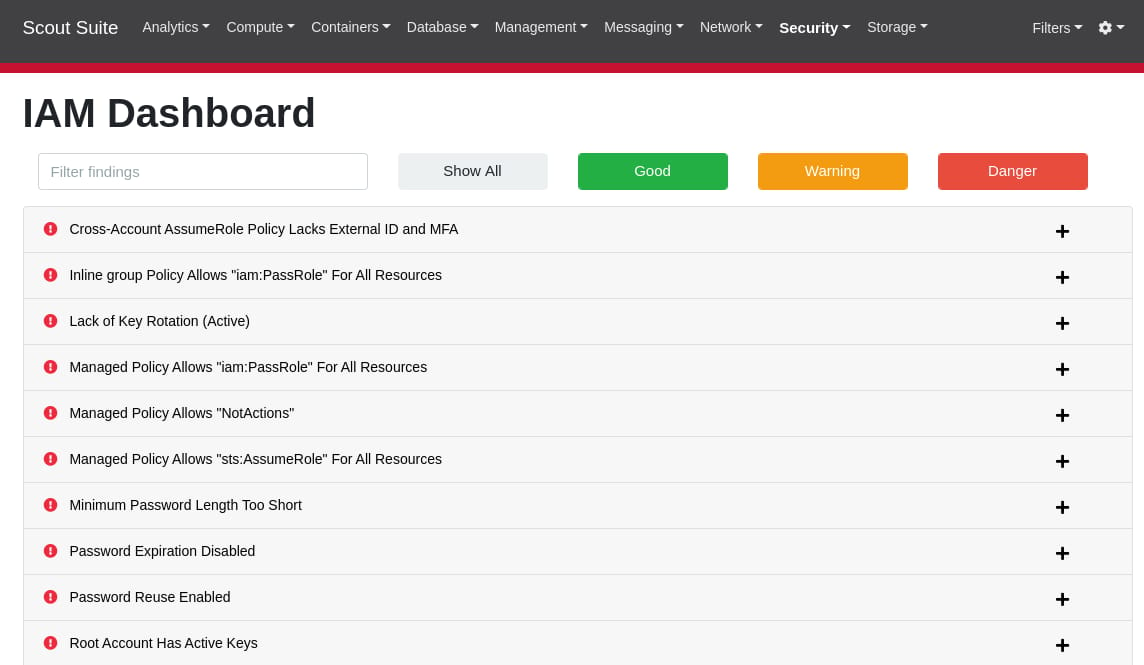
This open-source multi-cloud penetration testing tool can conduct security tests on cloud platforms. Scout Suite looks for configuration data and provides an overview of the attack surface and cloud-specific vulnerabilities.
This data can be perused for manual inspection to develop detailed remediation plans.
Best For: Security analysts needing free, multi-cloud configuration auditing and manual inspection insights.
Experts Review
Pros
- Provides free trials.
- Easy-to-use interface.
- Provides a free version with good features for cloud penetration testing.
Cons
- The paid version has more specifications.
- Services can be a bit slow.
Why did we choose Scout Suite?
Scout Suite’s open-source nature and multi-cloud support make it a good option for organizations exploring cloud security testing. Its ability to identify configuration data and provide an overview of the attack surface is helpful for manual inspection and remediation planning. The free version offers a good starting point for cloud penetration testing.
5. Pacu
Key Features:
- Free, open-source AWS penetration testing framework
- Automates detection of config flaws, privilege escalation, and credential misuse
- Modular with many attack plugins
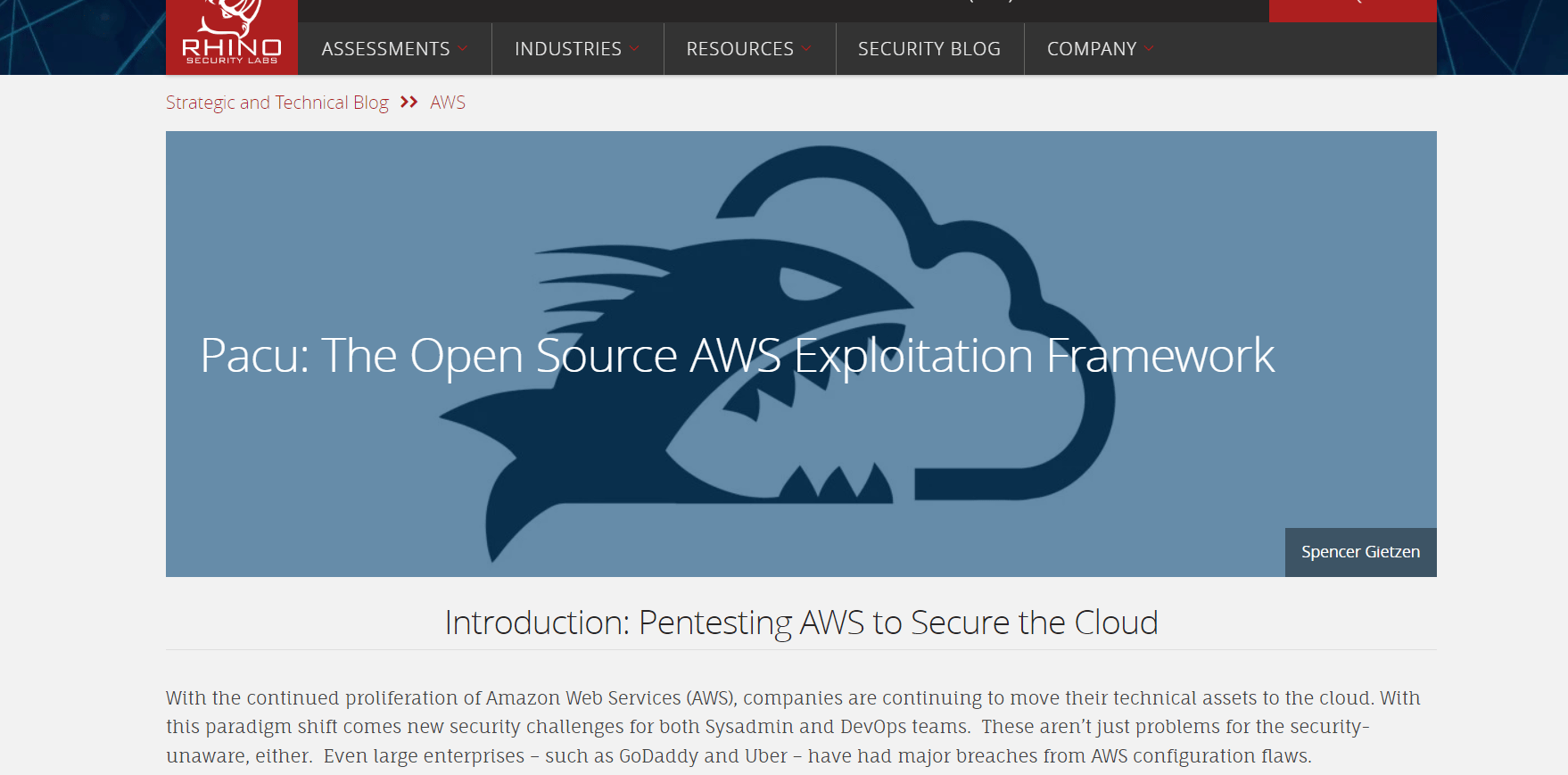
Pacu is an open-source cloud testing platform available for free on GitHub. It automates vulnerability detection in the AWS cloud platform. This framework enables penetration testers to identify and target configuration flaws in an AWS environment, including privilege escalation.
Best For: Security professionals focused on AWS, seeking deep privilege analysis and automated attack simulation.
Experts Review
Pros
- Capable of detecting AWS vulnerabilities
- It helps in quick scanning of the AWS cloud environment for user permissions.
Cons
- Does not offer as many features as its commercial counterparts.
Why did we choose Pacu?
Pacu is a specialized open-source tool focused on AWS cloud penetration testing. Its ability to automate vulnerability detection and target configuration flaws, such as privilege escalation, makes it a valuable asset for security professionals working within the AWS ecosystem.
6. Nmap
Key Features:
- Open-source network/cloud scanner
- Advanced host discovery, port/service/version/OS fingerprinting
- Scripting engine for automation; broad platform compatibility
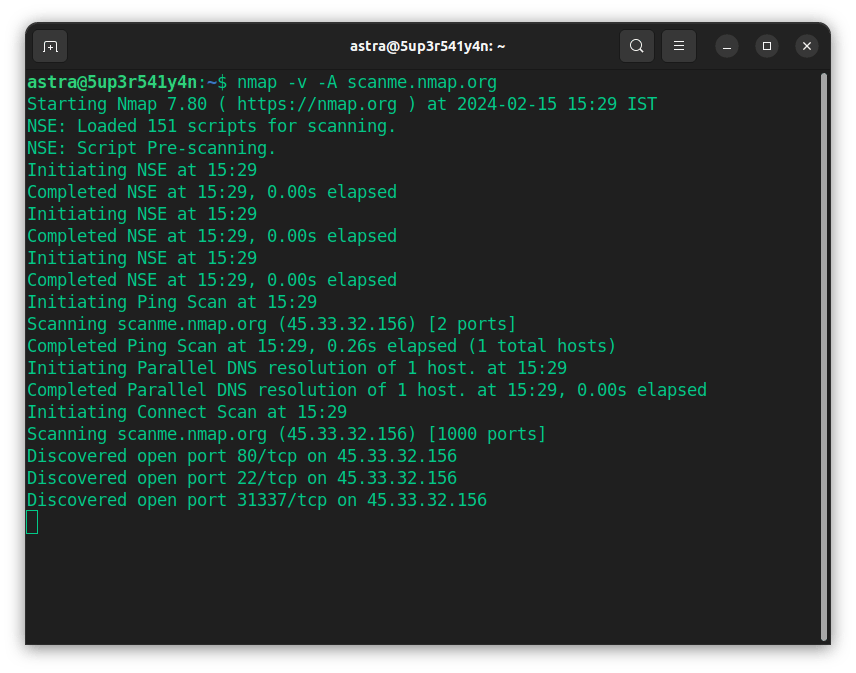
Nmap is an open-source vulnerability scanner and one of the most popular ethical cloud hacking tools that helps with cloud network discovery, management, and monitoring. It is designed to scan large cloud networks, but works fine against single networks.
Best For: Network and cloud admins needing a reliable, free scanner for discovery and basic vulnerability mapping.
Experts Review
Pros
- Shows open ports, running services, and other critical facets of a network
- Freely available.
- Usable for large and small networks alike
Cons
- The user interface can be improved.
- It might show different results each time.
Why did we choose Nmap?
Nmap’s inclusion is based on its versatility as a network discovery and monitoring tool, extending its utility to cloud environments. Its ability to scan large networks, identify open ports and running services, and its open-source availability make it a valuable asset for cloud network analysis.
7. AWS Inspector
Key Features:
- Native AWS vulnerability management
- Automated and continuous scanning for EC2/ECR/Lambda
- Contextual risk scoring, cross-account support
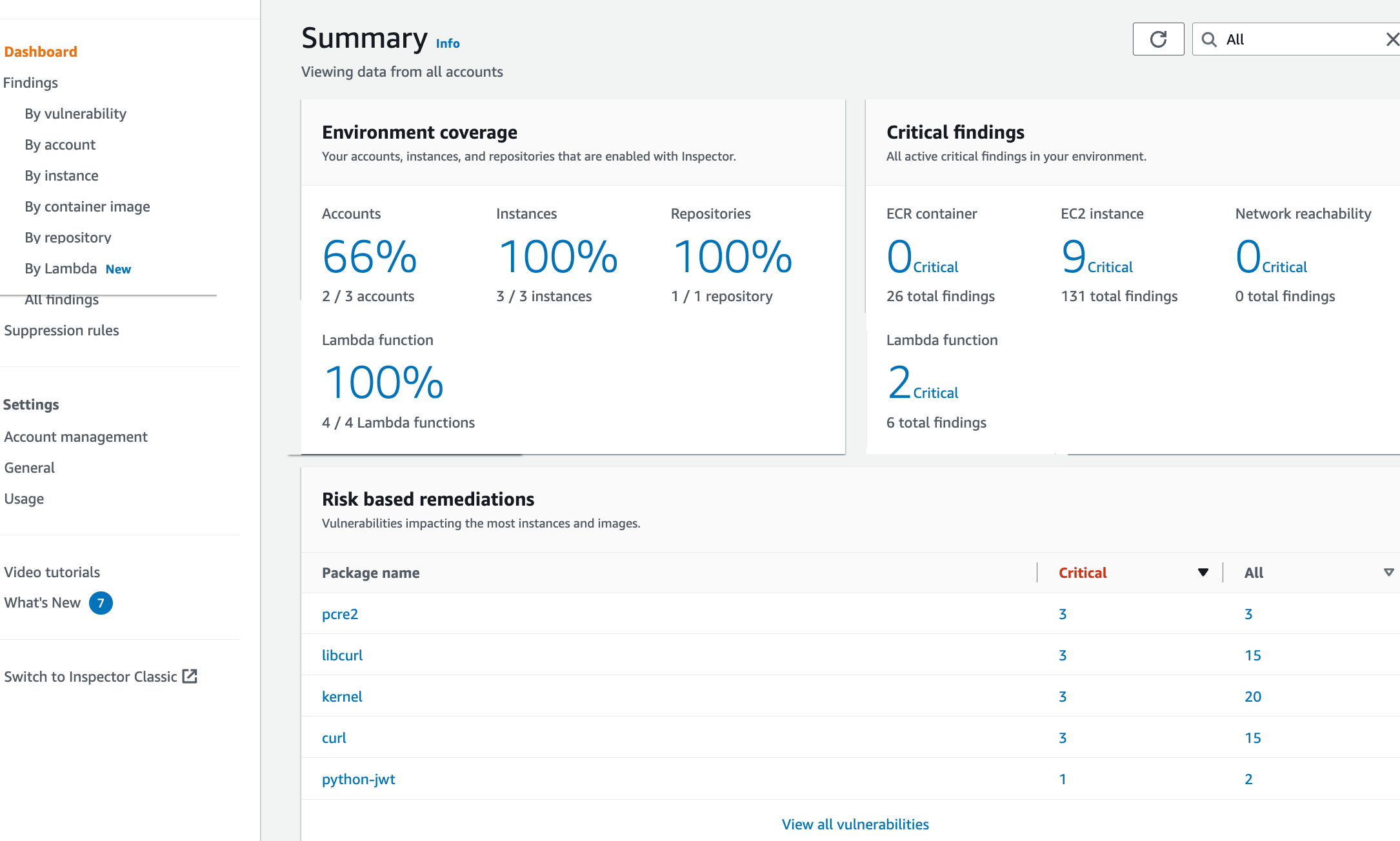
This automated vulnerability management tool helps by continuously scanning the automatically detected AWS workloads for vulnerabilities and unintentional exposures.
After a few easy steps to enable its services, AWS Inspector can be used across all your AWS accounts.
Best For: AWS-centric organizations seeking native, automated vulnerability management.
Experts Review
Pros
- Discovers EC2 instances and images.
- Assesses the Elastic Container Registry for flaws and areas of exposure.
- Contextualized risk scores
Cons
- Does not provide a classification of individual findings.
- Billing can be a bit tricky.
Why did we choose AWS Inspector?
AWS Inspector is a natural choice for organizations heavily invested in the AWS ecosystem. Its automated vulnerability management service, continuous scanning of AWS workloads, and contextualized risk scores make it an essential tool for maintaining AWS cloud security.
8. CloudBrute
Key Features:
- Brute-force-based black-box cloud pentesting
- Finds open buckets, apps, outdated endpoints, and storage misconfigurations
- Supports Amazon, Azure, and others
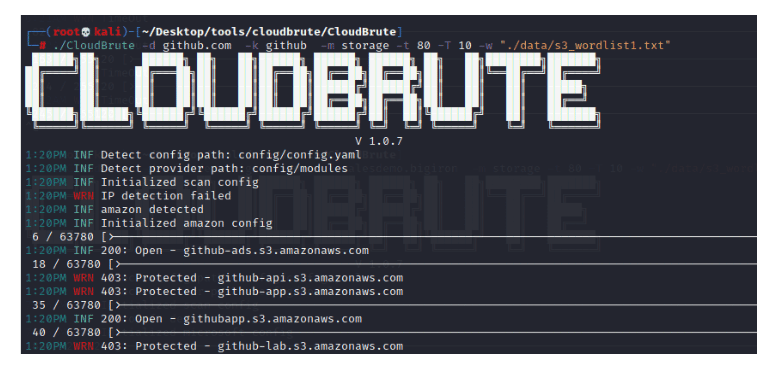
Supports Amazon, Azure, and others. CloudBrute helps you identify key elements, such as open buckets, apps, and data, by performing brute-force attacks on cloud environments. It targets the company’s infrastructure and files, making black-box cloud pentesting easier.
As one of the leading cloud pentest tools, it identifies vulnerabilities such as incorrect file storage, outdated endpoints, and inadequate concurrency.
Best For: Security teams wanting to uncover exposed cloud assets through brute-force enumeration.
Experts Review
Pros
- It works with multiple service providers like Amazon, Windows, and more.
- Brute-force attack based on a pre-defined word list.
- Black-box cloud penetration tests were provided.
Cons
- It’s not as extensive as its commercial counterparts.
Why did we choose CloudBrute?
CloudBrute’s focus on brute-force attacks to uncover vulnerabilities like open buckets and outdated endpoints makes it a valuable tool for black-box cloud penetration testing. Its multi-cloud support is also a plus.
9. MicroBurst
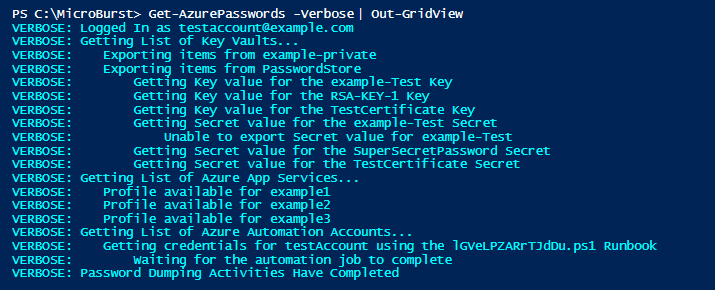
Key Features:
- Open-source toolkit for Azure security testing
- Weak configuration auditing, Azure service discovery
- Post-exploitation actions like credential dumping
This freely available toolkit, created by Karl Fosaaen, can be used to carry out cloud-based penetration tests for the Azure cloud platform. It aims to identify weak configuration audits and enables post-exploitation steps, such as credential dumping.
Best For: Azure security specialists requiring detailed auditing and post-exploitation capabilities.
Experts Review
Pros
- Open-source penetration testing tool.
- Offers Azure Services discovery and weak configuration auditing.
- Post-exploitation actions like credential dumping.
Cons
- Does not offer many features like commercial tools.
Why did we choose MicroBurst?
MicroBurst is a specialized open-source toolkit for Azure cloud penetration testing. Its ability to identify weak configurations and perform post-exploitation actions, such as credential dumping, makes it a valuable resource for Azure security assessments.
10. SkyArk
Key Features:
- Identifies shadow admins and sensitive identities in AWS/Azure
- Detects exposed privileges and additional attack surfaces
- Specialized for cloud “shadow” privilege discovery
Available for Azure and AWS, this cloud infrastructure testing tool is useful for identifying additional attack surfaces and specializes in combating the risk of cloud shadow admins. It helps detect these shadow admins that could be present in any cloud environment and safeguards companies against them.
Best For: Organizations concerned with privilege escalation and hidden admin risks in AWS/Azure.
Experts Review
Pros
- Detects the presence of shadow cloud admins.
- Helps in assessing entities in AWS and Azure.
Cons
- Not available for the Google Cloud platform.
Why did we choose SkyArk?
SkyArk’s focus on detecting shadow cloud admins and identifying additional attack surfaces makes it a unique tool for cloud infrastructure testing in AWS and Azure. This specialized functionality addresses a critical security concern in cloud environments.
11. BurpSuite
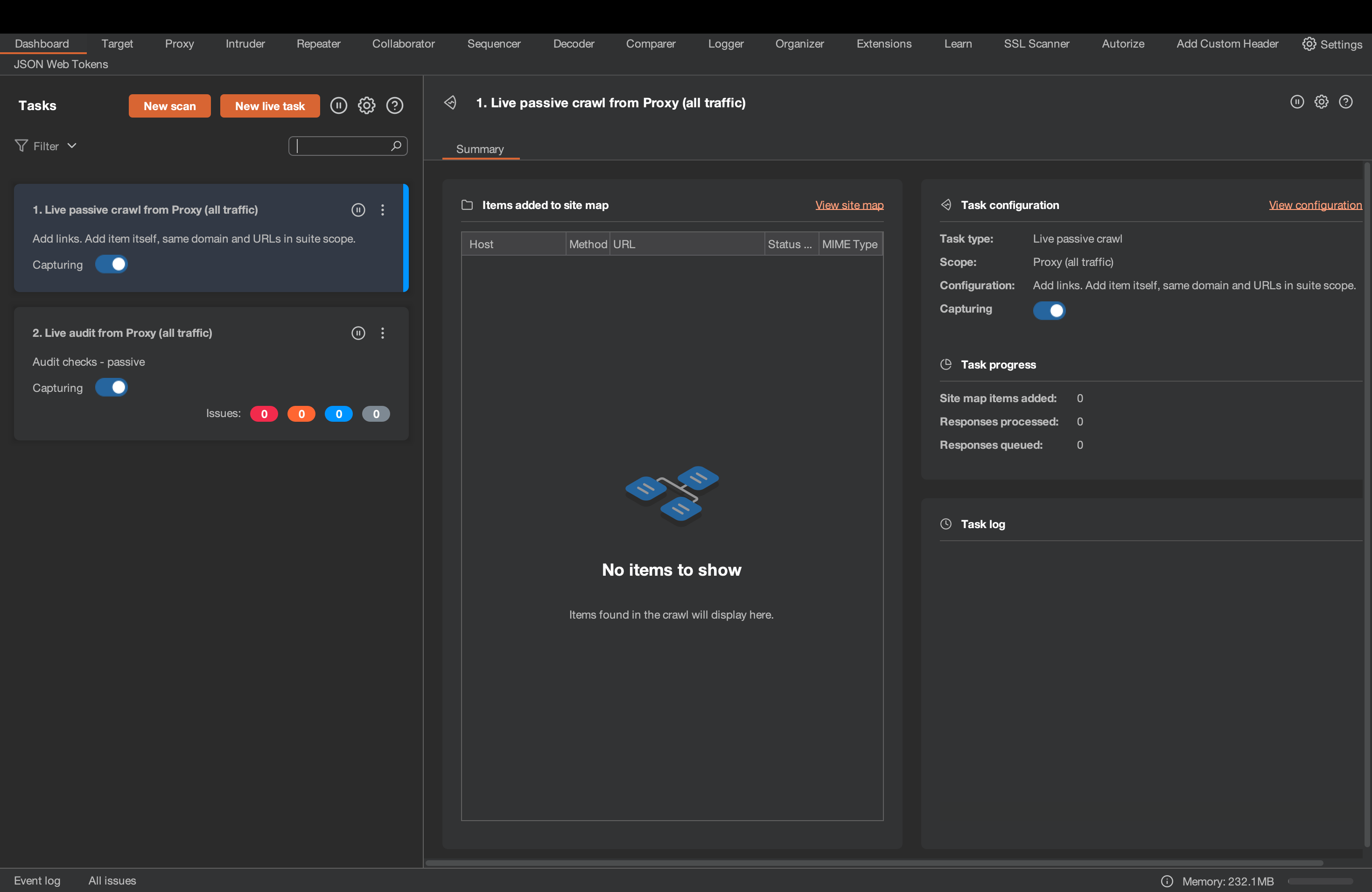
Key Features:
- Web app/cloud vulnerability scanner (manual and automated)
- Advanced proxy, scanner, intruder, and repeater tools
- Integrates with ticketing/workflow; S3 bucket testing support
BurpSuite is a constantly evolving vulnerability scanning and cloud pentesting tool that provides integrations for easy ticket generation. Now, it also provides scope for testing cloud environments and identifying misconfigurations in S3 buckets.
Best For: Web applications and cloud pentesters demanding powerful, extensible vulnerability testing with automated and manual capabilities.
Experts Review
Pros
- Provides advanced automated web app and cloud penetration testing services.
- Provides step-by-step advice for every vulnerability found.
- Can crawl through complex targets with ease based on URLs and content.
Cons
- Advanced solutions are commercialized and can be expensive.
- Does not provide expert customer service and assistance.
Why did we choose Burp Suite?
Burp Suite’s inclusion is due to its evolving capabilities, extending to cloud environments, including S3 bucket testing. Its comprehensive web application testing features and cloud-specific functionalities make it a versatile tool for cloud security assessments.
Final Thoughts
Cloud computing is taking over the business world by storm due to its ease of use and storage capabilities. Therefore, it becomes the responsibility of users and providers to ensure that their customers’ data is always secure, as even the cloud is vulnerable to hacking.
Choose the right cloud penetration testing tools based on their features, pros, and cons. Look for features such as CI/CD integration, compliance-based testing, affordable pricing, customization options, and a reliable penetration testing company.
Our top three picks to keep your cloud safe and sound include Astra Pentest, Intruder, and Nessus. Select the right tool to suit your needs.
FAQs
1. What are the top three cloud platforms?
The three most widely used cloud platforms are AWS by Amazon, Microsoft Azure, and Google Cloud Platform (GCP). Together they hold the majority of the enterprise cloud market and are also the primary environments most cloud penetration testing tools are built to support.
2. What are the top three cloud penetration testing methodologies?
The three main methodologies are black box (tester has zero prior knowledge, mimicking a true external attacker), white box (tester has full access to architecture, credentials, and code), and gray box (partial information is shared upfront, blending realism with efficiency).
3. What is AWS penetration testing?
AWS penetration testing involves probing the AWS services you use for exploitable vulnerabilities, misconfigurations, and privilege escalation paths. It is subject to AWS’s customer-support policies, and certain activities like DoS simulation still require you to submit a request form before testing.
4. What is the Shared Responsibility Model?
The Shared Responsibility Model splits cloud security between provider and customer. Providers handle the underlying infrastructure, while customers secure what they configure and deploy on top. Responsibility on the customer side increases as you move from SaaS to PaaS to IaaS environments.
5. How often should I run a cloud penetration test?
At minimum, run a full cloud pentest once a year, plus after any major infrastructure change, new deployment, or service migration. Many teams pair annual manual tests with continuous automated scans to catch misconfigurations and drift between engagements.