In 2023, WazirX, one of India’s leading crypto exchanges, suffered a $230 million breach: a single failure that triggered a force majeure event and widespread user panic.
In blockchain, trust is everything, and when your smart contract isn’t airtight, that trust evaporates fast. Blockchain applications are known to be more efficient, faster, and better protected than other apps, but even they are more susceptible to data breaches than you’d think, and this attack was beyond their control.
As such, this article will list some of the best blockchain auditing companies, outline the steps involved in blockchain auditing, and highlight key features to look out for.
Best 11 Blockchain Security Testing Companies
- Astra Pentest [Book a Demo]
- Hacken
- Trail Of Bits
- Quantstamp
- PeckShield
- SlowMist
- Certik
- OpenZeppellin
- Consensys Diligence
- Armors
- Sigma Prime
Overwhelmed by audit choices, or don’t know what’s overkill for your protocol? Talk to an Astra expert now: no bots, no fluff, just straight-up advice from someone who can help you figure out what will work best for your specific needs.
What is a Blockchain Security Audit?
A blockchain security audit is a thorough review of smart contracts, blockchain protocols, and associated code to identify vulnerabilities, logic errors, and security flaws before deployment. It helps prevent exploits such as reentrancy attacks and fund theft, ensuring the integrity and safety of blockchain-based systems.
Types of Blockchain Audits
Every blockchain system is a stack of trust: contracts enforce business logic, protocols secure consensus, bridges move assets, and apps connect users. A weakness in any one layer can compromise the entire system, which is why it’s essential to match the audit scope to risk concentrations.
Knowing the type of audit you need is the first step in ensuring trust in your chain extends beyond marketing.
- Smart Contract Audits: Review contract logic, permissions, and attack surfaces to identify flaws such as reentrancy, overflows, or privilege escalation before deployment.
- Protocol Audits: Analyze consensus mechanisms, validator incentives, and protocol-level economics to ensure security at the chain’s foundation.
- dApp Audits: Assess end-to-end decentralized applications, focusing on how smart contracts interact with frontends, wallets, and external APIs.
- Token & DeFi Audits: Examine tokenomics, liquidity pools, yield strategies, and cross-contract interactions to detect financial attack vectors.
- Infrastructure Audits: Cover nodes, wallets, and cross-chain bridges to safeguard the plumbing that keeps networks running.
- Compliance Audits: Validate adherence to regulatory and industry standards, such as AML/KYC integration or GDPR-sensitive data handling in blockchain contexts.
Top 3 Blockchain Auditing Companies
| Feature | Astra Pentest | Hacken | Trail of Bits |
|---|---|---|---|
| Scanner Capabilities | Blockchain, Web, Mobile, Cloud, API, Networks | Blockchain, Smart Contracts | Blockchain, Mobile Security, Software Assurance |
| Accuracy | Zero False Positives (Vetted Scans) | False Positives Possible | False Positives Possible |
| Expert Remediation | Yes | Yes | Yes |
| Continuous Monitoring | Yes (Smart Contract + CI/CD) | Yes (Web3 Bug Bounties) | No |
| Cost | $199/month | Quote on Request | Quote on Request |
1. Astra Pentest – [Get Started]
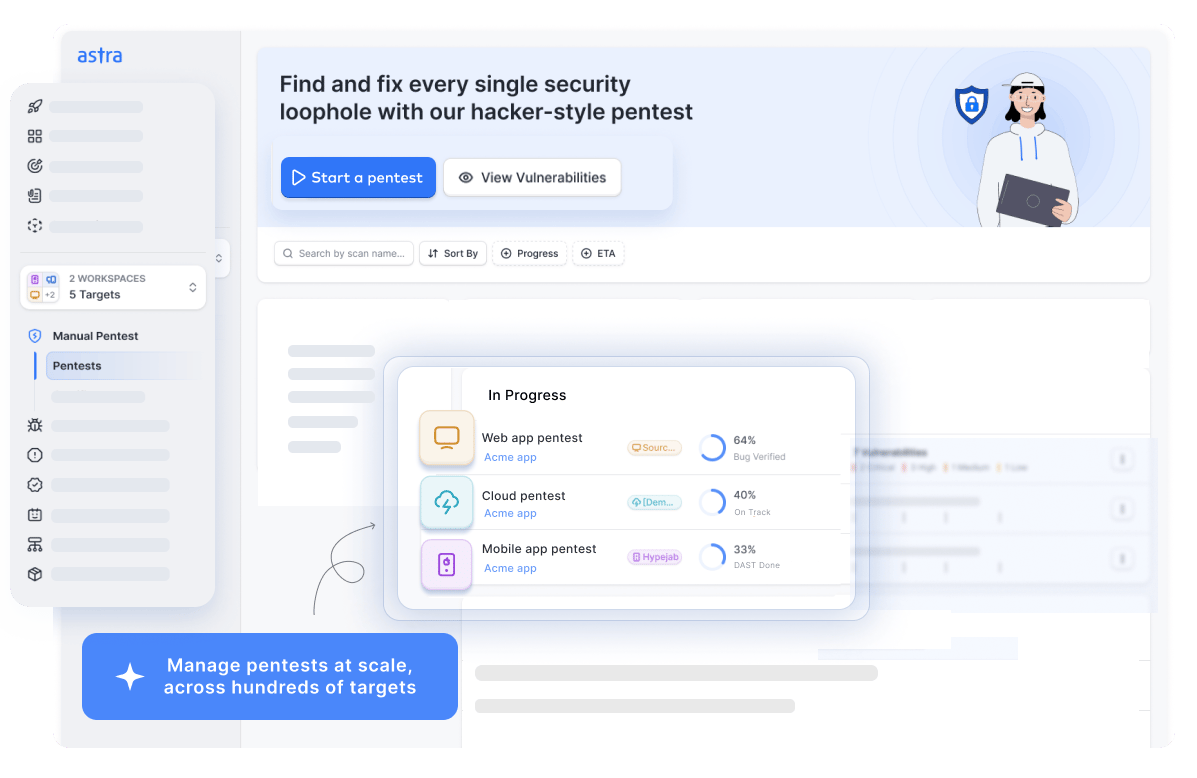
Features:
- Scanner Capabilities: Blockchain, Web and Mobile Apps, Cloud, API, and Networks
- Accuracy: Zero False Positives Assured (Vetted Scans)
- Expert Remediation: Yes
- Continuous Monitoring: Yes (Smart Contract Audits and CI/CD integration)
- Cost: $199/month
Astra’s blockchain pentesting combines over 15,000 regularly updated test cases with AI-powered automation and expert manual testing. We ensure zero false positives, support scans behind login, and uncover complex issues like business logic flaws and payment bypasses.
With seamless integrations across Slack, Jira, GitHub, GitLab, and Jenkins, Astra fits right into your DevSecOps workflow. CXO-friendly dashboards, customizable reports, and dedicated Slack channels make remediation collabs simple and efficient.
Enjoy unlimited automated scans, two free rescans, and publicly verifiable certifications. Backed by certified in-house experts and ISO-compliant practices, Astra delivers enterprise-grade security trusted by blockchain startups and global companies.
Pros
- Offers a publicly verifiable Trust Center
- Enable compliance-ready reporting for regulations
- Exclusive in-house security professionals with various certifications [OSCP, CEH, eJPT, eWPTXv2, and CCSP (AWS)] & CVEs
- CXO-friendly dashboard with a dedicated CSM
- Unlimited automated scans for existing and emerging CVEs
- Active contributor to OWASP and other similar open-source projects.
Limitations
- No free trial (offers a $7/week trial).
2. Hacken
Features:
- Scanner Capabilities: Blockchain scanning, smart contract
- Accuracy: False positives possible
- Expert Remediation: Yes
- Continuous Monitoring: Yes (offers Web3 bug bounty programs as well)
- Cost: Quote on request
Founded in 2017 by security specialists and white hat hackers, Hacken provides services such as educating people on ethical hacking to help them prevent cyberattacks.
Hacken has several products, including the Hackenproof BugBounty platform, with over 10,000 ethical hackers. Their portfolio includes over 700 projects, aside from which they continue to invest in blockchain security ecosystem development while launching other internal projects like hVPN and hPass.
Pros
- Structured and professional security testing.
- Cooperative customer support.
Limitations
- It can be a pricey blockchain auditing solution.
- Prices are only available on request.
3. Trail of Bits
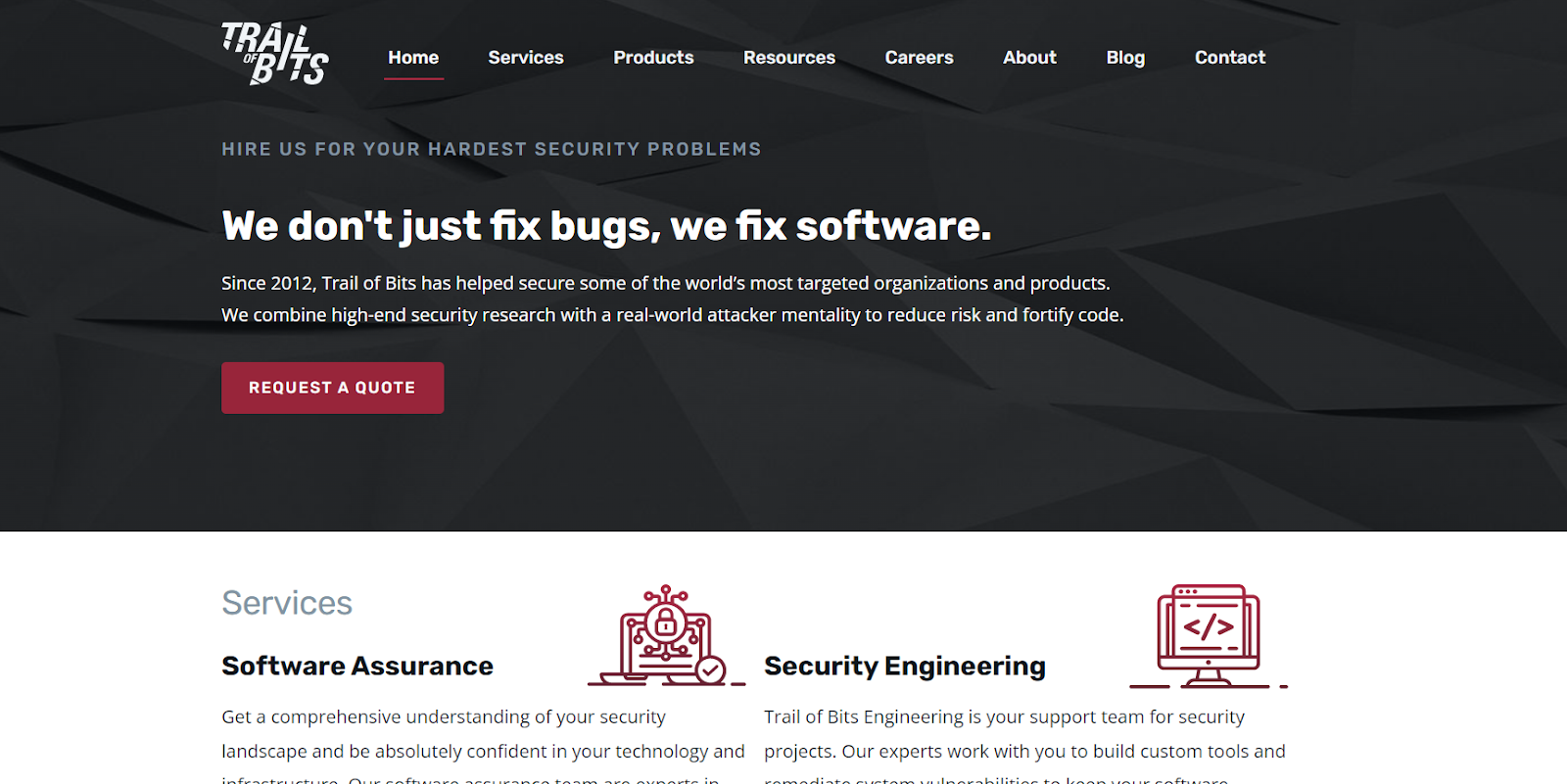
Features:
- Scanner Capabilities: blockchain, mobile security, software assurance
- Accuracy: False positives are possible
- Expert Remediation: Yes
- Continuous Monitoring: No
- Cost: Quote on request
Since 2012, Trail of Bits has been a leading cybersecurity firm with an extensive client list that includes Adobe, Microsoft, Stripe, Reddit, and more. They provide security audits for blockchain, software hardening, infrastructure security, threat modeling, and cryptographic review.
At Trail of Bits, the staff doesn’t just focus on blockchain security but also creates tools to help developers and researchers identify and fix crucial vulnerabilities. Some notable tools they offer are Ethersplay, Slither, and Echidna.
Pros
- They offer reasonable software assurance.
- Research and development services to better serve clients.
- Comprehensive support for unique needs.
Limitations
- The tool is highly scalable.
- Easy to integrate.
- Great customer support.
4. Quantstamp
Features:
- Scanner Capabilities: Web3, Blockchains, smart contracts
- Accuracy: False positives possible
- Expert Remediation: Yes
- Continuous Monitoring: Yes (smart contract audits and bug bounty programs)
- Cost: Quote on Request
Quantstamp is globally renowned for its smart contract auditing, which has secured over $200B in value. Selected from tech giants such as Google, Facebook, Apple, and Ethereum Foundation – their team of experienced security professionals is the best in the industry.
Quantstamp employs security experts who can audit blockchains in any language. They develop financial backer services for ecosystems included in Layer 1 blockchains and specialize in auditing various systems and protocols, like Ethereum 2.0, Solana, and BNB Chain.
Pros
- Run by experienced security professionals.
- Can audit blockchains in any language.
Limitations
- It might not be a scalable solution.
5. PeckShield
Features:
- Scanner Capabilities: Blockchain, smart contracts
- Accuracy: False positives possible
- Expert Remediation: Yes
- Continuous Monitoring: Yes (threat monitoring and DAppTotal)
- Cost: Not mentioned
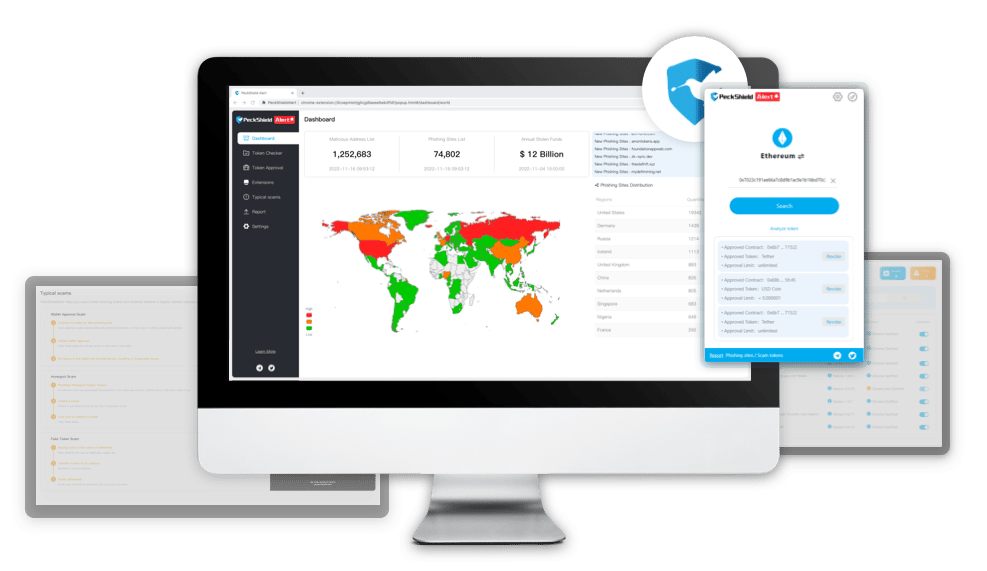
PeckShield is a China-based security and audit firm with international team members. In 2018, the company made a name for itself by uncovering issues such as BatchOverflow within Ethereum smart contracts.
It has a variety of blockchain technology experiences that its team offers. Through its various threat monitoring services, DAppTotal and CoinHolmes, they provide end-to-end protection for all blockchain users.
Pros
- Audited big names in the industry, such as Aave, EOS, and Tron.
- Provides end-to-end protection for all blockchain users.
Limitations
- Limited blockchain coverage.
6. SlowMist
Features:
- Scanner Capabilities: Blockchain, smart contracts
- Accuracy: False positives possible
- Expert Remediation: No
- Continuous Monitoring: Yes (continuous scanning)
- Cost: Quote on request
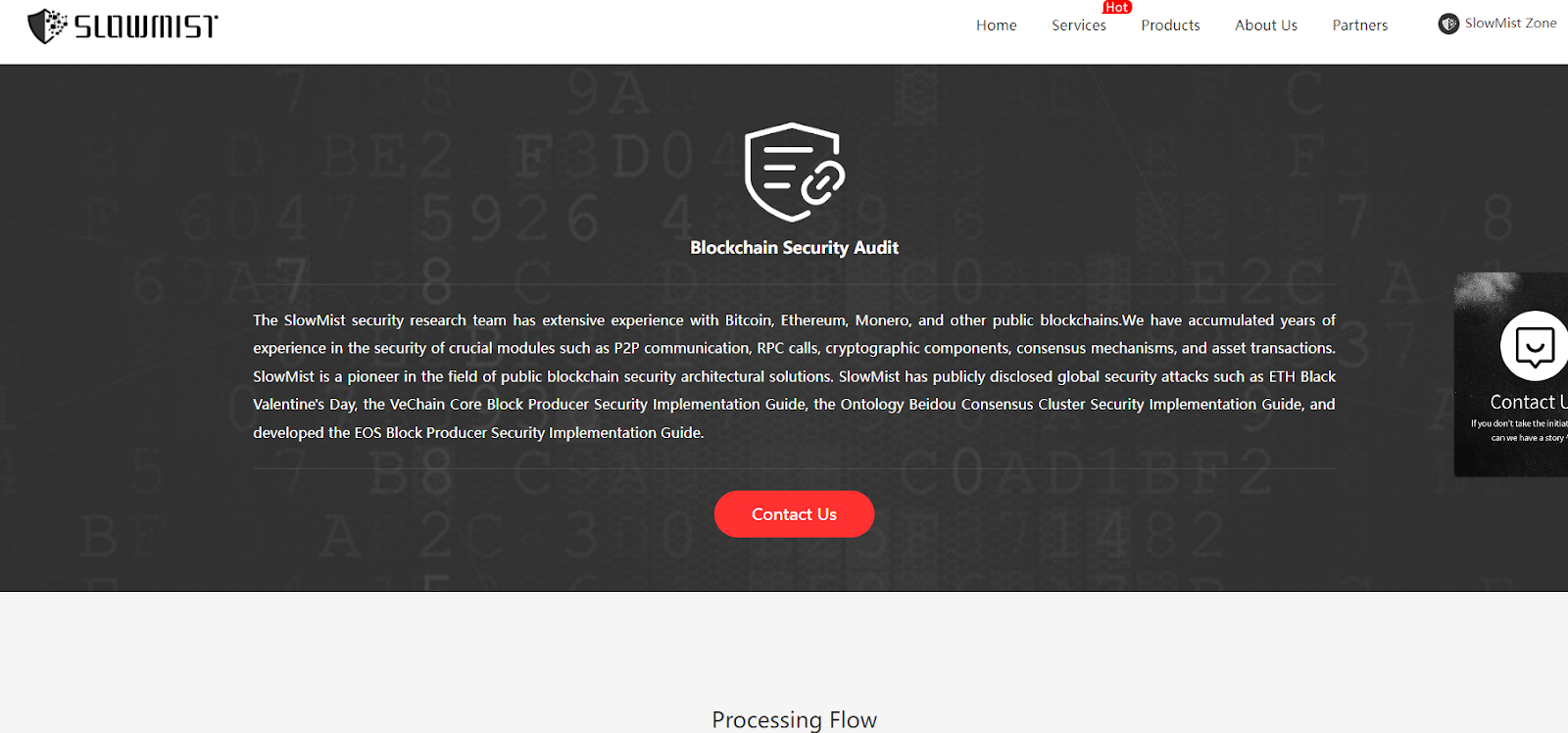
SlowMist is a blockchain security firm founded in 2018. They have over a decade of experience in network security and helping secure some of the world’s most influential cryptocurrency exchanges, such as Binance, OKX, Huobi, Pancakeswap, and Crypto.com.
SlowMist also offers various security products, including MistTrack (a cryptocurrency tracker), Anti-money laundering (AML) software, Vulpush (vulnerability monitoring), and SlowMist Hacked (crypto hack archives).
Pros
- Partnered with security firms such as Akamai, Cloudflare, FireEye, and BitDefender.
- Offers a variety of products.
Limitations
- Only focuses on blockchain and smart contracts.
7. Certik
Features:
- Scanner Capabilities: Web and smart contract audits
- Accuracy: False positives possible
- Expert Remediation: Yes
- Continuous Monitoring: Yes
- Cost: Not available
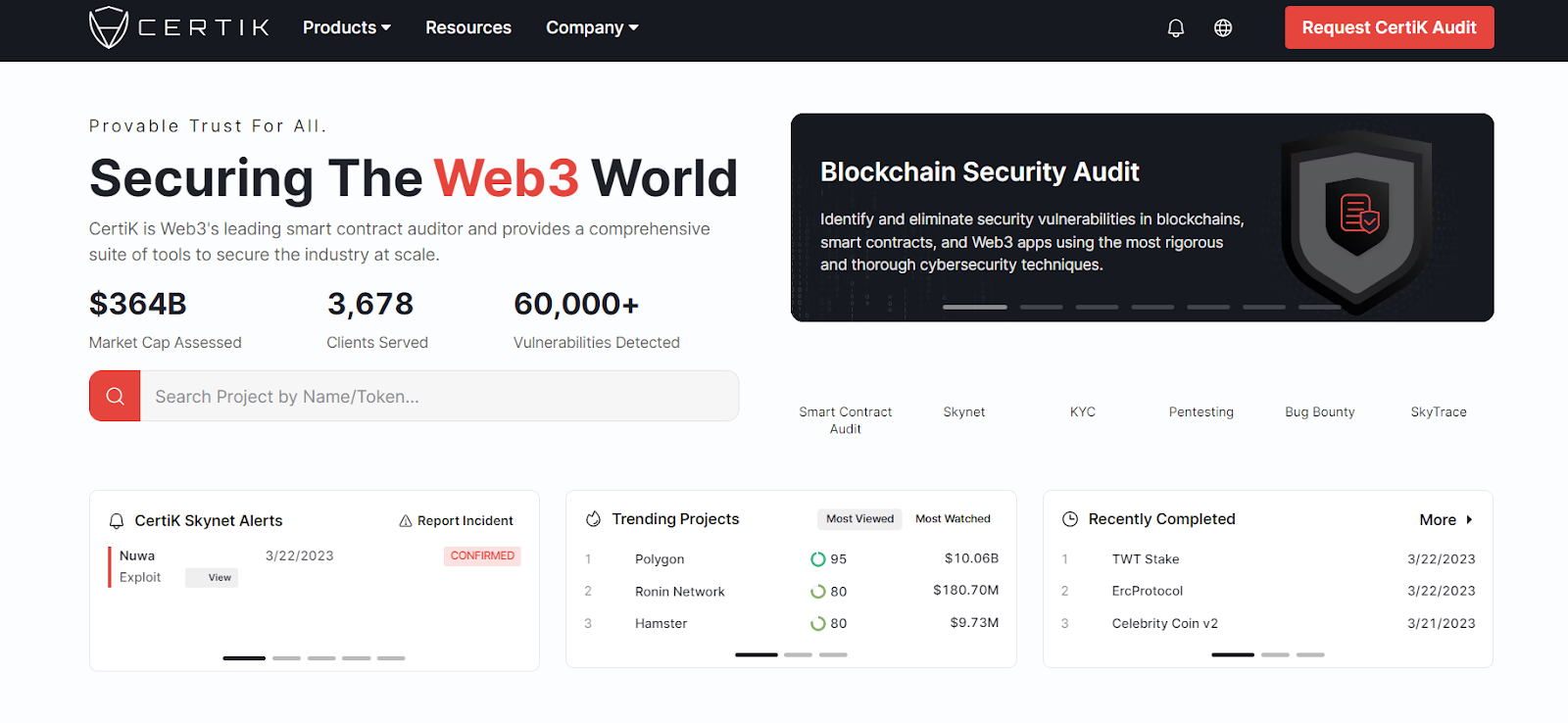
Certik is a blockchain audit firm founded in 2018 by professors from Columbia and Yale. Certik uses formal verification and AI technology to provide end-to-end security audits for smart contracts.
By combining these two verification forms, they mathematically validate the safety of smart contracts—something that other companies have yet to perfect. They have established “CertiK Chain,” a security-centered blockchain that upgrades the safety of smart contracts.
Pros
- Audits for popular chains such as Terra, Polygon, and The Sandbox.
- Supported by well-known companies such as Coinbase and Golden Sachs.
Limitations
- No mentionable Limitations.
8. OpenZeppelin
Features:
- Scanner Capabilities: automation of smart contracts, blockchain security audits
- Accuracy: False positives possible
- Expert Remediation: No
- Continuous Monitoring: No
- Cost: Quote on request
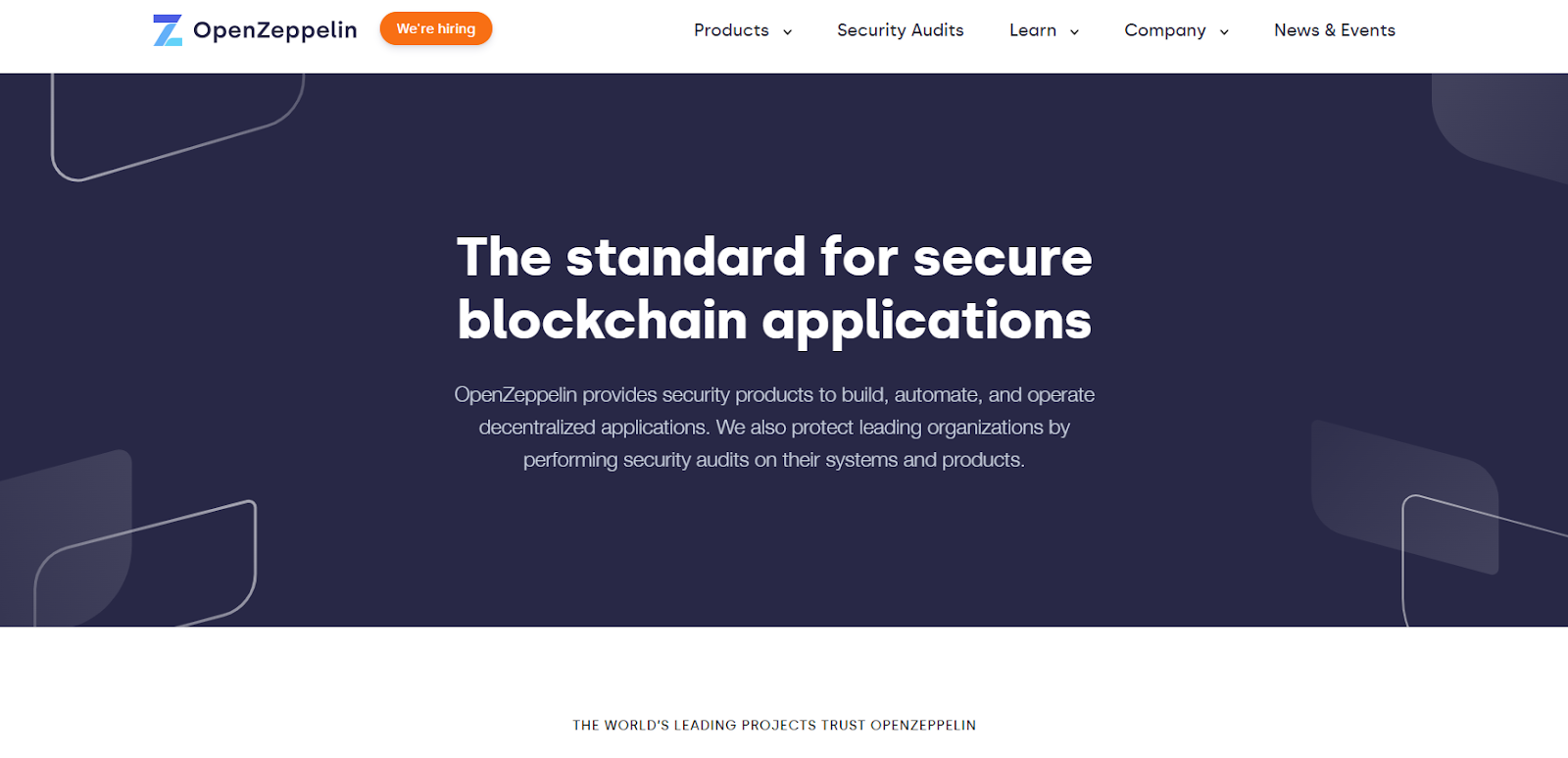
OpenZeppelin sets a standard for secure blockchain applications. As a cybersecurity technology and services company, it is best known for its Solidity libraries and OpenZeppelin Contracts.
The SDK lets developers easily integrate OpenZeppelin’s libraries into their existing applications. Their “Ethernaut” game tests gamers’ ability to find vulnerabilities in smart contracts. The Defender service helps projects automate contract administration by creating automated scripts.
Pros
- Easy integration with OpenZeppelin libraries
- Provide free services like “Defender.”
- Automation of contract administration
- Free solution
Limitations
- No particular limitations
9. Consensys Diligence
Features:
- Scanner Capabilities: Blockchain, Ethereum smart contracts
- Accuracy: False positives possible
- Expert Remediation: No
- Continuous Monitoring: No
- Cost: Price on Request
As one of the top crypto audit companies, Consensys is dedicated to creating innovative blockchain applications and software for the Ethereum network. Consensys’ Diligence cybersecurity product performs detailed security analyses of smart contracts so projects can deploy their Ethereum application without worry.
They provide blockchain security analysis tools and experienced, competent contract auditors who work together to achieve customer goals. The firm has protected over 100 blockchain companies and uncovered over 200 issues.
Pros
- Worked on more than 100 projects with support from experienced auditors.
- It has other services like fuzzing and scribble.
Limitations
- Deployment time is easily affected.
10. Armors
Features:
- Scanner Capabilities: Blockchain code, smart contracts
- Accuracy: False positives are possible
- Expert Remediation: No
- Continuous Monitoring: Yes (continuous scanning)
- Cost: Quote on Request
Founded in 2017 as a blockchain audit company, Armors is engaged in implementing a technological analysis of blockchain security.
Armors partners with exchanges such as OKEX, Binance, Bybit, Huobi, Bitfinex, Kucoin, MXC, Bibox, etc., to provide code audit services to its partners. It also partners with other services such as Polygon, Solana, and Ethereum.
Pros
- Provides security audit, penetration testing, and cross-chain migration.
- It also provides platform security for over 2,000 blockchain applications
Limitations
- Pricing not mentioned
11. Sigma Prime
Features:
- Scanner Capabilities: Blockchain, smart contracts
- Accuracy: High accuracy due to focus on research and development
- Expert Remediation: Yes, they offer remediation guidance
- Continuous Monitoring: No, primarily focused on audits
- Cost: Quote on request
Sigma Prime is a blockchain security and research firm specializing in Ethereum smart contract security assessments. Their contributions to Ethereum 2.0 development include the creation of the Lighthouse client.
They provide deep security auditing, where expert researchers locate probable vulnerabilities. This research emphasis has driven their high accuracy rates.
Pros:
- Expertise in Ethereum and smart contract security
- Strong research foundation
- In-depth audit reports
Limitations:
- Primarily focused on the Ethereum ecosystem
- Limited information on pricing is publicly available
How to Choose the Right Blockchain Auditing Provider?
1. Expertise
One of the most important factors to consider when choosing a blockchain auditing company is its expertise. Look for a company with experience auditing blockchain systems and smart contracts and a team of cybersecurity professionals with expertise in various areas such as cryptography, network security, and software engineering.
2. Reputation
It’s also important to consider the blockchain auditing company’s reputation. Choose a company with a strong industry reputation and that has worked with known clients. You can check reviews and testimonials from previous clients to get an idea of their experience working with the company.
3. Blockchain Coverage
Consider the range of blockchain platforms that the auditing company can audit. Some companies specialize in auditing specific blockchain platforms, such as Ethereum, while others may be able to audit a broader range of platforms.
4. Transparency
Find a company with a transparent auditing process and methodology. The auditing company should provide detailed reports and findings to its clients and be open to answering any questions you may have about its process.
5. Cost
Cost is also an essential factor to consider when choosing between crypto audit companies. Prioritize finding a company that offers flexible pricing options based on the scope and complexity of the project, and consider your budget when making a decision.
6. Customer support
Finally, consider the level of customer support that the auditing company provides. Look for a responsive company that is easy to communicate with and provides ongoing support throughout the auditing process and beyond.
No other Blockchain pentest product combines automated scanning + expert guidance like we do.

The Critical Role of Smart Contract Audits
Smart contracts are agreements executed automatically and have the contract conditions encoded into the code. These agreements control billions of dollars in decentralized independent organizations and money. However, flaws in these contracts can lead to devastating financial losses.
Blockchain auditing firms seem to be one of the most requisite needs in protection against the blockchain ecosystem. They audit various kinds of smart contracts to look out for vulnerabilities, such as:
- Decentralized Autonomous Organizations (DAOs): These complex structures require in-depth audits to avoid mismanagement of funds and exploitation.
- DeFi Protocols: These contracts manage much money and are prone to hacking. Audits are carried out to detect issues such as reentrancy and overflow errors.
- Token Contracts: The success of token projects depends on accurate token distribution, proper governance mechanisms, and robust security features.
- Exchange Contracts: Complex trading logic and matching orders allow rigorous auditing to detect market manipulation and avoid financial losses.
These and other types of smart contracts ensure security and integrity for participants, thanks to auditing firms that help establish trust in the blockchain industry and minimize possible risks for its participants.
How can Astra Security Help?
Simply put, Astra helps by providing an end-to-end audit framework that systematically checks smart contracts against common vulnerability categories such as reentrancy, insecure external calls, unbounded loops, privilege escalation, and weak access control. It combines static analysis, fuzzing, symbolic execution, and simulation to uncover flaws in logic, tokenomics, role management, and upgrade patterns.
From here, each finding is logged in the VAPT Dashboard, accompanied by severity ratings, proof-of-concept exploits, and clear remediation guidance, ensuring not only detection but also prevention of high-impact risks, such as locked funds, front-running, flash loan abuse, and MEV-exploitable designs.
Steps in Blockchain Auditing
1. Scope of Testing
Always define your audit goals before you begin the testing process with a blockchain auditor. You can also narrow down the scope of testing to several smaller goals related to different security areas and your specific needs.
2. Detection and Identification of Vulnerabilities
The next step is to review the code of the blockchain system or smart contract, which involves analyzing the code structure, logic, and flow to identify potential vulnerabilities. Manual code review and automated tools, such as static analysis, can be used to perform this step.
3. Exploitation
Once the code has been reviewed, it must be tested to identify potential vulnerabilities or weaknesses. This can include unit, integration, and stress testing, among others. A combination of automated and manual testing methods is usually used here to increase the reliability of the test.
4. Reporting
Finally, the results of the blockchain audit need to be compiled into a detailed report that identifies potential security risks and vulnerabilities and provides recommendations for addressing these issues. Share this report with stakeholders, the development team, and relevant regulatory bodies.
5. Remediation & Rescans
Based on the findings in the report, the developers collaborate with the testers to ensure that the vulnerabilities are remediated as quickly and efficiently as possible, and they formulate a rescan schedule to maintain continuous security.
Final Thoughts
Behind every audit is a team putting their name on your code, and behind your code is your credibility, your users’ safety, and your next funding round. The right audit partner will give you peace of mind, faster launches, and fewer 3 a.m. Slack meltdowns.
The growing blockchain landscape requires strong security measures to maintain the integrity of smart contracts. In this blog, we discussed the critical role of auditing companies in discovering and partially preventing associated threats.
Taking the onus of a comprehensive blockchain audit against protecting your digital possessions and the general maintenance of trust is extremely important.
Comparing the different blockchain auditing companies can help improve your blockchain project’s security profile, prevent risks, and ensure a high level of security.
FAQs
What are the best companies for blockchain auditing?
Astra Security, Hacken, Trail of Bits, and Quantstamp are among the leading blockchain auditing companies. They offer comprehensive security assessments and expert services to protect digital assets.
What are the benefits of blockchain auditing?
Blockchain auditing helps identify and mitigate vulnerabilities in smart contracts and other blockchain components, protecting digital assets and enhancing a project’s overall security posture.
How long does a blockchain audit take?
A blockchain audit usually takes 10 to 15 business days, depending on code complexity, number of contracts, and audit scope. Simple ERC-20 tokens may be reviewed within days, while complex DeFi or multi-contract systems require extensive testing, fuzzing, and reporting before completion.
How much does a blockchain audit cost?
A blockchain audit typically costs $5,000 to $30,000+, depending on contract complexity, codebase size, and testing depth. Simple token audits are cheaper, while DeFi, NFT, and cross-chain protocols require deeper analysis. Premium audits with formal verification and ongoing monitoring cost significantly more.
What are crypto audit companies?
Crypto audit companies review smart contracts, blockchain protocols, & decentralized applications for vulnerabilities before deployment. Firms like Trail of Bits, CertiK, Hacken, PeckShield, & Quantstamp combine manual code review with automated tools to catch exploits, logic flaws, & attack vectors before hackers do.
What does a blockchain security firm do?
A blockchain security firm audits smart contracts, protocols, and decentralized apps to find vulnerabilities before attackers exploit them. Services include code review, penetration testing, and cryptographic analysis across Ethereum, Solana, and other chains to protect user funds and platform integrity.