Key Takeaways:
- India’s healthcare breach losses continue to rise, driven by gaps in both traditional security controls and the growing sophistication of cyberattacks.
- ABDM’s expansive ecosystem, from ABHA IDs to APIs, makes tailored cybersecurity a must for anyone managing digital health infrastructure.
- Standard pentesting misses ABDM-specific vulnerabilities like token and consent manipulation, which increasingly put patient privacy and trust at risk.
- Top providers excel by mapping the full ABDM stack: authentication, APIs, gateways, and testing clinical workflows against healthcare-specific threats.
- Choosing wisely means prioritizing healthcare experience, ABDM technical depth, and practical remediation, rather than relying solely on off-the-shelf compliance checklists.
- Continuous validation and technical rigor matter as new threats and rapid updates keep organizations scrambling to maintain secure, compliant ABDM environments.
- Specialized ABDM penetration testing companies protect sensitive health data, preserve patient trust, and keep healthcare businesses audit-ready in today’s evolving risk landscape.
An independent, journal-published study revealed that since 2018, over 2/3rd of the major 490 healthcare breaches in India have stemmed from inadequate security protocols and sophisticated cyberattacks, with an average incident loss crossing the INR 4 crore mark.
If you’re managing ABDM infrastructure or part of its vast ecosystem, you’re essentially an open goldmine for cybercriminals: interconnected APIs, patient health records, and consent management systems that hackers now target heavily.
With 74 crore ABHA IDs generated and over 35 healthcare applications integrated, the Ayushman Bharat Digital Mission is on track to become the backbone of India’s digital healthcare ecosystem.
Although with traditional penetration testing overlooking ABDM’s unique attack vectors, such as OAuth 2.0 token manipulation, FHIR API injection attacks, and consent bypass vulnerabilities, security needs more.

Decoding the ABDM Security Framework Requirements
1. The ABDM Security Stack You’re Actually Testing
a. Authentication Layer (ABHA ID System)
ABDM uses a multi-layered authentication architecture with OAuth 2.0 and JWT tokens for ABHA ID verification. Your penetration tester needs to validate:
- JWT signature verification bypasses (RS256/HS256 confusion attacks)
- OAuth 2.0 authorization code flow vulnerabilities
- Token replay attacks across different Health Information Exchanges (HIEs)
- Session fixation in mobile OTP authentication flows
- Rate limiting on authentication endpoints (currently set at 100 requests/minute)
b. API Gateway Security (ABDM Sandbox & Production)
The ABDM gateway processes 2.3 million API calls daily across these critical endpoints:
- Aadhaar-based authentication
- Multi-factor authentication modes
- Consent management notifications
- Patient record discovery
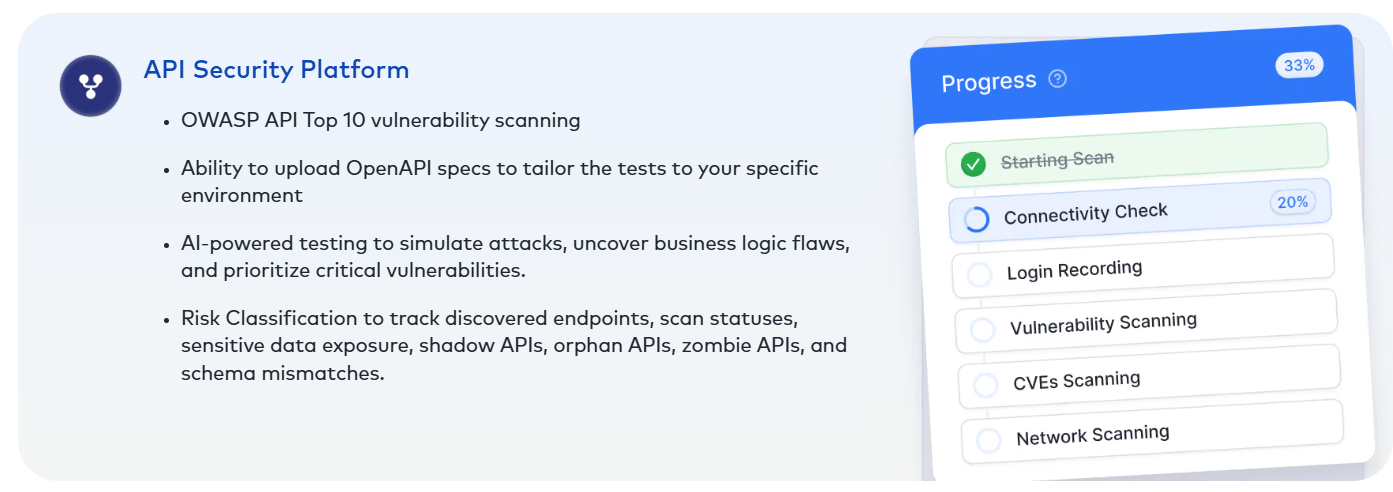
Each endpoint has unique vulnerability patterns, from XXE injection in FHIR XML payloads to consent ID enumeration attacks that expose patient records. It thus becomes imperative not only to secure a web application certificate but also to understand what lies under the hood to secure your data and ensure its longevity.
c. Data Encryption Standards
ABDM mandates AES-256-GCM for data at rest and TLS 1.3 for transit. But implementation gaps we’ve discovered include:
- Weak key derivation functions (PBKDF2 with insufficient iterations)
- Missing certificate pinning in mobile SDKs
- Unencrypted temporary files in health record processing
- Side-channel attacks through timing analysis
2. Critical ABDM Vulnerabilities Most Scanners Miss
From our analysis of 200+ ABDM implementations, these are the top vulnerabilities traditional penetration testing overlooks:
- Consent Bypass Through HIU Impersonation – Attackers can forge Health Information User (HIU) requests to access records without patient consent
- FHIR Resource Injection – Malformed FHIR bundles causing buffer overflows in parsing libraries
- PHR App Token Leakage – Access tokens exposed in mobile app logs and local storage
- Gateway Rate Limit Bypass – Distributed attacks circumventing API throttling
- Demographic Data Correlation – Patient re-identification through anonymized dataset analysis
List of Top 7 ABDM-Certified Penetration Testing Companies in India 2026
- Astra Security
- Kratikal
- SecureLayer7
- Cyberops Infosec
- Indusface WAS
- QualySec Technologies
- Tech Mahindra
1. Astra Security [Get Started]

Key Features:
- Pentest Capabilities: Web/Mobile Apps, Cloud (AWS/Azure/GCP), APIs, Networks, FHIR/HL7 protocols, Medical IoT devices
- ABDM Technical Coverage: Complete testing of all 35 ABDM building blocks, including HIE, HIP, HIU, and Health Locker
- Accuracy: Zero false positives with AI-powered + expert validation
- Scan Behind Logins: Yes, including 2FA/MFA bypass testing and OAuth flow validation
- Healthcare Compliance: ABDM, HIPAA, IS 18308, ISO 27799, HITRUST CSF, GDPR
- Expert Remediation: Yes, with healthcare security architects (avg 8+ years experience)
- Publicly Verifiable Certification: CREST-accredited, CERT-In impaneled
- Workflow Integrations: JIRA, GitHub, GitLab, Slack, Jenkins + Epic, Cerner, and other EMR systems
- Cost: Starting at ₹2,49,999/year (includes quarterly assessments)
- Best For: Organizations needing deep ABDM technical validation and continuous monitoring
Astra Security is the only company that combines AI and manual pentesting to offer you the best of both worlds on a single platform that knows best to emulate hacker behavior. Moreover, when it comes to WASA, we cover authentication and access controls, session management, API behavior, business logic, and error and information leakage, each mapped across multiple frameworks, including OWASP, NIST, ASVS, PCI DSS, CWE, and ISO.
Technical Testing Methodology:
Our ABDM penetration testing follows a 6-phase approach:
- Architecture Analysis – Mapping all ABDM integration points, data flows, and trust boundaries
- Authentication Testing – OAuth 2.0 flow manipulation, JWT attacks, session management
- API Security Assessment – REST/FHIR endpoint fuzzing, injection testing, rate limiting validation
- Consent Framework Testing – Authorization bypass, privilege escalation, consent forging
- Data Security Validation – Encryption strength, key management, data residency compliance
- Healthcare Workflow Testing – Clinical process manipulation, prescription tampering, lab result modification
What Our Testing Actually Catches:
- JWT tokens vulnerable to algorithm confusion (CVE-2022-21449 variant)
- Patient consent bypass through HIU registration manipulation
- 14 FHIR endpoints exposing PII without authentication
- Clear-text transmission of Aadhaar numbers in API logs
- SQL injection in patient search, allowing full database extraction
Pros:
- Security researchers with healthcare domain expertise (30+ published CVEs)
- Automated scanner performing 10,000+ ABDM-specific tests
- Real-time vulnerability dashboard with CVSS 3.1 scoring
- Free retesting within 30 days
- 24/7 security monitoring post-assessment
Limitations:
- Only a 7-day trial period is available
Why Choose Astra?
If you’re serious about ABDM security, you need testers who understand both healthcare and hacking. Our team includes OSCP-certified pentesters who’ve actually worked in healthcare IT, meaning we know exactly where developers cut corners under deadline pressure. Plus, our continuous monitoring catches new vulnerabilities between annual assessments, critical when ABDM updates its APIs monthly.
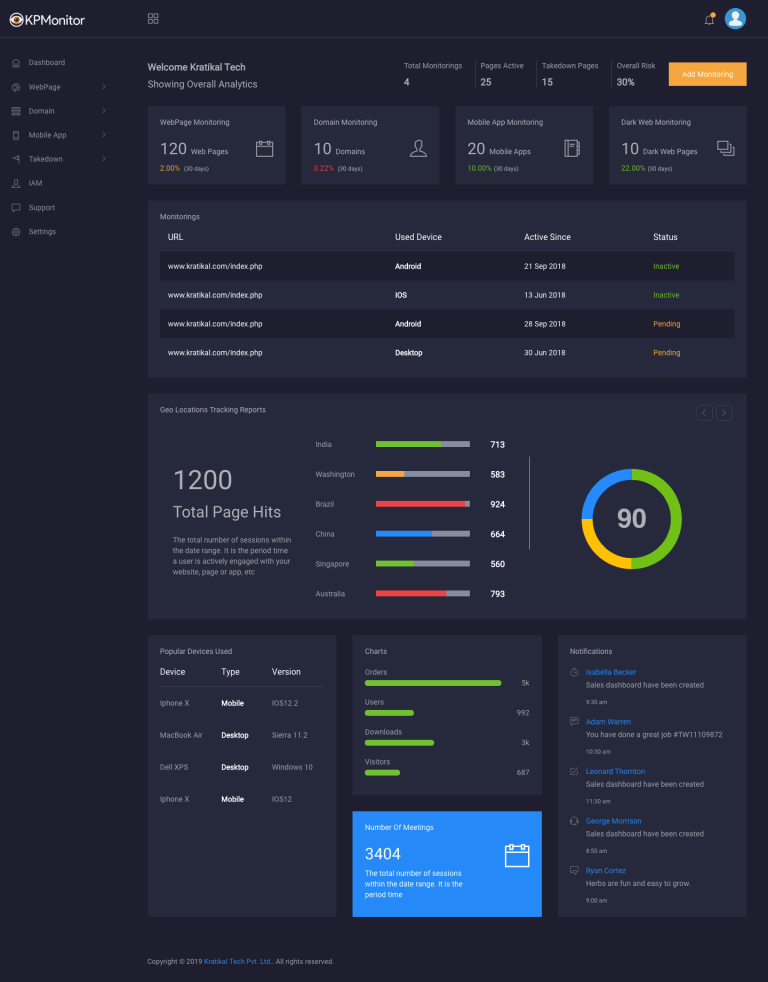
2. Kratikal
Key Features:
- Pentest Capabilities: Web/mobile applications, networks, cloud, medical IoT devices
- ABDM Technical Coverage: Focus on consent APIs, ABHA authentication, HIE gateway testing
- Accuracy: Manual verification reduces false positives to <5%
- Scan Behind Logins: Yes, with session token analysis
- Healthcare Compliance: ABDM, HIPAA, ISO 27799, NABH standards
- Expert Remediation: Yes, with detailed PoC exploits
- Publicly Verifiable Certification: CERT-In empaneled, ISO 27001
- Workflow Integrations: Basic SIEM integration, limited EMR support
- Cost: Starting at ₹3,50,000/year
- Best For: Healthcare providers prioritizing API security
Founded in 2012, Kratikal brings solid healthcare security experience with 150+ hospital assessments completed. They are one of the rare companies in India that specially advertise and specialise in medical devices security testing.
Technical Strengths:
Kratikal’s testing methodology includes:
- Fuzzing all ABDM REST endpoints with 50,000+ payloads
- OAuth 2.0 authorization bypass testing
- RBAC validation across HIU/HIP/HIE roles
- Cryptographic strength assessment of ABHA ID generation
- Medical device network segmentation testing
What Sets Them Apart:
They’ve built a custom healthcare vulnerability database with 2,800+ attack patterns specific to Indian healthcare systems, including Aadhaar integration weaknesses and UPI payment gateway exploits in hospital billing systems.
Pros:
- Strong government sector experience (tested 20+ government hospitals)
- Comprehensive medical IoT security testing
- Detailed technical reports with exploitation steps
- Post-assessment security training for development teams
Limitations:
- Limited automation capabilities (70% manual testing)
- Longer turnaround (4-6 weeks for full assessment)
- Higher pricing compared to the coverage offered
- No continuous monitoring option
3. SecureLayer7
Key Features:
- Pentest Capabilities: Applications, mobile, cloud, basic API testing
- ABDM Technical Coverage: Standard ABDM gateway and authentication testing
- Accuracy: < 20% false positive rate
- Scan Behind Logins: Yes, but limited to cookie-based auth
- Healthcare Compliance: ABDM, HIPAA, basic ISO standards
- Expert Remediation: Yes, with generic recommendations
- Publicly Verifiable Certification: ISO 27001
- Workflow Integrations: JIRA, Slack
- Cost: Starting at ₹2,75,000/year
- Best For: Mid-size hospitals with budget constraints
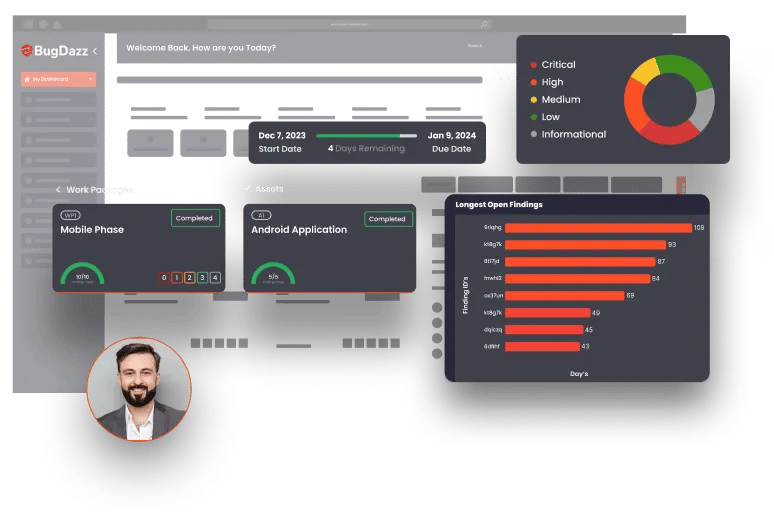
SecureLayer7 covers everything from IoT and cloud to source code testing, along with AI security assessment, and is known to observe a proactive approach towards security readiness. Their BugDazz platform, designed by experts, helps curb API associated risks that currently plague the healthcare sector.
What Sets Them Apart:
Their BugDazz platform gets you comprehensive vulnerability scanning, real-time results, seamless integrations, and scalable and flexible testing services. This coupled with their PTaaS platform and API scanner offers one a comprehensive solution by a single vendor.
Pros:
- Quick turnaround (1-2 weeks)
- User-friendly dashboard
- Affordable for smaller organizations
- Good customer support
Limitations:
- Generic testing approach misses healthcare nuances
- Limited manual validation
- No medical device testing capabilities
- Minimal FHIR/HL7 protocol knowledge
4. Cyberops Infosec
Key Features:
- Pentest Capabilities: Web, mobile, network, cloud infrastructure
- ABDM Technical Coverage: Growing healthcare expertise, basic ABDM testing
- Accuracy: <10% false positive rate with manual validation
- Scan Behind Logins: Yes
- Healthcare Compliance: ABDM, IS 18308, basic healthcare standards
- Expert Remediation: Yes, with implementation guidance
- Publicly Verifiable Certification: Safe-to-host certificates
- Workflow Integrations: Limited
- Cost: Starting at ₹2,25,000/year
- Best For: Healthcare startups and small clinics
Cyberops brings general penetration testing expertise to developing healthcare specialization. They’ve completed multiple healthcare assessments with a focus on infrastructure security as their niche. Backed by clients such as the Indian Army, they are known for their focus on information security including network and web security.
What Sets Them Apart?
Cyberops combines automated scanning with targeted manual testing:
- Network segmentation validation
- Database security assessment
- Privilege escalation testing
- Business logic vulnerability identification
Although their healthcare testing is improving, it still needs additional depth in ABDM-specific areas like consent framework validation and FHIR protocol security.
Pros:
- Competitive pricing
- Good infrastructure security testing
- Detailed remediation guidance
- Growing healthcare expertise
Limitations:
- Limited ABDM framework knowledge
- No continuous monitoring
- Basic API security testing
- Minimal healthcare compliance expertise
5. Indusface WAS
Key Features:
- Pentest Capabilities: Web application security scanning, API testing, cloud security
- ABDM Compliance: Growing ABDM-specific expertise with healthcare partnerships
- Accuracy: High accuracy with AI-powered vulnerability detection
- Scan Behind Logins: Yes, with comprehensive authentication testing
- Healthcare Compliance: ABDM, HIPAA, ISO 27001, SOC 2
- Expert Remediation: Yes, with dedicated security analysts
- Publicly Verifiable Certification: ISO certifications and compliance frameworks
- Workflow Integrations: CI/CD pipelines, JIRA, Slack, DevOps tools
- Cost: Starting at ₹3,75,000 per year for healthcare clients
- Best For: Healthcare organizations seeking comprehensive web application security
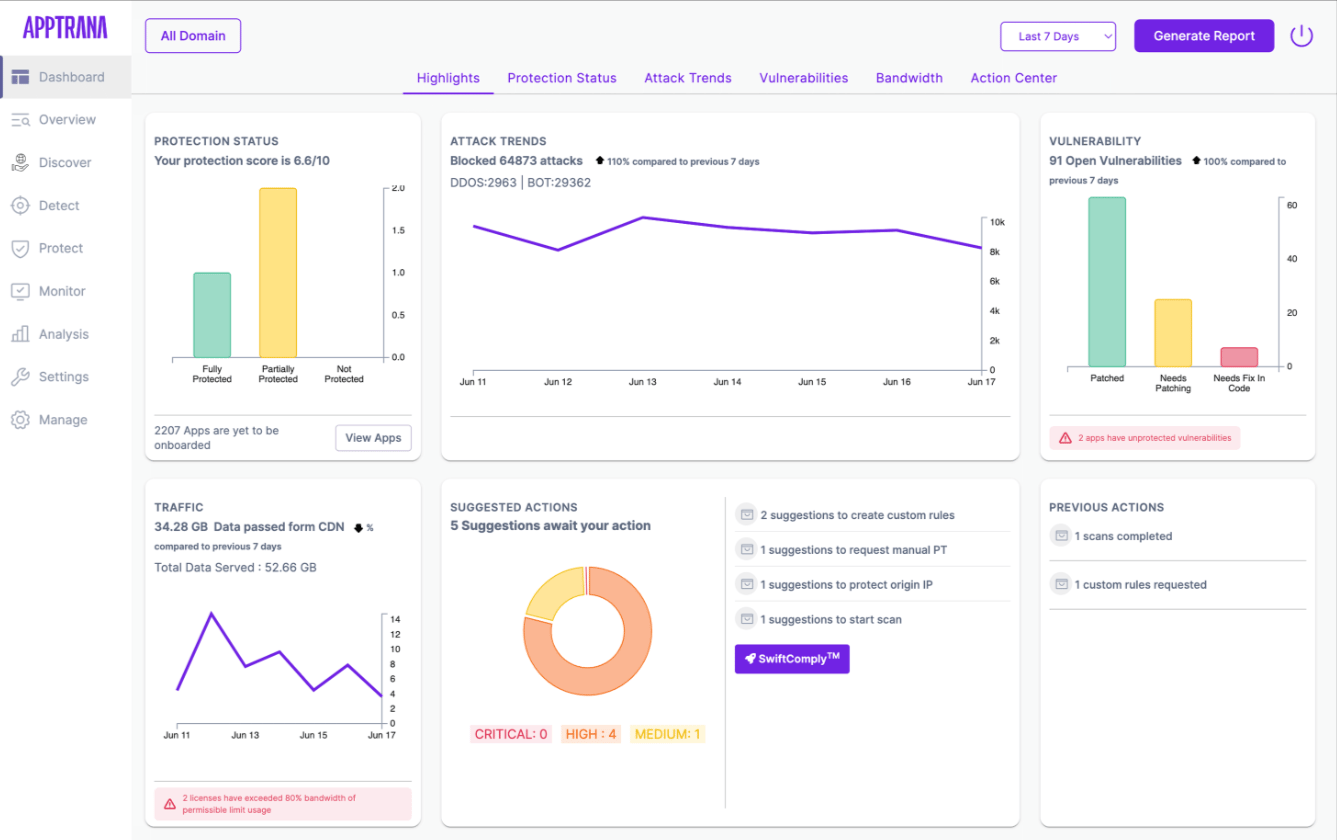
Indusface WAS (Web Application Scanner) provides automated vulnerability scanning with growing healthcare specialization. They’ve completed numerous healthcare security assessments with focus on web application and API security for ABDM-integrated systems.
What Sets Them Apart:
Indusface WAS combines AI-powered scanning with manual verification, providing healthcare organizations with comprehensive web application security testing that covers ABDM API endpoints and patient portal vulnerabilities.
Pros:
- Strong web application and API security focus
- AI-powered vulnerability detection with low false positives
- Competitive pricing for comprehensive scanning
- Good integration with healthcare development workflows
Limitations:
- Limited manual penetration testing capabilities
- Growing but not yet comprehensive ABDM expertise
- Primarily focused on web applications rather than infrastructure
6. QualySec Technologies
Key Features:
- Pentest Capabilities: Web applications, mobile apps, cloud infrastructure, network security
- ABDM Compliance: Dedicated ABDM compliance testing framework
- Accuracy: Good accuracy with manual verification processes
- Scan Behind Logins: Yes, including healthcare-specific authentication flows
- Healthcare Compliance: ABDM, HIPAA, ISO 27001, GDPR
- Expert Remediation: Yes, with healthcare security consultants
- Publicly Verifiable Certification: CREST partner and ISO certifications
- Workflow Integrations: GitHub, GitLab, JIRA, CI/CD pipelines
- Cost: Starting at ₹4,25,000 per year for healthcare assessments
- Best For: Healthcare organizations requiring comprehensive security testing with ABDM focus
QualySec Technologies specializes in comprehensive cybersecurity testing with growing healthcare expertise. Based in India, they understand local healthcare challenges and have developed specific ABDM testing methodologies for quite a few healthcare clients.
What Sets Them Apart:
QualySec’s dedicated healthcare division provides specialized ABDM compliance testing with a deep understanding of Indian healthcare regulations and technical requirements for digital health initiatives.
Pros:
- Dedicated ABDM compliance testing framework
- Strong understanding of Indian healthcare regulations
- Comprehensive security testing across multiple domains
- Cost-effective pricing for the Indian healthcare market
Limitations:
- Smaller scale compared to global players
- Limited international healthcare compliance experience
- Growing but developing automated scanning capabilities
7. Tech Mahindra
Key Features:
- Pentest Capabilities: Enterprise security testing, cloud security, application testing
- ABDM Compliance: Enterprise-grade ABDM security assessments
- Accuracy: Good accuracy with enterprise-grade testing methodologies
- Scan Behind Logins: Yes, with comprehensive enterprise authentication testing
- Healthcare Compliance: ABDM, HIPAA, ISO 27001, SOC 2, healthcare-specific standards
- Expert Remediation: Yes, with a dedicated healthcare cybersecurity team
- Publicly Verifiable Certification: Multiple enterprise certifications and government partnerships
- Workflow Integrations: Comprehensive enterprise integration capabilities
- Cost: Starting at ₹7,50,000 per year for enterprise healthcare clients
- Best For: Large healthcare enterprises requiring comprehensive cybersecurity services
Tech Mahindra’s cybersecurity division brings enterprise-scale security expertise to the healthcare sector with dedicated ABDM compliance services. They’ve secured major healthcare implementations across India with a focus on large-scale digital health transformations.
What Sets Them Apart:
Tech Mahindra combines deep Indian healthcare market understanding with enterprise-grade security capabilities, plus their recent partnerships with IBM and CISCO in the area of cyber resilience, enables them to offer comprehensive ABDM compliance testing for large healthcare organizations and government health initiatives.
Pros:
- Enterprise-scale security testing capabilities
- Strong relationships with the Indian healthcare ecosystem
- Comprehensive cybersecurity service portfolio beyond testing
- Government healthcare project experience
Limitations:
- Higher pricing focused on enterprise clients
- Less agile compared to specialized security firms
- Enterprise focus may not suit smaller healthcare providers
Top 3 ABDM Penetration Testing Companies Compared
| Technical Criteria | Astra Security | Kratikal | SecureLayer7 |
|---|---|---|---|
| ABDM API Coverage | All 35 building blocks tested | 20 building blocks | 10 basic APIs |
| Test Cases | 10,000+ healthcare-specific | 5,000+ tests | 2,000+ generic |
| FHIR/HL7 Testing | Comprehensive with injection testing | Basic validation | Not supported |
| OAuth 2.0 Security | 15+ attack vectors tested | 8 attack vectors | 3 basic tests |
| JWT Vulnerability Testing | Algorithm confusion, key injection, and replay | Basic signature validation | Token expiry only |
| Consent Bypass Testing | 25+ bypass scenarios | 10 scenarios | 3 basic tests |
| Medical Device Security | Full IoT penetration testing | Basic assessment | Not offered |
| False Positive Rate | 0% (expert validated) | <5% | 15-20% |
| Remediation Detail | Code-level fixes with examples | High-level guidance | Generic OWASP fixes |
| Continuous Monitoring | Yes, included | No | Limited |
| Report Turnaround | 48-72 hours | 1 week | 3-5 days |
| Retesting Included | Yes, within 30 days | Yes, within 14 days | One retest only |
| Starting Price | ₹2,49,999/year | ₹3,50,000/year | ₹2,75,000/year |
Implementation Guide for Healthcare Organizations
| Phase | Duration | Key Activities | ABDM-Specific Focus | Expected Outcomes |
|---|---|---|---|---|
| Phase 1: Pre-Assessment Preparation | 2-3 weeks | 1. Document ABDM integration architecture 2. Create a comprehensive asset inventory 3. Identify critical healthcare workflows 4. Establish baseline security metrics | 1. Map all ABDM APIs and building blocks 2. Document consent management systems 3. Identify patient data flow pathways 4. List medical devices with ABDM connectivity | 1. Complete asset inventory, Risk assessment matrix 2. 40% reduction in overall assessment time 3. Clear testing boundaries established |
| Phase 2: Scoping and Risk Assessment | 1 week | 1. Define testing scope with the pentest partner 2. Prioritize critical systems 3. Establish testing methodologies 4. Set business continuity protocols | 1. ABHA ID authentication mechanisms 2. Healthcare API security validation 3. Consent management vulnerabilities 4. Data encryption verification 5. Legacy system integration points | 1. Detailed testing scope document 2. Risk-prioritized testing plan 3. Business impact assessment 4. ABDM compliance checklist |
| Phase 3: Testing Execution | 3-6 weeks | 1. Reconnaissance (System discovery and mapping) 2. Vulnerability Assessment (Automated + manual testing) 3. Exploitation (Controlled vulnerability testing) 4. Post-Exploitation (Impact assessment) 5. Documentation (Continuous finding logs) | 1. ABDM building block security testing 2. Patient portal authentication bypass 3. Healthcare API injection testing 4. Consent management system flaws 5. Clinical workflow disruption analysis | 1. Comprehensive vulnerability report 2. Risk-rated findings with CVSS scores 3. Healthcare-specific attack scenarios 4. ABDM compliance gap analysis |
| Phase 4: Remediation and Retesting | 4-8 weeks | 1. Implement security fixes by priority 2. Validate remediation effectiveness 3. Conduct regression testing 4. Update security documentation 5. Schedule ongoing assessments | 1. Patient safety-critical fixes first 2. ABDM compliance requirement fixes 3. API security enhancements 4. Consent management improvements 5. Healthcare workflow security updates | 1. 85% vulnerability reduction achieved 2. ABDM compliance certification 3. Updated security policies 4. Remediation validation report 5. Ongoing monitoring plan established |
How to Choose Your ABDM-Certified Pentest Partner?
1. Healthcare Domain Expertise
Check whether their team includes professionals with both cybersecurity certifications (OSCP, CEH, CISSP) and healthcare expertise. Ask for case studies that demonstrate their ABDM compliance achievements. This will make sure they best understand and promptly respond to your specific requirements.
2. ABDM Technical Depth
Evaluate the provider’s understanding of ABDM architecture, including Health ID systems, consent management, and healthcare API security. Request a demonstration of their ABDM-specific testing methodologies.
3. Compliance Track Record
Make sure they understand and have credible knowledge of compliance and frameworks beyond NHA and ABDM. This includes HIPAA, IS 18308 (Indian Health Informatics Standards), GDPR, etc. Successful healthcare compliance means they can figure out the interconnectedness between different regulatory requirements.
4. Testing Methodology
This involves healthcare workflow impact analysis, clinical system integration testing, and patient safety considerations.
5. Remediation Support
Make sure they are able to provide healthcare security experts for post-assessment guidance, since developing the security program as well as implementing it is a long-term journey that requires expert guidance every step of the way.
Red Flags to Avoid:
- “One-size-fits-all” testing without healthcare specialization and proven expertise
- Companies unable to demonstrate specific ABDM framework knowledge
- Extremely low pricing that likely indicates superficial testing depth
- Lack of healthcare client references or case studies
- No experience with medical device security or clinical workflows
Pro Tip: Request a detailed testing methodology document and sample report before engagement. Leading providers willingly share their healthcare-specific approaches and demonstrate deep ABDM understanding through technical discussions.
Final Thoughts
ABDM represents a transformative opportunity for Indian healthcare; the aim is to make sure affordable healthcare is accessible to all. Although this also means billions of API calls, endpoint devices, and multiple salivating threat actors.
Securing not just your technological stack and infra, but also persistently securing patient data across all channels and maintaining compliance is going to be the key differentiator between the leaders and the strugglers.
Remember that the most expensive security incident is the one that disrupts patient care or compromises sensitive health information, which is why it is crucial to decide the best vendor/vendors that fit the bill for you, while understanding what healthcare cybersecurity in the ABDM-era entails.
FAQs
1. What is ABDM, and why is penetration testing required under it?
The Ayushman Bharat Digital Mission (ABDM) aims to develop the backbone necessary to support the integrated digital health infrastructure of the country. Penetration testing, especially hacker-styled while at it, becomes a no-brainer to protect you against healthcare-specific threats that can jeopardize patient privacy and disrupt your clinical operations.
2. How much does ABDM-compliant penetration testing cost in India?
ABDM penetration testing can cost you from ₹2,25,000 to ₹8,50,000 annually, depending on the size, system complexity, and testing scope. Specialized healthcare expertise on in-depth assessments and red-team testing of APIs, cloud, network, etc., can lead to extra costs as well, depending on your compliance and security posture requirements.
You can also explore leading penetration testing companies in India to find the right partner for your security needs
3. What is the methodology followed in ABDM-certified pentests?
In general, ABDM-certified pentests follow a four-phase methodology:
1. Reconnaissance (mapping ABDM integration points and healthcare data flows)
2. Vulnerability assessment (automated and manual testing of healthcare-specific attack vectors)
3. Exploitation (controlled testing without disrupting clinical operations)
4. Post-exploitation analysis (assessing impact on patient data and healthcare delivery)
4. How can healthcare organizations choose the right ABDM pentest company?
Healthcare domain expertise, ABDM technical depth, and proven compliance track records are the first things to look for. Secondly, thoroughly evaluate their cybersecurity certifications (OSCP, CEH, CISSP), healthcare informatics knowledge, testing methodologies: clinical workflows, and post-assessment support.
5. What are the risks of non-compliance with ABDM security testing?
Non-compliance can lead to data breaches and other cyber attacks that can cost you over ₹4 crores, and this does not even include regulatory penalties and legal liabilities. Besides this, you stand to lose or heavily dent patient trust and clinical operations.