
Key Takeaways:
- AI-powered phishing emails achieve a 54% click-through rate compared to just 12% for traditional campaigns.
- Using AI security tools can save you nearly $2 million per breach and help you detect threats 80 days faster than teams that rely on manual interventions.
- Shadow AI breaches (insecure AI tools employees use without authorization) cost organizations an average of $670,000 more than breaches without AI involvement.
- Modern AI security tools use behavioral analytics, NLP, deep learning, & predictive analytics to detect zero-days and insider threats that signature-based tools completely miss.
- The right AI security platform depends on your specific needs. While startups need developer-friendly continuous testing, enterprises require comprehensive coverage across infrastructure.
- The best AI security approach is hybrid; it combines both automated continuous scanning and expert human validation. This combo eliminates false positives and catches complex business logic vulnerabilities that AI alone might miss.
AI-generated phishing emails now achieve a 54% click-through rate against just 12% for human-crafted messages. No, that is not a typo! With AI, attackers are now 4.5x more effective at breaching and bleeding your defences. Secondly, phishing attacks have surged by over 1,265% since ChatGPT’s launch in 2022, enabling cybercriminals to launch campaigns at unprecedented scales.
The harsh reality? While 87% of organizations (Reuters) report experiencing an AI-driven cyberattack in the past year, detection times remain rather dormant.
According to IBM’s 2025 Cost of a Data Breach Report, firms are taking an average of 241 days to identify and contain a breach, which gives attackers nearly eight months to move laterally, extract data, and place MiTM tactics in your systems; they can literally hijack your entire tech stack with this much time.
The financial toll? Data breaches now cost an average of $4.44 million globally, with firms in the U.S. facing costs north of $10.22 million per incident, making an investment in AI security tools a matter of sustenance.
That is why in this guide, we’ll help you understand and discover:
- Definition, types, requirements, and what-to-look-for’s for in AI security platforms
- 9 leading AI security tools and their key features, pros, and limitations
- In-depth comparison of the top 3 platforms
- Peek inside the future of AI in cybersecurity
Top 9 AI Security Tools
- Astra Security
- Darktrace
- Crowdstrike falcon
- Vectra AI
- Abnormal AI
- Palo Alto Networks Cortex XDR
- SentinelOne Singularity
- IBM Qradar with Watson
- Microsoft Defender for Endpoint
What Are AI Security Tools?
Think of AI security tools as security analysts that never sleep, never miss a pattern, and process millions of data points in milliseconds. Unlike traditional security systems that yawn till a known attack signature strikes to trigger alerts—like a security guard that simply glances at IDs looking for the company’s logo—AI security tools actively learn what “normal” looks like in your environment and flag anything that deviates from it.
Traditional signature-based security has a simple rule: if this exact threat signature matches our database, block it. The problem? Cybercriminals aren’t using yesterday’s playbook. They’re constantly evolving their tactics, and by the time a new threat signature gets added to your database, they’re already behind your defences and whistling through your systems.
AI security tools flip this approach on its head by possessing the capabilities to focus on behavior rather than signatures.
Get an AI-infused engine continuously learns from each scan to secure your entire tech stack as it expands.

Top 9 AI Security Tools to Strengthen Your Security Posture in 2026
AI-powered security threats are evolving faster than ever, and your traditional defenses might not keep up. Phishing attacks powered by AI now achieve a 54% click-through rate compared to just 12% for traditional campaigns, making it clear that fighting AI with AI isn’t just smart—it’s necessary.
You need security tools that don’t just react to threats but anticipate them. The right AI security platform can mean the difference between catching a breach in 10 minutes versus 10 months. Let’s explore the top solutions that combine automated scanning with intelligent threat detection to keep your infrastructure secure.
Head-to-Head Top #3 AI Tools Comparison
| Feature | Astra Security | Darktrace | CrowdStrike Falcon |
|---|---|---|---|
| Best For | Developer-friendly continuous pentesting & vulnerability management | Self-learning threat detection across complex infrastructures | Comprehensive endpoint protection with managed hunting |
| AI Approach | AI-powered vulnerability detection + human pentest validation | Unsupervised self-learning behavioral AI | Cloud-scale AI with behavioral indicators of attack |
| Primary Focus | Application security (web, API, mobile, cloud) | Network, email, cloud, endpoint, and OT environments | Endpoint detection and response (EDR/XDR) |
| Deployment Speed | At par with Industry best via API integration | Days to weeks for full deployment | Minutes for agent deployment |
| Developer Integration | Native CI/CD integration (GitHub, GitLab, Jira, Slack) | Limited developer-focused integrations | Strong DevOps integration capabilities |
| Compliance Automation | Built-in compliance reporting (SOC 2, ISO 27001, HIPAA, PCI DSS, GDPR) | Supports various frameworks through monitoring | Comprehensive compliance mapping |
| Starting Price | $69/month (scans), $5,999/year (pentest) | ~€10,000/year (100 users) | $20,000/year |
| Ideal Organization | Startups to enterprises needing application security | Mid-market to enterprise with complex infrastructures | Mid-market to enterprise needing endpoint security |
1. Astra Security
G2 rating: 4.6/5 (162 reviews)
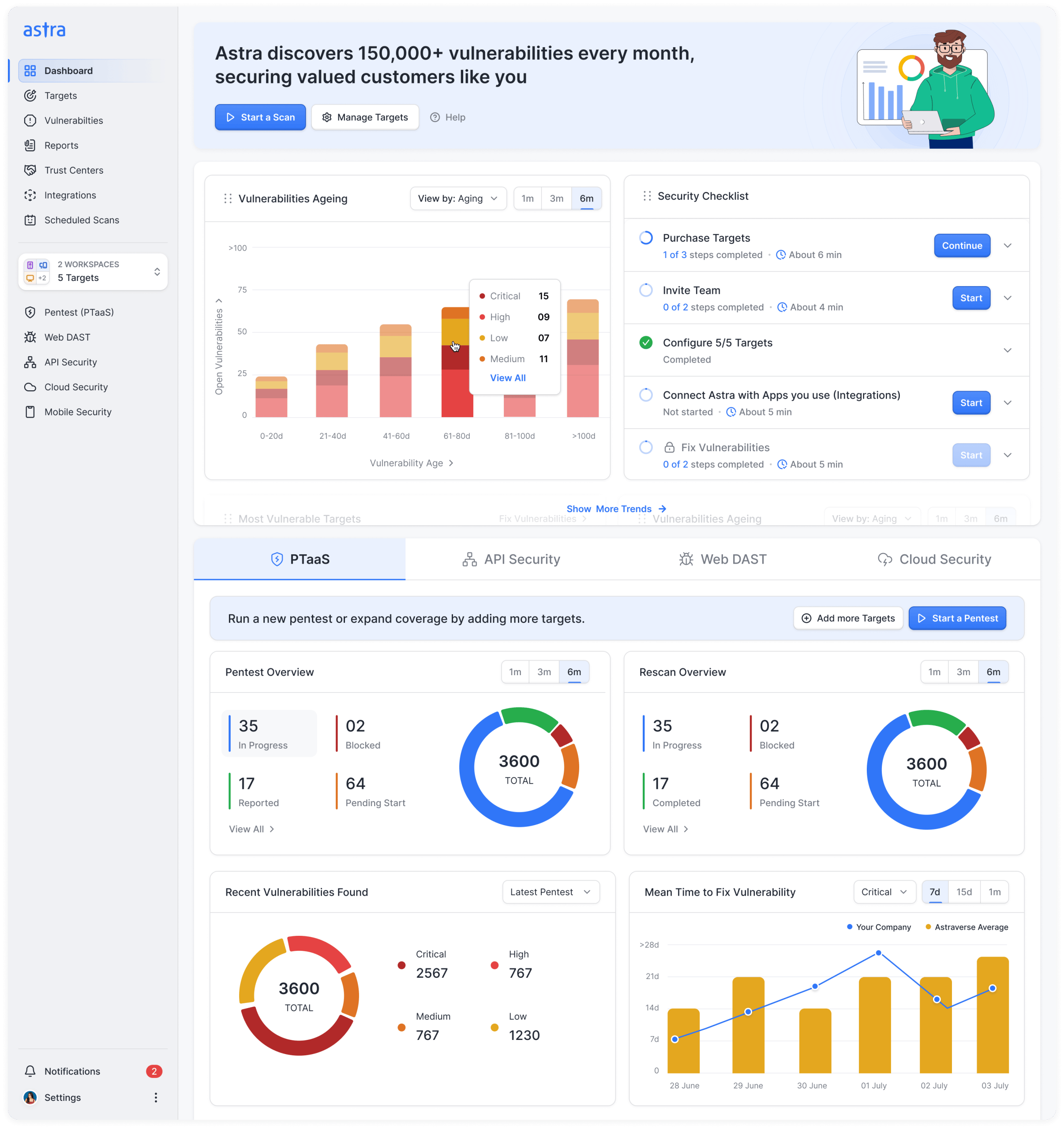
Astra Security has been recognized as a rising star and leader for vulnerability scanning and penetration testing by G2 and accelerated at Techstars in Berlin.
Our industry-specific AI test cases, AI-first defensive strategies, world-class Astranaut Bot, etc., offer a 360° view of your security posture along with continuous proactive insights, real-time reporting, and customizable reports that are designed to help CTOs shift left at scale while saving your firm millions of dollars proactively.
Key Features
- Primary Use Case: Continuous penetration testing and vulnerability management for web apps, APIs, cloud infrastructure, and mobile applications
- AI/ML Technology: AI-powered vulnerability detection with 15,000+ automated security tests; intelligent business logic testing through an AI-emulated hacker mindset
- Deployment Model: Cloud-based PTaaS (Penetration Testing as a Service) with API integrations for CI/CD pipelines
- Detection Speed: Real-time vulnerability detection with automated scans; manual pentest reports delivered within 10-15 business days
- Automation Level: Automated continuous scanning paired with expert manual validation; zero false positives ensured through certified and expert human verification
- Integration Capabilities: Native integrations with GitHub, GitLab, Jira, Slack, Azure, Bitbucket, and major CI/CD tools
- Compliance Support: Built-in compliance reporting for SOC 2, ISO 27001, HIPAA, PCI DSS, GDPR, CREST, CERT-In, and NIST frameworks
- Best For Organization Size: Startups to enterprise teams needing developer-friendly security testing
- Pricing: Vulnerability scans start at $69; comprehensive pentest plans start at $5,999 annually
Pros
- Developer-centric approach with seamless CI/CD integration reduces friction between security and engineering teams
- AI-assisted remediation guidance with proof-of-concept videos helps to help your developers fix vulnerabilities faster
- Publicly verifiable pentest certificates build trust with customers and simplify compliance audits
- An interactive dashboard provides real-time visibility into your security posture with executive and technical views
- Human verification of all automated findings eliminates false positives and reduces engineering time
Cons
- Only a 1-week free trial is available
Why Choose Astra Security
Astra Security stands out by bridging the gap between automated scanning and manual expertise. You get the continuous monitoring capabilities of automation without sacrificing the nuanced analysis only human pentesters can provide, all delivered through a platform infused with AI that your developers will actually want to use.
From automated compliance to real-time threat blocking, see what Astra’s comprehensive platform can do for your security posture today.
2. Darktrace
G2 rating: 4.4/5 (60 reviews)
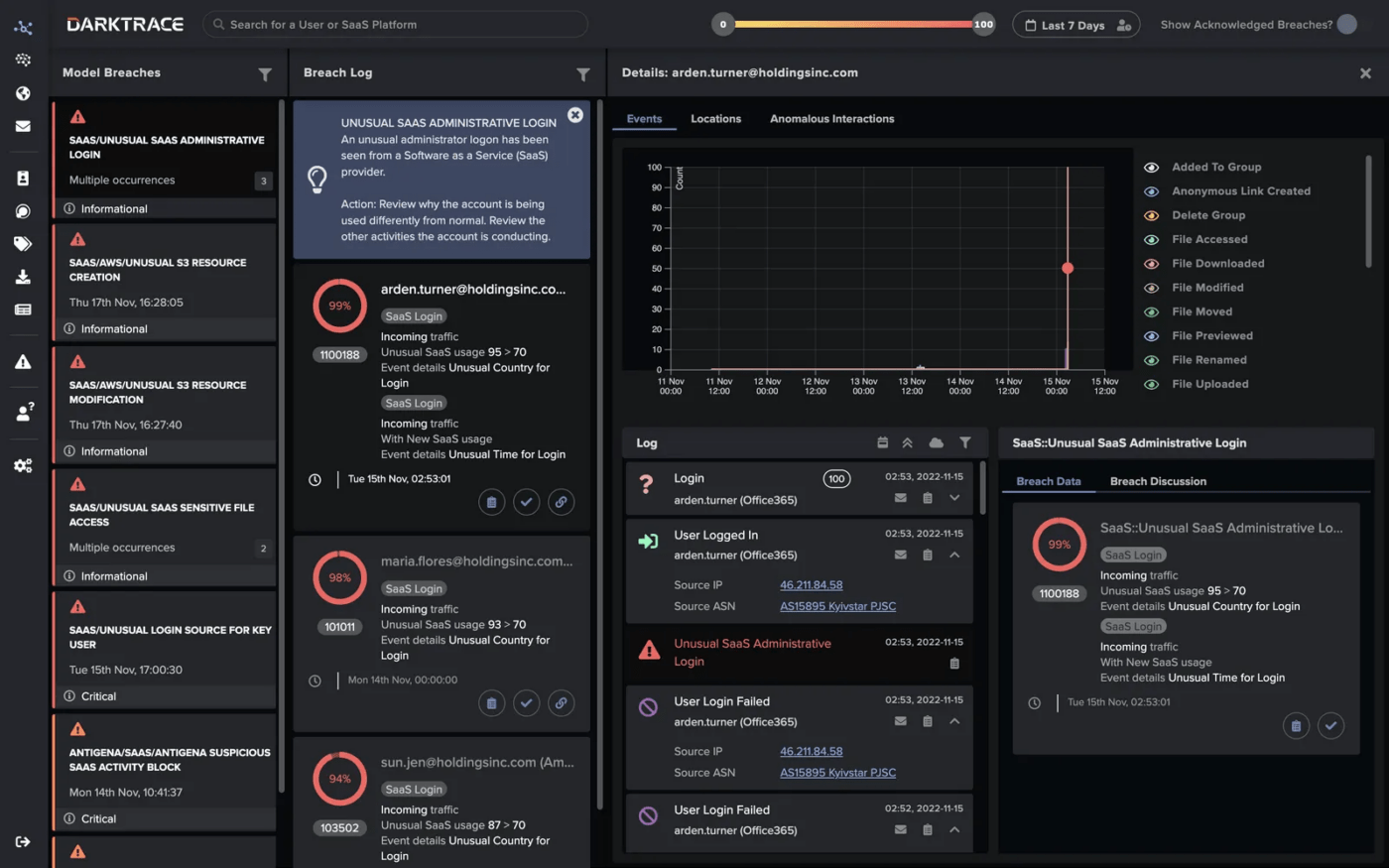
Darktrace is known to have pioneered self-learning AI for cybersecurity. It applies behavioral analytics across your entire digital infrastructure, and its AI engine continuously learns what’s normal for you. This makes it remarkably effective at spotting novel attacks that signature-based tools completely miss.
Key Features
- Primary Use Case: Real-time threat detection and autonomous response across network, cloud, email, endpoints, and operational technology
- AI/ML Technology: Proprietary self-learning AI using unsupervised machine learning; behavioral DNA modeling for every user and device
- Deployment Model: Cloud-native platform with support for hybrid and air-gapped environments
- Detection Speed: Real-time detection with autonomous response capabilities that neutralize threats within seconds
- Automation Level: Fully autonomous threat response through Antigena; AI analyst provides automated investigation summaries
- Integration Capabilities: Works with 500+ third-party security tools; vendor-independent architecture
- Compliance Support: Supports various compliance frameworks through comprehensive monitoring and reporting
- Best For Organization Size: Mid-market to large enterprise organizations with complex, distributed infrastructures
- Pricing: Approximately €10,000 annually for 100 users (€100 per user); custom enterprise pricing based on device counts and modules
Pros
- Self-learning AI adapts to your unique environment without requiring constant rule updates or signature definitions
- Autonomous response capabilities can contain threats before your security team even sees an alert
- EMAIL module uses an AI-based approach that’s considered one of the best in the market for filtering unwanted emails
Cons
- Requires regular health checks and can produce false positives during initial model training
- Premium pricing positions it in the upper segment of the market
Why We Chose Darktrace
You approach Darktrace if you are on the lookout for an AI that truly learns the unique data streams and packet patterns of your firm. Its approach enables it to become smarter over time without demanding constant tuning from your team.
3. CrowdStrike Falcon
G2 rating: 4.8/5 (31 reviews)
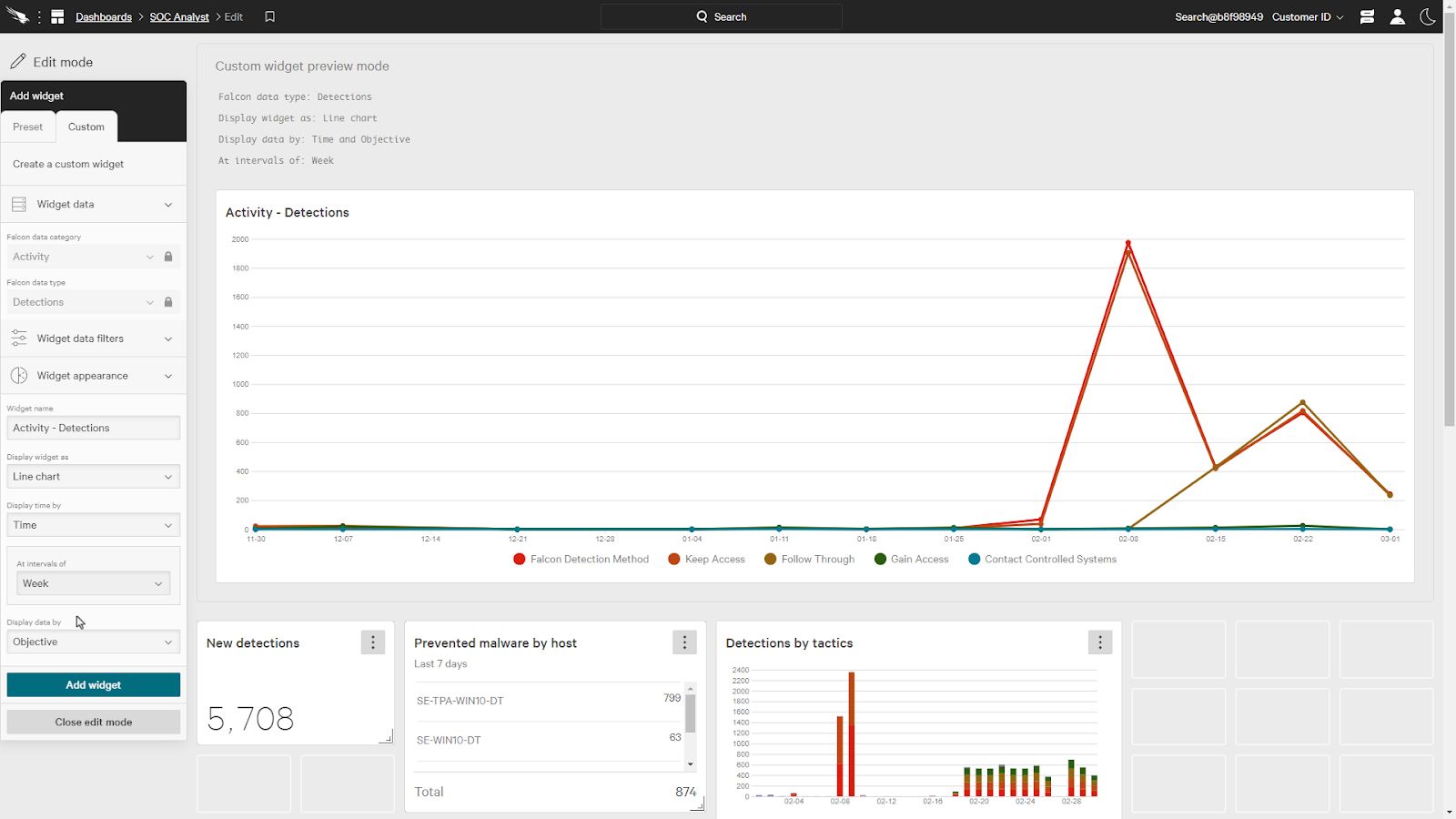
CrowdStrike Falcon delivers a suite of offerings that include SaaS stacks, IT ops, data and cloud-native endpoint protection that is powered by the Threat Graph, a massive AI-driven database capable of processing trillions of security events. The platform’s lightweight agent protects endpoints without hindering your system’s performance.
Key Features
- Primary Use Case: Endpoint protection, detection and response (EDR), and managed threat hunting across endpoints, identities, and cloud workloads
- AI/ML Technology: Cloud-scale AI with proprietary Threat Graph database; AI-powered indicators of attack (IOA) for behavior-based detection
- Deployment Model: Cloud-delivered single-agent architecture; deploys in minutes across Windows, macOS, and Linux
- Detection Speed: Real-time threat detection with automated response; processes and correlates events in milliseconds
- Automation Level: Charlotte AI for automated alert triage; Falcon Fusion SOAR provides 300+ workflow automation actions
- Integration Capabilities: Unified platform with native XDR capabilities; integrates with 500+ third-party tools
- Compliance Support: Comprehensive compliance mapping and reporting capabilities built into the platform
- Best For Organization Size: Mid-market to enterprise organizations needing comprehensive endpoint security
- Pricing: Annual pricing typically ranges from $20,000 to $175,000 based on features, scale, and endpoint count; tiered packages from Falcon Go to Falcon Complete
Pros
- Lightweight agent maintains a minimal system footprint while delivering comprehensive protection
- Unified platform approach eliminates the complexity of managing multiple security tools
- 24/7 managed threat hunting available in higher tiers provides expert oversight
Cons
- Advanced features can feel overwhelming for new users during initial onboarding
- Pricing might be on the expensive side, though users find it cost-effective, given the capabilities
Why We Chose CrowdStrike Falcon
CrowdStrike combines cloud-scale AI with human expertise in a way few competitors match. If you want comprehensive endpoint protection besides SaaS and cloud cybersecurity solutions that don’t slow down your systems, Falcon is the go-to tool…the cost being the only moot point here.
4. Vectra AI
G2 rating: 4.3/5 (18 reviews)
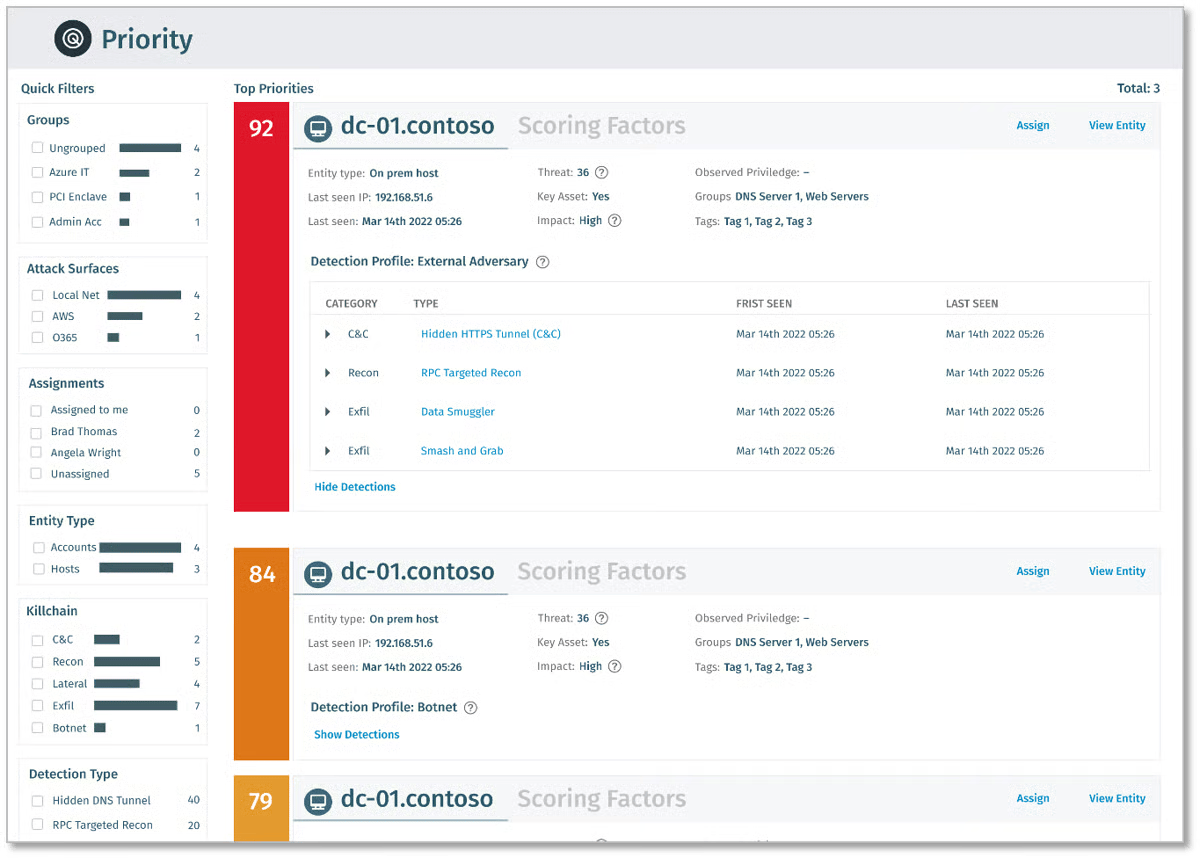
Vectra AI specializes in Attack Signal Intelligence via behavioral AI to detect threats that operate once the system is compromised. They focused on reducing alert noise by at least 80% and provide security teams with high-fidelity attack signals.
Key Features
- Primary Use Case: Network detection and response (NDR) with identity threat detection across hybrid cloud environments
- AI/ML Technology: AI-driven behavioral analysis; automated triage and prioritization using Attack Signal Intelligence
- Deployment Model: Hybrid deployment with sensors for network monitoring and cloud-native analysis
- Detection Speed: Reduces mean time to identify and contain breaches to approximately 10 minutes versus the industry average of 10 months
- Automation Level: AI-driven triage automatically correlates and ranks incidents by urgency; reduces alert noise by more than 80%
- Integration Capabilities: Strong Microsoft 365 integration; connects with EDR platforms like CrowdStrike and SentinelOne
- Compliance Support: Provides visibility and reporting for compliance requirements; strong audit trail capabilities
- Best For Organization Size: Mid-market to enterprise organizations with complex network infrastructures
- Pricing: Above average pricing with transparent cost structure; custom quotes based on environment size and requirements
Pros
- Reduces alert fatigue by consolidating numerous alerts into actionable incidents
- Provides complete attack lifecycle visibility with clear attack progression context
- Deep integration with the Microsoft ecosystem benefits organizations heavily invested in the Microsoft security stack
Cons
- Premium pricing. Placing it on the higher side of the spectrum
- Advanced integrations may require Linux server setup and manual configuration
Why We Chose It
Vectra excels at cutting through the noise. If your security team drowns in alerts from multiple tools, Vectra’s intelligent correlation helps them focus on threats that actually matter.
5. Abnormal AI
G2 rating: 4.8/5 (61 reviews)

Abnormal Security redefined email security by replacing signature-based detection with behavioral AI. Their platform analyzes over 45,000 signals to understand normal communication patterns and thus excels at catching sophisticated phishing and business email compromise attacks.
Key Features
- Primary Use Case: Cloud email security focused on stopping business email compromise (BEC), phishing, and account takeover attacks
- AI/ML Technology: Behavioral AI engine baselines normal communication patterns; natural language processing for content analysis
- Deployment Model: Cloud-native with API-based integration; deploys in 60 seconds via three-click API integration with Microsoft 365 and Google Workspace
- Detection Speed: Real-time threat detection and automated remediation across all mailboxes in milliseconds
- Automation Level: Reduces SOC workload by 95% through AI automation; AI Security Mailbox eliminates manual email triage
- Integration Capabilities: Native Microsoft 365 and Google Workspace integration; SIEM, SOAR, and XDR integration support
- Compliance Support: Security awareness training and compliance reporting capabilities
- Best For Organization Size: Mid-market to enterprise organizations using Microsoft 365 or Google Workspace
- Pricing: Subscription-based pricing; contact vendor for custom quotes based on user count and features
Pros
- Near-instant deployment without professional services or infrastructure changes
- AI capabilities can categorize emails based on context to distinguish graymail, bulk mail, and phishing
- Vendor risk scoring through VendorBase helps you understand supply chain security risks
Cons
- Requires API access to email data, which some security-conscious organizations may initially hesitate to grant
- Limited to email security; doesn’t address other attack vectors
Why We Chose Abnormal AI
Their anomaly detection engine uses identity and context to understand human behavior and analyze the risk of every cloud email event, detecting and stopping sophisticated, socially-engineered attacks, replacing exacting human dependency.
6. Palo Alto Networks Cortex XDR
G2 rating: 4.6/5 (48 reviews)
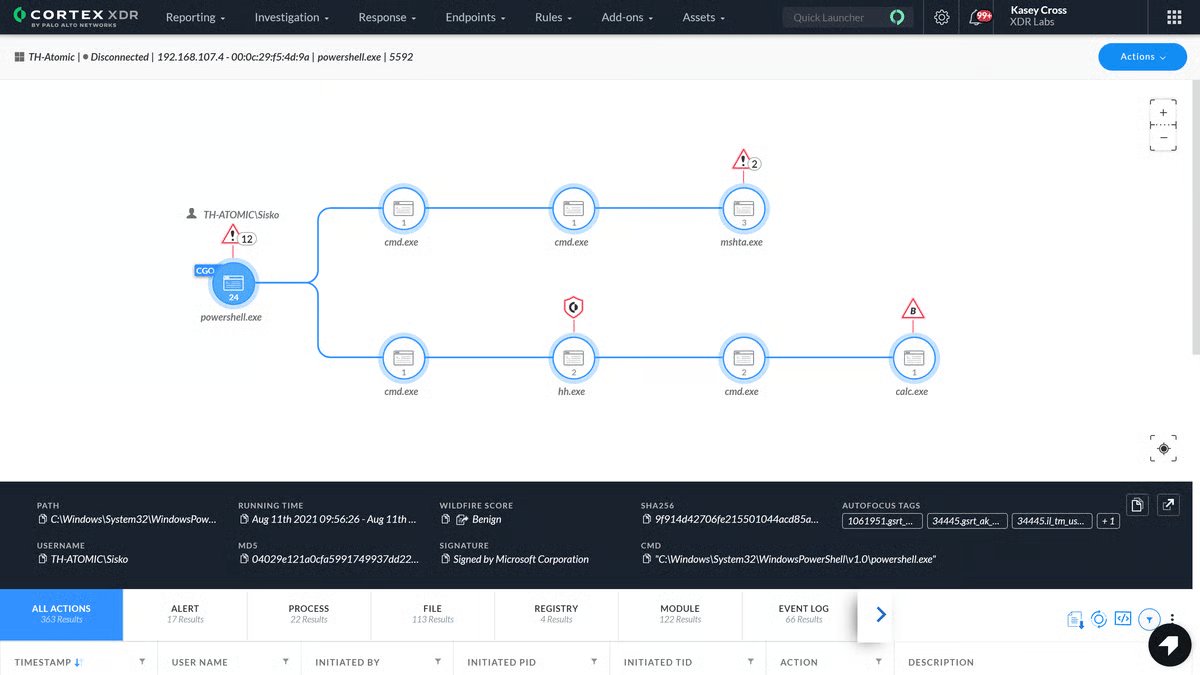
Cortex XDR uses ML and behavioral analytics to deliver extended detection and response by unifying data from endpoints, networks, and cloud environments (an industry first). The platform uses machine learning and behavioral analytics to detect sophisticated attacks across your entire infrastructure.
With Cortex XDR, you can harness the power of AI, analytics, and rich data to detect stealthy threats, intelligently group alerts, score your incidents, and get cross-data insights that accelerate investigations.
Key Features
- Primary Use Case: Extended detection and response (XDR) providing unified security across endpoints, networks, and cloud
- AI/ML Technology: Machine learning and behavioral analytics for threat detection; automated alert correlation and root cause analysis
- Deployment Model: Cloud-delivered platform with agent-based endpoint protection and network sensor deployment
- Detection Speed: Real-time threat detection with automated response capabilities; continuous monitoring across all data sources
- Automation Level: Automated threat grouping and prioritization; customizable automation packs for streamlined processes
- Integration Capabilities: Deep integration with Palo Alto Networks security ecosystem; supports third-party security tools
- Compliance Support: Comprehensive logging and reporting for various compliance frameworks
- Best For Organization Size: Mid-market to large enterprise organizations needing unified security operations
- Pricing: Custom pricing based on deployment size and feature requirements; generally positioned in the premium segment
Pros
- Unified visibility across endpoints, network, and cloud reduces security blind spots
- Automatically integrates host data with network and flow logs, making it easier to pinpoint threat root causes
- Strong integration within the Palo Alto Networks ecosystem provides comprehensive security
Cons
- Not a cheap product, though the platform offers maturity and scalability
- Initial setup can be more nuanced when juxtaposed with cloud-only solutions
Why We Chose Cortex XDR
Cortex XDR delivers best-in-class endpoint protection, achieving the highest combined protection and detection scores in the MITRE ATT&CK® round 3 evaluation. The Cortex XDR platform collects and analyzes all data, offering complete visibility and holistic protection.
7. SentinelOne Singularity
G2 rating: 4.7/5 (192 reviews)
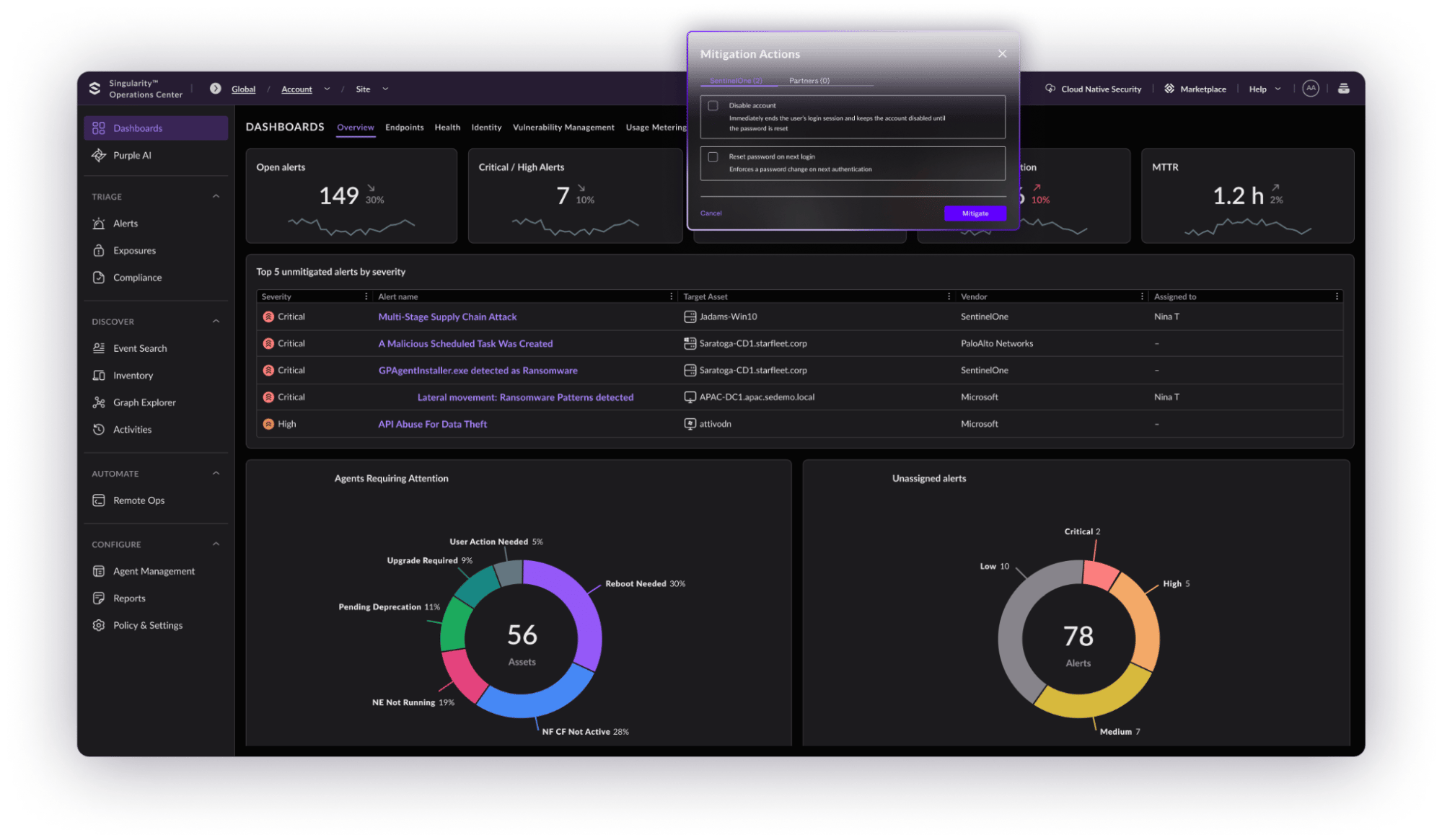
SentinelOne pioneers autonomous cybersecurity to prevent, detect, and respond to cyber attacks faster and with higher accuracy. Their Singularity Platform protects and empowers enterprises with real-time visibility, cross-platform correlation, and AI-powered response across endpoints, cloud workloads and containers, network-connected (IoT) devices and identity-centric attack surfaces.
Key Features
- Primary Use Case: Autonomous endpoint protection with EDR and XDR capabilities across Windows, macOS, Linux, and containers
- AI/ML Technology: AI models on each endpoint for autonomous threat detection; Storyline technology for automated event correlation
- Deployment Model: Cloud-native platform with lightweight agent; supports on-premises, cloud, and hybrid environments
- Detection Speed: Real-time detection and automated response with on-device AI; devices can self-heal after attacks
- Automation Level: Fully autonomous operation with automated rollback capabilities; PowerQuery analytics for threat hunting
- Integration Capabilities: Comprehensive integration ecosystem; works with major security platforms and SIEM solutions
- Compliance Support: Detailed compliance reporting and audit trail capabilities
- Best For Organization Size: Small businesses to large enterprises needing autonomous protection
- Pricing: More reasonable and cheaper pricing compared to some enterprise competitors; tiered packages with transparent pricing
Pros
- Automated Storyline feature links events and assigns risk scores, dramatically reducing investigation time
- Ransomware rollback capability restores systems to pre-attack state with minimal downtime
- On-device AI enables protection even when endpoints lose network connectivity
Cons
- Lacks some advanced security controls found in higher-tier enterprise platforms
- Users seek improved interoperability with legacy systems and more precise analytics
Why We Chose SentinelOne Singularity
This platform helps you stop known and unknown threats via sophisticated ML and intelligent automation. SentinelOne predicts malicious behavior across all vectors and eliminates threats with an incident response protocol that can be automated fully, and offers adaptability while at it.
[CTA] – Endpoints are just one entry point, you need to lock down your web, mobile, cloud and API attack surface with a comprehensive VAPT platform. Click here to know how and now.
8. IBM QRadar with Watson
G2 rating: 3.5/5 (2 reviews)
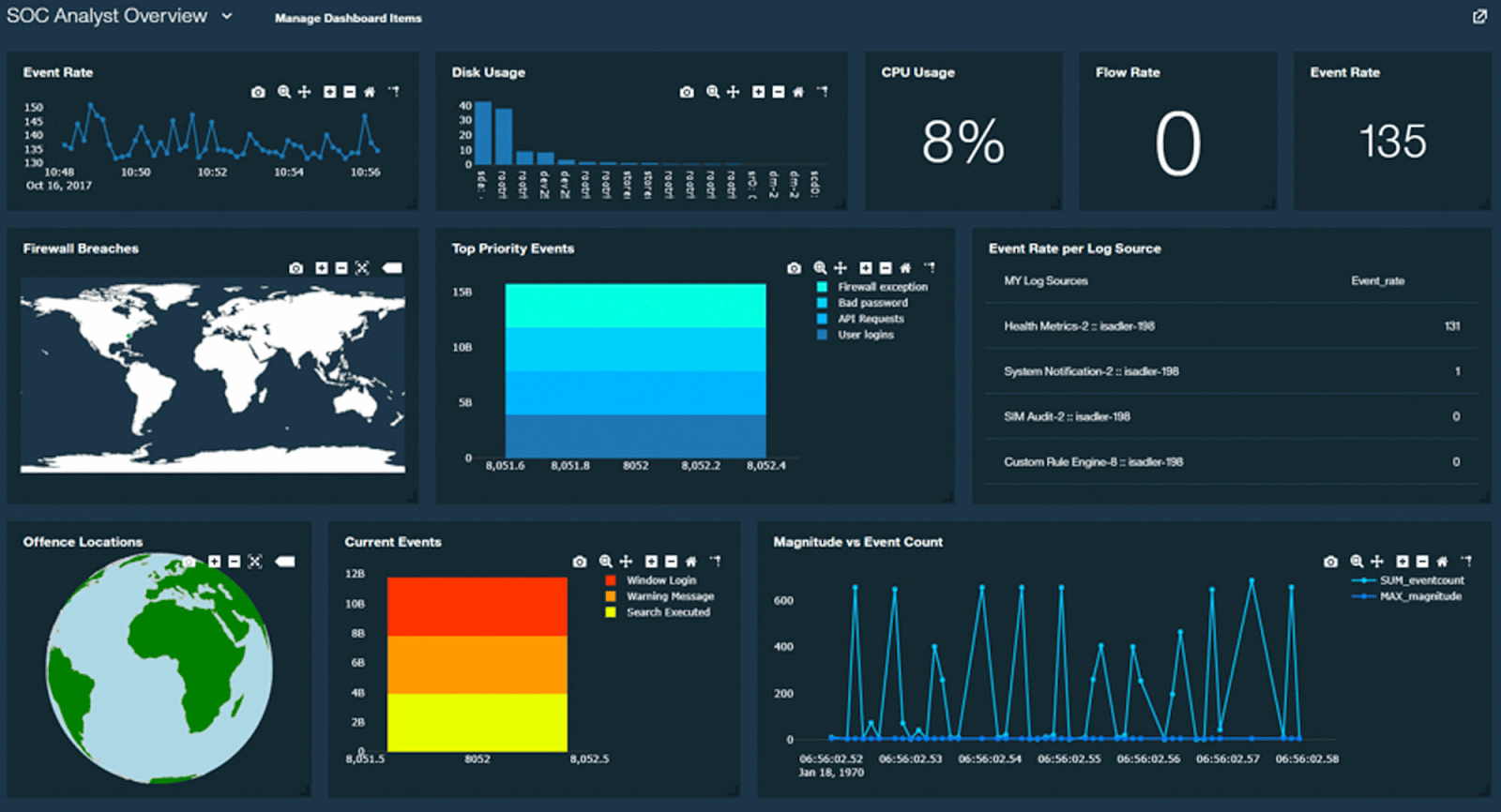
IBM QRadar NDR brings cognitive computing to security operations, using AI to investigate threats and recommend response actions. Watson’s natural language capabilities help security teams understand complex threat scenarios.
Key Features
- Primary Use Case: AI-augmented SIEM with security incident investigation and threat intelligence
- AI/ML Technology: Watson AI for automated threat investigation; machine learning for anomaly detection and pattern recognition
- Deployment Model: Available as on-premises, cloud, or hybrid deployment options
- Detection Speed: Automated investigation capabilities significantly reduce mean time to investigate incidents
- Automation Level: Watson automatically investigates threats and provides response recommendations—reducing manual workload
- Integration Capabilities: Extensive integration capabilities with security tools and data sources; part of IBM Security ecosystem
- Compliance Support: Comprehensive compliance reporting and audit trail capabilities
- Best For Organization Size: Large enterprises with complex security operations and mature SOC teams
- Pricing: Lower initial setup cost compared to some XDR platforms; enterprise pricing based on events per second and deployment model
Pros
- Watson AI provides natural language explanations of threats, making complex attacks understandable
- Automated investigation capabilities free up analyst time for higher-value security tasks
- Strong integration with the broader IBM Security ecosystem
Cons
- Requires a more involved initial setup compared to cloud-native solutions
- Better suited for organizations with existing SIEM expertise and resources
Why We Chose IBM QRadar with Watson
QRadar with Watson makes sense when you need AI that explains its reasoning. Watson’s cognitive approach helps junior analysts understand sophisticated threats while accelerating your investigations.
9. Microsoft Defender for Endpoint
G2 rating: 4.4/5 (305 reviews)

Microsoft Defender for Endpoint is a unified platform that enables preventative protection, post-breach detection, automated investigation, and response.
Key Features
- Primary Use Case: Cloud-delivered endpoint protection with behavioral-based detection and response
- AI/ML Technology: Behavioral AI for threat detection; automated investigation and response using machine learning
- Deployment Model: Cloud-native with deep integration across the Microsoft 365 ecosystem
- Detection Speed: Real-time threat detection with automated investigation capabilities
- Automation Level: Automated investigation and remediation; integration with Microsoft 365 Defender for unified security operations
- Integration Capabilities: Seamless integration with Microsoft products; works with third-party security solutions
- Compliance Support: Built-in compliance reporting aligned with Microsoft 365 compliance framework
- Best For Organization Size: Organizations of all sizes are already invested in the Microsoft ecosystem
- Pricing: Reasonable pricing options with user-friendly setup cost and licensing process; included in Microsoft 365 E5 licenses or available standalone
Pros
- Deep integration with Microsoft products provides seamless security across the entire Microsoft stack
- Automated investigation significantly reduces time spent on routine security incidents
- Cost-effective for organizations already using Microsoft 365
Cons
- Users wish pricing could be better for standalone implementations
- Works best within the Microsoft ecosystem; less optimal for highly heterogeneous environments
Why We Chose Microsoft Defender for Endpoint
MS Defender for Endpoint comes with no additional deployment or infrastructure, unparalleled optics (shared signals across devices, identities, and information), and automated security.
Hybrid visibility is great, but actionable fixes are better. Get detailed remediation steps for each vulnerability with Astra Security.
How AI Security Actually Works?
AI security tools draw their prowess from multiple machine learning techniques to create an agile and robust defense system:
Machine Learning Approaches
| ML Type | How It Works | Security Application |
|---|---|---|
| Supervised Learning | Learns from labeled training data (known threats and safe activities) | Malware classification, phishing detection, spam filtering |
| Unsupervised Learning | Analyzes data clusters to identify patterns without any labels | Zero-day threat detection, anomaly identification, unknown malware discovery |
| Reinforcement Learning | Trial and reward mechanisms are implemented to make it learn the optimal responses | Automated incident response, adaptive defense strategies, threat mitigation |
Core AI Technologies Powering Security
Behavioral Analytics & Anomaly Detection: Your systems have a set baseline of “normal” user and system behavior, which is derived from login times, data access patterns, network traffic volumes, API calls, etc. Now AI monitors this and raises alerts when someone logs in from an unusual location at 3 AM and starts downloading sensitive files, even when no malware signatures are present.
Natural Language Processing (NLP): AI analyzes email content, chat messages, and other textual communications via NLP to detect phishing attempts, social engineering tactics, and credential theft schemes. It thus enables it to understand context, tone, and linguistic patterns that hint at malice such as spotting a fraudulent CEO email even when the grammar is perfect.
Deep Learning for Pattern Recognition: Multi-layered neural networks (the core of Deep Learning) process complex data from endpoints, networks, and applications simultaneously, allowing AI to build correlations between seemingly unrelated events.
For example, a minor configuration change, followed by unusual API calls, followed by data exfiltration attempts, all viewed together give away a complete attack narrative, while individually they may seem meek.
Predictive Analytics: By analyzing historical attack data and current threat intelligence, AI helps you identify the most vulnerable hotspots that might be exploited. Thus, instead of waiting for an attack, you patch weaknesses before they’re even discovered by threat actors.
What AI Security Tools Can Actually Do?
Here’s where the rubber meets the road. AI security tools help you deliver capabilities that would otherwise require dozens of security analysts working around the clock:
Detect Real-Time Threats Across Multiple Vectors
- Monitors endpoints, networks, cloud environments, APIs, and applications simultaneously
- Processes terabytes of security telemetry data in real-time
- Correlates events across different systems to identify multi-stage attacks
- Detects lateral movement, privilege escalation, and data exfiltration attempts
Automatically Respond to & Remediate Incidences
- Instantly isolates compromised endpoints or user accounts
- Automatically blocks malicious IP addresses and domains
- Executes pre-defined remediation playbooks without human intervention
- Rolls back unauthorized system changes
- Quarantines suspicious files and processes
Identify Zero-Day Vulnerabilities Before the Coffee Break Ends
- Identifies previously unknown threats through behavioral analysis
- Detects exploit attempts that don’t match any known attack pattern
- Flags unusual file execution, memory manipulation, or network communication
- Discovers vulnerabilities before they’re publicly disclosed or weaponized
Detect Insider Threats Using Behavioral Baselines
- Tracks individual user behavior patterns over time
- Flags abnormal data access, downloads, or sharing activities
- Identifies compromised credentials being used by unauthorized parties
- Detects privilege abuse and policy violations
Learn Continuously & Adapt
- Updates threat models based on new attack data
- Adapts to changes in your environment (new applications, users, workflows)
- Improves detection accuracy through feedback loops
- Stays current with evolving threat tactics without manual signature updates
Reduce False Positives Through Contextual Analysis
- Understands the context behind security events (who, what, when, where, why)
- Distinguishes between anomalies (authorized maintenance) and actual threats
- Reduces alert fatigue by prioritizing genuine risks
- Learns from analyst feedback to refine detection logic
The fundamental shift in intelligence that AI security tools bring is that instead of asking “does this match a known bad thing?”AI asks, “Does this behavior make sense here ?“ This shifts your security posture from a reactive to proactive one, from signature-dependent to behavior-aware, and from manual to autonomously driven.
From automated compliance to real-time threat blocking, see what Astra’s comprehensive platform can do for your security posture today.
What are the different types of AI Security Tools in 2026?
AI security tools in 2026 are no longer just buzzwords, but essential layers for any scaling and modern security stack. The rare concoction of ML, behavioral analytics, and automation that they’re equipped with allows them to detect, prevent, and respond to threats across your tech stack.
AI-powered cloud security platforms such as Wiz and Orca automatically scan your cloud infrastructure for misconfigurations, shadow resources, and compliance gaps and provide real-time visibility and remediation. Moreover, their AI-infused engines learn and adapt to evolving your cloud environment’s baseline and flag deviations with minimal false positives.
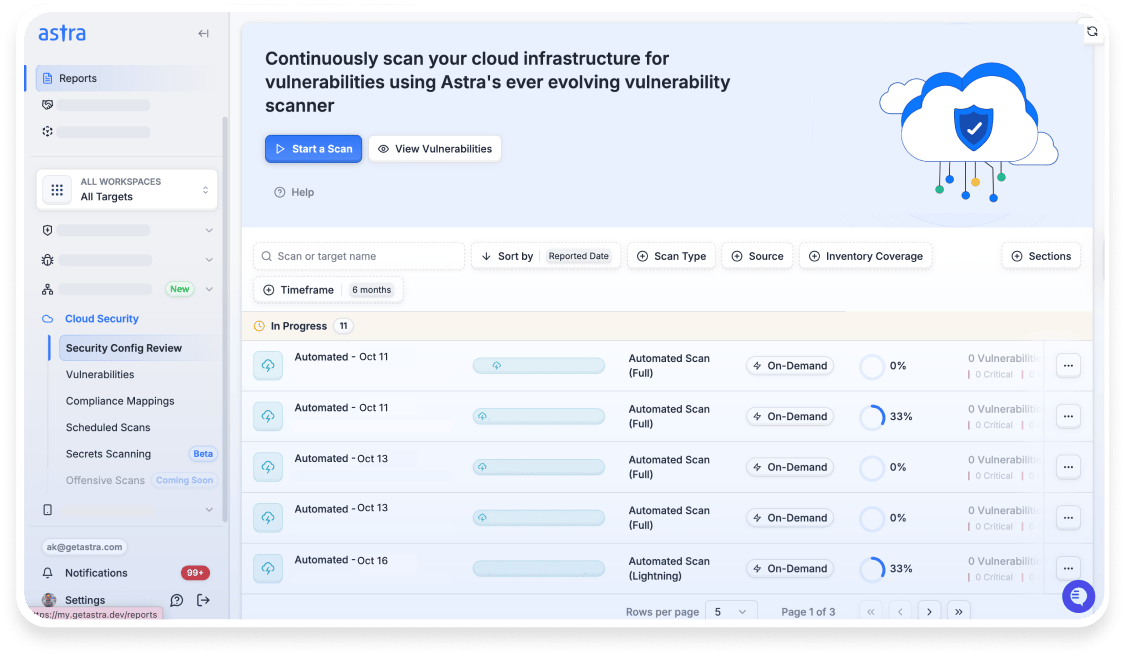
Network Detection and Response (NDR) tools are capable of carrying out deep packet inspection along with behavioral analysis through your network traffic highlighting suspicious activities, lateral movements, and command-and-control communications, even in channels that are encrypted. NDR platforms thus catch stealthy threats that are completely invisible to your traditional firewalls.
Endpoint Detection and Response (EDR) tools such as SentinelOne and CrowdStrike Falcon use AI agents and monitor your endpoints, looking for malicious activities. These platforms are autonomously capable of containing threats, rolling back changes, and providing forensic data ,which drastically brings down your MTTD and MTTR, minimizing damage.
Security Information and Event Management (SIEM) with AI platforms, like Splunk and Microsoft Sentinel, sit on top of your entire IT estate and ingest data logs. They majorly deploy ML to correlate events, detect anomalies, and prioritize alerts, which lets your security team focus on real threats rather than tackle through noise.
Email security platforms powered by AI, such as Proofpoint or Microsoft Defender for MS Office, work behind the scenes, scanning incoming and outgoing emails, looking for phishing, deepfakes, and malicious attachments. They’re continuously updated to adapt to evolving attack patterns and block new threats before they interact with your users.
Vulnerability scanners with AI capabilities don’t just run scans; they use ML and prioritize findings, predict how much they can be exploited, and even suggest remediations. These tools are developed keeping in mind integration with your CI/CD pipelines so as to help you shift left and ship right.
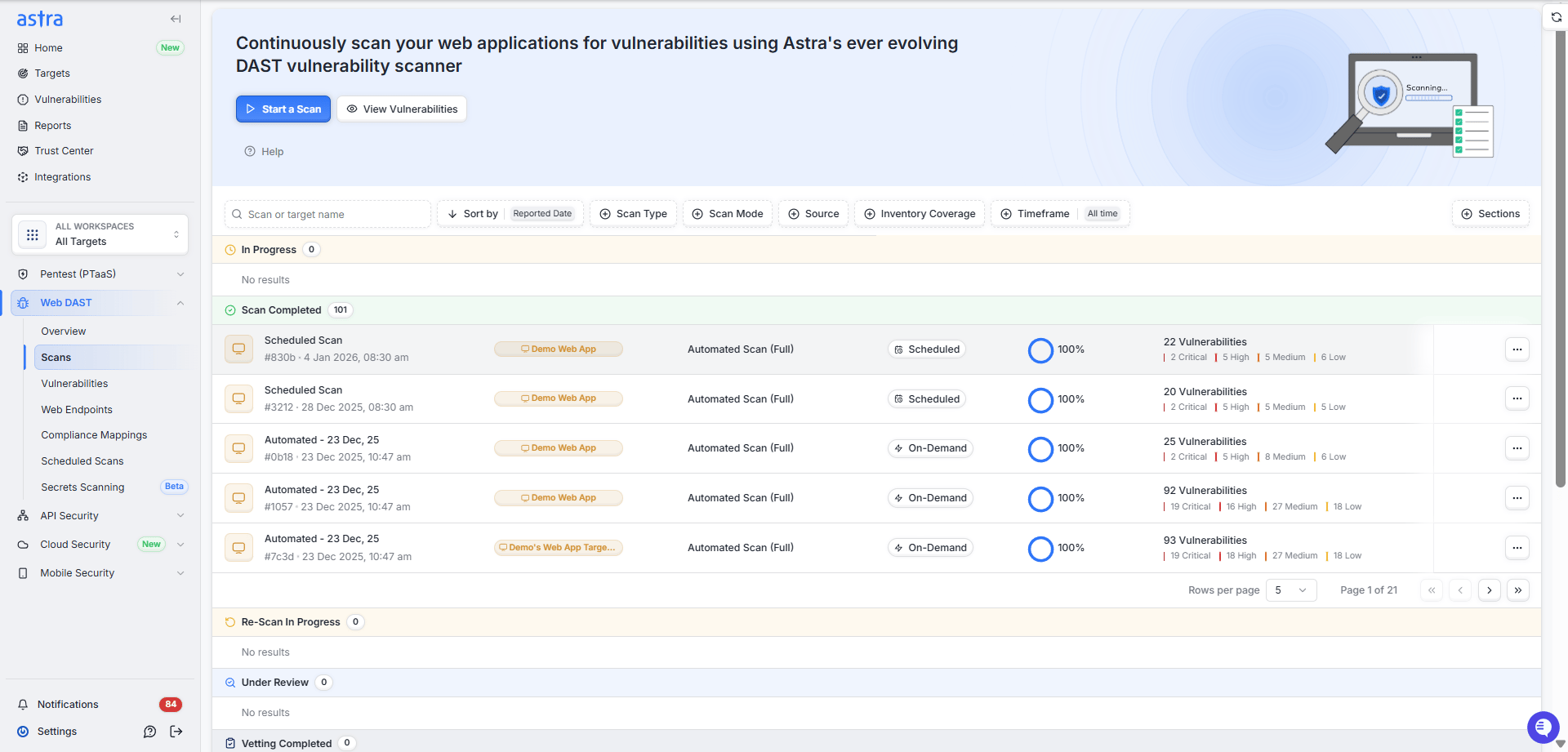
Penetration testing platforms like Astra Security are infused with AI to automatically discover most vulnerabilities and to simulate real-world scenarios more quickly. The combination you’re looking for here is that of automated scanning clubbed with manual pentesting intelligence that offers actionable insights and guarantees zero false positives.
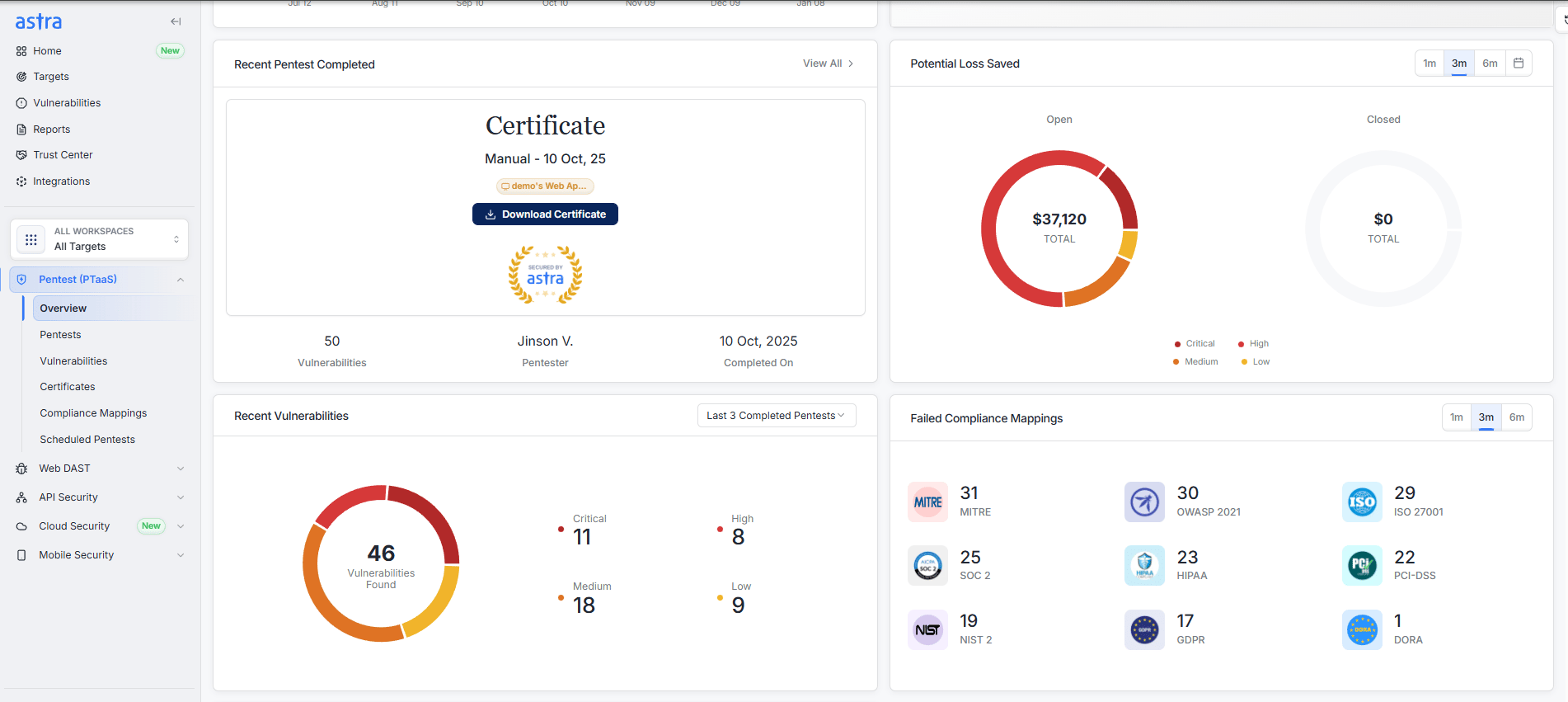
Each of these tool types addresses a unique layer of your security posture. The right mix depends on your infrastructure, risk profile, and business needs.
Why Do I Need AI Security Tools in 2026?
In 2026, cybersecurity is not just about fortification; it’s a race to outsmart threat actors that only need to succeed once, while you are barely allowed to even sleep. And with the advent of AI, their styles have changed, catapulting their efficiency and scale.
Threat Landscape
The data is clear: the attacks you face today are faster, smarter, and harder to detect.
AI-Powered Phishing & Deepfakes:
Phishing is no longer just bad grammar. AI tools can whip up deeply personalized emails within minutes and easily bypass traditional filters. Moreover, deepfake vishing (AI-powered voice phishing) attacks have surged by 1,633% between late 2024 and early 2025, and are being heavily deployed to do CXO-level voiceovers to authorize fraudulent transfers.
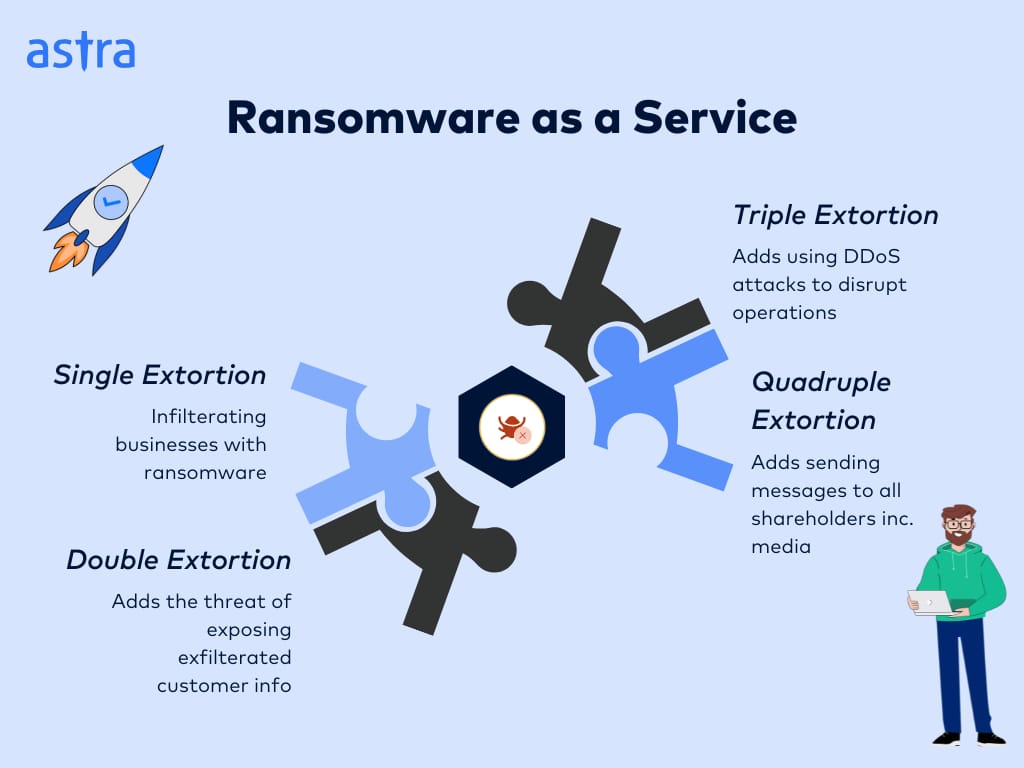
Ransomware-as-a-Service (RaaS):
FS-ISAC believes that in the coming months, attackers will deploy GenAI to automate and customize attacks against financial services firms and sell initial access as an industrial-scale service. Especially with the emergence of RaaS platforms, you no longer need to be a coding genius to launch a ransomware attack.
With a weakened entry barrier, even unskilled criminals are renting sophisticated malware and hitting organizations with not just double– and triple-extortion tactics but quadruple extortion, locking data and threatening to leak it.
- Shadow AI: These basically include insecure AI tools that your employees may be using for free to enhance their productivity. A 2025 report by IBM found that 1 in 5 organizations was breached via “Shadow AI,” and that over 63% lacked the access controls needed to tackle it. Moreover, breach costs involving shadow AI were, in general, $670,000 higher than those without it.
Simplify your security stack with Astra’s all-in-one AI-infused solution that covers API, cloud, AI, mobile and web security.
Business Imperatives
Adopting AI security in 2026 is more of a survival tactic than just better equipment against hackers.
GDPR, SOC 2, and ISO 27001 regulations now expect you to showcase“state-of-the-art” detection, in light of the rate, depth, and scale of attacks that the cyber-world faces, and deploy AI tools that automate evidence collection, so you’re not scrambling during audit season.
Secondly, the skill gap: the ISC2 Workforce Study found that 88% of organizations faced a security incident directly due to cutbacks in their cybersecurity budget. While a stronger bottom line is always desirable, especially in the agriculture, telecom, and FMCG sectors, investing in AI tools here can act as a force multiplier, handling the grunt work as your team focuses on critical threats.
Moreover, with the window to stop an attack shrinking fast, speed is survival—AI-driven security operations can contain breaches 80 days faster than manual teams, giving you a real edge in today’s threat landscape.
ROI and Business Impact
According to IBM, organizations that use AI and automation in security are up for saving an average of $1.9 million approximately per data breach, as opposed to those that don’t.
Secondly, a single breach erodes years of customer trust. Infusing AI into your security posture signals to your partners and clients that you take their data and security seriously, creating a competitive advantage through an agile, resilient security posture.
This is the era of shifting left and shipping right, demanding secure innovation, not one that brims with leaks and holes for threat actors. AI security tools here help you embrace new technologies, such as your own internal AI apps, without letting risk seep in with turbulence.
How to Choose the Right AI Security Tool?
Choosing an AI security tool can’t be based on a vendor’s marketing budget. You need to look for an AI security platform that actually assimilates with your infrastructure, addresses your vulnerabilities, and doesn’t leave you with big holes in your security budget.
Identifying Primary Security Needs
Start by mapping out exactly what needs protection. Are you concerned about API vulnerabilities? Worried about application-layer attacks? Facing compliance deadlines that keep you up at night?
Your threat landscape is of the essence here. A fintech company dealing with PCI-DSS compliance has vastly different requirements than a SaaS startup worried about OWASP Top 10 vulnerabilities. So make sure you have that understanding before floating your RFP.
Assessing Your Technical Environment
Your AI security ought not force you into a complete infrastructure overhaul. Check for compatibility with your cloud providers, CI/CD pipelines, and development frameworks.
Can it integrate with your SIEM? Does it support your authentication protocols? If you’re running Kubernetes, verify that the tool actually understands containerized environments rather than just claiming “cloud-native” credentials.
Evaluating Budget and ROI
Honey, show me the money. AI security platforms and packages can range from affordable to solutions that can cost more than your entire engineering team’s annual package, no, we are not kidding.
Calculate your potential breach cost. A single data breach can cost you, on average, $4.45 million (IBM). Then compare that against tool costs, implementation time, and maintenance. Also, do not forget to factor in hidden expenses like training, integration efforts, and the engineering hours needed to implement the tools.
Considering Compliance Requirements
Your compliance framework is your baseline. Whether it’s HIPAA, PCI-DSS, SOC 2, ISO 27001, GDPR compliance, or any industry-specific certifications, your AI security platform should be flexible and capable of helping you meet their requirements.
This entails generating reports that align with compliance mandates, maintaining audit trails, and mapping findings to specific regulatory requirements. This is to reduce auditor questions and team stress during certification cycles.
Red Flags to Avoid
Walk away from vendors who eschew pricing discussions upfront or require extensive customization before delivery. Moreover, poor API integration capabilities signal future headaches, and if the vendor hasn’t pushed meaningful updates in months, their AI models are probably gathering dust as they keep brandishing their innovation roadmap.
And if support is exclusively offshore with no dedicated account manager? That’s a 3 AM incident waiting to happen.
Final Thoughts
We’ve tried here to get you up to speed on everything AI security. The aim has been to help you understand what AI in cybersecurity means, what all it can influence, and how and where it can add positive impressions so as to further the dexterity of your security posture.
We do see the AI security tools market in 2026 becoming crowded, but the goal remains to find a solution that reduces noise rather than adding to it. Whether you are a startup in need of quick compliance or an enterprise fighting advanced persistent threats, the “best” tool is the one that fits your specific stack and security team.
Certain tools, such as CrowdStrike and SentinelOne, focus on top-notch endpoint defense, while Darktrace has network anomaly detection as its forte. And with proactivity becoming the need of the hour, you need a security platform that offers the best of AI-driven continuous scanning and expert manual pentesting.
FAQs
Can AI security tools replace manual penetration testing?
No, while AI tools power continuous monitoring and offer speed, they often miss complex business logic errors that only a human expert can find. The most secure approach is thus hybrid.
What is the difference between EDR and AI-driven pentesting?
EDR (Endpoint Detection and Response) tools focus on detecting attacks on your devices in real-time. AI-driven pentesting, on the other hand, finds vulnerabilities across your mobile and web applications, IoT devices, Cloud, and API infra. A robust security posture for an enterprise may require deploying both.
Are AI security tools expensive for small businesses?
Not necessarily. While enterprise suites can be costly, many modern platforms offer tailored, pay-per-use pricing options as well. SaaS-based solutions like Astra Security provide enterprise-grade vulnerability management at a price point that is accessible to startups and growing SMEs, as it delivers high ROI via its AI-infused VAPT engine.
Do artificial intelligence security tools increase false positives?
No, really, a lot depends on the tool. Legacy scanners often generate high noise. However, modern AI tools that use behavioral analytics and context-aware learning best filter out false alarms. Astra Security uses human experts here to vet AI findings and ensure near-zero false positives.
How quickly can AI tools detect a cyberattack?
AI tools are capable of detecting anomalies in milliseconds. By automating workflows, these tools can help significantly reduce your MTTD from days to minutes.
What are AI cybersecurity tools?
AI cybersecurity tools use artificial intelligence to help security teams detect threats, prioritize vulnerabilities, analyze alerts, automate repetitive workflows, and respond faster. They are useful for phishing defense, cloud security, vulnerability management, endpoint monitoring, and application security when paired with human validation and clear reporting.