

Key Takeaways
- Velocity is secure speed, not just speed
- Incremental scans keep pipelines fast and focused
- Automate security early and deepen checks at release
- Reduce noise, accelerate fixes, and maintain flow
Software delivery today is a delicate balancing act between moving quickly and maintaining security. CXOs chase release velocity, PMs measure success by the number of features shipped, and developers are asked to code faster with every sprint. However, every pipeline that prioritizes speed without embedded security is essentially gambling with the risk of a breach.
Legacy security models still act like toll gates, piling on reviews and post-deploy scans that stall progress. The result is predictable: pipelines either push out code that’s fast but fragile, or grind to a halt in the name of safety. DevSecOps velocity breaks that cycle by embedding security directly into the pipeline, allowing teams to deliver speed & resilience.
What is DevSecOps Velocity?
DevSecOps velocity is the ability to deliver software at speed while embedding security controls directly into the development pipeline, ensuring protection doesn’t come at the cost of innovation. In practice, it’s about aligning release cadence with security posture so that product velocity and resilience move in lockstep.
For modern enterprises, this is more than semantics, as a pipeline that pushes features fast but leaves gaps in authentication, secrets handling, or dependency checks is simply trading time-to-market for breach probability. Conversely, a pipeline that grinds to a halt because security reviews pile up after each sprint is a pipeline that has failed the business mandate for agility. Velocity, as such, is not defined here as speed, but rather as secure speed.
Software teams today operate under dual imperatives:
- Keep up with market and competitive pressure, measured by release frequency, feature velocity, and customer responsiveness.
- Shrink the attack surface, which is measured in risk reduction, vulnerability exposure, and compliance posture.
If these imperatives are not balanced, organizations end up in one of two failure modes: “fast but fragile” or “safe but stagnant.” Actual devsecops velocity means threading the needle: accelerating release cycles without leaving critical security gaps in the code, the CI/CD pipeline, or runtime environments.
Why Traditional Security Bottlenecks Break Velocity
Legacy security models were built for slower release cycles, where quarterly or even annual updates made post-deploy scans and manual reviews feasible. In today’s world of continuous delivery, those approaches are velocity killers. Common pitfalls include:
Security-as-a-gate vs. Security-as-code:
Old-school models treat security as a final checkpoint, something that happens after development and just before release. This creates chokepoints, adversarial handoffs, and endless ticket backlogs.
By contrast, security-as-code integrates scanning, policy enforcement, and compliance checks directly into the pipeline, automating what used to be manual gates.
Manual reviews and post-deploy scans:
A penetration test at the tail end of a release or an after-the-fact vulnerability scan may catch issues, but it also forces painful rework, rollback, or hotfixes that derail momentum. Worse, it conditions developers to see security as an obstacle rather than an enabler.
The consequence: teams either ship insecure code under pressure or miss delivery deadlines in the name of compliance. Neither outcome is acceptable at scale.
Fragmented Toolchains
Most enterprises operate a patchwork of scanners, dashboards, and compliance tools, resulting in findings being duplicated, lost, or siloed across teams. Different teams see different slices of reality, findings are duplicated or lost, and executives get dashboards that contradict one another.
For CXOs, the impact is clarity, as without a unified view, it’s impossible to measure exposure, prioritize fixes, or report credibly to boards and regulators.
Slow Approvals and Sign-offs
Manual approvals for minor changes stall releases, as a single configuration tweak can sit in a queue for days. At a small scale, this is tolerable, but at enterprise scale, it multiplies into a systemic drag, where opportunity costs run into the millions and developer frustration spikes.
This throttles velocity and creates massive opportunity costs. Worse still, manual approvals are often less reliable than automated policy enforcement, as overburdened reviewers may miss details or rubber-stamp changes. Policy-as-code enforces governance automatically, maintaining compliance without slowing teams down.
Reactive Rather than Proactive Posture
Legacy security practices tend to be reactive, focusing on responding to incidents after they occur, which leaves the organization exposed, forcing CXOs into crisis mode, as they explain breaches to customers, regulators, or even the board.
A proactive model embeds controls into workflows and anticipates issues early. This means fewer high-profile incidents, lower risk management costs, and the ability to position security as a business enabler that builds trust with customers and regulators.
What is the Role of Incremental Scanning in DevSecOps Velocity?
In fast-moving pipelines, scanning an entire codebase for every commit is like re-inspecting an entire skyscraper because someone painted a door. It slows developers down, eats compute budget, and creates bottlenecks.
Incremental scanning flips the script by focusing only on the delta, i.e., the actual changes and the dependencies those changes affect, so instead of slowing everything down, it delivers security feedback at the same pace as development.
Why Incremental Beats “Scan it All”?
- Speed → Faster results because only the modified code is scanned.
- Focus → Developers see vulnerabilities tied to their changes, not legacy backlog issues.
- Efficiency → Compute costs drop as unnecessary scans disappear.
- Adoption → Developers treat security checks as useful signals, not friction.
This isn’t about cutting corners, but rather scaling the scope of security to the scope of change.
| Practice | What it looks like in action | Example in the field |
|---|---|---|
| Git-based diff detection | Scan only modified files in a commit or merge request. | GitLab’s diff-based SAST shows findings only for changed code. |
| Targeted dependency scans | Re-check only updated libraries/packages. | Snyk and Dependabot flag issues only in the updated dependency. |
| Context-driven results | Suppress noise from untouched files; surface only new risks. | Checkmarx runs incremental scans if <7% of code changed, merging results into the baseline. |
| Hybrid cadence | Incremental scans per commit, full scans nightly/weekly. | Enterprises pair fast checks with deeper scheduled analysis. |
What Does Incremental Scanning Look Like in the Wild?
Different teams have taken different approaches, but the principle is consistent: focus on the delta.
- GitLab is rolling out diff-based SAST for merge requests, so reviewers see only the vulnerabilities introduced in the modified files. That keeps code review productive and cuts through alert fatigue.
- Snyk and Dependabot apply the same idea to dependencies, checking only the packages that have been updated, rather than re-auditing the entire tree. That keeps third-party risk manageable without stalling the build.
- Checkmarx takes it a step further: if less than ~7% of the codebase has changed, the tool runs an incremental scan and merges the results with a baseline. Only larger changes trigger a full scan. That way, teams don’t lose coverage but still get near-instant results for small commits.
Large enterprises are increasingly adopting a hybrid model, where incremental scans are performed on every commit to keep the pipeline moving, and full scans are scheduled nightly or weekly to maintain a comprehensive view. This pattern strikes a balance between speed and depth, satisfying both developers and auditors.
Why it Matters for Velocity
Incremental scanning isn’t just about faster pipelines. It reduces noise, prevents alert fatigue, lowers compute costs, and delivers security feedback at the same pace as development. That’s what makes it a cornerstone of DevSecOps velocity: security scaled to the size of the change, NOT the size of the codebase.
Still rescanning the entire codebase? Accelerate with incremental scans and DevSecOps velocity.

What are Effective Integration Tips for DevSecOps velocity?
Catch Problems Before They Leave the Developer’s Laptop
The fastest fix is the one made before code ever leaves a developer’s machine. Integrating secret scanners and lightweight checks at commit time prevents sensitive data from leaking into repositories in the first place.
- How to do it: Add IDE extensions or Git hooks that scan for secrets, credentials, or API keys.
- Tools to use: Gitleaks, TruffleHog, or GitHub Advanced Security.
- Why it matters: Issues are flagged in real time, saving costly remediation later and avoiding embarrassing exposure.
Run Lightning-fast Scans on Merges to Main
Once code leaves the dev box, feedback must stay near-instant. By configuring CI/CD to run tuned scans on each merge, teams maintain velocity without sacrificing visibility.
- Trigger scans with GitHub Actions, GitLab CI, CircleCI, or whichever CI/CD system you use.
- Focus only on changed files or directories, rather than rescan the entire repository.
- Run SAST and SCA with performance-tuned rulesets, trimming out unnecessary checks for faster cycle times.
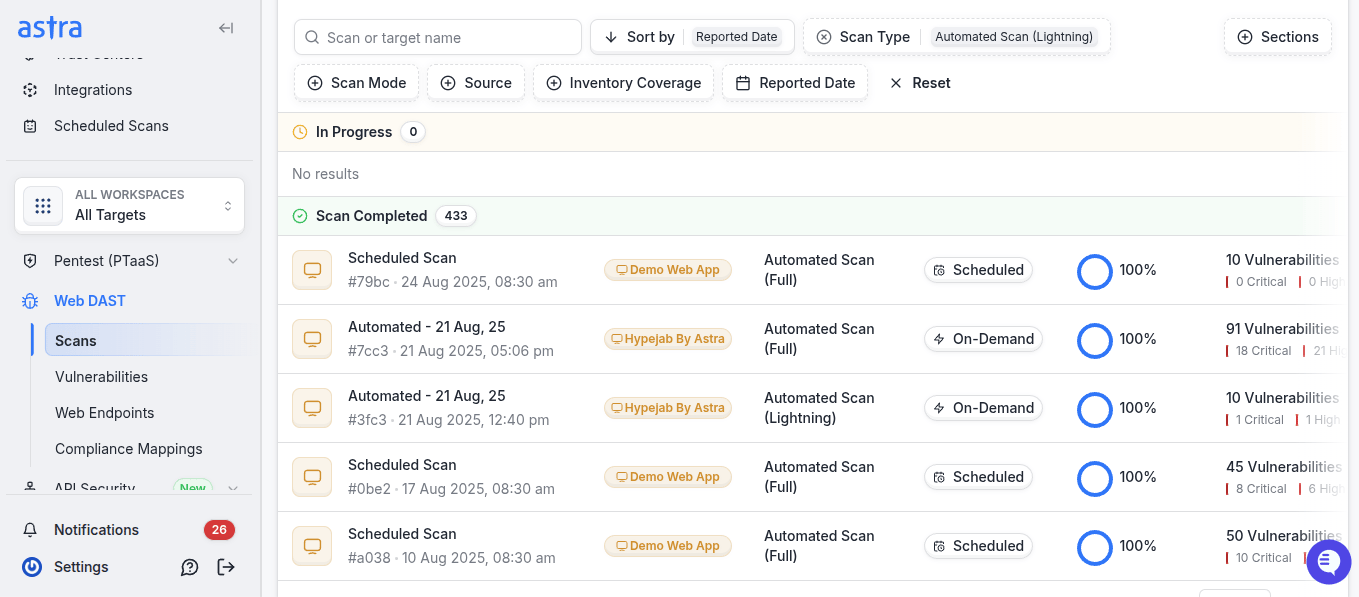
This pattern keeps the pipeline quick while ensuring that every new change undergoes security scrutiny before it is merged into main.
Schedule Deeper Scans Around Release Points
Incremental checks keep developers fast, but full assurance requires broader scans. Use release gates to run a comprehensive analysis across code, dependencies, infrastructure definitions, and containers.
| Scan Type | Scope | Purpose |
|---|---|---|
| SAST (Static Analysis) | Entire codebase | Catch coding flaws that incremental checks may miss. |
| SCA (Software Composition Analysis) | Full dependency tree | Identify risks from third-party/open-source components. |
| Secrets scanning | Complete repo history | Ensure no hardcoded credentials slip through. |
| Infrastructure & containers | IaC templates, Dockerfiles, images | Validate that the production environment is hardened. |
Releases should be gated on the results of these scans. This doesn’t slow day-to-day work but ensures that what goes live has been vetted comprehensively.
Why this Matters
This layered approach creates a pipeline where:
- Velocity stays intact: developers never stall on heavyweight scans.
- Security scales with context: lightweight checks at commit, deeper checks at release.
- Executives gain assurance: risk is controlled without compromising delivery timelines.
The net effect: security becomes an integral part of the delivery process, not a hindrance. By integrating scans where they make the most sense, teams move fast and stay secure.
How do CI/CD Pipelines Support DevSecOps Velocity?
A CI/CD pipeline isn’t just about shipping code faster; it’s also the perfect place to wire in security without killing flow. By aligning scans with branching workflows (feature → test → merge → release), you can catch issues at the right stage instead of drowning in noise.
The rule of thumb is simple: automate scans as pipeline jobs. Use GitHub Actions, GitLab CI, Jenkins, or Bitbucket Pipelines to run secret detection on commits, perform incremental SAST/SCA on merge requests, and conduct more comprehensive full-stack scans before release.
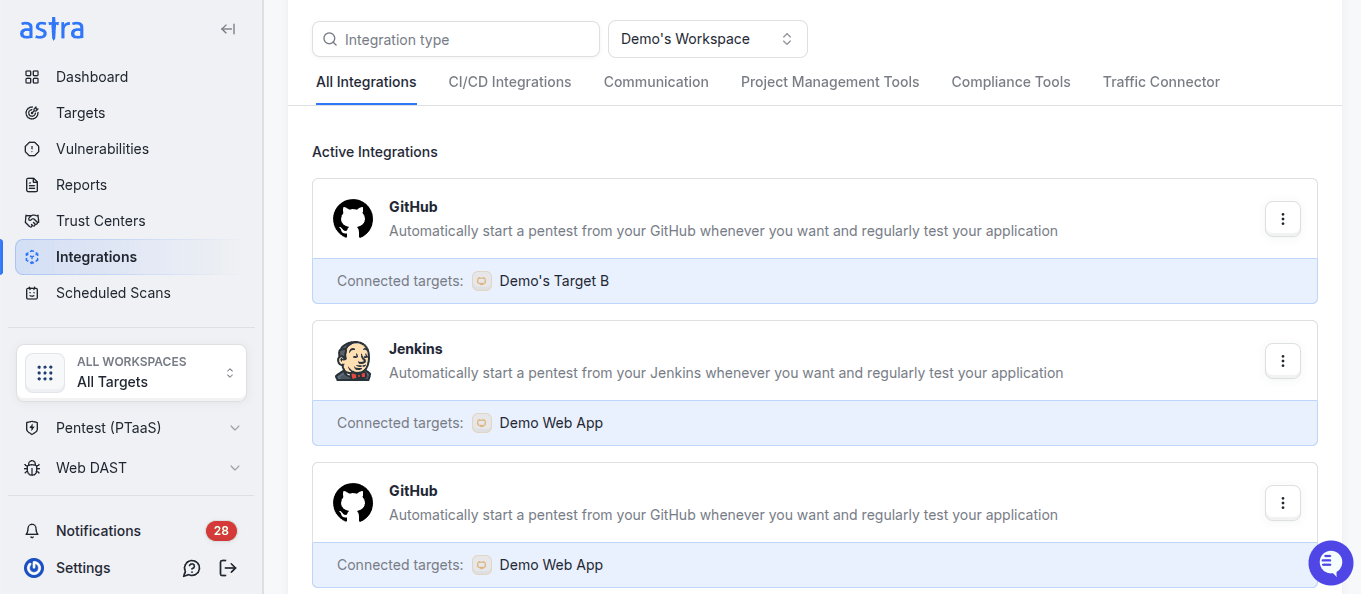
Once it’s in the pipeline, it’s off your plate. Security runs every time, consistently.
- Light checks (secrets, linting) → run fast on feature branches
- Incremental scans (SAST/SCA) → trigger on merge to keep code clean
- Full scans (SAST, SCA, IaC, containers) → gate releases before prod
This “light early, heavy late” model means you still get quick feedback while coding, but the system does the deep digging before anything goes live. Security runs in the background, velocity stays intact.
How can Astra Security Help?
Velocity in DevSecOps is about closing the gap between security findings and engineering fixes. Most scanners create noise and delays, resulting in false positives, vague reports, and hours-long scans that don’t align with sprint timelines. we flip this model by embedding security into the same workflows developers already use, with speed and clarity as defaults.
With 15,000+ automated test cases running directly from CI/CD pipelines, Astra Security ensures every commit or build is scanned without adding friction. In-house experts validate results, so developers receive high-confidence findings in minutes, not hours, along with precise guidance on fixes. That means security feedback loops keep pace with code delivery, rather than lagging.
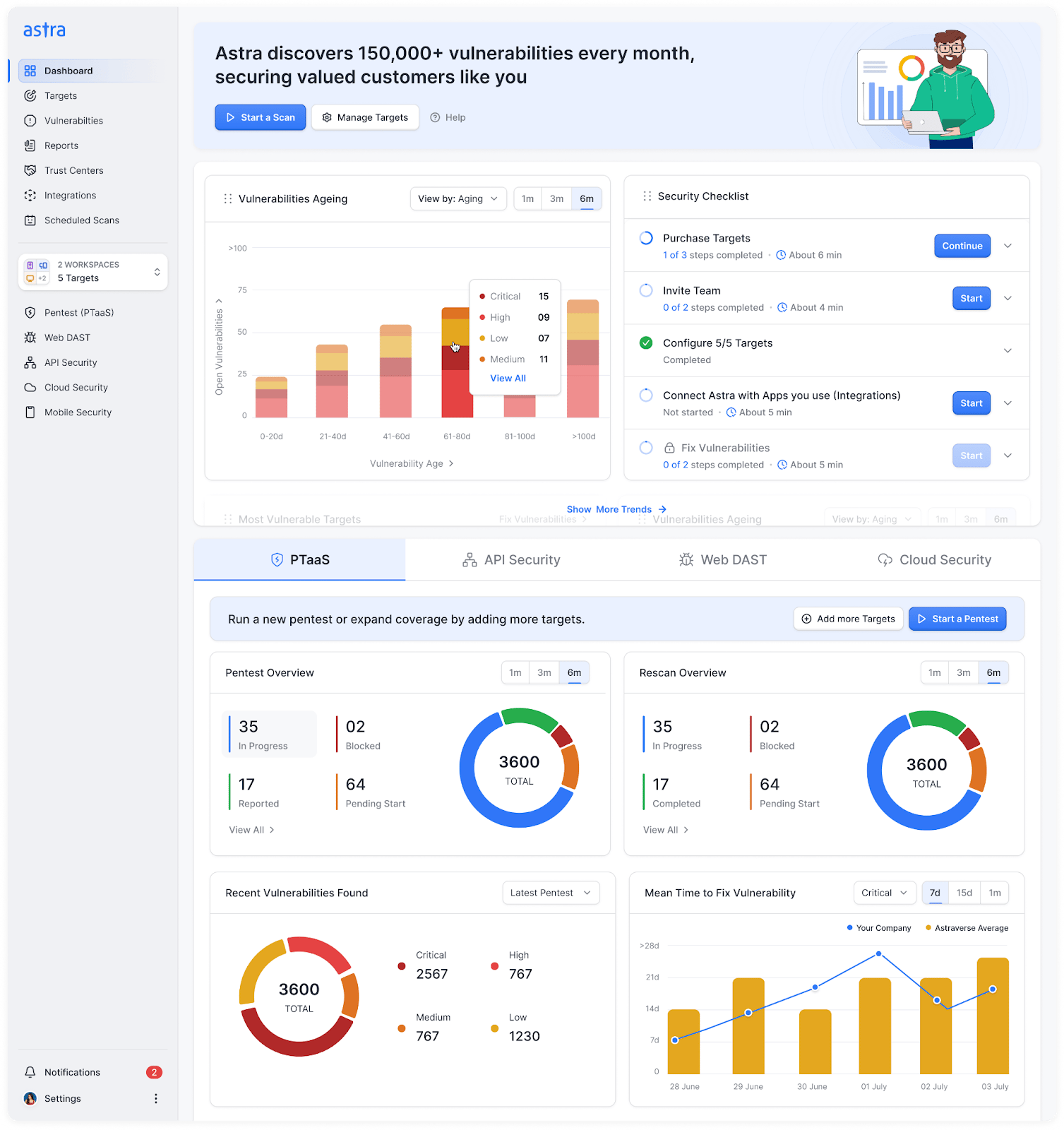
Astra Security platform also builds velocity into remediation: engineers can trigger targeted rescans on demand, collaborate with security experts in real time, and share compliance-ready results through a dedicated Trust Center. The result is faster resolution, reduced rework, and a pipeline where security runs continuously in step with development.
Why Astra Security drives DevSecOps velocity:
- Continuous CI/CD scans that align with release cadences instead of blocking them.
- Achieve near-zero false positives through expert validation, minimizing wasted cycles.
- On-demand rescans to verify fixes instantly and keep sprints on track.
- Integrated workflows with Jira, GitHub, GitLab, Slack, and no context-switching.
- Faster MTTR (up to 2x reduction) with detailed fix steps, PoCs, and real-time expert support.
Final Thoughts
DevSecOps velocity is not about choosing between speed and security; it’s about engineering them to coexist. Teams that get this wrong end up either firefighting production incidents or missing market windows, both of which cost more than getting the balance right upfront.
By shifting security into the pipeline, tuning scans to context, and validating results with precision, velocity becomes sustainable. The payoff is not just faster delivery, but delivery that holds up under scrutiny from customers, regulators, and attackers alike.
FAQs
What is DevSecOps velocity?
DevSecOps velocity is the ability to deliver software quickly while embedding security directly into the development pipeline. It balances release speed with risk reduction, ensuring that security is continuous and automated, so teams ship features fast without exposing themselves to breaches or compliance failures.
How does incremental scanning help in DevSecOps?
Incremental scanning focuses only on code changes and their dependencies instead of rescanning the entire codebase. This keeps feedback fast, reduces noise, lowers compute costs, and highlights issues relevant to current work. As a result, security checks align with developer speed, fueling true DevSecOps velocity.
How can I integrate security without slowing my pipeline?
You can embed lightweight security checks at commit, run incremental scans on merges, and schedule deeper scans before releases. Automating these steps in CI/CD ensures continuous protection without blocking workflows. This layered approach keeps developers moving quickly while maintaining strong security and compliance posture.
What are the best tools for CI/CD security scanning?
The best tools integrate seamlessly with your pipeline and support incremental, automated scans. Popular choices include GitHub Advanced Security, GitLab SAST, Snyk, Dependabot, and Checkmarx. Each helps detect vulnerabilities in code, dependencies, or secrets while maintaining DevSecOps velocity by balancing depth with speed.