On September 1, 2026, OpenAI announced that its Astra model had reached the Critical tier for cyber capability under the company’s Preparedness Framework, a first for its systems.
While working through an internal benchmark of 20 recently disclosed vulnerabilities in Google’s V8 engine, the model found two zero-days that no one had asked it to look for and used them in a working exploit chain. OpenAI is disclosing both flaws and restricting the capability to vetted testers.
We share a name with the model and nothing else, and the collision amuses us more than it worries us. The result is sobering, since work that once required rare specialists and months of runway occurred during a benchmark run, which industrializes the tradecraft that kept zero-days scarce.
Our position is that defenders should focus on exposure time, that is, how long an emerged flaw remains live in their stack, because novelty is the one variable they cannot control.
Key Thoughts
- OpenAI’s Astra model found and chained two unknown V8 zero-days during an internal evaluation, which signals that the cost of elite exploit development is collapsing.
- No security product honestly predicts unknown flaws in a technology before anyone knows they exist, and vendors who imply otherwise are selling a crystal ball.
- When Astra Security talks about zero-day attack prevention, we mean continuous monitoring for emerging, unpatched vulnerabilities, automatic rescans on every code merge, and manual business logic testing by security engineers.
- The rational response to AI-scale exploit development is cutting the time between a flaw emerging and a fix shipping, and that discipline is available to defenders today.
What Zero-Day Defense Means Here
The term zero-day carries a precise industry meaning and a much looser marketing one, and the distance between them is where overclaiming lives. We want to close that distance before making a single claim of our own.
What the Industry Means by Zero-Day
Since the phrase sits in our headline, we owe you a definition before anything else. In the standard industry sense, a zero-day is a flaw in a product or technology that no one outside the attacker knows about. No scanner, including ours, detects those flaws in advance because there is nothing on record to detect.
A vendor promising to find vulnerabilities before they exist is promising precognition, and precognition is not a product category.
What Our Platform Does Instead
Here is what our platform does, stated plainly. It continuously monitors your web applications and APIs for emerging, unpatched vulnerabilities, testing against new disclosures as they land instead of waiting for a scheduled audit.
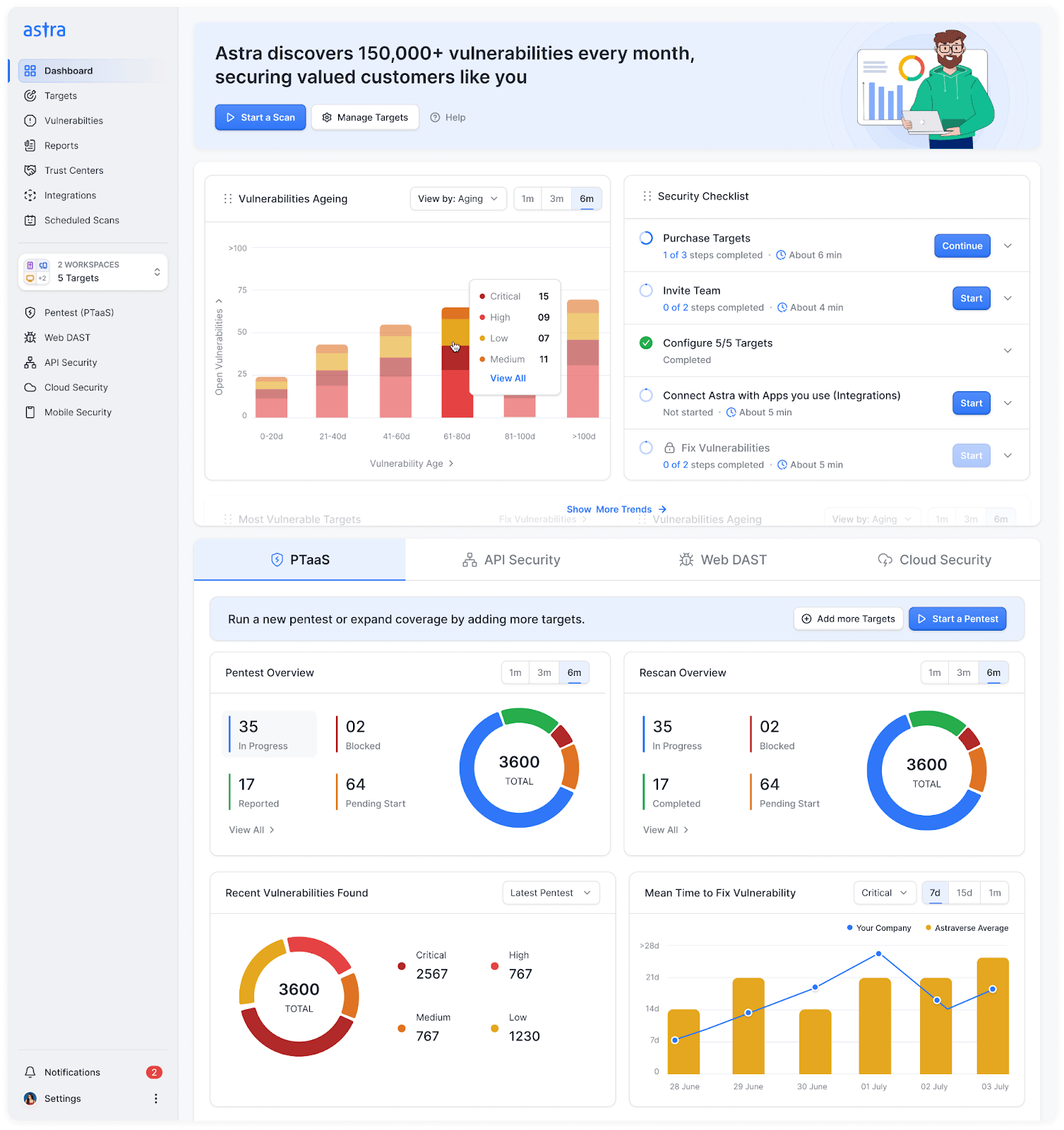
It integrates into your CI/CD pipeline so that every time code is merged or submitted, a new scan is automatically triggered, catching vulnerabilities newly introduced into your codebase at the point of change.
It then pairs that automation with manual penetration testing, where security engineers probe the business logic that no vulnerability database will ever describe. That is the whole claim, and we would rather state its limits ourselves than let a headline imply more, because the zero-day label attracts more hype than almost any other term in security marketing.
Whenever a vendor uses it, the useful question is what the words mean operationally, and now you know exactly what they mean when we use them.
The Dangerous Window Opens After Disclosure, Not Before
Ask most teams when a zero-day scares them, and they will point to the silent years before anyone finds it. The data says the scary part starts the moment everyone finds it.
Exploitation Begins in Days, Sometimes Minutes
Genuine in-the-wild zero-day attacks are rare, expensive, and mostly reserved for high-value targets. For a typical engineering organization, the losses concentrate later, in the days after a flaw becomes public and before a patch reaches production.
Google’s Mandiant team measured the average time from disclosure to exploitation falling from thirty-two days to roughly five days between 2021 and 2023. Cloudflare went further and recorded attackers attempting to exploit a JetBrains TeamCity authentication bypass twenty-two minutes after proof-of-concept code was published, which is faster than most teams finish reading the advisory.
AI Compresses the Timeline Again
A model that can turn a fresh disclosure into a working exploit can reduce weaponization from weeks to hours, and it can run that process across hundreds of disclosures in parallel, whereas a human crew could staff only a handful. The uncomfortable arithmetic is that patch lag, the gap between a public disclosure and your deployed fix, is becoming the largest attack surface most companies own.
Our State of Continuous Pentesting Report 2026, built on 6.8 million findings from more than 150,000 scans and 8,000 engagements, recorded a verified critical vulnerability every 48 seconds through 2025. One in ten verified findings is now critical, whereas a year earlier the ratio was one in forty, and attackers no longer need a secret flaw when the public ones stay open long enough.
Why Continuous Monitoring Beats Point-in-Time Scans
Once you accept that the clock starts at disclosure, the testing schedule becomes a security control in its own right. A cadence chosen for audit convenience was never chosen with that clock in mind.
What a Quarterly Scan Cannot See
A quarterly scan is a photograph, and it can tell you a great deal about the moment the shutter clicked and nothing at all about the vulnerability that emerged last Tuesday. When exploitation begins within days of disclosure, an assessment cadence measured in months guarantees long stretches where you are exposed and unaware, and no amount of report polish fixes a stale report.
Coverage That Moves With Your Code
Continuous monitoring changes the shape of the problem. Astra’s DAST scanner runs on your schedule or after every deployment, covers more than 10,000 test cases including the latest published CVEs, and absorbs what our pentesters learn from live engagements, so detection improves as the threat does.

Running continuous DAST inside your CI/CD pipeline matters just as much for the flaws you introduce yourself. Every merge into a web application or API triggers a fresh scan automatically, which means a vulnerable dependency or a misconfigured endpoint added this sprint surfaces this sprint, while the engineer who wrote the change still has the context to fix it cheaply.
Nothing about this predicts the unknown. It removes the months of blindness that a point-in-time model builds into your calendar, and the volume data says that blindness is getting expensive, since our scanners logged 1.8 million findings in December 2025 alone, more than the entire previous year combined.
Where Manual Logic Testing Fits
Everything above assumes the vulnerability has a name someone can publish. A meaningful share of what hurts companies never gets one, and that share needs a different kind of defense.
Flaws No Database Will Ever List
Monitoring handles the flaws the world knows about, and it does nothing for the flaw that exists only inside your application. A price manipulation path in your checkout flow or a role bypass in your admin panel will never receive a CVE number, because these weaknesses live in business logic rather than in any shared component.
That blind spot is measurable, since 91 percent of the critical findings verified in our report carried no CVE designation, no vendor patch, and no public remediation guidance, meaning the most damaging problems were exactly the ones no threat feed could have flagged.
Finding them takes an adversary who first understands what your product is supposed to do and then reasons about how to make it do something else.
The Human Layer That Hunts Them
That is why we pair the automation with manual testing by security engineers, the same team that has disclosed dozens of CVEs and contributes to OWASP projects. A human tester chains small oversights into real abuse paths, questions assumptions the spec never wrote down, and confirms that a finding is exploitable rather than theoretical.
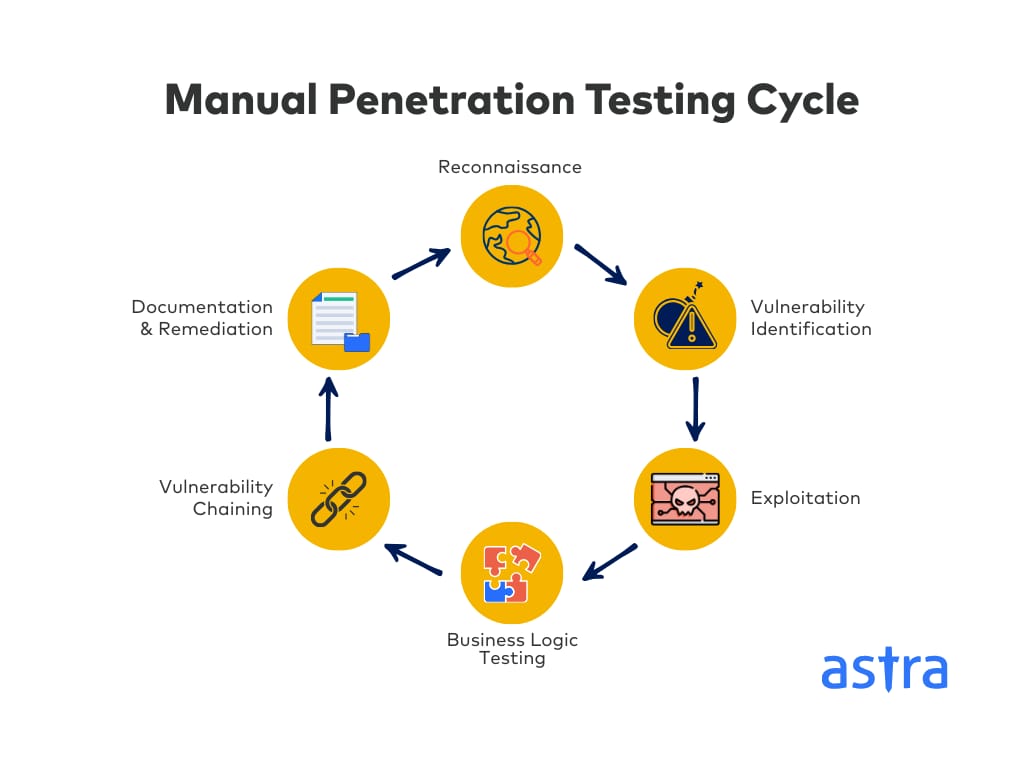
This pairing is our honest answer to unknown-unknowns. It does not predict flaws nobody has seen, and it does not need to, because it hunts for them the way an attacker would, on a cadence that keeps pace with your releases.
Note: Astra scales certified pentesters’ expertise, with its autonomous agents continuously hunting for key business logic flaws, such as price manipulation, role bypasses, and workflow abuse, across your stack.
What Defenders Should Take from OpenAI’s Zero-Day Results
The headlines around the announcement focused on what the model can do. The more practical question is what its existence obliges you to do differently, starting with your planning assumptions.
Assume the Capability Spreads
OpenAI is restricting access to its model’s most advanced cyber capability because the same skill that finds a flaw for a patch can find it for a payload. We think that caution is warranted, and we also think it buys less time than it appears to. Frontier results tend to be reproduced, and well-resourced attackers do not wait for an access program.
The working assumption for any security leader should be that comparable offensive capability will reach hostile hands sooner than any procurement cycle anticipates. The history of offensive tooling supports that assumption, since techniques that began as closely held tradecraft, from credential stuffing kits to ransomware builders, ended up packaged and rented out within a few years of proving themselves.
Shrink the Interval You Control
None of that changes what a defender controls. You cannot shorten the interval between a capability being demonstrated and criminals acquiring it, and you can absolutely shorten the interval between a vulnerability emerging and your fix shipping.
Inventory what you expose, monitor it continuously, rescan on every merge, and treat patch latency as an engineering metric with an owner and a target. Our platform exists to give teams that discipline today, without waiting on anyone’s access program or an invitation to a preview.
Final Thoughts
The two zero-days in this story were found by a system that never gets tired and never runs out of curiosity, and the sober conclusion beats the panicked one. You will never out-predict an adversary like that, and you do not need to. You need to be measurably faster than the window in which a fresh flaw is useful to them, and speed is a property of process, which means it can be built and measured like anything else your team ships.
If you want to see what that looks like against your own stack, Astra Security’s continuous monitoring and pentest platform is the shortest path to finding out. Connect a target, merge some code, and watch the findings arrive while they are still cheap to fix.