Key Takeaways
- Most high-impact external vulnerabilities stem from unknown/forgotten assets, not complex exploit chains.
- Use specialized tools for each testing phase (discovery, enumeration, scanning, exploitation) rather than bloated software stacks.
- Security professionals must manually verify scanner results to eliminate false positives and validate real exploitability.
- Modern APIs bypass WAFs and often lack proper security controls, making them prime targets for authorization flaws and data exposure.
- The most mature security programs leverage both automated platforms for ongoing monitoring and manual toolchains for in-depth, hands-on penetration testing.
The classic external penetration testing takes a systematic approach that includes reconnaissance, enumeration, validation, and proof-of-concept exploitation. Enterprise security teams deploy comprehensive suites of tools across the entire application, offering full lifecycle testing, which loses value when the toolchain isn’t purpose-built for each testing phase.
In this guide, we look at the top tools, categorized by penetration testing phase, practical use cases, and industry best practices for 2026.
Top External Penetration testing Tools
Recon & Attack Surface Discovery
Network & Service Enumeration Tools
Web Application External Pentesting Tools
API-Focused External Pentesting Tools
- Postman/Insomnia
- Burp Suite (API Testing)
- Kiterunner
Vulnerability Scanning & Validation Tools
Exploitation & Proof-of-Impact Tools
One-Stop Solution: Astra Security
External Pentesting Tools: The Reality
An external penetration test covers internet-facing assets such as domains, IP addresses, APIs, VPNs, and cloud-edge components. Organizations demand a one-stop shop solution, but there is no such tool. Instead of massive, bloated software stacks, professional penetration testers use small, portable, and efficient toolchains specialized for the task at hand.
The best way is to use best-in-breed complementary toolsets that are best-in-class in the domains they serve. The usual workflow for an external pentest is broken into separate phases: attack surface discovery, service enumeration, vulnerability scanning, exploitation, and validation.
For each phase, purpose-built tools are required that integrate to create a robust testing methodology.
Recon & Attack Surface Discovery (Most Critical Phase)
Reconnaissance is the step that lays the groundwork for the success and quality of the penetration test. The main value proposition of external security assessments is in finding what defenders have forgotten.
Most high-impact external vulnerabilities are usually related to unknown/forgotten assets rather than complex exploit chains. Thorough reconnaissance pays a higher dividend than advanced exploitation techniques.
Core Tools
Subfinder/Amass – Subdomain Discovery
Mapping the entire external attack surface is achieved through subdomain enumeration. Subfinder prioritizes speed over breadth and is very fast. It looks for passive sources and queries 45 sources, which is exactly why it is very fast, such as certificate transparency logs, standard DNS database methods, and more search engine-based queries.
It returns hundreds of subdomains in 30 seconds, automating reconnaissance.
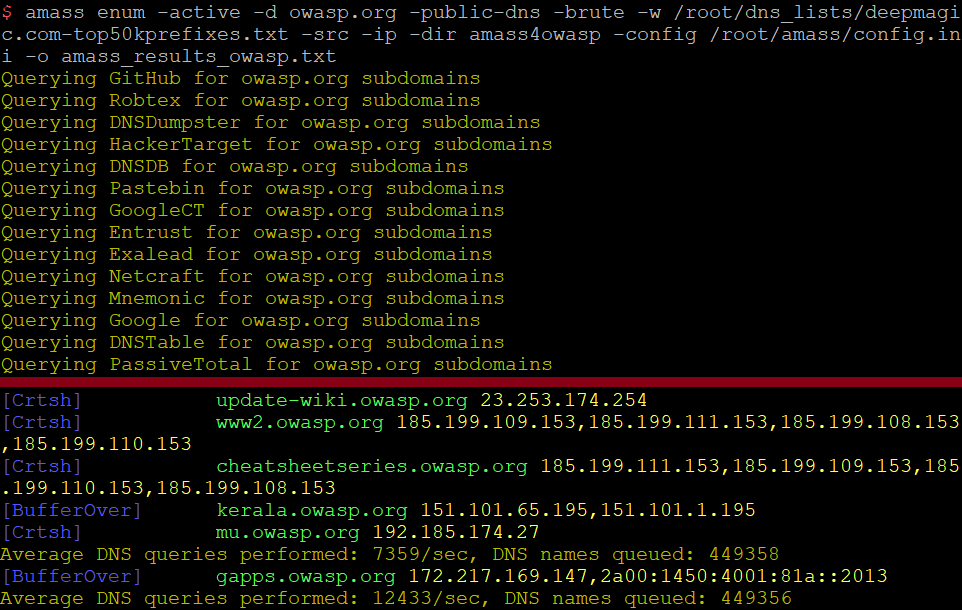
Amass extends coverage, offering 87 passive sources, along with active DNS enumeration and recursive subdomain discovery. Though slow (it takes >= 20 minutes to run a thorough scan), Amass reveals infrastructure that other rapid tools tend to miss; therefore, a penetration tester will use both tools: Subfinder for quick discovery and Amass for overnight, comprehensive scans.
Masscan – Fast Internet-Scale Port Discovery
With the ability to scan the entire IPv4 address space in less than 6 minutes, masscan runs faster than any other port scanner. It can achieve a throughput of 1.6 million packets per second on Linux systems. During the initial discovery phase, this tool is great for quickly discovering open ports over large ranges of IP addresses.
Nmap – Service Fingerprinting & Validation
Nmap gives application-level service fingerprinting and version detection after open ports are found using Masscan. The Nmap Scripting Engine (NSE) provides more than 600 scripts for protocol-specific enumeration and vulnerability checks. Nmap is significantly slower than Masscan, but provides the very detailed intelligence necessary for later stages of exploitation.
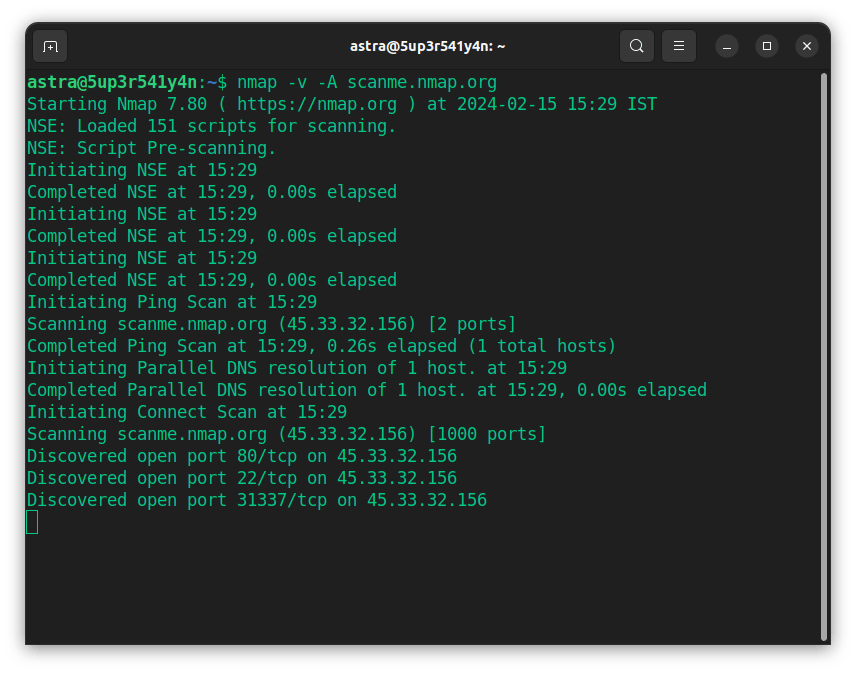
The optimal workflow combines both tools: Masscan for rapid port discovery across large scopes, followed by targeted Nmap scans for service validation and fingerprinting.
Shodan/Censys – Exposed Services & Historical Exposure
These platforms index internet-connected devices and services, enabling security teams to identify exposed infrastructure without active scanning.
Shodan is a leader in internet device search, but it has significant limitations. In fact, only 68% of the services Shodan has seen remain up, and there are coverage issues in the upper port ranges.
Censys outperforms the competition with 8x more ports scanned in the 65,535-port space, new service detection in less than 24 hours (3 days for Shodan), and source reliability with >92% live service accuracy compared to Shodan. Censys has richer, fresher data for serious attack surface management.
| Tool | Speed | Coverage | Update Frequency | Cost |
|---|---|---|---|---|
| Subfinder | Very Fast | 45 sources | Daily | Free |
| Amass | Slow | 87 sources | Daily | Free |
| Masscan | Extreme | 65,535 ports | N/A | Free |
| Nmap | Moderate | NSE 600+ scripts | Weekly | Free |
| Shodan | N/A | Basic | ~3 days | $59/month |
| Censys | N/A | Comprehensive | <24 hours | Tiered pricing |
Leverage Astra Security’s modern, agentless, multi-cloud, recon capabilities today.

Network & Service Enumeration Tools
Simply resolving the open ports is not enough. Port discovery must be turned into attack paths (i.e., potential targets for attackers) via service analysis. Most external pentests find misconfigurations and default credentials, not missing patches. Security teams need to focus on vulnerable management interfaces, default passwords, and insecure access controls.
Core Tools
Nmap NSE – Protocol-Specific Checks
The Nmap Scripting Engine provides targeted enumeration for specific services. Scripts such as, http-enum, smb-enum-shares and ssh-audit, identify service-specific misconfigurations and vulnerabilities efficiently.
Netcat / Socat – Manual Service Interaction
These utilities enable direct interaction with network services for manual banner grabbing and protocol testing. Their simplicity and universal availability make them essential for quick service verification.
Service-Specific Enumeration Tools
Specialized tools provide deep enumeration for common services. Enum4linux targets SMB/CIFS shares and user enumeration. SSH-audit analyzes SSH server configurations for weak algorithms and security issues. RDP-sec-check examines Remote Desktop Protocol implementations for vulnerabilities and misconfigurations.
Web Application External Pentesting Tools
The web application is the highest return-on-investment attack surface in an external assessment. The problem is how to differentiate a true security vulnerability from false-positive noise generated by the scanners.
Auth bypasses, for example, or business logic, or sensitive data exposure are all manual tests, and all things for which automated scanners create a ton of false positives. All scanner findings must be validated by security professionals through manual testing.
Core Tools
Burp Suite Pro – Manual Testing & Authentication Handling
Burp Suite Professional ($399/year) is the de facto standard for manual web application security testing.
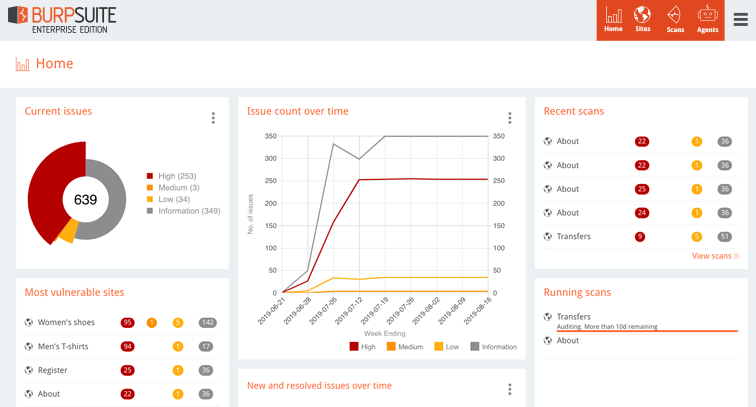
The most impressive features include the Repeater tool to change parameters of outgoing requests, Intruder (in the paid version) to quickly craft manual, customized attacks that focus on request/response analysis, Scanner to kick-start vulnerability assessment, and top-notch session-handling capabilities for more complex authentication flows.
OWASP ZAP – Lightweight Automated Coverage
OWASP ZAP is an open-source alternative that can do many of the same things, but does so automatically. YAML-centered automation framework ideal for CI/CD pipeline integration. Scans provide good coverage while minimizing false positives with active and passive scanning modes.
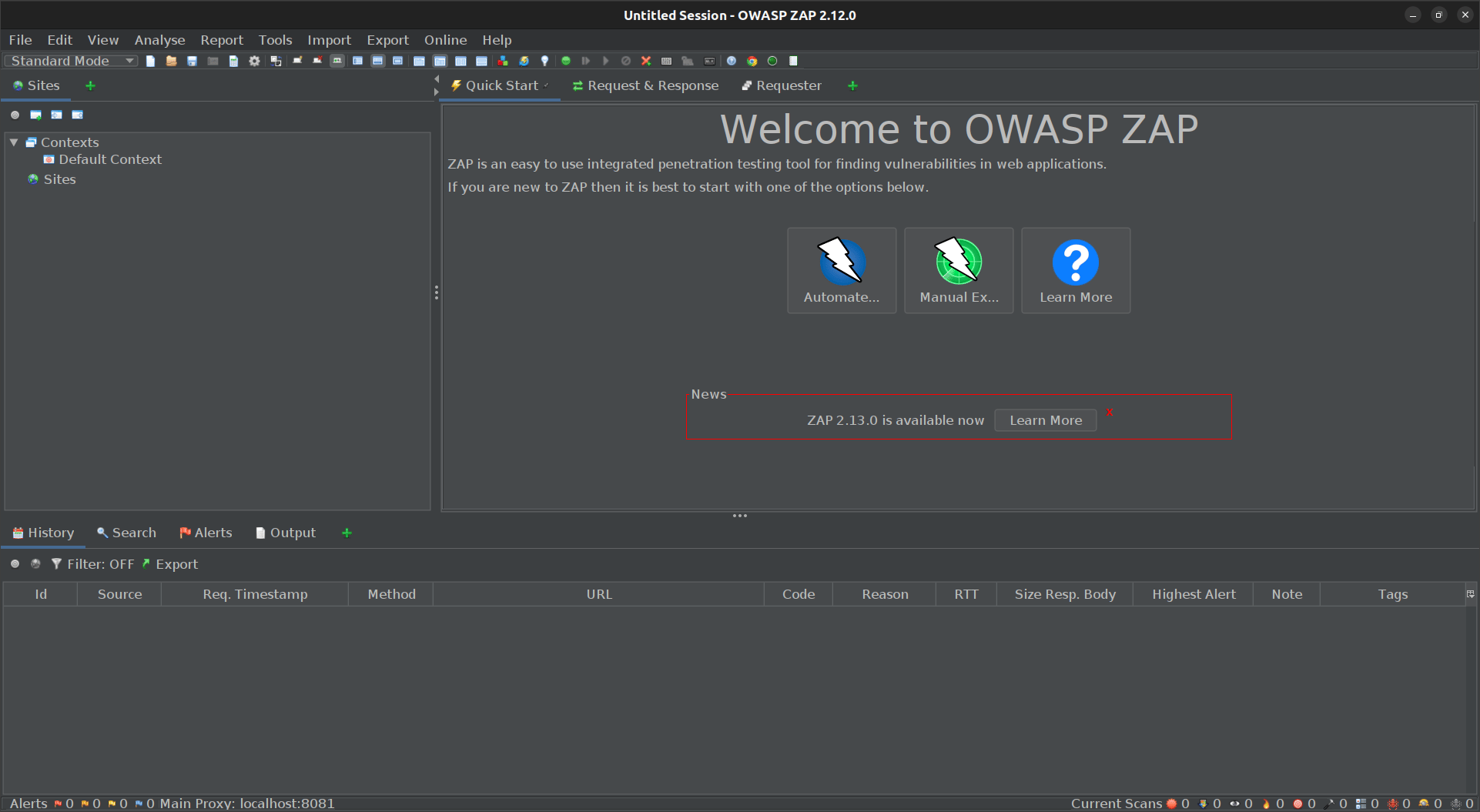
The interface seems less refined than Burp Suite’s, but the functionality is generally similar in most testing scenarios.
ffuf / dirsearch – Endpoint Discovery
These tools perform rapid directory and endpoint fuzzing using comprehensive wordlists.
Written in Go, ffuf handles massive wordlists efficiently and excels at discovering hidden administrative panels, backup files, and undocumented endpoints.
| Tool | Annual Cost | Optimal Use Case | Primary Limitation |
|---|---|---|---|
| Burp Suite Pro | $399 | Manual testing, complex authentication | Learning curve, resource intensive |
| OWASP ZAP | Free | CI/CD automation, rapid scanning | Interface polish, fewer extensions |
| ffuf | Free | Fast content discovery | Content discovery only |
API-Focused External Pentesting Tools
Modern applications continue to expose their functionality via APIs, which are not subjected to the same level of security checks as the classic web interface.
Exposed APIs are high-value targets, as they often bypass WAFs (Web Application Firewalls) and rate-limiting controls. Security assessments must validate broken object-level authorization (BOLA), information exposure due to excessive data, and missing authentication on high-value endpoints.
Core Tools
Postman / Insomnia – Manual API Testing
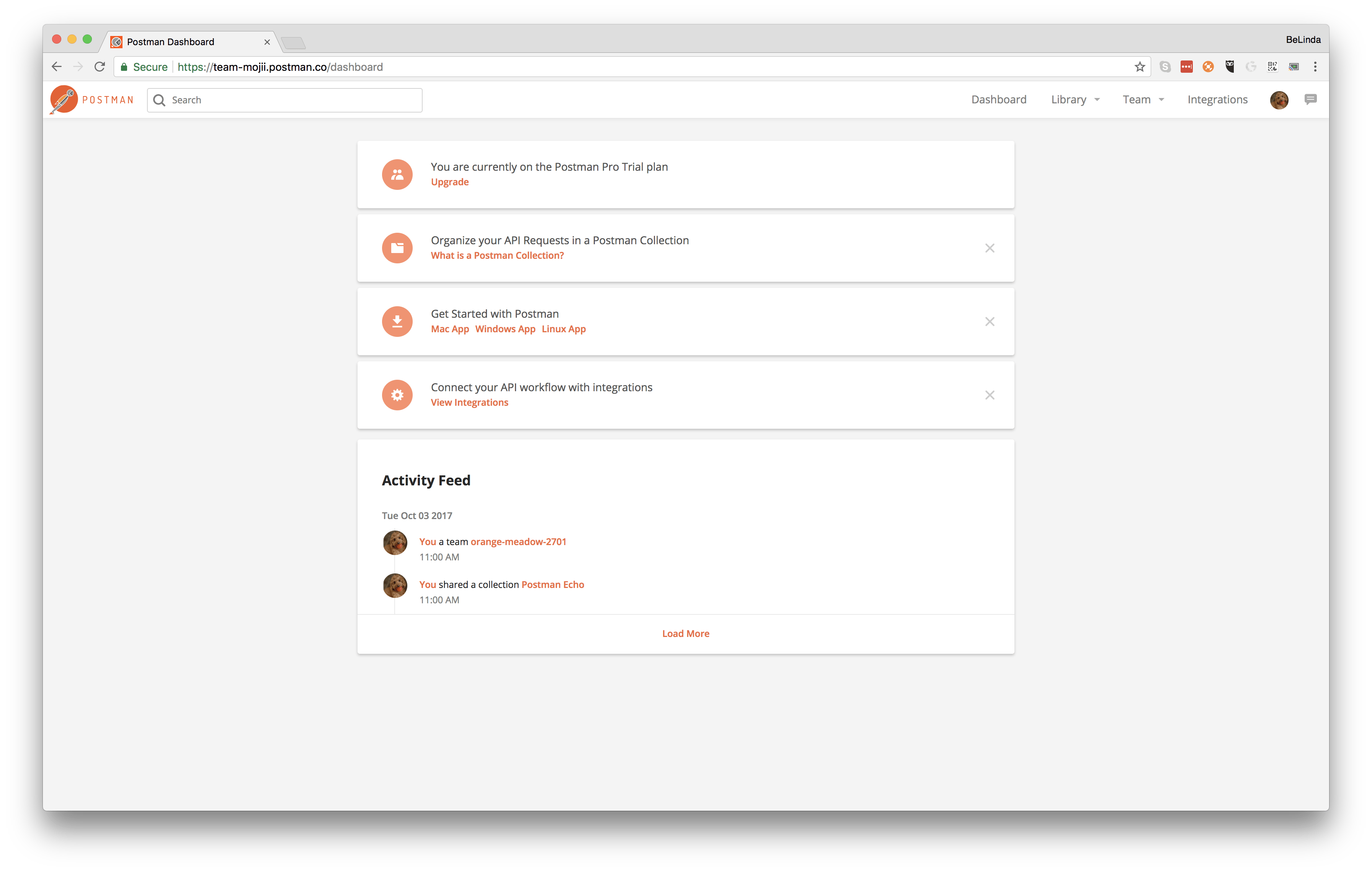
These GUI clients help you build and test API requests with ease. Postman splits things into collections for team collaboration. The more recent versions require some form of synchronization with the cloud, which can be problematic for those sensitivity-rated penetration testing engagements.
Burp Suite (API Testing) – Token Replay & Manipulation
Burp Suite’s Repeater and Intruder modules excel at API security testing. Security professionals use these tools to manipulate JWTs, perform parameter fuzzing, and test for authorization flaws.
Kiterunner – API Route Discovery
Kiterunner offers contextual API endpoint discovery tailored for modern application frameworks. Kiterunner avoids common brute-force approaches, instead crafting custom headers and HTTP methods to discover endpoints contextually.
This gives Kiterunner a considerable advantage in achieving more accurate and efficient discovery of application endpoints compared to traditional directory brute-forcing tools.
kr scan https://api.target.com -w routes-large.kite
Secure your API and endpoints with Astra Security’s modern, agentless, multi-cloud, continuous scanning today.
Vulnerability Scanning & Validation Tools
While vulnerability scanners cover a wide attack surface, their output needs to be interpreted more carefully. The most experienced penetration testers view the results of vulnerability scanners as initial leads that need to be manually validated. A professional would take the time to demonstrate exploitability and business impact; automated tools do not.
Core Tools
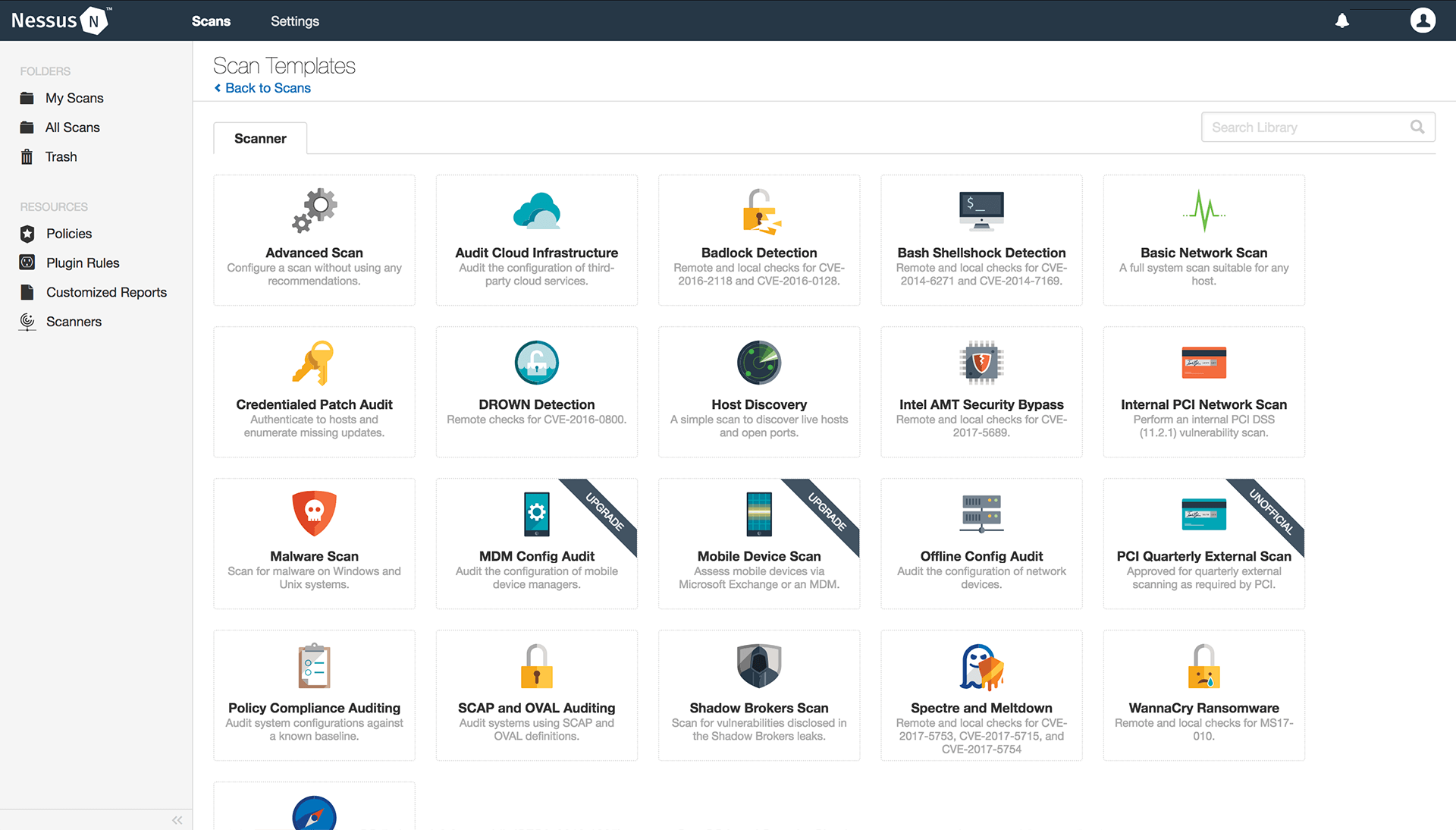
Nessus / Qualys / OpenVAS – Vulnerability Discovery
Nessus (Tenable, $2,500+/year): Covers 50,000+ CVEs, maintains the industry’s lowest false-positive rate, and provides comprehensive enterprise-focused capabilities.
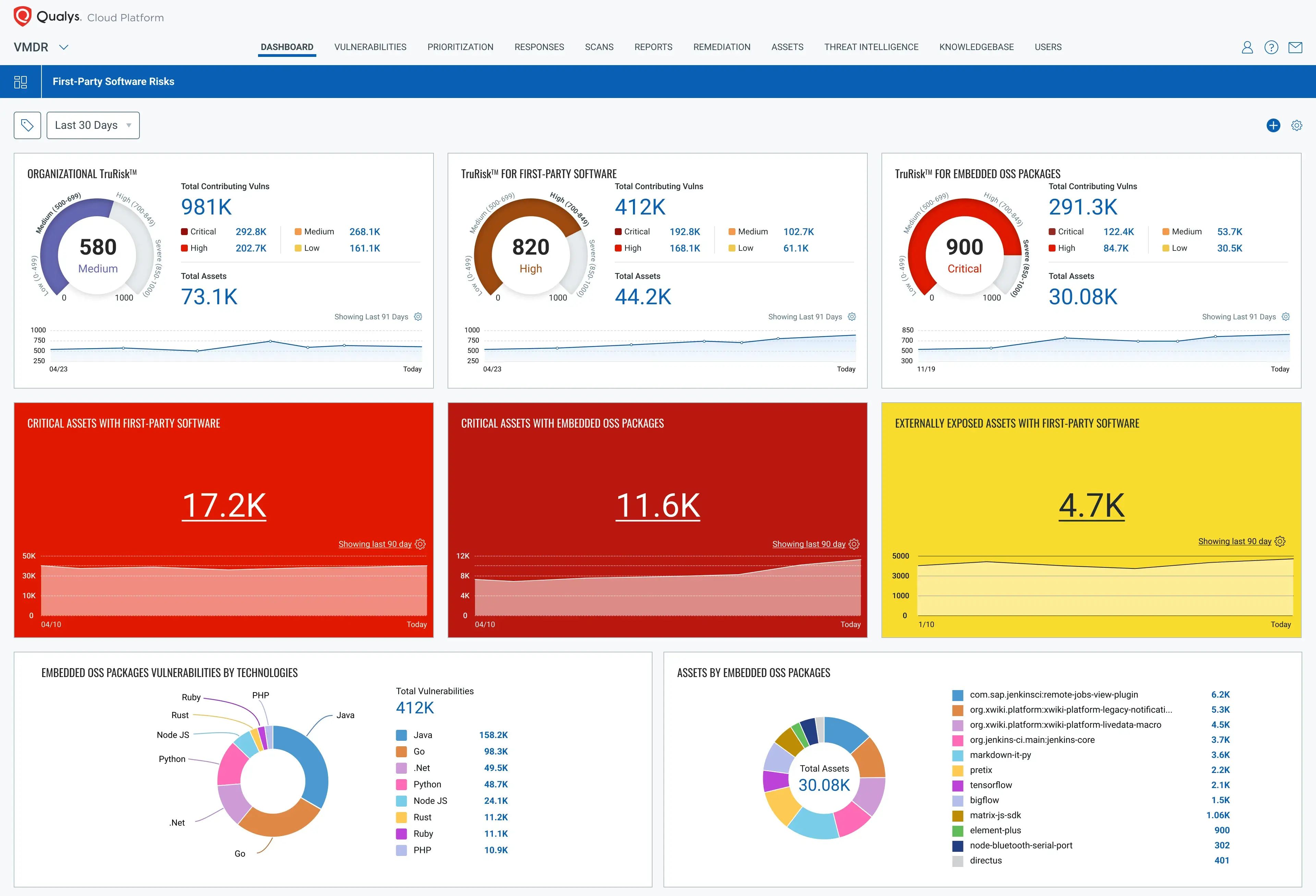
Qualys (per-asset pricing): Cloud-native continuous scanning platform with FedRAMP certification, ideal for large organizations requiring compliance reporting.
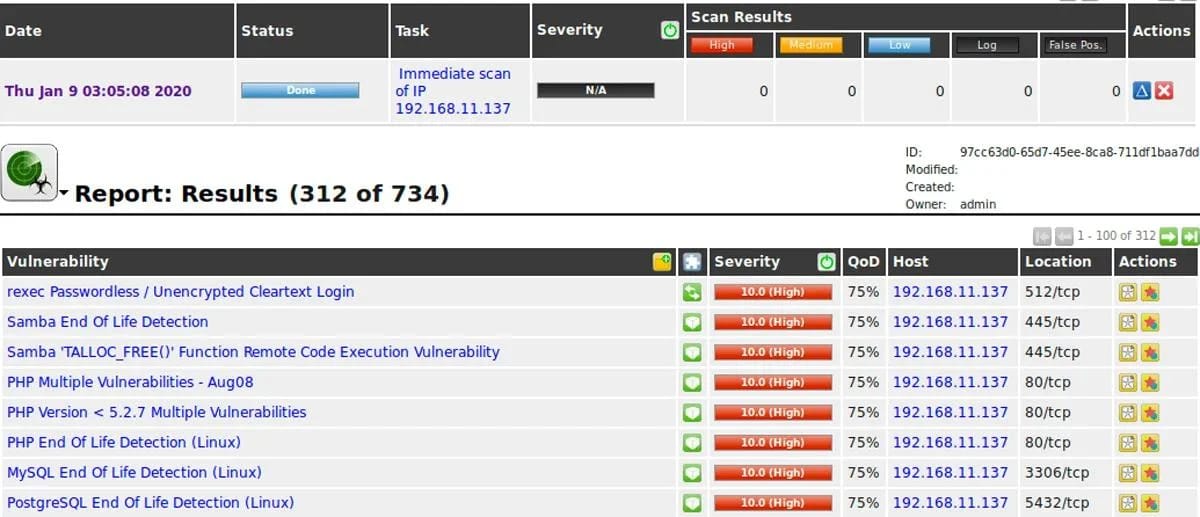
OpenVAS (Free): Open-source scanner covering 26,000+ CVEs with extensive customization capabilities. Requires manual setup and Linux expertise but eliminates licensing costs.
Nuclei – Fast, Template-Based Detection
Nuclei uses YAML templates created by the community to quickly find vulnerabilities.
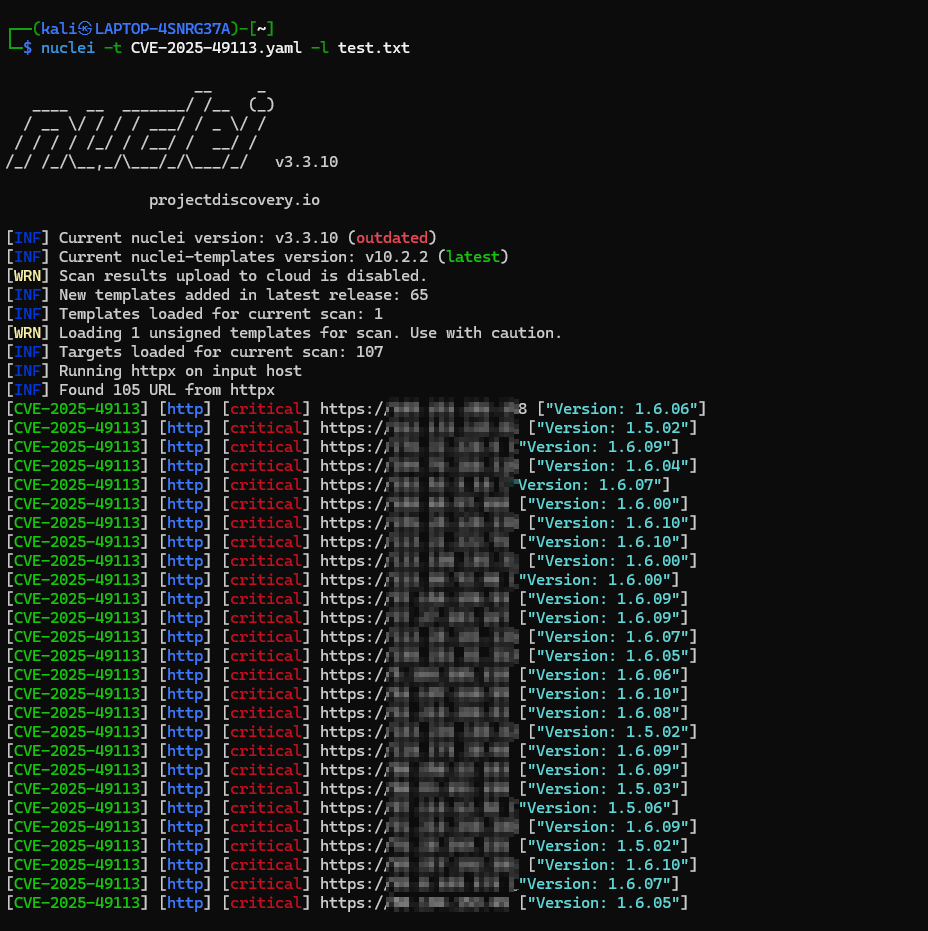
It has a library of over 6,000 templates covering CVEs, misconfigurations, and exposures, which are updated daily as new vulnerabilities are discovered.
| Scanner | CVE Coverage | False Positive Rate | Annual Cost | Optimal Application |
|---|---|---|---|---|
| Nessus | 50,000+ | Very Low | $2,500+ | Enterprise deployments |
| Qualys | Extensive | Low | Per-asset | Cloud-native compliance |
| OpenVAS | 26,000+ | Moderate | Free | Budget-conscious teams |
| Nuclei | 6,000+ templates | Very Low | Free | Rapid detection, automation |
Exploitation & Proof-of-Impact Tools
The best proof of how severe the vulnerability is comes from the actual control over the exploitation of a relevant security risk. Unauthenticated external penetration tests focus on effectiveness rather than theory. Theoretical remote code execution that collapses production systems is less useful than a working proof-of-concept for unauthorized data access.
Core Tools
Metasploit – Controlled Exploitation
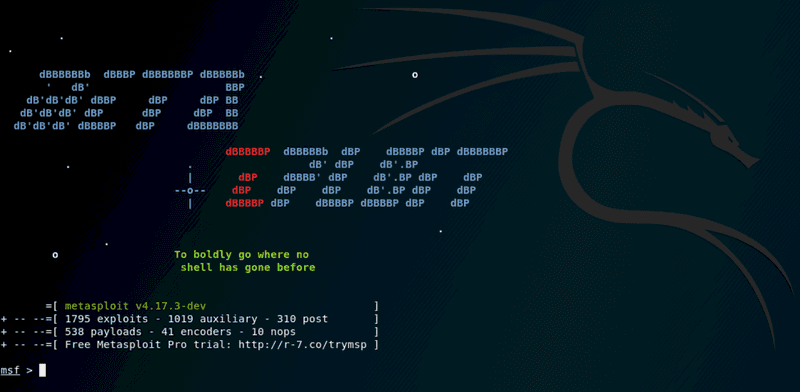
The Metasploit Framework contains 4,000+ exploit modules enabling controlled validation of identified vulnerabilities. The Meterpreter payload provides post-exploitation capabilities for demonstrating potential lateral movement and data access scenarios.
SearchSploit / Exploit-DB – Exploit Research
SearchSploit, an offline database of public exploits, enables instant matching of scanner-detected CVEs to proof-of-concept code at the utmost speed.
searchsploit apache 2.4.49
Custom Scripts – Chaining Weaknesses
Usually, it takes the combination of multiple moderate-severity issues to yield a high-impact finding. Custom Python exploitation chains with automated execution provide a more realistic approach to an attack than a set of proofs-of-concept.
Understand impact through Astra Security’s modern, agentless, exploitation and hacker-like pentests today.
Automated Platforms vs Manual Toolchains
- Automated Platforms like Astra Security provide ongoing monitoring, so manual assessments are not necessary very frequently. They penetrate the broader attack surface at scale with lower technical barriers.
- The Manual Toolchains of the tools listed in the preceding sections deliver in-depth and not breadth. They mimic real-world attack patterns and find minute security issues, but they require extensive security skills to use and take a long time to conduct.
The most mature security programs use both: automated platforms for continuous monitoring and manual, comprehensive toolchains for deep-dive assessments.
How does Astra Security Help?
Astra’s PTaaS platform combines continuous automated scanning with in-house certified pentesters (OSCP, CEH, eWPTXv2). Built on the Attack AI engine, it runs 15,000+ unified test cases daily while experts validate findings and uncover logic flaws scanners miss. The platform embeds seamlessly into CI/CD pipelines, scanning on your release cadence rather than an auditor’s schedule.
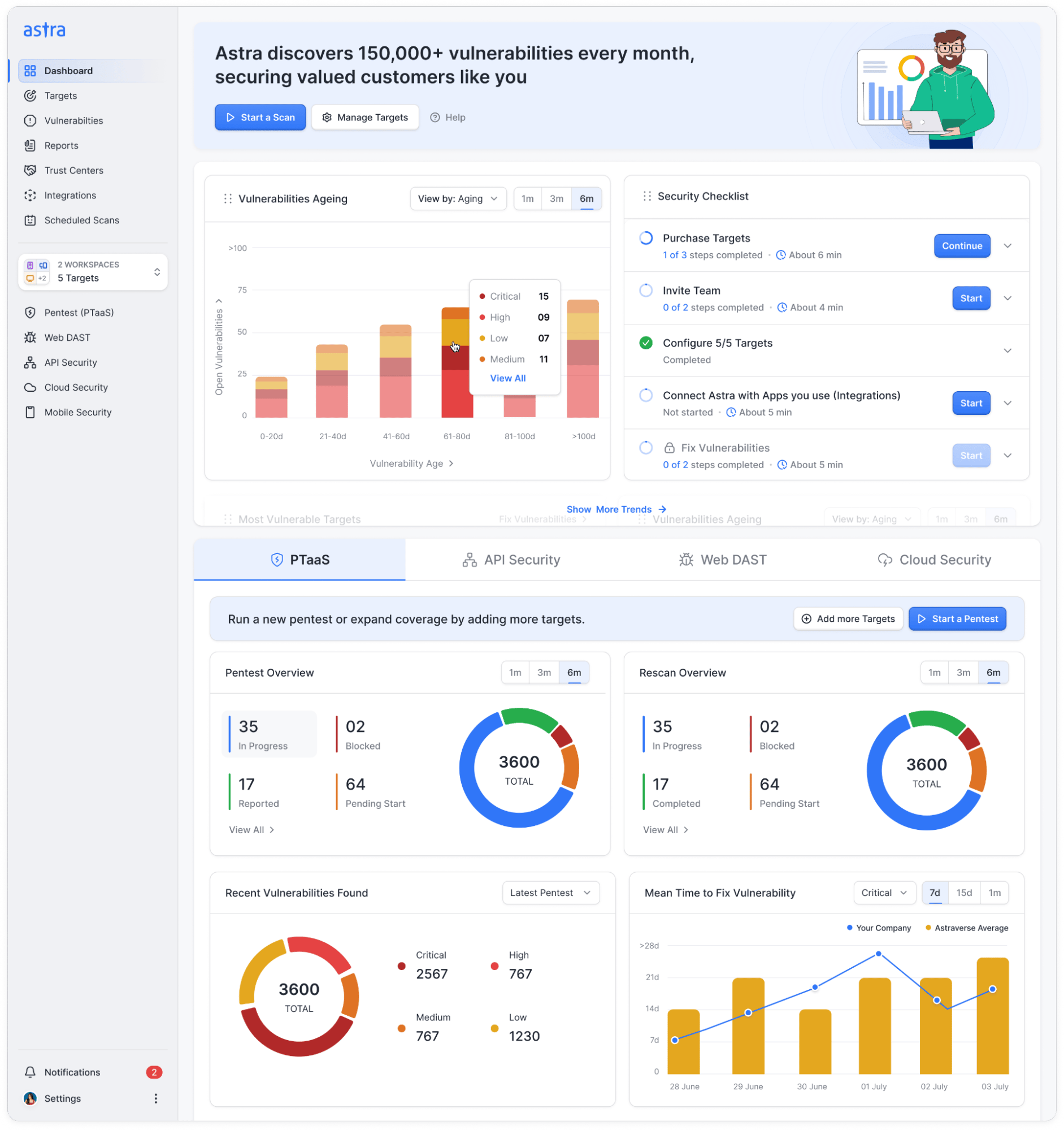
By integrating with GitHub, GitLab, Jira, and Slack, teams get remediation guidance directly in their workflows. This is continuous pentesting that scales with modern engineering.
Why teams choose Astra:
- 15,000+ test cases covering OWASP, BOLA, IDOR, APIs, and cloud misconfigurations
- Native CI/CD integrations for daily, weekly, or monthly scanning aligned to releases
- Human-vetted findings with AI-driven remediation guidance
- Instant rescans to validate fixes without full re-runs
- Trusted by 1,000+ teams across healthcare, fintech, and critical infrastructure
Ready to secure your infrastructure with Astra’s external penetration testing functionalities?
Final Take
Penetration testing is as effective as the quality of your security personnel, not the quality of the tooling you use. The success of external penetration testing lies in the holy trinity of discovery, context, and validation.
The best method is to use tools that complement each other, such as Amass and Censys, to enumerate the entire attack surface; these are used together with manual testing tools like Burp Suite and Nmap to deliver detailed analysis and context, and exploitation frameworks such as Metasploit to demonstrate impact.
The PTaaS platform by Astra Security follows this approach by combining a continuous automated scanner with a manual penetration test conducted by dedicated security experts, providing the security team with every possible manual test for web applications, APIs, and cloud infrastructure in a single dashboard.