
Key Takeaways
- ISO 27001-certified pentesting partners give you a stronger level of assurance because their own practices meet the same security controls they test you on.
- Choosing a certified provider helps reduce friction with auditors, since the reports and evidence align cleanly with ISO 27001 controls and documentation needs.
- Working with the right pentest company makes it easier to demonstrate due diligence to customers, investors, and compliance teams, especially during renewals or high-stakes deals.
- Indian organizations benefit from vendors who understand both ISO 27001 and local requirements like CERT-In, RBI, SEBI, and DPDP, so the testing stays relevant to real operational risks.
- A certified pentesting partner can help teams uncover blind spots in cloud, infrastructure, APIs, and applications that often get overlooked in routine vulnerability scans.
- Having the correct partner also reduces the internal workload, since remediation guidance, retesting, and control mapping happen in a structured, predictable way.
- In high-threat environments, especially with India’s rise in malware and targeted attacks, a certified pentester brings clarity on what to fix first and how to strengthen your security posture over time.
In 2024, India recorded over 369 million malware detections across >8 million endpoints, making it one of the most targeted nations within the Asia-Pacific region.
If you are dealing in ISMS, ISO 27001 is one core certification that defines the grit and robustness of your internal security posture, offering your investors and regulators credibility that drives your market value.
Although here’s the caveat: finding a penetration testing provider that actually holds ISO 27001 certification, rather than one that offers ISO 27001 pentesting services. Many companies claim expertise in testing your ISO 27001 controls, even though they are not certified themselves.
Aside from that, you face the challenge of balancing costs with genuine expertise that understands Indian regulatory nuances, including CERT-In directives, RBI’s cybersecurity guidelines, SEBI’s framework, and the emerging Digital Personal Data Protection (DPDP) Act of 2023.
List of Top 12 ISO 27001 Certified Penetration Testing Companies in India
- Astra Security
- SISA Information Security
- Indusface (Tata Communications)
- BSI Group India
- TÜV SÜD South Asia
- Bureau Veritas India
- Intertek India
- SGS India
- DNV GL Business Assurance India (now DNV)
- Qualysec Technologies
- Peneto Labs
- CloudSEK
Comparison of the Top 12 ISO 27001 Certified Pentest Companies in India
1. Astra Security [Get Started]
G2 Rating: 4.7/5 (154 reviews)
Key Features:
- Pentest Capabilities: Web and Mobile Applications, Cloud Infrastructure, API, Networks
- ISO 27001 Status: Certified and Accredited
- Accuracy: Zero false positives (Assured with Vetted Scans)
- Scan Behind Logins: Yes
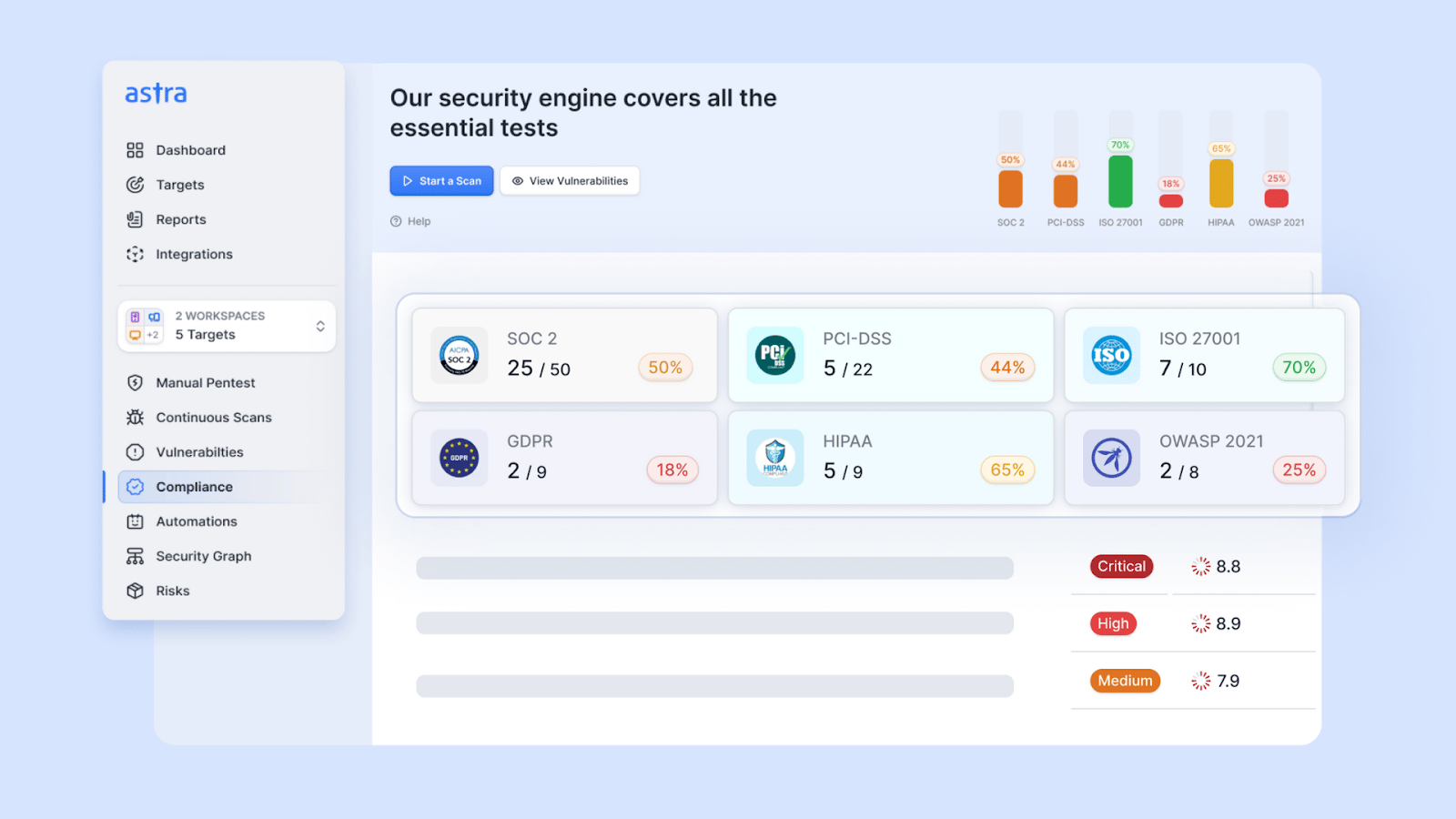
- Compliance Scans: ISO 27001, SOC 2, PCI-DSS, HIPAA, GDPR, CERT-In compliant, RBI guidelines, SEBI framework
- Expert Remediation: Yes
- Publicly Verifiable Certification: Yes
- Workflow Integrations: JIRA, GitHub, GitLab, Slack, CircleCI, Jenkins
- Cost: Starting at ₹1,65,000 per year. Get tailored pricing for your needs
- Best For: Comprehensive ISO 27001 pentesting with Indian regulatory compliance
As one of the few ISO 27001-certified penetration testing companies in India that combine automated scanning with expert-led manual testing, our CREST-accredited team conducts over 10,000 security tests, encompassing the OWASP Top 10, business logic flaws, and India-specific compliance requirements.
We ensure all our offerings comply with CERT-In directives and RBI cybersecurity guidelines. Moreover, our integration of ISO 27001 control mapping directly into pentest reports makes your audit preparation smooth-sailing and straightforward.
Pros:
- ISO 27001 certified with publicly verifiable credentials
- Security experts holding OSCP and CEH certifications with 30+ CVEs discovered
- Continuous vulnerability monitoring through an automated scanner
- Customized reports mapping findings to ISO 27001 controls (A.12.6.1, A.14.2, etc.)
- Scan behind authentication layers to detect hidden vulnerabilities
- Expert remediation support with GPT-powered chatbot and human guidance
Limitations:
- Only a 1-week trial is available, starting at $7
Why choose Astra Security?
Astra Security bridges the gap between ISO 27001 compliance requirements and practical penetration testing. Our ISO 27001 certification ensures we follow the same rigorous ISMS standards they’re testing for in your systems, while our expertise in Indian regulations, from CERT-In incident reporting to RBI’s technology risk management, renders us ideal for organizations that are trying to wade through India’s still nascent but nuanced compliance landscape.
What do our customers say about us?
“Astra’s ISO 27001-certified pentesting gave our board the confidence they needed. The reports directly mapped vulnerabilities to ISO controls, making our certification audit smooth. Their understanding of RBI guidelines was invaluable for our fintech.” — Rajesh M., CISO, Leading Payment Gateway (Source: G2)
Book a demo to see how Astra maps pentest findings to your ISMS →
2. SISA Information Security

G2 Rating: 3.5/5 (1 review)
Key Features:
- Pentest Capabilities: Web Applications, Mobile Apps, Network Infrastructure, APIs, Payment Systems, IoT, AI/ML Systems
- ISO 27001 Status: ISO 27001 certified with consultancy and auditing services
- Accuracy: Expert manual validation with a forensics-driven approach
- Scan Behind Logins: Yes
- Compliance Scans: CERT-In empanelled, PCI DSS QSA, CREST accredited, ISO 27001, P2PE-QSA, 3DS Assessor
- Expert Remediation: Yes, with forensic investigation capabilities
- Publicly Verifiable Certification: CREST and PCI SSC verifiable credentials
- Workflow Integrations: Custom API integrations for enterprise clients
- Turnaround Time: 15-20 business days for comprehensive assessments
- Cost: Starting at ₹3,00,000 per assessment
- Best For: Payment security, regulated industries, forensic-grade security assessments
Founded in Bangalore with delivery centers across the USA, UK, Bahrain, UAE, India, Singapore, and Australia, SISA Information Security has been a Payment Security Specialist since 2006. Their team holds CREST accreditation and multiple PCI Security Standards Council (PCI SSC) certifications. As a Global Payment Forensic Investigator of the PCI SSC, SISA deploys forensics insights to devise preventive, detective, and corrective security solutions for its clients.
Pros:
- Multiple PCI SSC authorizations, including QSA, ASV, P2PE-QSA, PFI, and 3DS Assessor credentials
- Forensics-driven methodology combining preventive, detective, and corrective solutions
- ISO 27001 consultancy, auditing, and ISO 27005 risk assessment implementation services
- Comprehensive coverage spanning compliance, testing, MDR, and digital forensics
Limitations:
- Premium pricing targeting enterprise and regulated sector clients
- A complex service portfolio may overwhelm smaller organizations seeking basic VAPT
- Longer turnaround times (15-20 business days) due to comprehensive forensic-grade assessments
- Limited G2 reviews for their security products (primarily Glassdoor employee reviews available)
Why did we choose SISA Information Security?
SISA’s forensics-driven approach is known in the industry for firms that need ISO 27001 certification and simultaneously need to address cross-border payment security requirements. Also, their expanding presence in the Middle East and beyond, and experience serving 1000+ organizations, bring international best practices to Indian compliance challenges.
3. Indusface
G2 Rating: 4.6/5 (100 reviews)
Key Features:
- Pentest Capabilities: Web Applications, APIs
- ISO 27001 Status: Parent company (Tata Communications) ISO 27001 certified
- Accuracy: Minimal false positives with the hybrid approach
- Scan Behind Logins: Yes
- Compliance Scans: ISO 27001, PCI-DSS, OWASP, CERT-In
- Expert Remediation: Yes (through managed services)
- Publicly Verifiable Certification: Yes (Tata Communications)
- Workflow Integrations: JIRA, Slack, CI/CD pipelines
- Cost: Starting at ₹1,80,000 per year
- Best For: ISO 27001-certified pentesting for enterprise infrastructure under the Tata Communications banner
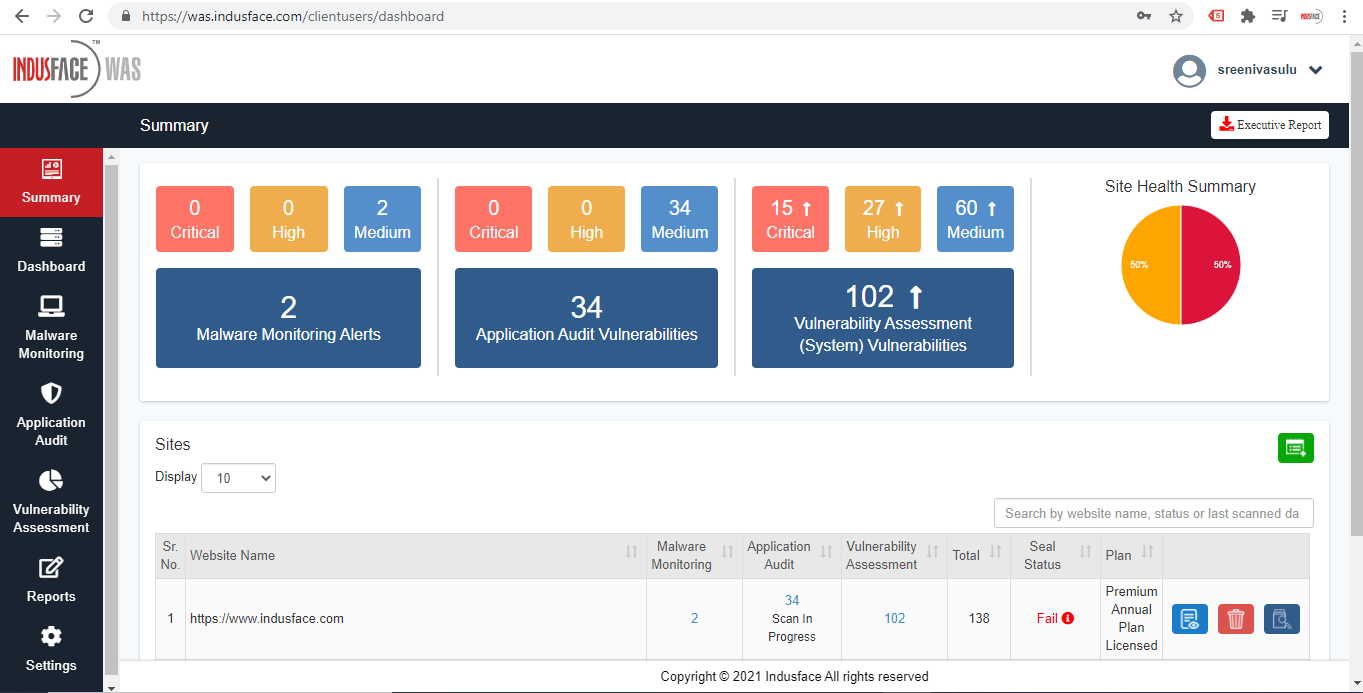
Operating under Tata Communications, IndusFace brings to the table enterprise-grade security backed by ISO 27001 certification. Also, their WAS platform combines automated scanning with manual penetration testing, along with their managed security services that include ISO 27001 control assessments.
Pros:
- Backed by Tata Communications’ ISO 27001 certification and infrastructure
- 24/7 managed security services with Indian support teams
- Strong compliance expertise across banking and financial sectors
- Experience with RBI and SEBI regulatory frameworks
Limitations:
- Parent company certification rather than direct Indusface certification
- Primary focus on web applications and APIs (limited mobile/network testing)
Struggling to map pentest findings to ISO 27001 controls? Our team can help you align testing with real audit expectations.

Why did we choose Indusface?
While Indusface itself may not hold an independent ISO 27001 certification, its operating under Tata Communications, a certified organization, ensures the same. Their strength in financial sector compliance makes them relevant for organizations that need to navigate through RBI’s cybersecurity guidelines alongside ISO 27001 requirements.
4. BSI Group India
Key Features:
- Audit & Certification Capabilities: ISO 27001, ISO 22301, ISO 9001, ISO 20000-1, ISO 27701, ISO 45001, CE Marking, GDPR audits, SOC readiness
- ISO 27001 Status: Accredited ISO 27001 certification body (UKAS)
- Accuracy: Highly standardized, globally recognized audit methodologies
- Scan Behind Logins: Not applicable (auditing body)
- Compliance Scans: ISO 27001, ISO 27701, GDPR, SOC readiness, NIST CSF alignment
- Expert Remediation: Advisory & gap assessment services available; remediation guidance (non-prescriptive)
- Publicly Verifiable Certification: Yes (BSI Certificate and BSI VerifEye Directory)
- Workflow Integrations: Enterprise portals for audit tracking and document submission
- Turnaround Time: Typically 4–12 weeks depending on scope & complexity
Cost: Starting at ₹4,00,000 per certification cycle
Best For: Enterprises seeking internationally recognized ISO certifications backed by the BSI Kitemark reputation
BSI Group India, part of the British Standards Institution founded in 1901, is one of the world’s oldest and most respected standards bodies. Their auditors bring deep sectoral expertise across manufacturing, IT/ITeS, BFSI, healthcare, and government. BSI is known for its strong governance, rigorous audit protocols, and its globally trusted BSI Kitemark®.
Pros:
- One of the most globally recognized ISO certification brands
- UKAS-accredited with high audit consistency
- Strong ecosystem of ISO training, documentation support, and compliance advisory
- Wide expertise across 100+ standards
Limitations:
- Premium pricing
- Slower onboarding due to high global demand
- Typically suitable for mid-size to enterprise clients
Why did we choose BSI Group India?
BSI’s global brand reputation, UKAS accreditation, and longstanding expertise make them one of the most credible ISO certification bodies operating in India. Companies aiming to attract international clients or expand globally prefer BSI certification for its strong worldwide acceptance.
Unsure whether your current pentest partner meets ISO 27001 standards? Get clarity before your next audit.
5. TÜV SÜD South Asia
Key Features:
- Audit & Certification Capabilities: ISO 27001, ISO 9001, ISO 14001, ISO 20000-1, ISO 45001, ISO 50001, product safety testing, CE & RoHS
- ISO 27001 Status: Accredited ISO 27001 certification body (DAkkS)
- Accuracy: Strong technical expertise with German engineering-driven audit rigor
- Scan Behind Logins: Not applicable
- Compliance Scans: ISO standards, regulatory product testing, CE, RoHS, and safety compliance
- Expert Remediation: Gap assessments, pre-audit consulting, corrective action advisory
- Publicly Verifiable Certification: Yes (TÜV SÜD Certificate Database)
- Workflow Integrations: TÜV audit portals & project management dashboards
- Turnaround Time: 4–10 weeks
Cost: ₹3,50,000–₹7,00,000 depending on scope & locations
Best For: Manufacturing, industrial, SaaS, and enterprise organizations needing globally recognized audits with strong technical depth
TÜV SÜD is among the most trusted names in testing, inspection, and certification (TIC). Their South Asia operations have a deep reach across India with strong credibility in sectors like automotive, manufacturing, energy, cloud services, and IT security.
Pros:
- German-engineering-led audit frameworks ensure technical depth
- Strong presence across Indian industries
- Offers both ISO certification and product testing under one umbrella
- Highly recognized by global OEMs and compliance teams
Limitations:
- Pricing at the upper mid-tier
- May be overkill for small companies or startups
- Longer scheduling cycles for senior auditors
Why did we choose TÜV SÜD South Asia?
TÜV SÜD brings unmatched industrial and information security expertise. For companies that must balance ISO certification with product safety, regulatory compliance, and deep technical validation, TÜV SÜD stands out as a comprehensive provider.
6. Bureau Veritas India
Key Features:
- Audit & Certification Capabilities: ISO 27001, ISO 9001, ISO 14001, ISO 20000-1, ISO 45001, ESG audits, supply chain compliance, product testing
- ISO 27001 Status: Accredited certification body (UKAS & other global bodies)
- Accuracy: High audit precision backed by a strong international presence
- Scan Behind Logins: Not applicable
- Compliance Scans: ISO, ESG, sustainability, product conformity, regulatory frameworks
- Expert Remediation: Advisory, corrective action consulting, gap identification
- Publicly Verifiable Certification: Yes (Bureau Veritas certification registry)
- Workflow Integrations: Client portals for audit planning and documentation review
- Turnaround Time: 4-10 weeks
Cost: Starting at ₹3,00,000 per certification cycle
Best For: Enterprises needing ISO certifications along with sustainability and supply-chain audits
Bureau Veritas, established in 1828, is one of the world’s most recognized TIC companies. Their India operations serve over 15,000 clients across industries, integrating sustainability, safety, and cybersecurity audits.
Pros:
- Strong global trust and high credibility
- Cross-industry audit expertise including BFSI, IT, manufacturing, energy
- Integrated offerings covering sustainability, social audits, and ISO certification
- Large pool of auditors in India enabling faster allocation
Limitations:
- Customer service experiences vary across regions
- Costs increase significantly for multi-site operations
Why did we choose Bureau Veritas India?
Bureau Veritas is ideal for companies that want more than ISO certification—especially those adopting ESG frameworks, sustainability reporting, or supply chain audits alongside ISO 27001.
7. Intertek India
Key Features:
- Audit & Certification Capabilities: ISO 27001, ISO 27701, ISO 9001, ISO 13485, product safety testing, cybersecurity audits, ETL marking
- ISO 27001 Status: Accredited certification body
- Accuracy: High consistency supported by Intertek’s global ATIC (Assurance, Testing, Inspection, Certification) model
- Scan Behind Logins: Not applicable
- Compliance Scans: ISO standards, product testing, regulatory & safety certifications
- Expert Remediation: Pre-audit assessments, documentation review, risk mapping
- Publicly Verifiable Certification: Yes (Intertek Directory of Certified Organizations)
- Workflow Integrations: Intertek digital audit management portal
- Turnaround Time: 5–12 weeks
Cost: ₹3,00,000–₹6,00,000 depending on scope
Best For: Product companies, electronics manufacturers, SaaS companies needing both product compliance and ISO 27001
Intertek India is part of the Intertek Group and is a global leader in testing and certification. Their unique advantage is strong integration between product safety, regulatory compliance, and information security standards, making them especially suitable for IoT and hardware firms.
Pros:
- Deep expertise in product testing + cybersecurity compliance
- Strong global credibility
- Good fit for IoT, hardware, biotech, and electronics companies
- Robust risk-focused audit methodology
Limitations:
- Slightly slower audit report issuance compared to others
- Less aggressive in the IT services sector compared to BSI/SGS
Why did we choose Intertek India?
Intertek’s strength lies in being a unified provider for both product compliance and ISO certification, making it ideal for technology companies shipping hardware products along with software.
8. SGS India
Key Features:
- Audit & Certification Capabilities:ISO 27001, ISO 9001, ISO 14001, ISO 20000-1, GDPR audits, SOC 2 readiness, supply chain audits
- ISO 27001 Status: Accredited certification body
- Accuracy: Highly reliable with SGS’s globally consistent audit protocols
- Scan Behind Logins: Not applicable
- Compliance Scans: ISO standards, sustainability audits, food safety compliance, supply-chain security
- Expert Remediation: Gap analysis, maturity assessments, process improvement guidance
- Publicly Verifiable Certification: Yes (SGS Certified Client Directory)
- Workflow Integrations: SGS Digicomply, audit portals, compliance dashboards
- Turnaround Time: 4–8 weeks (usually faster than Intertek and BV)
Cost: Typically starts around ₹2,80,000
Best For: Companies needing efficiency, speed, and global recognition at a competitive price point
SGS is one of the largest and most widely recognized certification bodies globally. Their Indian operations cover a diverse set of industries ranging from IT to oil & gas, logistics, food & agriculture, and more.
Pros:
- Fast audit scheduling and report delivery
- Broad accreditation coverage
- Competitive pricing compared to BSI/TÜV
- Strong India presence
Limitations:
- Less specialized in deep technical cybersecurity audits
- Less premium perception compared to BSI/TÜV
Why did we choose SGS India?
SGS perfectly balances credibility, cost, and turnaround time. For organizations that want ISO certification without paying enterprise premiums, SGS stands out as a reliable, globally recognized option.
9. DNV GL Business Assurance India (now DNV)
Key Features:
- Audit & Certification Capabilities: ISO 27001, ISO 9001, ISO 14001, ISO 45001, ISO 50001, maritime & energy compliance audits, digital trust certifications
- ISO 27001 Status: Accredited certification body
- Accuracy: Extremely rigorous audits backed by DNV’s risk-based “Next Generation Risk Management” methodology
- Scan Behind Logins: Not applicable
- Compliance Scans: ISO standards, risk assessments, sustainability, energy audits
- Expert Remediation: Maturity modelling, corrective action advisory, digital tools for ISO readiness
- Publicly Verifiable Certification: Yes (DNV Certificate Finder)
- Workflow Integrations: Lumina™ and Veracity™ digital audit & improvement platforms
- Turnaround Time: 4–10 weeks
Cost: Starting at ₹3,50,000
Best For: Companies in energy, maritime, critical infrastructure, and cybersecurity-focused enterprises
DNV is a Norway-based global leader in assurance for high-risk, high-reliability industries like maritime, oil & gas, renewables, and large-scale IT infrastructure. Their risk-based audit methodology is considered one of the best in Europe.
Pros:
- Deep risk-based assessment methodologies
- Strong credibility in energy, maritime, and infrastructure sectors
- Excellent digital tools (Lumina, Veracity) for audit tracking and improvement
- Very strong auditor expertise
Limitations:
- Pricing on the higher side
- More aligned with large enterprises than startups
Why did we choose DNV GL Business Assurance India?
DNV is ideal for organizations handling critical infrastructure or advanced cybersecurity maturity programs. Their risk-focused approach provides deeper insights than typical checklist-style ISO audits.
Explore Astra’s multi-asset pentesting capabilities for modern businesses →
10. Qualysec Technologies
G2 Rating: 4.5/5 (1 review)
Key Features:
- Pentest Capabilities: Web Applications, Mobile Apps, APIs, Cloud Infrastructure
- ISO 27001 Status: Certified
- Accuracy: Low false positive rate with manual validation
- Scan Behind Logins: Yes
- Compliance Scans: ISO 27001, SOC 2, PCI-DSS, GDPR, CERT-In
- Expert Remediation: Yes
- Publicly Verifiable Certification: Yes
- Workflow Integrations: JIRA, Slack, GitHub, GitLab
- Cost: Web & Mobile app pentesting price starting at ₹1,95,000 ($2200)
- Best For: Startups and scale-ups seeking affordable ISO 27001-certified pentesting
As an ISO 27001-certified penetration testing compay, Qualysec has gained traction among Indian startups and scale-ups. Their security experts hold OSCP and CEH certifications, and they’ve designed their service model specifically for fast-growing companies navigating their first ISO 27001 certification. What adds to their USP is their pricing model, which is transparent and without hidden costs.
Pros:
- ISO 27001 certified with startup-friendly pricing
- Fast turnaround times (typically 7-10 days for web app pentests)
- Clear, developer-friendly reports with reproduction steps
- Free retest after vulnerability remediation
Limitations:
- Limited experience with large enterprise environments
- Smaller geographic presence compared to established players
Why did we choose Qualysec?
Qualysec’s ISO 27001 certification at a competitive price point makes it accessible for startups and mid-market companies pursuing certification for the first time. Their experience working with India’s fintech ecosystem means they understand both ISO 27001 requirements and practical security challenges in high-velocity development environments, which is usually the case for start-ups.
11. Peneto Labs
G2 Rating: NA
Key Features:
- Pentest Capabilities: Web and Mobile Applications (Android, iOS, Hybrid), Cloud Infrastructure, API Security, Network (Internal and External), IoT and Embedded Devices, SCADA Systems, Thick Client Applications, Secure Code Review, Red Teaming and Adversary Simulation
- ISO 27001 Status: Auditor / Service provider
- Accuracy: Manual-first services with reduced false positives
- Scan Behind Logins: Yes
- Compliance Scans: CERT-In Guidelines, ISO 27001, SOC 2, PCI DSS, HIPAA, GDPR, RBI Guidelines, SEBI Framework, IRDAI Compliance, Safe-to-Host Certification for NIC hosting
- Expert Remediation: Yes
- Publicly Verifiable Certification: Yes
- Workflow Integrations: Multiple collaboration channels (specific info NA)
- Cost: $1000+ minimum project size
- Best For: CERT-In compliance audits, Indian regulatory frameworks (RBI, SEBI, IRDAI), government tenders and PSU projects, fintech and BFSI sector security, Safe-to-Host certification for NIC hosting, healthcare application security (HIPAA-aligned), SMEs, etc.
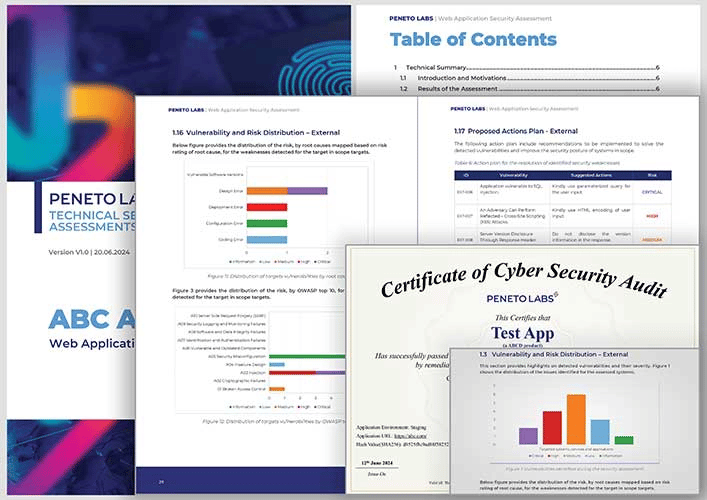
Founded in 2017 and headquartered in Chennai, Peneto Labs is a CERT-In empanelled cybersecurity company that aligns its offerings with international best practices and provides well-documented reports.
It offers VAPT services across applications, networks, cloud infrastructure, IoT, OT, and red teaming engagements, with a team of 11-50 employees. Even in the digital and AI era, this firm emphasizes manual-first testing, combined with automation, to deliver actionable, compliance-proof security assessments.
Pros:
- Cert-In empanelment and rigorous regulatory alignment
- Manual-first testing by certified experts
- Free retesting and comprehensive remediation support
Cons:
- Limited workflow integrations and a PTaaS platform
- A smaller team size may lead to potential scalability constraints
- Regional Focus May Limit Global Compliance Expertise
Why did we choose Peneto Labs?.
What truly differentiates them is their consultative approach coupled with free retesting, manual-first pentesting methodology, and comprehensive remediation support, they don’t just identify vulnerabilities, they guide your team through fixes and remediation at little to no cost.
12. CloudSEK
G2 Rating: 4.8/5 (81 reviews)
Key Features:
- Pentest Capabilities: Web Applications, APIs, Cloud Infrastructure, Digital Risk (External Attack Surface)
- ISO 27001 Status: Certified
- Accuracy: AI-powered threat intelligence reduces false positives
- Scan Behind Logins: Yes
- Compliance Scans: ISO 27001, SOC 2, CERT-In, GDPR, DPDP Act
- Expert Remediation: Yes (with threat context)
- Publicly Verifiable Certification: Yes
- Workflow Integrations: JIRA, Slack, Microsoft Teams, ServiceNow, Splunk
- Cost: Avg ticket cost perceived to be >$10,000 (>38% than other pentesting products: G2)
- Best For: External attack surface management combined with traditional pentesting and ISO 27001 compliance
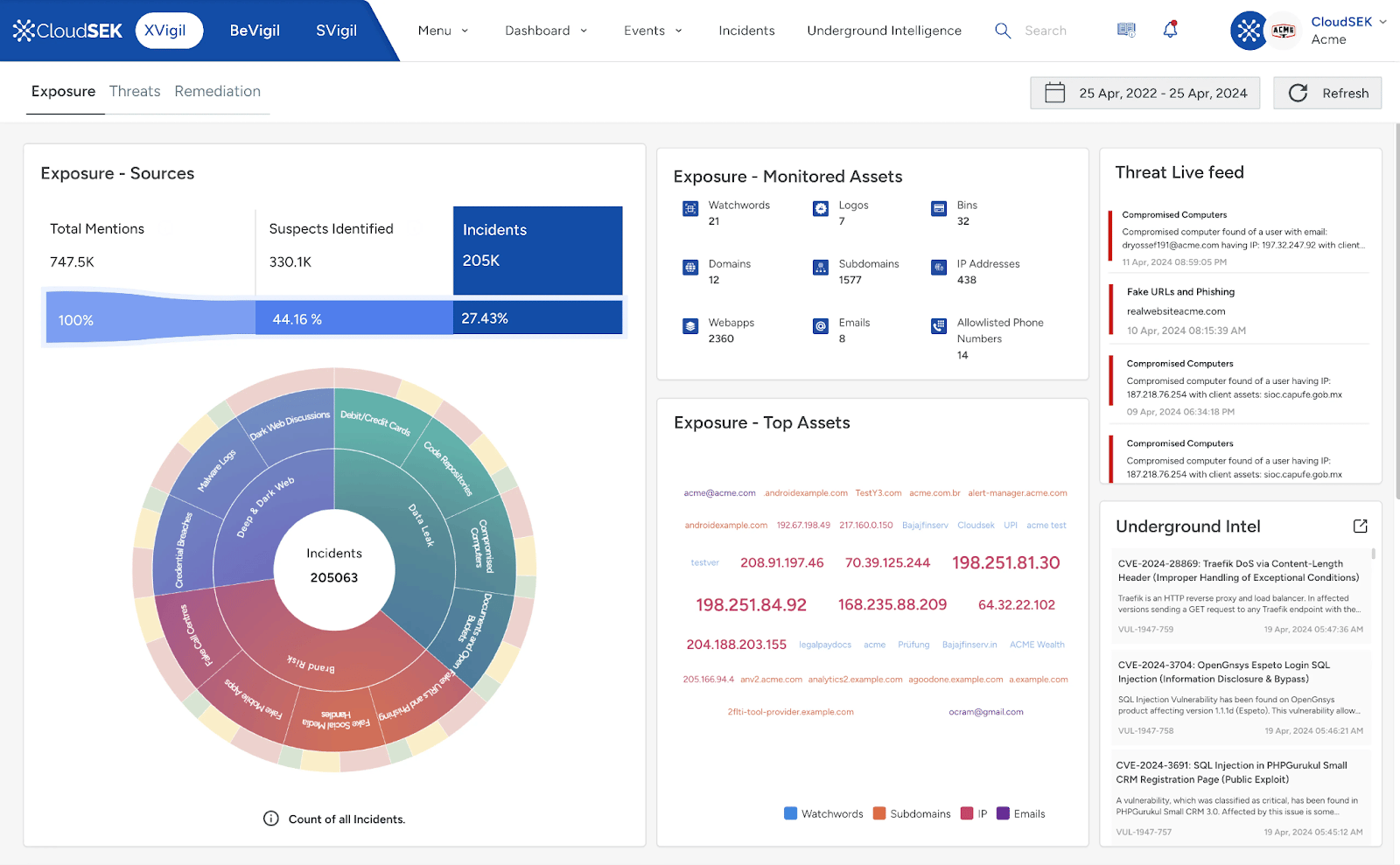
Based in Bangalore, CloudSEK is an ISO 27001-certified cybersecurity company that combines traditional penetration testing with AI-powered external attack surface management and digital risk monitoring.
Their XVigil platform provides continuous visibility into your externally facing assets, exposed credentials, brand impersonation, and third-party risks, all critical components of ISO 27001 controls A.12.6.1 (technical vulnerability management) and A.15.1.1 (supplier relationships).
CloudSEK’s threat intelligence capabilities help organizations address emerging threats and comply with CERT-In’s rapid incident reporting requirements.
Pros:
- ISO 27001 certified with unique external attack surface management capabilities
- AI-powered threat intelligence for proactive vulnerability detection
- Continuous monitoring aligns with ISO 27001’s ongoing risk assessment requirements
- Strong integration ecosystem for SOC and SIEM platforms
- Experience with CERT-In incident reporting workflows
- Relevant for DPDP Act compliance with dark web monitoring for data leaks
Limitations:
- Higher price point due to comprehensive platform capabilities
- It may be over-engineered for organizations seeking only point-in-time pentesting
- Requires dedicated resources to utilize continuous monitoring features effectively
Why did we choose CloudSEK?
If you’re pursuing ISO 27001 certification while managing complex digital ecosystems, including multiple domains, third-party integrations, and cloud services, CloudSEK might be your go-to pentesting vendor since it covers both internal systems and external-facing risks.
Moreover, their threat intelligence capabilities help you meet all ISO 27001 information security awareness requirements while also complementing CERT-In’s threat detection mandates.
Compare Astra’s continuous scanning with comprehensive compliance coverage →
Factors to Look for in an ISO 27001 Certified Pentest Company in India
1. ISO 27001 Certification Status & Scope
Make sure you verify whether the company itself holds ISO 27001 certification or merely offers ISO 27001 pentesting services. A certified company would implement the ISO 27001 mandates in its operations, showing that it practices the security governance it claims to be testing for.
Moreover, request their certificate number and verify it with NABCB or international bodies such as UKAS. Also, it is only prudent to examine the scope, does it cover their pentesting operations specifically, or only administrative functions?
Pro Tip: Ask your vendor for their Statement of Applicability (SoA) to understand which ISO 27001 controls they’ve implemented. A pentest provider balking at the same may lack the operational maturity you need.
2. Alignment with Indian Regulations
An ISO 27001 certification, though valuable, is not your only regulatory concern.
Your security testing firm ought to have expertise in CERT-In directives, RBI’s cybersecurity framework, SEBI’s guidelines for capital market entities, and the emerging DPDP Act 2023 requirements, to curb the audit and vendor management fatigue most scaling and enterprise-grade firms face.
Pro Tip: Ask specific questions about CERT-In’s log retention requirements (180 days) and how their pentesting methodology will help you with the same. Beyond ISO 27001 knowledge, you need India-specific expertise.
3. Tester Qualifications & Experience
Look for teams with recognized certifications like OSCP, CEH, CREST, or GPEN. More importantly, enquire about their practical experience, have they discovered and responsibly disclosed CVEs? Do they have experience in your specific industry?
Pro Tip: Request the CVs or certification profiles of the testers who’ll work on your engagement. Some companies outsource actual testing, so insist on knowing who’ll be working on your systems.
4. Pentest Methodology & Coverage
ISO 27001 control A.12.6.1 requires technical vulnerability management, but different assets need different testing approaches. Your ISO 27001-certified penetration testing company should offer comprehensive coverage: web applications, mobile apps, APIs, cloud infrastructure, and networks.
They should know their way around not only modern cloud-native applications but also legacy systems, including both automated scanning (for scale and consistency) and manual testing (for business logic flaws and complex vulnerabilities that automated tools miss).
Pro Tip: Request a sample pentest report, look for evidence of manual testing, not just automated scan output. The report should map findings to specific ISO 27001 controls.
5. Reporting & Remediation Support
ISO 27001 auditors nowadays put a lot of weight on how you acted on your pentesting findings. Your security testing firm should provide reports that map vulnerabilities to specific ISO 27001 controls (e.g., A.12.6.1 for technical vulnerabilities, A.14.2 for secure development).
The report should include risk ratings, reproduction steps, and remediation guidance. Next comes remediation support, will they help your developers understand and fix issues? Do they offer retesting to verify fixes?
Pro Tip: During vendor selection, ask about their average remediation turnaround time and whether remediation support is included or costs extra. Some providers deliver reports and disappear; others offer Slack or chat-based support until you’ve addressed critical findings.
6. Pricing & Retesting Policy
With the costs of an ISO 27001-certified pentest averaging ₹ 4,00,000, evaluate not just the upfront cost but the total cost of ownership: Does the pricing include retesting after you’ve fixed vulnerabilities? Are there additional charges for exceeding a certain number of URLs or API endpoints? What about emergency security assessments if you deploy new features?
Also consider testing frequency, ISO 27001 doesn’t mandate annual pentesting, but surveillance audits expect you to test your high-risk systems regularly.
Pro Tip: Request a detailed scope document specifying exactly what is covered under the quoted price.
Tired of generic pentest reports that don’t satisfy auditors? Reach out for guidance that supports both compliance and real security improvement.
Understanding ISO 27001 Penetration Testing Requirements
When it comes to ISMS, penetration testing helps you validate your security control implementations (addressing control A.12.1.2, focusing on operational software), identify weaknesses in your development practices (control A.14.2), and provide accessible and easy-to-read evidence for not just audit purposes but reviews and decision making (control A.9.1).
Regarding frequency, ISO 27001 doesn’t specify testing intervals; this is left to your organization’s risk assessment. Still, try to perform:
- Annual penetration testing for public-facing applications
- Testing post new deployments
- At least quarterly testing for high-risk systems
- Re-testing after a major vulnerability has been discovered
Also, keep proper, verifiable evidence of these pentests and remediations, as your ISO 27001 surveillance audits will expect the same.
ISO 27001 & Indian Cybersecurity Regulations
a. CERT-In Directives
CERT-In’s 2022 directives require you to report cybersecurity incidents within 6 hours and maintain system logs for at least 180 days. So, make sure your ISO 27001-certified pentest company is adept at sticking to the same.
b. RBI Guidelines for Financial Institutions
RBI specifically mandates testing by independent agencies (not internal teams) at defined frequencies. This entails understanding nuances like segregation of duties, third-party risk management, and the need for board-level reporting.
c. SEBI Cyber Security Framework
Although SEBI’s framework overlaps significantly with ISO 27001, there are certain additional sector-specific requirements around trading system security and market data protection. Your pentesting partner thus needs to understand both frameworks to provide efficient and non-overlapping coverage.
d. DPDP Act 2023 Implications
While the Act doesn’t explicitly mandate penetration testing, demonstrating reasonable security measures (as the Act requires) practically requires you to commit to regular security testing.
Planning for an ISO 27001 audit or renewal this year? Let’s make sure your pentesting meets the mark.
Final Thoughts
Over the years, ISO 27001 certification has evolved from a differentiator to an expectation. The key takeaway for you is understanding the difference between a company certified under ISO 27001 versus one that merely offers pentesting services.
The former displays operational maturity and security governance, while the latter may lack the processes and expertise in general.
Remember to verify their ISO 27001 certification status and scope through accreditation bodies, ensure expertise in Indian regulations, confirm not just your tester’s certifications but also their experience, evaluate their methodology for comprehensive asset coverage, and have thorough, transparent knowledge of their pricing structure and associated inclusions and exclusions.
Get started with Astra Security’s ISO 27001-certified pentesting today →
FAQs
1. What does it mean when a pentest company is ISO 27001 certified?
When a pentesting company holds ISO 27001 certification, it means they’ve implemented a documented Information Security Management System (ISMS) governing their own operations.
2. Why should I choose an ISO 27001-certified pentesting company in India?
Choosing an ISO 27001 certified provider from India with considerable and diverse experience ensures they not only help you with ISO 27001 requirements but also aid in your compliance with Cert-In, RBI, SEBI, DPDP, and other national regulatory bodies.
3. What are the top ISO 27001-certified penetration testing companies in India?
Astra Security, SISA Information Security, Indusface, eSec Forte Technologies, Qualysec, Valency Networks, SecureThings, iSecurion, and CloudSEK.
4. How to verify if a pentesting company is truly ISO 27001 certified?
Request their ISO 27001 certificate and verify it through the issuing certification body or accreditation authorities like NABCB or international bodies like the UKAS.
5. Is ISO 27001 certification mandatory for penetration testing providers in India?
No, ISO 27001 certification isn’t legally mandatory for pentesting providers in India. However, organizations in certain sectors often require it for vendor assessments.
6. How do you choose ISO 27001 consulting services?
Choose ISO 27001 consulting services with prior experience, industry knowledge, audit readiness support, clear documentation, a defined risk assessment approach, remediation guidance, and timeline fit. The right consultant should help teams prepare evidence, close gaps, and avoid certification chaos during audits.