
Key Takeaways
- Know your RBI rulebook by mapping the right Master Directions to your business.
- Test relentlessly with VA every 6 months and PT every 12 months on critical systems.
- Prove it on paper by keeping policies, fixes, and board approvals audit-ready.
- Bring in the pros by using certified VAPT partners for RBI-compliant reports.
If vulnerabilities were a currency, they’d be inflating faster than anything else in the world. According to Astra’s State of Continuous Pentesting Report, 5.33 new ones are discovered every minute, i.e., by the time you’ve finished this paragraph, dozens more doors have swung open for attackers.
Now layer that reality onto India’s financial sector, the digitalization of payments, banking, and money itself, combined with AI/ML, IoT, blockchain, quantum computing, and even deepfakes, has created a sprawling, vulnerable attack buffet. As such, knowing how to get RBI certification and choosing the right RBI vulnerability scan service provider matters.
Achieve RBI compliance faster with guided audits, gap assessments, and security tests tailored to your fintech workflows. (Talk to an RBI compliance expert)
What is RBI Certification & How to Get It?
Reserve Bank of India or RBI certification refers to the de facto proof of compliance that regulated entities provide, most often in the form of an external cyber audit or penetration test report mapped to specific clauses of the applicable RBI Master Directions, circulars, and frameworks governing the business line.
It is verified through supervisory inspections and supporting artefacts, such as policies, risk registers, remediation evidence, and Board minutes, all covered in the relevant RBI compliance report. To satisfy the Reserve Bank of India’s (RBI) cyber and IT directives, you must:
(a) Understand which regulation applies to your entity
(b) Embed regular Vulnerability Assessment & Penetration Testing (VA/PT) into your security life-cycle, besides a host of other IT guidelines that follow under the said master directions
(c) Design, Model, Implement, Monitor, and Document continuous, risk-based cybersecurity and other IT remediations.
| Business Activity | Primary RBI Instrument | Certification Touch-point |
|---|---|---|
| Commercial / Small Finance / Payment Banks | Cyber Security Framework in Banks (2016) | Annual IS audit + VA/PT attestation |
| All banks, NBFCs, CICs, AIFIs (since 1 Apr 2024) | Master Direction on IT Governance, Risk, Controls & Assurance Practices, 2023 | VA every 6 months & PT every 12 months for critical systems (Clause 26) |
| PSOs, PPI issuers & switch operators | Master Direction on Cyber-Resilience & Digital Payment Security Controls, 2024 | Security testing before go-live & after major change |
| Outsourced IT (cloud/SaaS/managed SOC) | Master Direction on Outsourcing of IT Services, 2023 | Independent security review of the service provider |
| Urban Co-operative Banks | Graded Cyber Security Framework (2019-20) | Periodic VA/PT + gap-assessment reports |

A Dive Into RBI’s Core Cybersecurity Principles & Directives
The 2023 IT Governance Master Direction
Born out of consolidating more than a decade of incremental guidelines, the Master Direction on Information Technology Governance, Risk, Controls, and Assurance Practices, 2023, is perhaps the most comprehensive cybersecurity mandate issued by the RBI, placing immense emphasis on continuous monitoring, threat management, and broad-level accountability. Some key components include:
Strategic Alignment Requirements: Aligning your IT strategies with business objectives is easier said than done, especially while maintaining robust security controls. RBI aids this process by mandating clear governance hierarchies, defining roles, and ensuring that cybersecurity becomes an indelible part of all strategic discussions.
Board-Level Governance Mandates: Not just operational controls, the updated guidelines demand broad-level oversight, possibly enabled by the formation of an IT Strategy Committee (ITSC), which includes independent directors with technical expertise in providing accurate and organization-level insights into cybersecurity initiatives.
This framework introduced the concept of baseline cybersecurity controls and established the three-tier approach that has influenced subsequent regulatory development.
Risk Management Integration: As AI/ML, Cloud computing, and fintech become integrated into your business workflows and value propositions, assimilating IT risks with your enterprise-level risk management frameworks has become necessary.
Many fintechs also work with PCI QSA companies to streamline overlapping audit requirements and maintain consistent compliance standards.
Cybersecurity Framework for Banks: Foundational Requirements
The 2016 Cybersecurity Framework for Banks established the foundational requirements that continue to underpin RBI’s approach to the financial sector. This framework highlighted baseline cybersecurity controls and a three-tier approach that has shaped future regulatory developments in the banking sector.
Annexe I – Baseline Cybersecurity and Resilience Requirements: This checklist encompasses 24 major control areas, ranging from IT inventory management to customer education and awareness programs.
C-SOC Requirements: These include enforcing centralised monitoring capabilities along with real-time threat detection, incident response, and cooperative management of security-related events. Additionally, C-SOCs are responsible for ensuring 24/7 operational capability with apt personnel and smooth escalation procedures.
Incident Reporting and Response: This involves detailing the cyber incident classification, reporting timelines (typically 2-6 hours for critical incidents), and coordination with relevant authorities, such as the RBI’s CSITE cell.
Mandatory Penetration Testing Requirements: Detailed Analysis
Frequency and Scope Mandates
The RBI’s master directions establish clear, quantitative requirements for various annual/bi-annual vulnerability assessments and pentests, which vary based on system criticality and risk exposure, representing the minimum standards that organisations should meet, with flexibility to implement more frequent testing based on their own risk assessments and desired security posture, as detailed:
Critical Systems and DMZ Assets
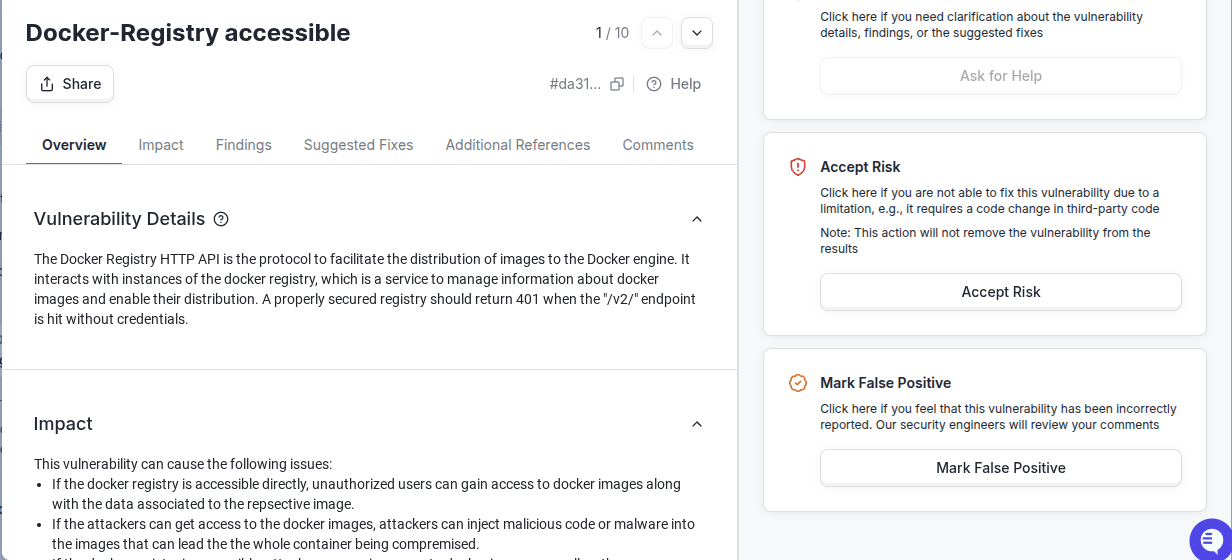
Critical systems, including all internet-facing applications, payment processing infrastructure, and DMZ-hosted services, require bi-annual vulnerability assessments, supported by RBI compliant security testing tools, with attack-style penetration testing conducted at least once a year.
Non-Critical Systems
For non-critical systems, VAPT assessments can be conducted based on your own risk analysis and management frameworks. RBI requires documenting this risk-based justification for defining your testing periods.
When it comes to product lifecycle requirements, mandatory testing is required before production deployment, after the live implementation, and after each significant system modification or update.
Technical Implementation Standards
Production Environment Testing Preference
Conduct penetration testing in production environments to ensure realistic threat simulation. When production testing is not feasible, the guidelines mandate test environments to maintain configuration parity with production systems, with any deviations formally documented and approved by the Information Security Committee.

Authentication and Authorization Testing
Conduct authenticated vulnerability scans to identify internal vulnerabilities that external scans might miss, including testing of privilege escalation scenarios, lateral movement possibilities, and data access controls.
Automated and Continuous Scanning
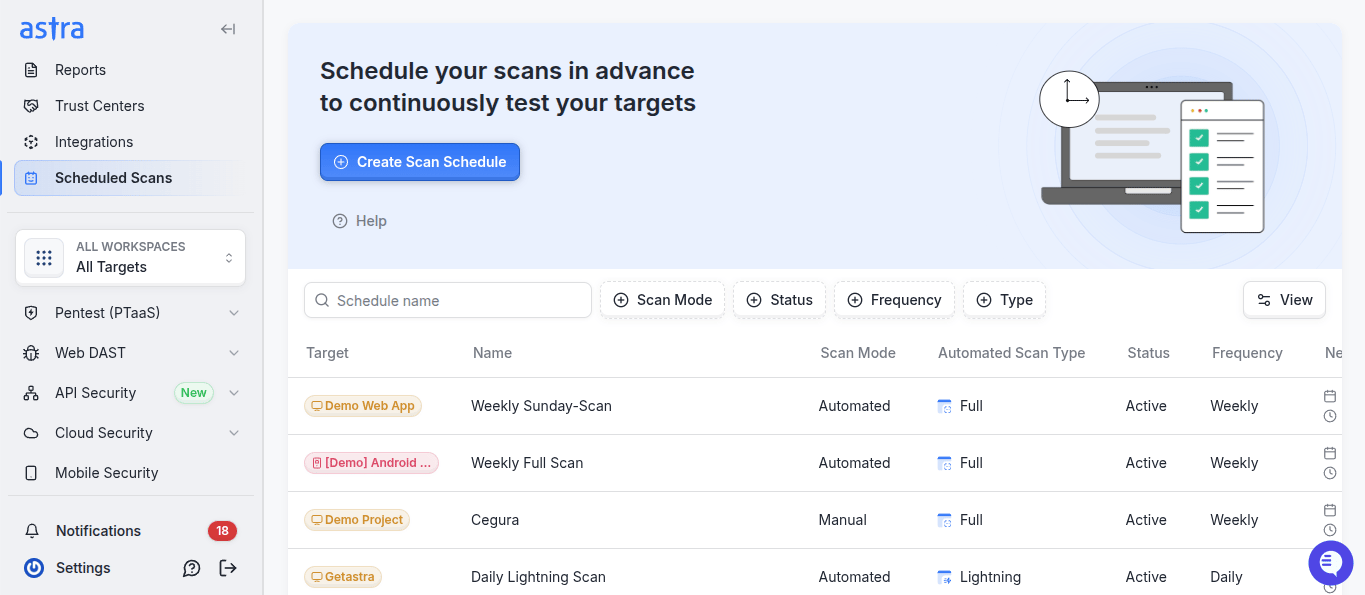
Given today’s data volume, variety, and velocity, an RBI vulnerability assessment tool SaaS is best suited to enforce continuous detection across multiple public-facing systems.
Independence and Expertise Requirements
Qualified Personnel Standards
Testing must be performed by appropriately trained professionals, ideally from an RBI-certified pentest company in India that can provide recognized audit-ready reports. This typically includes professionals holding recognized certifications such as CERT-In, CREST, OSCP, GWAPT, or equivalent qualifications.
Independence Criteria
This criterion requires that testing personnel maintain independence from the systems being tested and the teams involved in their development and maintenance. This often entails engaging an external RBI cyber security assessment vendor or internal teams with well-defined, segregated duties to minimize interdependencies.
Documentation and Reporting
These include vulnerability classification using standard frameworks such as CVSS v3, detailed exploit documentation, risk assessment, and remediation recommendations.
Mapping RBI Controls to Comprehensive Pentest Strategies
The 2023 Master Direction mandates annual penetration testing and semi-annual vulnerability assessments for all critical systems, especially the internet-facing targets as detailed under.
| RBI control object | Relevant clause | Required assurance | Pentest Module Required |
|---|---|---|---|
| Internet-facing web / mobile apps | MD-IT 26(a); CSF Banks Item No. 9 | Annual PT; VA 6 mths | Web-app &. Mobile Pentest |
| APIs & micro-services | MD-IT Item No. 16, Item No. 17 | AuthN/AuthZ, encryption, audit trails | API Pentest & DAST crawling |
| Cloud IaaS / SaaS workloads | MD-IT Item No. 10(d); Outsourcing MD Item No. 9 | Cloud config review, data-residency, vendor risk | Cloud PT with CIS benchmarks |
| Network & VPN edge | CSF Banks Item No. 8; MD-IT Item No. 14 | Penetration test of firewalls, IDS/IPS, and segmentation | Network Pentest |
| DR site & backups | MD-IT Item No. 27(d) | Half-yearly DR drill evidence | Infra PT + recovery validation |
| Continuous monitoring & CVE watch | MD-IT Item No. 25(c) | Ongoing vulnerability management | Astra Security DAST scheduler, CI/CD hooks |
Web and Mobile Applications
With financial services increasingly delivered through customer-facing portals and apps, web and mobile applications have become the most lucrative targets for attackers. Threat vectors range from classic OWASP Top 10 flaws to more complex business logic vulnerabilities and insecure mobile integrations.
RBI’s directives, specifically MD-IT 26(a), call for both periodic vulnerability assessments and annual penetration tests; however, the sheer breadth of risks requires structured, continuous validation. A robust testing program should include:
- Comprehensive OWASP Coverage: Systematic testing for injection flaws, broken authentication, cross-site scripting, and sensitive data exposure.
- Business Logic Testing: Identification of vulnerabilities unique to banking workflows, such as transaction manipulation, session hijacking, and bypass of multi-factor authentication.
- Mobile Application Security: Static and dynamic testing of iOS and Android apps, including API interactions, insecure local storage, and data leakage vectors.
- Authentication & Authorization Testing: Rigorous validation of login flows, privilege escalation paths, and token/session handling.
- Pre-Deployment and Post-Change Validation: Mandatory testing before apps go live, after significant feature releases, and following security control updates.
- Continuous App Monitoring: Runtime protection and anomaly detection to identify active exploitation attempts in production.
Beyond Point-in-Time Testing: Continuous Assurance Models
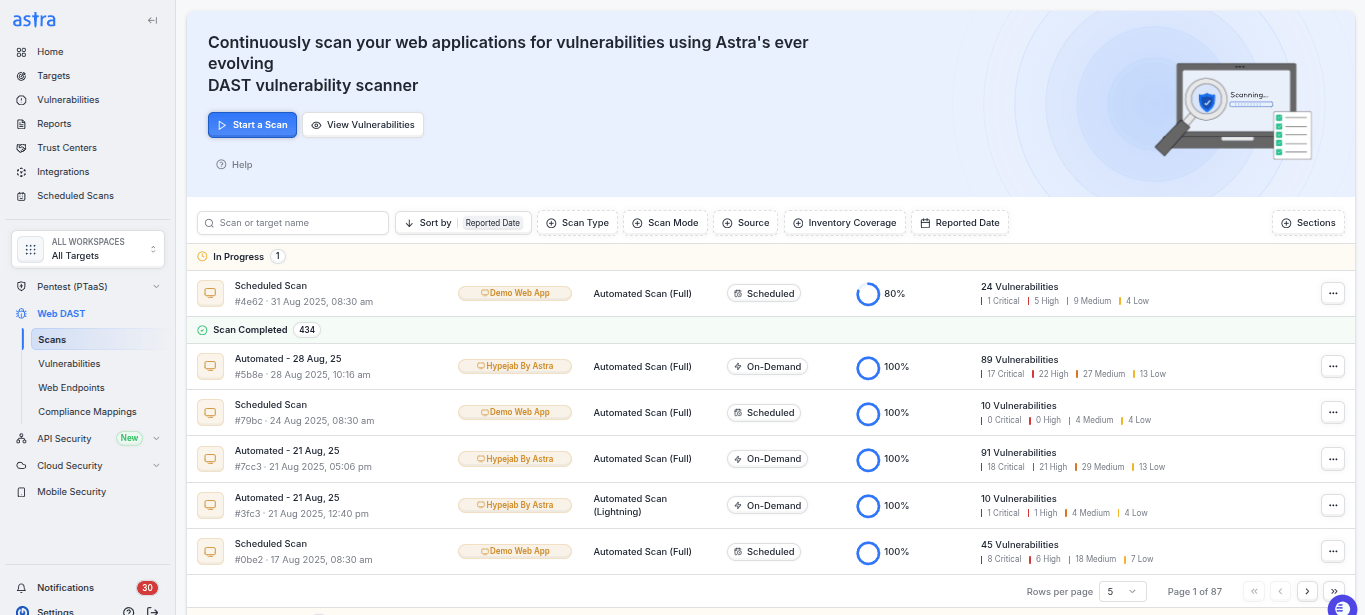
The RBI’s emphasis on “ongoing cyber-resilience” in clause 25(c) recognizes that modern cyber threats operate on timescales measured in minutes and hours, rather than the months between traditional penetration tests. Simply put, this translates to a continuous DAST integration at multiple points in the software development lifecycle:
- Pre-Commit Security Gates: Automated security scanning integrated into developer IDEs and version control systems
- CI/CD Pipeline Integration: Automated security testing triggered by code commits, with build failures for critical vulnerabilities
- Production Runtime Protection: Real-time application security monitoring that detects and responds to active attacks
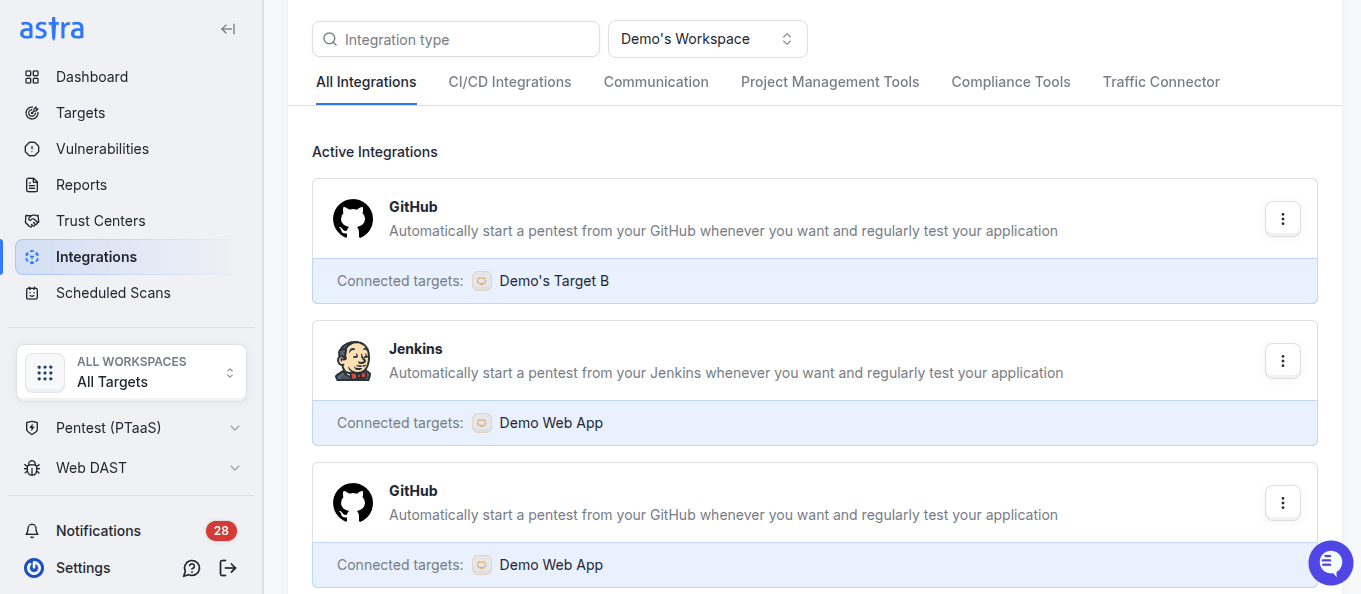
- DevSecOps Alignment: Astra Security’s platform supports DevSecOps practices through comprehensive API integration with popular development tools, including GitHub Actions, GitLab CI, Jenkins, and Azure DevOps
API Security and Microservices Architecture
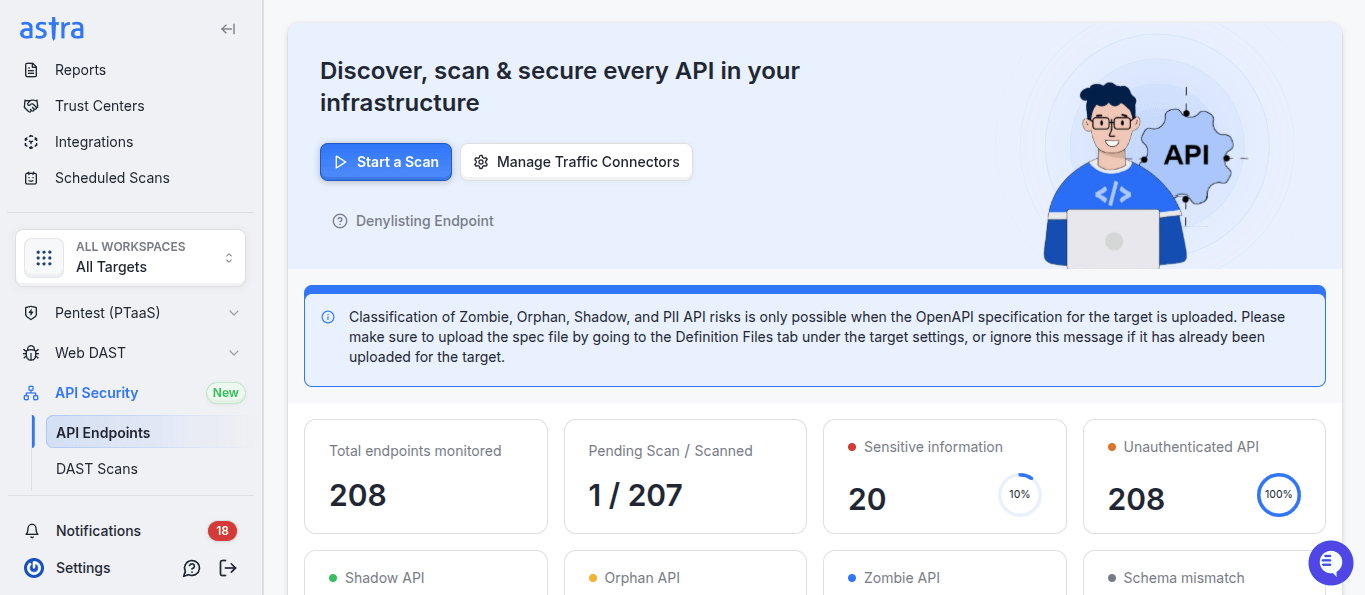
With the burgeoning adoption of microservices architectures and API-first development approaches, the threat vectors and attack surfaces, ranging from traditional technical misconfigurations and CVEs to shadow IT, have also expanded exponentially. This is where automated discovery and security platforms step in per clauses 16 & 17, which should cover:
- Dynamic API endpoint mapping and discovery
- OpenAPI/Swagger integration for automated security testing based on API documentation
- Specialized testing for GraphQL APIs, including introspection attacks and query depth analysis
- Continuous monitoring of API usage patterns to detect anomalous behaviour, potential data exfiltration, and unauthorised access attempts.
- Specialized testing of REST/SOAP APIs, authentication mechanisms, rate limiting, and data validation controls
Cloud Infrastructure and Multi-Cloud Ecosystems
Financial institutions increasingly operate across multiple cloud platforms, creating complex security management challenges that traditional perimeter-focused security models cannot adequately address. As such, automated monitoring of cloud infrastructure configurations to detect security-relevant changes:
· Infrastructure as Code (IaC) Security: Security scanning of Terraform, CloudFormation, and other IaC templates
· Runtime Configuration Monitoring: Real-time detection of security configuration changes in cloud environments
· Compliance Baseline Validation: Continuous validation against industry standards, including CIS Benchmarks and security frameworks
However, while choosing your cloud penetration testing partner for RBI compliance per iten no. 9 and 10(d), it may be necessary to evaluate the following:
- Cloud Configuration Assessment: Review IAM policies, storage bucket permissions, network security groups, and encryption implementations
- Container and Orchestration Security: Kubernetes security testing, container image vulnerability scanning, and runtime protection validation
- Multi-Cloud Connectivity: Assessment of inter-cloud communication channels, data residency compliance, and cross-platform security controls
- Cloud-Native Threat Detection: Seamless integration with cloud provider security services, including AWS GuardDuty, Azure Security Center, and Google Cloud Security Command Center for comprehensive threat detection and response.
Network Infrastructure and Segmentation
With attackers increasingly targeting VPN gateways, firewalls, and poorly segmented networks, RBI-mandated testing in clause 14 needs to go beyond surface scans and replicate real-world intrusion scenarios:
- External Perimeter Testing: Firewall rule validation, VPN security assessment, and external service exposure analysis
- Internal Network Segmentation: Lateral movement testing, privilege escalation scenarios, and network access control validation
- Wireless Network Security: Assessment of wireless access points, guest network isolation, and mobile device management controls
- Network penetration testing: It should simulate advanced persistent threat (APT) scenarios, including multi-stage attacks, command and control communication, and data exfiltration attempts.
Business Continuity and Disaster Recovery Validation
Clause 27(d) of the IT Master Direction requires half-yearly DR drills, with outcomes formally documented and mapped to recovery objectives. Adequate validation should include:
- Recovery Time Objective (RTO) Validation: Testing actual recovery times against documented objectives, often included in an RBI technical audit for compliance.
- Data Integrity Verification: Ensuring backup systems maintain data consistency and availability
- Communication Systems Testing: Validation of crisis communication channels and stakeholder notification procedures
- Integration with Cyber Incident Response: DR testing should include scenarios where cyber incidents trigger business continuity procedures, ensuring seamless integration between incident response and recovery processes.
A Step-by-Step Guide on How to Get RBI Certification Pentest
| Phase | Major Actions / Activities | Key Deliverables / Focus Areas | RBI Link |
|---|---|---|---|
| 1. Comprehensive Gap Assessment & Risk Profiling | - Map existing controls to RBI Master Directions - Prepare an RBI compliance testing checklist inclusive of: Asset inventory & criticality classification Digital asset discovery Business impact analysis Regulatory mapping Risk scoring matrix Stakeholder engagement | - Regulatory gap report - Risk profile matrix - Inventory of critical assets - Briefings to Board/Senior Management - ITSC readiness assessment - Resource/budget plan | MD-IT Item No. 4, 25 |
| 2. Policy Framework Development & Board Approval | - Establish IT governance structure - Update information security policy - Develop cybersecurity & crisis management plans - Resilience policy for business continuity/disaster recovery - Vendor risk management framework - Regular board engagement & training - Map policies to RBI requirements | - Board-approved policies - Crisis management & DR plans - Vendor risk assessment policy - Policy-to-regulatory mapping - Training program schedule | MD-IT Item No. 5-6 |
| 3. Technical Implementation & Security Controls Deployment | - Implement security controls across tech & vendor ecosystem - Network segmentation & access controls - Endpoint & device security - Encryption (data at rest/in transit/in use) - Set up 24x7 Security Operations Center (SOC) - Incident response team formation - Forensics readiness - Integrate security into SDLC & code review - Deploy real-time app protection | - Hardened IT infrastructure - SOC runbooks & escalation plans - Certified incident response team - Forensics processes - Secure SDLC practices | MD-IT Item No. 26(a) |
| 4. Penetration Testing & Vulnerability Management | - Define scope, onboard assets for testing - Set up authenticated scanning - Integrate with CI/CD pipelines - Schedule regular RBI audit-ready pentest service - Configure reports for stakeholders per clause 26(e) | - VA/PT attestation reports - Dashboards for leadership - Automated scan pipelines - Remediation & retesting records | MD-IT Item No. 26(e) |
| 5. Continuous Compliance & Ongoing Assurance | - Conduct quarterly self-assessments/gap closure - Implement key risk/cybersecurity metrics - Training & awareness for all risk profiles - Monitor regulatory updates - Run threat hunting, red team & crisis simulations - Third-party risk monitoring | - Ongoing compliance evidence - KPI/KRI dashboards - Training completion records - Threat/incident simulation logs - Third-party risk reports | MD-IT Item No. 25(c); CSF Banks Item No. 13 |
Advanced Risk Management and Emerging Compliance Challenges
AI & ML
The rapid adoption of AI/ML technologies in the financial sector has brought to picture advanced threats that traditional penetration testing methodologies are not equipped to handle.
RBI has acknowledged some of these risks, such as:
- Model Poisoning and Adversarial Attacks: Testing of machine learning models against data poisoning and adversarial input attacks
- Privacy and Data Protection: Assessment of AI systems for potential data leakage and privacy violations
- Algorithmic Bias and Fairness: Evaluation of AI decision-making systems for discriminatory outcomes
- Explainability and Transparency: Testing of AI systems’ ability to provide auditable decision logics
These risks underscore the need for AI security testing to be integrated with conventional penetration testing methodologies, as AI systems increasingly infiltrate traditional applications and infrastructure components.
Quantum Computing Preparedness
While quantum computing may not be as imminent as those induced by AI/ML, the RBIH (Reserve Bank Innovation Hub) has emphasised the need for “quantum-ready” cryptographic implementations, wherein organisations should begin planning for post-quantum cryptography transitions to avoid being left overwhelmed and helpless when this technology achieves commercial scalability.
- Cryptographic Inventory: Map all your cryptographic implementations across organizational systems periodically
- Quantum Vulnerability Analysis: Assess current cryptographic implementations against known quantum attack vectors and stay up-to-date on all similar developments in the cyberthreat space
- Migration Planning: Develop transition roadmaps for post-quantum cryptographic standards
- Hybrid Security Models: Plan implementation of cryptographic agility to support parallel traditional and quantum-resistant algorithms
Supply Chain Security & Third Party Risk Management
The increasing sophistication of supply chain attacks requires enhanced third-party risk management and security testing approaches. RBI’s outsourcing directions emphasize the need for comprehensive vendor security assessments.
Advanced Third-Party Testing:
- Software Supply Chain Analysis: Security assessment of software components, libraries, and dependencies
- Vendor Security Posture Monitoring: Continuous monitoring of third-party security practices and incident histories
- Fourth-Party Risk Assessment: Extended risk management covering vendors’ supplier relationships
- Contractual Security Requirements: Development of comprehensive security requirements for vendor contracts
How Can Astra Security Help?
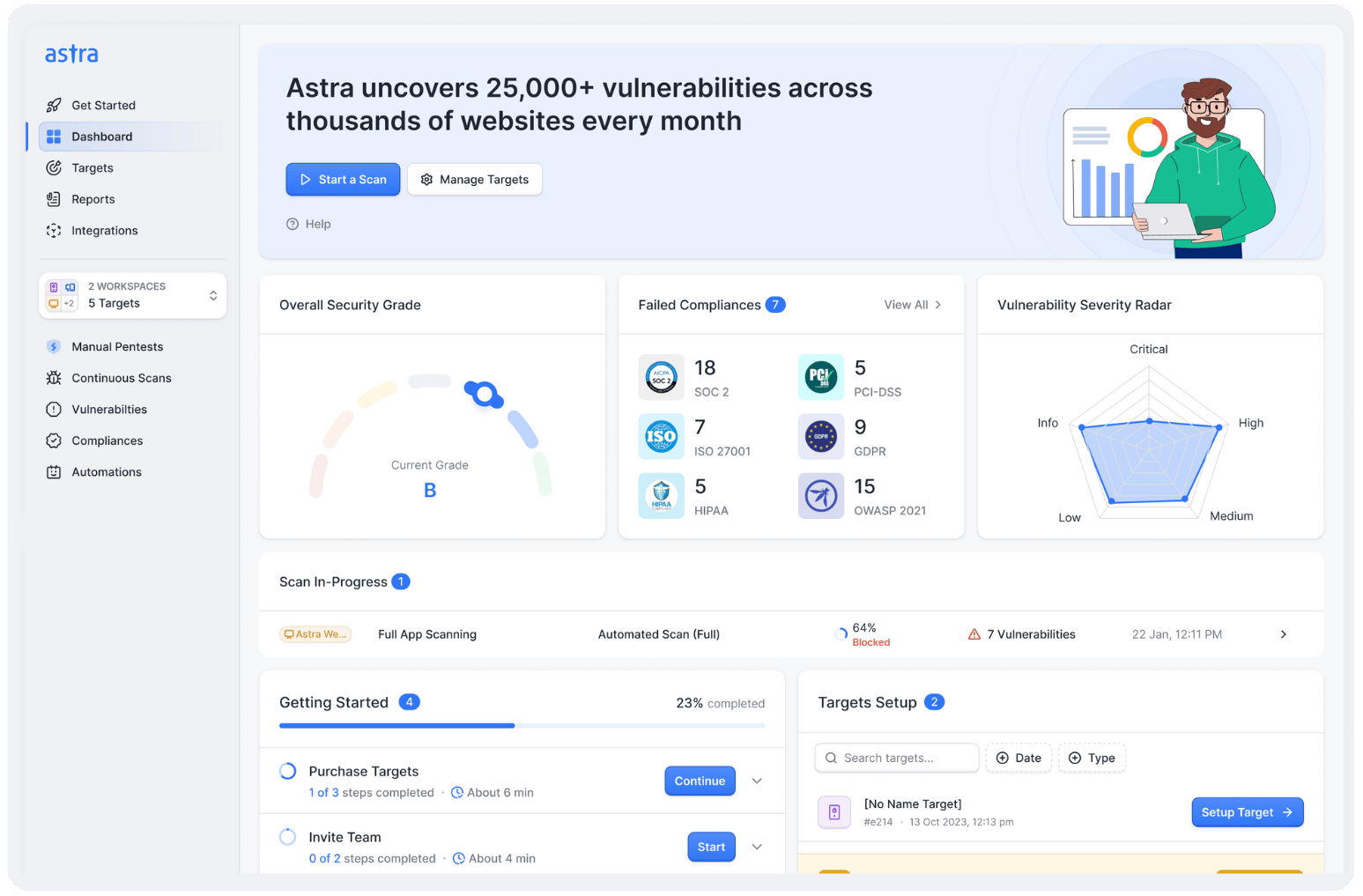
Astra Security simplifies how to get RBI certification by translating RBI’s VA/PT mandates into clear, automated workflows: semi-annual vulnerability scans and annual penetration tests for critical systems are scheduled by default, with lifecycle checks triggered before go-live, post-deployment, and after every major change, alongside generating audit-ready reports directly mapped to compliance clauses..
Beyond compliance, our RBI VAPT services, which include a comprehensive report, combine over 15,000 automated DAST checks with deep manual penetration testing by CERT-In certified experts. This is enhanced by behind-login coverage, AI-assisted logic testing, and two included rescans, which significantly reduce remediation cycles.
Moving beyond just detecting vulnerabilities across APIs, multi-cloud systems, web and mobile apps, and network layers, Astra Security acts as your RBI security audit vendor-approved partner, with seamless integration into Jira, Slack, GitHub, and Jenkins. Post-remediation, we also issue publicly verifiable compliance certificates and allow you to book an RBI pentest demo online, with validation scans minimizing friction during regulatory reviews.
Final Thoughts
“RBI certification” is not a one-time label; rather, it is a persistent compliance process that requires thorough documentation, planning, implementation, and oversight by the board, as well as technical audits.
Simply put, regulators expect you to show more than controls; they expect proof that those controls work, with vulnerability assessments every six months and penetration tests every year on all critical systems.
That’s why the real opportunity lies in shifting your view of compliance from burden to catalyst. With automated scans, recurring checks, and dashboards mapped directly to RBI clauses, you don’t just meet the mandate but build resilience, win trust, and gain a competitive edge in a financial sector where growth and threats both move fast.
Try the Astra Security demo for free today, and see if it is the right fit for your organization.
FAQs
Why is compliance with the RBI cybersecurity framework important for banks and financial institutions?
Compliance with RBI’s cybersecurity framework ensures financial institutions meet the security standards required to safeguard India’s financial system. It reduces systemic risk, safeguards sensitive customer data, and enhances resilience against evolving threats, while fostering customer trust, investor confidence, and the long-term stability of operations.
What are the necessary steps for an organization to prepare for an RBI cybersecurity audit or certification?
Conduct regular vulnerability assessments and penetration tests, document and maintain evidence of your incident response and remediation efforts, establish incident response protocols, implement continuous monitoring systems, and provide ongoing training for multiple stakeholders.
What are the benefits of adopting RBI-mandated cybersecurity controls and frameworks?
Adopting RBI’s controls strengthens cyber hygiene, reduces breaches, and helps firms get an accurate RBI security testing cost estimate while planning budgets for mandated scans. It ensures business continuity even during attacks and demonstrates alignment with regulators. For stakeholders, it fosters trust, enhances reputation, and provides a stronger competitive edge in India’s rapidly evolving financial services landscape.