
Vulnerability management is the critical process of identifying, assessing, prioritizing, and mitigating security vulnerabilities to protect your systems and business data from cyberattacks. However, with numerous options and factors such as target systems, budget, timelines, and risk tolerance to consider, selecting the right software can be overwhelming.
To simplify this process, our security experts have hand-picked a list of the top 10 vulnerability management systems that excel in scan quality, continuous monitoring, human support, tailored reporting, and patch management.
Why Vulnerability Management is Important
Vulnerability management is critical because attackers exploit the obvious, i.e, known flaws. Most breaches are not new tricks, they stem from old patches left undone or systems misconfigured. Staying safe means scanning often and fixing fast, before attackers slip through.
A solid VM practice does three simple things well:
- Finds weak spots across servers, apps, and cloud services.
- Helps you fix the highest-risk issues first.
- Produces the evidence that auditors and buyers expect.
Without this process, teams miss easy fixes and expose the business to preventable breaches.
Types of Vulnerability Management Tools
Tools fall into categories that cover different parts of your enterprise problems. Most businesses take a mixed approach with the following tools:
- Vulnerability scanners: Look for CVEs, weak configurations, and missing patches in an automated manner.
- Asset inventory: Auto-detects every host and device in your network. Hence, nothing slips through.
- Patch management: Pushes fixes fast and keeps track of them.
- Config management: Locks down baselines and flags drift.
- Risk prioritization: Ranks issues by real-world risk so you fix what matters first.
- Threat feeds: Flags new attack patterns so you can stay a step ahead.
- Reporting: Simple dashboards and reports made for both teams and auditors.
Modern platforms often combine several of these features or integrate them into an “attack surface” view so teams get one place to manage exposure.
Top 10 Vulnerability Management Systems (Reviewed)
- Astra Security
- Rapid7
- Tenable Nessus
- Breachlock
- Intruder
- Arctic Wolf
- Alert Logic
- Orca Security
- Symantec
- SecureWorks
5 Best Vulnerability Management Systems Compared
| Features | Astra Security | Rapid7 (InsightVM) | Tenable (Nessus) | BreachLock | Intruder |
|---|---|---|---|---|---|
| Scanner Capacity | Unlimited continuous scans + manual pentests (apps, APIs, cloud) | Covers 95+ attack types for web & cloud | Continuous scanning covering ~65K known vulnerabilities | Automated + managed pentests for web, network, APIs, cloud | Website/server/cloud scans for ~65K known vulnerabilities |
| Accuracy | Zero false positives with vetted scans | False positives possible | False positives possible | False positives possible | False positives possible |
| Vulnerability Management | Dynamic VM dashboard & continuous monitoring | Yes | Yes | Yes | Yes |
| Compliance Coverage | GDPR, PCI-DSS, HIPAA, ISO27001, and SOC2 | CIS, ISO 27001, and PCI DSS | HIPAA, ISO, NIST, and PCI-DSS | SOC2, PCI DSS, HIPAA, NIST, and ISO27001 | SOC2 and ISO 27001 |
| Integrations | Slack, Jira, CircleCI, GitHub/GitLab, etc. | ServiceNow SecOps, LogRhythm, ManageEngine, etc. | IBM QRadar, Splunk, GitHub, and GitLab | Jira, Slack, and Trello | GitHub and Jira |
| Support & Delivery Model | AI-assist + dedicated expert support with rescans included | AI-assist + human support | Community + paid support tiers | PTaaS model: human-led testing + reporting | AI-assist + human support, SaaS model |
| Pricing (indicative) | Starts $1,999/year | Around $1.93/month per asset | ~ $4,236/year (single-instance baseline) | Quote-based (PTaaS) | Starts ~$1,958/year (tiered by assets) |
| Best for | Continuous, AI-augmented pentesting + compliance-ready reports | Enterprises needing VM + SIEM / workflows | Widely used standard scanner for broad coverage | DevSecOps teams needing PTaaS + evidence-based reporting | Mid-market and cloud-first teams wanting prioritized scanning |
| Customer Rating | 4.6/5 on G2 | 4.4/5 on G2 | 4.5/5 on G2 | 4.6/5 on G2 | 4.8/5 on G2 |
| Pros & Cons | Pros: Finds business-logic errors, scans behind login, two rescan validations, and zero false positives. Cons: Limited free trial (only 1 week) | Pros: Intuitive UI, all-in-one vulnerability detection/management. Cons: Support can be slow, and manual asset decommissioning happens | Pros: Simplifies alert management, designed for scale. Cons: Premium support costs extra, and scans can be lengthy | Pros: Built-in NIST policy library and scalable cloud architecture. Cons: Remediation services not up to the mark and have limited integrations | Pros: Easy deployment and alerting. Automatic hourly checks for new hosts. Cons: Relatively expensive and no guarantee of zero false positives |
Still comparing top vulnerability management tools? Speak with our expert for a personalized recommendation.

10 Best Vulnerability Management Systems (Expert’s Opinion)
1. Astra Security [Get Started]
Key Features:
- Scanner Capacity: Unlimited continuous scans and manual pentests for applications, APIs, and cloud infrastructures
- Accuracy: Zero false positives
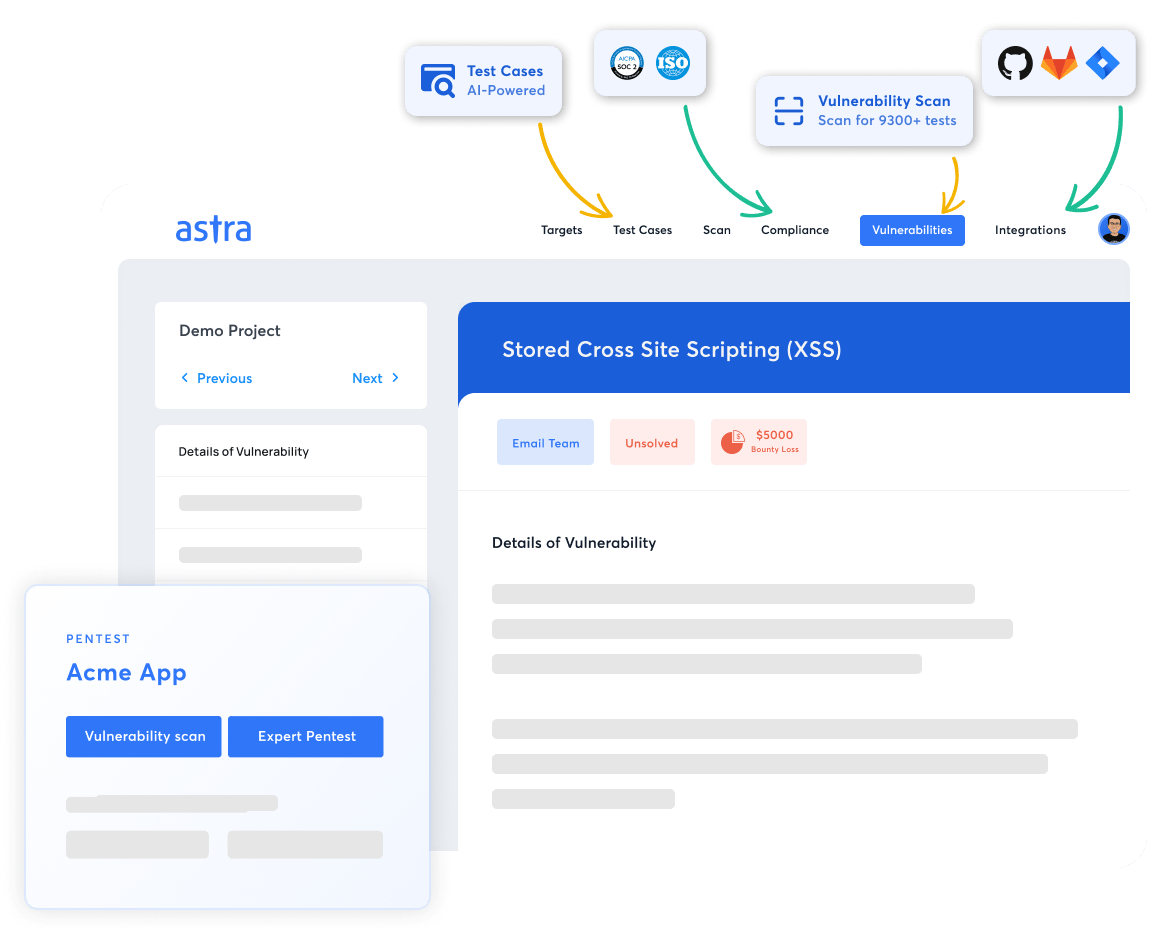
- Vulnerability management: Comes with dynamic vulnerability management dashboard
- Compliance: GDPR, PCI-DSS, HIPAA, ISO27001, and SOC2
- Integrations: Slack, JIRA, CircleeCI, GitHub, GitLab, and more
- Support: AI-powered chatbot with dedicated human support
- Price: Starting at $1999/yr
As one of the best vulnerability management systems, Astra Security blends automation with manual expertise to run 9,300+ AI-supported security tests and compliance checks across various types of assets and digital infrastructure to proactively strengthen your security.
With clear, actionable, and custom reporting, industry-specific AI-augmented test cases, and zero false positives with vetted scans, Astra simplifies vulnerability management end-to-end while our in-house penetester, with 6K+ CVEs to their name, provides personalized support.
Lastly, its seamless tech stack integrations and real-time expert support make it the perfect choice across industries and geographies.
Pros:
- Facilitates identification of business logic errors.
- Scans behind login pages.
- Provides 2 rescans to validate patches.
- Delivers custimizable compliance-specific scans and reports.
- Ensure zero false positives through vetted scans.
Limitations:
- Trial available at $7 for a week.
Unsure which type of vulnerability management tool is right for your stack? We’ll help you map your needs.
2. Rapid7
Key Features:
- Scanner Capacity: Capable of running 95+ attack types on your web app and cloud
- Accuracy: False positives possible
- Vulnerability management: Yes
- Compliance: CIS, ISO 27001, and PCI DSS
- Integrations: ServiceNow Security Operations, LogRhythm, ManageEngine, and more
- Support: AI-powered chatbot with human support
- Price: Starting at $1.93/mo for 500 assets, per asset
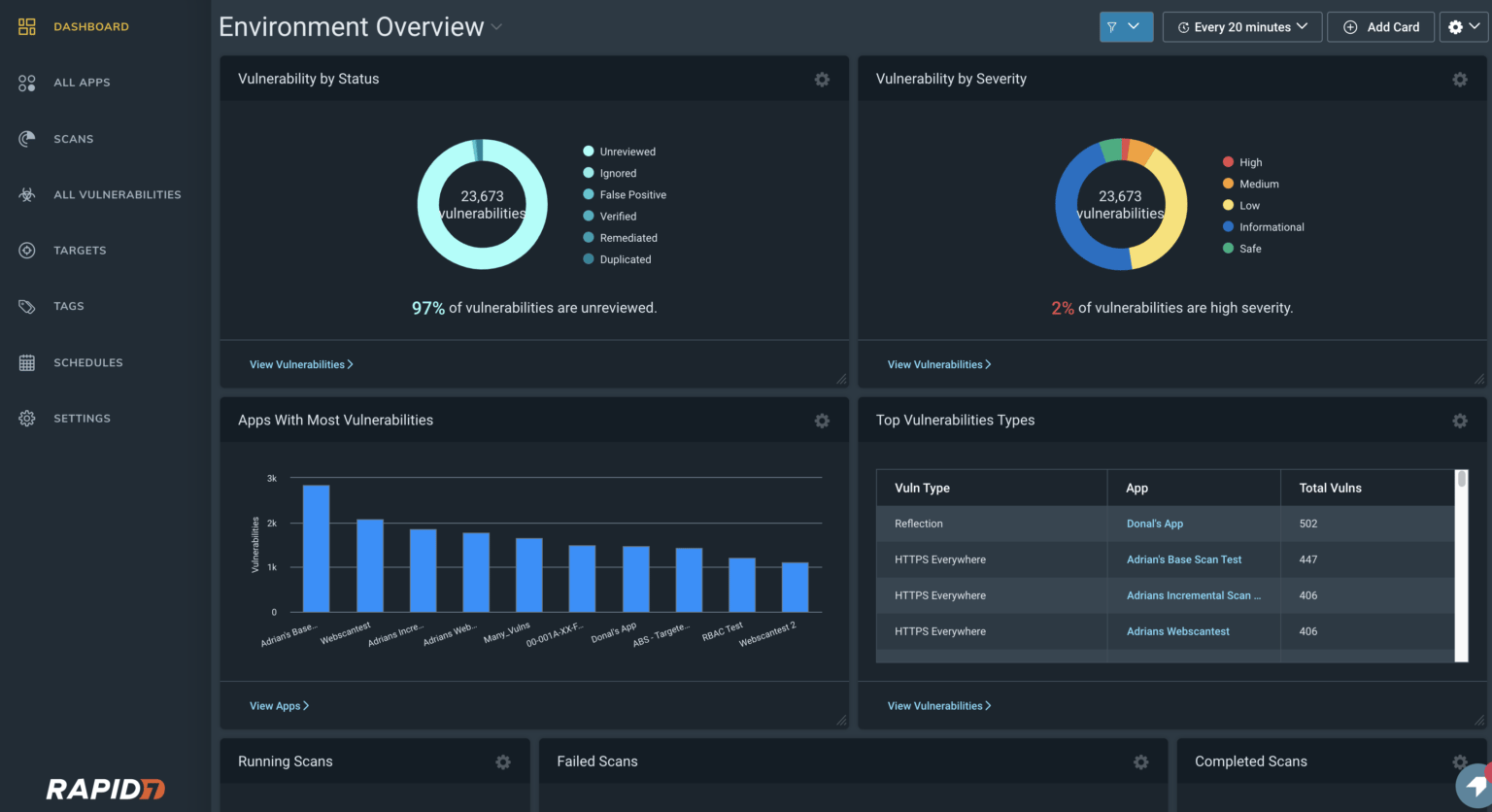
As a comprehensive vulnerability management system, Rapid7 provides world-class application security, vulnerability management, and SIEM services with its’ Insight VM offering capabilities such as advanced remediation, tracking, and reporting.
Moreover, its penetration testing platform integrates with 40+ technologies to deliver smoother workflows and improve speed of patching and remediation.
Pros:
- Simple and easy-to-navigate interface.
- Compiles a single platform for the detection and management of vulnerabilities.
Limitations:
- Customer support can be improved.
- Removal of scanned devices must be done manually.
3. Tenable Nessus
Key Features:
- Scanner Capacity: Continuous penetration testing for 65K+ vulnerabilities
- Accuracy: False positives possible
- Vulnerability management: Yes
- Compliance: HIPAA, ISO, NIST, and PCI-DSS
- Integrations: IBM Security, Splunk, GitHub, and GitLab
- Support: AI-powered chatbot with dedicated human support
- Price: Starting at $4,236/yr
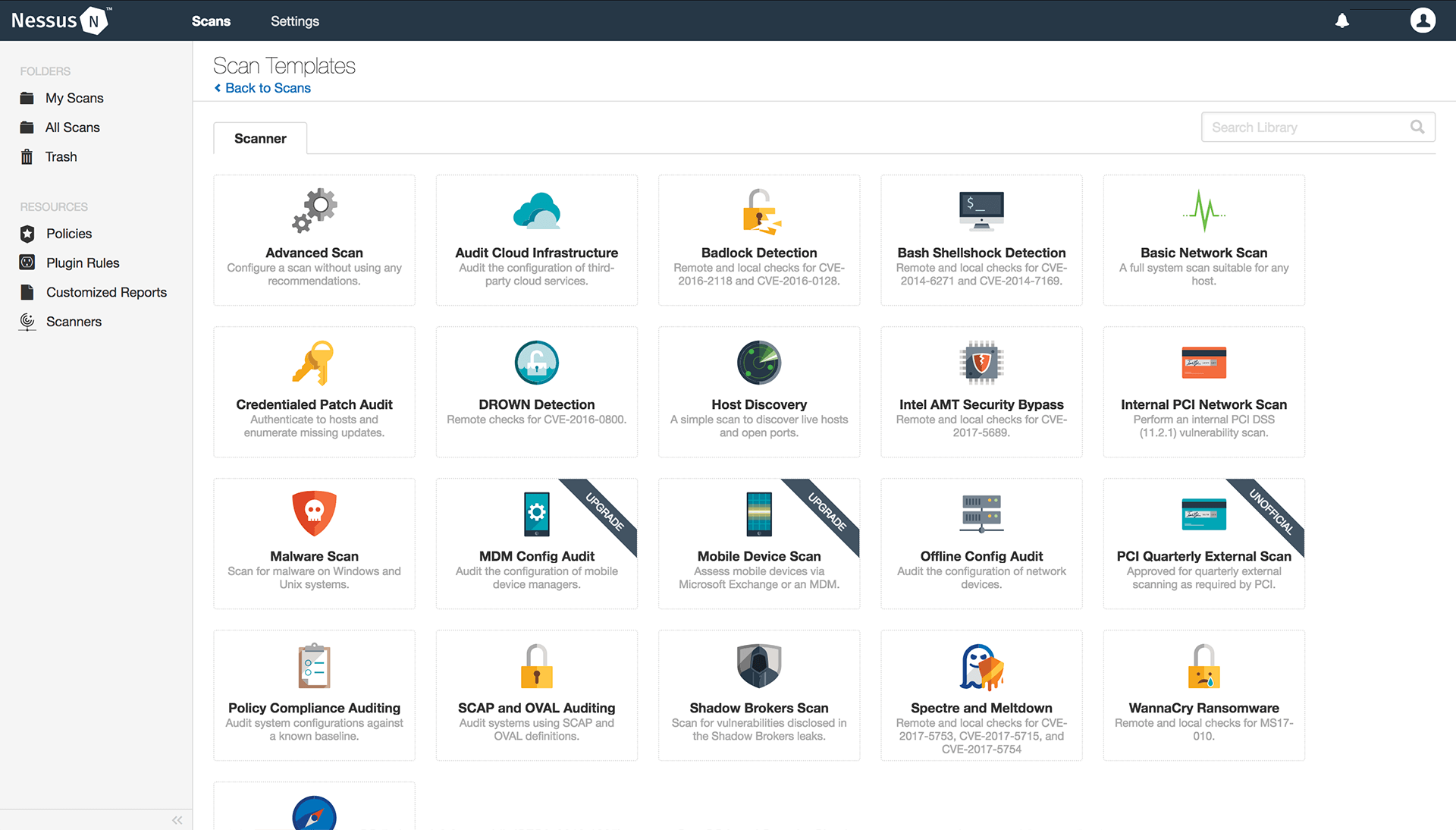
As a leading web application vulnerability management system, Nessus, under the Tenable umbrella, facilitates point-in-time analysis of security systems. Focused on automated scanning, it offers a better view of your cloud infrastructure and web applications with detailed reporting capabilities.
Moreover, its continuous monitoring functionalities, enhanced by a comprehensive analysis of exposure management, extensive integrations, and community support, help improve your security posture.
Pros:
- Simplifies alert management
- Designed to support scaling organizations.
Limitations:
- Advanced support is only available upon additional payment.
- Takes time to complete scans.
Want to see Astra Security’s vulnerability management tool’s zero false-positive scans and dynamic dashboard in action?
4. Breachlock
Key Features:
- Scanner Capacity: Pentest for web applications, networks, APIs, and cloud.
- Accuracy: False positives possible
- Vulnerability management: Yes
- Compliance: SOC 2, PCI DSS, HIPAA, NIST, and ISO 27001
- Integrations: Jira, Slack, and Trello
- Support: AI-powered chatbot with dedicated human support
- Price: Available on quote
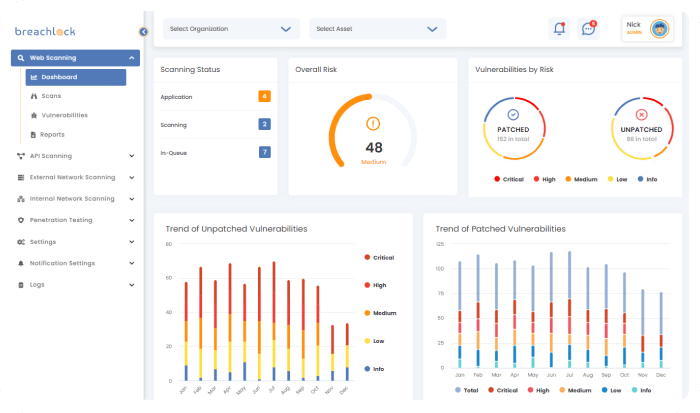
As another PTaaS platform, Breachloack delivers a judicious mix of AI-augmented penetration tests and automated scans to facilitate vulnerability management. It continuously monitors your infra for vulnerabilities and hidden assets, including those in shadow IT and the dark web.
Its evidenced-based reporting helps smoothen the remediation process, while the standardized framework helps meet industrial standards and benchmarks.
Pros:
- Provides access to a built-in NIST policy.
- Offers a scalable architecture.
Limitations:
- Remediation services have a lot of scope for improvement.
- Needs more integrations like Calico.
5. Intruder
Key Features:
- Scanner Capacity: Websites, servers, and cloud to detect 65000+ vulnerabilities
- Accuracy: False positives possible
- Vulnerability management: Yes
- Compliance: SOC2, and ISO 27001
- Integrations: GitHub & JIRA
- Support: AI-powered chatbot with human support
- Price: Starts at $1958/ year
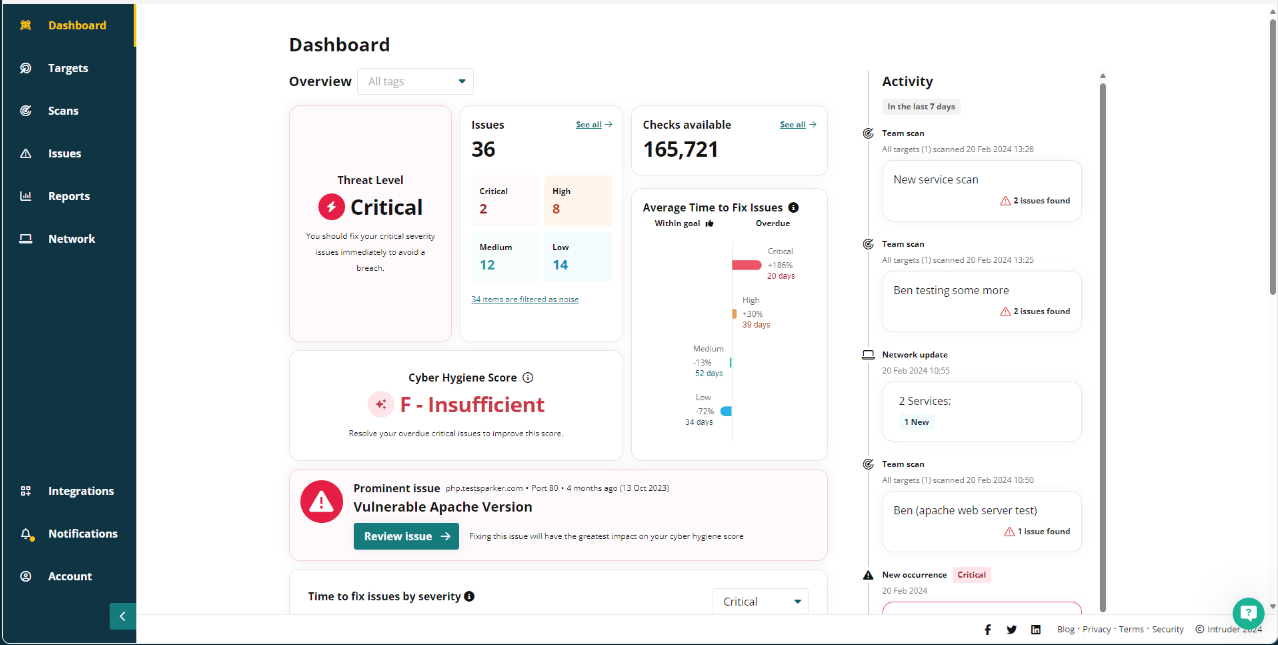
Known for integrating automated penetration testing, continuous monitoring, and proactive threat response under one platform, Intruder is one of the mature vulnerability management systems in the market.
Its real-time monitoring, coupled with monthly security assessment functionality and actionable reports, helps keep your data secure across assets while the seamless integrations facilitate remediation.
If you’re evaluating Intruder.io alternatives, this detailed comparison will help you hone in on the right tool.
Pros:
- Easy to deploy and manage alerts.
- Conducts hourly checks for new IP addresses and hostnames.
Limitations:
- The pricing is a bit steep
- Lacks zero false positive assurance.
6. Arctic Wolf
Key Features:
- Scanner Capacity: Vulnerability management and response solution for network and cloud
- Accuracy: False positives possible
- Vulnerability management: Yes
- Compliance: HIPAA, PCI-DSS, and ISO
- Integrations: Azure IaaS, Microsoft, AWS, and Okta
- Support: AI-powered chatbot with human support
- Price: Available on quote
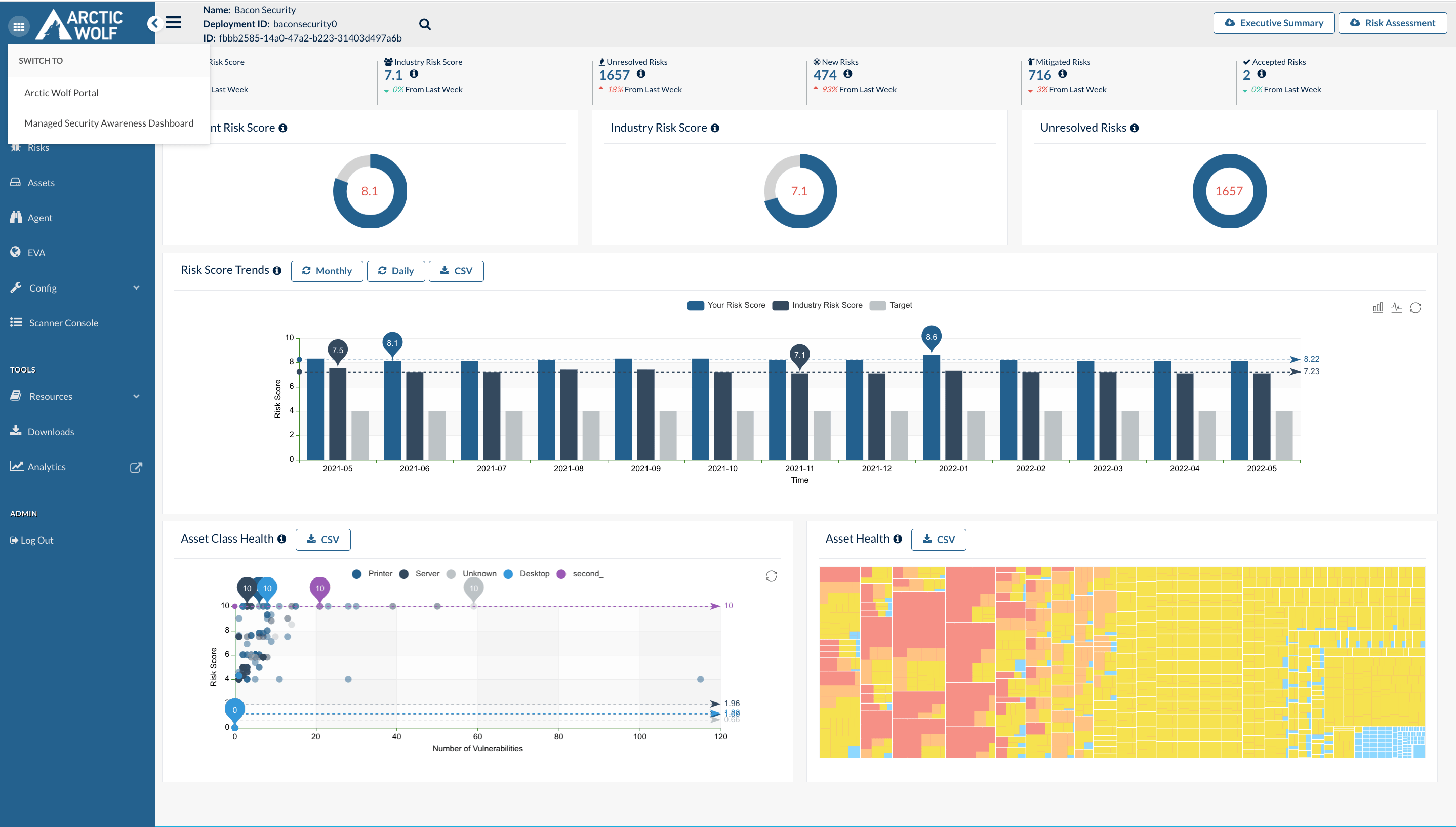
As a cloud-based vulnerability management platform, Arctic Wolf provides 24/7 managed detection and response solutions with constant monitoring capabilities.
With tailored risk assessments, real-time reporting, and personalized support, Arctic Wolf helps provide a proactive and comprehensive approach to vulnerability management to reduce cyber risk exposure.
Pros:
- Helps avoid alert fatigue.
- A cost-efficient solution to having an in-house SOC.
Limitations:
- Integrations can be improved.
7. Alert Logic
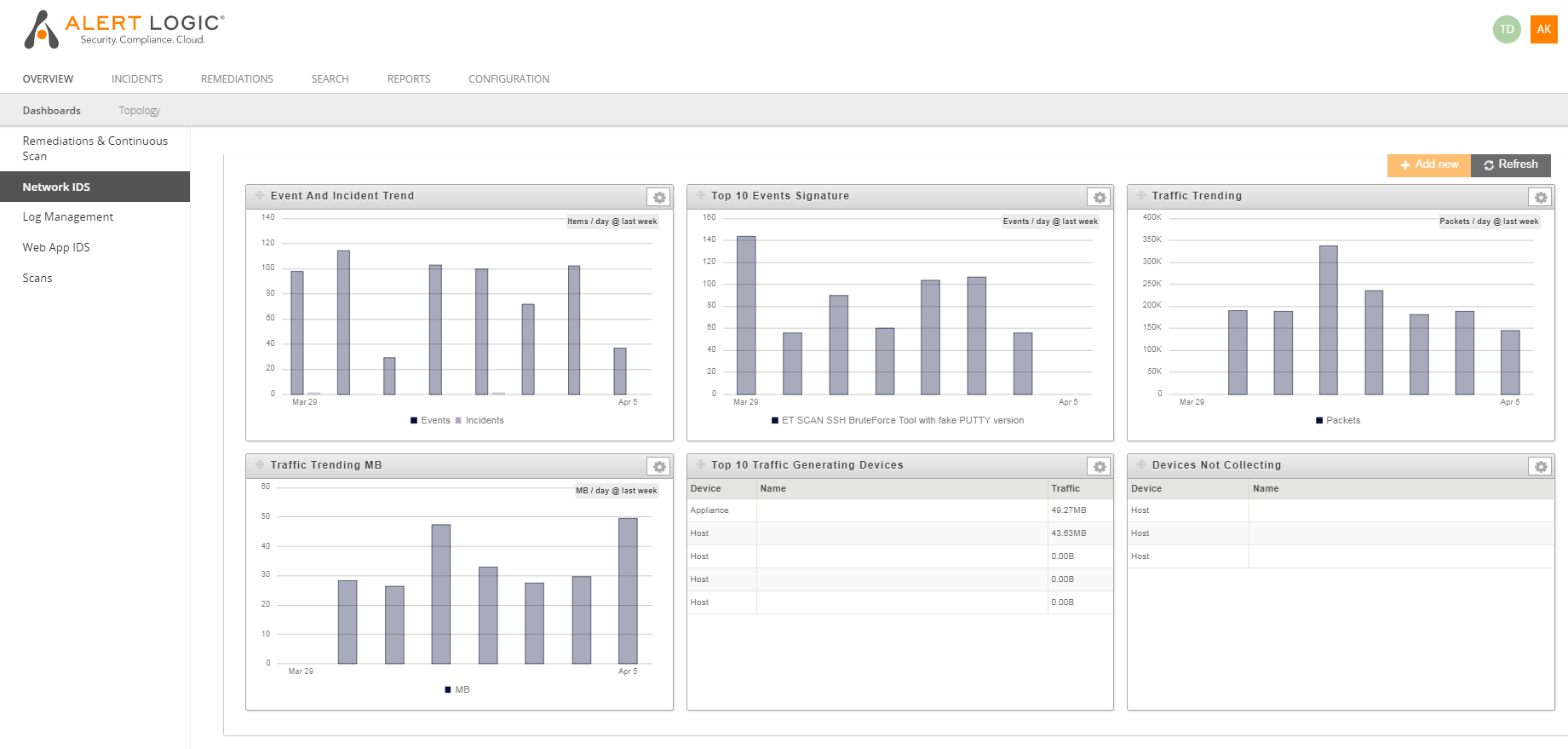
Key Features:
- Scanner Capacity: Scans for 99K+ vulnerabilities in networks
- Accuracy: False positives possible
- Vulnerability management: Yes
- Compliance: HIPAA, NIST, and PCI-DSS
- Integrations: Microsoft, AWS, JIRA, Crowdstrike and more
- Support: AI-powered chatbot
- Price: Available on quote
AlertLogic is a popular SOC-as-a-service and vulnerability management provider that provides managed network threat detection and response services.
They offer asset discovery, threat monitoring, incident validation, remediation, and log management services to secure your data and help maintain compliance with GDPR, HIPAA, PCI-DSS, and ISO 27001.
Pros:
- Precise and timely notifications
- Easy-to-navigate dashboards.
Limitations:
- Could have better end-point protection.
Looking for automated vulnerability management tools with continuous monitoring capabilities?
8. Orca Security
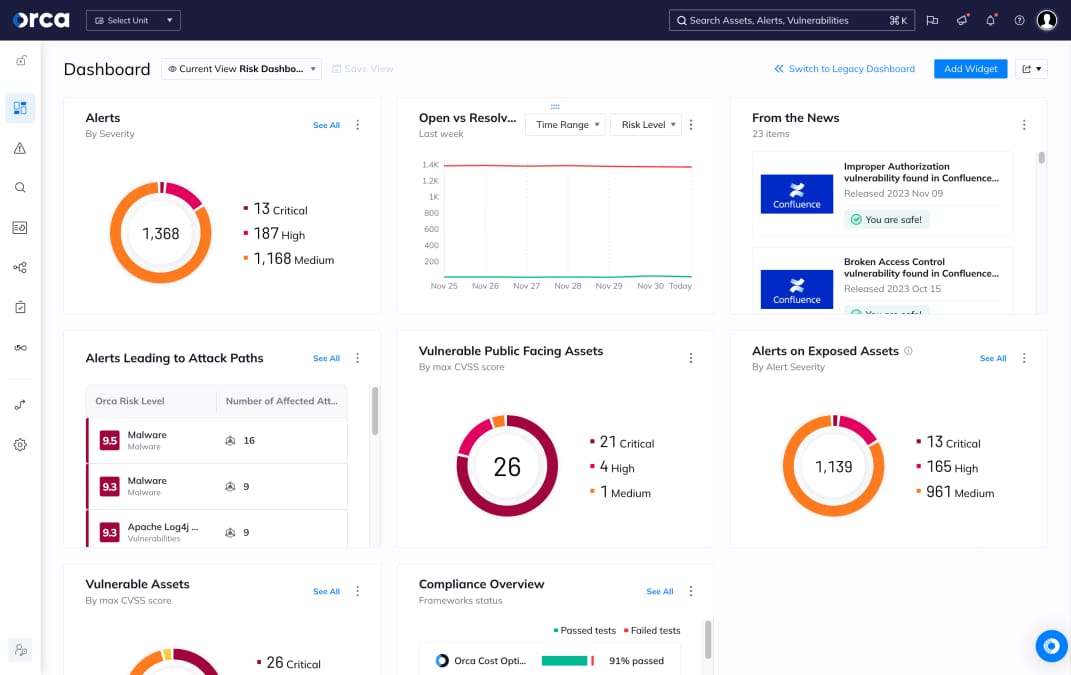
Key Features:
- Scanner Capacity:
- Accuracy: False positives possible
- Vulnerability management: Yes
- Compliance: 150+ frameworks for multi-cloud environments
- Integrations: JIRA, Okta, Slack, and more
- Support: AI-powered chatbot
- Price: Available on quote
Known for its leading vulnerability management system for cloud infrastructures like AWS, Azure, and Google Platform, Orca Security provides penetration testing and actionable data that is easily accessible to the right teams.
Moreover, its features like data encryption, antivirus, potential intrusion, and threat detection help strengthen your security posture.
Pros:
- Delivers discovery and modeling of interrelationships between multi-cloud assets
- Offers support for multi-cloud enterprise
Limitations:
- Known to face some issues with user authentication.
9. Symantec
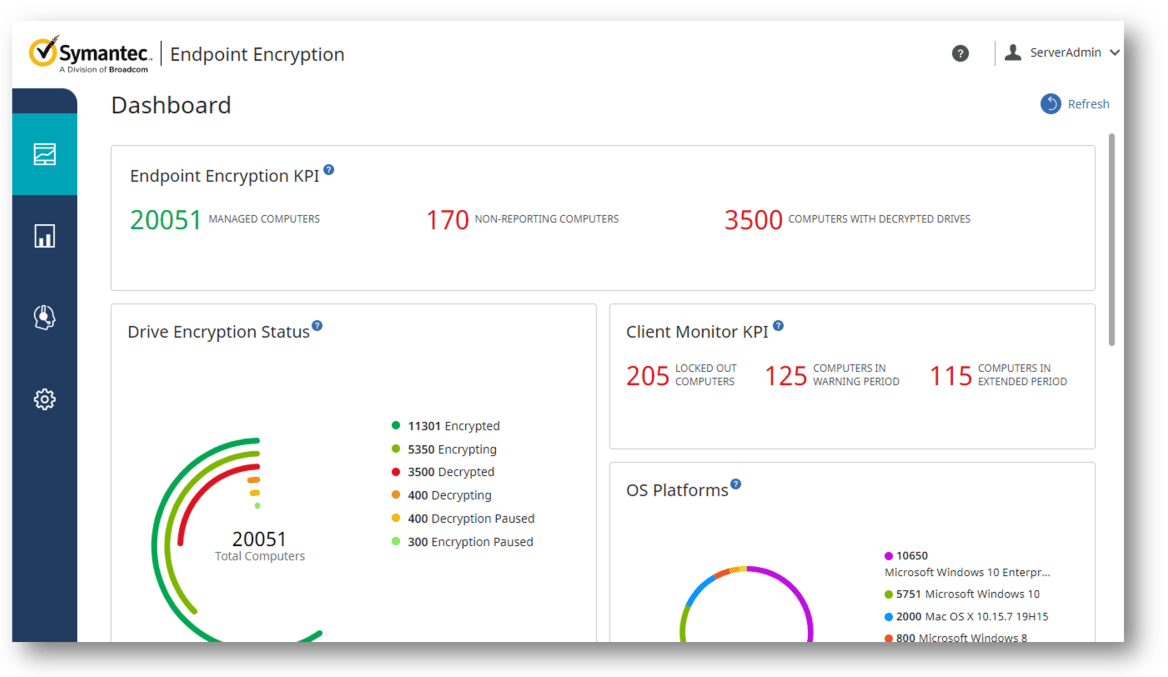
Key Features:
- Scanner Capacity:
- Accuracy: False positives possible
- Vulnerability management: Yes
- Compliance: ISO, SOC, PCI-DSS, and GDPR
- Integrations: JIRA, GitHub, GitLab, and more
- Support: AI-powered chatbot with dedicated human support
- Price: Available on quote
Part of the Broadcom Umbrella, Symantec is a cloud penetration testing vulnerability management system that delivers complete visibility and facilitates monitoring for unusual activities in the cloud.
The platform also offers threat management, sensitive data protection, and severity-based ranking to facilitate the discovery of OS and application-based vulnerabilities.
Pros:
- Offers endpoint threat detection.
- Deliver monthly proactive threat hunts.
Limitations:
- May not be feasible for small to medium-sized companies.
- Integration possibilities can be improved, especially for cloud environments.
10. SecureWorks
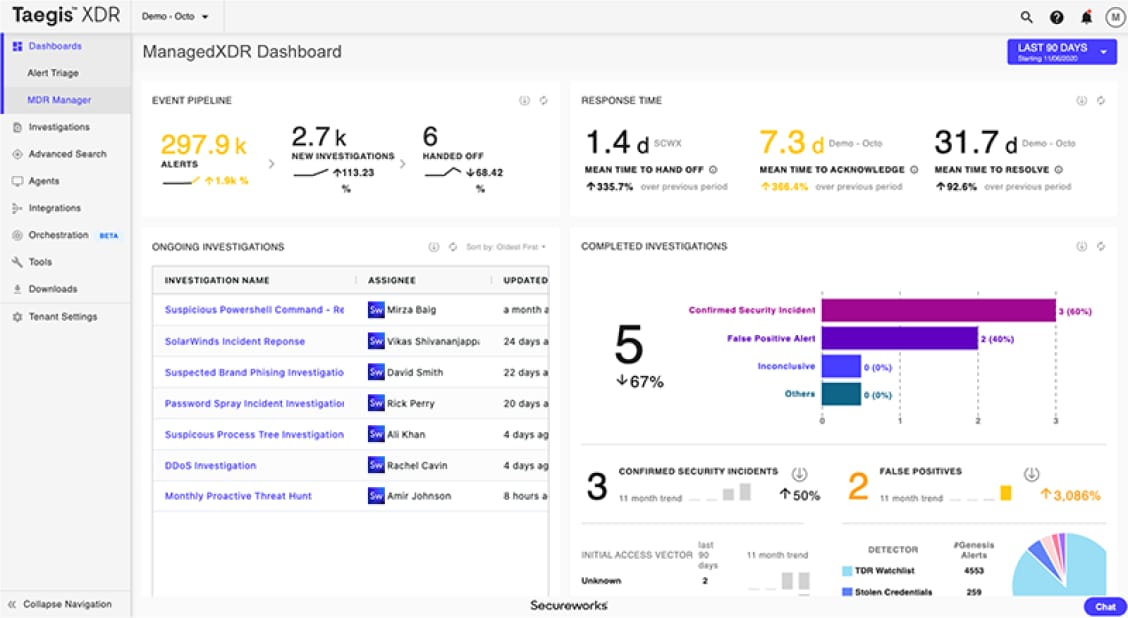
Key Features:
- Scanner Capacity: Helps detect 14K+
- Accuracy: False positives possible
- Vulnerability management: Yes
- Compliance: PCI-DSS, HIPAA
- Integrations: AWS, zScaler, Slack and JIRA
- Support: Dedicated human support
- Price: Available on quote
As a vulnerability management tool, SecureWorks pentesting, application security testing, malware detection, and risk assessments for information assets, networks, and systems.
Capable of performing nearly 250 billion cyber programs that facilitate threat detection and mitigation, and provides contextual analysis for prioritizing vulnerabilities based on over 40 internal and external risk factors.
Pros
- Easy to align the security environment with industry standards like NIST and ISO.
- Active communications can be improved.
Limitations
- Too expensive for SMEs.
- There’s a delay between suspicious activity and the alert raised.
Why a Vulnerability Management Tool Matters
Without the right vulnerability management tool, known issues slip through, manual patching gets delayed, and the business stays exposed. Strong tools help you:
- Automate discovery, and fix higher-risk issues on priority, while also reducing time-to-patch
- Fulfill pentesting compliance requirements for PCI-DSS, HIPAA, and ISO in an automated manner.
- Allows your team to focus on real business risks, instead of chasing tens of thousands of alerts.
More importantly, they help reduce noise and minimize developer burnout, also allowing your team to act faster when they trust the scan results. Such vigilance helps stop breaches and saves money and time in the long run.
Essential Features in a Vulnerability Management System
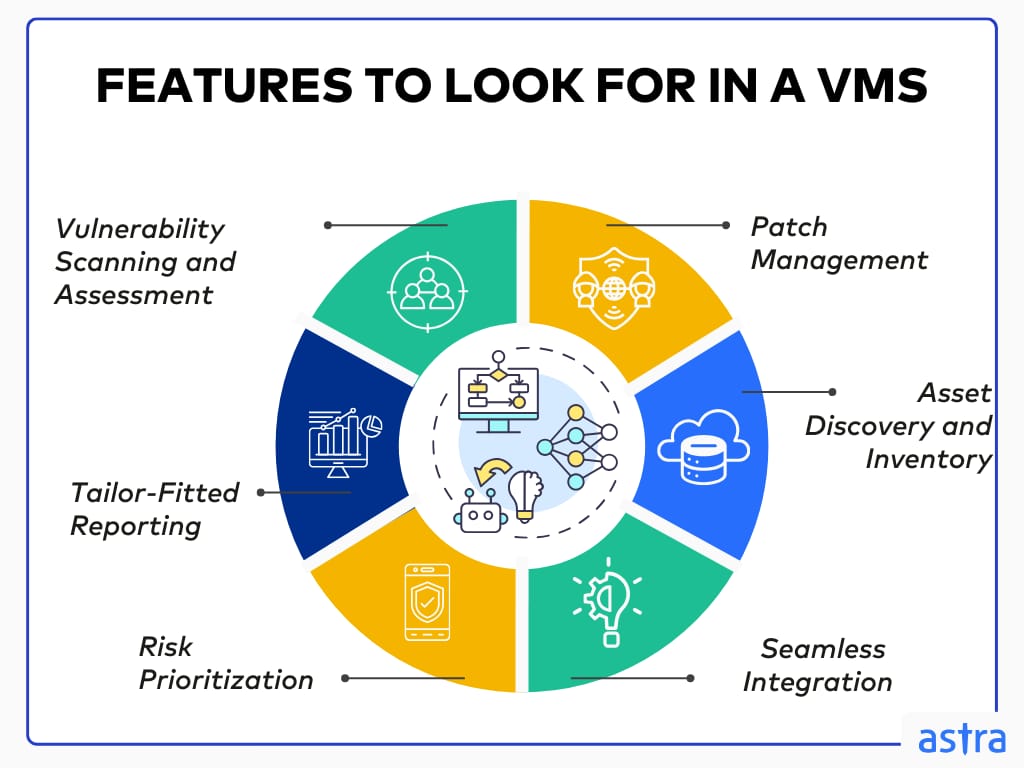
Asset Discovery and Inventory
A robust vulnerability management system facilitates accurate identification of all assets within your IT environment, including hardware, applications, network devices, and cloud infrastructure. Such a comprehensive discovery mechanism is crucial for establishing a baseline understanding of the attack surface and addressing all potential vulnerabilities.
Vulnerability Scanning and Assessment
Choose a VMS software that offers comprehensive scanning and assessment capabilities to enable holistic coverage across various assets, with in-depth insights into the severity and potential impact of identified risks and actionable remediation guidance.
Risk Prioritization
To ensure efficient resource allocation, choose a vulnerability management solution that effectively prioritizes vulnerabilities based on factors like criticality, exploitability, potential impact, and business context.
Prioritize vendors whose customizable risk-scoring mechanisms align with your organizational risk tolerance without compromising industrial standards.
Patch Management
Prioritize a vulnerability management software that automates the patch deployment process whenever possible, by providing features like vulnerability assessment before and after patching, patch approval workflows, and integration with configuration management databases (CMDBs).
Tailor-Fitted Reporting
Look for a vulnerability management tool that generates comprehensive reports on vulnerability status, remediation progress, and overall security posture with customizations to tailor info to specific audiences, such as IT teams, management, and compliance officers.
Seamless Integration
Choose a vulnerability management system that facilitates automated threat response and management by seamlessly integrating with workflow and CI/CD tools such as Slack, JIRA, CircleCI, intrusion detection and prevention systems, firewalls, and other SIEM solutions.
How to Choose the Right Vulnerability Management Tool
When you are evaluating a Vulnerability management solution, look for the following key selection criteria:
- Coverage & accuracy: Can it scan across apps, cloud, containers, and endpoints without drowning you in false positives?
- Scalability & performance: Can it expand smoothly to thousands of assets? Try to look for cloud-distributed scanning here.
- Automation & integrations: Features like built-in alerts, workflows, ticketing, and SIEM integrations save a lot of time.
- Risk prioritization: Are threats ranked by real-world exploitability, or just raw counts?
- Compliance & reporting: Pre-mapping for PCI, HIPAA, ISO, and SOC2 requirements with clean audit trails is a must.
- Usability & support: Access if the dashboard and report are easy and clear for analysts and execs to understand and backed by responsive vendor support.
- Pricing model: Understand the pricing model. Whether it’s based on per asset, IP, or SaaS. Choose what scales with your asset count and budget.
Pilot shortlisted tools in your environment to validate coverage and workflow fit before you commit.
Final Thoughts
To conclude, you can effectively mitigate risks, enhance your security posture, and protect your business from costly breaches by carefully evaluating the features and capabilities of different vulnerability management systems, such as asset discovery, risk prioritization, and reporting.
Moreover, the ideal vulnerability management software can empower you to proactively identify and address vulnerabilities, prioritize remediation efforts, and demonstrate compliance with industry regulations. Moreover, a good VMS tool like Astra Security or Rapid7 is indispensable to your cybersecurity framework.
FAQs
What is a vulnerability management system?
A vulnerability management system is a software solution that helps organizations identify, assess, prioritize, and remediate security weaknesses in their IT infrastructure, reducing the risk of successful cyberattacks by proactively addressing potential threats.
What are the 4 stages of vulnerability management?
Vulnerability management comprises four stages: identification of vulnerabilities, prioritization based on risk, remediation through patching or mitigation, and continuous monitoring and reporting to ensure ongoing protection and improvement of security posture.
How do vulnerability management tools help reduce security risks for enterprises?
Vulnerability management tools reduce risk by spotting and evaluating flaws early, ranking them by severity, and guiding remediation. With automation and reporting, they shrink the attack surface and help prevent breaches through proactive fixes.
Which vulnerability management tool features are most important for compliance audits?
Key features for compliance include automated asset discovery, risk-based scanning, compliance-focused reporting (e.g., PCI-DSS, HIPAA, ISO 27001), and integrations with patch-management and ITSM tools, along with ensuring audit readiness and smoother remediation workflows.
Do vulnerability management tools cover cloud and hybrid environments?
Yes. Modern tools span cloud-native, on-prem, and hybrid setups. They scan container images, infrastructure-as-code, and runtime workloads, unifying visibility across diverse environments for consistent coverage.